

Project
Photo: Ana Rodríguez Carrington (CC BY 2.0)Victory: Biosphere Reserve in Baja California Saved from Toxic Mine
Known as an “ecological treasure house,” the Sierra La Laguna Biosphere Reserve at the southern tip of Baja California will not be spoiled by toxic mine waste, thanks in part to AIDA’s advocacy.
The reserve was once an island, so it’s home to rare plant and animal species. Canyons, swimming holes, and hot springs can be found in its granite mountain range and lowland tropical forests.
Thanks to AIDA and our partners in Mexico, the Mexican government denied an environmental permit for the Paredones Amarillos gold mine, halting the project for the time being. To protect the biosphere reserve, AIDA helped educate community groups and decision makers about the mine's risks. This helped to build the political momentum necessary for the government to deny the permit.
To extract gold from the mountains, the Canadian company Vista Gold proposed to carve out huge quantities of rock—each ton containing a mere gram of gold–-grind it into sludge, and treated it with cyanide. The company planned to dump massive amounts of toxic waste (called “tailings”) behind a dam intended to store it forever. Unfortunately, tailings dams can break for various reasons, as happened at Bolivia’s Porco mine in 1996. When that dam collapsed, more than a quarter million metric tons of tailings flooded the river and contaminated 500 miles (800 km) of waterways in Bolivia, Argentina and Paraguay.
The mine could also cause acid mine drainage. When sulfur-containing rocks are exposed to air and water, sulfuric acid forms, which causes toxic heavy metals to dissolve and drain into the watershed. The risk of acid mine drainage in Sierra La Laguna was significant and the human and environmental cost would have been tremendous: thousands of people and countless wildlife in the reserve rely on its water for survival.
Depleting freshwater is a further threat because mines use tremendous quantities of water. Owing to the scarcity of water in the reserve, Vista Gold proposed to build a plant on the Pacific coast to remove salt from sea water in a highly energy-intensive process, and then pump the water 45 km to the mine site. The desalination plant posed a threat to the endangered leatherback sea turtle.
Singly and together, the mine’s impacts would have devastated a rare jewel, a unique and lush paradise worth saving for future generations.
Related projects
5 keys to collective action: Lessons from the meeting of environmental defenders from the Southern Cone
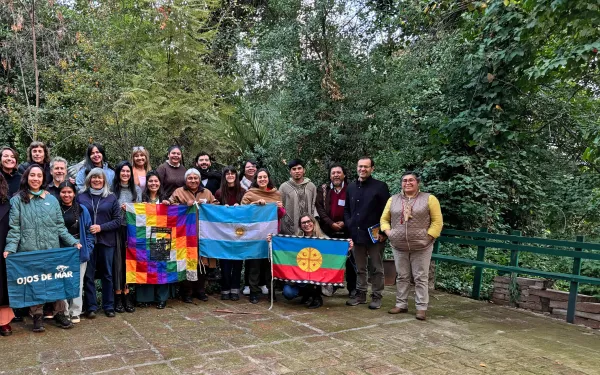
Can an energy transition be just if it repeats the harms of traditional extractivism?That was one of the central questions of “Articulando Territorios: Meeting of Defenders from the Southern Cone”, an event held on June 9 and 10 in Santiago, Chile, that brought together environmental defenders from Argentina, Bolivia, and Chile.For years, AIDA has stood alongside those defending their territories against extractive and energy projects in Latin America. This meeting was part of that commitment: a space to share experiences, strengthen protection capacities, and collectively reflect on the impacts of the pressures of the global energy transition, including the rise of extractivism.Here are the five key lessons we took away: 1. Communities are at the heart of the resistance for a just and sustainable energy transitionMany of the activities promoted under the global paradigm of the energy transition—such as lithium, copper, and other “strategic” metal mining, as well as port megaprojects—aimed at decarbonizing the energy mix continue to reproduce the historical dynamics of intensive resource extraction. The experiences and lessons shared in regions such as San Antonio in Chile, Salinas Grandes and Vaca Muerta in Argentina, and the salt flats of Bolivia point the way toward environmental justice. Against this new backdrop—and amid a wave of extractive expansion—local communities are shifting from being areas affected by these projects to becoming strategic allies in the resistance movements of the Southern Cone. 2. Defending the territory is a project that encompasses all aspects of life and shapes one's identityBeing an environmental defender is not a temporary job or activity, but a true life’s work. From this perspective, territorial defense goes beyond the protection of a physical or economic space. It involves cultural identity, collective memory, spirituality, and the intrinsic “body-territory” relationship. This framework explains why the impacts on ecosystems cannot be measured solely in economic terms: they directly damage the social fabric through community fragmentation, the forced migration of young people, and the painful loss of ancestral practices. 3. Protection must be comprehensive, collective, and proactiveThe protection of those who defend the territory cannot depend on individual reactions or improvised measures when the risk is imminent. Protecting ourselves means identifying threats and strengths, and increasing our capacity to respond to risks. Building support networks, ensuring protection protocols are in place, and prioritizing collective care are the foundation for establishing robust processes for territorial and environmental defense. 4. Communication is about challenging narratives without revictimizingCommunication is a fundamental tool for political protection and strategic advocacy to counteract power imbalances. Communities must position themselves as primary sources of territorial knowledge and as the authors of their own narratives. Effective communication means bringing their knowledge, their proposals, and their capacity for organized resistance to the forefront, without reducing them to suffering or revictimizing them. 5. Recognize the right to defend the environment and use international tools as a means of protectionRecognizing that defending the environment is a holistic life project means recognizing and legitimizing the right to defend it. Territory and environmental defenders safeguard common goods that benefit society as a whole. It is necessary to explicitly recognize the legitimacy and dignity of this work by eliminating stigmas and criminalization, and by ensuring safe spaces for the exercise of this right.In this context, the tools of international law are part of the range of protective measures, including:Strategic litigation. The success and transformative value of strategic environmental litigation go far beyond simply obtaining a favorable court ruling. Its true potential lies in bringing silenced conflicts to light, generating independent technical evidence, and opening up political spaces—all of which occur when it is well coordinated with community-based organizational processes.Escazú Agreement. The Escazú Agreement is a fundamental regional framework thanks to the three procedural rights—access to information, participation, and justice in environmental matters—that it guarantees and upon which it is built. It is key to the active protection of environmental human rights defenders. This framework must be transformed into a tool for defense in the hands of communities, particularly through well-founded legal action and the activation of the mechanisms provided for in the agreement. The recent gathering of environmental defenders from the Southern Cone confirms something that AIDA has observed across the entire continent: the defense of the environment and human rights is built through networking.We will continue to stand with communities and environmental defenders in Latin America to ensure that the energy transition does not come at the expense of their territories and their lives.
Read more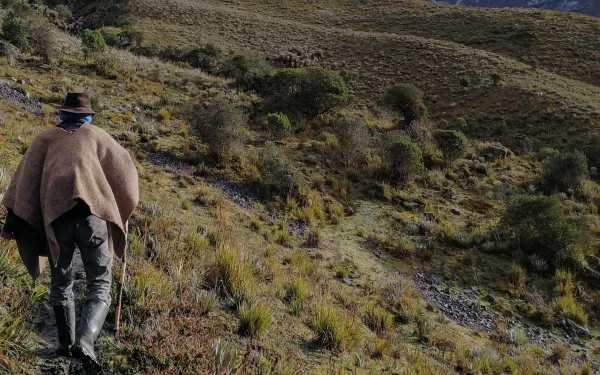
Environmental law in Latin America: Progress and setbacks
Environmental law in Latin America is currently facing a paradox.The continent has recently seen historic progress in developing binding legal standards to protect the environment and those who defend it. However, this progress coexists with the weakening of legal and institutional frameworks for protecting the environment and the rights of communities in various countries. At the forefront of protecting the environment, the climate, and peopleIn the context of the climate, environmental, and social crises, Latin America has been the birthplace of important legal tools to protect territories, ecosystems, communities, and the global climate.These recent developments have included the Escazú Agreement and Advisory Opinion 32 (OC-32/25) on the climate emergency issued by the Inter-American Court of Human Rights, which reinforce and reaffirm binding standards for climate action, environmental protection, and the defense of human rights.The Escazú Agreement, which entered into force on April 22, 2021, is the first regional environmental treaty—and the first of its kind in the world—to include specific provisions for the protection of individuals, groups, and organizations that promote and defend human rights in environmental matters in Latin America and the Caribbean.It is an international milestone in the areas of participation, information, and the protection of environmental defenders, as well as a model for other continents.As for the Inter-American Court’s ruling, made public on July 3, 2025, it recognizes the right to a healthy climate as an autonomous right—enforceable in its own right—with clear obligations for States in the face of the climate emergency. The court even reaffirms the State’s obligation to keep the planet’s average temperature at 1.5 °C, recognizing that this threshold is already having an impact on human rights.The court also establishes rules for enhanced due diligence, which entail, among other things, the duty of States to conduct environmental impact assessments, to establish clear guidelines for activities that may harm health or ecosystems, and to regulate public and private activities that affect the climate more rigorously and strictly.Furthermore, the ruling recognizes the right to science and the importance of the traditional knowledge of indigenous peoples and traditional communities as a fundamental component of climate action from a human rights perspective, applicable to all countries. Setbacks for protecting the environment and human rightsRecent examples in various countries across the continent show dangerous setbacks in the frameworks for the protection of the environment and community rights, as well as in the institutions responsible for this task.These setbacks jeopardize the rights of indigenous peoples and traditional communities and highlight extractivist pressures that threaten to exacerbate environmental degradation.These dynamics are reflected in the merger of environmental ministries with entities tasked with production or extraction, as well as in the relaxation of environmental assessment processes, which limit the tools available to communities and defenders to protect ecosystems and ways of life. Here are some examples: Chile (2025–2026). Two developments threaten the integrity of the country’s environmental governance: the reform of the regulations governing the Environmental Impact Assessment Service and the legislative process for the Framework Law on the Authorization of Sectoral Permits. Both seek to expedite environmental permits based on sworn statements, without prior oversight or the submission of environmental impact studies or statements. They also incorporate the concept of “administrative silence,” which means that if the administrative authority does not rule on a project’s admissibility, the application is officially accepted for processing.In addition, the government is pushing forward with a major reform to boost investment in Chile. Among other things, the so-called “Miscellaneous Law” makes the Environmental Impact Assessment System more flexible and allows companies to be compensated if environmental courts revoke an environmental permit.Argentina (2022–2026). Mining expansion took hold in the province of Jujuy following a constitutional amendment that did not include consultation with Indigenous peoples or mechanisms for citizen participation, particularly in connection with lithium mining in areas historically inhabited by Indigenous and peasant communities.At the national level, the Ministry of the Environment was abolished in 2023, and its responsibilities were transferred to the Ministry of the Interior. In 2024, the Incentive Regime for Large Investments was created, which grants tax and customs benefits for up to 30 years to megaprojects without requiring environmental impact studies, thereby creating an imbalance between investment rights and environmental rights. In addition, the “glacier law” was amended, marking another setback for environmental protection. Bolivia (2026). The Simplified Mining Compliance Regulations were approved, modifying environmental requirements and exempting project proponents from prior consultation and environmental impact assessments. This enables and expands gold mining in protected natural areas and indigenous territories, violates the rights of indigenous peoples, and disregards the rulings of the Agro-Environmental Court.And in August 2026, President Rodrigo Paz abolished the Ministry of Development Planning and the Environment. As a result of that reform, the Vice Ministry of the Environment was placed under the Ministry of Productive, Rural, and Water Development, an agency headed by an agribusiness executive.Ecuador (2025). Under the banner of “administrative efficiency,” the Ministry of the Environment, Water, and Ecological Transition was merged with the Ministry of Energy and Mines. This led to the creation of the Ministry of Environment and Energy. Experts indicate that this decision could undermine the independence of the environmental authority and, as a result, weaken due diligence principles, facilitate the approval of extractive projects, and reduce environmental oversight powers. Brazil (2025). The new General Environmental Licensing Law (Law 15,190/2025) aims to streamline the granting of environmental permits. The law extends the "License by Adherence and Commitment"—a self-declaration system that does not require a prior impact assessment—to small- and medium-scale activities with low or medium pollution potential. Regarding indigenous participation, the law restricts the mandatory opinion of the National Foundation for Indigenous Peoples to officially recognized lands, thereby excluding from this oversight at least 297 territories currently undergoing regularization. Furthermore, in cases where such an opinion is required, it lacks binding effect, thereby weakening the role of the licensing authority as a guarantor. Subsequently, the regulation was amended by Law No. 15,300/2025 to create the Special Environmental License, intended for projects classified as “strategic” by the Governing Council, with a maximum completion period of one year. Both regulations are being challenged before the Federal Supreme Court through four legal actions. The court plans to review these cases on August 12, 2026, to issue a ruling on the validity of the two laws. The legal frameworks and institutions that make up environmental governance cannot be viewed as mere technicalities or bureaucratic procedures, but rather as tools for protecting the right to a healthy environment. This right is essential to ensuring the enjoyment of other fundamental rights, such as the right to life, food, and water, among others. The weakening of environmental institutions or procedures does not merely “shorten timelines.” It undermines and restricts rights, reduces oversight, and broadens the scope for decisions that may affect territories and ecosystems without sufficient information, meaningful participation, or effective access to justice.The procedures that guarantee the human right to a healthy environment are not obstacles. They are essential to ensuring life. Recognizing the challenges without losing hopeInternational law is grounded in human dignity and the inherent integrity of nature. It is not a matter of declarations or decisions made by any body, but rather the recognition of an order that exists above all else, that precedes and belongs to all people without distinction. It is also a mechanism for preventing conflicts.What is at stake today carries far greater weight than the short-term deregulation efforts of successive governments. The hard-won rights that are now being eroded are the result of years of collective organizing, through which legal, social, and cultural safeguards have been established to protect future generations as well.In this context, strategic litigation and social mobilization are key tools for promoting environmental democracy, preventing setbacks, and establishing precedents that ensure the effective enforcement of already recognized rights. Similarly, the role of Indigenous peoples, traditional communities, and ancestral culture is central not only in terms of the recognition of rights but also in safeguarding territories, ancestral knowledge, and ways of life based on a respectful relationship with nature.None of this can be sustained without the active support of society as a whole. Defending what has already been achieved requires collective awareness, organization, and commitment so that the progress made in the region is not eroded but rather strengthened. This depends on our continued demand for transparency, participation, justice, and respect for standards that reflect the intrinsic natural order of people and the environment.
Read more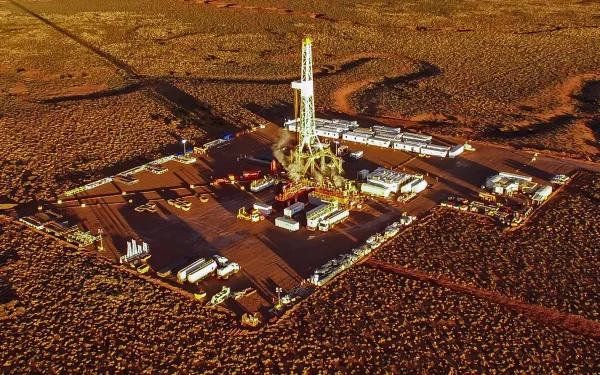
Fracking: A step toward the energy transition or a continued reliance on fossil fuels?
One argument made by supporters of fracking as a step toward the energy transition is that the technique buys time while alternatives to fossil fuels reach maturity and stability.Behind this line of reasoning lies the possibility of extracting more gas and the myth that it is a natural resource—when in fact it is a fossil fuel—and that it allows for the safe generation of energy without causing as much pollution as oil and coal.But a technique that perpetuates the use of fossil fuels—and whose environmental and social harms are widespread and well-documented—cannot be viewed as a solution or a step toward a transition that not only seeks to move beyond fossil fuels but also involves a paradigm shift in the energy system.Furthermore, by increasing dependence on oil and gas, fracking contributes to the worsening of the climate crisis due to methane emissions associated with the gas industry, as methane has a greater global warming potential than carbon dioxide (CO₂).Below, we debunk arguments that promote this technique as a step toward the energy transition. The continuation of an extractivist systemHydraulic fracturing, or fracking, is a technique for extracting gas from underground that involves drilling deep into the ground to inject, at very high pressure, a mixture of water, sand, and chemical additives (some of which are toxic) to fracture underground rock formations and extract the hydrocarbons "trapped" within them.Like the oil and coal industries, fracking uses a non-renewable energy source, intensively exploits natural resources such as water, and causes large-scale disruptions in the areas where it is carried out.Not only does it replicate these patterns of the fossil fuel industry, but its negative impacts are similar—and even more severe—than those of other fossil fuel exploration, extraction, and production activities. These include: water and air pollution, overexploitation of natural resources, land encroachment, ecosystem disruption, and the devastation of flora and fauna.This repetition of patterns seen in the fossil fuel industry means that fracking not only perpetuates dependence on fossil fuels, but also contributes to its expansion and consolidation.In fact, the development of infrastructure for its operation helps create and consolidate markets for long-term gas consumption, since it requires large-scale investments spanning several decades. This can create economic incentives to maintain and maximize its use over time, and discourage or delay decarbonization efforts. "Natural" gas? Less CO₂, but more methaneThe gas obtained through fracking has been called “natural”—a label meant to make it seem clean. But gas from fracking is neither natural nor clean.It’s dirty from start to finish—from the toxic chemicals injected into the ground to extract it to the greenhouse gases emitted during its production and combustion. Not to mention that it’s a fossil fuel, just like oil or coal.Another argument used to suggest that fracking gas is cleaner—and thus to promote it as a "transition fuel"—is that it produces fewer CO₂ emissions than other fossil fuels. This is a half-truth, as it fails to mention that the main component of natural gas is methane, a greenhouse gas whose global warming potential is much greater than that of CO₂.According to the Intergovernmental Panel on Climate Change (IPCC), methane’s global warming potential is approximately 82.5 times greater than that of CO₂ over a 20-year time horizon. This means that, despite emitting less CO₂ during combustion, fracking gas can have a climate impact equal to or even greater than that of other fossil fuels when methane emissions are taken into account.These emissions can occur both during planned events and as a result of leaks throughout the entire production and supply chain.Some studies estimate that methane leaks from unconventional gas operations—such as fracking—can reach up to 12% throughout the production and transportation chain, or that global leaks account for up to 5% of total gas production. Incompatibility with climate and human rights obligationsAs we have seen, fracking means greater dependence on fossil fuels and higher levels of polluting emissions. This not only undermines the argument that it is a "transition fuel," but also shows how this technique runs counter to countries’ international commitments regarding the climate crisis.The Paris Agreement, the most important binding global commitment to address the climate crisis, stipulates that countries must substantially reduce their greenhouse gas emissions—including CO₂ and methane—to limit the rise in global temperatures.How could a country justify that using a technique that involves generating more polluting emissions is consistent with its commitments to reduce them?Implementing fracking is also incompatible with States’ obligation to protect the human right to a healthy environment, especially in light of the impacts of the climate crisis. This principle was established in Advisory Opinion OC-32/25 of the Inter-American Court of Human Rights, which reinforced States' obligation to adopt measures to protect the climate system and the human rights of both present and future generations.At this time, when various countries in the region are considering launching or expanding fracking activities, it is essential that discussions not be limited to technical analyses, but rather address the environmental, climate, and human rights dimensions of these activities in light of the countries’ international commitments.So that narratives attempting to portray fracking as a step toward the transition do not obscure the fact that, in reality, it is an anchor that keeps us tied to our dependence on fossil fuels. Learn more about the impacts of fracking and the actions being taken to curb its expansion.
Read more