
Project
Amazon Watch / Maíra Irigaray
Barragem de Belo Monte no rio Xingu: 10 anos de impactos na Amazônia e de busca por reparações
A usina hidrelétrica de Belo Monte causou um desastre ambiental e social no coração da Amazônia: um dos ecossistemas mais importantes do planeta.
Essa situação só piorou desde que a usina começou a operar em 2016. A busca por justiça e reparação para as comunidades indígenas e ribeirinhas afetadas continua até hoje.
Em 2011, a Comissão Interamericana de Direitos Humanos (CIDH) concedeu a essas comunidades medidas de proteção, que até hoje não foram totalmente implementadas pelo Estado brasileiro.
E, desde junho daquele mesmo ano, a CIDH mantém um processo contra o Estado por sua responsabilidade internacional no caso.
A CIDH pode encaminhar o caso à Corte Interamericana de Direitos Humanos, que tem o poder de emitir uma sentença condenatória contra o Estado brasileiro.
Consulta o expediente de fatos do caso
Após 10 anos de operação da usina hidrelétrica e mais de 15 anos de violações de direitos humanos documentadas, é hora da justiça ser feita para as comunidades afetadas.
Leia a carta aberta das organizações que levam o caso à CIDH
Leia nosso comunicado à imprensa
Contexto
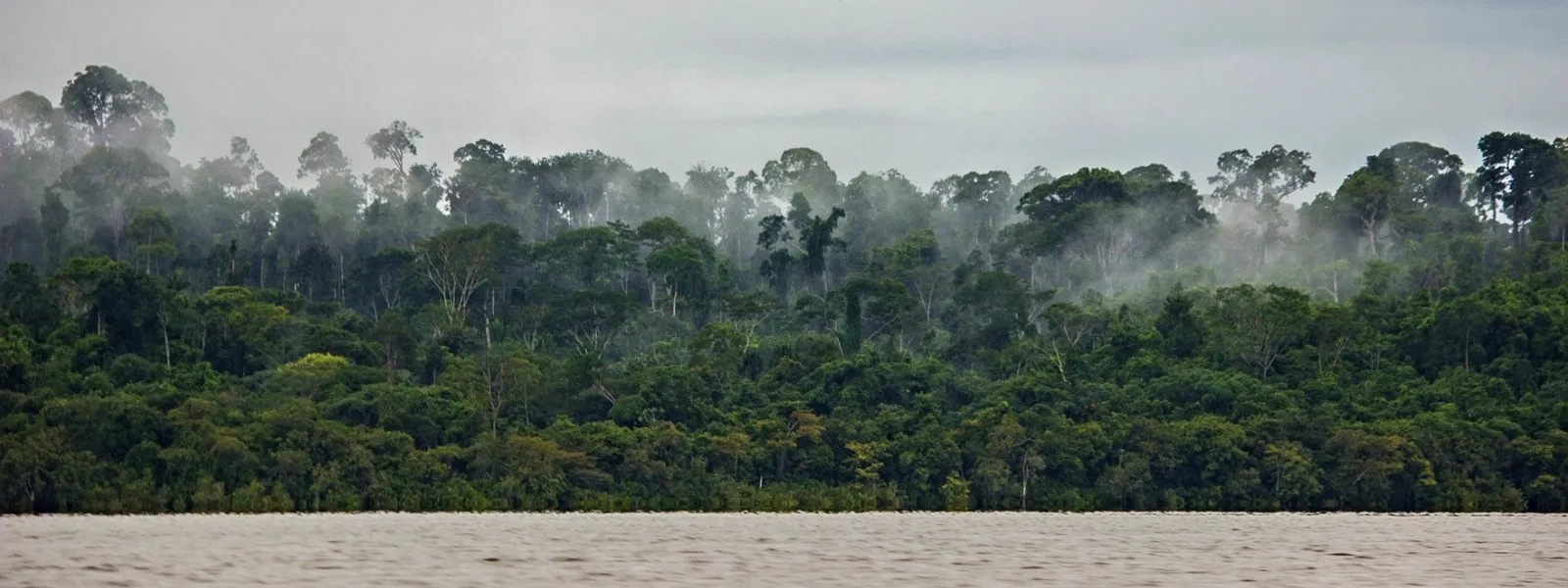
A usina hidrelétrica de Belo Monte — a quarta maior do mundo em capacidade instalada (11.233 MW) — foi construída no rio Xingu, no estado do Pará, norte do Brasil.
Foi inaugurada em 5 de maio de 2016, com uma única turbina. Naquela época, 80% do curso do rio foi desviado e 516 km² de terra foram inundados, uma área maior que a cidade de Chicago. Desse total, 400 km² eram de mata nativa. A usina começou a operar em plena capacidade em novembro de 2019.
Belo Monte foi construída e é operada pelo consórcio Norte Energia S.A., composto principalmente por empresas estatais. Foi financiada pelo Banco Nacional de Desenvolvimento Econômico e Social (BNDES), que aportou ao consórcio 25,4 bilhões de reais (aproximadamente US$ 10,16 bilhões), o maior investimento de sua história. Portanto, o BNDES também é legalmente responsável pelos impactos socioambientais associados ao projeto hidrelétrico.
Décadas de danos ambientais e humanos
As violações dos direitos humanos e a degradação da Amazônia remontam ao início do projeto. Em março de 2011, a Norte Energia iniciou a construção da barragem sem consulta adequada e sem o consentimento prévio, livre e informado das comunidades afetadas.
A construção levou ao deslocamento forçado de mais de 40.000 pessoas, rompendo laços sociais e culturais. O plano de reassentamento em Altamira — cidade diretamente afetada pelo projeto hidrelétrico — incluía moradias na periferia da cidade, sem serviços públicos adequados, moradias dignas para as famílias reassentadas e moradias diferenciadas para aqueles pertencentes a comunidades indígenas.
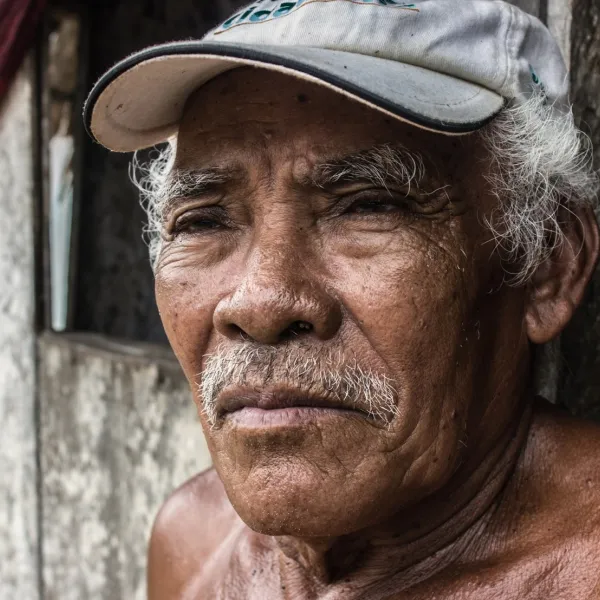
A operação da barragem de Belo Monte impôs uma seca permanente e artificial na Volta Grande do rio Xingu, agravada pelas secas históricas na Amazônia em 2023 e 2024. Como resultado, a morte de milhões de ovos de peixe foi documentada por quatro anos consecutivos (de 2021 a 2024) e, nos últimos três anos, não houve migração de peixes rio acima para desovar e se reproduzir. Assim, a pesca artesanal, principal fonte de proteína para os povos indígenas e comunidades ribeirinhas, foi severamente afetada: o consumo de peixe caiu de 50% para 30% do total de proteínas consumidas, sendo substituído por alimentos processados. Em suma, houve um colapso ambiental e humanitário que resultou no colapso da pesca como modo de vida tradicional, insegurança alimentar e falta de acesso à água potável para milhares de famílias, empobrecimento e doenças.
Além disso, a construção da barragem aumentou o desmatamento e intensificou a extração ilegal de madeira e a insegurança em terras indígenas e tribais, colocando em risco a sobrevivência dessas comunidades. Outra consequência foi o agravamento da pobreza e dos conflitos sociais, bem como a sobrecarga dos sistemas de saúde, educação e segurança pública em Altamira, cidade considerada a mais violenta do país em 2017, onde houve aumento do tráfico de pessoas e da violência sexual. Também foram registrados casos de violência contra defensores de direitos humanos envolvidos no caso.
Em 2025, durante a 30ª Conferência das Nações Unidas sobre Mudanças Climáticas (COP30), realizada no Brasil, o Ministério Público Federal classificou os danos causados por Belo Monte como ecocídio.
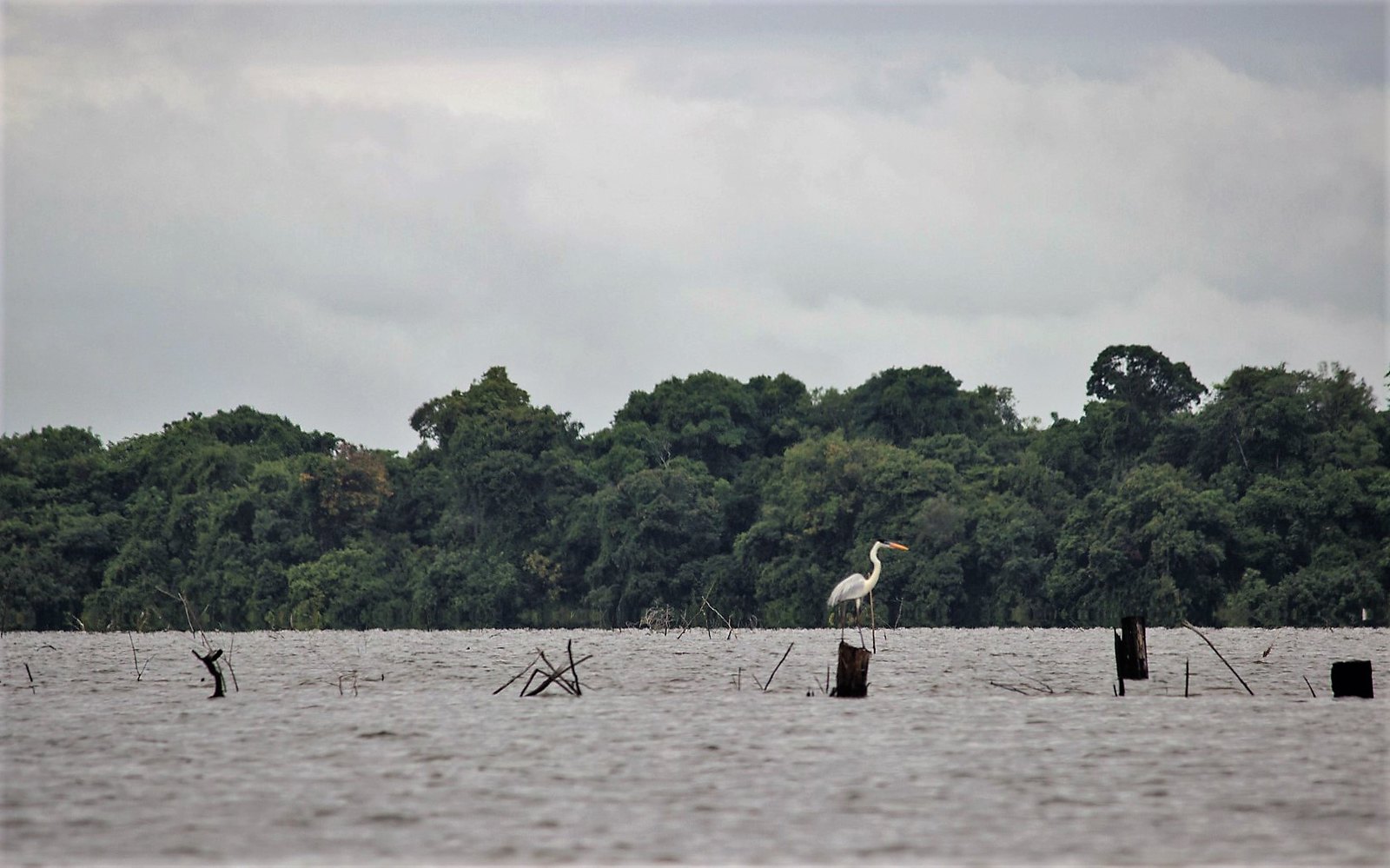
Foto: Amazon Watch / Maíra Irigaray.
A busca por justiça e reparação
Ao longo dos anos, o Ministério Público Federal do Pará, a Defensoria Pública e organizações da sociedade civil impetraram dezenas de ações judiciais em tribunais brasileiros para contestar as diversas irregularidades do projeto, bem como seus impactos. A maioria das ações permanece sem solução, algumas há mais de 10 anos.
Essas ações não obtiveram sucesso porque o governo federal tem reiteradamente anulado decisões favoráveis às comunidades afetadas, recorrendo a um mecanismo pelo qual o presidente do Supremo Tribunal Federal pode suspender uma decisão judicial com base unicamente em argumentos genéricos como "interesse nacional" ou "ordem econômica".
Diante da falta de respostas eficazes em nível nacional, a AIDA — juntamente com uma coalizão de organizações aliadas — levou o caso à Comissão Interamericana de Direitos Humanos (CIDH) e, em 2010, solicitou medidas cautelares para proteger a vida, a integridade e a saúde das comunidades indígenas afetadas.
Em 1º de abril de 2011, a CIDH concedeu essas medidas e solicitou ao Estado brasileiro a suspensão das licenças ambientais e de quaisquer obras de construção até que as condições relativas à consulta prévia e à proteção da saúde e integridade das comunidades fossem atendidas.
E, em 16 de junho de 2011, apresentamos uma denúncia formal à CIDH — juntamente com o Movimento Xingu Vivo Para Siempre, a Coordenação das Organizações Indígenas da Amazônia Brasileira, a Diocese de Altamira, o Conselho Missionário Indígena, a Sociedade Pará de Defesa dos Direitos Humanos e a Global Justice — contra o Estado brasileiro por sua responsabilidade internacional nas violações de direitos humanos contra os povos afetados neste caso. A denúncia foi apresentada em dezembro de 2015.
Em 3 de agosto de 2011, a CIDH modificou as medidas cautelares para solicitar — em vez da suspensão de licenças e obras — a proteção dos povos que vivem em isolamento voluntário, a saúde das comunidades indígenas e a regularização e proteção das terras ancestrais.
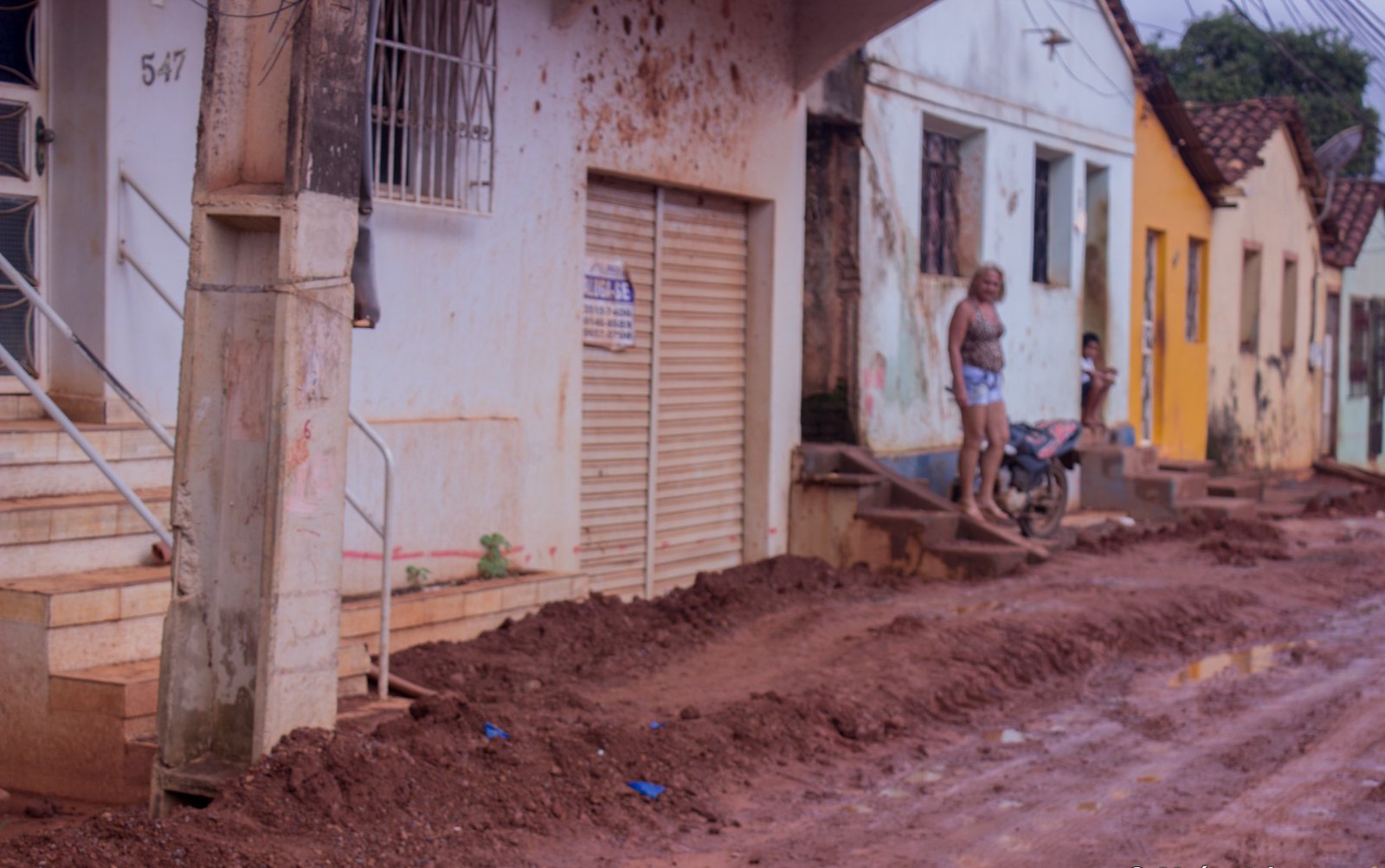
Foto: Amazon Watch / Maíra Irigaray.
Situação atual
As medidas de proteção concedidas pela CIDH permanecem em vigor, mas o Estado brasileiro não as cumpriu integralmente, relatando apenas ações genéricas. As comunidades documentaram as contínuas violações de seus direitos. A situação que motivou o pedido dessas medidas — o risco à vida, à segurança e aos meios de subsistência das comunidades — persiste e se agravou com a usina hidrelétrica operando em plena capacidade e com as recentes secas extremas na Amazônia.
Além do ocorrido em Belo Monte, existe o risco de maiores danos sociais e ambientais decorrentes da implementação de outro megaprojeto de mineração na Volta Grande do Xingu. Lá, a empresa canadense Belo Sun pretende construir a maior mina de ouro a céu aberto do Brasil.
Os impactos sinérgicos e cumulativos da usina e da mina não foram avaliados. O Estado excluiu povos indígenas, comunidades ribeirinhas e comunidades camponesas do processo de licenciamento ambiental do projeto. Apesar disso, dos protestos indígenas e de outras irregularidades em torno do projeto, o governo do estado do Pará autorizou formalmente a mina em abril de 2026.
Belo Monte, assim como outras usinas hidrelétricas, agrava a emergência climática ao gerar emissões de gases de efeito estufa em seu reservatório. Além disso, é ineficiente diante das secas prolongadas e intensas causadas pela crise, pois perde capacidade de geração de energia.
O caso perante a Comissão Interamericana
Em outubro de 2017, a CIDH anunciou que decidiria conjuntamente sobre a admissibilidade (se o caso preenche os requisitos para admissão) e o mérito (se houve, de fato, violação de direitos humanos) da denúncia internacional contra o Estado brasileiro.
Quinze anos após a apresentação da denúncia, as comunidades afetadas e as organizações que as representam ainda aguardam essa decisão. Caso a CIDH conclua que houve violações de direitos humanos e emita recomendações que o Estado brasileiro não cumpra, poderá encaminhar o caso à Corte Interamericana de Direitos Humanos, cujas decisões são vinculativas.
Uma possível decisão da Corte Internacional de Direitos Humanos neste caso estabeleceria um precedente jurídico regional em relação aos direitos dos povos indígenas e ribeirinhos, à participação pública em megaprojetos e à responsabilidade do Estado no contexto da crise climática. Isso é particularmente relevante à luz do Parecer Consultivo nº 32 da Corte, que reafirmou as obrigações dos Estados de proteger pessoas e comunidades em todo o continente da emergência climática.
Partners:
Related projects
Revealing the Impact of Development on Human Rights and the Environment
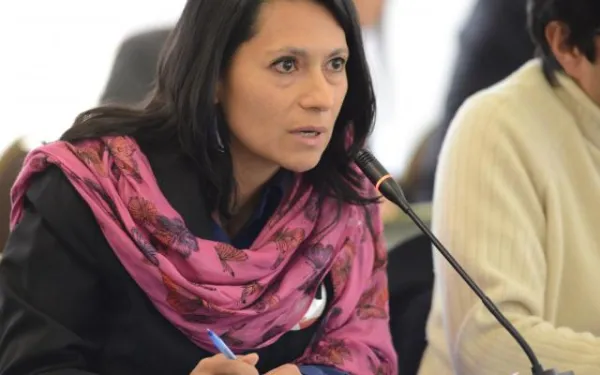
"There we were – men and women, boys and girls, elders and community leaders – who dared to reject the burning of our homes on the river’s edge, the theft and loss of our things, the mistreatment, the insults, the humiliation from the police, the Army and public companies of Medellín, who forcibly emptied the river banks to make way for development." With these words, Isabel Cristina Zuleta gave testimony before the Inter-American Commission on Human Rights last month, describing the situation that she and thousands of Colombians have been suffering through. Zuleta, the leader of Movimiento Rios Vivos (Living Rivers Movement), is a victim of forced displacement – caused by the Hidroituango hydroelectric project in Colombia – and she is not alone. AIDA’s Co-Executive Director Astrid Puentes participated in the hearing alongside Rios Vivos, Tierra Digna, Asoquimbo, Comisión Intereclesial de Justicia y Paz, Corporación Jurídica Libertad, and other partner organizations from Colombia. She argued before the Commission that, in Colombia, forced displacement caused by development projects, such as mines and dams, is not recognized as a human rights violation by the State, which leaves affected communities unprotected. During the hearing Puentes introduced the three primary causes of forced displacement from these projects: the close relationship between armed conflict and major development projects; the flexibility and violation of rules in their authorization and implementation; and the direct impacts of their operation. She asked the Commission to urge the Colombian State to guarantee rights to the victims, repair damages, and take appropriate measures to prevent displacement in the future. Puentes described human rights violations caused by specific projects, such as El Quimbo dam, which displaced hundreds of families in Huila Department, and coal mines in La Jagua de Ibirico, in Cesar Department, where air pollution displaced entire communities. The inadequate implementation of development projects in Colombia, and in the region, also violates Economic, Social and Cultural Rights (ESCR), especially the right to a healthy environment. In this regard, AIDA and organizations from the region participated in a hearing called by the Commission to analyze the situation of ESCR on the continent. In it, Maria José Veramendi Villa, a senior AIDA attorney, noted that States mainly fail to protect the right to a healthy environment by implementing mining, energy, and infrastructure projects. The problem has only worsened in recent years. "The Commission has found different manifestations of this problem over the course of at least 40 hearings, conducted over the last decade, which have illustrated the serious territorial, cultural, and environmental conflicts created by the violations of ESCR," said Veramendi during the hearing. We need an Inter-American Human Rights Commission that is firm and decided in its position towards development projects that violate human rights and that brings justice to those who cannot find it in their countries.
Read more
Seeking Solutions at the UN Climate Conference
The most important global meeting on climate change is nearing, and expectations are high. The United Nations Climate Change Conference (COP20), in Lima December 1-12, is expected to conclude with a draft of a new global agreement on climate change, which will be signed in 2015. The conference also provides a key opportunity to hold nations to the financial commitments they made at prior conferences. AIDA is attending the conference with two main objectives. First, we will advocate full funding of the Green Climate Fund. Second, we will contribute to the conversation to ensure that the new climate agreement takes into account the impact of climate change on human rights. The UN Framework Convention on Climate Change established the Green Climate Fund to finance programs and projects for climate change adaptation and mitigation. Countries most vulnerable to climate change will be given investment priority. “We want specific commitments to be made, with clarity about the road map that develop countries should follow so that their fight against climate change has sustainable financial assistance,” said Andrea Rodriguez, senior attorney at AIDA. To date, the Green Climate Fund has received $9.6 billion in pledges. At the Lima conference, we aim to generate additional commitments that raise the total to $15 billion. We will also work with governments to ensure that they live up to their commitment to contribute $100 billion a year, starting in 2020, to ensure that resources are predictable and sustainable. AIDA will work with global networks like Climate Action Network International (CAN-I) to monitor financial contributions. AIDA, together with partner organizations is organizing a Latin America and the Caribbean Climate Finance Day on Saturday the 6th of December. This event will convene stakeholders from various sectors to facilitate dialogue and build capacity on key climate finance issues affecting the region. One of the sessions will address the role of the Green Climate fund in contributing to transformational change in Latin America. “Leveraging the context of climate talks, we would like to remind the decision makers that methods of mitigating climate change must be truly sustainable and efficient,” Rodriguez stated. “Mitigation efforts should not promote projects like large dams, which have been considered a source of clean energy, despite the fact that they emit large amounts of climate-forcing methane, especially in the tropics.” The conference will provide an opportunity for AIDA to work with negotiators to ensure that human rights considerations, which were recognized in previous climate agreements, make it into the next agreement. Alongside COP20, we will participate in the People’s Summit on Climate Change, a major alternative gathering of civil society organizations. In this meeting, AIDA will discuss hydraulic fracturing, or fracking, and its implications for the environment of Latin America and for global climate. We will be posting updates throughout the conference on our website, Facebook and Twitter. Follow along!! #RoadToCOP20
Read more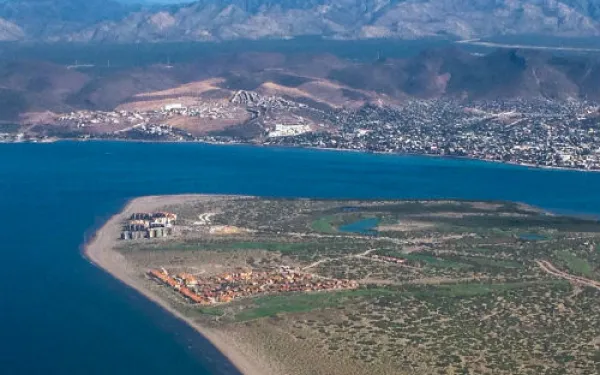
Mexico has an opportunity to protect its environment
By Sandra Moguel, AIDA attorney, @sandra_moguel The pirinola is a traditional Mexican die with six flat sides, each of which carries an instruction, used in various countries in Latin America to play games and make bets. After being spun, the pirinola stops on one of its sides and shows the player what he must do with the chips he has: GIVE 1, GIVE 2, TAKE 1, TAKE 2, GIVE ALL, TAKE ALL. As a country, Mexico goes through moments of collective despondency, when all seems lost. But it isn't. As in a game with the pirinola, there is always hope with another spin. In terms of the protection of its environment, Mexico still has an opportunity to correctly decide the fate of their natural heritage and to pursue sustainable development. GIVE ALL: The Uncomfortable Story of Paraíso del Mar Paraíso del Mar is a tourism project on the barrier sand bar known as El Mogote, in the Bay of La Paz, Baja California Sur. Project developers have proposed construction of a major resort with 2,050 hotel rooms, 4,000 homes, golf courses, and a marina. In early 2013, a Mexican court ruled definitively that the environmental permit the Secretariat of Environment and Natural Resources (SEMARNAT) had authorized for the project was illegal. The ruling held that SEMARNAT did not enforce environmental laws requiring evaluation of the environmental impact of Paraíso del Mar. However, before the ruling, some parts of the project had already been constructed. As a result, mangroves in the area have disappeared almost entirely, and the scenery and coastline have been modified. With an authorization of environmental impact that is both irresponsible and illegal, everyone loses: Just think of the destruction that happened when Hurricane Odile hit Los Cabos last year. Aspects of climate change and extreme weather events should also be considered when evaluating tourism projects in this region. In this case, they were not. Who will compensate the businesses that have invested in the project? Who will repair the damages? Who will restore the landscape? Society as a whole has been affected. An Environmental Impact Assessment reviews the effects of human activities on the environment. Its objective is to identify whether the effects on ecosystems can be mitigated or compensated for. Unfortunately, the laws that regulate the manner in which the environmental authority performs these assessments seem like a pretense, and assessment becomes a mere formality, which ends up harming both society and the biodiversity zones. TAKE 1: Contributing to a Solution The Interamerican Association for Environmental Defense (AIDA) and our partner organization Earthjustice, representing organizations from civil society, have presented a citizen submission to the Commission on Environmental Cooperation (CEC). The Commission is an international organization created under the North American Agreement on Environmental Cooperation, formed between Mexico, Canada, and the United States. Our petition asks the Commission to open an investigation into the authorizations of Paraíso del Mar and other similar projects in the Gulf of California. The petition states that the Mexican government failed to enforce its environmental laws when it didn’t assess the environmental impact of projects in coastal wetlands of the Gulf. The CEC Secretariat recommended the development of a factual record (a detailed investigation) last September. GIVE 2: The Decision Depends on at Least Two Governments In the coming days, at least two of the three environment ministers of the United States, Canada, and Mexico must vote in favor of carrying out such an investigation. This vote is an opportunity to promote transparency and public participation in environmental issues. It’s the perfect occasion for the Mexican government to establish credibility, trust, and the opportunity for dialogue that citizens are clamoring for. A factual record does not contain a rating on the arguments of the petitioners, nor does it contain recommendations from the Commission to resolve the problem. It is, rather, a detailed examination that becomes a source of feedback for SEMARNAT about the concerns of civil society. It is noteworthy that of the 41 citizen petitions that have been filed against Mexico with the Commission, 19 have to do with the Environmental Impact Assessment. This means that citizens are questioning the discretion with which this tool is used, and how the environmental impacts of these projects are being determined. TAKE ALL: What Can We Conclude? Echoing the observation of Paola Zavala, social movements must be accompanied by an agenda of specific needs that are shared by members of civil society. More than a chance to scream and let off steam in the streets, such movements are forums for constructive citizen participation. In the case of the Gulf of California, the petitioners, supported by civil society organizations and academics, demand that SEMARNAT implement environmental laws. It should approve projects based on the best available descriptions of work to be completed, which outline the total cumulative and residual impacts of the project. Such projects should in no way violate international treaties or norms on threatened species or on the protection of the mangroves. The factual record is not a panacea for Mexico’s environmental woes. But if it generates awareness and an agenda for dialogue between public officials, business people, and civil society about the importance of the Environmental Impact Assessment, it will be a major step on the road to decision-making that guarantees sustainable development in Mexico.
Read more