
Project
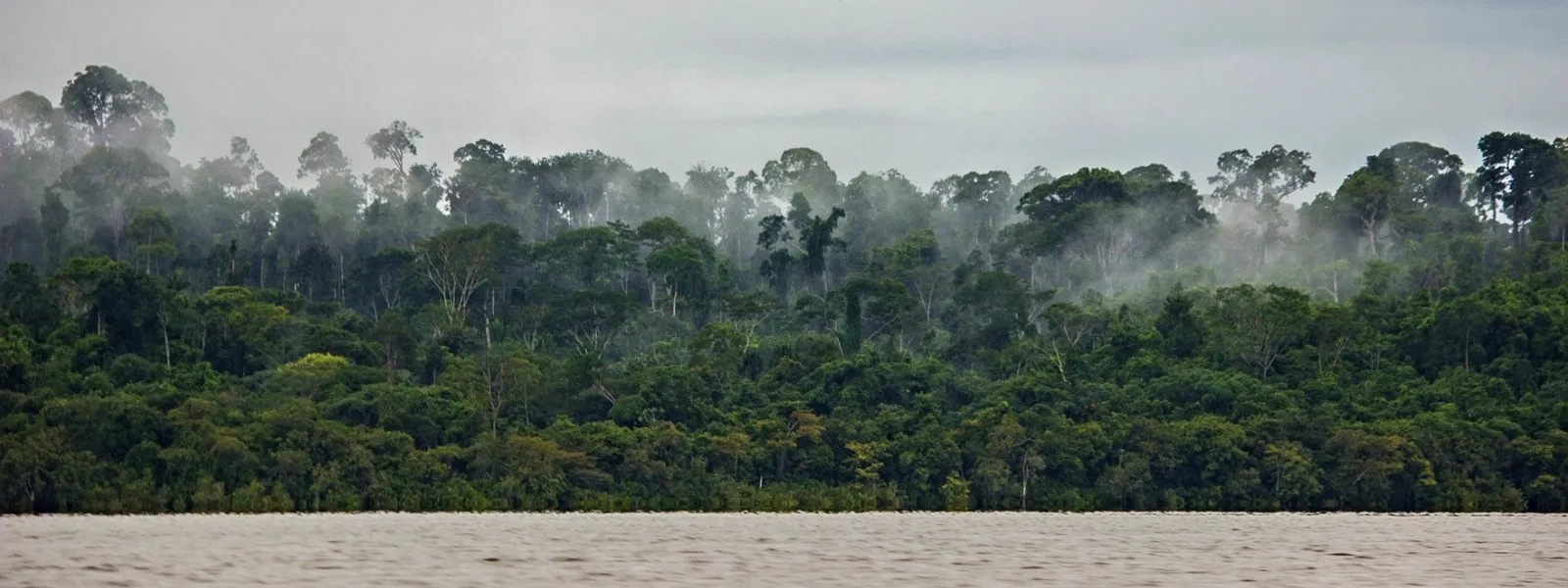
Amazon Watch / Maíra Irigaray
Barragem de Belo Monte no rio Xingu: 10 anos de impactos na Amazônia e de busca por reparações
A usina hidrelétrica de Belo Monte causou um desastre ambiental e social no coração da Amazônia: um dos ecossistemas mais importantes do planeta.
Essa situação só piorou desde que a usina começou a operar em 2016. A busca por justiça e reparação para as comunidades indígenas e ribeirinhas afetadas continua até hoje.
Em 2011, a Comissão Interamericana de Direitos Humanos (CIDH) concedeu a essas comunidades medidas de proteção, que até hoje não foram totalmente implementadas pelo Estado brasileiro.
E, desde junho daquele mesmo ano, a CIDH mantém um processo contra o Estado por sua responsabilidade internacional no caso.
A CIDH pode encaminhar o caso à Corte Interamericana de Direitos Humanos, que tem o poder de emitir uma sentença condenatória contra o Estado brasileiro.
Consulta o expediente de fatos do caso
Após 10 anos de operação da usina hidrelétrica e mais de 15 anos de violações de direitos humanos documentadas, é hora da justiça ser feita para as comunidades afetadas.
Leia a carta aberta das organizações que levam o caso à CIDH
Leia nosso comunicado à imprensa
Contexto
A usina hidrelétrica de Belo Monte — a quarta maior do mundo em capacidade instalada (11.233 MW) — foi construída no rio Xingu, no estado do Pará, norte do Brasil.
Foi inaugurada em 5 de maio de 2016, com uma única turbina. Naquela época, 80% do curso do rio foi desviado e 516 km² de terra foram inundados, uma área maior que a cidade de Chicago. Desse total, 400 km² eram de mata nativa. A usina começou a operar em plena capacidade em novembro de 2019.
Belo Monte foi construída e é operada pelo consórcio Norte Energia S.A., composto principalmente por empresas estatais. Foi financiada pelo Banco Nacional de Desenvolvimento Econômico e Social (BNDES), que aportou ao consórcio 25,4 bilhões de reais (aproximadamente US$ 10,16 bilhões), o maior investimento de sua história. Portanto, o BNDES também é legalmente responsável pelos impactos socioambientais associados ao projeto hidrelétrico.
Décadas de danos ambientais e humanos
As violações dos direitos humanos e a degradação da Amazônia remontam ao início do projeto. Em março de 2011, a Norte Energia iniciou a construção da barragem sem consulta adequada e sem o consentimento prévio, livre e informado das comunidades afetadas.
A construção levou ao deslocamento forçado de mais de 40.000 pessoas, rompendo laços sociais e culturais. O plano de reassentamento em Altamira — cidade diretamente afetada pelo projeto hidrelétrico — incluía moradias na periferia da cidade, sem serviços públicos adequados, moradias dignas para as famílias reassentadas e moradias diferenciadas para aqueles pertencentes a comunidades indígenas.
A operação da barragem de Belo Monte impôs uma seca permanente e artificial na Volta Grande do rio Xingu, agravada pelas secas históricas na Amazônia em 2023 e 2024. Como resultado, a morte de milhões de ovos de peixe foi documentada por quatro anos consecutivos (de 2021 a 2024) e, nos últimos três anos, não houve migração de peixes rio acima para desovar e se reproduzir. Assim, a pesca artesanal, principal fonte de proteína para os povos indígenas e comunidades ribeirinhas, foi severamente afetada: o consumo de peixe caiu de 50% para 30% do total de proteínas consumidas, sendo substituído por alimentos processados. Em suma, houve um colapso ambiental e humanitário que resultou no colapso da pesca como modo de vida tradicional, insegurança alimentar e falta de acesso à água potável para milhares de famílias, empobrecimento e doenças.
Além disso, a construção da barragem aumentou o desmatamento e intensificou a extração ilegal de madeira e a insegurança em terras indígenas e tribais, colocando em risco a sobrevivência dessas comunidades. Outra consequência foi o agravamento da pobreza e dos conflitos sociais, bem como a sobrecarga dos sistemas de saúde, educação e segurança pública em Altamira, cidade considerada a mais violenta do país em 2017, onde houve aumento do tráfico de pessoas e da violência sexual. Também foram registrados casos de violência contra defensores de direitos humanos envolvidos no caso.
Em 2025, durante a 30ª Conferência das Nações Unidas sobre Mudanças Climáticas (COP30), realizada no Brasil, o Ministério Público Federal classificou os danos causados por Belo Monte como ecocídio.
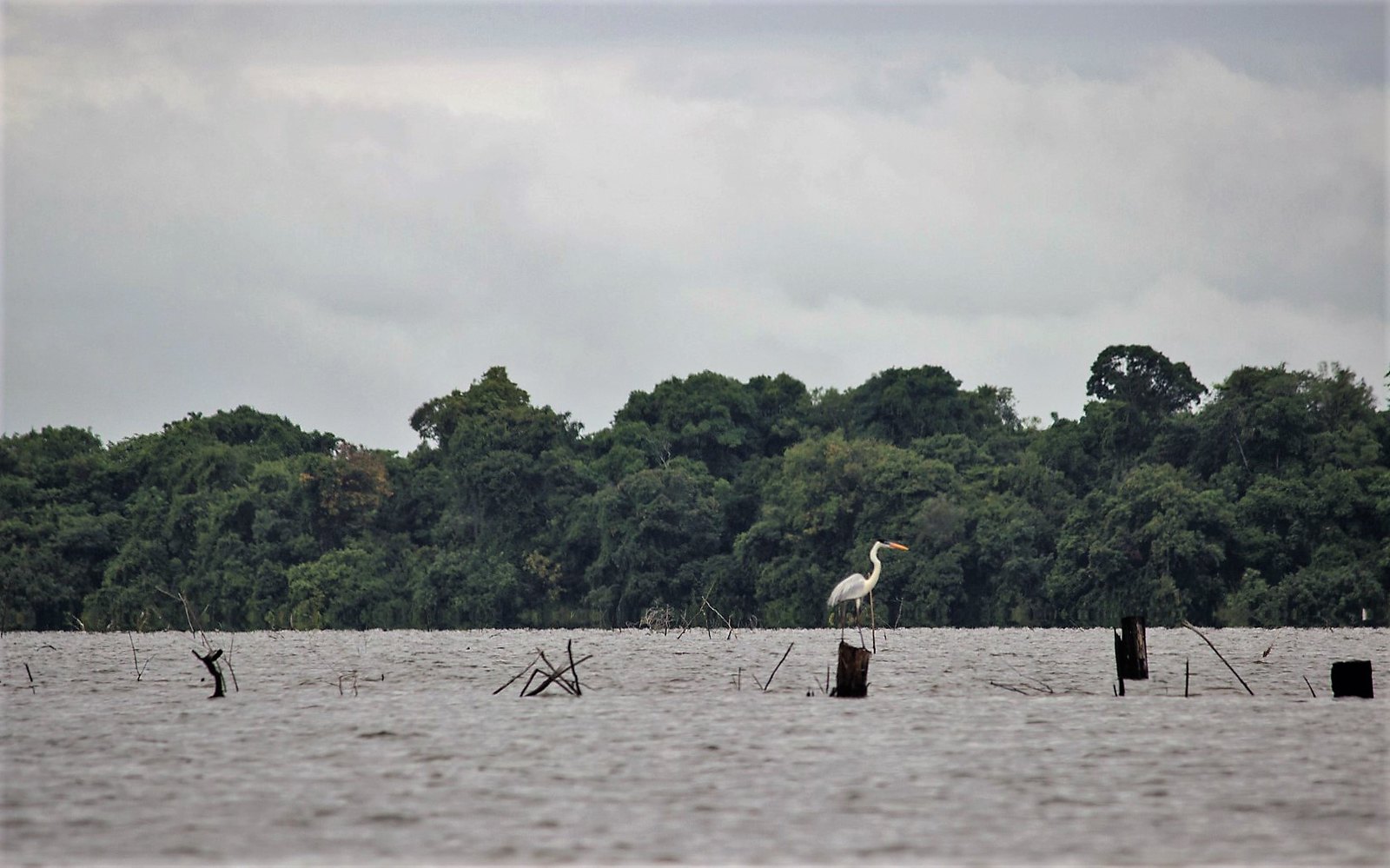
Foto: Amazon Watch / Maíra Irigaray.
A busca por justiça e reparação
Ao longo dos anos, o Ministério Público Federal do Pará, a Defensoria Pública e organizações da sociedade civil impetraram dezenas de ações judiciais em tribunais brasileiros para contestar as diversas irregularidades do projeto, bem como seus impactos. A maioria das ações permanece sem solução, algumas há mais de 10 anos.
Essas ações não obtiveram sucesso porque o governo federal tem reiteradamente anulado decisões favoráveis às comunidades afetadas, recorrendo a um mecanismo pelo qual o presidente do Supremo Tribunal Federal pode suspender uma decisão judicial com base unicamente em argumentos genéricos como "interesse nacional" ou "ordem econômica".
Diante da falta de respostas eficazes em nível nacional, a AIDA — juntamente com uma coalizão de organizações aliadas — levou o caso à Comissão Interamericana de Direitos Humanos (CIDH) e, em 2010, solicitou medidas cautelares para proteger a vida, a integridade e a saúde das comunidades indígenas afetadas.
Em 1º de abril de 2011, a CIDH concedeu essas medidas e solicitou ao Estado brasileiro a suspensão das licenças ambientais e de quaisquer obras de construção até que as condições relativas à consulta prévia e à proteção da saúde e integridade das comunidades fossem atendidas.
E, em 16 de junho de 2011, apresentamos uma denúncia formal à CIDH — juntamente com o Movimento Xingu Vivo Para Siempre, a Coordenação das Organizações Indígenas da Amazônia Brasileira, a Diocese de Altamira, o Conselho Missionário Indígena, a Sociedade Pará de Defesa dos Direitos Humanos e a Global Justice — contra o Estado brasileiro por sua responsabilidade internacional nas violações de direitos humanos contra os povos afetados neste caso. A denúncia foi apresentada em dezembro de 2015.
Em 3 de agosto de 2011, a CIDH modificou as medidas cautelares para solicitar — em vez da suspensão de licenças e obras — a proteção dos povos que vivem em isolamento voluntário, a saúde das comunidades indígenas e a regularização e proteção das terras ancestrais.
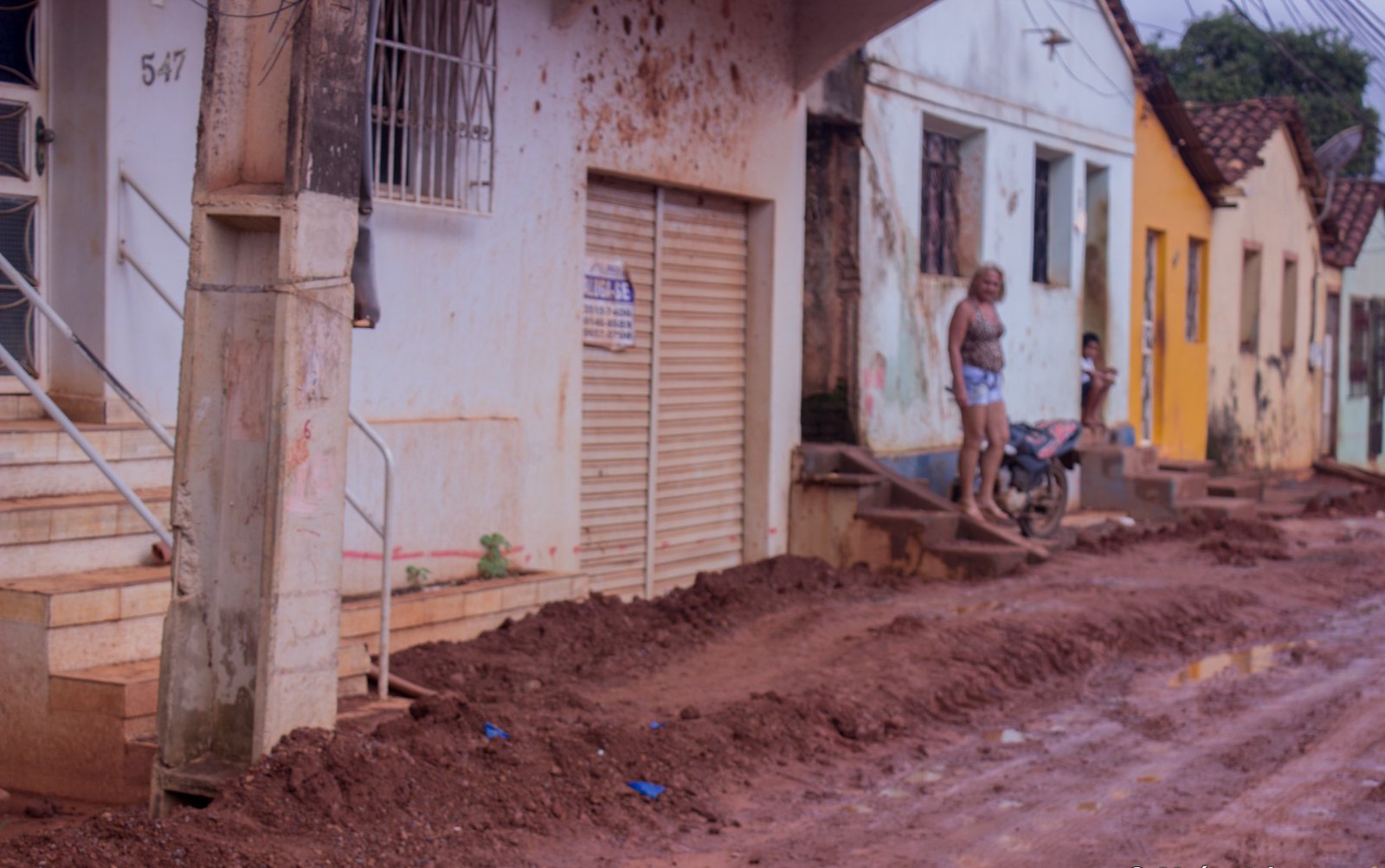
Foto: Amazon Watch / Maíra Irigaray.
Situação atual
As medidas de proteção concedidas pela CIDH permanecem em vigor, mas o Estado brasileiro não as cumpriu integralmente, relatando apenas ações genéricas. As comunidades documentaram as contínuas violações de seus direitos. A situação que motivou o pedido dessas medidas — o risco à vida, à segurança e aos meios de subsistência das comunidades — persiste e se agravou com a usina hidrelétrica operando em plena capacidade e com as recentes secas extremas na Amazônia.
Além do ocorrido em Belo Monte, existe o risco de maiores danos sociais e ambientais decorrentes da implementação de outro megaprojeto de mineração na Volta Grande do Xingu. Lá, a empresa canadense Belo Sun pretende construir a maior mina de ouro a céu aberto do Brasil.
Os impactos sinérgicos e cumulativos da usina e da mina não foram avaliados. O Estado excluiu povos indígenas, comunidades ribeirinhas e comunidades camponesas do processo de licenciamento ambiental do projeto. Apesar disso, dos protestos indígenas e de outras irregularidades em torno do projeto, o governo do estado do Pará autorizou formalmente a mina em abril de 2026.
Belo Monte, assim como outras usinas hidrelétricas, agrava a emergência climática ao gerar emissões de gases de efeito estufa em seu reservatório. Além disso, é ineficiente diante das secas prolongadas e intensas causadas pela crise, pois perde capacidade de geração de energia.
O caso perante a Comissão Interamericana
Em outubro de 2017, a CIDH anunciou que decidiria conjuntamente sobre a admissibilidade (se o caso preenche os requisitos para admissão) e o mérito (se houve, de fato, violação de direitos humanos) da denúncia internacional contra o Estado brasileiro.
Quinze anos após a apresentação da denúncia, as comunidades afetadas e as organizações que as representam ainda aguardam essa decisão. Caso a CIDH conclua que houve violações de direitos humanos e emita recomendações que o Estado brasileiro não cumpra, poderá encaminhar o caso à Corte Interamericana de Direitos Humanos, cujas decisões são vinculativas.
Uma possível decisão da Corte Internacional de Direitos Humanos neste caso estabeleceria um precedente jurídico regional em relação aos direitos dos povos indígenas e ribeirinhos, à participação pública em megaprojetos e à responsabilidade do Estado no contexto da crise climática. Isso é particularmente relevante à luz do Parecer Consultivo nº 32 da Corte, que reafirmou as obrigações dos Estados de proteger pessoas e comunidades em todo o continente da emergência climática.
Partners:
Related projects

Pre-COP31 sessions in Bonn: A worn-out climate system with glimmers of hope
By Florencia Ortúzar Greene and Karla Maass* The world has been negotiating on climate change for 30 years. For 30 years, governments have been meeting annually, accompanied by increasingly alarming scientific reports. The multilateral process has matured; it now has implementation rules and mechanisms in place to drive global climate action, but that action remains limited and discretionary.What's going on? How can we breathe new life into this very important global process?The following are our reflections after participating in the 64th Sessions of the Subsidiary Bodies (SB64) of the United Nations Framework Convention on Climate Change (UNFCCC), held June 8–18 in Bonn, Germany, to advance negotiations leading up to the 31st UN Climate Change Conference (COP31). The stalemate in international climate negotiationsIt would be unfair to say that the sessions in Bonn were a failure, let alone to be surprised by the lack of concrete results. What is happening is simply a reflection of a process in slow decline. This becomes evident at a time when there is sustained and widespread talk of the need for “implementation” and “cooperation” to put the Paris Agreement into effect, while, time and again, two irreconcilable rifts continue to block progress. Being able to identify them so clearly brings a certain sense of reassurance.The main point of contention remains financing. Developing countries consistently raise in negotiating rooms that the Paris Agreement not only sets targets for emissions reductions and adaptation but also establishes concrete commitments for financial support from developed countries. However, discussions on the provision of financing are completely stalled. This is happening in a context where commitments are not only insufficient but also inadequate in quality, accessibility, and predictability.In response to this demand, developed countries have placed increasing emphasis on mobilizing private capital and creating enabling conditions for investment. Although these flows can play an important role, private investment tends to be directed toward sectors and projects with clear financial returns. Meanwhile, critical areas such as adaptation, loss and damage, and capacity building continue to depend on concessional public financing. Added to this are structural debt-related issues that ultimately exacerbate shortcomings in countries already struggling to cope.The second point of contention relates to phasing out fossil fuels. For several States Parties, the willingness to embark on phasing out fossil fuels is not on the table. This is despite the fact that they are signatories to the Paris Agreement ad, at COP28 in Dubai, agreed to move toward a just, orderly, and equitable transition away from fossil fuels. There is talk of a just transition, but plans to expand fossil fuel use are as certain as they are concrete. The role of science in addressing the climate crisis has been sidelined One cause for concern at SB64 was the intention of representatives from various countries to downplay the role of science in climate decision-making. This is nothing new. It has been happening for years, gradually and steadily—perhaps so slowly that we hadn’t noticed it until now.This phenomenon became evident when contrasted with the results of the First International Conference on the Transition Beyond Fossil Fuels, held recently in Santa Marta, Colombia. There, science served as the common thread and central foundation of the political dialogue. The way science was given a platform reminded us of how it was handled at the early COPs, which opened with presentations of the findings of the Intergovernmental Panel on Climate Change (IPCC). Today, that no longer happens. These days, science appears as a second-rate guest, with a contested and unclear role.This is extremely important because, without science, the process loses its foundation and becomes a purely political negotiation, in which the side with the most power wins. Climate action: A new wind of hopeThis story doesn't end on a completely bleak note. At the climate talks in Bonn, some encouraging developments took place—the result of this long and complex process.The Brazilian COP30 Presidency took on the task of developing roadmaps to transition away from fossil fuels and to halt and reverse deforestation by 2030, thereby reinforcing the two central pillars of any effective and reliable climate action. This demonstrates leadership willing to break away from the official path to make progress.In addition, at COP30, it was agreed to implement a just transition mechanism (known as BAM), a decision that responded to the urgent call from civil society and affected communities. And in Bonn, countries made progress in implementing it. While there is still much to be done, the process is still on track and will be finalized at COP31, to be held November 9–20 in Antalya, Turkey.Furthermore, the Santa Marta Conference—organized within the framework of COP30 and bringing together 57 countries willing to discuss the energy transition—succeeded in launching a renewed process of dialogue, which is also an undisputed source of hope that will continue to grow stronger as we look ahead to the second conference, to be hosted by Tuvalu and Ireland. Learn more in our review of the SB64 (in Spanish). *Florencia Ortúzar Greene is the director of AIDA's Climate Program, and Karla Maass is an external consultant for the organization.
Read more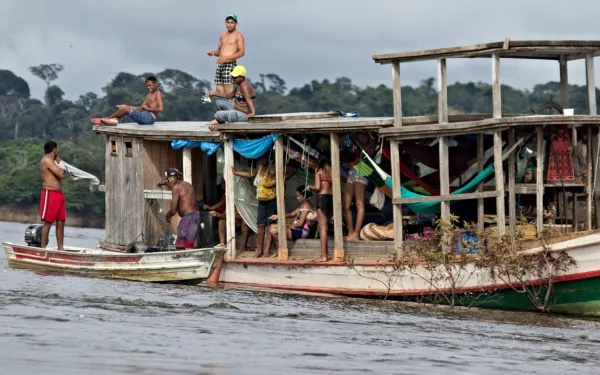
The Xingu River is being silenced, but not its people
A river is always a path, sustenance, and memory. At the Volta Grande (or Great Bend) of the Xingu River, deep in the Brazilian Amazon, the water did more than just flow: it taught people when to plant, when to fish, and when to celebrate. There, life moved to the rhythm of the river. But that began to change in 2010, when plans were underway to build the Belo Monte hydroelectric plant, and a silent question began to grow: Who decides the fate of the water? Six years later, on May 5, 2016, when the dam was inaugurated, nearly 80% of the Xingu River’s flow had been diverted.As early as 2018, organizations and communities were warning that the flow management plan imposed on the Xingu River for the operation of the hydroelectric plant foreshadowed a future of drought.That warning has come true.Today, entire stretches of the river are dry. More than 100 kilometers of the Volta Grande have lost their natural flow. The water, which once sustained biodiversity and local ways of life, no longer flows as it once did. Without enough water, the fish have stopped reproducing. There has been no spawning for three years. The river’s silence has turned into hunger, uncertainty, and disruption. The death of the fish is not just an environmental impact: it is the breakdown of a way of life. Indigenous, riverine, and fishing communities have lost not only their primary source of food but also their autonomy and their connection to the land. Today, the legacy of Belo Monte is a growing accumulation of ecological, social, and cultural degradation. However, this story is not yet over. Time for justice for the Xingu River and the life it sustainsTen years after the Belo Monte Dam began operations, the reported impacts have been confirmed, but something unexpected has also grown stronger: resistance.The affected communities remain organized, active, and determined. They continue to speak out, demand reparations, and defend their right to live alongside the river.That strength is evident today in the protests against new projects in the area.Because for these communities, the struggle is not just against a project; it is for the survival of their way of life.Today is a moment of justice for them. The complaint against the Brazilian State for its international responsibility in the case has been before the Inter-American Commission on Human Rights since 2011, pending a decision that could mark a turning point for the communities of the Xingu Basin. The complaint contains the legal and evidentiary elements necessary for the Commission to admit it, determine that there were several human rights violations, and refer the case to the Inter-American Court of Human Rights, whose ruling could set a precedent for state regulation of megaprojects in the context of the climate crisis; public participation; and the protection of indigenous peoples, traditional communities, and key ecosystems such as the Amazon.But as the process moves forward slowly, the impacts continue to worsen every day. The urgency is not legal; it is human. Every unanswered cycle is another cycle of drought, biodiversity loss, and mounting violations. In this case, making a decision is not just an institutional matter; it is a matter of life expectancy for those who depend on the river.What happened with Belo Monte has become a symbol. It is a clear example of how projects marketed as “clean energy” can have profound and lasting impacts when they disregard human rights. At a time when the world is seeking energy solutions to address the climate crisis, we cannot repeat old patterns of injustice. Learn More
Read more
Santa Marta and the End of Fossil Fuels: From “Yes” to “How”
The First International Conference on the Transition Beyond Fossil Fuels has concluded in Santa Marta, Colombia. And all signs point to this initiative being here to stay.Many aspects deserve attention in this process launched by Colombia and the Netherlands. Are we witnessing the first step toward a new era?While the world is still processing what has happened and awaits the official report from the co-hosting countries in the coming months, we offer an early analysis. The OriginsThe Santa Marta conference was a response to the frustration caused by three decades of international climate negotiations—at the successive Conferences of the Parties (COP) to the United Nations Framework Convention on Climate Change (UNFCCC)—failing to directly address the primary and undisputed cause of the climate crisis: fossil fuels. And it was about time.Since 1992, the international community has negotiated emissions targets and market mechanisms without ever facing the elephant in the room. The words "oil," "coal," and "fuels" do not appear in the Paris Agreement. It wasn’t until 2021, at the Glasgow COP, that fossil fuels were acknowledged for the first time as causing climate change, but only a gradual reduction in coal was called for. In 2023, in Dubai, the greatest progress was made: the phrase "transitioning away from fossil fuels." And in 2025, in Belém, not even that could be maintained. But at least that frustration helped spark the Santa Marta conference, which was precisely the opposite: 57 countries representing a third of global GDP sat down to discuss how to phase out fossil fuels, not whether to do so. If it amounts to nothing more, this conference was at least a relief, a sign of sanity in a world that sometimes is truly hard to understand.And the discussion wasn't just about the "what," but also the "how," which includes justice. The official summary document circulated by the host countries discusses territorial plans for a just transition, labor restructuring with the participation of workers and communities, direct access to financing for indigenous peoples, and explicit prevention of "new forms of extractive dependency." Decentralized and community-based energy systems are mentioned as concrete examples of sustainable production.At AIDA, we believe this is a fundamental condition: without justice, there can be no viable transition. It is not merely an ethical or legal imperative; it is also a practical one. When the transition is carried out without involving communities, without safeguarding people and territories, and without a fair distribution of burdens and benefits, it generates resistance that can hinder the projects themselves. The evidence in Latin America speaks for itself.In times when humanity is going through such darkness, it is hard to be optimistic. Perhaps in this case, there are reasons to be so. A war that, paradoxically, shows the way forwardWith the war in the Middle East as a backdrop, the Santa Marta conference took on an unprecedented sense of urgency: the disruption to oil and gas supplies that it has caused puts us in a unique situation. Overnight, between 20 and 25% of the world’s oil and gas flow was cut off, wreaking havoc across the globe: skyrocketing living costs, blackouts, and faltering economies. A conflict in one specific part of the world is affecting nearly every economy on the planet.And that shifted the tone of the conversation. The transition is no longer framed solely as a climate or environmental necessity, but as a matter of security and sovereignty. The war demonstrated that relying on fossil fuels makes us tremendously vulnerable. It is time to recognize that the climate emergency and economic stability are on the same side—they are not at odds.Fatih Birol, director of the International Energy Agency, stated from Santa Marta that the war "has broken fossil fuel markets beyond repair," referring to the metaphor of the broken vase. This is not merely an environmentalist position; it is a global assessment. The Revitalization of Santa MartaIn addition to its content, the way the Santa Marta conference unfolded was also surprising and could be considered a breakthrough in climate diplomacy.The fossil fuel lobby was explicitly excluded. Countries that have historically blocked any progress were not invited. And the format of the high-level segment broke with traditional dynamics: instead of the computer-read statements that characterize COPs, ministers and delegates sat in small circles under Chatham House rules, without screens, alongside representatives of civil society and indigenous peoples under the same conditions. It didn’t happen at the end, when no one is listening anymore, but rather by setting the tone from the very beginning.Tzeporah Berman, chair of the initiative to establish the Fossil Fuel Non-Proliferation Treaty, described the experience as "watching a dam break": "All that accumulated experience, knowledge, and passion suddenly translates into concrete steps to phase out polluting fuels." Science at the WheelAmong the concrete outcomes, the launch of the Scientific Panel for Global Energy Transition (SPGET) stands out. In the early years of climate negotiations, science led the way: COPs opened with an update on the latest scientific findings, and decisions were built upon that foundation. Over time, this approach eroded. Countries with fossil fuel interests gradually diluted scientific warnings and introduced what was openly called “false solutions” at the Santa Marta conference—such as carbon capture and offsets—to justify continued extraction. The conference set out to put science back in the driver’s seat.The Intergovernmental Panel on Climate Change (IPCC) continues to produce essential reports, but it has limitations that the SPGET can address. It publishes reports every seven years, a slow process for a crisis that is accelerating. Its summaries for policymakers—which, in practice, are read by governments—are negotiated line by line with government representatives, including those from countries with fossil fuel interests, diluting the conclusions. And the IPCC is not authorized to make policy recommendations to countries. Carlos Nobre, one of the founders of the SPGET, recounted that he once sought to include information on the risks facing the Amazon in an IPCC summary, but a representative from his own country rejected it.The SPGET is completely independent. No government can veto its findings, and it will produce annual updates with concrete policy recommendations to support countries in developing roadmaps aligned with the 1.5°C goal. In terms of its structure, it is co-chaired by a Cameroonian economist (Vera Songwe), a German economist (Ottmar Edenhofer), and a Brazilian energy engineer (Gilberto Jannuzzi). If it works as promised, it could become the scientific arm that the transition needs. Continuity and Structure: A Commitment to the FutureThe Santa Marta conference was not a one-off event, but rather the start of a structured process. To begin with, a second conference has already been confirmed for 2027, co-hosted by Tuvalu and Ireland, cementing the commitment to North-South collaboration. With this in mind, three permanent working groups have been established that will continue their work until the Tuvalu conference.The first line of work will support countries in developing national transition roadmaps aligned with their climate commitments under the Paris Agreement. There are concrete examples: France presented its own roadmap to phase out fossil fuels from its energy mix by 2050—the first proposal of its kind submitted by a developed country. But the plan has been criticized by civil society. It does not address the remediation of territories damaged by decades of extraction, nor does it account for the new pressures that its electrification model could exert on the Global South, from which the vast majority of the minerals needed for batteries, grids, and renewable energy come.Colombia, for its part, presented its own plan at the academic pre-conference, with data showing that the transition would become economically viable starting in 2040.Unlike the Nationally Determined Contributions (NDCs), these roadmaps address fossil fuel production. The NDCs focus on reducing emissions, but they do not commit to closing coal mines or power plants or ending tenders for fossil fuel extraction. However, NDCs also have something that roadmaps lack: legal standing, as they are part of the Paris Agreement. Thus, the promise lies in integrating roadmaps into NDCs, which would result in concrete and binding transition commitments. But, as the French case shows, if the roadmaps do not incorporate the remediation of affected territories or the supply chains that electrification demands, there is a risk of ending up with binding commitments that reinforce an unequal transition rather than correcting it.The second ongoing line of work will address financial barriers—debt, fossil fuel subsidies, and access to capital—with support from IISD, a research center specializing in subsidy policies and climate finance. And the third will seek ways to decarbonize international trade by connecting fossil fuel-producing and -consuming countries so they can work together on the transition, with support from the Organization for Economic Co-operation and Development (OECD).In addition, there is the Scientific Panel (SPGET), which will provide the technical foundation for the entire process, and a permanent coordination group between the current co-hosts (Colombia and the Netherlands) and the future co-hosts (Tuvalu and Ireland) to ensure continuity. Everything that emerges from these lines of work will inform the official UN climate negotiations, including COP31, scheduled for November of this year in Turkey.Although there are no binding agreements to show for it, we already have concrete working mechanisms in place among the countries committed to moving forward, including supporting institutions, clear mandates, a second conference to review progress, and a commitment to influence official UN negotiations. It’s a good start, with a structure that sustains itself. What Remains to Be ResolvedThere is one issue that cuts across all of the above: timelines and urgency. We have only just begun discussing roadmaps to phase out fossil fuels, but their implementation should have begun 40 years ago. That delay should set the tone for everything that lies ahead.One area where the Santa Marta conference fell particularly short is financing. The issue—debt, fiscal space, subsidies, and the international financial architecture—was discussed at length, but this failed to translate into clear signals. For a process aimed at coordinating the global phase-out of fossil fuels, the absence of a financial roadmap is a serious limitation.This is nothing new, nor is it a matter of charity. The principle of common but differentiated responsibilities, enshrined in the UNFCCC itself, establishes that the countries that contributed most to the climate crisis must support those that contributed least and are suffering the most. On this basis, climate finance targets have been set, currently amounting to USD 300 billion annually by 2035, as agreed at COP29. But most of that financing comes in the form of loans, which means that countries in the Global South are taking on debt to solve a problem they did not create. The North’s climate debt to the South paradoxically becomes the South’s financial debt to the North. Thus, a just transition is not possible. And the Santa Marta conference failed to make any progress on this issue.Another structural barrier that was addressed in Santa Marta but still requires further work is the investor-state dispute settlement (ISDS) mechanism, which allows fossil fuel corporations to sue governments for adopting climate measures. At least $100 billion in compensation has been awarded to companies through international arbitration tribunals. ISDS was included in the official summary of the Santa Marta conference, but with lukewarm language. As long as governments can be sued for billions for closing a coal mine, the transition will not move forward—not for lack of will, but out of fear of lawsuits.Nor was the debate over natural gas as a "transition" fuel resolved. The official document acknowledges that "there were differing perspectives regarding the role of transition fuels and technologies"—a step forward achieved thanks to pressure from civil society, given the number of countries that openly promote gas as a solution. But gas is a fossil fuel, and methane leaks from it exacerbate global warming. Presenting it as a "transition" fuel only deepens dependence and delays the transition.Finally, an analysis from Latin America reveals a significant practical inconsistency: the gap between what countries say and what they do. The Mexican government actively participated in the conference while also establishing a committee to assess the viability of "sustainable" fracking. The Brazilian government, guardian of the Amazon, continues to auction off oil wells. And Colombia, host of the conference, announced that it seeks to expand the extractive frontier in the Caribbean Sea. It seems that different branches of the same government are acting with entirely contradictory objectives. The problem is that this undermines the credibility of the process, which is crucial for a coalition such as the one being sought.That said, perhaps it was too much to expect that the first conference of its kind—which sought and succeeded in laying the groundwork for a new process—would provide all the answers to the crisis of our times. The Santa Marta conference served to identify the problems, establish lines of action, and build trust. The next step cannot wait much longer. By the 2027 conference in Tuvalu, there should be no unresolved issues left, especially regarding financing. A plan without financing, no matter how good or well thought out it may be, cannot get off the ground. From a Coal Port to a Sinking Island The conference in Santa Marta, a major coal port in Colombia, has come to a close, and the next stop is Tuvalu, a small Pacific island nation facing an existential threat from rising sea levels. The route is symbolic: from a country that exports coal to one that is disappearing due to the global warming caused by burning that very coal. That these two nations are now working together to lay the groundwork for a change in course is precisely what we need: to acknowledge the past and look to the future with solidarity.The First International Conference on the Transition Beyond Fossil Fuels could go down in history as the cornerstone of a new era. Let’s keep building on this foundation.
Read more