
Project
Shutterstock.
Pollution of the Motagua River in Guatemala: The Poqomam Maya people’s quest for environmental justice
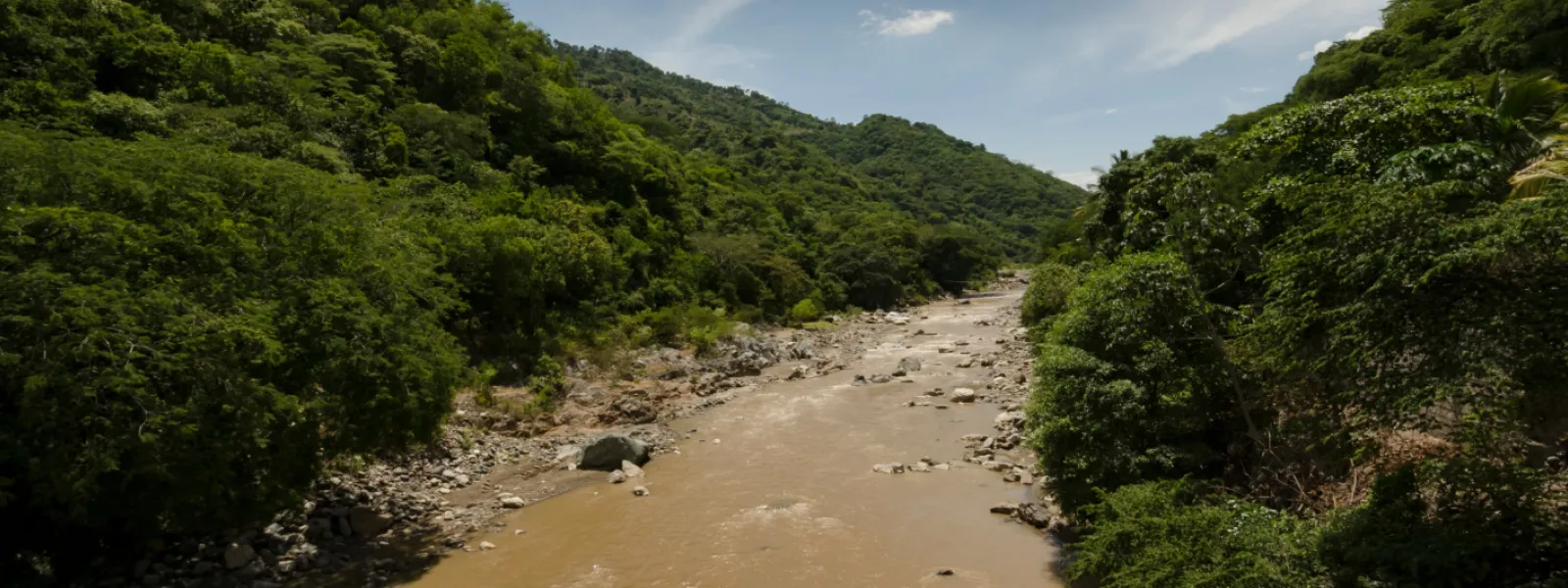
The Motagua River basin—Guatemala’s largest and most important river—is severely polluted with wastewater, solid waste, and other types of debris.
This is a cross-border issue because the Motagua’s polluted waters flow into the Caribbean Sea, reach the coast of Honduras, and threaten the Mesoamerican Reef System.
For decades, this has violated the rights to health, water, development, and a healthy environment of all the people living in the river basin.
In June 2025, the Poqomam Maya community of Santa Cruz Chinautla—supported by AIDA, the Indigenous Peoples’ Law Firm, and allied organizations—achieved an unprecedented legal victory to halt degradation in the basin. In response to the lawsuit it filed, a Guatemalan court ordered the municipality of Chinautla to comply with a series of obligations to curb the pollution of the area’s rivers and soil.
The government's response to the ruling has so far been limited to technical working group meetings. Meanwhile, the community continues to work toward the proper implementation of the ruling and to take other actions to defend its territory and its rights.
Background
The Motagua River, which is 486 km long, flows through 96 municipalities and 14 departments in Guatemala. It originates in Quiché, a department located in the northwest, and empties into the Caribbean Sea.
Polluting activities occur throughout the entire basin, including sub-basins and micro-basins. The largest volume of pollution comes from Guatemala City, the country’s capital, and is carried by the waters of the Las Vacas River, which in turn receives a large amount of waste from the Chinautla River.
The Chinautla River, which flows through the municipality of the same name, carries solid waste from a landfill located in Zone 3 of the capital—where trash from at least 14 municipalities in the department of Guatemala is dumped—as well as sewage generated by some 500,000 people living in the northern part of the capital, which undergoes no prior treatment.
Other sources of pollution include the numerous illegal dumps in the municipality of Chinautla, the waste that private vehicles and garbage trucks dump along the banks of its rivers, as well as the sand-mining companies—which began setting up operations in the area between 1996 and 1997—whose activities weaken the rivers' basins, causing solid waste to be more easily carried away by the river currents.
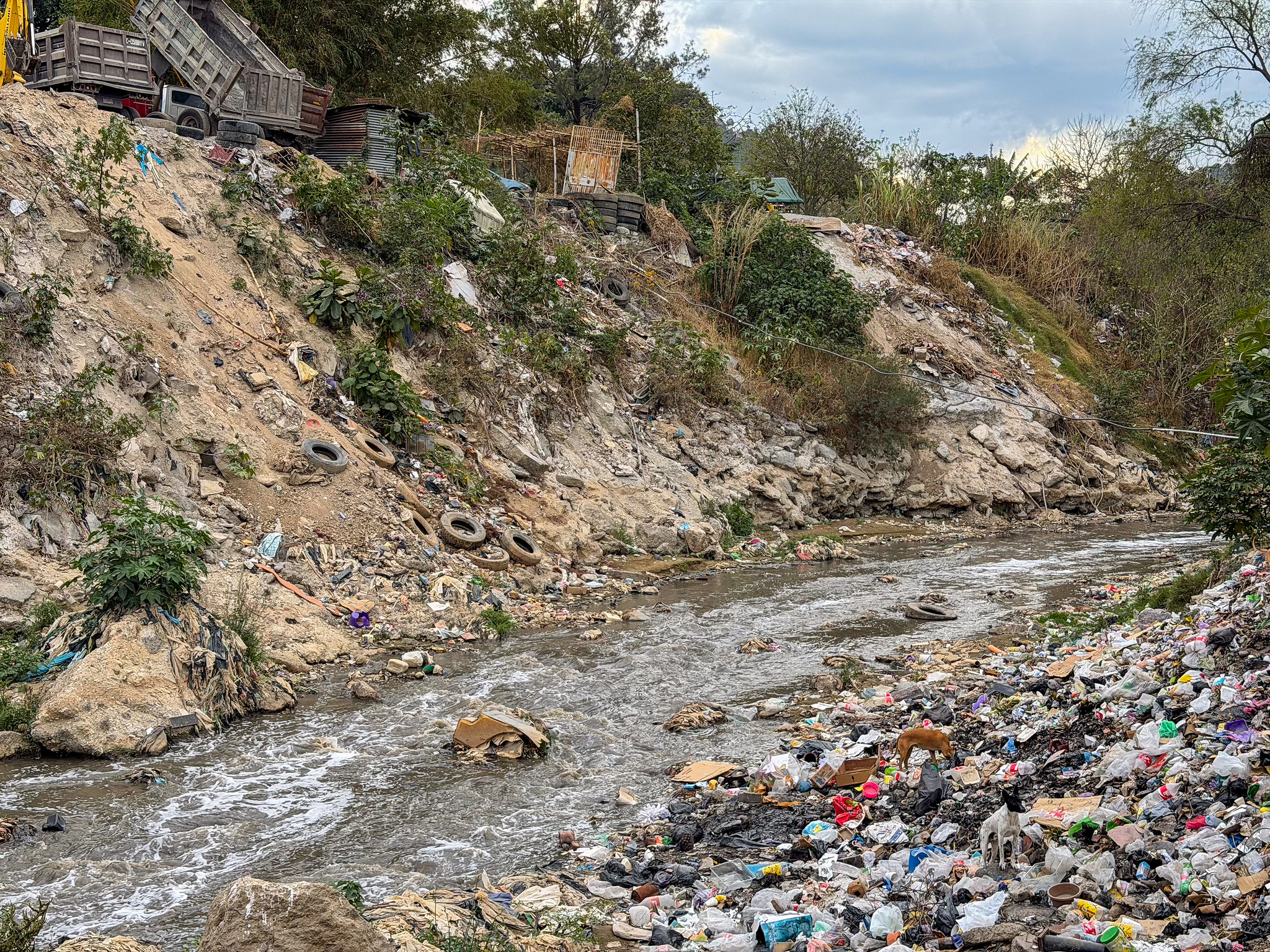
Photo: Mayela Sánchez García.
The situation extends beyond national borders. Every year, the Motagua River discharges some 20,000 metric tons of plastic into the Caribbean Sea, making it one of the rivers that contributes the most plastic pollution to the ocean worldwide, according to estimates contained in a 2025 report by the Inter-American Commission on Human Rights (IACHR).
The river flows into the Mesoamerican Reef at its mouth, so pollution also threatens to degrade one of the largest and most biodiverse transboundary reefs on the planet, which spans the territorial waters of Belize, Guatemala, Honduras, and Mexico.
In addition, the contaminated water reaches the coast of Honduras and spreads into Amatique Bay, located along the eastern coast of Guatemala, affecting the Caribbean Sea.
The roots of this chronic, cross-border problem are structural. Data from the Integrated Environmental Management of the Motagua River Basin project, funded by the United Nations Development Program (UNDP), show that in Guatemala, 66% of municipal solid waste is not collected, and there is no guarantee that the remaining 34% is disposed of properly. Furthermore, of all landfills nationwide, 88.32% are illegal or lack municipal authorization.
In other words, the core issues that need to be addressed are the mismanagement of solid waste and water resources in Guatemala; noncompliance with existing regulations on wastewater discharge and the disposal and treatment of solid waste and residues; and the lack of a water law.
The Poqomam Maya people's quest for justice
The rivers of Santa Cruz Chinautla, a community of the Poqomam Maya people located just twelve kilometers from Guatemala City, have become conduits of pollution that are degrading the Motagua River.
For decades, the local population has seen its health and livelihoods—including pottery, one of the main economic activities and a source of identity—damaged due to the lack of waste management in the municipality of Chinautla and the urban area of the country’s capital, as well as the activities of sand-mining companies.
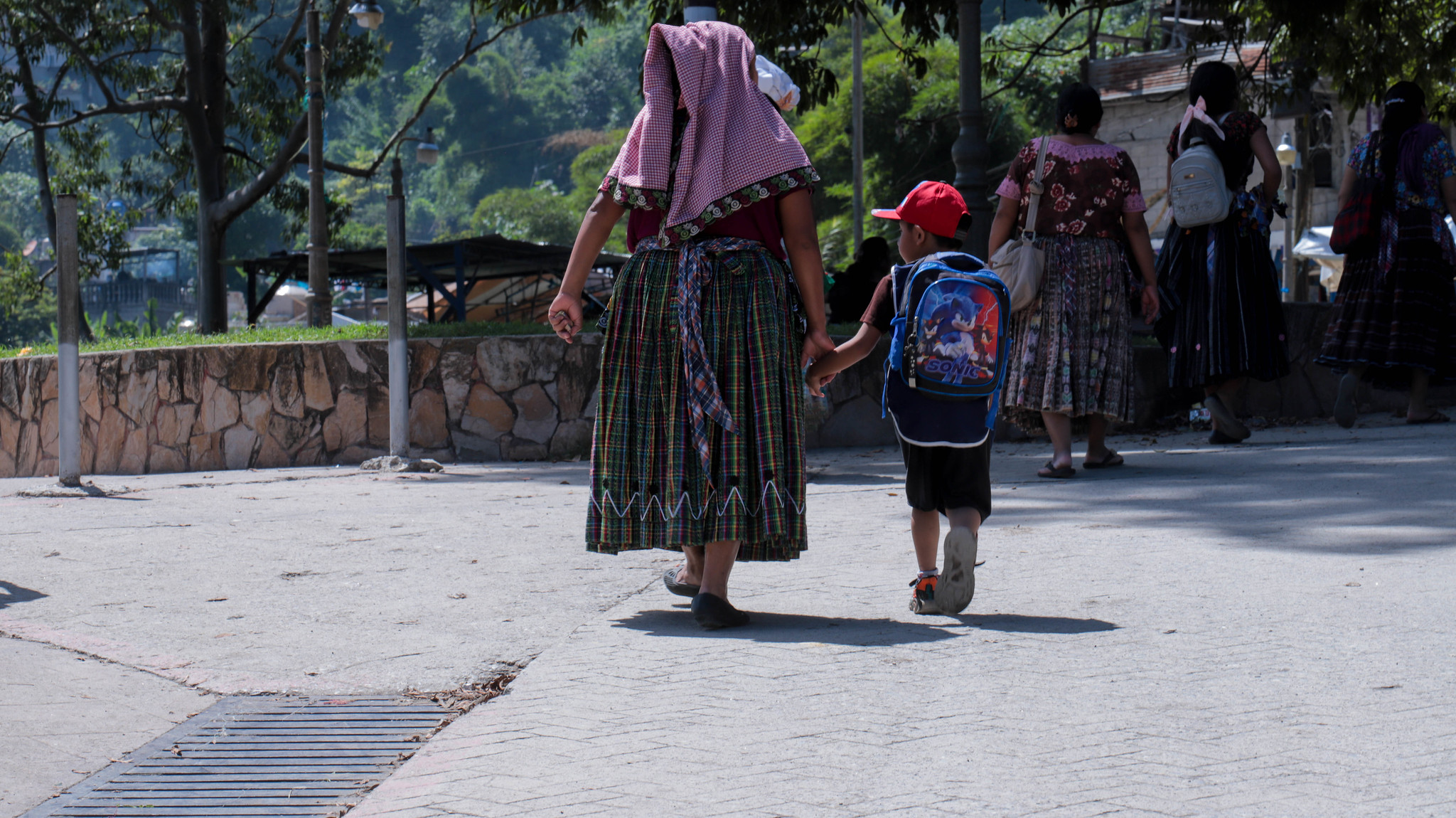
Photo: Mario Winter.
Voices for the Motagua River: Olga Vázquez.
Voices for the Motagua River: Nazario Pascual.
In early 2000, the Maya community organized to stop sand mining on their territory. At that time, the companies held mining permits that remained valid through 2021 and 2022. And although the permits expired, some companies continued to operate after requesting extensions. In June 2022, the indigenous authorities of the Poqomam people began a sit-in protest in front of the Piedrinera San Luis company, which they maintained for four years.
In July 2024, the Special Rapporteur on Economic, Social, Cultural, and Environmental Rights of the IACHR visited Santa Cruz Chinautla. During his visit, traditional authorities and community members spoke about the environmental, water-related, health, economic, and cultural impacts of the pollution in their rivers.
That same year, in October, the community—with support from AIDA, the Indigenous Peoples’ Law Firm, and partner organizations—filed a lawsuit (petition for amparo) against the municipality of Chinautla over its failure to take measures to address the contamination of its rivers and soil caused by improper solid waste management and the existence of illegal landfills.
AIDA’s scientific team, together with local residents and community authorities, collected key information on illegal landfills in the area. This community science initiative supported the litigation by highlighting the severity of the pollution, demonstrating the ongoing use of such practices, and providing evidence of the municipal authorities’ failure to fulfill their legal obligations regarding waste management.
Learn more about this community science initiative.
In June 2025, the Poqomam community won the support of the Guatemalan justice system when a constitutional court ordered the municipality of Chinautla to effectively address the claims in the lawsuit aimed at stopping the pollution of the rivers and soil in Santa Cruz Chinautla.
This is the first time a Guatemalan court has recognized a community's right to a healthy environment and its central role in finding solutions.
Find out the details of the legal victory.
Current situation
Since the ruling was issued, the municipality of Chinautla has held a series of “technical working groups” with representatives from the central government, civil society, and the community. A smaller group of technical experts was later created to develop a work plan with clear goals. Several months have passed without the municipality convening these working groups.
Furthermore, in December 2025, the IACHR noted in its report Human Rights Situation in Guatemala that the Motagua River basin is facing a severe pollution crisis that has had profound impacts on biodiversity and has resulted in systematic violations of the human rights of local communities, including the Maya Poqomam people.
And in May 2026, the Ministry of the Environment and Natural Resources revoked the license of the sand mining company Piedrinera San Luis for "failure to comply with environmental commitments."
AIDA continues to monitor the implementation of the court ruling to ensure the right to a healthy environment for the Poqomam Maya community and all those living in the Motagua River basin. Meanwhile, the residents of Santa Cruz Chinautla remain organized and mobilized to improve their environment and defend their rights.
Related projects
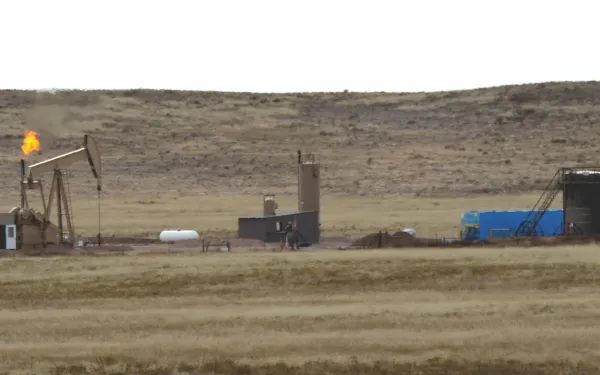
UN Committee recommends Argentina “reconsider” the use of fracking
The Committee on Economic, Social and Cultural Rights of the United Nations expressed its concern about Argentina’s intention to exploit unconventional oil and gas reserves in Vaca Muerta, one of the world’s largest shale deposits. It recommended the goverment reconsider those plans to ensure compliance with the nation’s international commitments on climate change. Geneva, Switzerland. The Committee of Economic, Social and Cultural Rights of the United Nations recommended that Argentina reconsider its plans for the large-scale exploitation of shale gas and oil in Vaca Muerta, one of the world’s largest deposits of unconventional hydrocarbons. The Committee expressed its concern after reviewing the nation’s fourth report to the Universal Periodic Review on human rights, encouraging the government to reconsider the use of fracking in order to ensure compliance with its international obligations on climate change. "The Committee is concerned that this hydraulic fracturing project contradicts the State’s commitments to the Paris Agreement, and would have a negative impact on global warming and the enjoyment of economic and social rights by the global population and future generations," read the concluding observations on Argentina's report, approved by the Committee at its 64th session, which took place from September 24 to October 12, 2018. The Committee urged the State "to promote alternative and renewable energies, reduce greenhouse gas emissions and establish national targets with benchmarks defined over time." The Committee also expressed concern about the lack of adequate evaluation of fracking’s negative impacts on the environment and human health, and about the absence of prior consultation with affected local populations. In that sense, the Committee entrusted the Argentine State to: "... adopt a regulatory framework for fracking that includes assessments of its impact in all provinces, preceded by consultations with affected communities, and with appropriate documentation of its effects on air and water pollution, radioactive emissions, risks to health and safety at work, its effects on public health, noise pollution, light and stress, potential seismic activity, threats to agriculture, soil quality, and the climate system." The UN Universal Periodic Review is a process that offers each State the opportunity to declare what measures it has adopted to improve the human rights situation in the country and to comply with its obligations in this area. Its objective is to improve that situation and address human rights violations wherever they occur. PRESS CONTACTS: Víctor Quintanilla (Mexico), AIDA, [email protected], +5215570522107 Fernando Cabrera, Opsur, [email protected], +5492995864313
Read more
The IPCC climate report: science has spoken and we must act now
The international scientific community has spoken: the only thing that can save us from a climate catastrophe is a radical and immediate change. The next 11 years are the most important in the history of the planet, in terms of climate change. Our response to their message will determine our future. In its most recent analysis, the Intergovernmental Panel on Climate Change (IPCC) of the United Nations establishes the impacts that could occur if the planet’s average temperature increases by more than 2°C, and compares those with what would happen if we stop warming, or at least keep it below 1.5°C. The 2016 Paris Agreement, an international accord to curb climate change, aims to keep warming well below 2°C with respect to pre-industrial levels, and to continue global efforts to limit it to 1.5°C. The impacts of global warming The IPCC experts’ conclusions are piercing. Those extra 0.5°C would be lethal for millions of people and their ways of life. If the Earth warms 2°C or more, we would experience: more frequent and intense heat waves, droughts and floods; sea level rise of an extra 10 centimeters, implying coastal flooding and filtration of salt water into agricultural areas and freshwater sources—a matter of life and death for roughly 10 million people; double the risk of habitat loss for plants and vertebrates, and triple the risk for insects, considering more than 100 thousand species which were studied; the disappearance of more than 99% of coral reefs, while 10 to 30 percent of what remains could be saved if we were to stabilize the planet’s temperature below 1.5°C; an increase in the range of mosquitoes that transmit diseases such as malaria and dengue; and the devastation of crops and livestock, severely affecting global food security. So, how are we doing now? Not so well. The planet has already warmed 1°C since preindustrial times, and in 2017 the emissions responsible for warming increased again. The commitments nations made to comply with the Paris Agreement are insufficient. Settling on that level of ambition would take us to 3°C warming by 2030, a reality with unimaginable consequences. Changing our climate destiny Let’s talk about solutions. Ensuring that the planet’s warming doesn’t exceed 1.5°C is possible, but it will require unprecedented action. Emissions must lower by 45 percent between 2010 and 2030, and we must achieve carbon neutrality by 2050. That means not emitting more than what the world’s forests and natural carbon sinks can absorb. This will require that: the most polluting industries, particularly those producing fossil fuels, implement radical changes; renewable energy is the norm by 2050, accounting for between 70 and 85 percent of total energy production; coal-fired power plants disappear; transportation runs with clean, renewable electricity; and we expand, maintain, and care for forests and other natural carbon sinks, which are responsible for removing emissions from the atmosphere. The IPCC report also recognizes a monumental opportunity: the mitigation of short-lived climate pollutants (SLCPs)—including black carbon or soot, methane, hydrofluorocarbons and tropospheric ozone. More climatically intense than carbon dioxide, SLCPs are responsible for half of global warming. Because of their short duration in the atmosphere, they could play a key role in reducing warming in the short term. In addition, the reduction of SLCPs brings important benefits for human well-being, including the reduction of pollution that affects public health and better yield of crops. But few countries have included the reduction of short-lived climate pollutants in their national commitments on climate change. At AIDA we’re working so that Latin American nations advance in the control of these emissions. As the region with the greatest potential for renewable energies, Latin America has the opportunity to be an example for the rest of the planet. The threats facing the region are great and avoiding them is well worth the effort. Climate change threatens to shake us from our very roots—melting Andean glaciers, increasing droughts and floods, diminishing freshwater supplies, driving species to extinction, increasing wildfires, favoring the spread of invasive species, losing corals and marine biodiversity, affecting food security, and wreaking havoc on people’s health and livelihoods. The outlook is clear: maintaining global warming below 1.5°C is not an easy task, but science holds it’s possible. We have the scientific knowledge, and the technological and financial capacity to achieve this goal. The responsibility now lies with governments, decision-makers and the private sector—together they must drive unprecedented changes. We must remember that implementing these changes is not just possible, it’s desirable. A world with fewer emissions is a cleaner and a fairer world for us and for future generations. What’s not to like?
Read moreThe IPCC climate report: science has spoken and we must act now
The international scientific community has spoken: the only thing that can save us from a climate catastrophe is a radical and immediate change. The next 11 years are the most important in the history of the planet, in terms of climate change. Our response to their message will determine our future. In its most recent analysis, the Intergovernmental Panel on Climate Change (IPCC) of the United Nations establishes the impacts that could occur if the planet’s average temperature increases by more than 2°C, and compares those with what would happen if we stop warming, or at least keep it below 1.5°C. The 2016 Paris Agreement, an international accord to curb climate change, aims to keep warming well below 2°C with respect to pre-industrial levels, and to continue global efforts to limit it to 1.5°C. The impacts of global warming The IPCC experts’ conclusions are piercing. Those extra 0.5°C would be lethal for millions of people and their ways of life. If the Earth warms 2°C or more, we would experience: more frequent and intense heat waves, droughts and floods; sea level rise of an extra 10 centimeters, implying coastal flooding and filtration of salt water into agricultural areas and freshwater sources—a matter of life and death for roughly 10 million people; double the risk of habitat loss for plants and vertebrates, and triple the risk for insects, considering more than 100 thousand species which were studied; the disappearance of more than 99% of coral reefs, while 10 to 30 percent of what remains could be saved if we were to stabilize the planet’s temperature below 1.5°C; an increase in the range of mosquitoes that transmit diseases such as malaria and dengue; and the devastation of crops and livestock, severely affecting global food security. So, how are we doing now? Not so well. The planet has already warmed 1°C since preindustrial times, and in 2017 the emissions responsible for warming increased again. The commitments nations made to comply with the Paris Agreement are insufficient. Settling on that level of ambition would take us to 3°C warming by 2030, a reality with unimaginable consequences. Changing our climate destiny Let’s talk about solutions. Ensuring that the planet’s warming doesn’t exceed 1.5°C is possible, but it will require unprecedented action. Emissions must lower by 45 percent between 2010 and 2030, and we must achieve carbon neutrality by 2050. That means not emitting more than what the world’s forests and natural carbon sinks can absorb. This will require that: the most polluting industries, particularly those producing fossil fuels, implement radical changes; renewable energy is the norm by 2050, accounting for between 70 and 85 percent of total energy production; coal-fired power plants disappear; transportation runs with clean, renewable electricity; and we expand, maintain, and care for forests and other natural carbon sinks, which are responsible for removing emissions from the atmosphere. The IPCC report also recognizes a monumental opportunity: the mitigation of short-lived climate pollutants (SLCPs)—including black carbon or soot, methane, hydrofluorocarbons and tropospheric ozone. More climatically intense than carbon dioxide, SLCPs are responsible for half of global warming. Because of their short duration in the atmosphere, they could play a key role in reducing warming in the short term. In addition, the reduction of SLCPs brings important benefits for human well-being, including the reduction of pollution that affects public health and better yield of crops. But few countries have included the reduction of short-lived climate pollutants in their national commitments on climate change. At AIDA we’re working so that Latin American nations advance in the control of these emissions. As the region with the greatest potential for renewable energies, Latin America has the opportunity to be an example for the rest of the planet. The threats facing the region are great and avoiding them is well worth the effort. Climate change threatens to shake us from our very roots—melting Andean glaciers, increasing droughts and floods, diminishing freshwater supplies, driving species to extinction, increasing wildfires, favoring the spread of invasive species, losing corals and marine biodiversity, affecting food security, and wreaking havoc on people’s health and livelihoods. The outlook is clear: maintaining global warming below 1.5°C is not an easy task, but science holds it’s possible. We have the scientific knowledge, and the technological and financial capacity to achieve this goal. The responsibility now lies with governments, decision-makers and the private sector—together they must drive unprecedented changes. We must remember that implementing these changes is not just possible, it’s desirable. A world with fewer emissions is a cleaner and a fairer world for us and for future generations. What’s not to like?
Read more