
Project
Shutterstock.
Pollution of the Motagua River in Guatemala: The Poqomam Maya people’s quest for environmental justice
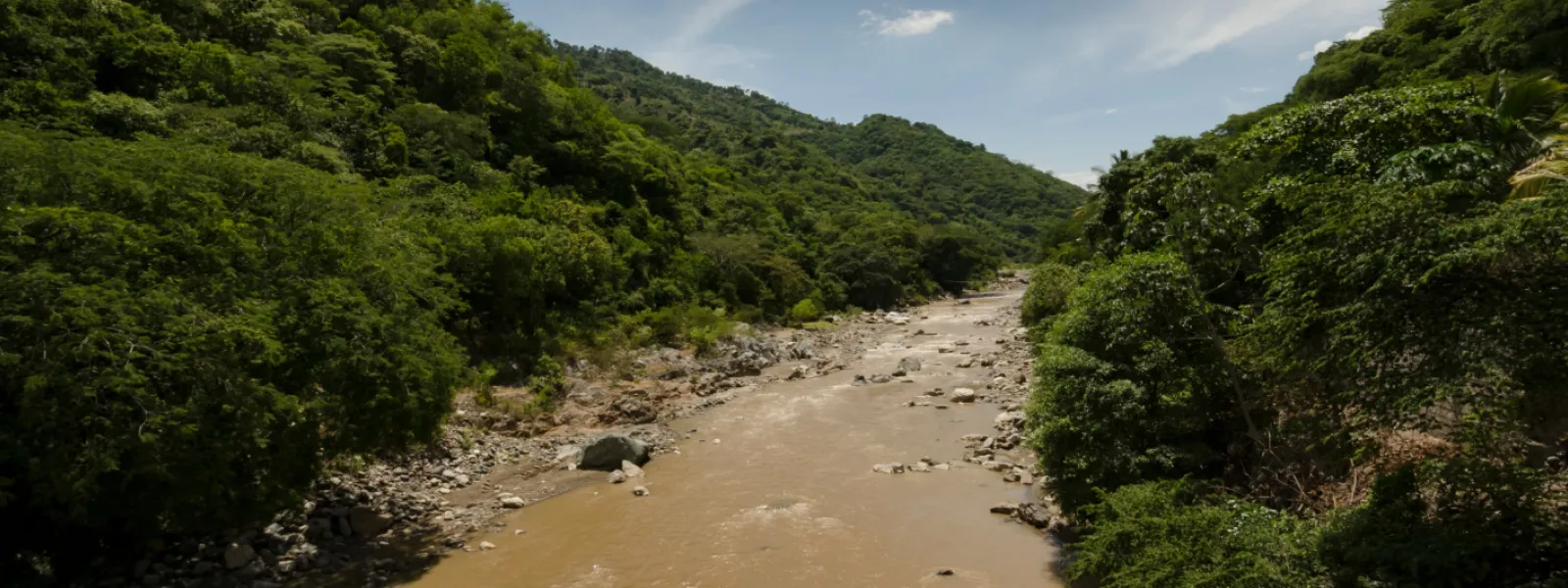
The Motagua River basin—Guatemala’s largest and most important river—is severely polluted with wastewater, solid waste, and other types of debris.
This is a cross-border issue because the Motagua’s polluted waters flow into the Caribbean Sea, reach the coast of Honduras, and threaten the Mesoamerican Reef System.
For decades, this has violated the rights to health, water, development, and a healthy environment of all the people living in the river basin.
In June 2025, the Poqomam Maya community of Santa Cruz Chinautla—supported by AIDA, the Indigenous Peoples’ Law Firm, and allied organizations—achieved an unprecedented legal victory to halt degradation in the basin. In response to the lawsuit it filed, a Guatemalan court ordered the municipality of Chinautla to comply with a series of obligations to curb the pollution of the area’s rivers and soil.
The government's response to the ruling has so far been limited to technical working group meetings. Meanwhile, the community continues to work toward the proper implementation of the ruling and to take other actions to defend its territory and its rights.
Background
The Motagua River, which is 486 km long, flows through 96 municipalities and 14 departments in Guatemala. It originates in Quiché, a department located in the northwest, and empties into the Caribbean Sea.
Polluting activities occur throughout the entire basin, including sub-basins and micro-basins. The largest volume of pollution comes from Guatemala City, the country’s capital, and is carried by the waters of the Las Vacas River, which in turn receives a large amount of waste from the Chinautla River.
The Chinautla River, which flows through the municipality of the same name, carries solid waste from a landfill located in Zone 3 of the capital—where trash from at least 14 municipalities in the department of Guatemala is dumped—as well as sewage generated by some 500,000 people living in the northern part of the capital, which undergoes no prior treatment.
Other sources of pollution include the numerous illegal dumps in the municipality of Chinautla, the waste that private vehicles and garbage trucks dump along the banks of its rivers, as well as the sand-mining companies—which began setting up operations in the area between 1996 and 1997—whose activities weaken the rivers' basins, causing solid waste to be more easily carried away by the river currents.
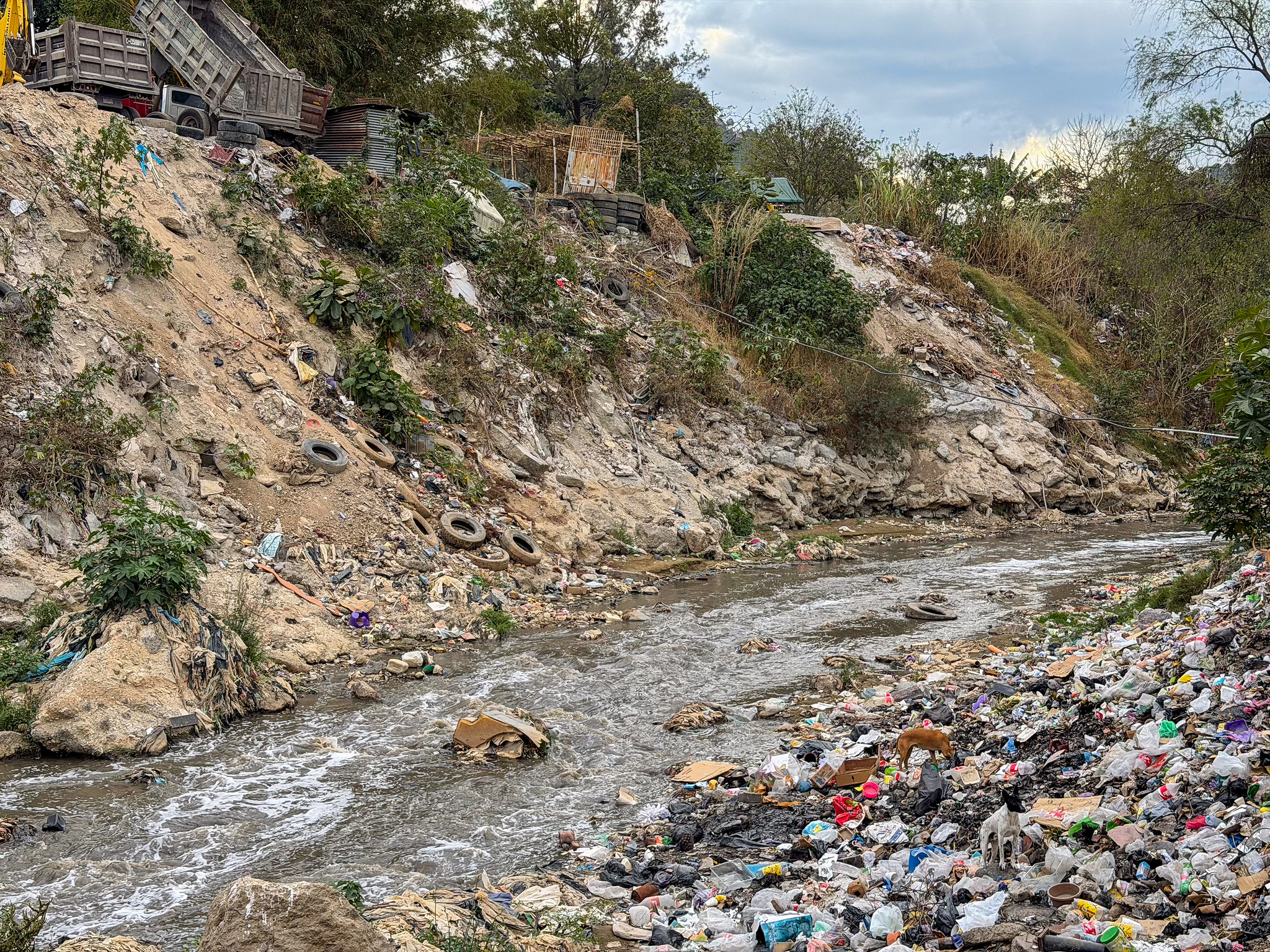
Photo: Mayela Sánchez García.
The situation extends beyond national borders. Every year, the Motagua River discharges some 20,000 metric tons of plastic into the Caribbean Sea, making it one of the rivers that contributes the most plastic pollution to the ocean worldwide, according to estimates contained in a 2025 report by the Inter-American Commission on Human Rights (IACHR).
The river flows into the Mesoamerican Reef at its mouth, so pollution also threatens to degrade one of the largest and most biodiverse transboundary reefs on the planet, which spans the territorial waters of Belize, Guatemala, Honduras, and Mexico.
In addition, the contaminated water reaches the coast of Honduras and spreads into Amatique Bay, located along the eastern coast of Guatemala, affecting the Caribbean Sea.
The roots of this chronic, cross-border problem are structural. Data from the Integrated Environmental Management of the Motagua River Basin project, funded by the United Nations Development Program (UNDP), show that in Guatemala, 66% of municipal solid waste is not collected, and there is no guarantee that the remaining 34% is disposed of properly. Furthermore, of all landfills nationwide, 88.32% are illegal or lack municipal authorization.
In other words, the core issues that need to be addressed are the mismanagement of solid waste and water resources in Guatemala; noncompliance with existing regulations on wastewater discharge and the disposal and treatment of solid waste and residues; and the lack of a water law.
The Poqomam Maya people's quest for justice
The rivers of Santa Cruz Chinautla, a community of the Poqomam Maya people located just twelve kilometers from Guatemala City, have become conduits of pollution that are degrading the Motagua River.
For decades, the local population has seen its health and livelihoods—including pottery, one of the main economic activities and a source of identity—damaged due to the lack of waste management in the municipality of Chinautla and the urban area of the country’s capital, as well as the activities of sand-mining companies.
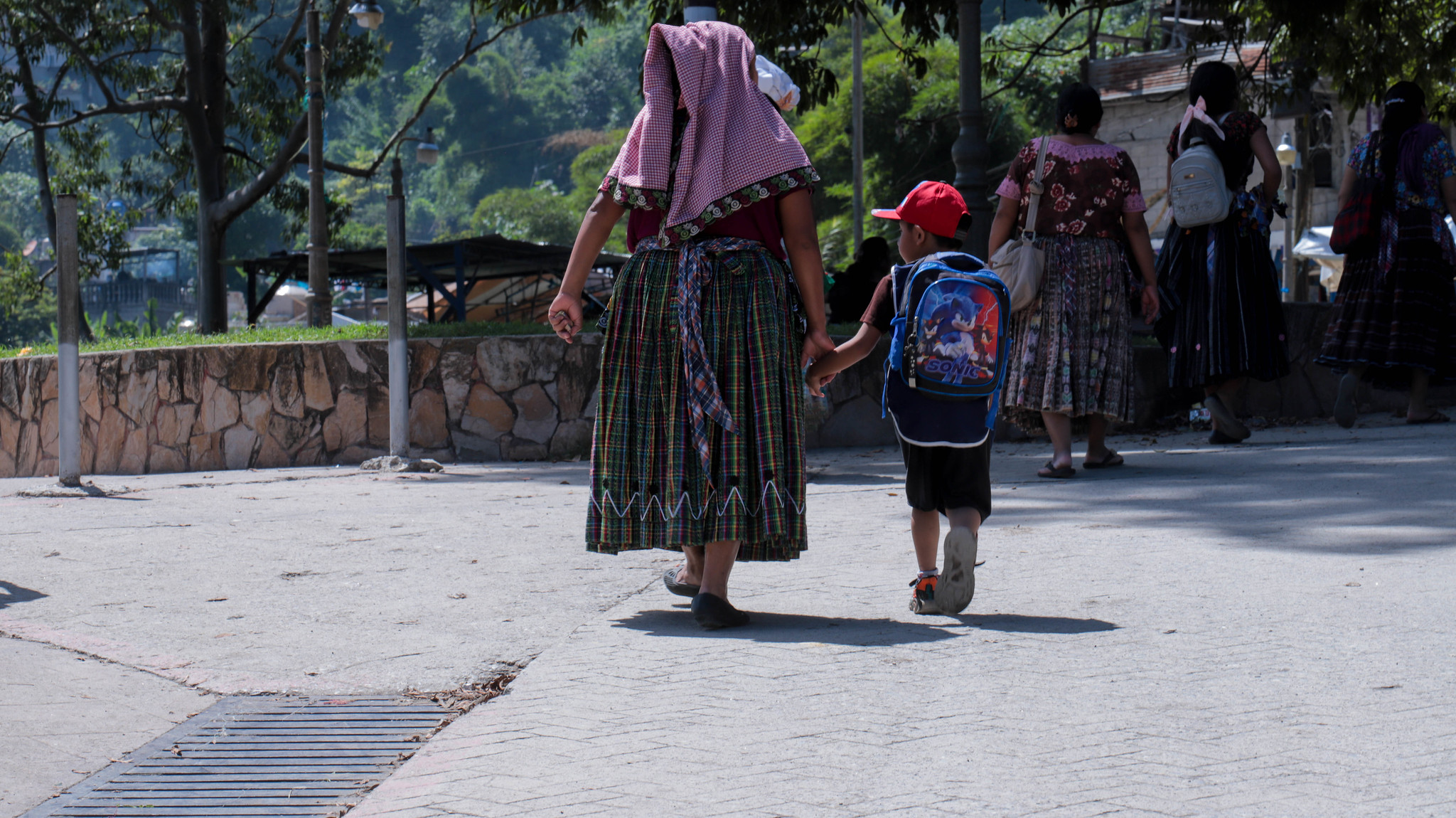
Photo: Mario Winter.
Voices for the Motagua River: Olga Vázquez.
Voices for the Motagua River: Nazario Pascual.
In early 2000, the Maya community organized to stop sand mining on their territory. At that time, the companies held mining permits that remained valid through 2021 and 2022. And although the permits expired, some companies continued to operate after requesting extensions. In June 2022, the indigenous authorities of the Poqomam people began a sit-in protest in front of the Piedrinera San Luis company, which they maintained for four years.
In July 2024, the Special Rapporteur on Economic, Social, Cultural, and Environmental Rights of the IACHR visited Santa Cruz Chinautla. During his visit, traditional authorities and community members spoke about the environmental, water-related, health, economic, and cultural impacts of the pollution in their rivers.
That same year, in October, the community—with support from AIDA, the Indigenous Peoples’ Law Firm, and partner organizations—filed a lawsuit (petition for amparo) against the municipality of Chinautla over its failure to take measures to address the contamination of its rivers and soil caused by improper solid waste management and the existence of illegal landfills.
AIDA’s scientific team, together with local residents and community authorities, collected key information on illegal landfills in the area. This community science initiative supported the litigation by highlighting the severity of the pollution, demonstrating the ongoing use of such practices, and providing evidence of the municipal authorities’ failure to fulfill their legal obligations regarding waste management.
Learn more about this community science initiative.
In June 2025, the Poqomam community won the support of the Guatemalan justice system when a constitutional court ordered the municipality of Chinautla to effectively address the claims in the lawsuit aimed at stopping the pollution of the rivers and soil in Santa Cruz Chinautla.
This is the first time a Guatemalan court has recognized a community's right to a healthy environment and its central role in finding solutions.
Find out the details of the legal victory.
Current situation
Since the ruling was issued, the municipality of Chinautla has held a series of “technical working groups” with representatives from the central government, civil society, and the community. A smaller group of technical experts was later created to develop a work plan with clear goals. Several months have passed without the municipality convening these working groups.
Furthermore, in December 2025, the IACHR noted in its report Human Rights Situation in Guatemala that the Motagua River basin is facing a severe pollution crisis that has had profound impacts on biodiversity and has resulted in systematic violations of the human rights of local communities, including the Maya Poqomam people.
And in May 2026, the Ministry of the Environment and Natural Resources revoked the license of the sand mining company Piedrinera San Luis for "failure to comply with environmental commitments."
AIDA continues to monitor the implementation of the court ruling to ensure the right to a healthy environment for the Poqomam Maya community and all those living in the Motagua River basin. Meanwhile, the residents of Santa Cruz Chinautla remain organized and mobilized to improve their environment and defend their rights.
Related projects
We all deserve to breathe clean air
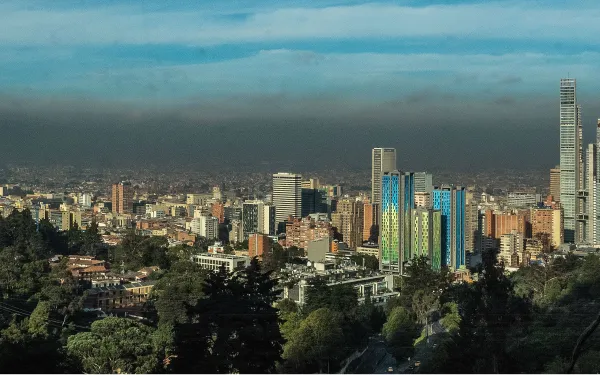
I was born and raised in Bogota, Colombia’s bustling capital city. When I was a child, I grew accustomed to the chaos of the streets—thousands of cars and buses spewing black smoke into the air, the endless honking of horns. It was normal to see massive smokestacks and smell bad odors. I thought all cities were that way, and that nature and clean air only existed in places far from home. I was used to having health problems: headaches, rashes, eye and throat irritation, coughs and hay fever. I never questioned why my sisters and I were constantly fighting these “environmental allergies.” Pollution even prevented me from enjoying the outdoors. I couldn’t easily walk or ride my bike, for example, because my lungs struggled from the soot emitted by passing trucks and buses. There were days I had to leave my house wearing a mask, and times when we were forbidden from playing outside due to the pollution. Air pollution: a silent killer As an adult, I realized that environmental allergies are not the norm. Often, they are caused by constantly breathing in black carbon, ozone, sulfur dioxide and other pollutants that cars, buses and factories emit into the atmosphere each day. I realized that air pollution is a serious threat to quality of life and to a person’s health, especially among the most vulnerable, like our children and the elderly. According to the World Health Organization, millions of people die each year from illnesses related to air pollution. In Latin America, it is the number one environmental health risk, and causes more than 150,000 premature deaths per year. Cities like Mexico City, Monterrey (Mexico), Cochabamba (Bolivia), Santiago de Chile, Lima (Peru), Medellin (Colombia), San Salvador (El Salvador) and Bogota have the highest levels of air pollution in the region. When cities are allowed to expand without regulation, population skyrockets—and with it, so do the number of cars and trucks and factories. I worry about the future of my family in that scenario. I don’t want the air we breathe to negatively impact our health. My husband, who is not from Bogota, moved there to be with me. One year later, he was diagnosed with asthma. When my daughter was just two months old, she had a respiratory infection that put her in intensive care for several days. The cause of both their illnesses: the city’s poor air quality. Stopping the contamination The majority of the world’s population lives in cities. And while we can’t expect our cities to be pristine, natural ecosystems, they should provide people with the minimal conditions they need to lead dignified, healthy lives. That’s why AIDA works to improve air quality in Latin America, advocating for the protection of our children and other populations highly vulnerable to atmospheric contamination. We are raising awareness among policy makers about the importance of regulating short-lived climate pollutants (SLCPs), which stay in the atmosphere for a relatively short period of time. Unlike carbon dioxide, which can stay in the atmosphere for centuries, SLCPs remain in the air from a few days to a few decades. SLCPs include soot (also known as black carbon) and methane gas. These contaminants are major contributors to climate change, degrade air quality and have serious impacts on food security and human health. Effectively reducing them could significantly improve air quality and advance the fight against climate change in the short-term. Through our experience in international law, we’re seeking ways to regulate these short-lived pollutants across Latin America. Because having clean air to breath is one of life’s basic needs. Clean air shouldn’t be a luxury.
Read more
Infographic: Advisory Opinion 23
The Inter-American Court of Human Rights, the Observatory of the Inter-American Human Rights System of the UNAM (OSIDH), the Due Process Foundation (DPLF), AIDA and the Institute of Constitutional Studies of the State of Querétaro present this infographic on the Court's Advisory Opinion 23. The main objective is to make available to all interested persons the main points and standards developed by the Court regarding the obligations of States regarding the environment and its relationship with human rights. We hope that this joint initiative will contribute to the full validity and guarantee of economic, social, cultural and environmental rights in the region. Advisory Opinion 23, issued on November 15, 2017, establishes a historical precedent for the protection of human rights in the continent. Download the infographic in Spanish Download the infographic in Portuguese Download the infographic in French Advisory Opinion (full text) English Spanish
Read more
Argentina’s approval of fracking wells violates international obligations
The authorization of four fracking wells within the Vaca Muerta shale deposit poses a risk to vital water sources and violates the rights of Mapuche communities. In support of an amparo filed to invalidate the project’s approval, AIDA presented evidence detailing Argentina’s failure to comply with international environmental and human rights obligations. Mendoza, Argentina. Argentina violated international environmental and human rights obligations when it authorized the development of four fracking wells in indigenous territory. The wells would damage vital water sources and violate the rights of Mapuche communities, AIDA explained in an amicus brief presented before the Supreme Court of Mendoza Province. The brief supports an amparo seeking to invalidate the project’s approval, filed by the Environment and Natural Resources Foundation (FARN, for its initials in Spanish). “Fracking was authorized in Mendoza without any environmental impact assessment,” explained AIDA Attorney Claudia Velarde. “In fact, the project was presented for authorization as ‘infrastructure adaptation’ and the environmental authority granted the permits in a record time of just six days.” The wells are located within Vaca Muerta, the largest non-conventional deposit of shale gas in Latin America. Mapuche indigenous communities—recognized by the National Institute of Indigenous Affairs—live in the project area and, as such, have the right to prior consultation; operators must receive their free, prior and informed consent for any activity affecting their territory. The energy company El Trebol S.A. failed to recognize that right when assessing the project. As a result, the project’s authorization violates Convention 169 of the International Labor Organization, the United Nations Declaration on the Rights of Indigenous Peoples, and the American Declaration on the Rights of Indigenous People—all international standards recognized by Argentina. “The chemicals used in fracking can contaminate both surface and groundwater, including, in this case, those of the Llancanelo lagoon, a wetland of international importance under the Ramsar Convention, a treaty ratified by the government of Argentina,” said Velarde. “The site is a zone of passage and rest for more than 130 species of resident and migratory birds.” In addition, fracking activities require large amounts of water, while Mendoza has for years suffered from drought, a problem only aggravated by climate change. Finally, the brief emphasizes that there is neither detailed geological data of the zone nor quality information on the dynamics of the groundwater. “Faced with this scientific uncertainty, authorities have an obligation to apply the precautionary principle,” Velarde explained. “An activity as potentially harmful as fracking must be rejected unless those seeking to implement it can prove that it will not cause serious and irreversible damage to the environment.” Press contact: Victor Quintanilla (Mexico), AIDA, [email protected], +5215570522107
Read more