
Project
Shutterstock.
Pollution of the Motagua River in Guatemala: The Poqomam Maya people’s quest for environmental justice
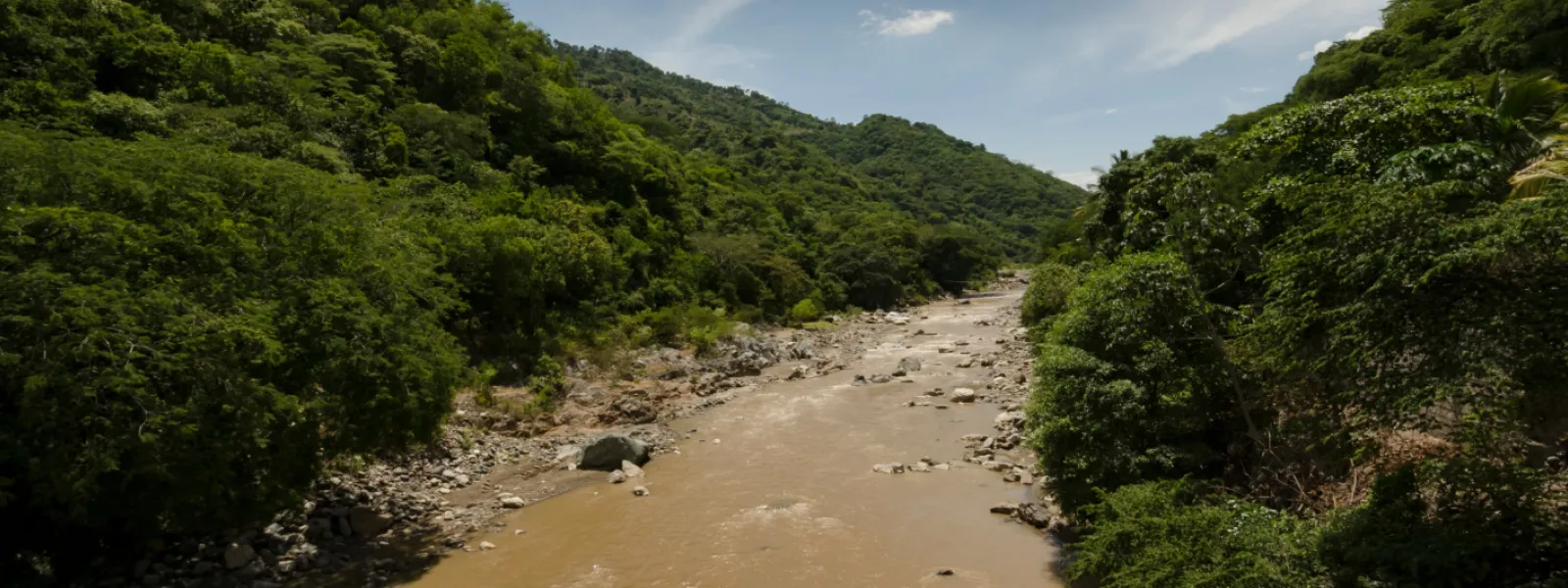
The Motagua River basin—Guatemala’s largest and most important river—is severely polluted with wastewater, solid waste, and other types of debris.
This is a cross-border issue because the Motagua’s polluted waters flow into the Caribbean Sea, reach the coast of Honduras, and threaten the Mesoamerican Reef System.
For decades, this has violated the rights to health, water, development, and a healthy environment of all the people living in the river basin.
In June 2025, the Poqomam Maya community of Santa Cruz Chinautla—supported by AIDA, the Indigenous Peoples’ Law Firm, and allied organizations—achieved an unprecedented legal victory to halt degradation in the basin. In response to the lawsuit it filed, a Guatemalan court ordered the municipality of Chinautla to comply with a series of obligations to curb the pollution of the area’s rivers and soil.
The government's response to the ruling has so far been limited to technical working group meetings. Meanwhile, the community continues to work toward the proper implementation of the ruling and to take other actions to defend its territory and its rights.
Background
The Motagua River, which is 486 km long, flows through 96 municipalities and 14 departments in Guatemala. It originates in Quiché, a department located in the northwest, and empties into the Caribbean Sea.
Polluting activities occur throughout the entire basin, including sub-basins and micro-basins. The largest volume of pollution comes from Guatemala City, the country’s capital, and is carried by the waters of the Las Vacas River, which in turn receives a large amount of waste from the Chinautla River.
The Chinautla River, which flows through the municipality of the same name, carries solid waste from a landfill located in Zone 3 of the capital—where trash from at least 14 municipalities in the department of Guatemala is dumped—as well as sewage generated by some 500,000 people living in the northern part of the capital, which undergoes no prior treatment.
Other sources of pollution include the numerous illegal dumps in the municipality of Chinautla, the waste that private vehicles and garbage trucks dump along the banks of its rivers, as well as the sand-mining companies—which began setting up operations in the area between 1996 and 1997—whose activities weaken the rivers' basins, causing solid waste to be more easily carried away by the river currents.
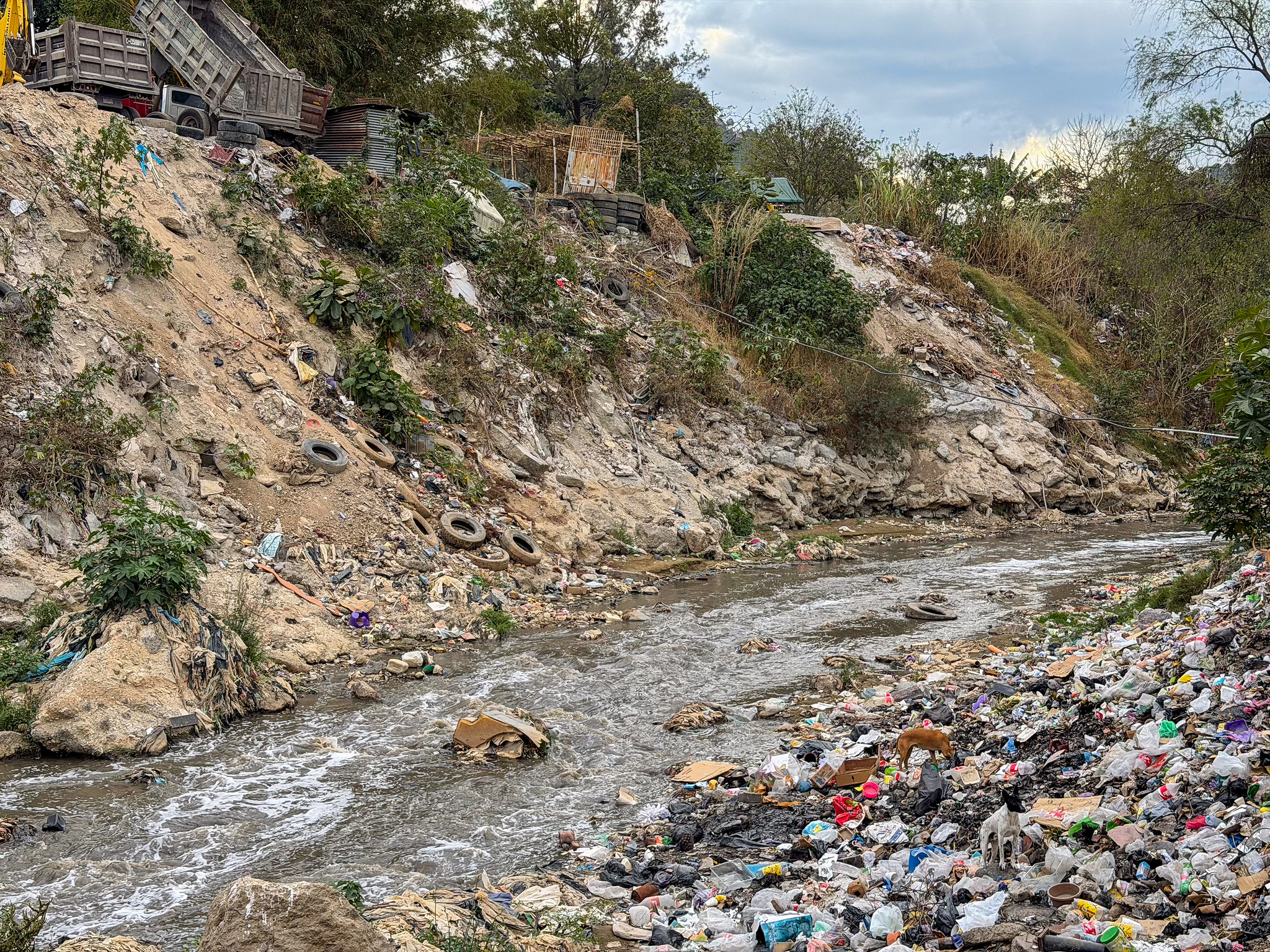
Photo: Mayela Sánchez García.
The situation extends beyond national borders. Every year, the Motagua River discharges some 20,000 metric tons of plastic into the Caribbean Sea, making it one of the rivers that contributes the most plastic pollution to the ocean worldwide, according to estimates contained in a 2025 report by the Inter-American Commission on Human Rights (IACHR).
The river flows into the Mesoamerican Reef at its mouth, so pollution also threatens to degrade one of the largest and most biodiverse transboundary reefs on the planet, which spans the territorial waters of Belize, Guatemala, Honduras, and Mexico.
In addition, the contaminated water reaches the coast of Honduras and spreads into Amatique Bay, located along the eastern coast of Guatemala, affecting the Caribbean Sea.
The roots of this chronic, cross-border problem are structural. Data from the Integrated Environmental Management of the Motagua River Basin project, funded by the United Nations Development Program (UNDP), show that in Guatemala, 66% of municipal solid waste is not collected, and there is no guarantee that the remaining 34% is disposed of properly. Furthermore, of all landfills nationwide, 88.32% are illegal or lack municipal authorization.
In other words, the core issues that need to be addressed are the mismanagement of solid waste and water resources in Guatemala; noncompliance with existing regulations on wastewater discharge and the disposal and treatment of solid waste and residues; and the lack of a water law.
The Poqomam Maya people's quest for justice
The rivers of Santa Cruz Chinautla, a community of the Poqomam Maya people located just twelve kilometers from Guatemala City, have become conduits of pollution that are degrading the Motagua River.
For decades, the local population has seen its health and livelihoods—including pottery, one of the main economic activities and a source of identity—damaged due to the lack of waste management in the municipality of Chinautla and the urban area of the country’s capital, as well as the activities of sand-mining companies.
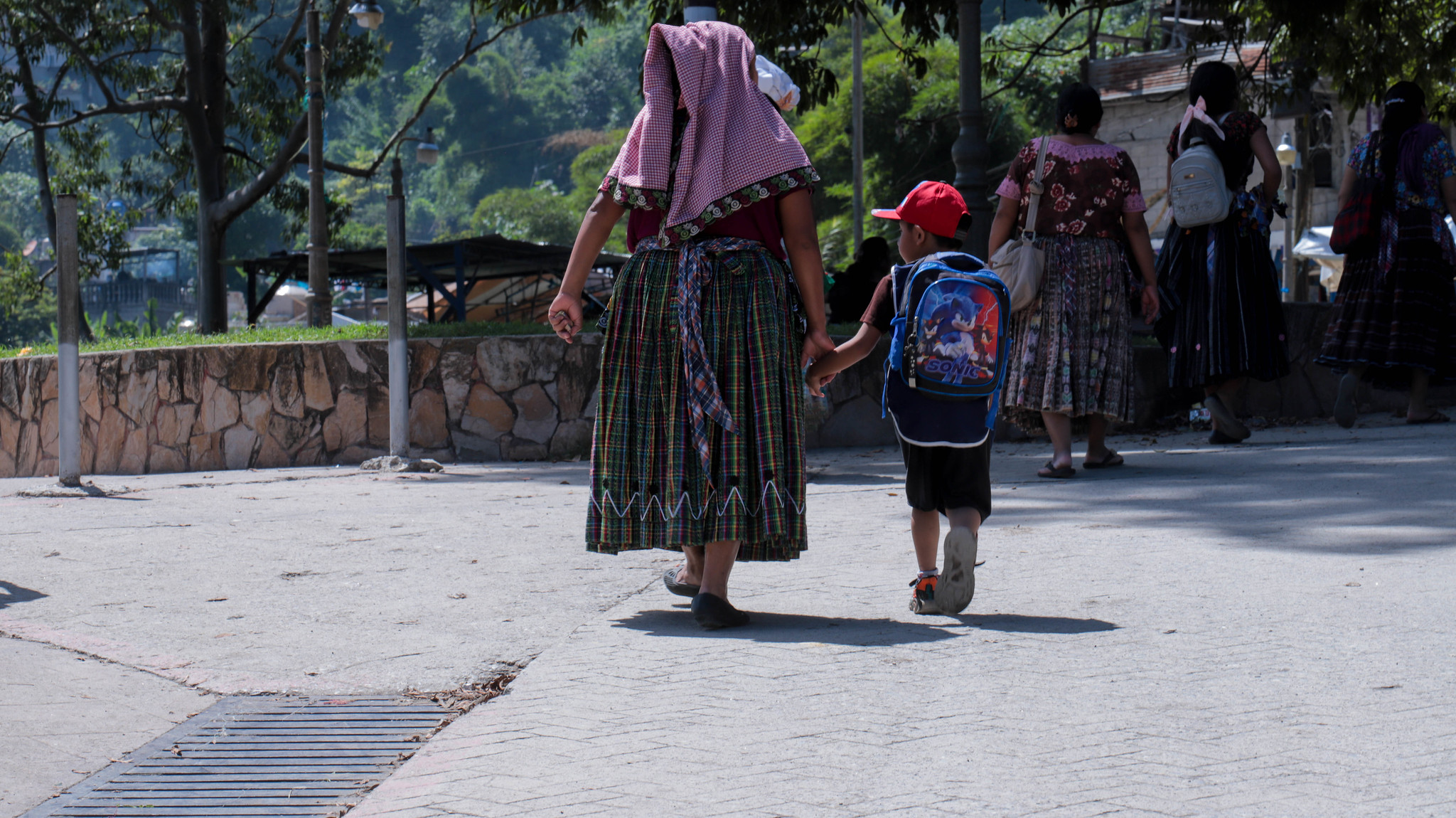
Photo: Mario Winter.
Voices for the Motagua River: Olga Vázquez.
Voices for the Motagua River: Nazario Pascual.
In early 2000, the Maya community organized to stop sand mining on their territory. At that time, the companies held mining permits that remained valid through 2021 and 2022. And although the permits expired, some companies continued to operate after requesting extensions. In June 2022, the indigenous authorities of the Poqomam people began a sit-in protest in front of the Piedrinera San Luis company, which they maintained for four years.
In July 2024, the Special Rapporteur on Economic, Social, Cultural, and Environmental Rights of the IACHR visited Santa Cruz Chinautla. During his visit, traditional authorities and community members spoke about the environmental, water-related, health, economic, and cultural impacts of the pollution in their rivers.
That same year, in October, the community—with support from AIDA, the Indigenous Peoples’ Law Firm, and partner organizations—filed a lawsuit (petition for amparo) against the municipality of Chinautla over its failure to take measures to address the contamination of its rivers and soil caused by improper solid waste management and the existence of illegal landfills.
AIDA’s scientific team, together with local residents and community authorities, collected key information on illegal landfills in the area. This community science initiative supported the litigation by highlighting the severity of the pollution, demonstrating the ongoing use of such practices, and providing evidence of the municipal authorities’ failure to fulfill their legal obligations regarding waste management.
Learn more about this community science initiative.
In June 2025, the Poqomam community won the support of the Guatemalan justice system when a constitutional court ordered the municipality of Chinautla to effectively address the claims in the lawsuit aimed at stopping the pollution of the rivers and soil in Santa Cruz Chinautla.
This is the first time a Guatemalan court has recognized a community's right to a healthy environment and its central role in finding solutions.
Find out the details of the legal victory.
Current situation
Since the ruling was issued, the municipality of Chinautla has held a series of “technical working groups” with representatives from the central government, civil society, and the community. A smaller group of technical experts was later created to develop a work plan with clear goals. Several months have passed without the municipality convening these working groups.
Furthermore, in December 2025, the IACHR noted in its report Human Rights Situation in Guatemala that the Motagua River basin is facing a severe pollution crisis that has had profound impacts on biodiversity and has resulted in systematic violations of the human rights of local communities, including the Maya Poqomam people.
And in May 2026, the Ministry of the Environment and Natural Resources revoked the license of the sand mining company Piedrinera San Luis for "failure to comply with environmental commitments."
AIDA continues to monitor the implementation of the court ruling to ensure the right to a healthy environment for the Poqomam Maya community and all those living in the Motagua River basin. Meanwhile, the residents of Santa Cruz Chinautla remain organized and mobilized to improve their environment and defend their rights.
Related projects

Guatemalan indigenous communities file complaint for dams’ damages
Affected communities have called on the Inter-American Development Bank to withdraw funding for the Pojom II and San Andrés dams for failure to comply with its operational policies. The mega-projects have damaged water sources and harmed the livelihoods of local indigenous people, particularly women. Washington, D.C. Indigenous communities affected by Guatemala’s Pojom II and San Andrés dams have called on the Inter-American Development Bank to withdraw its investment in the mega-projects. A complaint filed before the Bank’s independent accountability mechanism explains how the serious social and environmental damages caused by the planning and construction of the dams resulted from the projects’ failure to comply with the Bank’s operational policies. The communities are represented by the Interamerican Association for Environmental Defense (AIDA), the International Platform Against Impunity, and the Plurinational Ancestral Government of Q’anjob’al, Popti, Chuj and Akateko. “The damages caused by the projects’ implementation are the result of non-compliance with the Bank’s operational policies, particularly its policies on environment and sustainability, indigenous people, gender, and information disclosure,” explained Liliana Ávila, AIDA attorney. The complaint details how the dams were authorized without adequate community consultation, and how those affected did not receive sufficient information on the risks. In addition, community members who have peacefully resisted the projects have suffered attacks, threats, and harassment; in 2017, they reported the murder of one local resident, which has yet to be resolved. The construction of the dams has also caused severe environmental damage, including water scarcity and pollution, which have affected local people’s ability to fish, grow food, and maintain their tradition lifestyle. The affected people of the microregion of Ixquisis, in the department of Huehuetenango, are primarily indigenous Mayans including the Chu, Q’anjob’al and Akateko ethnic groups. “The damages from the dams are differentially suffered by women, since they are the primary managers of water use in their homes,” said Anabella Sibrián from the International Platform Against Impunity. “The women of Ixquisis face stigmatization and live in fear of retaliation for their peaceful opposition to the projects.” The Pojom II hydroelectric plant is operated by Generadora San Mateo S.A, while San Andrés is run by Generadora San Andrés S.A. Both are subsidiaries of Promoción y Desarrollos Hídricos S.A., a Guatemalan company. In 2013, IDB Invest, a private arm of the Inter-American Development Bank, approved loans of up to $9 million USD for the construction of Pojom II and up to $6 million USD for the San Andrés project. “We our hope that the Bank’s accountability mechanism confirms the projects have violated internal policies and thus recommends that IDB Invest withdraw its investment from these harmful mega-dams,” Ávila said. The Ixquisis communities were recently awarded the 2018 Front Line Defenders award for Human Rights Defenders at Risk for their valiant, peaceful struggle to defend their water and their territory. Find more information on the case here. Press Contact Victor Quintanilla (México), AIDA, [email protected], +521 5570522107
Read more
Why we work to protect human rights in Latin America
The attorneys who make up AIDA’s Human Rights and the Environment Program work to protect people and communities whose rights have been violated or are at risk from the degradation of their natural environment. They know that there is an undeniable connection between the full enjoyment of human rights and a healthy environment. Here’s why they do what they do: “I DO IT BECAUSE IT’S IN MY BLOOD.” Astrid Puentes, AIDA Co-Director “I work in defense of the environment and human rights because they are essential aspects of life, and they are linked. I do it because it’s in my blood: my father was a farmer, my grandparents and great-grandparents too. Part of my connection with nature comes from my family; it’s my inheritance. I’ve always wanted to contribute to making the world better, particularly in my home country of Colombia, which has so many natural resources but also so much social injustice. I dedicated my career as an attorney to helping make my country a better place. When I became a mother, that motivation only grew, and now I feel a great responsibility to do everything I can so that my children will have a better planet.” Early in her career, Astrid helped stop a proposal by the Colombian and United States governments to spray a transgenic fungus on the Amazon, which would have seriously damaged a vital ecosystem that many people depend on. It was the first successful case in which Astrid was directly involved. “I DEFEND HUMAN RIGHTS BECAUSE I BELIEVE THAT DIGNITY AND EQUALITY ARE INALIENABLE RIGHTS.” Liliana Ávila, Senior Attorney “I defend human rights because I believe that dignity and equality are inalienable rights. I believe in the value of differences and in the struggles of those who have not known their rights. These convictions have made me feel indignation, shame, and rage for the way rights human rights have been infringed upon in my country — Colombia — as well as in Latin America and the world at large. I defend human rights because, for me, they are the realization of the human aspiration to build a more just world.” Last May, Liliana was moved by the story of an indigenous woman in Guatemala whose community depended on a nearby river, which was suffering water shortages due to the construction of a dam. With the water from that river, the woman watered flowers in her garden, which brought her happiness when life made her sad. That story filled Liliana with hope because she knew that, though her work, she could help keep those flowers blooming. “MY GREATEST MOTIVATION COMES FROM MY AWARENESS OF INEQUALITY AND INJUSTICE.” Daniel Iglesias, Fellow “My greatest motivation comes from my awareness of the inequality and injustice that characterize the modern world, in large part due to the effects of global capitalism. It is our responsibility to fight to eliminate those inequalities. Defending human rights through solidarity and by denouncing injustice is a fundamental way to achieve that goal.” As a human rights attorney, Daniel come face-to-face with injustices such as indigenous communities being stripped of their land, people deprived of their freedom of expression, and those who have been affected by the damages caused by extractive industries. Those experiences inform Daniel’s work with AIDA in Mexico, and feed his desire to continue working for social and environmental justice in the region. “I GREW UP knowing I HAD RIGHTS.” Marcella Ribeiro, Legal Advisor “I grew up knowing I had rights. I knew I would never lack food or water and that the beach in front of my house in Brazil would never be polluted because I had the right to a healthy environment. But when I learned that people living in favelas and those affected by droughts didn’t know they had rights, and didn’t organize to claim them, I decided to devote myself to fighting so their voices are heard and their humanity is recognized.” Marcela worked in Brazil’s favelas educating residents about their human rights. Since then, she has understood that social justice will always be possible as long as people are allowed to enjoy their social, cultural, economic and environmental rights.
Read more
Statement on the denouncement of violence against communities in Guatemala
Communities in northwest Guatemala publicly denounced repression and intimidation following peaceful demonstrations against the presence of the National Police and Army in their territory. The people of the microregion of Ixquisis, in the department of Huehuetenango, are currently living in fear due to the improper use of criminal law against those who have expressed their opposition to the development of the Pojom I, Pojom II and San Andrés dams. Together with allied organizations, AIDA has denounced before the Inter-American Commission on Human Rights the worrying criminalization of human rights defenders who oppose the hydroelectric projects in Guatemala. As an organization that works in defense of human rights and the environment in Latin America, AIDA would like to express the following: The repression of freedom of association and expression is extremely worrisome. The risks faced by the people of Ixquisis and the increased acts of violence against them are alarming. We reject any act of violence or intimidation by private and public security forces against people exercising their individual and collective rights. We likewise condemn any campaign of disinformation, de-legitimization and stigmatization that may arise in response the communities’ peaceful demonstrations. The acts that have been denounced not only violate basic rights, but also affect social stability and the traditional lifestyle of the communities. AIDA expresses solidarity with the Peaceful Resistance of the Microregion of Ixquisis; and we support their struggle to defend land and water, and achieve environmental justice. We call on the State of Guatemala to: guarantee the full enjoyment of the communities’ human rights; protect those who defend them; carry out diligent actions to investigate recent acts of violence; ensure due process for those who defend their rights before the projects’ advancement; and evaluate the instances of force denounced by the communities. press contact Victor Quintanilla (Mexico), AIDA, [email protected], +52 5570522107
Read more