
Project
Shutterstock.
Pollution of the Motagua River in Guatemala: The Poqomam Maya people’s quest for environmental justice
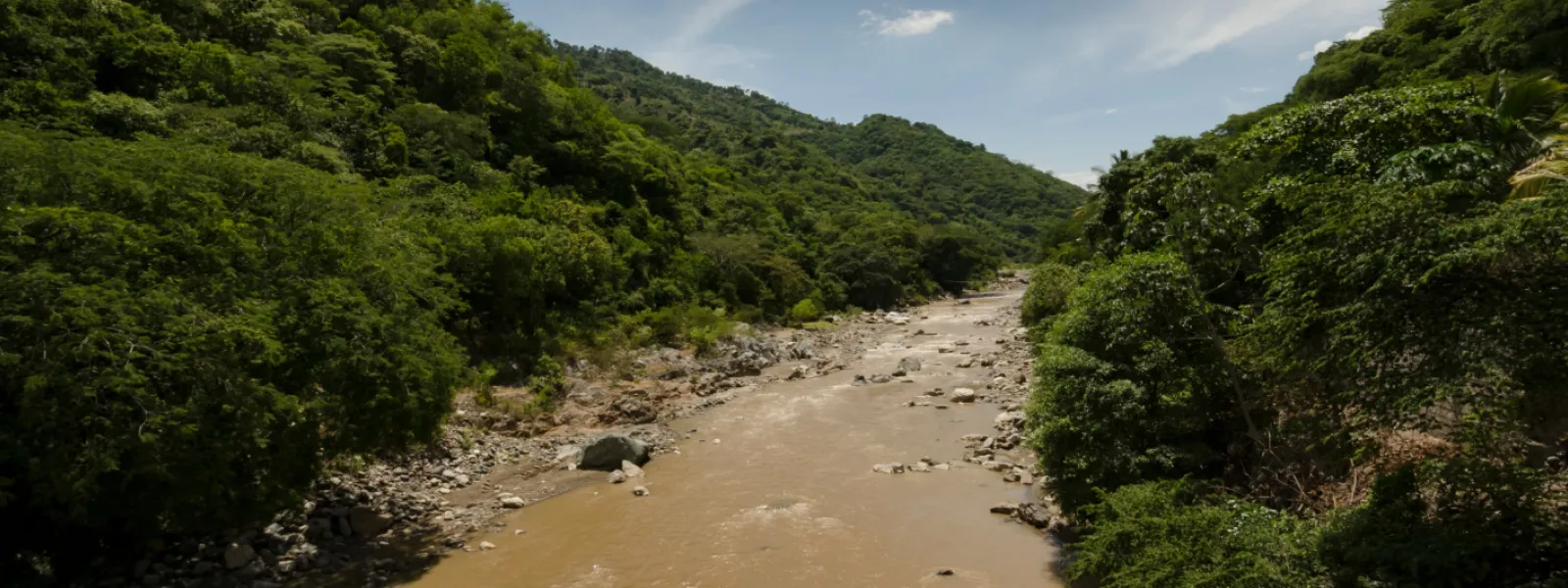
The Motagua River basin—Guatemala’s largest and most important river—is severely polluted with wastewater, solid waste, and other types of debris.
This is a cross-border issue because the Motagua’s polluted waters flow into the Caribbean Sea, reach the coast of Honduras, and threaten the Mesoamerican Reef System.
For decades, this has violated the rights to health, water, development, and a healthy environment of all the people living in the river basin.
In June 2025, the Poqomam Maya community of Santa Cruz Chinautla—supported by AIDA, the Indigenous Peoples’ Law Firm, and allied organizations—achieved an unprecedented legal victory to halt degradation in the basin. In response to the lawsuit it filed, a Guatemalan court ordered the municipality of Chinautla to comply with a series of obligations to curb the pollution of the area’s rivers and soil.
The government's response to the ruling has so far been limited to technical working group meetings. Meanwhile, the community continues to work toward the proper implementation of the ruling and to take other actions to defend its territory and its rights.
Background
The Motagua River, which is 486 km long, flows through 96 municipalities and 14 departments in Guatemala. It originates in Quiché, a department located in the northwest, and empties into the Caribbean Sea.
Polluting activities occur throughout the entire basin, including sub-basins and micro-basins. The largest volume of pollution comes from Guatemala City, the country’s capital, and is carried by the waters of the Las Vacas River, which in turn receives a large amount of waste from the Chinautla River.
The Chinautla River, which flows through the municipality of the same name, carries solid waste from a landfill located in Zone 3 of the capital—where trash from at least 14 municipalities in the department of Guatemala is dumped—as well as sewage generated by some 500,000 people living in the northern part of the capital, which undergoes no prior treatment.
Other sources of pollution include the numerous illegal dumps in the municipality of Chinautla, the waste that private vehicles and garbage trucks dump along the banks of its rivers, as well as the sand-mining companies—which began setting up operations in the area between 1996 and 1997—whose activities weaken the rivers' basins, causing solid waste to be more easily carried away by the river currents.
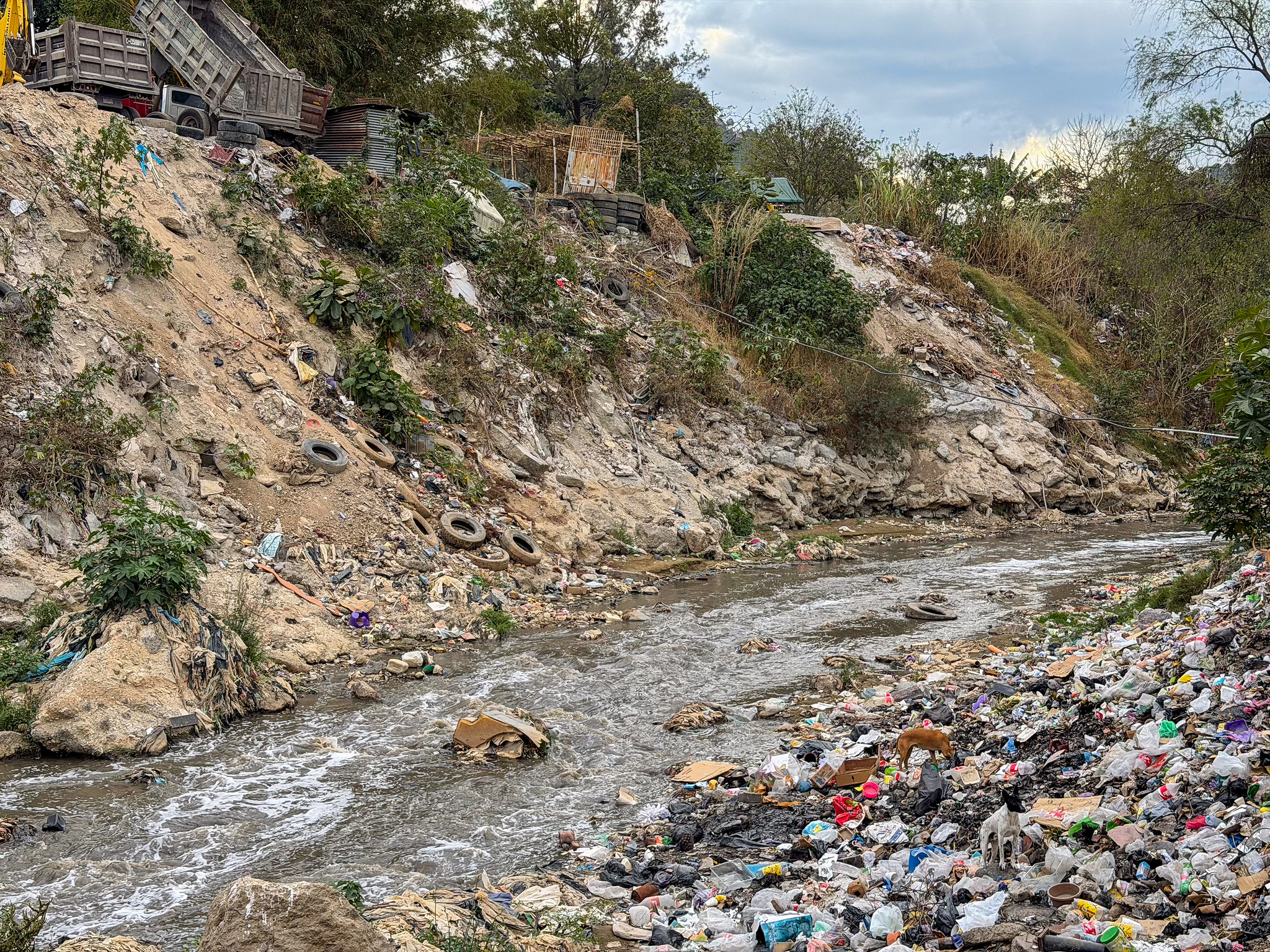
Photo: Mayela Sánchez García.
The situation extends beyond national borders. Every year, the Motagua River discharges some 20,000 metric tons of plastic into the Caribbean Sea, making it one of the rivers that contributes the most plastic pollution to the ocean worldwide, according to estimates contained in a 2025 report by the Inter-American Commission on Human Rights (IACHR).
The river flows into the Mesoamerican Reef at its mouth, so pollution also threatens to degrade one of the largest and most biodiverse transboundary reefs on the planet, which spans the territorial waters of Belize, Guatemala, Honduras, and Mexico.
In addition, the contaminated water reaches the coast of Honduras and spreads into Amatique Bay, located along the eastern coast of Guatemala, affecting the Caribbean Sea.
The roots of this chronic, cross-border problem are structural. Data from the Integrated Environmental Management of the Motagua River Basin project, funded by the United Nations Development Program (UNDP), show that in Guatemala, 66% of municipal solid waste is not collected, and there is no guarantee that the remaining 34% is disposed of properly. Furthermore, of all landfills nationwide, 88.32% are illegal or lack municipal authorization.
In other words, the core issues that need to be addressed are the mismanagement of solid waste and water resources in Guatemala; noncompliance with existing regulations on wastewater discharge and the disposal and treatment of solid waste and residues; and the lack of a water law.
The Poqomam Maya people's quest for justice
The rivers of Santa Cruz Chinautla, a community of the Poqomam Maya people located just twelve kilometers from Guatemala City, have become conduits of pollution that are degrading the Motagua River.
For decades, the local population has seen its health and livelihoods—including pottery, one of the main economic activities and a source of identity—damaged due to the lack of waste management in the municipality of Chinautla and the urban area of the country’s capital, as well as the activities of sand-mining companies.
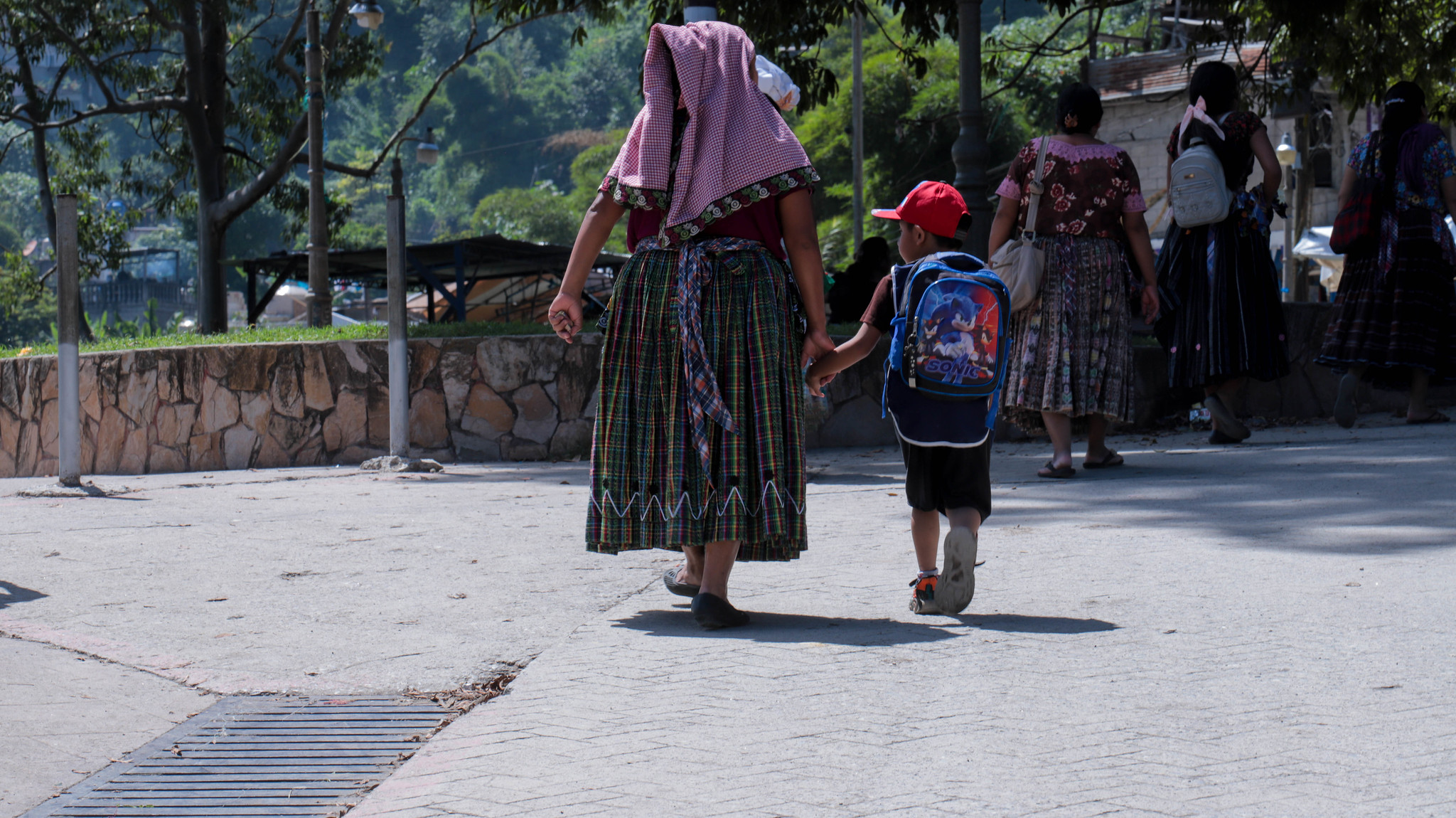
Photo: Mario Winter.
Voices for the Motagua River: Olga Vázquez.
Voices for the Motagua River: Nazario Pascual.
In early 2000, the Maya community organized to stop sand mining on their territory. At that time, the companies held mining permits that remained valid through 2021 and 2022. And although the permits expired, some companies continued to operate after requesting extensions. In June 2022, the indigenous authorities of the Poqomam people began a sit-in protest in front of the Piedrinera San Luis company, which they maintained for four years.
In July 2024, the Special Rapporteur on Economic, Social, Cultural, and Environmental Rights of the IACHR visited Santa Cruz Chinautla. During his visit, traditional authorities and community members spoke about the environmental, water-related, health, economic, and cultural impacts of the pollution in their rivers.
That same year, in October, the community—with support from AIDA, the Indigenous Peoples’ Law Firm, and partner organizations—filed a lawsuit (petition for amparo) against the municipality of Chinautla over its failure to take measures to address the contamination of its rivers and soil caused by improper solid waste management and the existence of illegal landfills.
AIDA’s scientific team, together with local residents and community authorities, collected key information on illegal landfills in the area. This community science initiative supported the litigation by highlighting the severity of the pollution, demonstrating the ongoing use of such practices, and providing evidence of the municipal authorities’ failure to fulfill their legal obligations regarding waste management.
Learn more about this community science initiative.
In June 2025, the Poqomam community won the support of the Guatemalan justice system when a constitutional court ordered the municipality of Chinautla to effectively address the claims in the lawsuit aimed at stopping the pollution of the rivers and soil in Santa Cruz Chinautla.
This is the first time a Guatemalan court has recognized a community's right to a healthy environment and its central role in finding solutions.
Find out the details of the legal victory.
Current situation
Since the ruling was issued, the municipality of Chinautla has held a series of “technical working groups” with representatives from the central government, civil society, and the community. A smaller group of technical experts was later created to develop a work plan with clear goals. Several months have passed without the municipality convening these working groups.
Furthermore, in December 2025, the IACHR noted in its report Human Rights Situation in Guatemala that the Motagua River basin is facing a severe pollution crisis that has had profound impacts on biodiversity and has resulted in systematic violations of the human rights of local communities, including the Maya Poqomam people.
And in May 2026, the Ministry of the Environment and Natural Resources revoked the license of the sand mining company Piedrinera San Luis for "failure to comply with environmental commitments."
AIDA continues to monitor the implementation of the court ruling to ensure the right to a healthy environment for the Poqomam Maya community and all those living in the Motagua River basin. Meanwhile, the residents of Santa Cruz Chinautla remain organized and mobilized to improve their environment and defend their rights.
Related projects

Open letter to American States on the signing of a regional environmental treaty
Dear Presidents, On 27 September 2018, countries in Latin America and the Caribbean will have the opportunity to put in place a new instrument to protect the environment: The Regional Agreement on Access to Information, Public Participation and Access to Justice on Environmental Matters in Latin America and the Caribbean (the Escazú Agreement). Your governments can make history and become leaders in environmental protection by signing the agreement during the opening for signature ceremony which will be held in the context of the Annual General Debate of the United Nations General Assembly in New York. The Escazú Agreement is a key tool that will allow for a more participatory approach to decision-making, policymaking and projects relating to the environment and decreasing and mitigating conflicts driven by a lack of effective participation of affected communities. The Agreement delves into the human rights obligations that the countries in the region previously acquired through other international instruments with regard to the right of access to public information; participation in decision-making, including the adoption of inclusive, participatory and representative decisions at all levels; the right to a healthy environment; equal access to justice with regard to environmental rights; and the protection of human and environmental rights defenders, among others. These obligations acquired by the countries of Latin America and the Caribbean, together with the commitments made within the framework of the Sustainable Development Goals and other international agreements, reflect a commitment to environmentally friendly development that respect human rights and future generations. In addition, at the 48th General Assembly of the Organization of American States (OAS) in June this year, your governments welcomed the signing of the Escazú Agreement with the acknowledgment that the human person is the central subject of sustainable development and should be an active participant in this. You also acknowledged that the Agreement is a means to guarantee a safe environment in which individuals, groups and organizations that promote and defend human rights related to the environment can act without facing threats, restrictions, attacks or danger. Signing the Escazú Agreement is the first step required to include environmental access rights into the government agenda. It represents a historic opportunity for your governments to send a clear message to your citizens and the international community regarding your firm commitment to this global agenda for the protection of human rights associated with a healthy and sustainable environment. A global agenda that will benefit everyone in the region and around the world. We call on your governments to sign the Escazú Agreement on 27 September 2018 and submit it to the competent national bodies for its immediate ratification. Now is the time to deliver real steps for real change. Latin America and the Caribbean need you to make the promise of the Escazú Agreement a reality for millions of people in the region. We also urge your governments to adopt rapid and effective measures to implement the provisions of the Agreement.
Read more
Renewing AIDA’s Board of Directors
We proudly welcome the new members of our Board: Xavier Martínez Esponda, Monica Roa and Manuel Pulgar-Vidal. All three are outstanding legal professionals dedicated to the defense of the environment and human rights in Latin America. AIDA’s Board of Directors has been renewed following internal elections, with the incorporation of three new members for the next period of three years. We’re honored to welcome: Xavier Martínez Esponda, a prominent Mexican attorney and Technical Operating Director of the Mexican Center for Environmental Law (CEMDA); Monica Roa, an accomplished Colombian attorney and defender of women’s rights; and Manuel Pulgar-Vidal, a renowned Peruvian environmental attorney, former Minister of Environment of Peru and current leader of the Climate and Energy Practice at WWF International. Manuel Pulgar-Vidal is returning to AIDA’s Board of Directors, which he chaired for eight years after helping to found the organization in 1998. The Board is currently chaired by Manolo Morales of Ecuador, Executive Director of the ECOLEX Management and Environmental Law Corporation. It has as Vice President, Jerónimo Rodríguez of Colombia, Sub-director of Natural Wealth Program at Chemonics International; as Chief Financial Officer, Martin Wagner of the United States, Director of the International Program at Earthjustice; and as Secretary, Margot Venton of Canada, attorney at Ecojustice. Other members include Rafael González of Costa Rica, President of Justice for Nature (JPN) and Pedro Solano of Peru, Executive Director of the Peruvian Society for Environmental Law (SPDA). AIDA is the only regional organization of Latin American experts providing free legal and technical support in defense of the environment and human rights in the Americas. We are constantly seeking new ways to strength the organization, including through the important roles of our Board members.
Read more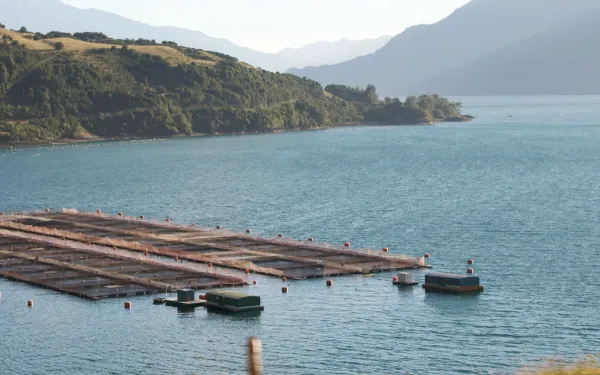
Opening our eyes to the dangers of salmon farming in Chile
Recently, I went to dinner with some friends. Two of them ordered salmon. The dish was expensive because, although Chile is the world’s second largest producer, salmon is a non-native species and one of the most popular fish in the country. I respectfully asked my friends if they were aware of the toll commercial salmon production takes on our oceans. Their response was glib: “That’s an exaggeration,” they said. “I don’t think it’s that bad.” Unfortunately, I expected that response. The environmental dangers of salmon farming in Chile are largely hidden, but that doesn’t make them any less serious. An unsustainable industry On July 5, nearly 700,000 salmon escaped from their pens at a farm off of Huar Island in Patagonia’s Los Lagos region. The escape has revived public debate on the dangers of Chile’s salmon industry. Caused by damage the pens sustained during a storm, the escape could represent one of the largest environmental catastrophes since salmon farming began in Chile in the 1980’s. But what’s the bigger problem? As it turns out, it’s not just one problem — it’s many. The problems of salmon farming first became visible in 2007 when scientists recorded the first case of infectious salmon anemia, a lethal illness for the fish. Although the industry adopted new infrastructure and sanitary standards, the root of the problem remained unaddressed—the overpopulation of marine habitats, packed with more fish than they could support, was causing oxygen depletion and, eventually, oceanic dead zones. Those poor farming practices also led to the excessive use of antibiotics to treat illnesses and infections. Eventually, other problems arose—algae blooms, and the so-called red tides that have devastated the area’s marine life. The recent massive salmon escape has posed serious public health risks because the fish had been treated with excessive amounts of antibiotics, making them inapt for consumption by humans or other animals. But, despite warnings from the authorities in the days following the escape, fishermen in the area began capturing salmon and selling them at extremely low prices. As an invasive predator, the salmon also posted a threat to the ecosystem, since they are aggressive fish prone to devastating anything in their path, including native species. Greenpeace said the escape was equivalent to a plague of 140 million rats eating anything in their path. Although the company was required to re-capture at least 10 percent of the salmon, they failed to reach that goal, despite offering up to $11 per fish. The work was further complicated since salmon are prey to sea lions and other predators. All this has revealed a clear structural problem—the lack of government control and regulation of an unsustainable industry. The most recent escape, from a farm owned by Marine Harvest Company, is yet another example of how the entire industry is failing to comply with environmental standards. According to Chile’s National Fish Service, some 3.3 million salmon have escaped from different fisheries in the Los Lagos, Aysén and Magallanes regions in the last eight years. Urgent Measures If this malpractice continues, salmon farming could destroy Chile’s marine biodiversity. Other countries have taken drastic actions in response to cases similar to the one on Huar Island. In the United States, for example, Washington State decided to gradually eliminate salmon farms after 300 salmon escape from a hatchery there. At AIDA, we are working to protect Chilean Patagonia, the country’s most pristine region, into which the salmon industry continues to expand. In May 2017, we filed a complaint with the Chile’s Superintendent of the Environment asking they investigate the damages salmon farms are causing to the Magallanes region, and sanction the companies responsible. We also commissioned a scientific report demonstrating how susceptible the region is to the risks of salmon farming. Hopefully my compatriots will realize that we share a common interest in protecting our most pristine waters from the damages of salmon farming. Because at the end of the day, that bite of salmon may be more expensive than they think.
Read more