
Project
Shutterstock.
Pollution of the Motagua River in Guatemala: The Poqomam Maya people’s quest for environmental justice
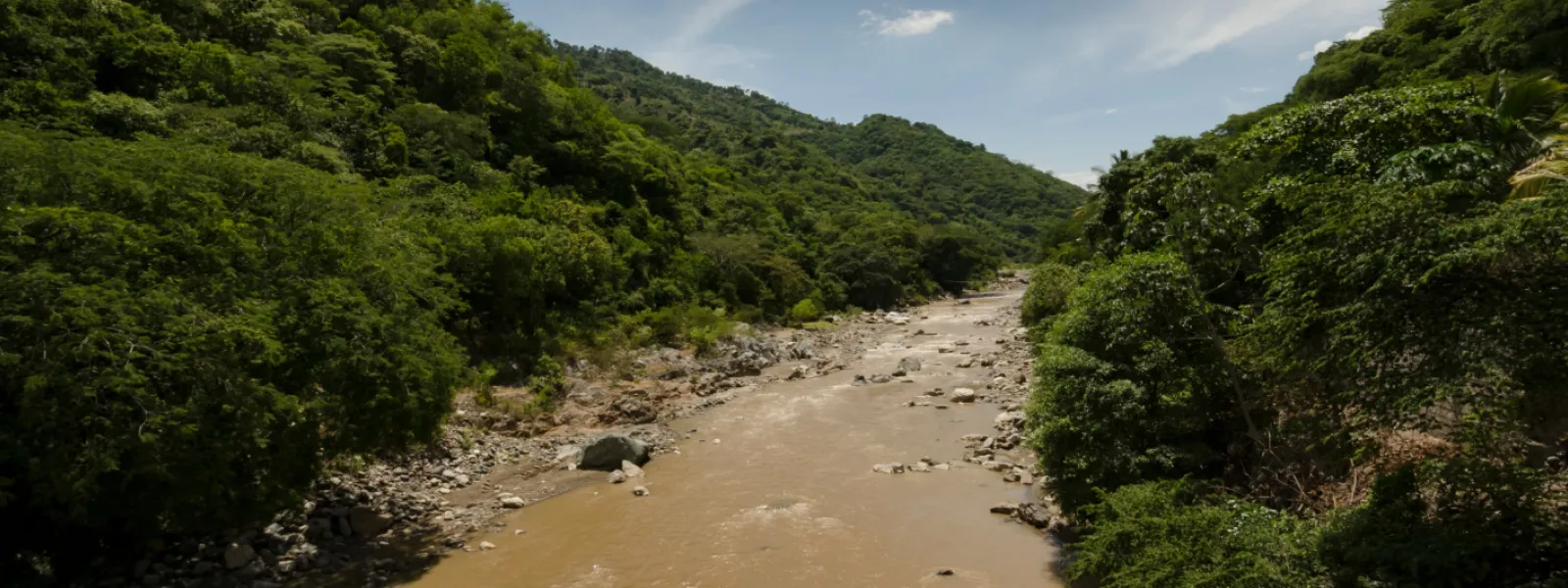
The Motagua River basin—Guatemala’s largest and most important river—is severely polluted with wastewater, solid waste, and other types of debris.
This is a cross-border issue because the Motagua’s polluted waters flow into the Caribbean Sea, reach the coast of Honduras, and threaten the Mesoamerican Reef System.
For decades, this has violated the rights to health, water, development, and a healthy environment of all the people living in the river basin.
In June 2025, the Poqomam Maya community of Santa Cruz Chinautla—supported by AIDA, the Indigenous Peoples’ Law Firm, and allied organizations—achieved an unprecedented legal victory to halt degradation in the basin. In response to the lawsuit it filed, a Guatemalan court ordered the municipality of Chinautla to comply with a series of obligations to curb the pollution of the area’s rivers and soil.
The government's response to the ruling has so far been limited to technical working group meetings. Meanwhile, the community continues to work toward the proper implementation of the ruling and to take other actions to defend its territory and its rights.
Background
The Motagua River, which is 486 km long, flows through 96 municipalities and 14 departments in Guatemala. It originates in Quiché, a department located in the northwest, and empties into the Caribbean Sea.
Polluting activities occur throughout the entire basin, including sub-basins and micro-basins. The largest volume of pollution comes from Guatemala City, the country’s capital, and is carried by the waters of the Las Vacas River, which in turn receives a large amount of waste from the Chinautla River.
The Chinautla River, which flows through the municipality of the same name, carries solid waste from a landfill located in Zone 3 of the capital—where trash from at least 14 municipalities in the department of Guatemala is dumped—as well as sewage generated by some 500,000 people living in the northern part of the capital, which undergoes no prior treatment.
Other sources of pollution include the numerous illegal dumps in the municipality of Chinautla, the waste that private vehicles and garbage trucks dump along the banks of its rivers, as well as the sand-mining companies—which began setting up operations in the area between 1996 and 1997—whose activities weaken the rivers' basins, causing solid waste to be more easily carried away by the river currents.
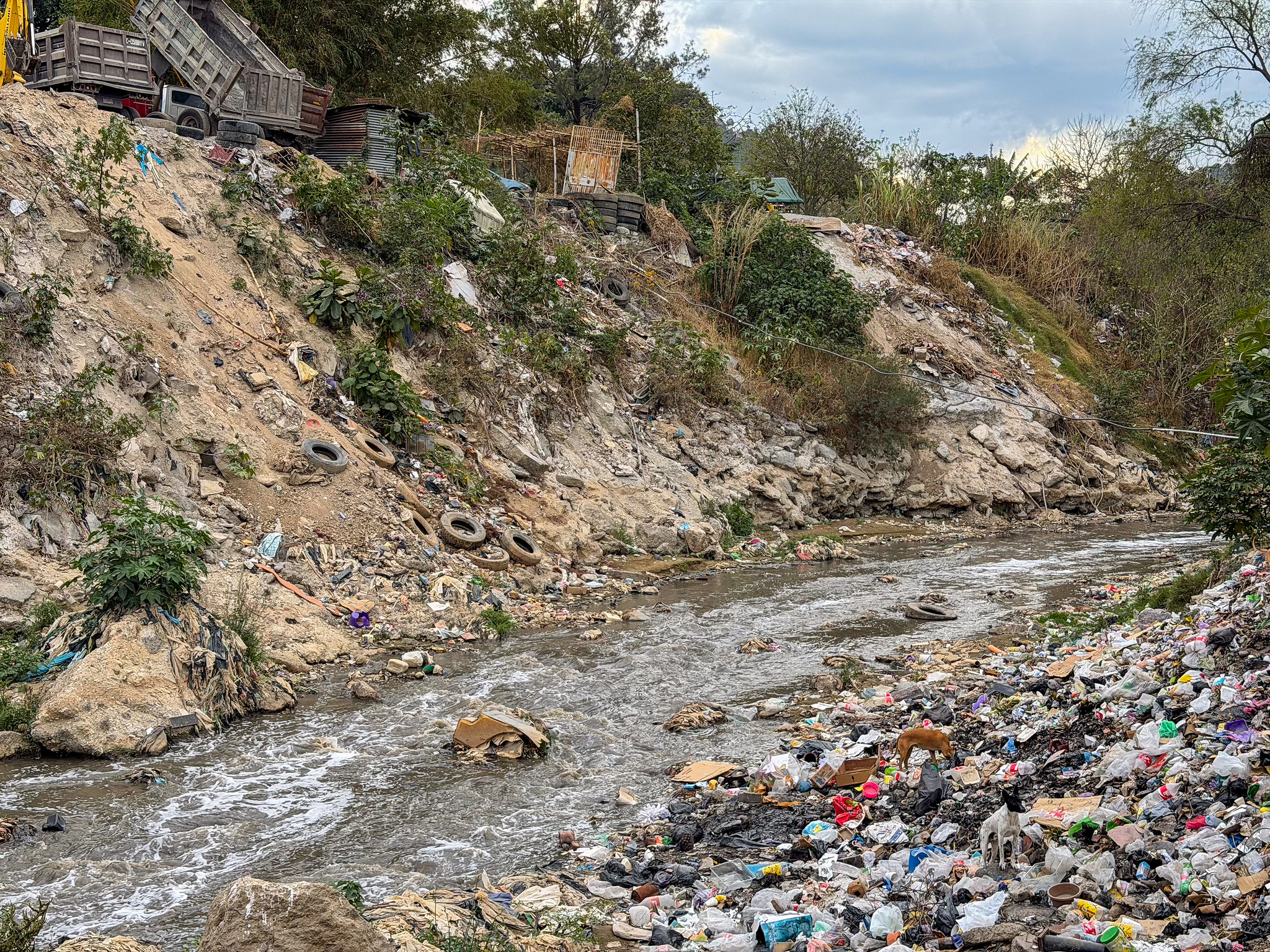
Photo: Mayela Sánchez García.
The situation extends beyond national borders. Every year, the Motagua River discharges some 20,000 metric tons of plastic into the Caribbean Sea, making it one of the rivers that contributes the most plastic pollution to the ocean worldwide, according to estimates contained in a 2025 report by the Inter-American Commission on Human Rights (IACHR).
The river flows into the Mesoamerican Reef at its mouth, so pollution also threatens to degrade one of the largest and most biodiverse transboundary reefs on the planet, which spans the territorial waters of Belize, Guatemala, Honduras, and Mexico.
In addition, the contaminated water reaches the coast of Honduras and spreads into Amatique Bay, located along the eastern coast of Guatemala, affecting the Caribbean Sea.
The roots of this chronic, cross-border problem are structural. Data from the Integrated Environmental Management of the Motagua River Basin project, funded by the United Nations Development Program (UNDP), show that in Guatemala, 66% of municipal solid waste is not collected, and there is no guarantee that the remaining 34% is disposed of properly. Furthermore, of all landfills nationwide, 88.32% are illegal or lack municipal authorization.
In other words, the core issues that need to be addressed are the mismanagement of solid waste and water resources in Guatemala; noncompliance with existing regulations on wastewater discharge and the disposal and treatment of solid waste and residues; and the lack of a water law.
The Poqomam Maya people's quest for justice
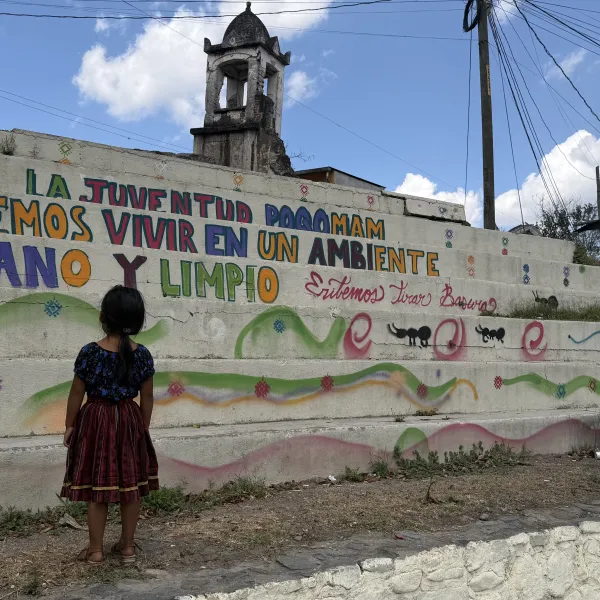
The rivers of Santa Cruz Chinautla, a community of the Poqomam Maya people located just twelve kilometers from Guatemala City, have become conduits of pollution that are degrading the Motagua River.
For decades, the local population has seen its health and livelihoods—including pottery, one of the main economic activities and a source of identity—damaged due to the lack of waste management in the municipality of Chinautla and the urban area of the country’s capital, as well as the activities of sand-mining companies.
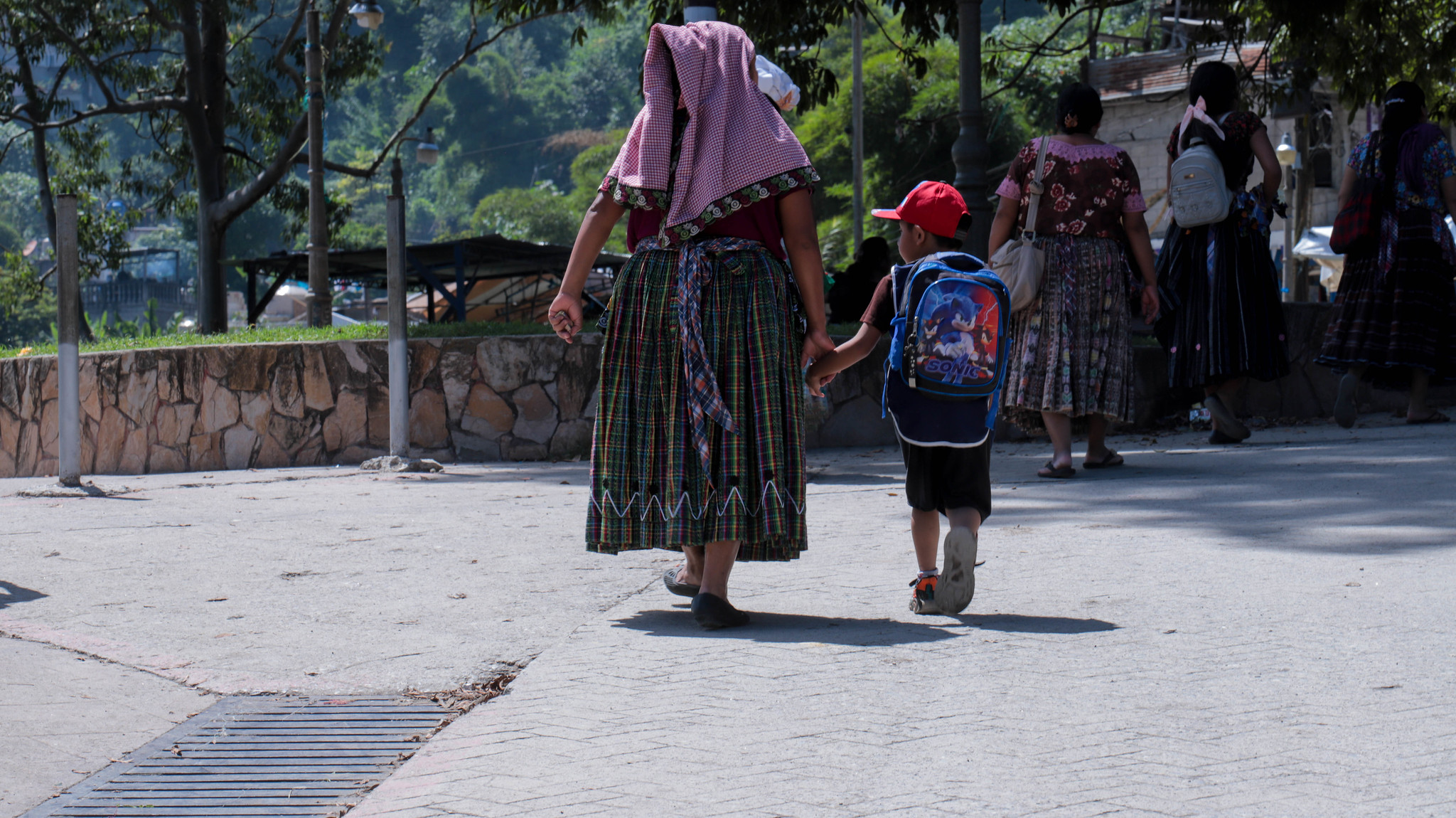
Photo: Mario Winter.
Voices for the Motagua River: Olga Vázquez.
Voices for the Motagua River: Nazario Pascual.
In early 2000, the Maya community organized to stop sand mining on their territory. At that time, the companies held mining permits that remained valid through 2021 and 2022. And although the permits expired, some companies continued to operate after requesting extensions. In June 2022, the indigenous authorities of the Poqomam people began a sit-in protest in front of the Piedrinera San Luis company, which they maintained for four years.
In July 2024, the Special Rapporteur on Economic, Social, Cultural, and Environmental Rights of the IACHR visited Santa Cruz Chinautla. During his visit, traditional authorities and community members spoke about the environmental, water-related, health, economic, and cultural impacts of the pollution in their rivers.
That same year, in October, the community—with support from AIDA, the Indigenous Peoples’ Law Firm, and partner organizations—filed a lawsuit (petition for amparo) against the municipality of Chinautla over its failure to take measures to address the contamination of its rivers and soil caused by improper solid waste management and the existence of illegal landfills.
AIDA’s scientific team, together with local residents and community authorities, collected key information on illegal landfills in the area. This community science initiative supported the litigation by highlighting the severity of the pollution, demonstrating the ongoing use of such practices, and providing evidence of the municipal authorities’ failure to fulfill their legal obligations regarding waste management.
Learn more about this community science initiative.
In June 2025, the Poqomam community won the support of the Guatemalan justice system when a constitutional court ordered the municipality of Chinautla to effectively address the claims in the lawsuit aimed at stopping the pollution of the rivers and soil in Santa Cruz Chinautla.
This is the first time a Guatemalan court has recognized a community's right to a healthy environment and its central role in finding solutions.
Find out the details of the legal victory.
Current situation
Since the ruling was issued, the municipality of Chinautla has held a series of “technical working groups” with representatives from the central government, civil society, and the community. A smaller group of technical experts was later created to develop a work plan with clear goals. Several months have passed without the municipality convening these working groups.
Furthermore, in December 2025, the IACHR noted in its report Human Rights Situation in Guatemala that the Motagua River basin is facing a severe pollution crisis that has had profound impacts on biodiversity and has resulted in systematic violations of the human rights of local communities, including the Maya Poqomam people.
And in May 2026, the Ministry of the Environment and Natural Resources revoked the license of the sand mining company Piedrinera San Luis for "failure to comply with environmental commitments."
AIDA continues to monitor the implementation of the court ruling to ensure the right to a healthy environment for the Poqomam Maya community and all those living in the Motagua River basin. Meanwhile, the residents of Santa Cruz Chinautla remain organized and mobilized to improve their environment and defend their rights.
Related projects
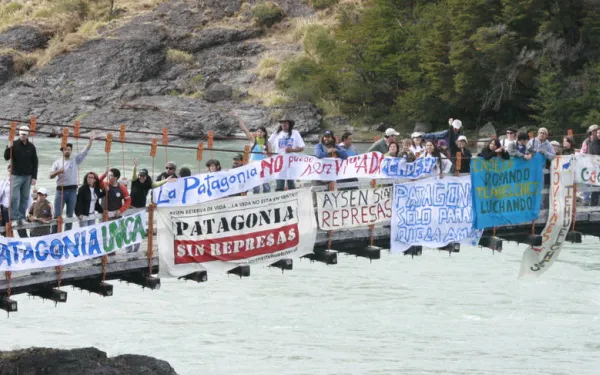
Climate initiatives must not include large hydropower projects – NGOs
In a global manifesto released today, a coalition of more than 300 civil society organizations[i] from 53 countries called on governments and financiers at the Paris climate talks to keep large hydropower projects out of climate initiatives such as the Clean Development Mechanism, the World Bank’s Climate Investment Funds, and green bonds. Large hydropower projects emit massive amounts of methane, make water and energy systems more vulnerable to climate change, and cause severe damage to critical ecosystems and local communities. Including them in climate initiatives crowds out support for true climate solutions such as wind and solar power which have become readily available, can be built more quickly than large dams and have a smaller social and environmental footprint. “Particularly in tropical regions, hydropower reservoirs emit significant amounts of greenhouse gases, comparable to the climate impact of the aviation sector”, said Peter Bosshard, interim Executive Director of International Rivers. “For environmental, social and economic reasons, large hydropower projects are a false solution to climate change.” “Large hydropower projects have serious impacts on local communities and often violate the rights of indigenous peoples to their lands, cultural integrity and free, prior informed consent”, said Joan Carling, Secretary General of the Asia Indigenous Peoples Pact (AIPP). “The resistance of dam-affected communities has often been met with egregious human rights violations.” “Hydropower dams make water and energy systems more vulnerable to climate change,” said Himanshu Thakkar, the founder of the South Asia Network on Dams, Rivers and People (SANDRP). “Dam building has exacerbated flood disasters in fragile mountain areas. At the same time more extreme droughts increase the economic risks of hydropower, and have greatly affected countries that depend on hydropower dams for most of their electricity.” “Wind and solar power have become readily available and financially competitive, and have overtaken large hydropower in the addition of new capacity,” said Astrid Puentes, co-Executive Director of the Interamerican Association for Environmental Defense (AIDA). “The countries of the global South should leapfrog obsolete dam projects and promote energy solutions that are gentle to our climate, our environment and the people that depend on it.” Background Large hydropower projects are often propagated as a “clean and green” source of electricity by international financial institutions, national governments and other actors. They greatly benefit from instruments meant to address climate change, including carbon credits under the Clean Development Mechanism (CDM), credits from the World Bank’s Climate Investment Funds, and special financial terms from export credit agencies and green bonds. The dam industry advocates that large hydropower projects be funded by the Green Climate Fund, and many governments boost them as a response to climate change through national initiatives. For example, at least twelve governments with major hydropower sectors have included an expansion of hydropower generation in their reports on Intended Nationally Determined Contributions (INDCs). Support from climate initiatives is one of the main reasons why more than 3,700 hydropower dams are currently planned and under construction around the world. Further information The civil society manifesto, Ten Reasons Why Climate Initiatives Should Not Include Large Hydropower Projects, is available here. The new video, A Wrong Climate for Damming Rivers, is available at https://youtu.be/UnG_b6egjFk. The following launch events for the manifesto and video will be held in Paris this week: Saturday, December 5th, 12 pm: Press Conference with indigenous leaders and human rights defenders at the International Rights of Nature Tribunal (Maison des Métallos, 94 Rue Jean-Pierre Timbaud, 75011). December 5th, 6 pm - The manifesto and video will be presented at event hosted by the Bianca Jagger Human Rights Foundation (Galerie Thaddaeus Ropac Paris Pantin, Salzburg, 69, Avenue Du Géneral Lecler, 93500, Pantin). Journalists interested in attending should send a request via e-mail by end-of-day December 3rd to: [email protected]. [i] Sponsors: Asia Indigenous Peoples Pact, Asociación Interamericana para la Defensa del Ambiente, Amazon Watch, Bianca Jagger Human Rights Foundation, Carbon Market Watch, France Liberte, International Rivers, Jeunes Volontaires pour l'Environnement International, Oxfam International, REDLAR, Ríos Vivos, Rivers Without Boundaries; South Asia Network on Dams, Rivers and People and Urgewald.
Read moreIf we want to cool the planet, fracking must be banned
Statement from the Latin American Alliance On Fracking at COP21: The goal of the 21st Conference of Parties of the United Nations Framework Convention on Climate Change is to reach an effective agreement that will reduce greenhouse gas emissions to a level consistent with both the rights and opportunities of present and future generations, and the conservation of the environment. This requires national policies and actions consistent with international commitments on climate change and human rights, and which respect the Sustainable Development Goals. Fracking to extract unconventional hydrocarbons is contrary to all of the above commitments, and will actually increase the impacts of climate change – which is why the controversial practice must be banned. During the cycle of extracting, processing, storing, transferring and distributing unconventional hydrocarbons, methane gas – 87 times more powerful than carbon dioxide as an agent of global warming – is released in the atmosphere. The release of methane contributes to global warming at a time when we should be taking any measures necessary to stop it: “within a period of 20 years, the footprint of natural gas released from shale deposits is worse than that of carbon or oil.”[1] If we continue with the concept of development based on the exploitation of fossil fuels, without first taking into account the rights and needs of communities, it will be impossible to conserve a planet that upholds the well being of present and future generations. The unconventional hydrocarbons extracted from the earth by fracking should not be considered transition or clean energies, since both greenhouse gas emissions, and the risks and damages posed to the environment and public health, are very high.[2] Fracking in Latin America We believe that the experience of fracking in Latin America should stimulate global discussion. Despite the particularities with which fracking has advanced on the continent, many similarities have emerged between cases in Mexico, Colombia, Chile, Bolivia and Argentina. Fracking is advancing blindly in Latin America. The basic human rights of affected communities are being ignored, including: the right to consultation and free, prior and informed consent; the right to participation and social control; and the right to information.[3] Governments of the region have failed to apply the precautionary principle, which should be applied considering the serious risks fracking creates for the health of people and the environment, and the uncertainty surrounding the scope and extent of damage it can cause. National laws have been modified based on corporate demands to open the door to the exploitation of unconventional hydrocarbons through fracking. The Mexican energy reform (2013) and the new law on hydrocarbons in Argentina (2014) are clear examples of this. Fracking in the region has developed without any comprehensive, long-term studies on the risks and damages it causes to the health of people and the environment. With the exception of Mexico, the countries of the region lack their own studies of unconventional hydrocarbon reserves that could verify the figures estimated by the U.S. Energy Information Administration. Across the continent, fracking has advanced on indigenous and rural communities, urban neighborhoods and even Natural Protected Areas. It has resulted in the displacement of people and productive activities such a livestock and agriculture, whose coexistence with the technique is impossible.[4] In parallel, complaints and damages have multiplied in response to fires, spills, and explosions; the toxic pollution of water, air and soil; the loss of radioactive substances into wells; and the mismanagement of water.[5] Throughout Latin America, the rejection of fracking has grown. Proof lies in the national and international networks of opposition; the more than 50 communities and municipalities that have banned fracking within their territories in Argentina, Mexico, Brazil and Uruguay;[6] and the suspension of fracking operations through judicial actions in Brazil and Argentina. States should make commitments against fracking In the framework of the Paris Climate Talks, we urge Member States of the Convention to: Sign a binding agreement that efficiently and effectively reduces greenhouse gases to levels compatible with the rights and opportunities of present and future generations, and conservation of the environment. Apply the precautionary principle as a legal and ethical imperative of action to address high-risk situations in a context of scientific uncertainty, in this case banning fracking in countries where it has been initiated or interest in it shown. Conduct objective and independent scientific studies about the risks and impacts of fracking on health, the environment and productive processes, with a long-term goal of ensuring the rights of present and future generations. Where impacts have been confirmed, States should guarantee that companies take responsibility for the damages done and, primarily, for the restoration of the affected environment, even in cases where their contract has ended. Strengthen a policy of energy diversification and the reduced rationalization of energy consumption, which includes the promotion of renewable energies and discourages the extraction of fossil fuels, consistent with principles and rights related to transparency, participation and free, prior and informed consent. On behalf of the Latin American Alliance On Fracking, we warn of the risks and severe damage that the exploration and exploitation of unconventional hydrocarbons can cause to the people and environment of our countries. Fracking is an experimental technique and neither governments nor companies should conduct experiments at such a high risk to the life and health of people and the environment. [1] Food and Water Watch, “The Urgent Case for a Ban on Fracking,” February 2015, http://www.foodandwaterwatch.org/sites/default/files/urgent_case_for_ban_on_fracking.pdf and Robert Howarth and Anthony Ingraffea, “Should fracking stop?” in: Nature, September 15, 2011, vol. 477, p. 272. http://www2.cce.cornell.edu/naturalgasdev/documents/pdfs/howarth%20nature.pdf [2] Robert Howarth “A bridge to nowhere: methane emissions and the greenhouse gas footprint of natural gas,” April 2014, http://onlinelibrary.wiley.com/doi/10.1002/ese3.35/pdf [3]Alianza Latinoamericana frente al Fracking, “Avance ciego del fracking en América Latina” (infographic), September 2015, http://www.opsur.org.ar/blog/2015/09/04/mapa-del-fracking-en-america-latina-2/ [4] OPSur “Alto Valle Perforado” (Ed. Jinete Insomne, 2015) [5] Pablo Bertinat et al; “20 Mitos y Realidades del Fracking,” 2014, http://www.rosalux.org.ec/attachments/article/819/20_Mitos_LIBRO_FRL_PRINT.pdf [6] Alianza Latinoamericana frente al Fracking, “Avance ciego del fracking en América Latina” (infographic), September 2015, http://www.opsur.org.ar/blog/2015/09/04/mapa-del-fracking-en-america-latina-2/
Read more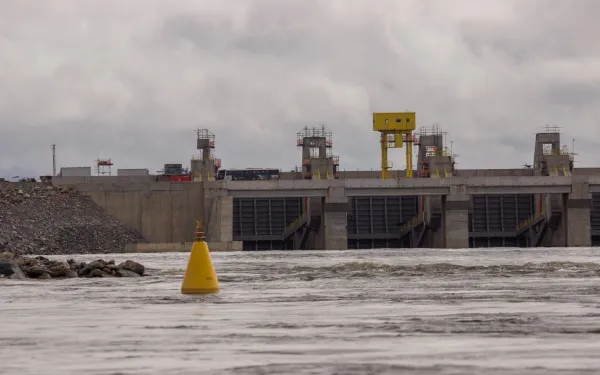
Ten Reasons Why Climate Initiatives Should Not Include Large Hydropower Projects
A Civil Society[i] Manifesto for the Support of Real Climate Solutions Large hydropower projects are often propagated as a “clean and green” source of electricity by international financial institutions, national governments and other actors. They greatly benefit from instruments meant to address climate change, including carbon credits under the Clean Development Mechanism (CDM), credits from the World Bank’s Climate Investment Funds, and special financial terms from export credit agencies and green bonds. The dam industry advocates for large hydropower projects to be funded by the Green Climate Fund, and many governments boost them as a response to climate change through national initiatives. For example, at least twelve governments with major hydropower sectors have included an expansion of hydropower generation in their reports on Intended Nationally Determined Contributions (INDCs). Support from climate initiatives is one of the reasons why more than 3,700 hydropower dams are currently under construction and in the pipeline. Yet large hydropower projects are a false solution to climate change. They should be kept out from national and international climate initiatives for the following reasons: Particularly in tropical regions, hydropower reservoirs emit significant amounts of greenhouse gases. According to a peer-reviewed study, methane from reservoirs accounts for more than 4% of all human-caused climate change – comparable to the climate impact of the aviation sector. In some cases, hydropower projects are producing higher emissions than coal-fired power plants generating the same amount of electricity. Rivers take about 200 million tons of carbon out of the atmosphere every year. In addition, the silt that rivers like the Amazon, Congo, Ganges and Mekong carry to the sea feeds plankton and absorbs large amounts of carbon. Hydropower projects and other dams disrupt the transport of silt and nutrients and impair the role of rivers to act as global carbon sinks. Hydropower dams make water and energy systems more vulnerable to climate change. Unprecedented floods are threatening the safety of dams and alone in the US have caused more than 100 dams to fail since 2010. Dam building has exacerbated flood disasters in fragile mountain areas such as Uttarakhand/India. At the same time more extreme droughts increase the economic risks of hydropower, and have greatly affected countries from Africa to Brazil that depend on hydropower dams for most of their electricity. In contrast to most wind, solar and micro-hydropower projects, dams cause severe and often irreversible damage to critical ecosystems. Due to dam building and other factors, freshwater ecosystems have on average lost 76% of their populations since 1970 – more than marine and land-based ecosystems. Building more dams to protect ecosystems from climate change means sacrificing the planet’s arteries to protect her lungs. Large hydropower projects have serious impacts on local communities and often violate the rights of indigenous peoples to their lands, territories, resources, governance, cultural integrity and free, prior informed consent. Dams have displaced at least 40-80 million people and have negatively affected an estimated 472 million people living downstream. The resistance of dam-affected communities has often been met with egregious human rights violations. Large hydropower projects are not always an effective tool to expand energy access for poor people. In contrast to wind, solar and micro-hydropower, large hydropower dams depend on central electric grids, which are not a cost-effective tool to reach rural populations particularly in Sub-Saharan Africa and the Himalayas. Large hydropower projects are often built to meet the demands of mining and industrial projects even if they are justified by the needs of the poor. Even if they were a good solution in other ways, large hydropower projects would be a costly and time-consuming way to address the climate crisis. On average large dams experience cost overruns of 96% and time overruns of 44%. In comparison, wind and solar projects can be built more quickly and experience average cost overruns of less than 10%. Unlike wind and solar power, hydropower is no longer an innovative technology, and has not seen major technical breakthroughs in several decades. Unlike with solar power, climate funding for large hydropower projects will not bring about further economies of scale, and does not encourage a transfer of new technologies to Southern countries. Wind and solar power have become readily available and financially competitive, and have overtaken large hydropower in the addition of new capacity. As grids become smarter and the cost of battery storage drops, new hydropower projects are no longer needed to balance intermittent sources of renewable energy. Hydropower projects currently make up 26% of all projects registered with the CDM, and absorb significant support from other climate initiatives. Climate finance for large hydropower projects crowds out support for real solutions such as wind, solar and micro hydropower, and creates the illusion of real climate action. Including large hydropower in climate initiatives falsely appears to obliterate the need for additional real climate solutions. For these reasons, the undersigned organizations and individuals call on governments, financiers and other institutions to keep large hydropower projects out of their initiatives to address climate change. All climate and energy solutions need to respect the rights and livelihoods of local communities. [i] Amazon Watch, Asia Indigenous Peoples Pact, Asociación Interamericana para la Defensa del Ambiente, Bianca Jagger Human Rights Foundation, Carbon Market Watch, International Rivers, Jeunes Volontaires pour l'Environnement International, Oxfam International, South Asia Network on Dams, Rivers and People; Urgewald, REDLAR and Movimiento Ríos Vivos.
Read more