
Project
Shutterstock.
Pollution of the Motagua River in Guatemala: The Poqomam Maya people’s quest for environmental justice
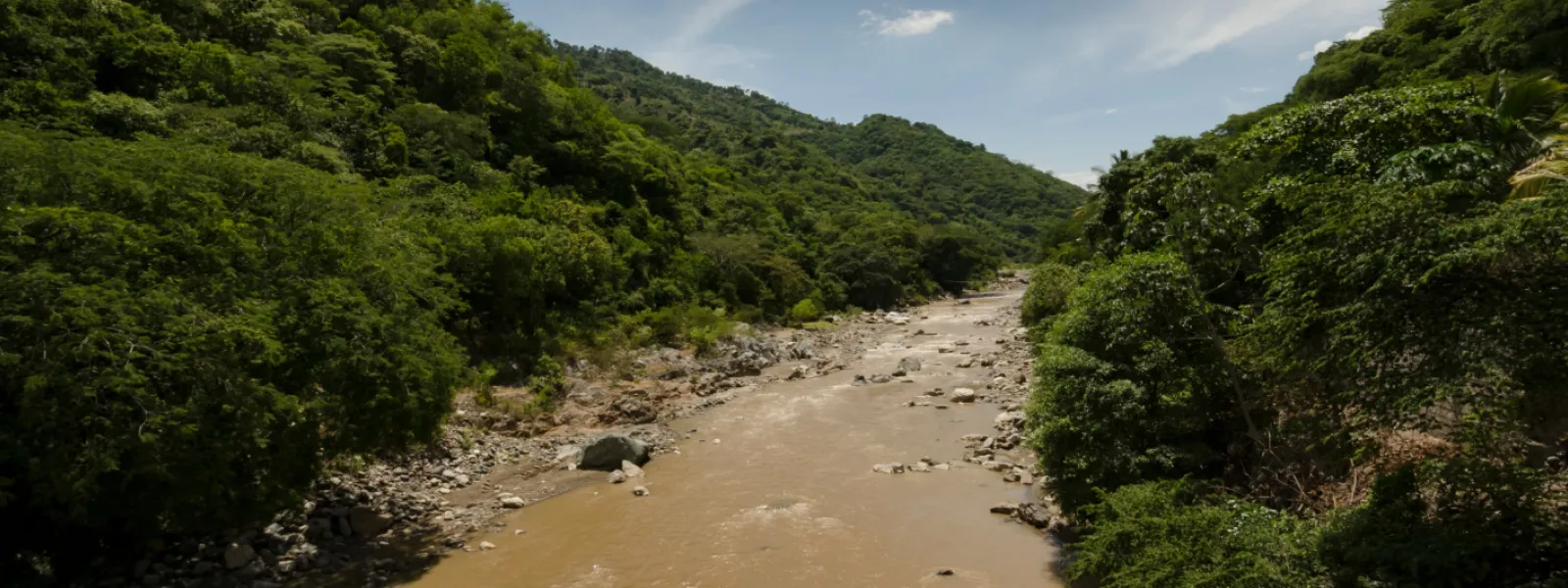
The Motagua River basin—Guatemala’s largest and most important river—is severely polluted with wastewater, solid waste, and other types of debris.
This is a cross-border issue because the Motagua’s polluted waters flow into the Caribbean Sea, reach the coast of Honduras, and threaten the Mesoamerican Reef System.
For decades, this has violated the rights to health, water, development, and a healthy environment of all the people living in the river basin.
In June 2025, the Poqomam Maya community of Santa Cruz Chinautla—supported by AIDA, the Indigenous Peoples’ Law Firm, and allied organizations—achieved an unprecedented legal victory to halt degradation in the basin. In response to the lawsuit it filed, a Guatemalan court ordered the municipality of Chinautla to comply with a series of obligations to curb the pollution of the area’s rivers and soil.
The government's response to the ruling has so far been limited to technical working group meetings. Meanwhile, the community continues to work toward the proper implementation of the ruling and to take other actions to defend its territory and its rights.
Background
The Motagua River, which is 486 km long, flows through 96 municipalities and 14 departments in Guatemala. It originates in Quiché, a department located in the northwest, and empties into the Caribbean Sea.
Polluting activities occur throughout the entire basin, including sub-basins and micro-basins. The largest volume of pollution comes from Guatemala City, the country’s capital, and is carried by the waters of the Las Vacas River, which in turn receives a large amount of waste from the Chinautla River.
The Chinautla River, which flows through the municipality of the same name, carries solid waste from a landfill located in Zone 3 of the capital—where trash from at least 14 municipalities in the department of Guatemala is dumped—as well as sewage generated by some 500,000 people living in the northern part of the capital, which undergoes no prior treatment.
Other sources of pollution include the numerous illegal dumps in the municipality of Chinautla, the waste that private vehicles and garbage trucks dump along the banks of its rivers, as well as the sand-mining companies—which began setting up operations in the area between 1996 and 1997—whose activities weaken the rivers' basins, causing solid waste to be more easily carried away by the river currents.
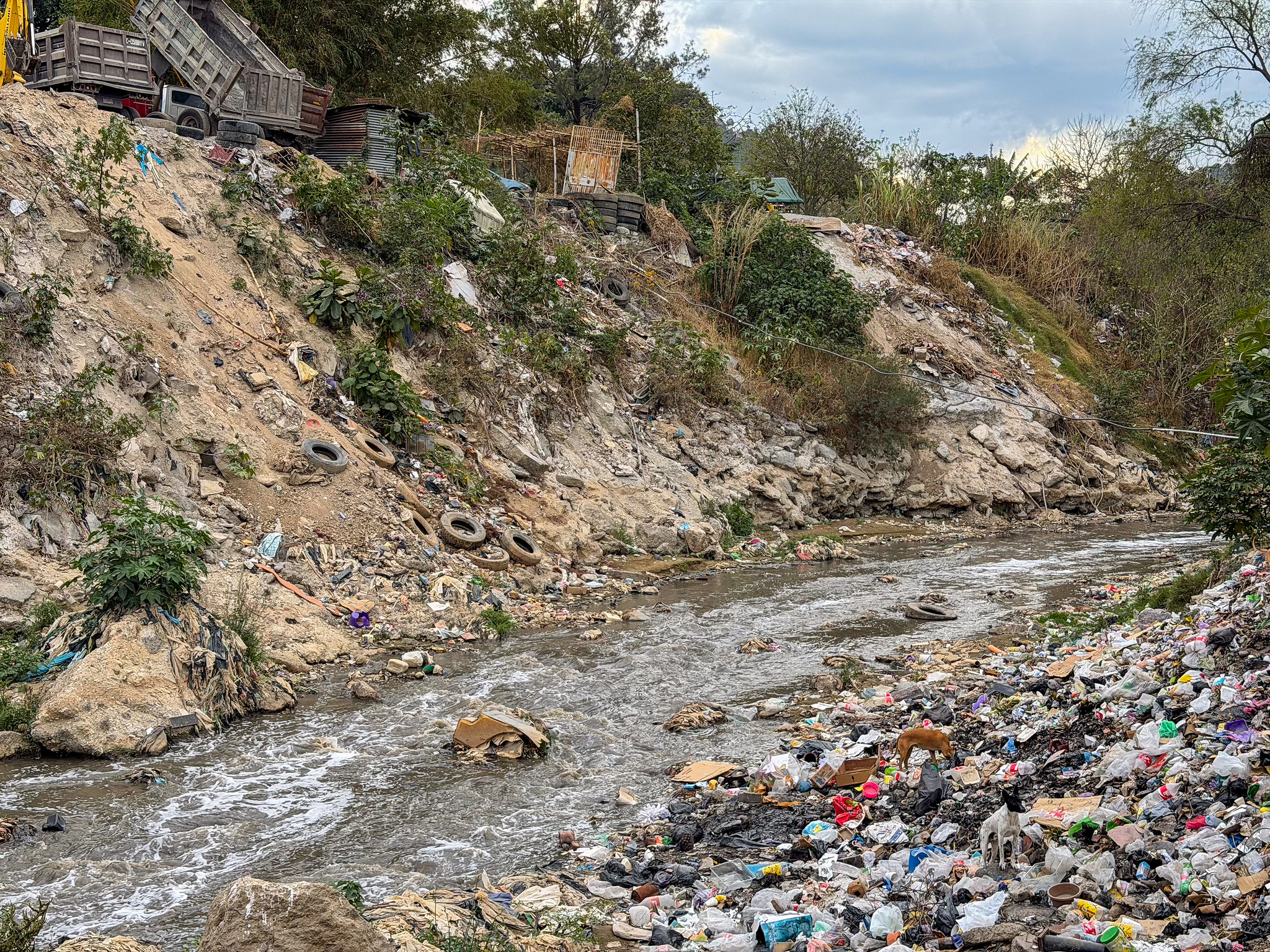
Photo: Mayela Sánchez García.
The situation extends beyond national borders. Every year, the Motagua River discharges some 20,000 metric tons of plastic into the Caribbean Sea, making it one of the rivers that contributes the most plastic pollution to the ocean worldwide, according to estimates contained in a 2025 report by the Inter-American Commission on Human Rights (IACHR).
The river flows into the Mesoamerican Reef at its mouth, so pollution also threatens to degrade one of the largest and most biodiverse transboundary reefs on the planet, which spans the territorial waters of Belize, Guatemala, Honduras, and Mexico.
In addition, the contaminated water reaches the coast of Honduras and spreads into Amatique Bay, located along the eastern coast of Guatemala, affecting the Caribbean Sea.
The roots of this chronic, cross-border problem are structural. Data from the Integrated Environmental Management of the Motagua River Basin project, funded by the United Nations Development Program (UNDP), show that in Guatemala, 66% of municipal solid waste is not collected, and there is no guarantee that the remaining 34% is disposed of properly. Furthermore, of all landfills nationwide, 88.32% are illegal or lack municipal authorization.
In other words, the core issues that need to be addressed are the mismanagement of solid waste and water resources in Guatemala; noncompliance with existing regulations on wastewater discharge and the disposal and treatment of solid waste and residues; and the lack of a water law.
The Poqomam Maya people's quest for justice
The rivers of Santa Cruz Chinautla, a community of the Poqomam Maya people located just twelve kilometers from Guatemala City, have become conduits of pollution that are degrading the Motagua River.
For decades, the local population has seen its health and livelihoods—including pottery, one of the main economic activities and a source of identity—damaged due to the lack of waste management in the municipality of Chinautla and the urban area of the country’s capital, as well as the activities of sand-mining companies.
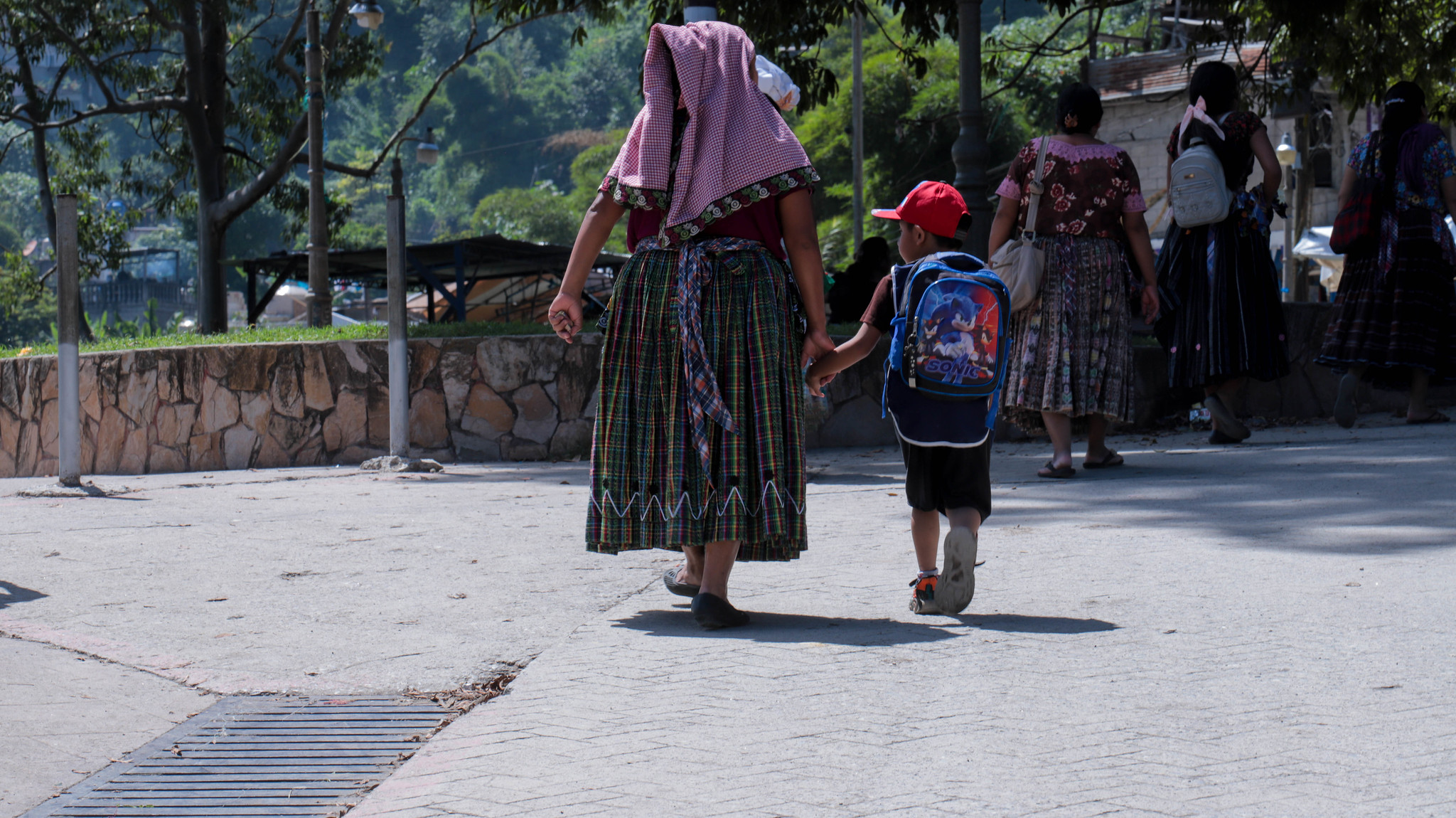
Photo: Mario Winter.
Voices for the Motagua River: Olga Vázquez.
Voices for the Motagua River: Nazario Pascual.
In early 2000, the Maya community organized to stop sand mining on their territory. At that time, the companies held mining permits that remained valid through 2021 and 2022. And although the permits expired, some companies continued to operate after requesting extensions. In June 2022, the indigenous authorities of the Poqomam people began a sit-in protest in front of the Piedrinera San Luis company, which they maintained for four years.
In July 2024, the Special Rapporteur on Economic, Social, Cultural, and Environmental Rights of the IACHR visited Santa Cruz Chinautla. During his visit, traditional authorities and community members spoke about the environmental, water-related, health, economic, and cultural impacts of the pollution in their rivers.
That same year, in October, the community—with support from AIDA, the Indigenous Peoples’ Law Firm, and partner organizations—filed a lawsuit (petition for amparo) against the municipality of Chinautla over its failure to take measures to address the contamination of its rivers and soil caused by improper solid waste management and the existence of illegal landfills.
AIDA’s scientific team, together with local residents and community authorities, collected key information on illegal landfills in the area. This community science initiative supported the litigation by highlighting the severity of the pollution, demonstrating the ongoing use of such practices, and providing evidence of the municipal authorities’ failure to fulfill their legal obligations regarding waste management.
Learn more about this community science initiative.
In June 2025, the Poqomam community won the support of the Guatemalan justice system when a constitutional court ordered the municipality of Chinautla to effectively address the claims in the lawsuit aimed at stopping the pollution of the rivers and soil in Santa Cruz Chinautla.
This is the first time a Guatemalan court has recognized a community's right to a healthy environment and its central role in finding solutions.
Find out the details of the legal victory.
Current situation
Since the ruling was issued, the municipality of Chinautla has held a series of “technical working groups” with representatives from the central government, civil society, and the community. A smaller group of technical experts was later created to develop a work plan with clear goals. Several months have passed without the municipality convening these working groups.
Furthermore, in December 2025, the IACHR noted in its report Human Rights Situation in Guatemala that the Motagua River basin is facing a severe pollution crisis that has had profound impacts on biodiversity and has resulted in systematic violations of the human rights of local communities, including the Maya Poqomam people.
And in May 2026, the Ministry of the Environment and Natural Resources revoked the license of the sand mining company Piedrinera San Luis for "failure to comply with environmental commitments."
AIDA continues to monitor the implementation of the court ruling to ensure the right to a healthy environment for the Poqomam Maya community and all those living in the Motagua River basin. Meanwhile, the residents of Santa Cruz Chinautla remain organized and mobilized to improve their environment and defend their rights.
Related projects
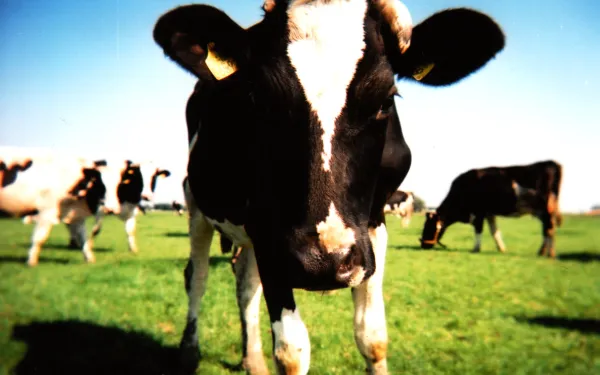
Reducing Short-Lived Climate Pollutants: A life jacket in times of climate change
By Florencia Ortuzar, AIDA attorney They’re all around you – the air conditioner hanging from your neighbor’s window, the charcoal powering your grill, the black smoke pillowing out of a passing truck, even the cows dotting the fields outside town. These familiar aspects of our daily lives are just some of the sources of short-lived climate pollutants (SLCPs). When released, SLCPs warm our atmosphere. But, compared to carbon dioxide, they have a relatively short lifespan. Consequently, their effective mitigation could provide a life jacket on the troubled waters of climate change. That’s why SCLPs are worth considering as the world moves rapidly toward the new global climate accord to be signed at the 21st Conference of Parties (COP21) of the United Nations Framework Convention on Climate Change (UNFCCC). The meeting in Paris this December will be the most important in the global climate negotiations thus far. The new accord it produces could help us out of the planetary dilemma we’re currently in. The task is difficult. There have been 20 conferences of the UNFCCC so far, none of which has made substantial progress. Emissions have increased each year since the convention began, except for 2008 and 2009, when they decreased due the global economic crisis (not, notably, due to human will to survive). Sometimes, it’s hard to keep hope alive, but at AIDA, we never lose it. What are SLCPs? These contaminants include black carbon, tropospheric ozone, methane and hydroflourocarbons (HFC). Each one of them is different, but they share two main characteristics: they are major contributors to global warming, and, once emitted, they remain in the atmosphere briefly. The second feature is the one to which we must draw attention if we seek to mitigate climate change in the short term. Unlike SLCPs, carbon dioxide (CO2) can remain in the air for centuries. That means that even if we stopped all emissions today, the CO2 emitted would continue to warm the atmosphere for a very long time. How big of a problem are they? The Intergovernmental Panel on Climate Change (IPCC) has estimated that SLCPs are responsible for more than 30 percent of global warming. More recent studies estimate between 40 and 45 percent. Mitigating carbon dioxide, responsible for the majority of the greenhouse effect, is essential to maintaining the climatic equilibrium of the earth in the long term. But the opportunity offered through the mitigation of SLCPs is much more immediate, and its effects could be felt in our daily lives. Advantages of reducing SLCPs The desirability of reducing SLCPs is much greater if we consider that, in addition to heating the atmosphere, these contaminants cause other problems that directly affect human health and the natural environment. Black carbon and tropospheric ozone, for example, are the cause of millions of premature deaths each year, since they increase the risk of respiratory and heart disease. They also damage crop yields, so their control would help improve food security worldwide. What does the Convention say? The Convention and its Kyoto Protocol do not recognize SLCPs as a concept, although the Protocol does include methane and HFCs in the greenhouse gases it seeks to combat. But this lack of recognition may change with the new climate accord. The current agreement includes a list of specific polluting gases that States must reduce. With the new agreement, however, countries will be free to decide what to include in their gas mitigation targets. Mexico has become a notable example in this regard by unconditionally committing, through its Intended Nationally Determined Contributions (INDCs), to reduce black carbon by 51 percent by 2030. This percentage has the potential to rise to 70 percent with international assistance. The work at hand At AIDA we work to inform governments of the measures they could take to effectively reduce short-lived climate pollutants in their countries. We advocate for the adoption of solutions whose effectiveness has already been tested in various parts of the world. We are preparing a report that reviews current regulation of these pollutants in three Latin American countries: Brazil, Chile and Mexico. We hope this report will facilitate progress towards a better approach to SLCPs in these countries. We will then continue working on this important issue in the rest of the region. You can find more information about SLCPs HERE!
Read more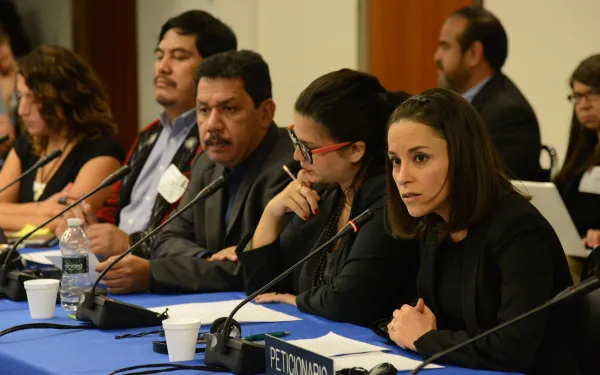
NGOs testify before IACHR regarding violation of the right to water by extractive activities
In a hearing before the Commission, advocates explained how extractive activities, especially mining and energy projects, restrict individual and community water use. They also documented the failure of states to protect the right to water and effectively control companies and projects that affect this right. Washington, DC, United States. Civil society organizations[i] drew the attention of the Inter-American Commission on Human Rights (IACHR) to the growing pressure to use natural resources for the development of extractive activities in the Americas, including the construction of dams and mining projects. They did so at a hearing in which they showed how this situation has resulted in the systematic violation of the right to water in the region. "We have identified four patterns that characterize this problem: the use of judicial frameworks that favor the appropriation of water resources for extractive projects, ownership of the resource that favor its use for mining projects over human use and consumption, pollution and deterioration of water sources, and the lack of consultation and free, prior and informed consent in the implementation of these projects," explained Maria José Veramendi Villa, lawyer from the Interamerican Association for Environmental Defense, at the beginning of the hearing. The organizations presented cases of appropriation, pollution and irreversible damage to water sources due to the implementation of extractive projects. This situation not only affects water rights but also infringes upon other rights such as health, decent life, integrity, healthy environment, food and culture. The participating organizations noted the impacts both on individuals and communities that are in areas directly influenced by projects for which there was no prior consultation, as well as for those who are outside of the immediate project area but depend on affected water sources for their livelihood. Such cases have been documented extensively in a report that was delivered to the IACHR. "In Argentina, the exploitation of the Alumbrera mine has caused the leakage of toxic waste into three rivers and, although a court case on the pollution is open, measures to effectively remediate the damage have yet to be taken. We are concerned that none of our countries are implementing plans to prevent additional damage, nor are they taking measures to remediate the cumulative damage from the pollution," said Johana Rocha, of the Centro de Estudios para la Justicia Social “Tierra Digna” of Colombia. The hearing before the IACHR highlighted the failure of States in the region to implement effective measures to ensure the right to water. The participating organizations reported that existing legal frameworks favor the appropriation of water for mining projects over the use and human consumption. They also explained the failure of national mechanisms to control and monitor the performance of companies that implement extractive projects - a situation which allows them to continue to commit gross violations of human rights. "We have found a contradiction in the States' obligations to protect and guarantee the right to water, which has been incorporated into their Constitutions and legislation. They instead give preference to corporations, thus denying the right to water of the communities," stated Pedro Landa, of the Equipo de Reflexión, Investigación y Comunicación de la Compañía de Jesús (ERIC-SJ) of Honduras. Raphaela Lopes, of Justiça Global, spoke of the easing of legal frameworks, which violates human rights. "With the energy reform recently approved in Mexico, for example, the right to water is undermined in favor of hydrocarbons and electricity." Lastly, the organizations asked the IACHR, among other things, to reaffirm at a national level the recognition of water as a human right; to consider the importance of water as a fundamental element to the right to a healthy environment; to remind States of their obligations to protect the rights to water and environment above any extractive activity or infrastructure; to highlight the obligation of the states to effectively control the activities that could affect the right to water, including the companies that operate within their territory and the national companies that operate externally; and to remind states of the importance of the right to free, and prior, informed consent before the implementation of any project. [i] Acción Solidaria para el Desarrollo (COOPERACCIÓN) – Perú, Asociación Interamericana para la Defensa del Ambiente (AIDA) – Regional, Asociación Pro Derechos Humanos (APRODEH) – Perú, Bienaventurados los Pobres (BePe) - Colectivo SumajKawsay – Argentina, Centro de Acción Legal Ambiental y Social (CALAS) – Guatemala, Centro de Derechos Humanos “Bartolomé Carrasco Briseño A.C.” (BARCA-DH) – México, Centro de Estudios para la Justicia Social ‘Tierra Digna’ – Colombia, Centro de Incidencia Ambiental (CIAM) – Panamá, Centro de Investigación sobre Desarrollo y Comercio (CEICOM) – El Salvador, Comité de Unidad Campesina (CUC) – Guatemala, Comitê Nacional em Defesa dos Territórios frente a Mineração – Brasil, Equipo de Reflexión, Investigación y Comunicación de la Compañía de Jesús (ERIC-SJ) – Honduras, Fundación para el Debido Proceso Legal (DPLF) – Regional, Grupo Internacional de Trabajo sobre Asuntos Indígenas (IWGIA) – Regional, Justiça Global – Brasil, Observatorio Ciudadano – Chile, Pensamiento y Acción Social (PAS) – Colombia, y Pax Christi – Internacional.
Read more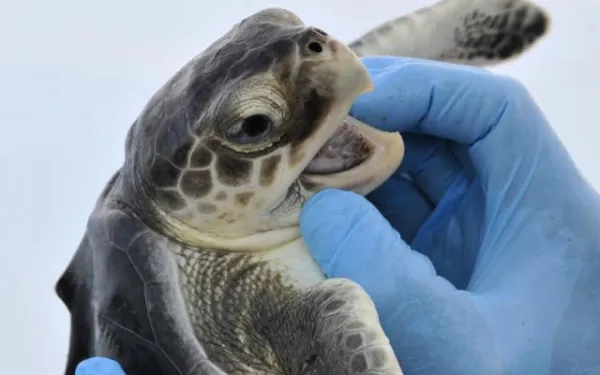
Protecting Sea Turtles in the Gulf of Mexico
By Sandra Moguel Every few years, hundreds of hawksbill and kemp’s ridley turtles glide through the warm, shallow waters of the Veracruz Reef System. There they swim and feed amongst the brightly colored corals, which stretch for miles through the Gulf of Mexico. When the sun goes down, many of the females make their way back to the very beach from which they hatched, to lay the eggs of the next generation. This ritual has happened for centuries, as the migratory turtles move and feed and breed their way through the Gulf and Caribbean waters. But it’s happening less and less. As their critical habitats are threatened by reckless human activities and a changing climate, the population of hawksbill turtles in the region has declined by 95 percent, making them a critically endangered species. The hawksbill (eretmochelys imbricata) and Kemps’ ridley (lepidochelys kempii) turtles are just two of the five neotropical species of sea turtle that spend a portion of their migratory cycles along the coast of Veracruz, Mexico, and within the confines its reefs. Now, these turtles are facing a new threat – the expansion of the Port of Veracruz. To raise awareness of the risk posed to these threatened species, AIDA and the Mexican Center for Environmental Law (CEMDA) on September 22 presented a petition (in Spanish) before the Scientific Committee of the Inter-American Sea Turtle Convention (IAC), under which Mexico has obligations to protect turtles found within its borders. In the petition, we detailed the direct and indirect impacts that the expansion of the Port would have on the various turtle species and their habitat. We also mentioned that in the project’s environmental impact statement, the Veraruz Port Authority stated that the port expansion “will never have a direct effect on protected species.” They therefore failed to present protection measures for sea turtles, particularly the hawksbill, which is listed as threatened under both the Sea Turtle Convention and Mexican law. Our petition before the IAC requests they take measures to understand the threat and urge Mexico to act, including: conduct an investigation on the impacts the port expansion would have on the turtles and their habitat; conduct a site visit; make recommendations for the protection of the species and their habitat; and urge the Mexican government to apply precautionary measures while evaluating potential environmental impacts on the turtles. Also on September 22, alongside CEMDA, we delivered more than 36,000 signatures from a citizens’ petition urging the Secretariat of Environment & Natural Resources to revoke the environmental authorization granted for the Port’s expansion. The petition argues that the expansion project would put in danger two of Mexico’s natural treasures – the Veracruz Reef System and Los Tuxtlas Reserve, a natural protected area from which basaltic rock for the construction would be extracted. The permit has been approved without considering the severe environmental impacts it would have on the unique ecosystems of the region and the creatures that call them home. The Mexican government has thus violated national and international obligations to conserve biodiversity and protect its natural heritage. As long as the Port of Veracruz expansion project threatens sensitive species and ecosystems, we will continue to advocate through national and international bodies to stop it. Thank you for supporting our work to defend the health and biodiversity of the Veracruz Reef System!
Read more