
Project
Shutterstock.
Pollution of the Motagua River in Guatemala: The Poqomam Maya people’s quest for environmental justice
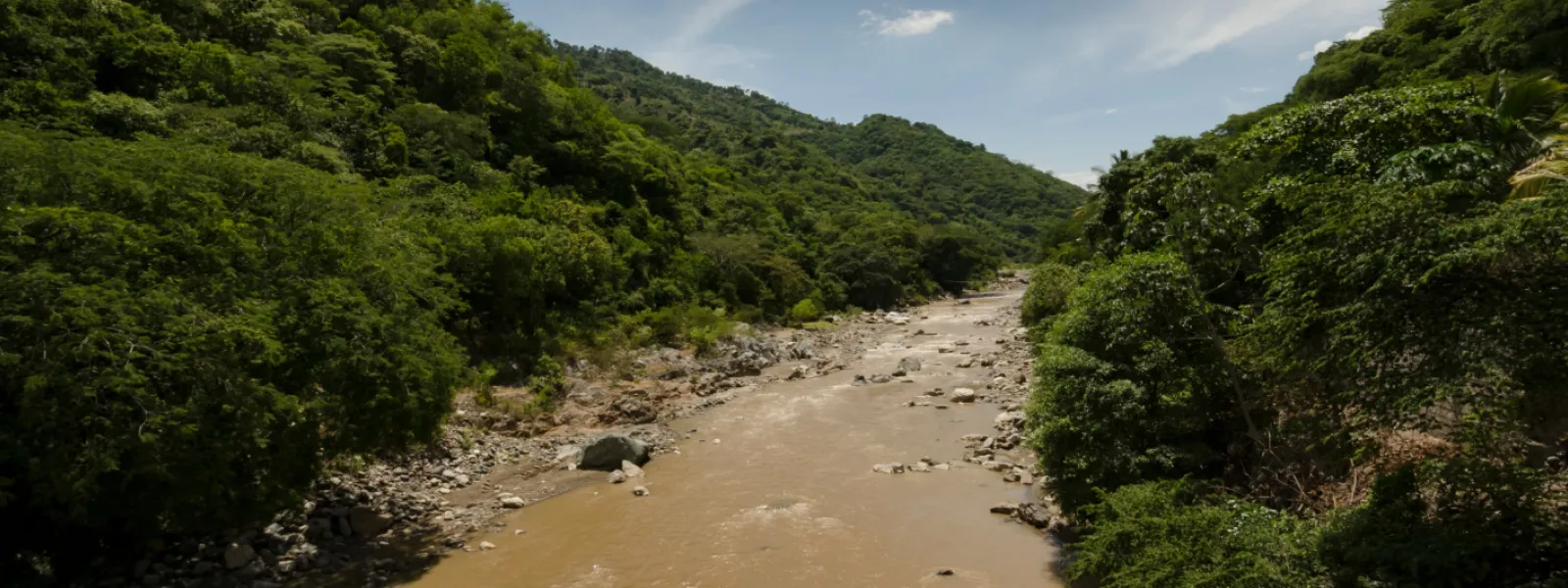
The Motagua River basin—Guatemala’s largest and most important river—is severely polluted with wastewater, solid waste, and other types of debris.
This is a cross-border issue because the Motagua’s polluted waters flow into the Caribbean Sea, reach the coast of Honduras, and threaten the Mesoamerican Reef System.
For decades, this has violated the rights to health, water, development, and a healthy environment of all the people living in the river basin.
In June 2025, the Poqomam Maya community of Santa Cruz Chinautla—supported by AIDA, the Indigenous Peoples’ Law Firm, and allied organizations—achieved an unprecedented legal victory to halt degradation in the basin. In response to the lawsuit it filed, a Guatemalan court ordered the municipality of Chinautla to comply with a series of obligations to curb the pollution of the area’s rivers and soil.
The government's response to the ruling has so far been limited to technical working group meetings. Meanwhile, the community continues to work toward the proper implementation of the ruling and to take other actions to defend its territory and its rights.
Background
The Motagua River, which is 486 km long, flows through 96 municipalities and 14 departments in Guatemala. It originates in Quiché, a department located in the northwest, and empties into the Caribbean Sea.
Polluting activities occur throughout the entire basin, including sub-basins and micro-basins. The largest volume of pollution comes from Guatemala City, the country’s capital, and is carried by the waters of the Las Vacas River, which in turn receives a large amount of waste from the Chinautla River.
The Chinautla River, which flows through the municipality of the same name, carries solid waste from a landfill located in Zone 3 of the capital—where trash from at least 14 municipalities in the department of Guatemala is dumped—as well as sewage generated by some 500,000 people living in the northern part of the capital, which undergoes no prior treatment.
Other sources of pollution include the numerous illegal dumps in the municipality of Chinautla, the waste that private vehicles and garbage trucks dump along the banks of its rivers, as well as the sand-mining companies—which began setting up operations in the area between 1996 and 1997—whose activities weaken the rivers' basins, causing solid waste to be more easily carried away by the river currents.
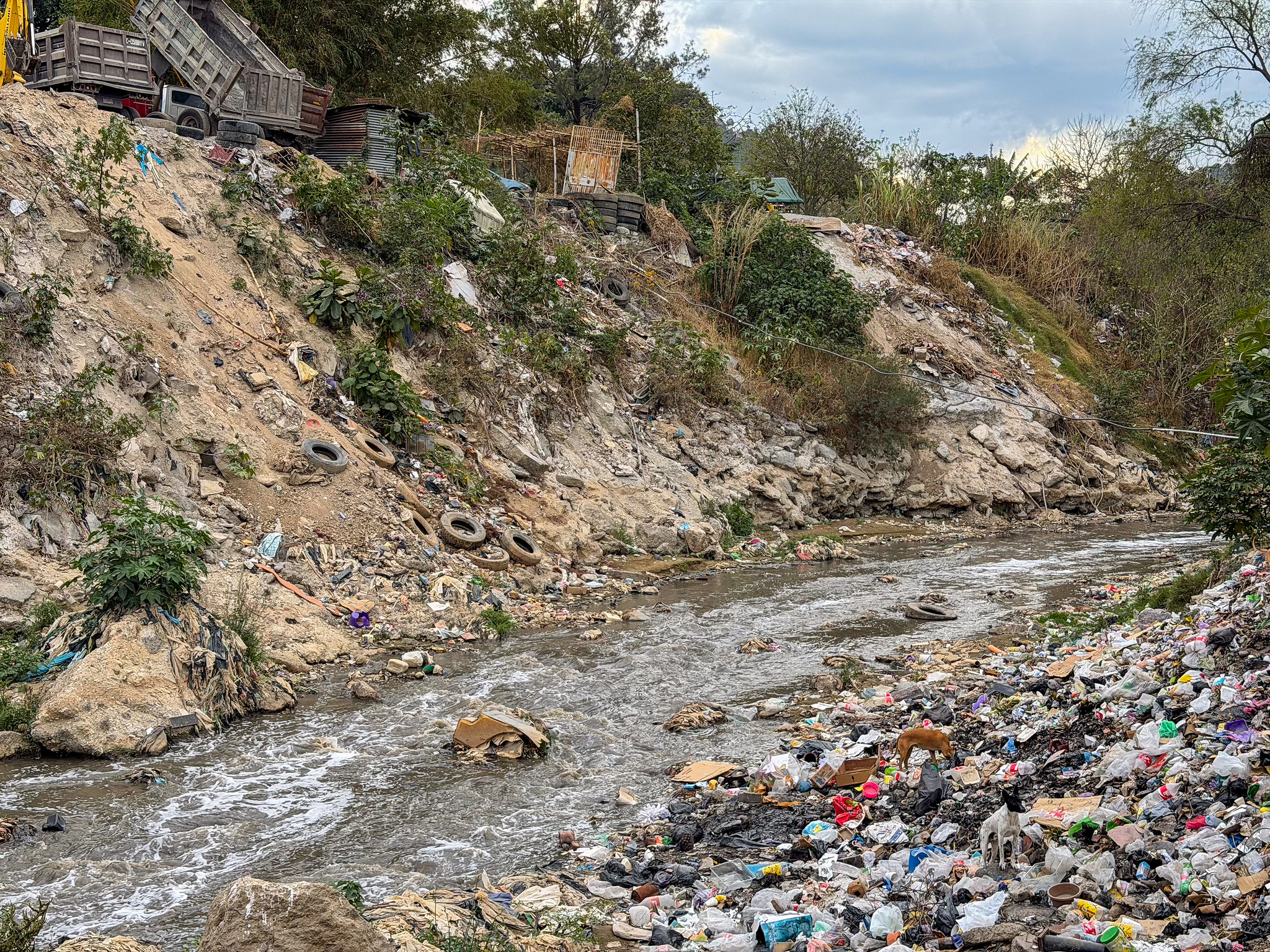
Photo: Mayela Sánchez García.
The situation extends beyond national borders. Every year, the Motagua River discharges some 20,000 metric tons of plastic into the Caribbean Sea, making it one of the rivers that contributes the most plastic pollution to the ocean worldwide, according to estimates contained in a 2025 report by the Inter-American Commission on Human Rights (IACHR).
The river flows into the Mesoamerican Reef at its mouth, so pollution also threatens to degrade one of the largest and most biodiverse transboundary reefs on the planet, which spans the territorial waters of Belize, Guatemala, Honduras, and Mexico.
In addition, the contaminated water reaches the coast of Honduras and spreads into Amatique Bay, located along the eastern coast of Guatemala, affecting the Caribbean Sea.
The roots of this chronic, cross-border problem are structural. Data from the Integrated Environmental Management of the Motagua River Basin project, funded by the United Nations Development Program (UNDP), show that in Guatemala, 66% of municipal solid waste is not collected, and there is no guarantee that the remaining 34% is disposed of properly. Furthermore, of all landfills nationwide, 88.32% are illegal or lack municipal authorization.
In other words, the core issues that need to be addressed are the mismanagement of solid waste and water resources in Guatemala; noncompliance with existing regulations on wastewater discharge and the disposal and treatment of solid waste and residues; and the lack of a water law.
The Poqomam Maya people's quest for justice
The rivers of Santa Cruz Chinautla, a community of the Poqomam Maya people located just twelve kilometers from Guatemala City, have become conduits of pollution that are degrading the Motagua River.
For decades, the local population has seen its health and livelihoods—including pottery, one of the main economic activities and a source of identity—damaged due to the lack of waste management in the municipality of Chinautla and the urban area of the country’s capital, as well as the activities of sand-mining companies.
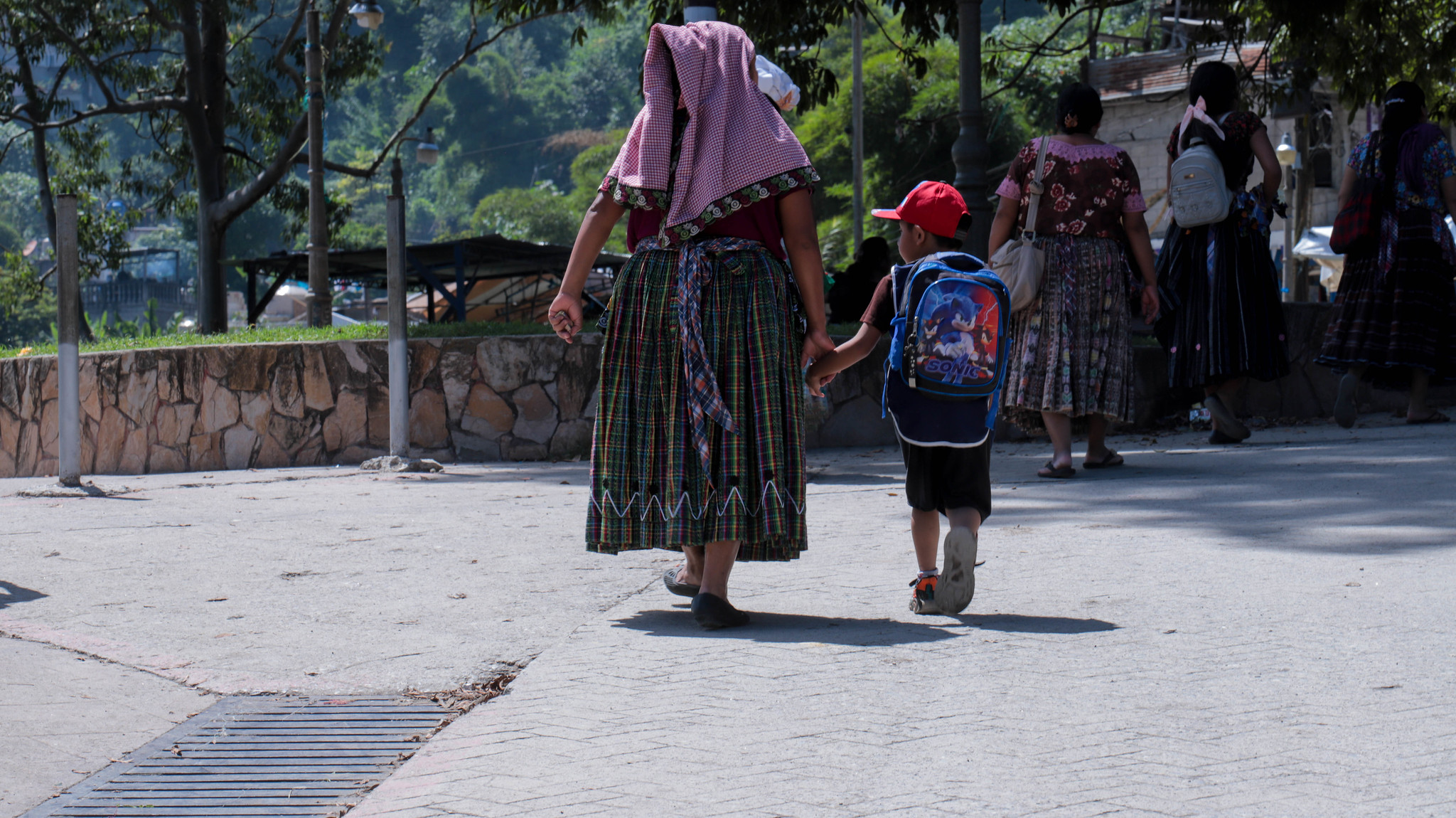
Photo: Mario Winter.
Voices for the Motagua River: Olga Vázquez.
Voices for the Motagua River: Nazario Pascual.
In early 2000, the Maya community organized to stop sand mining on their territory. At that time, the companies held mining permits that remained valid through 2021 and 2022. And although the permits expired, some companies continued to operate after requesting extensions. In June 2022, the indigenous authorities of the Poqomam people began a sit-in protest in front of the Piedrinera San Luis company, which they maintained for four years.
In July 2024, the Special Rapporteur on Economic, Social, Cultural, and Environmental Rights of the IACHR visited Santa Cruz Chinautla. During his visit, traditional authorities and community members spoke about the environmental, water-related, health, economic, and cultural impacts of the pollution in their rivers.
That same year, in October, the community—with support from AIDA, the Indigenous Peoples’ Law Firm, and partner organizations—filed a lawsuit (petition for amparo) against the municipality of Chinautla over its failure to take measures to address the contamination of its rivers and soil caused by improper solid waste management and the existence of illegal landfills.
AIDA’s scientific team, together with local residents and community authorities, collected key information on illegal landfills in the area. This community science initiative supported the litigation by highlighting the severity of the pollution, demonstrating the ongoing use of such practices, and providing evidence of the municipal authorities’ failure to fulfill their legal obligations regarding waste management.
Learn more about this community science initiative.
In June 2025, the Poqomam community won the support of the Guatemalan justice system when a constitutional court ordered the municipality of Chinautla to effectively address the claims in the lawsuit aimed at stopping the pollution of the rivers and soil in Santa Cruz Chinautla.
This is the first time a Guatemalan court has recognized a community's right to a healthy environment and its central role in finding solutions.
Find out the details of the legal victory.
Current situation
Since the ruling was issued, the municipality of Chinautla has held a series of “technical working groups” with representatives from the central government, civil society, and the community. A smaller group of technical experts was later created to develop a work plan with clear goals. Several months have passed without the municipality convening these working groups.
Furthermore, in December 2025, the IACHR noted in its report Human Rights Situation in Guatemala that the Motagua River basin is facing a severe pollution crisis that has had profound impacts on biodiversity and has resulted in systematic violations of the human rights of local communities, including the Maya Poqomam people.
And in May 2026, the Ministry of the Environment and Natural Resources revoked the license of the sand mining company Piedrinera San Luis for "failure to comply with environmental commitments."
AIDA continues to monitor the implementation of the court ruling to ensure the right to a healthy environment for the Poqomam Maya community and all those living in the Motagua River basin. Meanwhile, the residents of Santa Cruz Chinautla remain organized and mobilized to improve their environment and defend their rights.
Related projects
AIDA urges Panamanian Supreme Court to protect water sources
Requested the annulment of a resolution that allows large projects like hydroelectric dams to use up to 90 percent of the water in rivers, lakes and other ecosystems. Panama City, Panama. The Interamerican Association for Environmental Defense (AIDA) has filed a legal brief supporting the lawsuit filed by the Centro de Incidencia Ambiental of Panama (CIAM) seeking annulment of Resolution No. AG-0691-2012, which was enacted by the former National Environmental Authority (ANAM), now the Ministry of Environment. This resolution, which establishes environmental flow, allows up to 90 percent of the water in rivers, lakes, and other natural sources to be used in large projects such as hydroelectric dams. Environmental flow is the minimum amount of water that a river or other channel must contain to maintain its ecological values—refuge for flora and fauna, landscape preservation, and dilution of pollutants, among others—and its social value, or use by communities. The ANAM resolution, annulment of which is sought in the CIAM lawsuit, sets this amount at only 10 percent of an unmodified average for all water bodies and allows the remainder to be used in large infrastructure projects. In its legal brief supporting the lawsuit, AIDA’s primary arguments highlight the Panamanian government’s international legal obligations to protect water resources and guarantee human rights. “We want the judges of the Third Chamber to nullify the resolution, with an understanding of the importance of Panama’s international obligations to maintain an environmental flow that supports the health of aquatic ecosystems and guarantees human rights,” said Haydée Rodríguez, AIDA attorney. AIDA seeks the annulment of the ANAM resolution because it violates the international principles and obligations undertaken by the Panamanian government to protect the biodiversity and rational use of its ecosystems, and to guarantee such human rights as access to water, a healthy environment, and way of life. AIDA also notes that the resolution lacks mechanisms for public participation in the establishment of environmental flow to incorporate the needs of all stakeholders.
Read more
Rights of the Environment: The Pope is on our Side
In his speech before the United Nations today in New York, Pope Francis argued passionately in defense of the environment, proclaiming that the natural world should have the same rights and protection as humanity. The Pope insisted on the “rights of the environment” because, according to His Holiness: We human beings are part of the environment. We live in communion with it, since the environment itself entails ethical limits which human actions must acknowledge and respect (…) Any harm done to the environment, therefore, is harm done to humanity… In all religions, the environment is a fundmental good. The Pope also proclaimed the fundamental nature of the fight against climate change, which requires concrete and effective actions. A decisive moment in this fight will come this December at the Paris Climate Conference, where governments from around the world will meet and commit to global actions to confront the climate crisis. The Pope declared: I’m confident that the Paris Conference on climate change will secure fundamental and effective agreements. During the UN General Assembly, before leaders and representatives of the people of the world, the Pope added: Our world demands of all government leaders a will that is effective, practical and constant, concrete steps and immediate measures for preserving and improving the natural environment. This speech is a milestone in the struggle for the defense of the environment and against climate change. It’s yet another push to continue fighting every day for the preservation of biodiversity, ecosystems, freshwater, and the balance of life on this planet, this marvellous creation that we humans share with so many other forms of life. At AIDA we strive every day to defend the right to a healthy environment in the Americas, and in our Climate Change program we monitor and support the negotiations to reach a new global climate accord. As long as humanity and the environment suffer at the hand of irresponsible development, we will continue to fight in defense of the environment.
Read more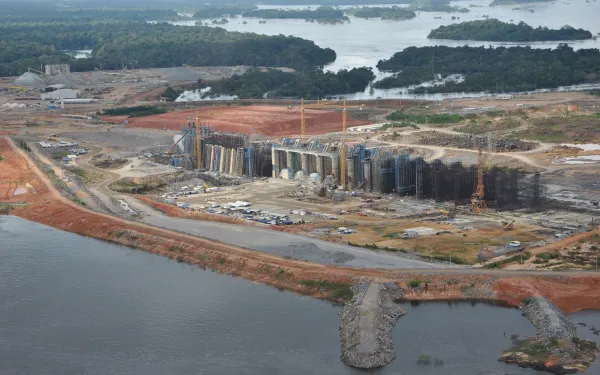
Belo Monte noncompliant with conditions for operation, says environmental authority
Altamira, Brazil. In their technical analysis of the Belo Monte Dam released yesterday, the Brazilian Institute of Environment and Renewable Natural Resources (IBAMA) concluded that the conditions required to approve Belo Monte’s Operating License have not yet been met. Ten of twelve conditions identified by IBAMA as pending compliance are considered essential for granting the license. Until the operating consortium, Norte Energía, addresses these conditions, the project will be delayed and the dam’s reservoir will not be flooded. “We welcome IBAMA’s thorough evaluation of Belo Monte, a project that has already had severe impacts on the environment and human rights,” said Astrid Puentes Riaño, co-director of AIDA. “Moving forward, it is crucial that all conditions are met, and measures to protect the people and environment of the Xingú River basin are fully implemented before the license may be granted.” The Interamerican Association for Environmental Defense (AIDA) has for more than 5 years supported indigenous and local communities and organizations in their fight to denounce the irregularities of the Belo Monte project. The conclusions outlined by IBAMA reinforce the arguments of those who have long opposed the dam for its negative socio-environmental impacts. “If the Brazilian government approves Belo Monte’s operating license without first guaranteeing the protection of the environment and human rights, they would be violating their international commitments,” said María José Veramendi Villa, AIDA attorney. AIDA and partner organizations have long argued that conditions do not exist for the approval of licenses for Belo Monte. Essential services that would guarantee minimum rights to the displaced population remain outstanding, including potable water and health and sanitation services. In 2011, the Inter-American Commission for Human Rights granted precautionary measures in favor of affected indigenous communities. The severity of the project’s human rights violations have been reinforced in a report by the Socio-Environmental Institute (ISA) of Brazil, to which AIDA contributed, as well as in information gathered by the health and indigenous protection authorities and the Brazilian Public Ministry. AIDA expects that IBAMA’s technical report will be taken into consideration when making the final decision on the dam’s operating license. The outright denial of the license would serve as a paradigm for future mega-projects planned in the Brazilian Amazon, as well as other parts of the region, sending a clear message that economic development projects must not engage in human rights violations.
Read more