
Project
Shutterstock.
Pollution of the Motagua River in Guatemala: The Poqomam Maya people’s quest for environmental justice
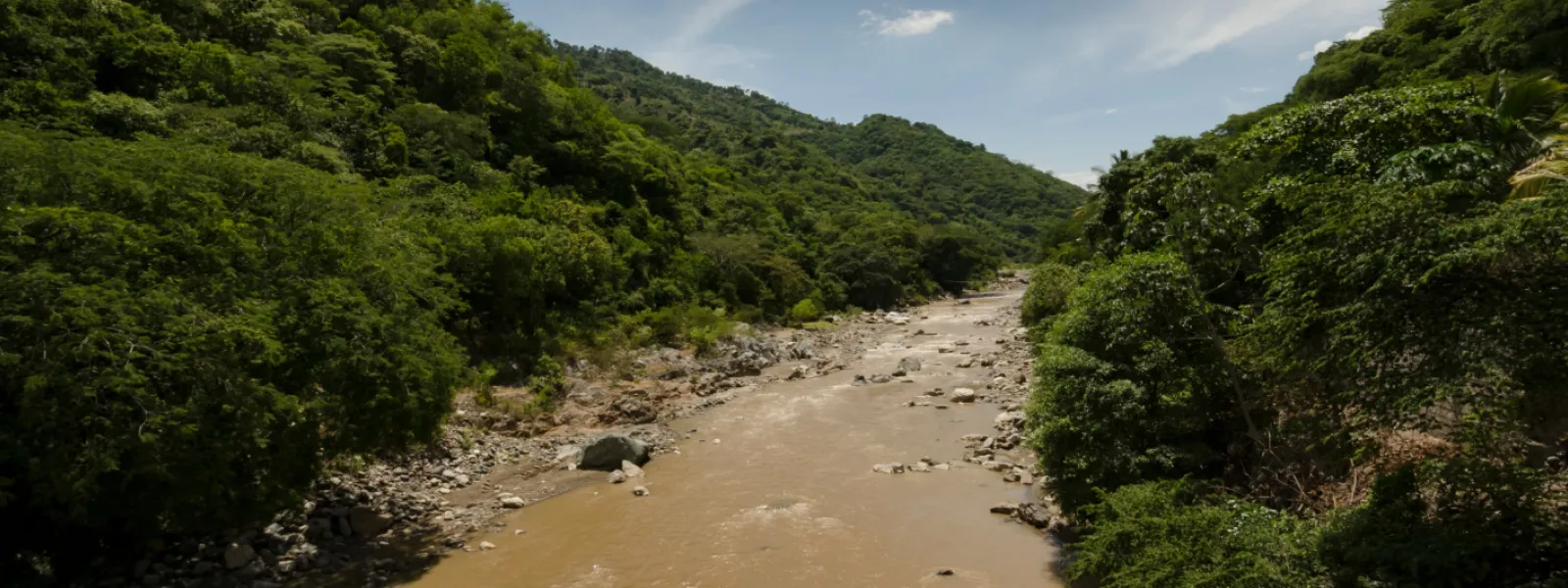
The Motagua River basin—Guatemala’s largest and most important river—is severely polluted with wastewater, solid waste, and other types of debris.
This is a cross-border issue because the Motagua’s polluted waters flow into the Caribbean Sea, reach the coast of Honduras, and threaten the Mesoamerican Reef System.
For decades, this has violated the rights to health, water, development, and a healthy environment of all the people living in the river basin.
In June 2025, the Poqomam Maya community of Santa Cruz Chinautla—supported by AIDA, the Indigenous Peoples’ Law Firm, and allied organizations—achieved an unprecedented legal victory to halt degradation in the basin. In response to the lawsuit it filed, a Guatemalan court ordered the municipality of Chinautla to comply with a series of obligations to curb the pollution of the area’s rivers and soil.
The government's response to the ruling has so far been limited to technical working group meetings. Meanwhile, the community continues to work toward the proper implementation of the ruling and to take other actions to defend its territory and its rights.
Background
The Motagua River, which is 486 km long, flows through 96 municipalities and 14 departments in Guatemala. It originates in Quiché, a department located in the northwest, and empties into the Caribbean Sea.
Polluting activities occur throughout the entire basin, including sub-basins and micro-basins. The largest volume of pollution comes from Guatemala City, the country’s capital, and is carried by the waters of the Las Vacas River, which in turn receives a large amount of waste from the Chinautla River.
The Chinautla River, which flows through the municipality of the same name, carries solid waste from a landfill located in Zone 3 of the capital—where trash from at least 14 municipalities in the department of Guatemala is dumped—as well as sewage generated by some 500,000 people living in the northern part of the capital, which undergoes no prior treatment.
Other sources of pollution include the numerous illegal dumps in the municipality of Chinautla, the waste that private vehicles and garbage trucks dump along the banks of its rivers, as well as the sand-mining companies—which began setting up operations in the area between 1996 and 1997—whose activities weaken the rivers' basins, causing solid waste to be more easily carried away by the river currents.
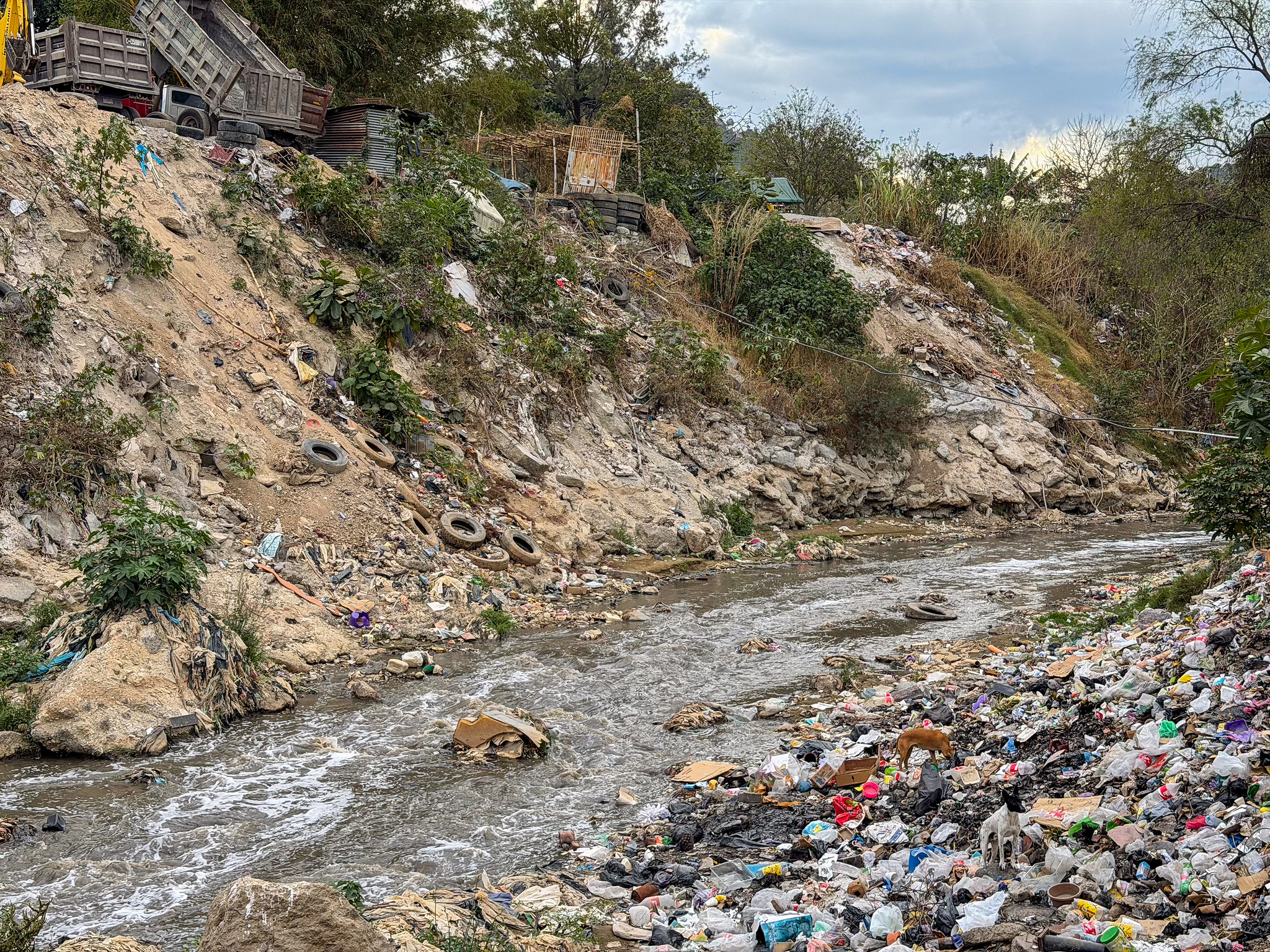
Photo: Mayela Sánchez García.
The situation extends beyond national borders. Every year, the Motagua River discharges some 20,000 metric tons of plastic into the Caribbean Sea, making it one of the rivers that contributes the most plastic pollution to the ocean worldwide, according to estimates contained in a 2025 report by the Inter-American Commission on Human Rights (IACHR).
The river flows into the Mesoamerican Reef at its mouth, so pollution also threatens to degrade one of the largest and most biodiverse transboundary reefs on the planet, which spans the territorial waters of Belize, Guatemala, Honduras, and Mexico.
In addition, the contaminated water reaches the coast of Honduras and spreads into Amatique Bay, located along the eastern coast of Guatemala, affecting the Caribbean Sea.
The roots of this chronic, cross-border problem are structural. Data from the Integrated Environmental Management of the Motagua River Basin project, funded by the United Nations Development Program (UNDP), show that in Guatemala, 66% of municipal solid waste is not collected, and there is no guarantee that the remaining 34% is disposed of properly. Furthermore, of all landfills nationwide, 88.32% are illegal or lack municipal authorization.
In other words, the core issues that need to be addressed are the mismanagement of solid waste and water resources in Guatemala; noncompliance with existing regulations on wastewater discharge and the disposal and treatment of solid waste and residues; and the lack of a water law.
The Poqomam Maya people's quest for justice
The rivers of Santa Cruz Chinautla, a community of the Poqomam Maya people located just twelve kilometers from Guatemala City, have become conduits of pollution that are degrading the Motagua River.
For decades, the local population has seen its health and livelihoods—including pottery, one of the main economic activities and a source of identity—damaged due to the lack of waste management in the municipality of Chinautla and the urban area of the country’s capital, as well as the activities of sand-mining companies.
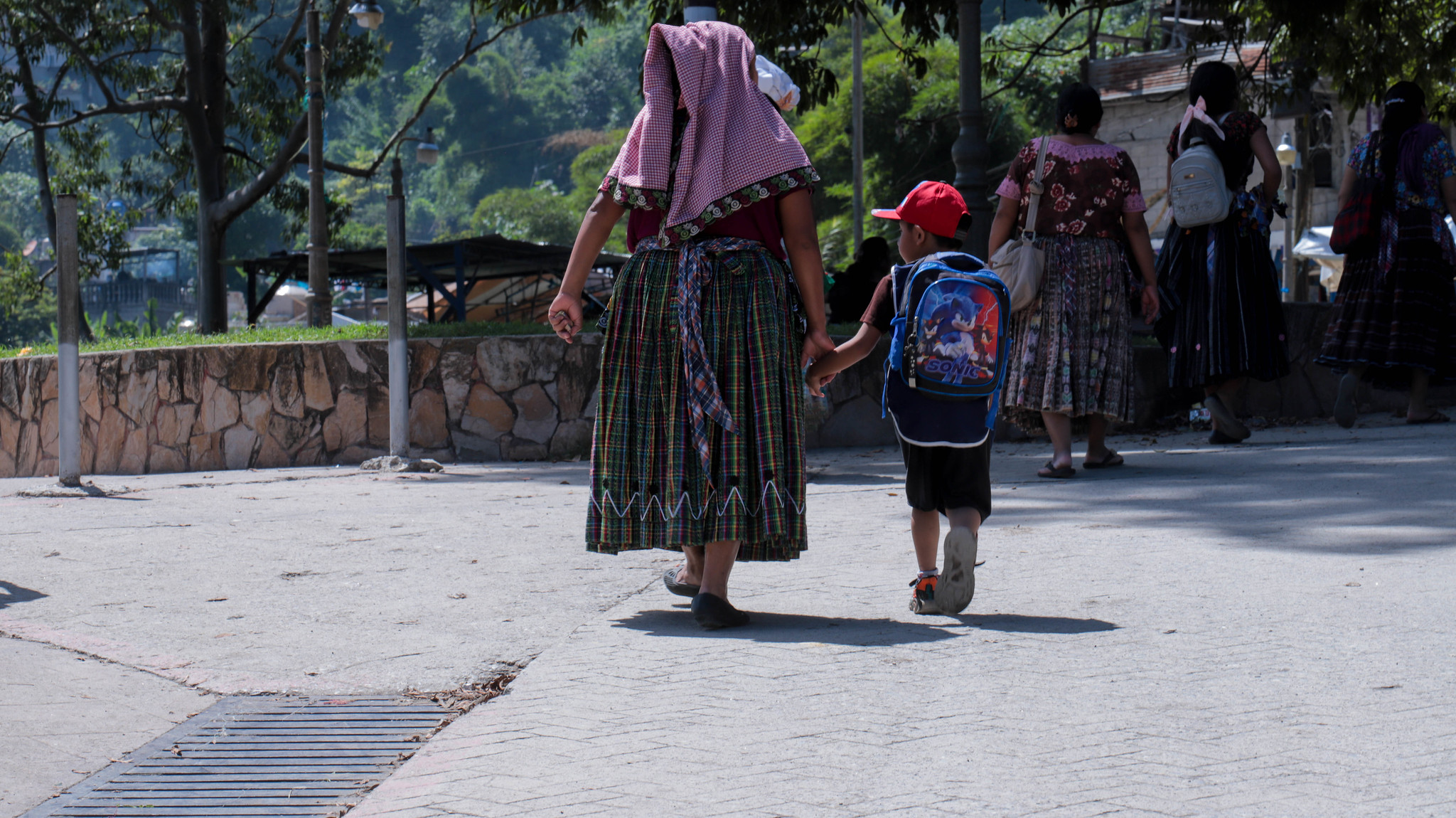
Photo: Mario Winter.
Voices for the Motagua River: Olga Vázquez.
Voices for the Motagua River: Nazario Pascual.
In early 2000, the Maya community organized to stop sand mining on their territory. At that time, the companies held mining permits that remained valid through 2021 and 2022. And although the permits expired, some companies continued to operate after requesting extensions. In June 2022, the indigenous authorities of the Poqomam people began a sit-in protest in front of the Piedrinera San Luis company, which they maintained for four years.
In July 2024, the Special Rapporteur on Economic, Social, Cultural, and Environmental Rights of the IACHR visited Santa Cruz Chinautla. During his visit, traditional authorities and community members spoke about the environmental, water-related, health, economic, and cultural impacts of the pollution in their rivers.
That same year, in October, the community—with support from AIDA, the Indigenous Peoples’ Law Firm, and partner organizations—filed a lawsuit (petition for amparo) against the municipality of Chinautla over its failure to take measures to address the contamination of its rivers and soil caused by improper solid waste management and the existence of illegal landfills.
AIDA’s scientific team, together with local residents and community authorities, collected key information on illegal landfills in the area. This community science initiative supported the litigation by highlighting the severity of the pollution, demonstrating the ongoing use of such practices, and providing evidence of the municipal authorities’ failure to fulfill their legal obligations regarding waste management.
Learn more about this community science initiative.
In June 2025, the Poqomam community won the support of the Guatemalan justice system when a constitutional court ordered the municipality of Chinautla to effectively address the claims in the lawsuit aimed at stopping the pollution of the rivers and soil in Santa Cruz Chinautla.
This is the first time a Guatemalan court has recognized a community's right to a healthy environment and its central role in finding solutions.
Find out the details of the legal victory.
Current situation
Since the ruling was issued, the municipality of Chinautla has held a series of “technical working groups” with representatives from the central government, civil society, and the community. A smaller group of technical experts was later created to develop a work plan with clear goals. Several months have passed without the municipality convening these working groups.
Furthermore, in December 2025, the IACHR noted in its report Human Rights Situation in Guatemala that the Motagua River basin is facing a severe pollution crisis that has had profound impacts on biodiversity and has resulted in systematic violations of the human rights of local communities, including the Maya Poqomam people.
And in May 2026, the Ministry of the Environment and Natural Resources revoked the license of the sand mining company Piedrinera San Luis for "failure to comply with environmental commitments."
AIDA continues to monitor the implementation of the court ruling to ensure the right to a healthy environment for the Poqomam Maya community and all those living in the Motagua River basin. Meanwhile, the residents of Santa Cruz Chinautla remain organized and mobilized to improve their environment and defend their rights.
Related projects
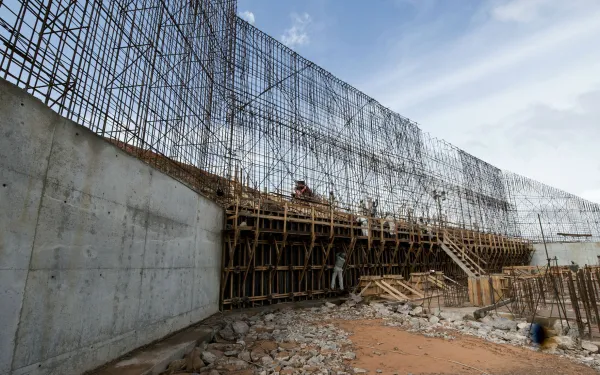
Belo Monte Dam may begin operations despite noncompliance
The dam has failed to comply with conditions for the protection of the health, integrity and way of life of affected communities. Organizations reiterate the validity of the precautionary measures granted by the Inter-American Commission on Human Rights in favor of the indigenous communities of the Xingú River basin, whose situation of risk has worsened. Altamira, Brazil & Washington, DC – The Belo Monte dam is applying for authorization to begin operations, with construction reported at 70 percent complete. This authorization may happen despite the fact that the project has failed to comply with conditions necessary to protect the health, integrity and way of life of affected communities, including the indigenous peoples of the Xingú river basin. Civil society organizations solicited the Inter-American Commission for Human Rights to maintain the precautionary measures granted in 2011 in favor of the indigenous peoples of the Xingú river basin. They did so as a response to the Brazilian government’s request that the Commission lift the measures, which were authorized to avoid irreparable damage to the rights of the communities. The Interamerican Association for Environmental Defense (AIDA), Justiça Global, the Sociedad Paraense de Defensa de los Derechos Humanos (SDDH) and the Movimiento Xingú Vivo para Siempre (MXPVS) filed the brief on behalf of indigenous and river communities affected by Belo Monte. The organizations argued before the Commission that the social and environmental situation surrounding Belo Monte continues to be serious and urgent, and could cause irreparable damages. Their arguments are based on a recent report by the Socio-Environmental Institute of Brazil (ISA), as well as on official government data that include information from health and indigenous protection authorities and the Public Ministry. The ISA report analyzes in detail the situation of Altamira, Pará—the region where Belo Monte is being constructed—and emphasizes the human rights violations and irregularities of the project. The report warns that necessary conditions do not exist for the Brazilian Institute of Environment and Renewable Natural Resources (IBAMA) to grant the project’s operating license. If granted, the license would authorize the filling of the dam, and, thus, the final diversion of the Xingú River. One part of the dam would then begin operation. According to the ISA report, measures to avoid the project’s impacts on health, education and basic sanitation have not been met. This neglect will lead to further damage, such as the fracturing of indigenous communities, saturation of public health services, lower quality education, and greater forest degradation. “The consequences we announced years ago are now a reality,” said Astrid Puentes Riaño, co-director of AIDA. “The filling of the dam, scheduled for the year’s end, will cause the loss of homes and land, and the modification of the traditional lifestyles and livelihoods of Xingú communities. Brazilian authorities and the Commission must act effectively to prevent this disaster.” It is clear that the conditions necessary for Norte Energía, the consortium in charge of the project, to receive the license are not in place. The vice-governor of Pará explained that although the construction is 70 percent complete, only 30 percent of the social and environmental conditions have been met. Similarly, the Attorney of the Republic of Altamira, Thais Santi, said that the consortium is not respecting the protection plan for indigenous lands, the principal condition for the protection of the peoples of the Xingú. The decision on the authorization of Belo Monte must also take into account the recent corruption scandal that has engulfed the project. The investigation Lava Jato, which began a year ago, exposed a massive network of corruption involving the government and Brazil’s largest construction companies. A senior executive, currently in prison on corruption charges, mentioned in his declaration how they had set up and executed bribes for the construction of Belo Monte. The Comptroller General (CGU) thereafter decided to investigate the use of public funds in the project. “The lack of effective control in the execution of the project has made the consequences much worse than anticipated. Giving free reign of operation to the dam at this time would mean completely shutting down the options available to avoid major social and humanitarian disasters in the region,” said Sandy Faidherb of SDDH.
Read moreGreen Climate Fund disappoints by accrediting unfit entities
During its 10th session, in a process characterized by little transparency, the Board of the Green Climate Fund accredited 13 entities to manage financing that the Fund authorizes for climate change adaptation and mitigation projects. The Board accredited the entities as a group, without carefully analyzing them one by one. They did not consider that some have been penalized for financing terrorism and laundering money, or that their primary lending portfolios support fossil fuels. Nor did they consider that some haven’t shown sufficient capacity to manage high-risk climate change projects that could cause irreparable environmental and social impacts. Some do not comply with international fiduciary standards to handle such activities. “We’re disappointed to see that the Green Climate Fund has demonstrated business-orientated behavior, no different from other financial institutions. This doesn’t help the Fund contribute to a paradigm shift and offer better access to resources for local actors,” said Andrea Rodríguez, a senior AIDA lawyer and civil society observer at the Board meetings. The decision-making process for the accreditation of the 13 entities lacked transparency, as no names of the candidates were known until the decision was made. Nevertheless, civil society organizations were able to obtain information to identify inappropriate backgrounds of some of the entities seeking accreditation, and asked the Board to decide on a case-by-case basis. They also requested that the Board assess evidence questioning the ability of these institutions to manage high-risk projects, and to ensure that only the best entities are accredited. The Board, however, opted to make a hasty decision. It reviewed the proposals in a closed Executive Session, and accredited all 13 entities together without considering their problematic histories. “By acting this way, the Board risks the reputation, credibility and legitimacy of the Green Climate Fund,” Rodríguez added. The Board should ensure that all entities seeking accreditation meet the same standards required for access to Fund resources. Developing countries depend on the integrity of accredited entities to ensure access to the financing they need to confront the increasingly severe effects of climate change. It remains vital that the Board guarantees transparency in its decision-making processes.
Read more
Letter to Pope Francis on the Delicate Situation of NGOs in Bolivia
Respectfully we turn to Your Holiness, on the occasion of your upcoming visit to Bolivia, as organizations that protect the environment and human rights in the Americas. We wish to share with Your Holiness our growing concern about the severe limitations imposed upon civil society organizations (CSOs) by the Bolivian government, particularly with respect to those who defend human rights and those of Mother Earth. We celebrate the historic effort to protect our Common Home through the publication of your Encyclical letter, Laudato Si’. It is our hope your text drives profound change in the politics, practices and beliefs of our governments, corporations, and civil society, and inspires every person to create a more just and sustainable world. In your Encyclical letter, Your Holiness has highlighted the substantial contributions of our planet’s CSOs in putting environmental issues on the public agenda. We are deeply grateful for this recognition and we hope that Bolivian CSOs can continue playing their essential role in the promotion of and care for Mother Earth. This requires them to be able to fully exercise their work without threats from the government, even in situations in which they do not agree. As Your Holiness understands, Bolivia has made essential contributions to the national and international recognition of the rights of Mother Earth. In 2009, the Bolivian people approved by an absolute majority their new Constitution, which recognized the right to a healthy and balanced environment for all people; consolidated the environment as a subject of rights; and upheld the rights of future generations to the same. President Evo Morales has also internationally promoted the rights of Mother Earth, the rights of indigenous peoples, and the international recognition of the human right to water. In 2010, President Morales stated, “Now it is more important to defend the rights of Mother Earth than to defend human rights, because in defending the rights of Mother Earth, we defend human rights.”[1] Bolivian civil society organizations, together with indigenous and peasant organizations, played a crucial role in solidifying this new constitutional framework. However, since 2011 their situation and relationship with the government has deteriorated, especially after the government’s decision to construct a highway through a National Park and Indigenous Territory (TIPNIS). This is because most of the indigenous communities of that territory, and many civil society organizations working to defend the environment and human rights, opposed the project, considering it a violation of their rights that would cause irreversible damage to the natural habitat. Since then, the government has implemented policies and actions to weaken and limit the work of the CSOs. In 2013, the government of Evo Morales passed two laws (Act 351 and Supreme Decree 1597) that restrict and condition the functioning of CSOs to their compliance with sectoral policies of the government, that is to say, to the discretion of government actors. For example, the government can revoke the legal status of a CSO when it considers that the organization is not complying with sectoral policies of the government.[2] The Ombudsman of Bolivia submitted a claim of unconstitutionality against those laws in 2013, the outcome of which has not yet been resolved. These laws have scared the country’s CSOs away from their work for fear of losing their legal recognition. Many have been silenced to stay in line; others have ceased operations, or have converted to other legal status to prevent harassment from the government. Both the United Nations Human Rights Council[3] and the UN Special Rapporteur on the Rights to Freedom of Peaceful Assembly and of Association have expressed worry about Act 351 and its regulatory decree. Maina Kiai, UN Special Rapporteur, has stated that such laws “restrict the right of association in accordance with laws, standards, and international principles.”[4] The government has not yet incorporated United Nations recommendations to modify those rules. On May 20, the government approved a law (Supreme Decree 2366) that authorizes the exploration of hydrocarbons in all of the country’s national protected areas. In June, President Morales threatened CSOs, particularly those that promote the protection of the environment, stating: “… I want to say to you: NGOs, foundations that impede the exploration of natural resources, will leave Bolivia…”[5] Your Holiness, as you may appreciate, the situation of CSOs, or any person or institution intending to protect the environment in Bolivia, is very delicate. We therefore respectfully request that you, in your upcoming visit to the country, may use your good offices before President Evo Morales to request that his government stop pressuring CSOs, and assume a public commitment to respect, protect, and guarantee their work in recognition of the freedom of association, freedom of expression, and political and institutional pluralism essential for the sustainability of our democracies. We are incredibly grateful for your attention, and we send our fraternal greetings in the hope that your visit and intervention can contribute to improving the protection of our Common Home in Bolivia. We’d like to take this opportunity to express our highest consideration and great esteem. Fundación Centro de Estudios Ecológicos de la República Argentina (Argentina) Abogadas y Abogados para la Justicia y los Derechos Humanos, A. C. (México) Unidad de Protección a Defensoras y Defensores de Derechos Humanos (Guatemala) Medio Ambiente y Sociedad A.C. (México) Frente Ciudadano en Defensa del Agua y la Vida en B.C.S. (México) COMCAUSA AC (México) Acción Ecológica (Chile) Coordinadora Nacional de Derechos Humanos (Perú) Comisión de Justicia Social de la Diócesis de Chimbote (Perú) Instituto Peruano de Educación en Derechos Humanos y la Paz (Perú) Ambiente y Sociedad (Colombia) Asociación Amigos de los Parques Nacionales de Argentina (Argentina) Centro de Estudios Mineros Colombia Punto Medio (Colombia) Instituto Runa de Desarrollo y Estudios sobre Género (Perú) Centro de Estudios Jurídicos e Investigación Social (Bolivia) Fundación Ambiente y Recursos Naturales (Argentina) Liga de Defensa del Medio Ambiente (Bolivia) Asociación Ecologista Río Mocoretá (Argentina) Asociación Eco Raíces (Argentina) Fundación Myrna Mack (Guatemala) Paz y Esperanza (Perú) Foro del Buen Ayre (Argentina) Asociación Ambientalista Ecolapaz (Argentina) Asociación Ambientalista del Sur (Argentina) Asociación Ambientalista Mayu Sumaj (Argentina) Asociación Argentina de Abogados Ambientalistas (Argentina) Asociación Civil de Ecología Social (Argentina) Asociación Civil Red Ambiental (Argentina) Asociación Civil Tierra XXI (Argentina) Asociación de Protección al Ambiente Serrano - Calamuchita (Argentina) Asociación Ecologista PIUKE (Argentina) Asociación Lihue (Argentina) Asociación Vecinal Moronense (Argentina) Bios Argentina (Argentina) Centro Ambiental Argentino – Cambiar (Argentina) Centro Andino de Desarrollo e Investigación Ambiental (Argentina) Centro Argentino de Meteorólogos (Argentina) Centro de Protección a la Naturaleza (Argentina) Comisión Interdisciplinaria de Medio Ambiente (Argentina) Comisión Ecológica Ituzaingó (Argentina) Continental Nea (Argentina) Federación Amigos de la Tierra Argentina (Argentina) Foro de los Ríos (Argentina) Fundación Ambiente Ecológico (Argentina) Fundación Arandu (Argentina) Fundación Argentina de Energías Alternativas y Renovables (Argentina) Fundación Argentina de Etoecología (Argentina) Fundación Cullunche para la Conservación del Ambiente, la Flora y la Fauna (Argentina) Fundación Inti Cuyum (Argentina) Fundación Norte Ecológico (Argentina) Fundación Orden Ecológica (Argentina) Fundación Pacha Mama para el Medio Ambiente y Desarrollo (Argentina) Fundación para el Desarrollo Sustentable de Eco Regiones (Argentina) Fundación Pasos (Argentina) Fundación Península Raulí (Argentina) Fundación Proyectos Ambientales (Argentina) Fundación Red Informática Ecologista (Argentina) Grupo Ambiental para el Desarrollo (Argentina) Grupo Ecológico Bolívar (Argentina) Greenpeace Argentina (Argentina) Iniciativa Radial (Argentina) Instituto de Estudios e Investigaciones sobre Medio Ambiente (Argentina) Fundación Jorge Esteban Roulet (Argentina) Organización Argentina de Investigaciones Espeleológicas – Karst (Argentina) Movimiento Transfronterizo de ONG Ambientalistas de la Triple Frontera (Argentina, Brasil, Uruguay) Multimedios Ambiente Ecológico (Argentina) Observatorio de Políticas Sociales y Ambientales (Argentina) Red Eco-ambiental de Jujuy (Argentina) Taller ecologista Rótary Internacional (Argentina) Equipo de Reflexión, Investigación y Comunicación de la Compañía de Jesús (Honduras) Ágora Espacio Civil (Paraguay) Plataforma Interamericana de Derechos Humanos, Democracia y Desarrollo (Regional) Centro de Documentación en Derechos Humanos “Segundo Montes Mozo S.J.” (Ecuador) Fundación Étnica Integral (República Dominicana) Corporación para el Desarrollo de Aysén (Chile) Asociación pro Derechos Humanos (Perú) Alianza Mexicana contra el Fracking (México) Blue Planet Project (Internacional) Fundación Instituto Boliviano de la Montaña (Bolivia) Red MUQUI (Perú) Red Regional Agua, Desarrollo y Democracia (Perú) Asociación Interamericana para la Defensa del Ambiente (Regional) Organización Familia Pasta de Conchos (México) Centro de Estudios y Apoyo al Desarrollo Local (Bolivia) GRUFIDES (Perú) Derechos Humanos y Medio Ambiente (Perú) Hnas. de la Misericordia de las Américas, comunidad de Argentina (Argentina) CADEP “José María Arguedas” (Perú) Red Latinoamericana Iglesias y Minería (Regional) Asociación Fe y Derechos Humanos (Perú) Food & Water Watch (EE.UU.) Centro de Derechos Humanos de las Mujeres (México) Grupo de Mujeres de San Cristobal Las Casas (México) Defensa de Niñas y Niños - Internacional, Costa Rica (Costa Rica) Movimiento Franciscano ̈Justicia y Paz ̈ Bolivia (Bolivia) Franciscans International – Bolivia (Bolivia) Instituto NATURA (Perú) CooperAcción (Perú) Consejo Latinoamericano de Iglesias CLAI. Programa Fe, Economía, Ecología y Sociedad (Regional) Centro de Documentación e Información Bolivia (Bolivia) Comisión Colombiana de Juristas (Colombia) Red Uniendo Manos Perú (Perú) Adhesiones personales Albert Hans Argote Adrian, Cochabamba, Bolivia Miguel Vargas Delgado, Santa Cruz, Bolivia Ariel Pérez Castellón, Cochabamba, Bolivia Severo Villarroel Zenzano, Oruro, Bolivia Donald K. Anton, Australia [1] Cfr. http://www.jornada.unam.mx/2010/04/22/mundo/024n1mun [2] Cfr. Decreto Supremo 1597, Artículo 19, inciso g. [3] Cfr. Human Rights Council, Final observations on the third periodic report of the Plurinational State of Bolivia, October 14 to November 1, 2013, paragraph 24 http://tbinternet.ohchr.org/Treaties/CCPR/Shared%20Documents/BOL/CCPR_C_BOL_CO_3_15635_S.doc [4] Cfr. http://www.noticiasfides.com/g/politica/la-onu-alerta-que-ley-sobre-ong-vulnera-el-derecho-a-la-libertad-de-asociacion-en-bolivia-34609/ [5] Cfr. http://www.cambio.bo/?q=oeneg%C3%A9s-que-perjudiquen-al-estado-se-ir%C3%A1n-del-pa%C3%ADs
Read more