Project
Shutterstock.
Pollution of the Motagua River in Guatemala: The Poqomam Maya people’s quest for environmental justice
The Motagua River basin—Guatemala’s largest and most important river—is severely polluted with wastewater, solid waste, and other types of debris.
This is a cross-border issue because the Motagua’s polluted waters flow into the Caribbean Sea, reach the coast of Honduras, and threaten the Mesoamerican Reef System.
For decades, this has violated the rights to health, water, development, and a healthy environment of all the people living in the river basin.
In June 2025, the Poqomam Maya community of Santa Cruz Chinautla—supported by AIDA, the Indigenous Peoples’ Law Firm, and allied organizations—achieved an unprecedented legal victory to halt degradation in the basin. In response to the lawsuit it filed, a Guatemalan court ordered the municipality of Chinautla to comply with a series of obligations to curb the pollution of the area’s rivers and soil.
The government's response to the ruling has so far been limited to technical working group meetings. Meanwhile, the community continues to work toward the proper implementation of the ruling and to take other actions to defend its territory and its rights.
Background
The Motagua River, which is 486 km long, flows through 96 municipalities and 14 departments in Guatemala. It originates in Quiché, a department located in the northwest, and empties into the Caribbean Sea.
Polluting activities occur throughout the entire basin, including sub-basins and micro-basins. The largest volume of pollution comes from Guatemala City, the country’s capital, and is carried by the waters of the Las Vacas River, which in turn receives a large amount of waste from the Chinautla River.
The Chinautla River, which flows through the municipality of the same name, carries solid waste from a landfill located in Zone 3 of the capital—where trash from at least 14 municipalities in the department of Guatemala is dumped—as well as sewage generated by some 500,000 people living in the northern part of the capital, which undergoes no prior treatment.
Other sources of pollution include the numerous illegal dumps in the municipality of Chinautla, the waste that private vehicles and garbage trucks dump along the banks of its rivers, as well as the sand-mining companies—which began setting up operations in the area between 1996 and 1997—whose activities weaken the rivers' basins, causing solid waste to be more easily carried away by the river currents.
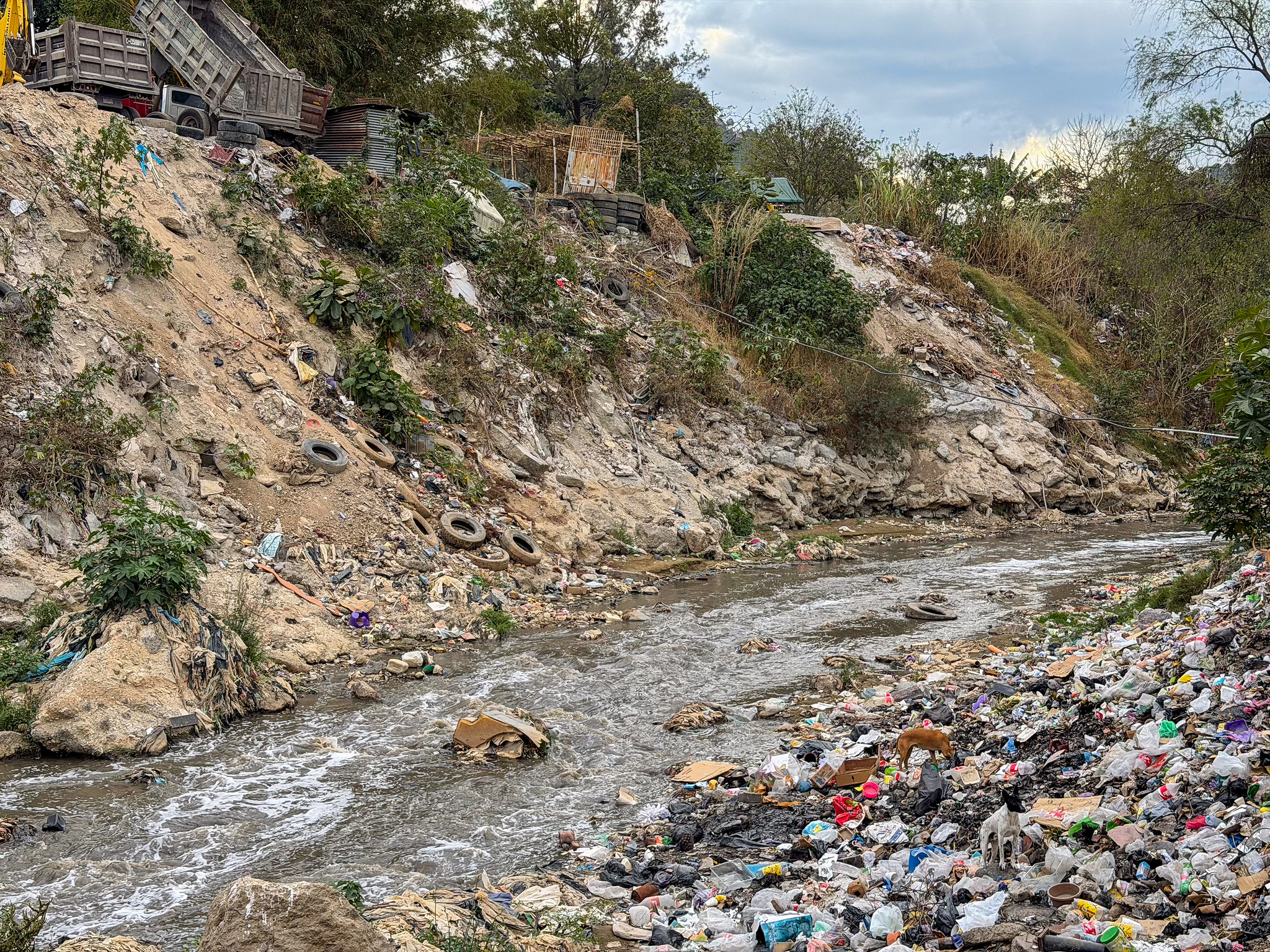
Photo: Mayela Sánchez García.
The situation extends beyond national borders. Every year, the Motagua River discharges some 20,000 metric tons of plastic into the Caribbean Sea, making it one of the rivers that contributes the most plastic pollution to the ocean worldwide, according to estimates contained in a 2025 report by the Inter-American Commission on Human Rights (IACHR).
The river flows into the Mesoamerican Reef at its mouth, so pollution also threatens to degrade one of the largest and most biodiverse transboundary reefs on the planet, which spans the territorial waters of Belize, Guatemala, Honduras, and Mexico.
In addition, the contaminated water reaches the coast of Honduras and spreads into Amatique Bay, located along the eastern coast of Guatemala, affecting the Caribbean Sea.
The roots of this chronic, cross-border problem are structural. Data from the Integrated Environmental Management of the Motagua River Basin project, funded by the United Nations Development Program (UNDP), show that in Guatemala, 66% of municipal solid waste is not collected, and there is no guarantee that the remaining 34% is disposed of properly. Furthermore, of all landfills nationwide, 88.32% are illegal or lack municipal authorization.
In other words, the core issues that need to be addressed are the mismanagement of solid waste and water resources in Guatemala; noncompliance with existing regulations on wastewater discharge and the disposal and treatment of solid waste and residues; and the lack of a water law.
The Poqomam Maya people's quest for justice
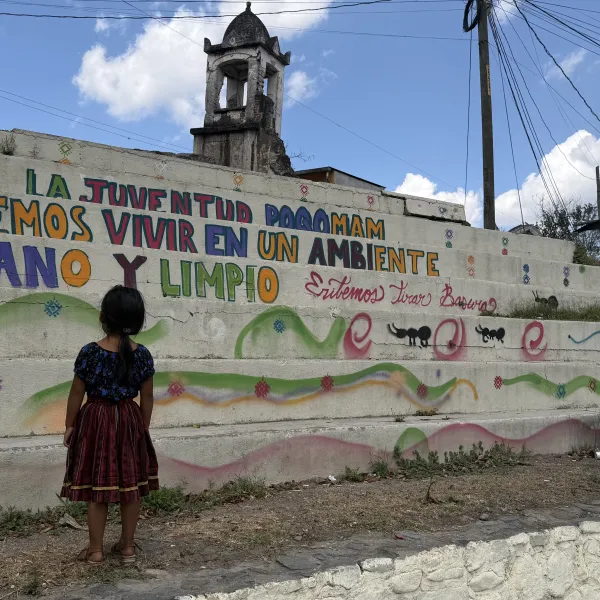
The rivers of Santa Cruz Chinautla, a community of the Poqomam Maya people located just twelve kilometers from Guatemala City, have become conduits of pollution that are degrading the Motagua River.
For decades, the local population has seen its health and livelihoods—including pottery, one of the main economic activities and a source of identity—damaged due to the lack of waste management in the municipality of Chinautla and the urban area of the country’s capital, as well as the activities of sand-mining companies.
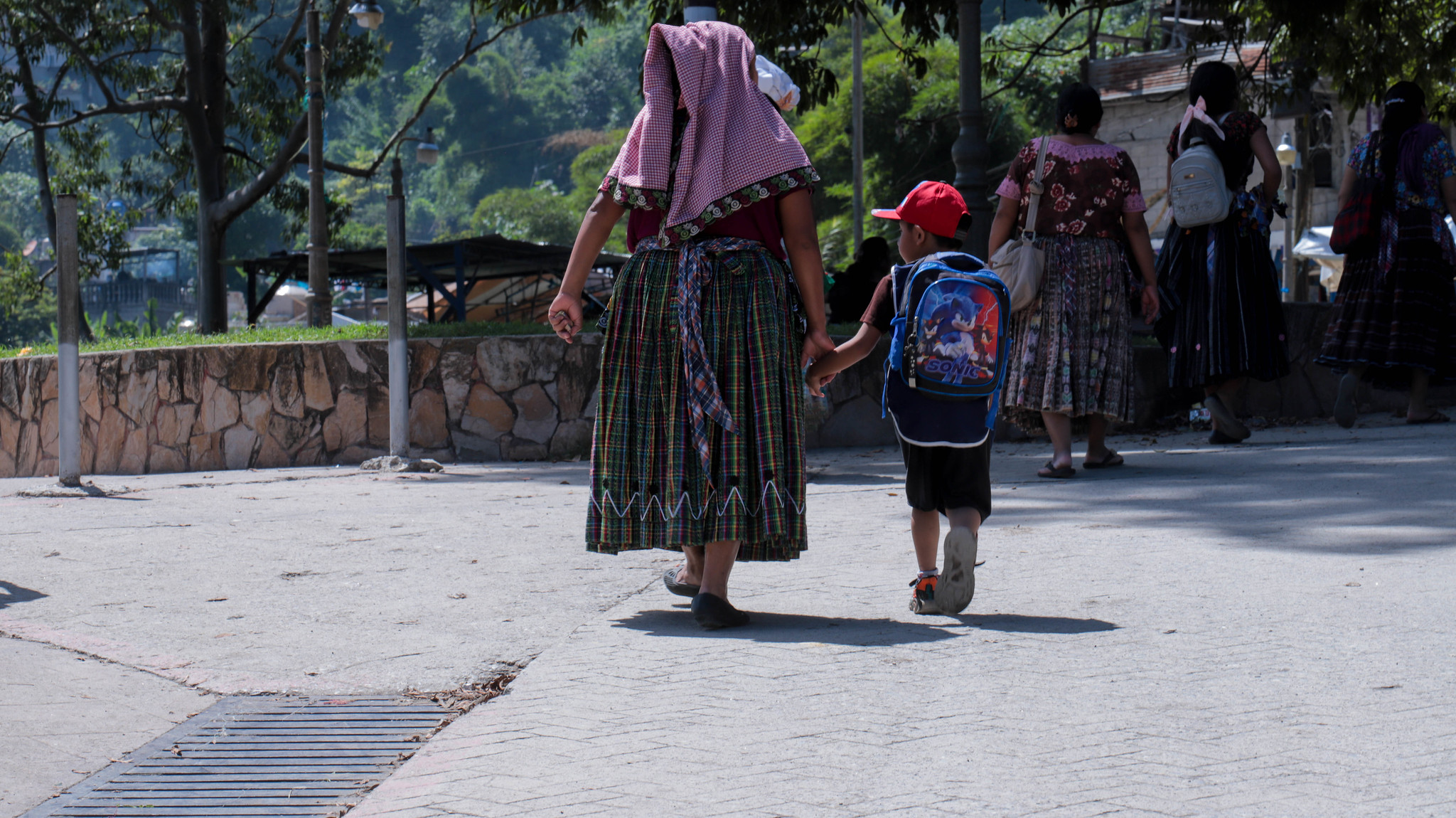
Photo: Mario Winter.
Voices for the Motagua River: Olga Vázquez.
Voices for the Motagua River: Nazario Pascual.
In early 2000, the Maya community organized to stop sand mining on their territory. At that time, the companies held mining permits that remained valid through 2021 and 2022. And although the permits expired, some companies continued to operate after requesting extensions. In June 2022, the indigenous authorities of the Poqomam people began a sit-in protest in front of the Piedrinera San Luis company, which they maintained for four years.
In July 2024, the Special Rapporteur on Economic, Social, Cultural, and Environmental Rights of the IACHR visited Santa Cruz Chinautla. During his visit, traditional authorities and community members spoke about the environmental, water-related, health, economic, and cultural impacts of the pollution in their rivers.
That same year, in October, the community—with support from AIDA, the Indigenous Peoples’ Law Firm, and partner organizations—filed a lawsuit (petition for amparo) against the municipality of Chinautla over its failure to take measures to address the contamination of its rivers and soil caused by improper solid waste management and the existence of illegal landfills.
AIDA’s scientific team, together with local residents and community authorities, collected key information on illegal landfills in the area. This community science initiative supported the litigation by highlighting the severity of the pollution, demonstrating the ongoing use of such practices, and providing evidence of the municipal authorities’ failure to fulfill their legal obligations regarding waste management.
Learn more about this community science initiative.
In June 2025, the Poqomam community won the support of the Guatemalan justice system when a constitutional court ordered the municipality of Chinautla to effectively address the claims in the lawsuit aimed at stopping the pollution of the rivers and soil in Santa Cruz Chinautla.
This is the first time a Guatemalan court has recognized a community's right to a healthy environment and its central role in finding solutions.
Find out the details of the legal victory.
Current situation
Since the ruling was issued, the municipality of Chinautla has held a series of “technical working groups” with representatives from the central government, civil society, and the community. A smaller group of technical experts was later created to develop a work plan with clear goals. Several months have passed without the municipality convening these working groups.
Furthermore, in December 2025, the IACHR noted in its report Human Rights Situation in Guatemala that the Motagua River basin is facing a severe pollution crisis that has had profound impacts on biodiversity and has resulted in systematic violations of the human rights of local communities, including the Maya Poqomam people.
And in May 2026, the Ministry of the Environment and Natural Resources revoked the license of the sand mining company Piedrinera San Luis for "failure to comply with environmental commitments."
AIDA continues to monitor the implementation of the court ruling to ensure the right to a healthy environment for the Poqomam Maya community and all those living in the Motagua River basin. Meanwhile, the residents of Santa Cruz Chinautla remain organized and mobilized to improve their environment and defend their rights.
Related projects
Strengthening the Sea Turtle Treaty
By Gladys Martínez When baby sea turtles first break through their shells, they slowly stick their heads out into the world. Then, they run as fast as they can to the vast body of salt water before them, where they will spend their lives. Sea turtles are migratory creatures that swim in the oceans, and nest on the beaches, of many different countries. Their survival is at risk from the impacts of human activity, such as unsustainable fishing, poorly planned development, and mining projects in marine and coastal areas. In an effort to confront these threats, the Inter-American Convention for the Protection and Conservation of Sea Turtles was created in 2001. The international treaty promotes the protection, conservation and recovery of sea turtle populations. From June 24 to 26 in Mexico City, representatives from member States will discuss achievements and plan for the future of the Convention during the 7th Conference of Parties. AIDA will be there advocating for the States to continue meeting their obligations and making new commitments. Fifteen Contracting Parties have signed the Convention: Argentina, Belize, Brazil, Chile, Costa Rica, Ecuador, Honduras, Mexico, Nicaragua, Netherlands (Antilles), Panama, Peru, Uruguay, Venezuela and the United States. Thirty-two accredited observers, including academic institutions and NGOs, may participate in meetings of Scientific and Consultative committees of experts. The 7th Conference of the Parties will focus on adopting three key resolutions, on: The conservation of leatherback sea turtles (Dermochelys Coriacea) in the Pacific Ocean. The conservation of loggerhead sea turtles (Caretta Caretta). Exceptions to the subsistence harvest of olive ridley turtle eggs in Costa Rica. The Conference will also review the States’ compliance with regards to their annual reports, present the Secretariat’s work plan, and elect a new President, Vice President and Rapporteur. AIDA will seek for the States to: Commit to avoiding threats to turtle nesting habitats by mining projects. Continue restricting and prohibiting developments that affect sea turtle migration routes. Strengthen measures for responsible fishing and bycatch (sea turtles are captured and killed incidentally by fishermen targeting other species). We will concentrate our outreach efforts on creating awareness and promoting measures to curb the risks that the Don Diego marine mining project will have on the loggerhead turtle and Mexico’s marine ecosystem. AIDA has worked since 1998 to protect sea turtles. First we advocated the Convention’s ratification. A campaign organized by AIDA and other sea turtle advocates helped secure the signatures necessary to continue the negotiation process, and, in 2011, for the Convention to enter into force. We have advocated before Courts and decision-makers for the protection of sea turtles in several countries of Latin America, basing our advocacy on the obligations assumed by States under the Convention. Using this strategy, we have protected the green turtle from illegal poaching on Costa Rica’s Atlantic coast, avoided loss of nesting habitat of the leatherback turtle, and guaranteed that hawksbill and olive ridley turtles continue to enjoy one of their favorite coral reefs, Coiba National Park in Panama. Follow us on Facebook and Twitter to learn more about the 7th Conference of Parties of the international treaty to protect sea turtles!
Read more
AIDA applauds Pope Francis’ recognition of urgent environmental challenges
The Interamerican Association for Environmental Defense (AIDA) applauds Pope Francis’ new Encyclical, Laudato Si: On Care For Our Common Home, released today. In it, the Pope addresses the environmental challenges facing humanity, which must be urgently addressed in order to protect the earth “with which we share existence.” His Holiness highlights the recommendations of organizations, like AIDA, which we hope will finally be echoed in governments, international organizations, corporations, and by all the people of this planet. We all have a responsibility to act to protect our home. The encyclical is comprehensive and covers many important issues. We would like to emphasize the Pope’s recognition of the following: The work performed by organizations and individuals to protect the environment. We are grateful for his gesture, and feel honored and committed to continuing this hard work. That fact that “recent World Summits on the environment have not lived up to expectations because, due to lack of political will, they were unable to reach truly meaningful and effective global agreements on the environment.” He concludes, “Reducing greenhouse gases requires honesty, courage and responsibility, above all on the part of those countries which are more powerful and pollute the most.” Social inequality and the impact of environmental degradation, which worsens the misery of the poor, including migrants and indigenous communities. We therefore reiterate our call to protect Earth, taking into particular consideration solutions that address this inequality. The rich and complex biodiversity of the planet’s ecosystems, which must be preserved, as well as the human right to water, which “is essential to human survival and, as such, is a condition for the exercise of other human rights.” The Precautionary Principle as a tool to avoid serious and irreversible harm to the environment. With this Encyclical, Pope Francis joins other religious leaders who have made an urgent call for the adoption of immediate measures to protect the planet.
Read more
Closing Statement by NGOs at Ramsar COP12
Presented by Rafaela Nicola, World Wetland Network Committee’s Neo-Tropics delegate We would like to thank the Secretary General and the Parties for this opportunity to address the meeting, to share our message that NGOS are committed to Ramsar and we want to do more. We also wish to thank the government of Uruguay for hosting the COP. We appreciated the field trips yesterday, which introduced us to the beautiful wetlands in this country, some of which are Ramsar Sites. World Wetland Network was launched at Ramsar COP 10; this is our third COP. Our participation in Ramsar is recognized in Resolution 11.6.We were formed to complement the activity of the IOPs. We fully appreciate the value and expertise of the non-governmental IOPs, who work in strong partnership with local communities and indigenous peoples. WWN was formed at the initiative of smaller, grass-roots NGOs and CSOs seeking a voice at the table. I speak on behalf of our 2000 members worldwide and our friends at the COP: local and sub-regional organizations who have been meeting daily to engage with and monitor this important process. The core work of the Ramsar COP 12 has been the resolutions. Crafting and revising resolutions. Collaborating, negotiating and finally reaching agreement. We humbly acknowledge the co- operation and hard work of the Secretariat, Contracting Parties and IOPs to create meaningful resolutions that ensure conservation and wise of our world’s wetlands. When we all return home the real challenge begins, turning these resolutions into action. We urge the Contracting Parties to show steadfast commitment and leadership. We stand ready to help at the local level. The Fourth Strategic Plan is the most significant outcome of this COP, guiding our combined efforts for the next nine years. World Wetland Network welcomes the Contracting Parties initiative to strengthen engagement of NGOs, civil society groups, local communities and indigenous peoples in the Strategic Plan. These stakeholders provide a long-term and often continuous connection to wetland sites and are essential partners to achieve the Ramsar vision. We note that the top priority of the Strategic Plan is to prevent, stop and reverse the loss and degradation of wetlands. Your recognition of the key threats including unsustainable agriculture, forestry and extractive industries, especially oil, gas, mining, and urbanization closely reflects the local knowledge and concerns of our members, in Latin America and globally. We encourage Contracting Parties to work cohesively across ministries and prioritize long-term sustainability when approving developments. A healthy environment is fundamental to our economic and social security. Cohesive implementation will be supported by the effective mobilization of National Wetland Committees. We note that establishment of these committees, with both government and non- government representatives, is an indicator for success of Goal 1 in the Plan, and we urge the parties to comply. The theme of the COP has been “Wetlands for our future.” That future starts today. Every planning and development decision taken today will directly impact on wetlands and the communities that depend on them. Our message is loud and clear: we are committed to Ramsar and we want to do more. We trust our activities at Ramsar COP 12 have enhanced the meeting and we pledge our commitment to the conservation and wise use of wetlands. Thank you
Read more