
Project
Shutterstock.
Pollution of the Motagua River in Guatemala: The Poqomam Maya people’s quest for environmental justice
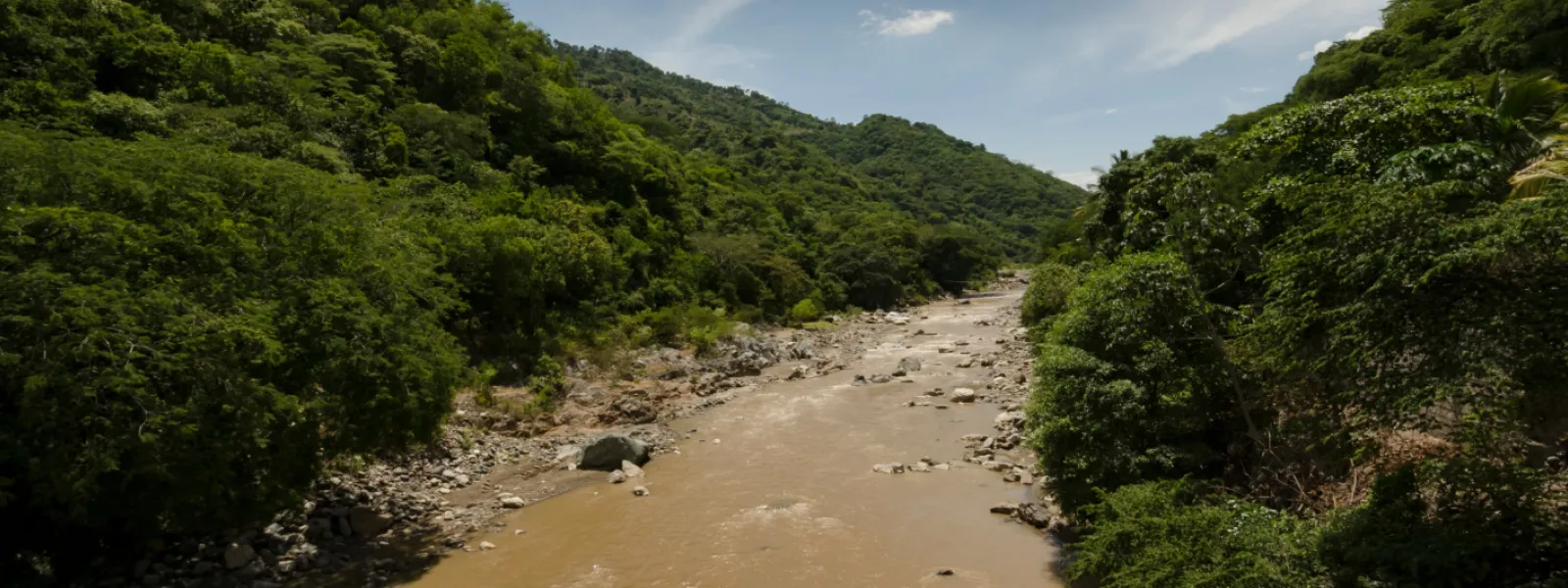
The Motagua River basin—Guatemala’s largest and most important river—is severely polluted with wastewater, solid waste, and other types of debris.
This is a cross-border issue because the Motagua’s polluted waters flow into the Caribbean Sea, reach the coast of Honduras, and threaten the Mesoamerican Reef System.
For decades, this has violated the rights to health, water, development, and a healthy environment of all the people living in the river basin.
In June 2025, the Poqomam Maya community of Santa Cruz Chinautla—supported by AIDA, the Indigenous Peoples’ Law Firm, and allied organizations—achieved an unprecedented legal victory to halt degradation in the basin. In response to the lawsuit it filed, a Guatemalan court ordered the municipality of Chinautla to comply with a series of obligations to curb the pollution of the area’s rivers and soil.
The government's response to the ruling has so far been limited to technical working group meetings. Meanwhile, the community continues to work toward the proper implementation of the ruling and to take other actions to defend its territory and its rights.
Background
The Motagua River, which is 486 km long, flows through 96 municipalities and 14 departments in Guatemala. It originates in Quiché, a department located in the northwest, and empties into the Caribbean Sea.
Polluting activities occur throughout the entire basin, including sub-basins and micro-basins. The largest volume of pollution comes from Guatemala City, the country’s capital, and is carried by the waters of the Las Vacas River, which in turn receives a large amount of waste from the Chinautla River.
The Chinautla River, which flows through the municipality of the same name, carries solid waste from a landfill located in Zone 3 of the capital—where trash from at least 14 municipalities in the department of Guatemala is dumped—as well as sewage generated by some 500,000 people living in the northern part of the capital, which undergoes no prior treatment.
Other sources of pollution include the numerous illegal dumps in the municipality of Chinautla, the waste that private vehicles and garbage trucks dump along the banks of its rivers, as well as the sand-mining companies—which began setting up operations in the area between 1996 and 1997—whose activities weaken the rivers' basins, causing solid waste to be more easily carried away by the river currents.
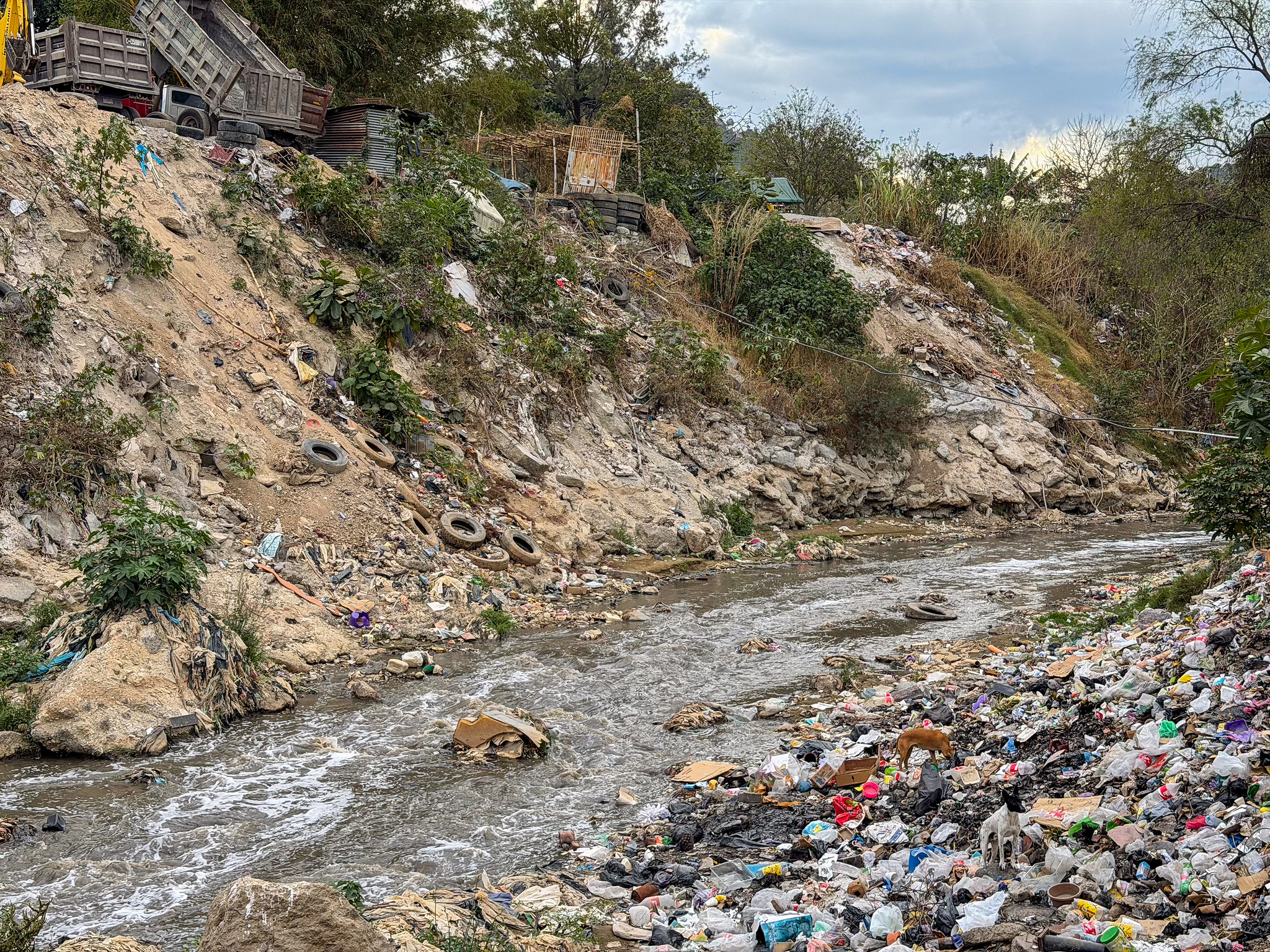
Photo: Mayela Sánchez García.
The situation extends beyond national borders. Every year, the Motagua River discharges some 20,000 metric tons of plastic into the Caribbean Sea, making it one of the rivers that contributes the most plastic pollution to the ocean worldwide, according to estimates contained in a 2025 report by the Inter-American Commission on Human Rights (IACHR).
The river flows into the Mesoamerican Reef at its mouth, so pollution also threatens to degrade one of the largest and most biodiverse transboundary reefs on the planet, which spans the territorial waters of Belize, Guatemala, Honduras, and Mexico.
In addition, the contaminated water reaches the coast of Honduras and spreads into Amatique Bay, located along the eastern coast of Guatemala, affecting the Caribbean Sea.
The roots of this chronic, cross-border problem are structural. Data from the Integrated Environmental Management of the Motagua River Basin project, funded by the United Nations Development Program (UNDP), show that in Guatemala, 66% of municipal solid waste is not collected, and there is no guarantee that the remaining 34% is disposed of properly. Furthermore, of all landfills nationwide, 88.32% are illegal or lack municipal authorization.
In other words, the core issues that need to be addressed are the mismanagement of solid waste and water resources in Guatemala; noncompliance with existing regulations on wastewater discharge and the disposal and treatment of solid waste and residues; and the lack of a water law.
The Poqomam Maya people's quest for justice
The rivers of Santa Cruz Chinautla, a community of the Poqomam Maya people located just twelve kilometers from Guatemala City, have become conduits of pollution that are degrading the Motagua River.
For decades, the local population has seen its health and livelihoods—including pottery, one of the main economic activities and a source of identity—damaged due to the lack of waste management in the municipality of Chinautla and the urban area of the country’s capital, as well as the activities of sand-mining companies.
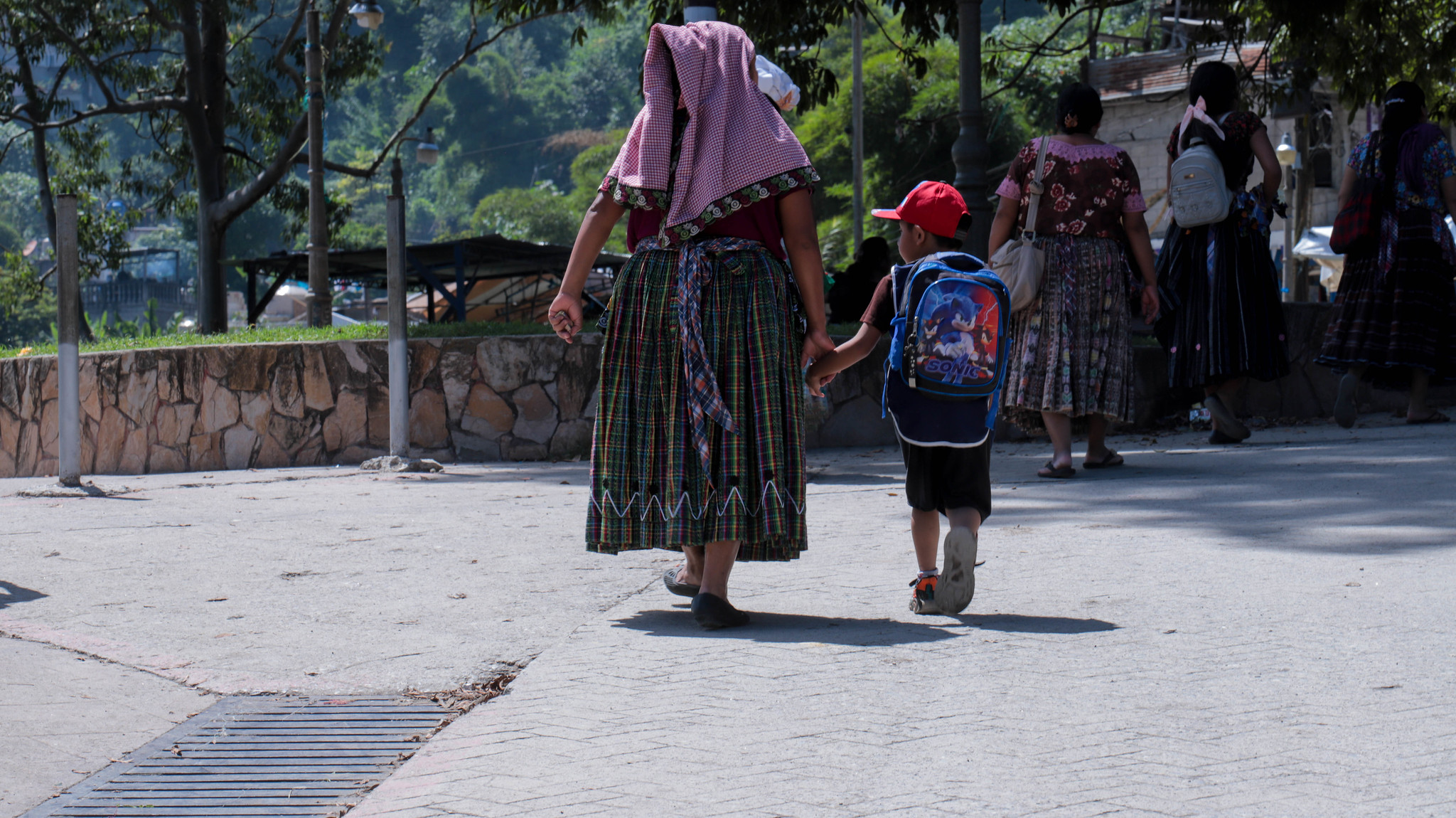
Photo: Mario Winter.
Voices for the Motagua River: Olga Vázquez.
Voices for the Motagua River: Nazario Pascual.
In early 2000, the Maya community organized to stop sand mining on their territory. At that time, the companies held mining permits that remained valid through 2021 and 2022. And although the permits expired, some companies continued to operate after requesting extensions. In June 2022, the indigenous authorities of the Poqomam people began a sit-in protest in front of the Piedrinera San Luis company, which they maintained for four years.
In July 2024, the Special Rapporteur on Economic, Social, Cultural, and Environmental Rights of the IACHR visited Santa Cruz Chinautla. During his visit, traditional authorities and community members spoke about the environmental, water-related, health, economic, and cultural impacts of the pollution in their rivers.
That same year, in October, the community—with support from AIDA, the Indigenous Peoples’ Law Firm, and partner organizations—filed a lawsuit (petition for amparo) against the municipality of Chinautla over its failure to take measures to address the contamination of its rivers and soil caused by improper solid waste management and the existence of illegal landfills.
AIDA’s scientific team, together with local residents and community authorities, collected key information on illegal landfills in the area. This community science initiative supported the litigation by highlighting the severity of the pollution, demonstrating the ongoing use of such practices, and providing evidence of the municipal authorities’ failure to fulfill their legal obligations regarding waste management.
Learn more about this community science initiative.
In June 2025, the Poqomam community won the support of the Guatemalan justice system when a constitutional court ordered the municipality of Chinautla to effectively address the claims in the lawsuit aimed at stopping the pollution of the rivers and soil in Santa Cruz Chinautla.
This is the first time a Guatemalan court has recognized a community's right to a healthy environment and its central role in finding solutions.
Find out the details of the legal victory.
Current situation
Since the ruling was issued, the municipality of Chinautla has held a series of “technical working groups” with representatives from the central government, civil society, and the community. A smaller group of technical experts was later created to develop a work plan with clear goals. Several months have passed without the municipality convening these working groups.
Furthermore, in December 2025, the IACHR noted in its report Human Rights Situation in Guatemala that the Motagua River basin is facing a severe pollution crisis that has had profound impacts on biodiversity and has resulted in systematic violations of the human rights of local communities, including the Maya Poqomam people.
And in May 2026, the Ministry of the Environment and Natural Resources revoked the license of the sand mining company Piedrinera San Luis for "failure to comply with environmental commitments."
AIDA continues to monitor the implementation of the court ruling to ensure the right to a healthy environment for the Poqomam Maya community and all those living in the Motagua River basin. Meanwhile, the residents of Santa Cruz Chinautla remain organized and mobilized to improve their environment and defend their rights.
Related projects
IFC boosts investment in contested Canadian mining project in Colombia despite ongoing investigation
Washington, DC – On April 24, more than 50,000 Colombians took to the streets in Bucaramanga in a march to defend their primary water source from the development of Eco Oro Minerals’ Angostura gold project and other proposed mining activities. Despite broad public opposition and an ongoing investigation into an earlier investment decision, the private lending arm of the World Bank, the International Finance Corporation (IFC), bought more shares in Eco Oro Minerals in February. The IFC’s original decision in 2009 to invest in Eco Oro is the subject of an ongoing investigation by the World Bank’s Compliance Advisor Ombudsman about whether its social and environmental sustainability policies were violated. In February, without waiting for a decision on the ongoing investigation, the IFC purchased an additional 390,000 shares in Eco Oro Minerals for a total investment of US$18.4 million. Members of the Committee for the Defense of Water and the Santurbán Páramo brought the original complaint to the CAO in June 2012 and have decried the fact that mining is illegal within the páramo. "This mining project and the others that it stimulates in the area will put the drinking water of millions of us at risk. We have clearly stated that we want the IFC to divest, not reinvest," remarked Carlos Lozano Acosta, attorney at the Interamerican Association for Environmental Defense (AIDA). The Santurbán Páramo is a high altitude wetland ecosystem that provides water for approximately 2 million people in the region. "This new investment is irresponsible. The IFC needs to learn from the past; investments in mining have led to violent conflict and human rights violations throughout Latin America, stated Carla Garcia Zendejas, Program Director at the Center for International Environmental Law (CIEL). “Given that there is an open investigation, at a minimum the IFC should wait for their own compliance office to determine if their original investment in the mine violated their own policies before making any further decisions" Garcia Zendejas said. Violence has already taken place in the area of Eco Oro operations. The complaint presented to the CAO alleges that the IFC glossed over potential security issues related to the Angostura project. It includes documented evidence of violence associated with guerrilla and paramilitary activity following a major military operation and the establishment of military installations in the area around 2003. “The IFC is investing in conflict and lending legitimacy to an activity that downstream communities and organizations have clearly opposed out of concern for their future well-being. The IFC should start listening to the Colombian people and withdraw,” commented Jen Moore, Latin America Program Coordinator for MiningWatch Canada.
Read moreOrganizations ask for immediate suspension of aerial fumigations of glyphosate and other chemicals in Colombia
A citizen petition was released by the website Change.org addressed to President Juan Manuel Santos and the National Narcotics Council. It requested that such fumigations are suspended because they damage the environment, human health and may cause cancer. Bogota, Colombia. The Interamerican Association for Environmental Defense (AIDA), with the help of the Institute for Development and Peace Studies (INDEPAZ) and the Observatory of Crops Declared Illicit, launched a citizen petition today open to signatures through the website Change.org to request that president Juan Manuel Santos and the National Narcotics Council suspend aerial spraying of illicit crops using glyphosate and other harmful chemicals. "Independent scientific studies show that the fumigations are inefficient and have not reduced coca and poppy crops. To the contrary, they have contributed to the destruction of forests and affected populations, including ethnic groups. Recently, the International Agency for Research on Cancer of the World Health Organization (WHO) determined that the glyphosate usedin in spraying may cause cancer in humans," says Astrid Puentes Riaño, AIDA Co-Executive Director who signed the petition. The National Narcotics Council will meet on May 14 to address the issue and decide whether to suspend the spraying. In the case of Colombia, this practice is carried out on a mass scale, through aerial spraying and uses a concentration of glyphosate higher than that used commercially. In addition, the spraying occurs indiscriminately over houses, farms and water sources. On April 24 and based on the determination of the WHO, the Ministry of Health recommended the National Narcotics Council immediately suspend aerial spraying of glyphosate, which was introduced to the country more than 15 years ago with funding from the United States Government. In the past, high courts in the country such as the Constitutional Court have also solicited the suspension of the spraying, but these provisions have not been met. This issue reached the International Court of Justice when Ecuador sued Colombia for impacts of the fumigations in the border area. The Colombian government compensated the neighboring country and pledged to stop spraying along the border. Apart from damage to health, the fumigations impact ecosystems rich in biodiversity and the species that inhabit them, pollute water and destroy food crops that are a source of subsistence for indigenous and Afro-Colombian communities and small farmers.
Read more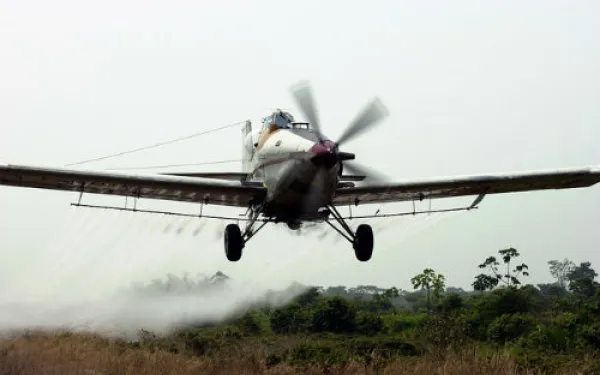
Colombian government must immediately suspend the use of glyphosate
Bogota, Colombia. Glyphosate, the herbicide used to eradicate crops considered illicit in Colombia, has been classified as a substance probably carcinogenic to humans by the International Agency for Research on Cancer, the specialized cancer agency of the World Health Organization. Based on these findings, the Colombian Ministry of Health is recommending that the country’s Ministry of Justice "immediately suspend the use of glyphosate in the Illicit Crops Eradication Program’s aerial spraying operations." The Interamerican Association for Environmental Defense (AIDA) strongly supports this recommendation so that the human rights to health and a healthy environment, both closely linked to the right to life, are protected in Colombia. We urge the government to fulfill its national and international obligations, respecting the conclusions reached by the highest health authorities, in order to prevent further damage to the country’s people and environment. For 15 years, AIDA and partner organizations have been warning of the grave impacts glyphosate has on the environment and human health. We’ve advocated for the need to apply the precautionary principle to suspend Colombia’s fumigation program, which has been financed by the government of the United States. Astrid Puentes Riaño, attorney and co-director of AIDA: "Colombia, like no other country, has used millions of liters of glyphosate that have not succeeded in destroying coca and poppy plants, but have irreparably damaged the environment and human health. Without excuses or delays, the National Narcotics Council must act responsibly and immediately suspend the use of glyphosate in the eradication of illicit crops." Anna Cederstav, co-director of AIDA and PhD in Chemistry: "The scientific evidence on the impacts of glyphosate on the environment and human health is sufficient to support a decision of the suspension of aerial spraying of glyphosate in Colombia."
Read more