
Project
Shutterstock.
Pollution of the Motagua River in Guatemala: The Poqomam Maya people’s quest for environmental justice
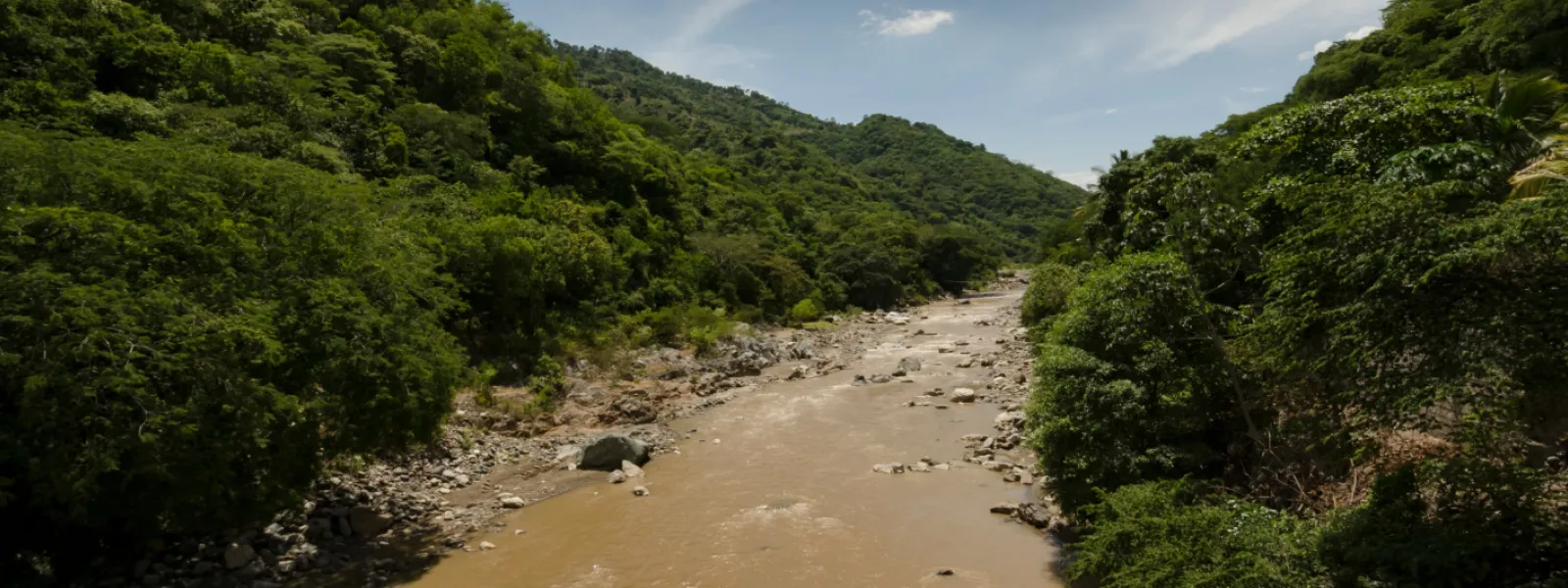
The Motagua River basin—Guatemala’s largest and most important river—is severely polluted with wastewater, solid waste, and other types of debris.
This is a cross-border issue because the Motagua’s polluted waters flow into the Caribbean Sea, reach the coast of Honduras, and threaten the Mesoamerican Reef System.
For decades, this has violated the rights to health, water, development, and a healthy environment of all the people living in the river basin.
In June 2025, the Poqomam Maya community of Santa Cruz Chinautla—supported by AIDA, the Indigenous Peoples’ Law Firm, and allied organizations—achieved an unprecedented legal victory to halt degradation in the basin. In response to the lawsuit it filed, a Guatemalan court ordered the municipality of Chinautla to comply with a series of obligations to curb the pollution of the area’s rivers and soil.
The government's response to the ruling has so far been limited to technical working group meetings. Meanwhile, the community continues to work toward the proper implementation of the ruling and to take other actions to defend its territory and its rights.
Background
The Motagua River, which is 486 km long, flows through 96 municipalities and 14 departments in Guatemala. It originates in Quiché, a department located in the northwest, and empties into the Caribbean Sea.
Polluting activities occur throughout the entire basin, including sub-basins and micro-basins. The largest volume of pollution comes from Guatemala City, the country’s capital, and is carried by the waters of the Las Vacas River, which in turn receives a large amount of waste from the Chinautla River.
The Chinautla River, which flows through the municipality of the same name, carries solid waste from a landfill located in Zone 3 of the capital—where trash from at least 14 municipalities in the department of Guatemala is dumped—as well as sewage generated by some 500,000 people living in the northern part of the capital, which undergoes no prior treatment.
Other sources of pollution include the numerous illegal dumps in the municipality of Chinautla, the waste that private vehicles and garbage trucks dump along the banks of its rivers, as well as the sand-mining companies—which began setting up operations in the area between 1996 and 1997—whose activities weaken the rivers' basins, causing solid waste to be more easily carried away by the river currents.
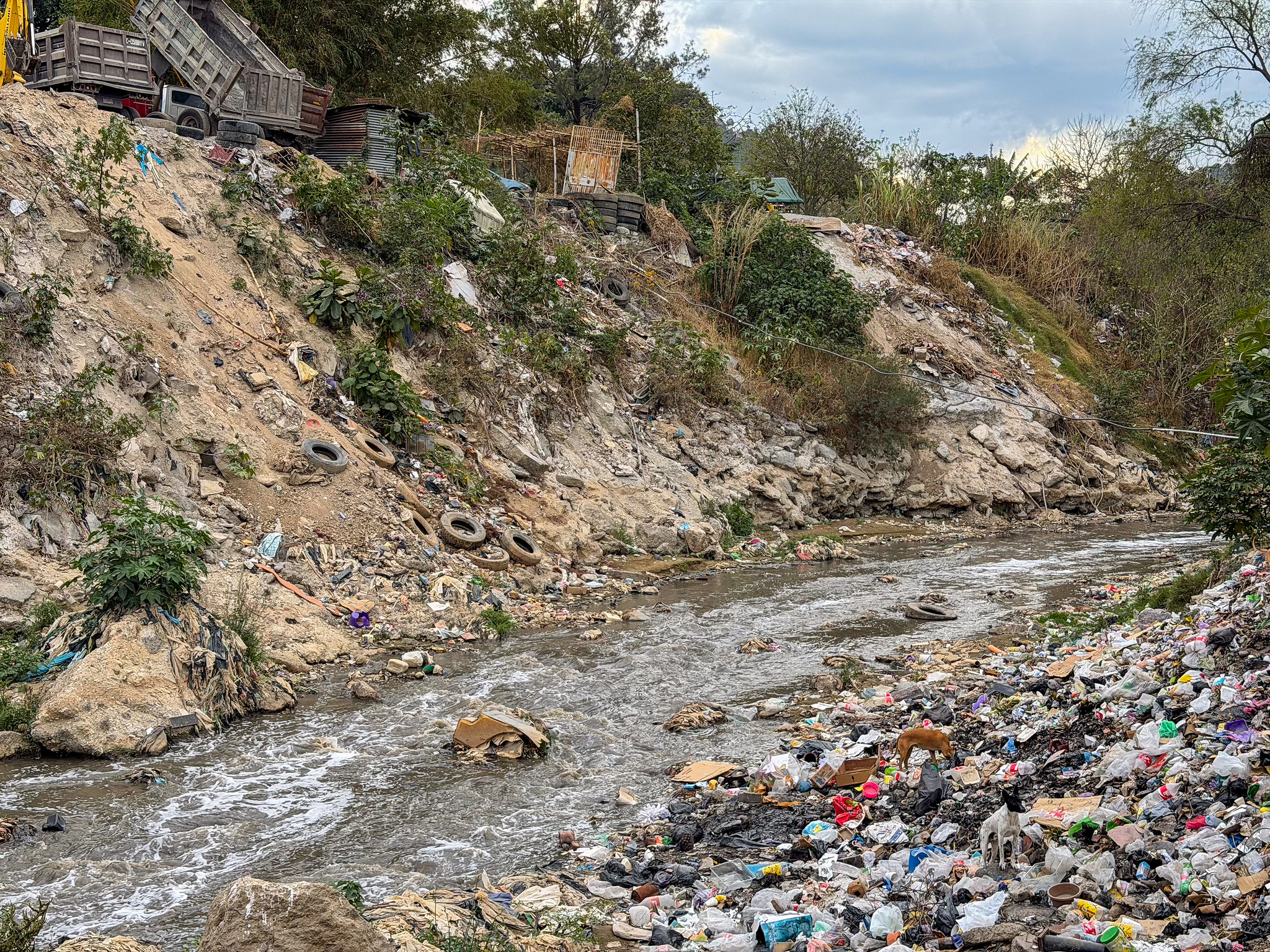
Photo: Mayela Sánchez García.
The situation extends beyond national borders. Every year, the Motagua River discharges some 20,000 metric tons of plastic into the Caribbean Sea, making it one of the rivers that contributes the most plastic pollution to the ocean worldwide, according to estimates contained in a 2025 report by the Inter-American Commission on Human Rights (IACHR).
The river flows into the Mesoamerican Reef at its mouth, so pollution also threatens to degrade one of the largest and most biodiverse transboundary reefs on the planet, which spans the territorial waters of Belize, Guatemala, Honduras, and Mexico.
In addition, the contaminated water reaches the coast of Honduras and spreads into Amatique Bay, located along the eastern coast of Guatemala, affecting the Caribbean Sea.
The roots of this chronic, cross-border problem are structural. Data from the Integrated Environmental Management of the Motagua River Basin project, funded by the United Nations Development Program (UNDP), show that in Guatemala, 66% of municipal solid waste is not collected, and there is no guarantee that the remaining 34% is disposed of properly. Furthermore, of all landfills nationwide, 88.32% are illegal or lack municipal authorization.
In other words, the core issues that need to be addressed are the mismanagement of solid waste and water resources in Guatemala; noncompliance with existing regulations on wastewater discharge and the disposal and treatment of solid waste and residues; and the lack of a water law.
The Poqomam Maya people's quest for justice
The rivers of Santa Cruz Chinautla, a community of the Poqomam Maya people located just twelve kilometers from Guatemala City, have become conduits of pollution that are degrading the Motagua River.
For decades, the local population has seen its health and livelihoods—including pottery, one of the main economic activities and a source of identity—damaged due to the lack of waste management in the municipality of Chinautla and the urban area of the country’s capital, as well as the activities of sand-mining companies.
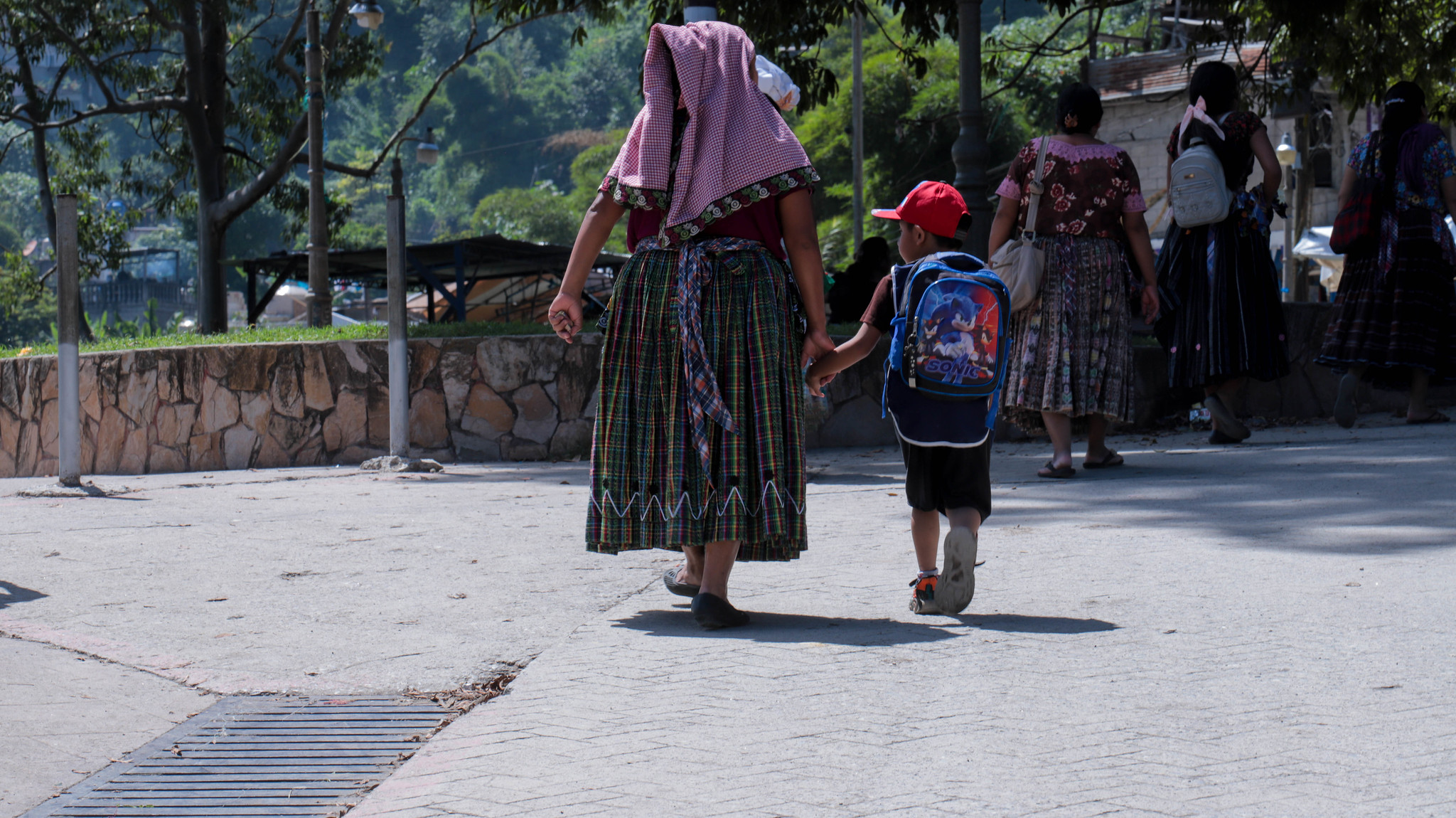
Photo: Mario Winter.
Voices for the Motagua River: Olga Vázquez.
Voices for the Motagua River: Nazario Pascual.
In early 2000, the Maya community organized to stop sand mining on their territory. At that time, the companies held mining permits that remained valid through 2021 and 2022. And although the permits expired, some companies continued to operate after requesting extensions. In June 2022, the indigenous authorities of the Poqomam people began a sit-in protest in front of the Piedrinera San Luis company, which they maintained for four years.
In July 2024, the Special Rapporteur on Economic, Social, Cultural, and Environmental Rights of the IACHR visited Santa Cruz Chinautla. During his visit, traditional authorities and community members spoke about the environmental, water-related, health, economic, and cultural impacts of the pollution in their rivers.
That same year, in October, the community—with support from AIDA, the Indigenous Peoples’ Law Firm, and partner organizations—filed a lawsuit (petition for amparo) against the municipality of Chinautla over its failure to take measures to address the contamination of its rivers and soil caused by improper solid waste management and the existence of illegal landfills.
AIDA’s scientific team, together with local residents and community authorities, collected key information on illegal landfills in the area. This community science initiative supported the litigation by highlighting the severity of the pollution, demonstrating the ongoing use of such practices, and providing evidence of the municipal authorities’ failure to fulfill their legal obligations regarding waste management.
Learn more about this community science initiative.
In June 2025, the Poqomam community won the support of the Guatemalan justice system when a constitutional court ordered the municipality of Chinautla to effectively address the claims in the lawsuit aimed at stopping the pollution of the rivers and soil in Santa Cruz Chinautla.
This is the first time a Guatemalan court has recognized a community's right to a healthy environment and its central role in finding solutions.
Find out the details of the legal victory.
Current situation
Since the ruling was issued, the municipality of Chinautla has held a series of “technical working groups” with representatives from the central government, civil society, and the community. A smaller group of technical experts was later created to develop a work plan with clear goals. Several months have passed without the municipality convening these working groups.
Furthermore, in December 2025, the IACHR noted in its report Human Rights Situation in Guatemala that the Motagua River basin is facing a severe pollution crisis that has had profound impacts on biodiversity and has resulted in systematic violations of the human rights of local communities, including the Maya Poqomam people.
And in May 2026, the Ministry of the Environment and Natural Resources revoked the license of the sand mining company Piedrinera San Luis for "failure to comply with environmental commitments."
AIDA continues to monitor the implementation of the court ruling to ensure the right to a healthy environment for the Poqomam Maya community and all those living in the Motagua River basin. Meanwhile, the residents of Santa Cruz Chinautla remain organized and mobilized to improve their environment and defend their rights.
Related projects
The Nicaragua Canal: Resistance to Dispossession
“How do I explain do my son that to be a landowner will soon mean to be an employee?” asked a woman who may soon lose her land because of the proposed Nicaraguan Interoceanic Grand Canal. Her question resounds in my head each time I hear news of the canal’s construction. There is nothing more valuable than a piece of land to cultivate, land you’ve dreamed of your whole life, land that your children will some day inherit, land that makes the early mornings and long days working under the hot sun worth it. People throughout Nicaragua have said “no” to the proposed canal. They have decided to fight because they’re not willing to lose their dreams for nothing more than the promise of a job. A Controversial Canal The proposed canal will cross Lake Nicaragua, or Cocibolca, the second largest lake in Latin America. It will cut the country in two to connect the Caribbean Sea and the Atlantic Ocean with the Pacific. At 278 kilometers, it will be three times larger than the Panama Canal. The project’s estimated cost is 50 billion dollars. More than just the canal, it will include other megaprojects: an airport, highways, a free trade zone, resorts and two ports – one on the Pacific and the other on the Caribbean. The magnitude of the project will be reflected in the negative impacts it will cause. Canal construction will directly affect 119,000 people in 13 municipalities, according to Mónica López Baltodano of Fundación Popol Na. She presented this information at a special hearing on March 16, 2015 before the Inter-American Commission for Human Rights. The hearing was requested by 10 organizations from Nicaragua and the multi-national Center for Justice and International Law (CEJIL). “Our greatest worry is that the exact number of citizens who will undergo a process of expropriation (those who will be displaced from their land) remains a State secret, and there are no plans for relocation or the restoration of living conditions,” Lopez explained. Azahelea Solís of the Citizens’ Union for Democracy (UCD) added that granting licenses for the project “violates the Constitution of the Republic, various national laws, and more than 10 international environmental treaties signed by Nicaragua.” In addition, the canal was approved in the absence of an environmental impact assessment. The concession was granted to a single company: the Chinese consortium HKND. In the hearing, Louis Carlos Buob of CEJIL explained that the consortium has exclusive rights to “development” and “operation” of the canal, potentially for at least 116 years. The concession gives them “unrestricted rights over natural resources like land, forests, islands, air, surface and groundwater, maritime space and additional resources that could be considered relevant anywhere in the country.” The damage to these natural resources is precisely the most worrying thing about the canal. Its construction will impact Lake Cocibolca, the most important fresh water source in Central America. It also “threatens sensitive marine ecosystems in the Caribbean Sea belonging to Colombia and divides in two the Mesoamerican Biological Corridor, a loose network of reserves and other land that stretches from the south of Mexico to Panama, which animals such as the jaguar use to cross Central America.” Community Resistance Those affected by the expropriations have formed the National Council for the Defense of our Lands, Lake and National Sovereignty. Through this united front they have expressed their total opposition to the project and have stated that they will not sell their lands for the canal’s construction. According to the page Nicaragua sin heridas, a citizen’s initiative to disclose information on the project, there have been 41 protests against the project, in which 113,500 people have mobilized across 25 territories in just five months. The community of El Tule, in the department of Rio San Juan, has become an emblem of the anti-canal fight. The citizens there who will be affected by the project have held marches and rallies. On December 24, they were victims of repression at the hands of the National Police – the crowd was beaten and 33 people, including leaders of the movement, were imprisoned for their protest. In Tule there was no Holy Night, and no Merry Christmas. A Disastrous Trend Sadly, the Nicaragua Canal is just one of many projects that gravely affect human rights and the environment in Latin America. In the last 20 years, more than 250 million people have been displaced in the name of “development” for megaprojects, such as dams, or extractive activities, such as mining. In October 2014, alongside partner organizations, AIDA called Inter-American Human Rights Commission’s attention to forced displacement caused by the inadequate implementation of mining and energy projects in Colombia. On that occasion, we asked the Commission to develop standards on displacement by megaprojects and urged the Colombian government to properly care for the victims. Megaprojects not only cause forced displacement, but also violate other human rights ranging from the loss of ways of life to the criminalization of social protest, as occurred in El Tule. In Mexico, the Miguel Augustín Pro Juárez Center for Human Rights published the report Han Destruido la Vida en Este Lugar (They’ve Destroyed Life in This Place, 2010), which documents the damage caused by megaprojects and by the exploitation of natural resources. According to the report, in addition to forced displacement, these projects cause harm to ways of life and broken cultural ties. I would add that displacements break community social networks, vital to the exercise of rights. Left with Questions What will happen to those whose land is expropriated by the Nicaragua Canal? Are they condemned to be displaced and see their dream of landownership destroyed? Who will guarantee respect for their human rights? In what way can Nicaraguan civil society and those unaffected by the project help them? Today the canal threatens to become a reality for one of the poorest countries in Latin America, with a recent history of dictatorship and civil war, that is each day more vulnerable to climate change and natural disasters. How do I explain do my son that to be a landowner will soon mean to be an employee? I still have no answer.
Read moreAIDA celebrates historic decision to suspend fumigation with glyphosate in Colombia
AIDA calls on the National Environmental Licensing Agency to immediately cancel the permit authorizing the chemical spraying program. Thanks to more than 24,000 people who signed a petition on Change.org to suspend fumigation and to colleagues and organizations that participated in the campaign. Bogota, Colombia. The Interamerican Association for Environmental Defense (AIDA) welcomes the Colombian government’s decision to suspend the aerial spraying of coca and poppy crops with glyphosate in the country. To implement this decision, the National Environmental Licensing Agency must rule immediately and cancel the permit granted to the chemical spraying program. "This is a historic moment for health, the environment, and respect for law in Colombia," said Astrid Puentes Riaño, Co-Director of AIDA. "We know it was a complex decision, but in light of a policy that has proved ineffective and caused serious damage, it was also a smart decision to change course and find real solutions." AIDA has followed the Illicit Crop Eradication Program in Colombia since the late 1990s. We have repeatedly decried the serious damage to health and the environment caused by the glyphosate mixture applied in Colombia, and advocated more appropriate alternatives to eradicate coca and poppy crops. The decision to suspend the spraying, made last night by the National Narcotics Council with an overwhelming majority of seven votes to one, will become effective if the National Environmental Licensing Agency revokes the permit authorizing the program. AIDA believes that the permit should be canceled immediately because the program was designed to use glyphosate, and without it the program no longer makes sense. One day before the decision, AIDA delivered a petition to suspend the spraying, with more than 24,000 signatures, to the Minister of Justice, who also chairs the Narcotics Council. The petition, posted on Change.org, was sponsored by AIDA in conjunction with the Institute for Studies of Development and Peace (INDEPAZ) and the Observatory of Crops and Growers Declared Illicit, with support from Washington Office on Latin America and Latin American Working Group. In one week the petition received 24,933 signatures. "We thank everyone who signed and those who for years have requested this change in policy; this is a shared achievement," said Hector Herrera, AIDA attorney and coordinator of the Environmental Justice Network in Colombia. "We look forward to creation of a technical committee to make recommendations and hope that it is participatory and transparent." The suspension of the fumigation program followed a finding, issued by the World Health Organization’s International Agency for Research on Cancer, that glyphosate may be carcinogenic. This finding led the Ministry of Health to recommended suspending the program, which Colombia’s Constitutional Court and other national courts had unsuccessfully requested years before, citing the precautionary principle. This principle, found in international environmental law, was incorporated into Colombian legislation in 1993. It holds that in the absence of scientific certainty, when a risk of serious or irreversible health or environmental damage may be present, the authorities should take steps to avoid that risk. In the case of spraying, the requirements for applying the precautionary principle are met. Although there is no absolute scientific certainty of causal harm, more than 15 years of evidence points to possible serious and irreversible damage to health and the environment, including risk of cancer and skin diseases, damage to amphibians and fish, and damage to forests and food crops. The Colombian government, for the sake of caution, finally suspended spraying to prevent further damage.
Read more
More than 20,000 petition Colombia to stop aerial spraying of herbicides
Less than 24 hours before the National Narcotics Council decides whether to suspend the spraying, organizations deliver a citizens’ petition seeking a halt to social and environmental damages. Bogota, Colombia. A coalition of nongovernmental organizations delivered a petition with more than 20,000 signatures to the Ministry of Justice today, urging a stop to widespread aerial spraying of glyphosate and other harmful chemicals over large swaths of land in Colombia with the objective of eradicating coca and poppy crops. The petition highlights the need to protect the environment and human health from damages caused by the spraying, which is done over forests, homes, farms and water sources. Organizations sponsoring the petition, which was posted on the website Change.org, include the Interamerican Association for Environmental Defense (AIDA), the Institute for Development and Peace Studies (INDEPAZ), the Observatory of Crops Declared Illicit, the Washington Office on Latin America, and Latin American Working Group. “In just a few days we received more than 20,000 signatures saying ‘no’ to the fumigation, not only with glyphosate, but with any herbicide used as an instrument in the war against drugs,” said Camilo González, Colombia’s former Minister of Health. The National Narcotics Council, chaired by the Ministry of Justice, will meet today to decide whether or not to suspend the spraying. “The Council should make its decision on the basis of law, considering scientific and technical evidence about the harmful impacts of spraying and the lack of desired results,” concluded Hector Herrera, attorney for AIDA and coordinator of the Environmental Justice Network of Colombia. Alongside sponsoring organizations, the signers of the petition emphasize that the spraying should come to an end because it: Causes serious health impacts: The World Health Organization’s International Agency for Research on Cancer determined that glyphosate may cause cancer in humans. Independent studies have also documented other serious health effects from the spraying, such as skin diseases and problems during pregnancy. Has not achieved its objective: Over more than 15 years, the spraying has failed to reduce the cultivation of coca and poppy crops for illicit use. Causes serious environmental impacts: Spraying has been done indiscriminately over homes, farms and water sources. As a consequence, it has damaged biodiverse ecosystems and the species that live in them (fish, amphibians, rodents, insects, and endemic plants), polluted water, destroyed forests, and damaged food crops, a source of subsistence for many communities. Displaces people: Having no alternatives to coca and poppy cultivation, entire families have left their land because of the spraying. Ignores national and international socio-environmental standards: National tribunals such as the Constitutional Court have requested the suspension of spraying based on the precautionary principle. Colombia compensated Ecuador for the damages the spraying has caused along the border, and promised to suspend the practice in that region. National and international experts explained these and other reasons to halt the aerial spraying program in a seminar today at the Center for Memory, Peace and Reconciliation in Bogota. “For 40 years, the spraying of pesticides has been the subject of academic, scientific and legal analysis, which, though recommending the end of their application, have not always been public. These analyses have been dominated by politics of security and public order, but have left out health, environmental and legal recommendations. This approach has denied the existence of the socio-economic problems that persist in communities where crops are grown; it has denied the importance of recognizing the human rights of rural communities; and it has not recognized the new approach recommended by the United Nations Development Program to contain the expansion of illicit crops,” explained Pedro Arenas, coordinator of the Observatory of Crops Declared Illicit, who moderated the discussion group. The Ministry of Health, the provincial and district secretaries of Health, the Ombudsman, and the Attorney General’s Office, among other authorities, agree with the thousands of people who signed the petition and the organizations that have promoted it. The petition is still open for signatures! Sign Here: chn.ge/1zPK74G!
Read more