
Project
Shutterstock.
Pollution of the Motagua River in Guatemala: The Poqomam Maya people’s quest for environmental justice
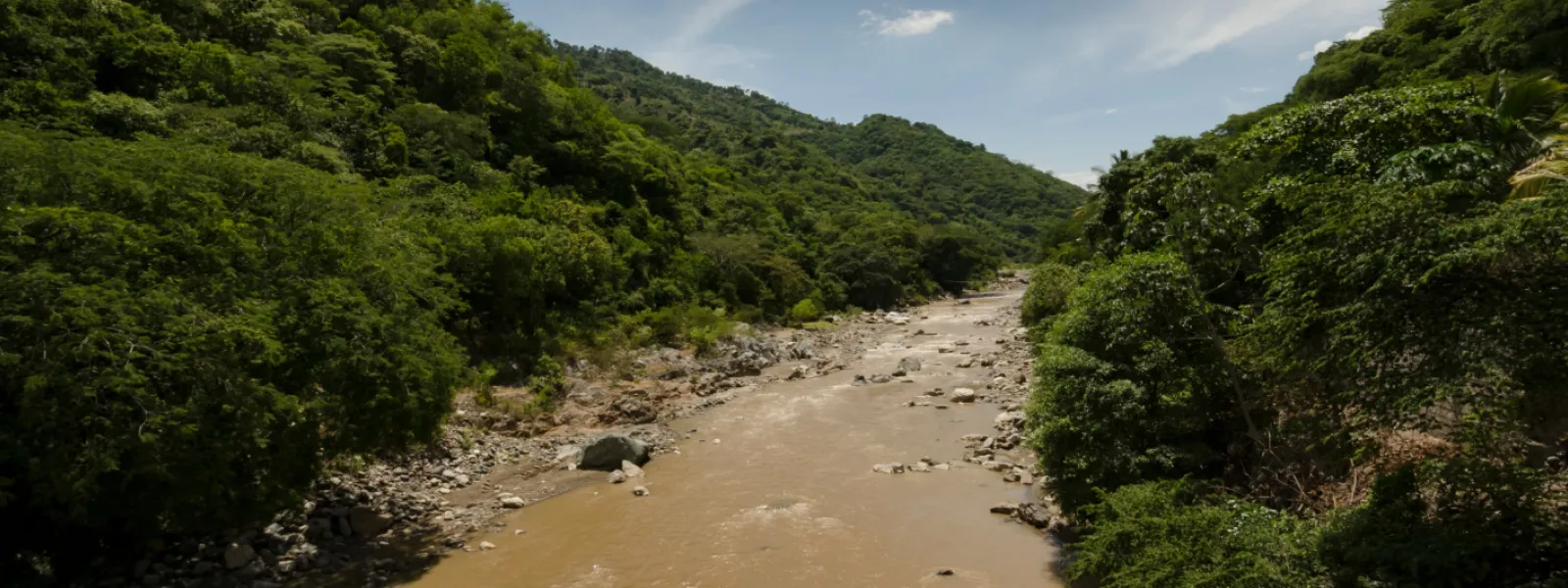
The Motagua River basin—Guatemala’s largest and most important river—is severely polluted with wastewater, solid waste, and other types of debris.
This is a cross-border issue because the Motagua’s polluted waters flow into the Caribbean Sea, reach the coast of Honduras, and threaten the Mesoamerican Reef System.
For decades, this has violated the rights to health, water, development, and a healthy environment of all the people living in the river basin.
In June 2025, the Poqomam Maya community of Santa Cruz Chinautla—supported by AIDA, the Indigenous Peoples’ Law Firm, and allied organizations—achieved an unprecedented legal victory to halt degradation in the basin. In response to the lawsuit it filed, a Guatemalan court ordered the municipality of Chinautla to comply with a series of obligations to curb the pollution of the area’s rivers and soil.
The government's response to the ruling has so far been limited to technical working group meetings. Meanwhile, the community continues to work toward the proper implementation of the ruling and to take other actions to defend its territory and its rights.
Background
The Motagua River, which is 486 km long, flows through 96 municipalities and 14 departments in Guatemala. It originates in Quiché, a department located in the northwest, and empties into the Caribbean Sea.
Polluting activities occur throughout the entire basin, including sub-basins and micro-basins. The largest volume of pollution comes from Guatemala City, the country’s capital, and is carried by the waters of the Las Vacas River, which in turn receives a large amount of waste from the Chinautla River.
The Chinautla River, which flows through the municipality of the same name, carries solid waste from a landfill located in Zone 3 of the capital—where trash from at least 14 municipalities in the department of Guatemala is dumped—as well as sewage generated by some 500,000 people living in the northern part of the capital, which undergoes no prior treatment.
Other sources of pollution include the numerous illegal dumps in the municipality of Chinautla, the waste that private vehicles and garbage trucks dump along the banks of its rivers, as well as the sand-mining companies—which began setting up operations in the area between 1996 and 1997—whose activities weaken the rivers' basins, causing solid waste to be more easily carried away by the river currents.
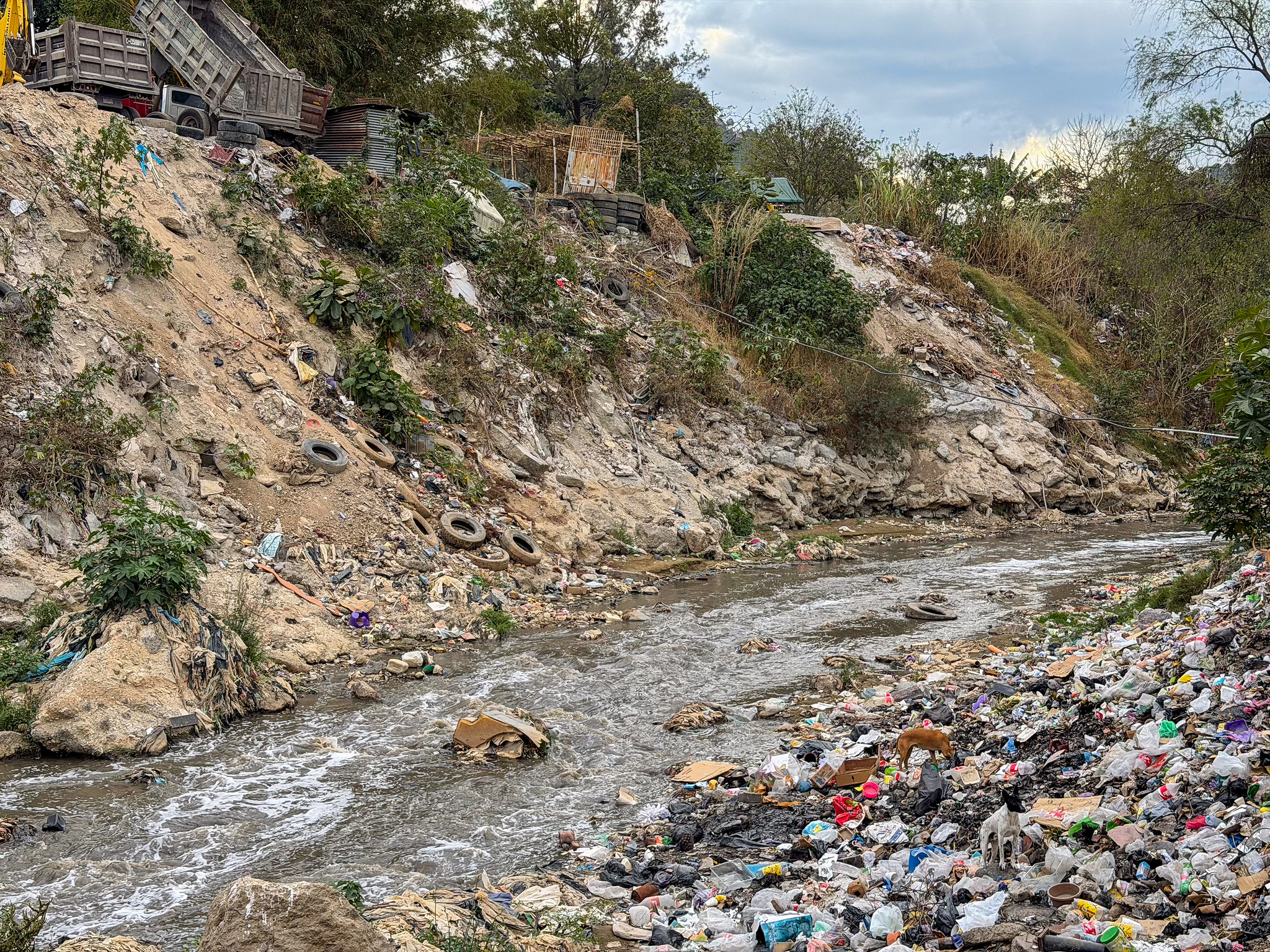
Photo: Mayela Sánchez García.
The situation extends beyond national borders. Every year, the Motagua River discharges some 20,000 metric tons of plastic into the Caribbean Sea, making it one of the rivers that contributes the most plastic pollution to the ocean worldwide, according to estimates contained in a 2025 report by the Inter-American Commission on Human Rights (IACHR).
The river flows into the Mesoamerican Reef at its mouth, so pollution also threatens to degrade one of the largest and most biodiverse transboundary reefs on the planet, which spans the territorial waters of Belize, Guatemala, Honduras, and Mexico.
In addition, the contaminated water reaches the coast of Honduras and spreads into Amatique Bay, located along the eastern coast of Guatemala, affecting the Caribbean Sea.
The roots of this chronic, cross-border problem are structural. Data from the Integrated Environmental Management of the Motagua River Basin project, funded by the United Nations Development Program (UNDP), show that in Guatemala, 66% of municipal solid waste is not collected, and there is no guarantee that the remaining 34% is disposed of properly. Furthermore, of all landfills nationwide, 88.32% are illegal or lack municipal authorization.
In other words, the core issues that need to be addressed are the mismanagement of solid waste and water resources in Guatemala; noncompliance with existing regulations on wastewater discharge and the disposal and treatment of solid waste and residues; and the lack of a water law.
The Poqomam Maya people's quest for justice
The rivers of Santa Cruz Chinautla, a community of the Poqomam Maya people located just twelve kilometers from Guatemala City, have become conduits of pollution that are degrading the Motagua River.
For decades, the local population has seen its health and livelihoods—including pottery, one of the main economic activities and a source of identity—damaged due to the lack of waste management in the municipality of Chinautla and the urban area of the country’s capital, as well as the activities of sand-mining companies.
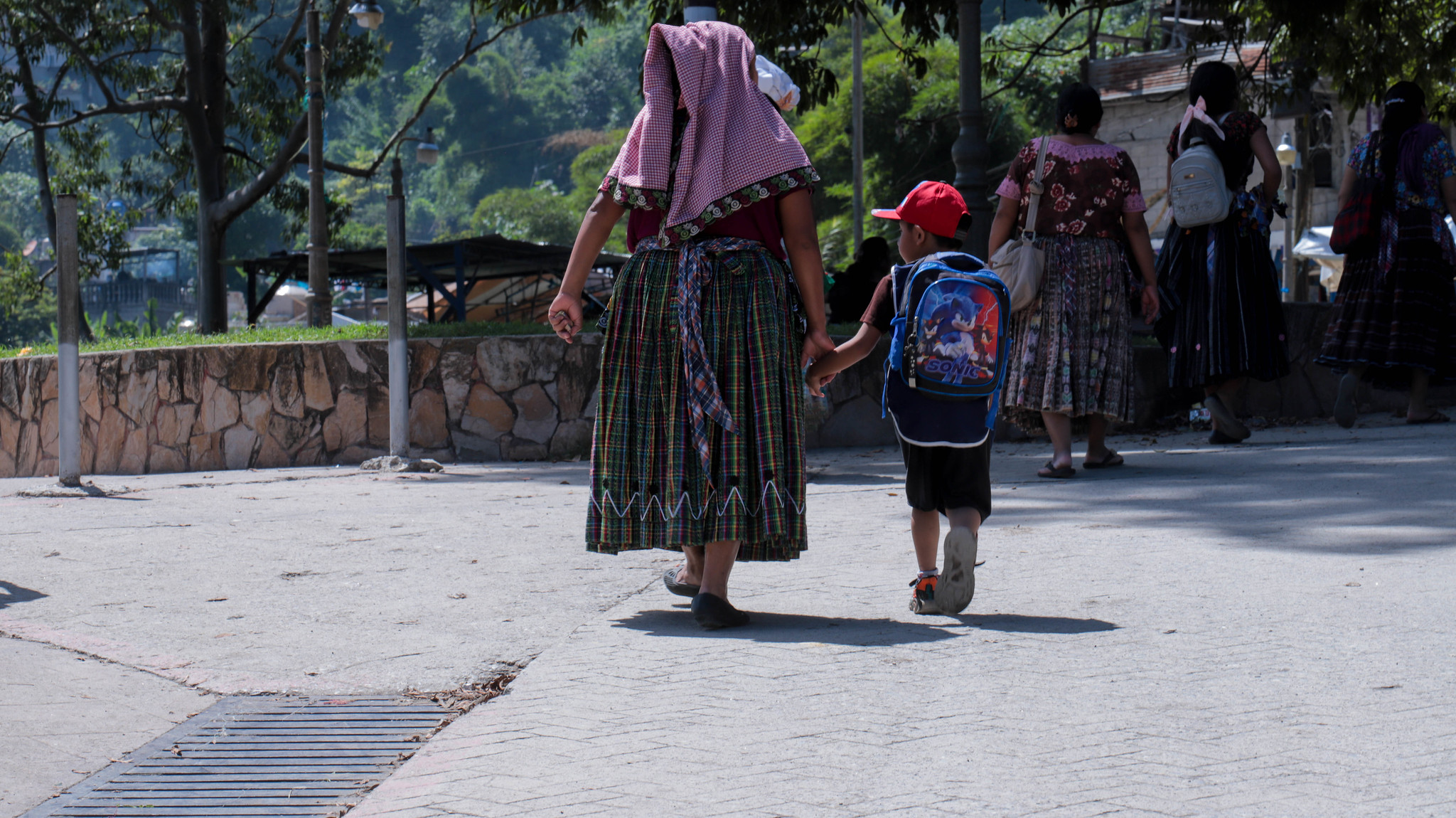
Photo: Mario Winter.
Voices for the Motagua River: Olga Vázquez.
Voices for the Motagua River: Nazario Pascual.
In early 2000, the Maya community organized to stop sand mining on their territory. At that time, the companies held mining permits that remained valid through 2021 and 2022. And although the permits expired, some companies continued to operate after requesting extensions. In June 2022, the indigenous authorities of the Poqomam people began a sit-in protest in front of the Piedrinera San Luis company, which they maintained for four years.
In July 2024, the Special Rapporteur on Economic, Social, Cultural, and Environmental Rights of the IACHR visited Santa Cruz Chinautla. During his visit, traditional authorities and community members spoke about the environmental, water-related, health, economic, and cultural impacts of the pollution in their rivers.
That same year, in October, the community—with support from AIDA, the Indigenous Peoples’ Law Firm, and partner organizations—filed a lawsuit (petition for amparo) against the municipality of Chinautla over its failure to take measures to address the contamination of its rivers and soil caused by improper solid waste management and the existence of illegal landfills.
AIDA’s scientific team, together with local residents and community authorities, collected key information on illegal landfills in the area. This community science initiative supported the litigation by highlighting the severity of the pollution, demonstrating the ongoing use of such practices, and providing evidence of the municipal authorities’ failure to fulfill their legal obligations regarding waste management.
Learn more about this community science initiative.
In June 2025, the Poqomam community won the support of the Guatemalan justice system when a constitutional court ordered the municipality of Chinautla to effectively address the claims in the lawsuit aimed at stopping the pollution of the rivers and soil in Santa Cruz Chinautla.
This is the first time a Guatemalan court has recognized a community's right to a healthy environment and its central role in finding solutions.
Find out the details of the legal victory.
Current situation
Since the ruling was issued, the municipality of Chinautla has held a series of “technical working groups” with representatives from the central government, civil society, and the community. A smaller group of technical experts was later created to develop a work plan with clear goals. Several months have passed without the municipality convening these working groups.
Furthermore, in December 2025, the IACHR noted in its report Human Rights Situation in Guatemala that the Motagua River basin is facing a severe pollution crisis that has had profound impacts on biodiversity and has resulted in systematic violations of the human rights of local communities, including the Maya Poqomam people.
And in May 2026, the Ministry of the Environment and Natural Resources revoked the license of the sand mining company Piedrinera San Luis for "failure to comply with environmental commitments."
AIDA continues to monitor the implementation of the court ruling to ensure the right to a healthy environment for the Poqomam Maya community and all those living in the Motagua River basin. Meanwhile, the residents of Santa Cruz Chinautla remain organized and mobilized to improve their environment and defend their rights.
Related projects
How can we save coral reefs?
By Haydée Rodríguez When I tell people I live in Costa Rica, they imagine my home on the beach, facing the ocean, waves rolling in from the endless horizon. In reality, I live in a city like any other, one hour from the Pacific coast and three from the Caribbean. Although my life hasn’t exactly been a tropical vision of paradise, I’ve been in love with the ocean since I was a girl. That love has only deepened the more I came to understand the mysteries of the sea, the services it provides and the marvelous creatures that call it home. Of all the species that live in the sea, corals are among my favorites. Thanks to my career at AIDA, I have been able to both learn a lot about these tiny animals, and work to identify effective ways to protect them. Many people don’t know about the incredible connection we have with corals. It’s a connection that exists even for those of us who don’t have the privilege of living by the sea. What are corals and what do they do for us? Although at first glance they look like large rocks, corals are actually living organisms with an exoskeleton. They have a mutualistic relationship with photosynthetic algae called zooxanthellae, which are responsible for their brilliant coloring. The algae use sunlight to produce food and some of the nutrients that the corals need to survive. In exchange, the corals provide the algae with a protected environment. A group of corals forms a reef, a highly biodiverse ecosystem, widely known as the jungle of the sea. Coral reefs provide many benefits to humanity: Reefs are spawning grounds for many varieties of fish—the fish you eat are linked, in one way or another, with a coral reef. Reefs are natural shock absorbers that protect coastal communities from storms and hurricanes. Reefs are tourist destinations that generate important national income: one square kilometer of coral reef provides services valued at up to $600,000 a year, according to the United Nations. The bad news is that these benefits could be lost if we don’t act now to preserve coral reefs. It’s estimated that 60 percent of the world’s coral reefs could disappear by 2030. That would mean that our children may enjoy them for only a brief time, and our grandchildren may know them only from photographs in their science and history books. What are the threats and how can we help fight them? Unsustainable fishing methods, such as trawling, which destroys any coral in its path. Before eating or buying seafood, it’s worth asking how it was fished. Becoming responsible consumers is our right and our obligation. We must demand in restaurants and grocery stores products that have been taken from the sea without harming corals or other species of importance. Inadequate tourism practices harm coral reefs. When exploring the wondrous corals reefs, snorkelers and divers must avoid touching or stepping on them at all costs. We must remember that corals are living creatures, which our weight and the equipment we carry into the sea can harm. When we buy souvenirs like necklaces and crafts, we should reject products that use or incorporate corals. We do not need corals to decorate our homes or bodies, but the ocean needs them to maintain its equilibrium. A recent study found that, when they come into contact with the ocean, sunscreens that contain oxybenzone (a chemical compound) could, even in low concentrations, damage the DNA of corals, deforming them and eventually causing death. We must avoid using this type of product, and instead use safe sunscreens and clothing to protect us from the sun. Here is a list of sunscreens that are safe for corals. The fertilizers used on crops leech into rivers and eventually reach the ocean, severely harming corals by increasing the production of algae, which in large quantities block the sun and prevent corals from receiving nutrients. We must opt for fruits and vegetables grown organically and demand responsible agriculture. Improving legal protection of coral reefs Another important way of saving coral reefs is by seeking change in our countries. We must urge our governments to improve the laws protecting these sensitive creatures. At AIDA, we have recently published A Guide to International Regulatory Best Practices for Coral Reef Protection. The document contains ideas to strengthen laws and promote the conservation of coral reefs around the world. I invite you to share the guide with decision-makers in your country. Or if you prefer, send me ([email protected]) the contact information of people who may be interested in implementing the recommendations contained within, and I will send them the guide directly. Corals play a more important role in our lives than many of us understand, and their future is in our hands. We must save coral reefs to ensure that our children and our grandchildren can enjoy the many benefits of these wondrous creatures.
Read moreHow can we save coral reefs?
By Haydée Rodríguez When I tell people I live in Costa Rica, they imagine my home on the beach, facing the ocean, waves rolling in from the endless horizon. In reality, I live in a city like any other, one hour from the Pacific coast and three from the Caribbean. Although my life hasn’t exactly been a tropical vision of paradise, I’ve been in love with the ocean since I was a girl. That love has only deepened the more I came to understand the mysteries of the sea, the services it provides and the marvelous creatures that call it home. Of all the species that live in the sea, corals are among my favorites. Thanks to my career at AIDA, I have been able to both learn a lot about these tiny animals, and work to identify effective ways to protect them. Many people don’t know about the incredible connection we have with corals. It’s a connection that exists even for those of us who don’t have the privilege of living by the sea. What are corals and what do they do for us? Although at first glance they look like large rocks, corals are actually living organisms with an exoskeleton. They have a mutualistic relationship with photosynthetic algae called zooxanthellae, which are responsible for their brilliant coloring. The algae use sunlight to produce food and some of the nutrients that the corals need to survive. In exchange, the corals provide the algae with a protected environment. A group of corals forms a reef, a highly biodiverse ecosystem, widely known as the jungle of the sea. Coral reefs provide many benefits to humanity: Reefs are spawning grounds for many varieties of fish—the fish you eat are linked, in one way or another, with a coral reef. Reefs are natural shock absorbers that protect coastal communities from storms and hurricanes. Reefs are tourist destinations that generate important national income: one square kilometer of coral reef provides services valued at up to $600,000 a year, according to the United Nations. The bad news is that these benefits could be lost if we don’t act now to preserve coral reefs. It’s estimated that 60 percent of the world’s coral reefs could disappear by 2030. That would mean that our children may enjoy them for only a brief time, and our grandchildren may know them only from photographs in their science and history books. What are the threats and how can we help fight them? Unsustainable fishing methods, such as trawling, which destroys any coral in its path. Before eating or buying seafood, it’s worth asking how it was fished. Becoming responsible consumers is our right and our obligation. We must demand in restaurants and grocery stores products that have been taken from the sea without harming corals or other species of importance. Inadequate tourism practices harm coral reefs. When exploring the wondrous corals reefs, snorkelers and divers must avoid touching or stepping on them at all costs. We must remember that corals are living creatures, which our weight and the equipment we carry into the sea can harm. When we buy souvenirs like necklaces and crafts, we should reject products that use or incorporate corals. We do not need corals to decorate our homes or bodies, but the ocean needs them to maintain its equilibrium. A recent study found that, when they come into contact with the ocean, sunscreens that contain oxybenzone (a chemical compound) could, even in low concentrations, damage the DNA of corals, deforming them and eventually causing death. We must avoid using this type of product, and instead use safe sunscreens and clothing to protect us from the sun. Here is a list of sunscreens that are safe for corals. The fertilizers used on crops leech into rivers and eventually reach the ocean, severely harming corals by increasing the production of algae, which in large quantities block the sun and prevent corals from receiving nutrients. We must opt for fruits and vegetables grown organically and demand responsible agriculture. Improving legal protection of coral reefs Another important way of saving coral reefs is by seeking change in our countries. We must urge our governments to improve the laws protecting these sensitive creatures. At AIDA, we have recently published A Guide to International Regulatory Best Practices for Coral Reef Protection. The document contains ideas to strengthen laws and promote the conservation of coral reefs around the world. I invite you to share the guide with decision-makers in your country. Or if you prefer, send me ([email protected]) the contact information of people who may be interested in implementing the recommendations contained within, and I will send them the guide directly. Corals play a more important role in our lives than many of us understand, and their future is in our hands. We must save coral reefs to ensure that our children and our grandchildren can enjoy the many benefits of these wondrous creatures.
Read more
Still Waiting for Justice in La Oroya
Part 1 of a 2-Part Series on the Human Rights Situation in La Oroya, Peru. By María José Veramendi Villa Juana[1] is tired. She and her neighbors have been waiting eight years for a ruling; eight years for a decision that could better their lives, clean their air, attend to their sick children and families. What began as a courageous and hopeful quest for justice has become a discouraging waiting game. Since 2007, a group of residents in La Oroya, Peru, has acted as petitioner in a case before the Inter-American Commission on Human Rights, Community of La Oroya v. Peru. For nearly a century, their city has been contaminated by the operation of a metallurgical complex (smelter) within its borders. The smelter has blackened the air, poisoned their bodies, and released toxic chemicals into the land and water. La Oroya was once identified as one of the most polluted cities in the world. The severe contamination has, and continues to have, grave impacts on the health of the city’s residents. Realities of La Oroya When AIDA’s co-executive director Anna Cederstav first arrived in La Oroya in 1997, women were walking around with scarves covering their faces, a vain attempt to ease the pain of breathing. Juana explained that she had felt the steady burning in her eyes and throat—the effects of contamination—since she could remember, but didn’t pay it any mind. Like most of the population, she thought it was normal. She didn’t really know what clean air was because she’d never experienced it. AIDA has worked for nearly two decades with the community of La Oroya. In 2002, we published the report La Oroya Cannot Wait with the Peruvian Society for Environmental Law. That report began to reveal to the community the severity of the pollution and health risks they were facing on a daily basis. The community realized they had to do something. Juana said it was in 2003, more than 80 years after the smelter began operating, that she became aware of the contamination. Through work with her parish, she was able to access information and learn about what was happening in her city. From there, she connected the dots—the respiratory problems in her family were, in fact, a result of her city’s extreme contamination. The quest for justice Residents submitted their case before the Inter-American Commission after their attempts at justice within Peru produced no remedy. A 2006 ruling by Peru’s Constitutional Tribunal against the State ordered it to adopt measures to protect the health of the community, but the State took no such action. In 2007, the Commission urged the Peruvian state to carry out precautionary measures—a specialized diagnosis of 65 residents and treatment for those who showed irreversible damage to their lives or personal integrity. Juana said receiving news of the precautionary measures was a happy moment because “we knew that we were winning something. At the beginning, everything went well and we believed that everything would be fixed, (but) with the passing of months—years—there were no answers.” Then, in 2009, the Commission issued a report admitting AIDA’s petition, declaring that the State’s omissions in the face of pollution could, if proven, represent human rights violations. But still, nearly a decade after the petition was first filed, the victims await a decision, the precautionary measures have yet to be enforced, and the State’s responsibility for the acts have yet to be established. “It’s taking a really long time, and not all of us have the patience or desire to keep waiting,” Juana said. Time affects the victims, wearing them out until they begin to waver and give up fighting for their right to justice. They become even more vulnerable as they face a city hostile to anyone who fights for their rights to life and health, a state that denies its responsibility and looks for any excuse to avoid assuming responsibility, and a company that wants to polish its reputation and use its economic power to manipulate the government. Where is the law in these cases? Where is justice? Juana explained that leaving La Oroya would be impossible for her family, because there they have work. She remains committed to achieving change with the lawsuit. But that’s not the case for everyone. La Oroya contains thousands of stories of families whose lives were radically changed due to the city’s contamination and the subsequent damages to their health and lives. There are those who had to abandon their homes because they did not see a future in the city, and those who have been unable to leave La Oroya because their entire lives and family are there. Then there are those who have suffered painful attacks and insults from their own neighbors in a community worried about losing jobs, but who march forward with the conviction that, one day, change will come and La Oroya will be a better and fairer place for them, their children, and their grandchildren. I trust and hope that the law will deliver justice to salvage those years of waiting. [1] The name has been changed to protect the client. This blog is based on a longer article Maria José wrote on the case entitled La Oroya: A Painful Wait for Justice. It was published as Chapter 8 of DeJusticia’s book, Human Rights in Minefields: Extractive Economies, Environmental Conflicts and Social Justice in the Global South. Read the full account here.
Read more