
Project
Shutterstock.
Pollution of the Motagua River in Guatemala: The Poqomam Maya people’s quest for environmental justice
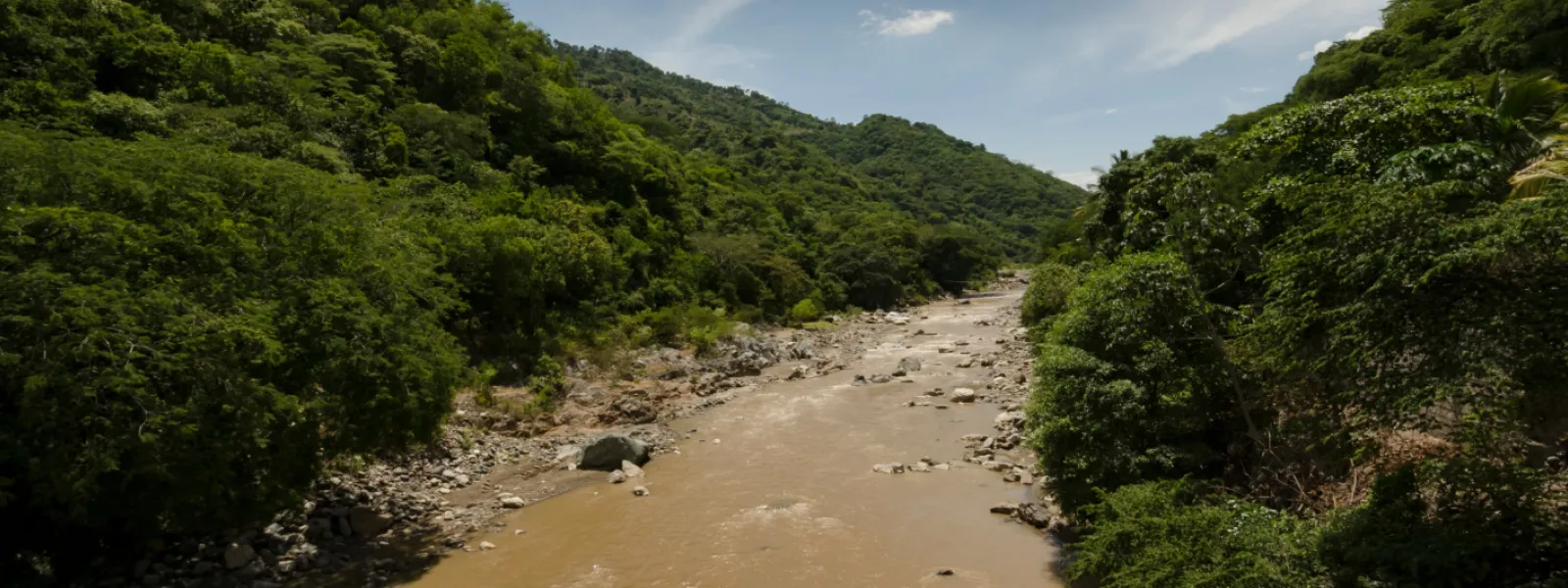
The Motagua River basin—Guatemala’s largest and most important river—is severely polluted with wastewater, solid waste, and other types of debris.
This is a cross-border issue because the Motagua’s polluted waters flow into the Caribbean Sea, reach the coast of Honduras, and threaten the Mesoamerican Reef System.
For decades, this has violated the rights to health, water, development, and a healthy environment of all the people living in the river basin.
In June 2025, the Poqomam Maya community of Santa Cruz Chinautla—supported by AIDA, the Indigenous Peoples’ Law Firm, and allied organizations—achieved an unprecedented legal victory to halt degradation in the basin. In response to the lawsuit it filed, a Guatemalan court ordered the municipality of Chinautla to comply with a series of obligations to curb the pollution of the area’s rivers and soil.
The government's response to the ruling has so far been limited to technical working group meetings. Meanwhile, the community continues to work toward the proper implementation of the ruling and to take other actions to defend its territory and its rights.
Background
The Motagua River, which is 486 km long, flows through 96 municipalities and 14 departments in Guatemala. It originates in Quiché, a department located in the northwest, and empties into the Caribbean Sea.
Polluting activities occur throughout the entire basin, including sub-basins and micro-basins. The largest volume of pollution comes from Guatemala City, the country’s capital, and is carried by the waters of the Las Vacas River, which in turn receives a large amount of waste from the Chinautla River.
The Chinautla River, which flows through the municipality of the same name, carries solid waste from a landfill located in Zone 3 of the capital—where trash from at least 14 municipalities in the department of Guatemala is dumped—as well as sewage generated by some 500,000 people living in the northern part of the capital, which undergoes no prior treatment.
Other sources of pollution include the numerous illegal dumps in the municipality of Chinautla, the waste that private vehicles and garbage trucks dump along the banks of its rivers, as well as the sand-mining companies—which began setting up operations in the area between 1996 and 1997—whose activities weaken the rivers' basins, causing solid waste to be more easily carried away by the river currents.
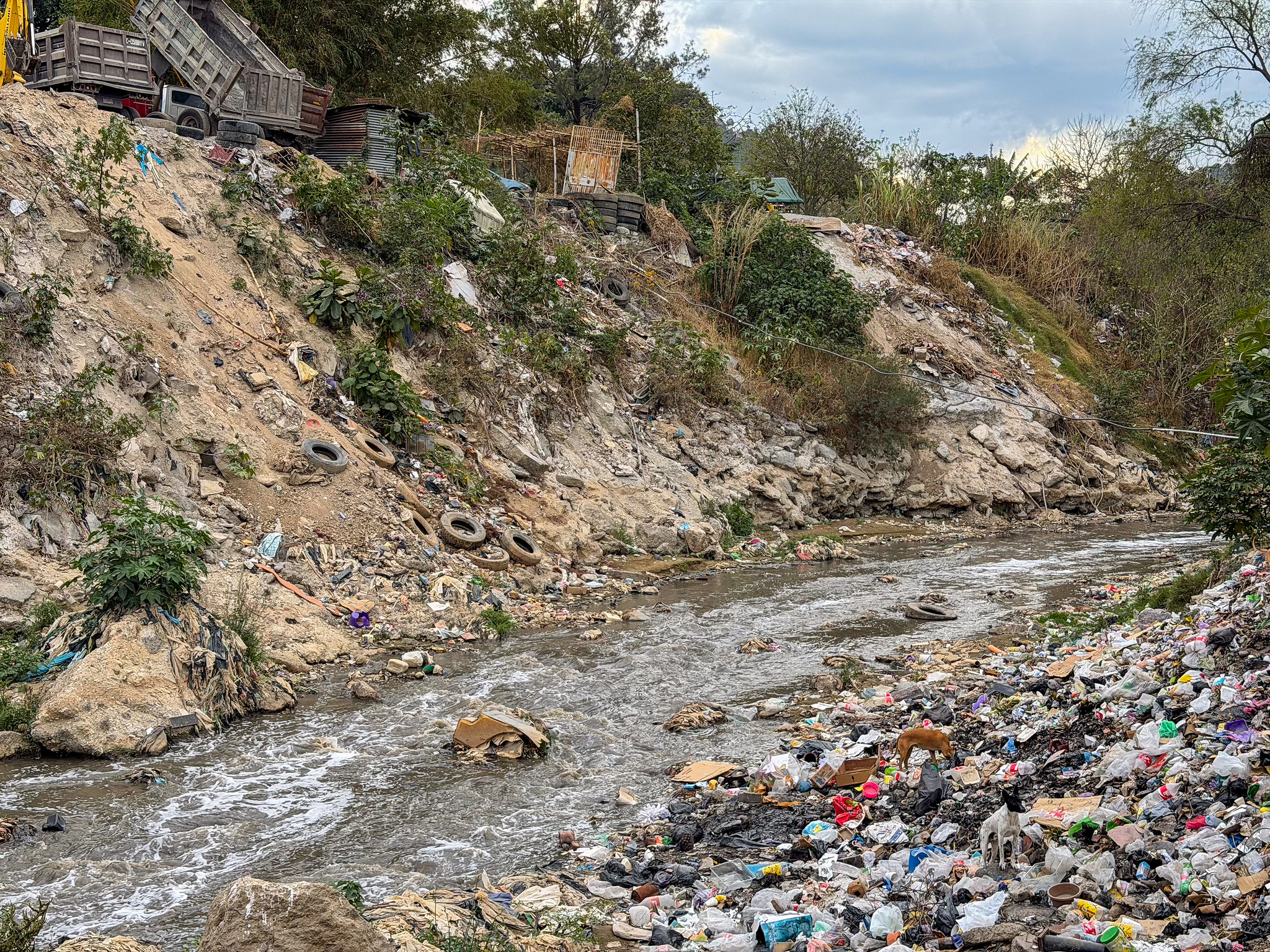
Photo: Mayela Sánchez García.
The situation extends beyond national borders. Every year, the Motagua River discharges some 20,000 metric tons of plastic into the Caribbean Sea, making it one of the rivers that contributes the most plastic pollution to the ocean worldwide, according to estimates contained in a 2025 report by the Inter-American Commission on Human Rights (IACHR).
The river flows into the Mesoamerican Reef at its mouth, so pollution also threatens to degrade one of the largest and most biodiverse transboundary reefs on the planet, which spans the territorial waters of Belize, Guatemala, Honduras, and Mexico.
In addition, the contaminated water reaches the coast of Honduras and spreads into Amatique Bay, located along the eastern coast of Guatemala, affecting the Caribbean Sea.
The roots of this chronic, cross-border problem are structural. Data from the Integrated Environmental Management of the Motagua River Basin project, funded by the United Nations Development Program (UNDP), show that in Guatemala, 66% of municipal solid waste is not collected, and there is no guarantee that the remaining 34% is disposed of properly. Furthermore, of all landfills nationwide, 88.32% are illegal or lack municipal authorization.
In other words, the core issues that need to be addressed are the mismanagement of solid waste and water resources in Guatemala; noncompliance with existing regulations on wastewater discharge and the disposal and treatment of solid waste and residues; and the lack of a water law.
The Poqomam Maya people's quest for justice
The rivers of Santa Cruz Chinautla, a community of the Poqomam Maya people located just twelve kilometers from Guatemala City, have become conduits of pollution that are degrading the Motagua River.
For decades, the local population has seen its health and livelihoods—including pottery, one of the main economic activities and a source of identity—damaged due to the lack of waste management in the municipality of Chinautla and the urban area of the country’s capital, as well as the activities of sand-mining companies.
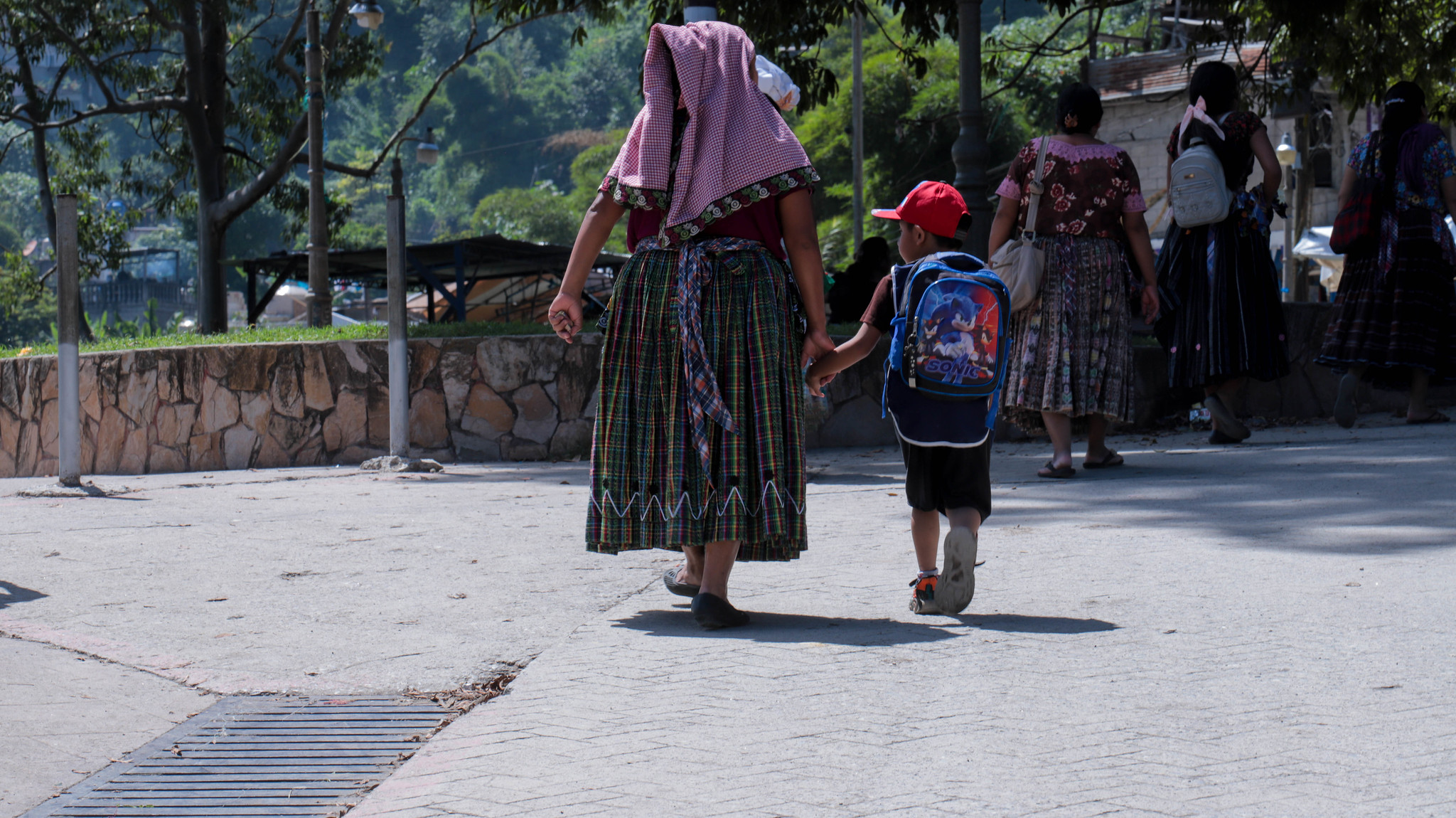
Photo: Mario Winter.
Voices for the Motagua River: Olga Vázquez.
Voices for the Motagua River: Nazario Pascual.
In early 2000, the Maya community organized to stop sand mining on their territory. At that time, the companies held mining permits that remained valid through 2021 and 2022. And although the permits expired, some companies continued to operate after requesting extensions. In June 2022, the indigenous authorities of the Poqomam people began a sit-in protest in front of the Piedrinera San Luis company, which they maintained for four years.
In July 2024, the Special Rapporteur on Economic, Social, Cultural, and Environmental Rights of the IACHR visited Santa Cruz Chinautla. During his visit, traditional authorities and community members spoke about the environmental, water-related, health, economic, and cultural impacts of the pollution in their rivers.
That same year, in October, the community—with support from AIDA, the Indigenous Peoples’ Law Firm, and partner organizations—filed a lawsuit (petition for amparo) against the municipality of Chinautla over its failure to take measures to address the contamination of its rivers and soil caused by improper solid waste management and the existence of illegal landfills.
AIDA’s scientific team, together with local residents and community authorities, collected key information on illegal landfills in the area. This community science initiative supported the litigation by highlighting the severity of the pollution, demonstrating the ongoing use of such practices, and providing evidence of the municipal authorities’ failure to fulfill their legal obligations regarding waste management.
Learn more about this community science initiative.
In June 2025, the Poqomam community won the support of the Guatemalan justice system when a constitutional court ordered the municipality of Chinautla to effectively address the claims in the lawsuit aimed at stopping the pollution of the rivers and soil in Santa Cruz Chinautla.
This is the first time a Guatemalan court has recognized a community's right to a healthy environment and its central role in finding solutions.
Find out the details of the legal victory.
Current situation
Since the ruling was issued, the municipality of Chinautla has held a series of “technical working groups” with representatives from the central government, civil society, and the community. A smaller group of technical experts was later created to develop a work plan with clear goals. Several months have passed without the municipality convening these working groups.
Furthermore, in December 2025, the IACHR noted in its report Human Rights Situation in Guatemala that the Motagua River basin is facing a severe pollution crisis that has had profound impacts on biodiversity and has resulted in systematic violations of the human rights of local communities, including the Maya Poqomam people.
And in May 2026, the Ministry of the Environment and Natural Resources revoked the license of the sand mining company Piedrinera San Luis for "failure to comply with environmental commitments."
AIDA continues to monitor the implementation of the court ruling to ensure the right to a healthy environment for the Poqomam Maya community and all those living in the Motagua River basin. Meanwhile, the residents of Santa Cruz Chinautla remain organized and mobilized to improve their environment and defend their rights.
Related projects

COP21: Mainstreaming Climate Change within Financial Institutions
Financial institutions are crucial players in the global fight against climate change. In order for countries around the world to successfully pursue low-carbon and climate-resilient development, significant sums of finance will need to be harnessed. The Paris Agreement – set to be finalized this week at the close of COP21 – will surely catalyze climate finance around the world. But climate finance will only represent a small percentage of overall global financial flows. Therefore, the extent to which climate change considerations are more broadly mainstreamed within financial institutions will have an important effect on the speed of the global economy’s transformation in response to climate change. AIDA co-director Astrid Puentes Riaño was part of a panel that addressed this reality on December 7 during a COP21 side event titled Mainstreaming Climate Change Within Financial Institutions. The event began with a presentation unveiling the Five Voluntary Principles that had been agreed to this year by 26 financial institutions on four continents, which collectively manage $11 trillion USD. These voluntary principles included commitments to manage climate risks, improve climate performance, account for climate action, adhere to climate change strategies, and promote climate smart objectives. Following introductory remarks by the CEO of the French Development Agency and the Vice President of the World Bank Group, the main group of five panelists was invited to discuss their actions and views related to the initiative. The importance of Puentes Riaño’s presence on the panel was immediately apparent – she was not only the only woman, but also the only voice representing civil society. Other panelists included representatives from major public and private financial institutions, such as the Development Bank of Latin America, the Vicepresident of the European Investment Bank and the head of the Ministry of the Environment and Tourism in Namibia. The presentations on behalf of the financial institutions were brief, but to a certain extent heartening. Representatives lauded the billions of dollars they were committing to the fight against climate change, as well as other steps they were taking to reduce the climate impact of their investments. The European Investment Bank Representative, for example, highlighted their new emissions performance standard for investment in new energy development, which he said didn’t discriminate against any particular energy source, but effectively excluded coal. There was also discussion about the importance of working together and building information-sharing platforms, such as a website to host information gathered by the financial institutions. The representative from the commercial banking sector said that his company had committed to investing $2 billion USD in green bonds, wouldn’t be funding any new coal plants, and would be increasing investments in renewable energy. The Minister from Namibia stressed the devastating effect climate change is already having, and will continue to have, on his country. He explained that although climate change is a priority for his government, there is a lack of resources available to address the various needs that can arise at any time. Speaking on behalf of civil society, Puentes Riaño welcomed the initiative as a good start, which projected a positive image of the financial sector. Recognizing that the effort was still in its nascent stages, she offered some recommendations regarding its implementation. First, she called for consideration of human rights and social risk to be included in project assessments. This, Puentes Riaño explained, would facilitate the selection of the right kinds of projects to invest in. Secondly, she called for an effort to ensure that there was consideration of, and agreement among financial institutions about key definitions, for example “renewable energy” and “sustainable development”, as well as thought given to which options should be excluded as false solutions. Finally, she called on these funding institutions to focus on how this initiative would be implemented. She recommended having a clear, transparent, and participatory road map that was ambitious enough to put the world on a 1.5 degrees C path. During discussions like these, it’s easy to see how important it is for civil society organizations to be present and doing their best to contribute to the dialogue. In this case, AIDA was able to join the conversation and use our position at the table to help increase awareness about and advocate for access to information, transparency and accountability, public participation, and human rights.
Read more
To cool the planet, fracking must be prohibited, organizations say
In the framework of COP21, a coalition of Latin American civil society organizations is urging world leaders meeting in Paris to ban fracking in their countries. By emitting large quantities of greenhouse gases, the process itself goes against the central objective of the climate negotiations: stopping global warming. Paris, France. In a public statement directed at Member States of the United Nations Framework Convention on Climate Change, organizations and allies of the Latin American Alliance On Fracking asked that all fracking activities be banned due to the fact that, among other impacts, hydraulic fracturing emits greenhouse gases that contribute to global warming. During the cycle of extracting, processing, storing, transferring, and distributing unconventional hydrocarbons using fracking, methane gas is released into the atmosphere. Methane is 87 times more powerful than carbon dioxide as an agent of global warming, the group explained in their statement. The document will be presented this Friday December 11 at 10 a.m. (local time) at the Climate Action Zone by: Alianza Mexicana contra el Fracking; Asociación Ambiente y Sociedad; the Inter-American Association for Environmental Defense (AIDA); Food & Water Watch; Freshwater Action Network Mexico; the Heinrich Böll Foundation – Mexico, Central America and the Caribbean; Instituto Brasileiro de Analises Socias e Economicas (IBASE); and Observatorio Petrolero Sur (OpSur). The organizations discuss the current state of hydraulic fracturing in Latin America. Although the use of the experimental technique is contrary to national and international commitments to reduce emissions, several countries in the region – among them Mexico, Colombia, Argentina, Chile and Bolivia – have begun exploration or exploitation of unconventional hydrocarbons through fracking. “Fracking is advancing blindly in Latin America, with no comprehensive long-term studies on the risks and serious damage that it could cause to the health of people and the environment,” said Ariel Pérez Castellón, attorney at AIDA. “Operations of this kind in the region have failed to respect fundamental human rights, including the right to consultation and free, prior and informed consent; the right to participation and social control; and the right to information,” added Milena Bernal, attorney with the Asociación Ambiente y Sociedad. According to the organizations, fracking is advancing quickly into indigenous and rural communities, urban neighborhoods, and even Natural Protected Areas. It has caused the displacement both of people and of productive activities such as farming and agriculture, because their coexistence with this technique is impossible. Rejection of fracking has grown in parallel with its spread in operations. “The proof of this resistance are the national and international networks opposing this technique, including more than 50 municipalities that have banned it in Argentina, Brazil and Uruguay,” said Diego di Risio, researcher at Observatorio Petrolero Sur. “As part of our statement, we urge the Member Parties of the Convention to: sign a binding agreement that quickly and effectively reduces greenhouse gases and incorporates human rights into the legal text; apply the precautionary principle to ban fracking; and promote renewable energies and disincentivize the extraction of fossil fuels,” stated Claudia Campero Arena, researcher at Food & Water Watch, and Moema Miranda, director of Ibase. Read the full statement from the Latin American Alliance on Fracking here. Event “The fight against fracking in Latin America: experiences in Argentina, Bolivia, Colombia, Brazil and Mexico” Simultaneous translation in English and French Friday December 11, 2015 Climate Action Zone Centquatre, 5 rue Curial, Paris (Métro Riquet)
Read moreCOP21's International Human Rights Day
Programme of Events - December 10, 2015 10:00 - 10:30 Press Conference (Le Bourget, Hall 5, Press Conf. Room 2). Hosted by Office of the High Commissioner on Human Rights. 11:00 - 12:30 Side Event: Fight Climate Change, Eradicate Poverty and Ensure Access to Rights—The Challenge of a Truly Just Transition (Espace Générations Climat, Room 4). Hosted by Secours Catholique - Caritas France and ATD Quart Monde. 11:30 - 13:00 Side Event: Climate Change: One of the Greatest Human Rights Challenges of Our Time (Le Bourget, Hall 4, Observer Room 12). Hosted by the Human Rights & Climate Change Working Group, Geneva Climate Change Concertation Group, CARE International, Center for International Environmental Law, Earthjustice, Franciscans International, Friedrich-Ebert-Stiftung and Human Rights Watch. 13:00 - 13:30 Civil Society Action: Stand Up for Human Rights (Le Bourget, TBD). 13:00 - 14:30 Side Event: Climate Change and Human Rights: Focus on Urban Life, Human Rights and Adaptation to Climate Change (Espace Générations Climat, Room 4). Hosted by European Association of Geographers. 15:45 - 17:00 Photo Exhibition and Film Screening: There Is No Time Left: Climate Change and Human Rights in Turkana County, Kenya (Espaces Générations Climat, Round House and Stand A28). Hosted by Human Rights Watch. 17:30 - 19:00 Side Event: Agir Contre le Climat et Promouvoir les Droits Humains: Solutions Pratiques (Espace Générations Climat, Room 1). Hosted by the Human Rights & Climate Change Working Group and Réseau Climat & Développement. 18:30 - 21:00 Human Rights Day Celebration (Point Ephemere, 200 quai de Valmy 75010 Paris). Hosted by the Tri-Caucus, Accra Caucus, Geneva Group, Human Rights & Climate Change Working Group, Indigenous Peoples Caucus, and REDD+ Safeguards Working Group.
Read more