
Project
Shutterstock.
Pollution of the Motagua River in Guatemala: The Poqomam Maya people’s quest for environmental justice
The Motagua River basin—Guatemala’s largest and most important river—is severely polluted with wastewater, solid waste, and other types of debris.
This is a cross-border issue because the Motagua’s polluted waters flow into the Caribbean Sea, reach the coast of Honduras, and threaten the Mesoamerican Reef System.
For decades, this has violated the rights to health, water, development, and a healthy environment of all the people living in the river basin.
In June 2025, the Poqomam Maya community of Santa Cruz Chinautla—supported by AIDA, the Indigenous Peoples’ Law Firm, and allied organizations—achieved an unprecedented legal victory to halt degradation in the basin. In response to the lawsuit it filed, a Guatemalan court ordered the municipality of Chinautla to comply with a series of obligations to curb the pollution of the area’s rivers and soil.
The government's response to the ruling has so far been limited to technical working group meetings. Meanwhile, the community continues to work toward the proper implementation of the ruling and to take other actions to defend its territory and its rights.
Background
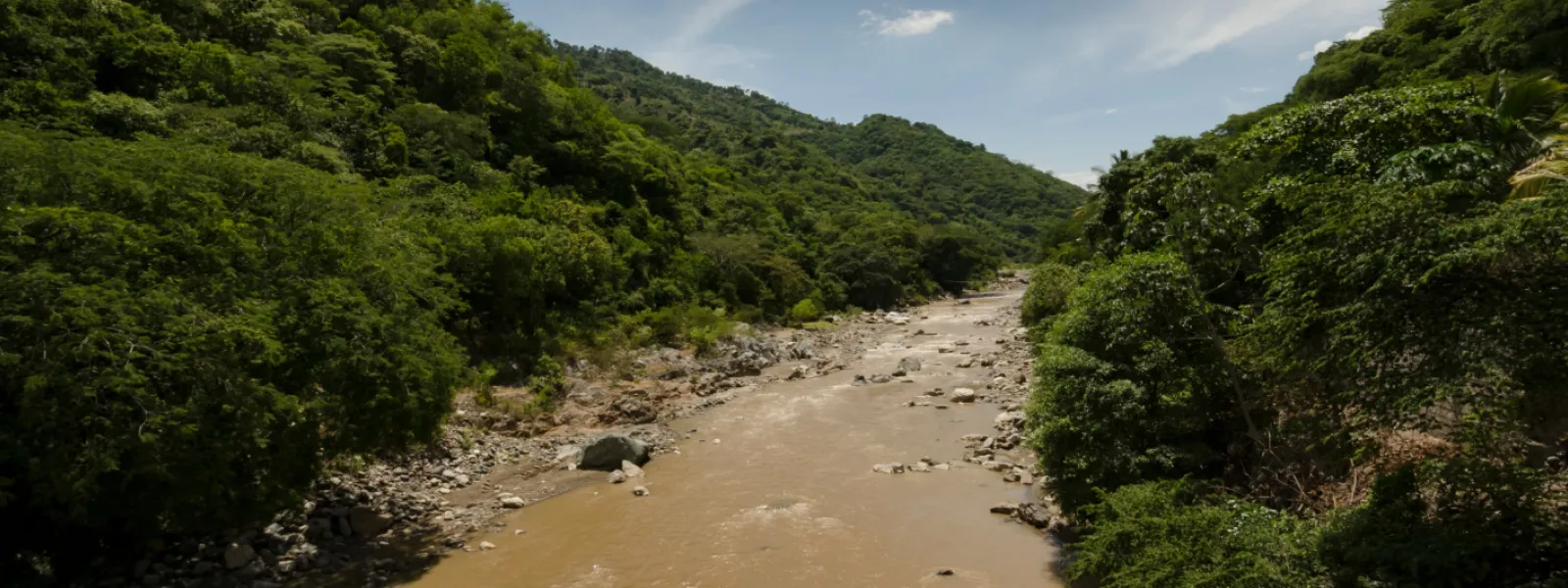
The Motagua River, which is 486 km long, flows through 96 municipalities and 14 departments in Guatemala. It originates in Quiché, a department located in the northwest, and empties into the Caribbean Sea.
Polluting activities occur throughout the entire basin, including sub-basins and micro-basins. The largest volume of pollution comes from Guatemala City, the country’s capital, and is carried by the waters of the Las Vacas River, which in turn receives a large amount of waste from the Chinautla River.
The Chinautla River, which flows through the municipality of the same name, carries solid waste from a landfill located in Zone 3 of the capital—where trash from at least 14 municipalities in the department of Guatemala is dumped—as well as sewage generated by some 500,000 people living in the northern part of the capital, which undergoes no prior treatment.
Other sources of pollution include the numerous illegal dumps in the municipality of Chinautla, the waste that private vehicles and garbage trucks dump along the banks of its rivers, as well as the sand-mining companies—which began setting up operations in the area between 1996 and 1997—whose activities weaken the rivers' basins, causing solid waste to be more easily carried away by the river currents.
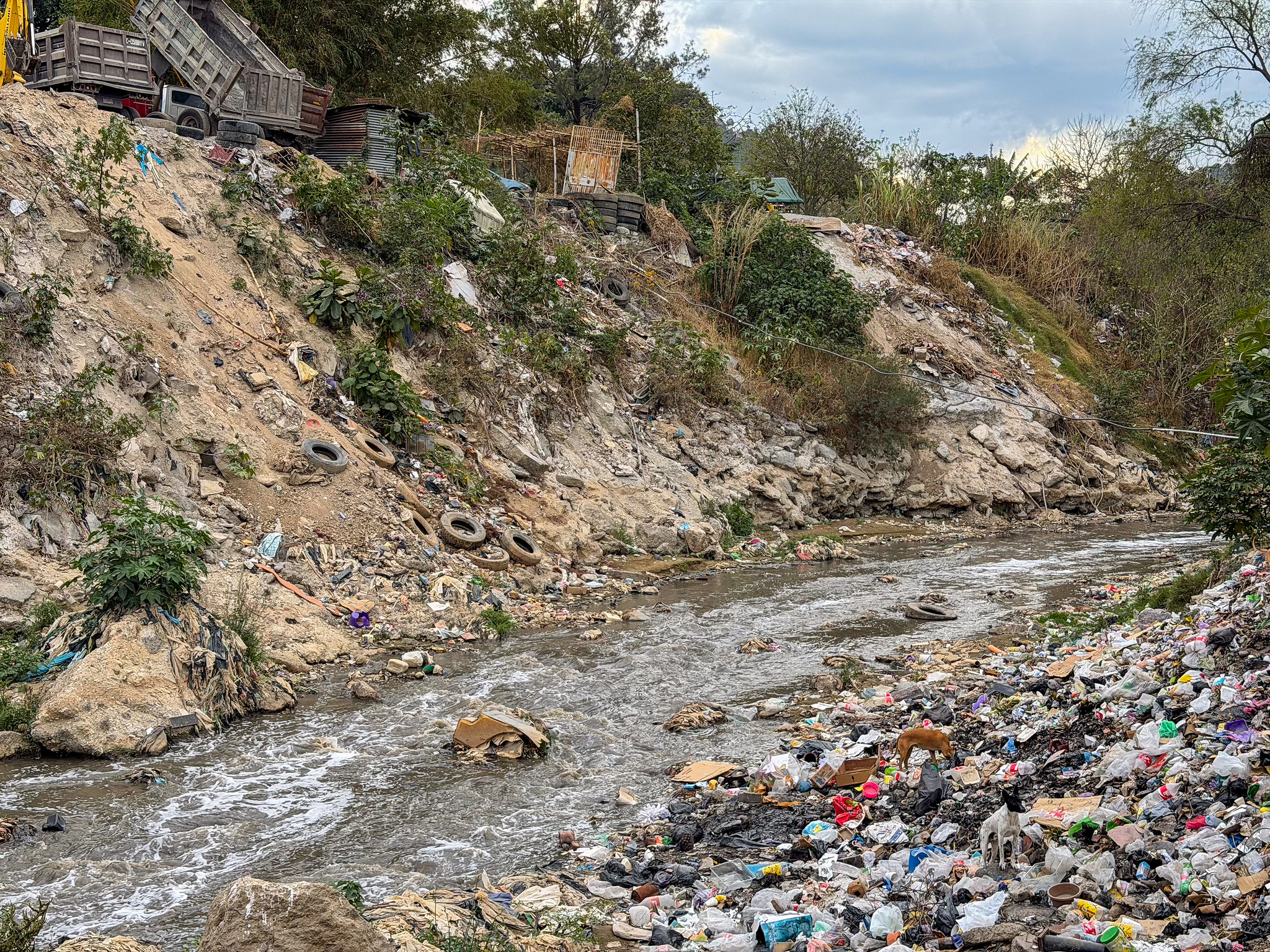
Photo: Mayela Sánchez García.
The situation extends beyond national borders. Every year, the Motagua River discharges some 20,000 metric tons of plastic into the Caribbean Sea, making it one of the rivers that contributes the most plastic pollution to the ocean worldwide, according to estimates contained in a 2025 report by the Inter-American Commission on Human Rights (IACHR).
The river flows into the Mesoamerican Reef at its mouth, so pollution also threatens to degrade one of the largest and most biodiverse transboundary reefs on the planet, which spans the territorial waters of Belize, Guatemala, Honduras, and Mexico.
In addition, the contaminated water reaches the coast of Honduras and spreads into Amatique Bay, located along the eastern coast of Guatemala, affecting the Caribbean Sea.
The roots of this chronic, cross-border problem are structural. Data from the Integrated Environmental Management of the Motagua River Basin project, funded by the United Nations Development Program (UNDP), show that in Guatemala, 66% of municipal solid waste is not collected, and there is no guarantee that the remaining 34% is disposed of properly. Furthermore, of all landfills nationwide, 88.32% are illegal or lack municipal authorization.
In other words, the core issues that need to be addressed are the mismanagement of solid waste and water resources in Guatemala; noncompliance with existing regulations on wastewater discharge and the disposal and treatment of solid waste and residues; and the lack of a water law.
The Poqomam Maya people's quest for justice
The rivers of Santa Cruz Chinautla, a community of the Poqomam Maya people located just twelve kilometers from Guatemala City, have become conduits of pollution that are degrading the Motagua River.
For decades, the local population has seen its health and livelihoods—including pottery, one of the main economic activities and a source of identity—damaged due to the lack of waste management in the municipality of Chinautla and the urban area of the country’s capital, as well as the activities of sand-mining companies.
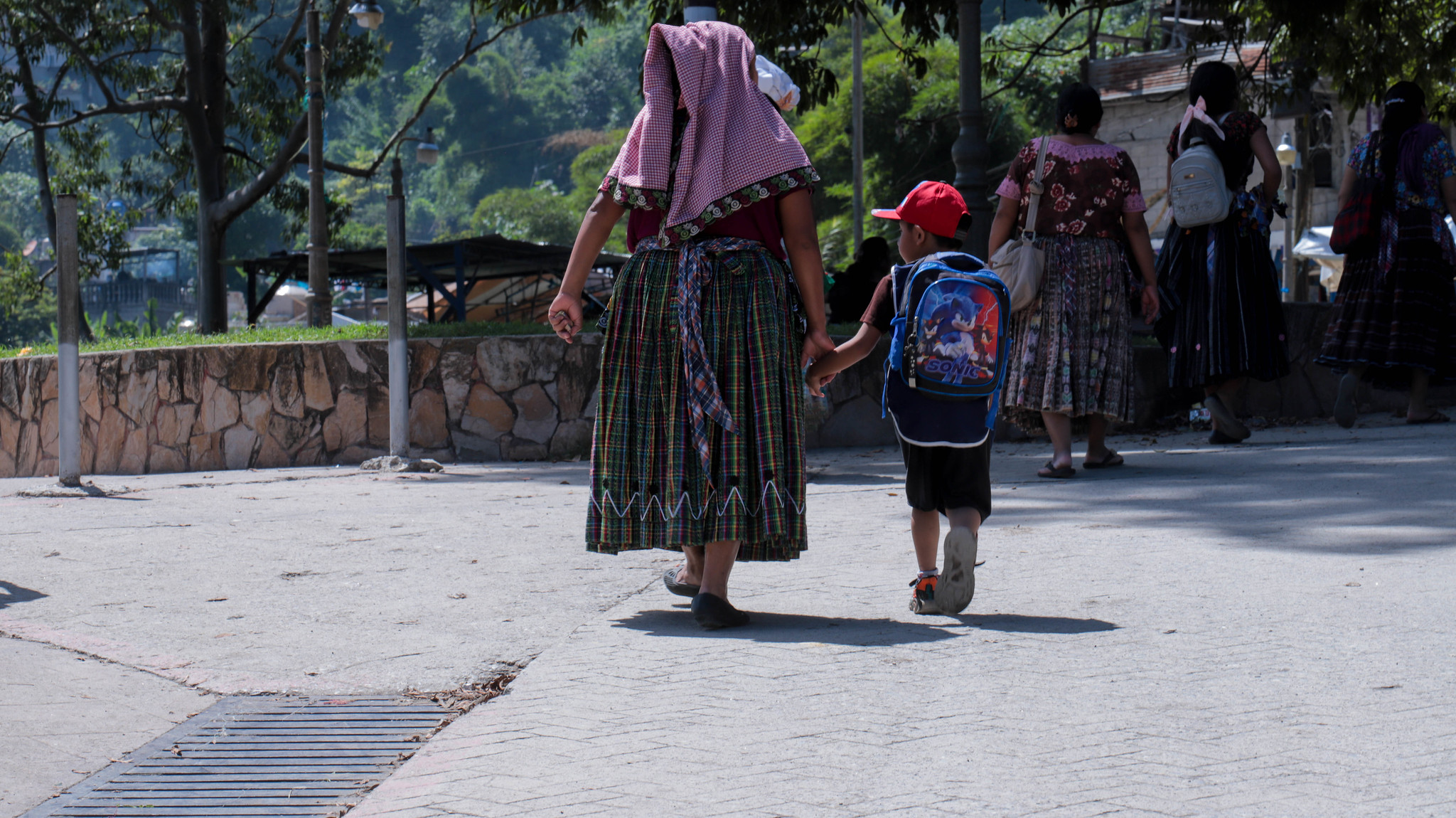
Photo: Mario Winter.
Voices for the Motagua River: Olga Vázquez.
Voices for the Motagua River: Nazario Pascual.
In early 2000, the Maya community organized to stop sand mining on their territory. At that time, the companies held mining permits that remained valid through 2021 and 2022. And although the permits expired, some companies continued to operate after requesting extensions. In June 2022, the indigenous authorities of the Poqomam people began a sit-in protest in front of the Piedrinera San Luis company, which they maintained for four years.
In July 2024, the Special Rapporteur on Economic, Social, Cultural, and Environmental Rights of the IACHR visited Santa Cruz Chinautla. During his visit, traditional authorities and community members spoke about the environmental, water-related, health, economic, and cultural impacts of the pollution in their rivers.
That same year, in October, the community—with support from AIDA, the Indigenous Peoples’ Law Firm, and partner organizations—filed a lawsuit (petition for amparo) against the municipality of Chinautla over its failure to take measures to address the contamination of its rivers and soil caused by improper solid waste management and the existence of illegal landfills.
AIDA’s scientific team, together with local residents and community authorities, collected key information on illegal landfills in the area. This community science initiative supported the litigation by highlighting the severity of the pollution, demonstrating the ongoing use of such practices, and providing evidence of the municipal authorities’ failure to fulfill their legal obligations regarding waste management.
Learn more about this community science initiative.
In June 2025, the Poqomam community won the support of the Guatemalan justice system when a constitutional court ordered the municipality of Chinautla to effectively address the claims in the lawsuit aimed at stopping the pollution of the rivers and soil in Santa Cruz Chinautla.
This is the first time a Guatemalan court has recognized a community's right to a healthy environment and its central role in finding solutions.
Find out the details of the legal victory.
Current situation
Since the ruling was issued, the municipality of Chinautla has held a series of “technical working groups” with representatives from the central government, civil society, and the community. A smaller group of technical experts was later created to develop a work plan with clear goals. Several months have passed without the municipality convening these working groups.
Furthermore, in December 2025, the IACHR noted in its report Human Rights Situation in Guatemala that the Motagua River basin is facing a severe pollution crisis that has had profound impacts on biodiversity and has resulted in systematic violations of the human rights of local communities, including the Maya Poqomam people.
And in May 2026, the Ministry of the Environment and Natural Resources revoked the license of the sand mining company Piedrinera San Luis for "failure to comply with environmental commitments."
AIDA continues to monitor the implementation of the court ruling to ensure the right to a healthy environment for the Poqomam Maya community and all those living in the Motagua River basin. Meanwhile, the residents of Santa Cruz Chinautla remain organized and mobilized to improve their environment and defend their rights.
Related projects

Indigenous leader condemns Brazil’s rights abuses at United Nations
Speakers highlight violations stemming from Amazon dams at Human Rights Council. Geneva, Switzerland. In a groundbreaking event at the 25th United Nations Human Rights Council, the national coordinator of Brazil’s Association of Indigenous Peoples (APIB) Sônia Guajajara exposed an alarming disregard for indigenous peoples’ rights by the Brazilian government as it rushes to promote an unprecedented wave of large dam construction across the Amazon basin with devastating impacts on their territories and livelihoods. In her testimony, Ms. Guajajara argued that the violation of indigenous rights to prior consultations concerning the federal government’s dam-building plans has set a troubling precedent for the rule of law and the future of Brazil’s indigenous peoples. The side event, entitled ‘Indigenous peoples’ right to consultation on large dam projects in Brazil’, also featured Alexandre Andrade Sampaio, a Brazilian lawyer with the Interamerican Association for Environmental Defense (AIDA), who critiqued the use of a legal mechanism known as “Security Suspension” (Suspensão de Segurança) that allows chief justices, upon request from the government, to indefinitely suspend legal rulings in favor of indigenous peoples’ rights. Among the most egregious use of this legal artifice that was originally created during Brazil’s military dictatorship, is the suspension of court decisions on the illegality of large hydroelectric dam projects, such as Belo Monte, where the federal government has failed to ensure indigenous peoples’ right to prior consultations, as enshrined in the Brazilian constitution. According to Sampaio, the Security Suspension also constitutes an obstacle to Brazil’s compliance with international agreements concerning free, prior, and informed consultation and consent (FPIC), including Convention 169 of the International Labor Organization ILO), ratified by the Brazilian Congress in 2002, and the 2007 UN Declaration on Rights of Indigenous Peoples (UNDRIP). “The alliance of economic interests and political power represent a major crisis for the implementation of indigenous rights in today’s Brazil,” said Ms. Guajajara. “However, even if the government denies our rights, it cannot deny its responsibility to this convention.” “The Suspension of Security Violates Human rights. The very people that could dismiss it are the same ones who personally benefit from its existence,” said Mr. Sampaio. “That is why it is important for the international community to turn its eyes to this matter and request the Brazilian government adopt effective measures that lead to the respect of human rights.” Joint declarations were submitted to the UN General Assembly by a coalition of Brazilian and international groups, including NGO France Libertés. In discussing growing threats to indigenous rights, both documents highlight the Brazilian government’s plans to build a massive complex of up to 29 large dams along the Amazon’s Tapajós River and its tributaries in the next ten years. Lesser-known than the controversial Belo Monte project on the neighboring Xingu River, the Tapajós complex would provoke flooding and other devastating consequences for indigenous peoples and other traditional populations both upstream and downstream of planned dams, including elimination of migratory fish that are a dietary stable and a basis of local economies. The federal government’s rush to construct a series of large dams in the Tapajós region, in the absence of prior consultations with indigenous peoples, has led to growing protests from local tribes, such as the Munduruku, Kayabi and Apiaká people. “We are watching a dark history repeat itself on the rivers of the Amazon where Belo Monte’s tragedy threatens to be reproduced on the Tapajós,” said Christian Poirier of Amazon Watch. “While the Brazilian government claims to respect its indigenous peoples, it is in fact working to dismantle their rights to open their lands and rivers to unconstrained exploitation.” Prior to the side event the delegates met with Ambassador Regina Dunlop of Brazil’s Permanent Mission to the United Nations in order to present their grievances. While the Ambassador stated that the information would be more relevant if presented to government representatives in Brasilia, Ms. Guajajara and Mr. Sampaio countered that these criticisms are frequently ignored by government decision makers until problems are exposed in international forums, such as the United Nations. “Brazil’s reputation is at stake on this international stage,” said Sônia Guajajara. “We are here to bring visibility to the unacceptable prejudice and discrimination suffered by indigenous peoples and to demand that it stops.” The side event in Geneva was organized by France Liberté (Fondation Danielle Mitterand) with support from Amazon Watch and International Rivers.
Read moreIndigenous leader condemns Brazil’s rights abuses at United Nations
Speakers highlight violations stemming from Amazon dams at Human Rights Council. Geneva, Switzerland. In a groundbreaking event at the 25th United Nations Human Rights Council, the national coordinator of Brazil’s Association of Indigenous Peoples (APIB) Sônia Guajajara exposed an alarming disregard for indigenous peoples’ rights by the Brazilian government as it rushes to promote an unprecedented wave of large dam construction across the Amazon basin with devastating impacts on their territories and livelihoods. In her testimony, Ms. Guajajara argued that the violation of indigenous rights to prior consultations concerning the federal government’s dam-building plans has set a troubling precedent for the rule of law and the future of Brazil’s indigenous peoples. The side event, entitled ‘Indigenous peoples’ right to consultation on large dam projects in Brazil’, also featured Alexandre Andrade Sampaio, a Brazilian lawyer with the Interamerican Association for Environmental Defense (AIDA), who critiqued the use of a legal mechanism known as “Security Suspension” (Suspensão de Segurança) that allows chief justices, upon request from the government, to indefinitely suspend legal rulings in favor of indigenous peoples’ rights. Among the most egregious use of this legal artifice that was originally created during Brazil’s military dictatorship, is the suspension of court decisions on the illegality of large hydroelectric dam projects, such as Belo Monte, where the federal government has failed to ensure indigenous peoples’ right to prior consultations, as enshrined in the Brazilian constitution. According to Sampaio, the Security Suspension also constitutes an obstacle to Brazil’s compliance with international agreements concerning free, prior, and informed consultation and consent (FPIC), including Convention 169 of the International Labor Organization ILO), ratified by the Brazilian Congress in 2002, and the 2007 UN Declaration on Rights of Indigenous Peoples (UNDRIP). “The alliance of economic interests and political power represent a major crisis for the implementation of indigenous rights in today’s Brazil,” said Ms. Guajajara. “However, even if the government denies our rights, it cannot deny its responsibility to this convention.” “The Suspension of Security Violates Human rights. The very people that could dismiss it are the same ones who personally benefit from its existence,” said Mr. Sampaio. “That is why it is important for the international community to turn its eyes to this matter and request the Brazilian government adopt effective measures that lead to the respect of human rights.” Joint declarations were submitted to the UN General Assembly by a coalition of Brazilian and international groups, including NGO France Libertés. In discussing growing threats to indigenous rights, both documents highlight the Brazilian government’s plans to build a massive complex of up to 29 large dams along the Amazon’s Tapajós River and its tributaries in the next ten years. Lesser-known than the controversial Belo Monte project on the neighboring Xingu River, the Tapajós complex would provoke flooding and other devastating consequences for indigenous peoples and other traditional populations both upstream and downstream of planned dams, including elimination of migratory fish that are a dietary stable and a basis of local economies. The federal government’s rush to construct a series of large dams in the Tapajós region, in the absence of prior consultations with indigenous peoples, has led to growing protests from local tribes, such as the Munduruku, Kayabi and Apiaká people. “We are watching a dark history repeat itself on the rivers of the Amazon where Belo Monte’s tragedy threatens to be reproduced on the Tapajós,” said Christian Poirier of Amazon Watch. “While the Brazilian government claims to respect its indigenous peoples, it is in fact working to dismantle their rights to open their lands and rivers to unconstrained exploitation.” Prior to the side event the delegates met with Ambassador Regina Dunlop of Brazil’s Permanent Mission to the United Nations in order to present their grievances. While the Ambassador stated that the information would be more relevant if presented to government representatives in Brasilia, Ms. Guajajara and Mr. Sampaio countered that these criticisms are frequently ignored by government decision makers until problems are exposed in international forums, such as the United Nations. “Brazil’s reputation is at stake on this international stage,” said Sônia Guajajara. “We are here to bring visibility to the unacceptable prejudice and discrimination suffered by indigenous peoples and to demand that it stops.” The side event in Geneva was organized by France Liberté (Fondation Danielle Mitterand) with support from Amazon Watch and International Rivers.
Read more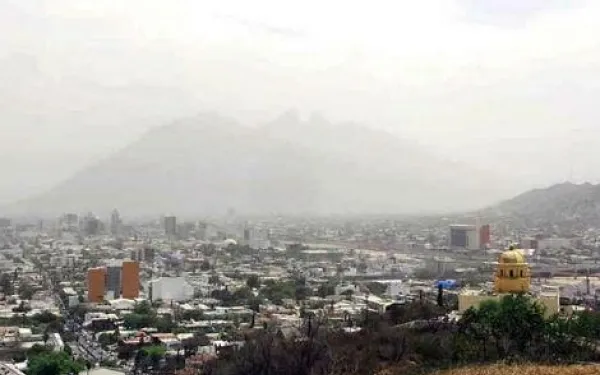
Air pollution in Latin America and its effect on our health and climate
By Héctor Herrera, AIDA legal advisor and coordinator of the Network for Environmental Justice in Colombia, @RJAColombia According to the latest report from the Clean Air Institute, Monterrey, Guadalajara and Mexico City (Mexico), Cochabamba (Bolivia), Santiago (Chile), Lima (Peru), Bogota and Medellin (Colombia), Montevideo (Uruguay) and San Salvador (El Salvador) are 10 most polluted cities in Latin America. In all of them, the level of air pollution exceeds World Health Organization recommendations. The scene is similar in big cities across the region: buses and trucks spew out black smoke as people walk under grey skies. This is the backdrop in The Sound of Things Falling, an award-winning novel by Colombia’s Juan Gabriel Vásquez in which descriptions like this abound: “On the corner of Carrera Cuarta, the heavy afternoon traffic was moving slowly, in single file, toward the exit on to Avenida Jiménez. I found the gap in the traffic I needed to cross in front of a small bus whose recently illuminated headlights were catching the dust from the street, the smoke from exhaust pipes and the beginnings of a light drizzle.” Vásquez is writing about Bogota. But he could just as easily have been describing Monterrey or San Salvador. Residents of Latin America’s big cities live enveloped in smog. They breathe in the microparticles of black carbon, ozone, nitrogen dioxide and sulphur dioxide that comes with the air polluted by urban transport, industry and power plants. We can get riled up when a passing truck spits a cloud of smoke in our face. But our outrage fades almost as soon when we think that making these vehicles more environmentally friendly is not our responsibility. Those decisions lie out of our reach in the hands of politicians and bureaucrats. Even so, we must understand that air pollution is a problem that affects all of us and so it is important to be aware of the associated health risks. THE Clean Air Institute's report explains how breathing in air containing a high concentration of pollutants can reduce our quality of life and lead to illness or premature death. Thankfully, the report also makes recommendations on how to avoid this. Worryingly, public health is not the only casualty of air pollution. Another is a faster pace of climate change Black carbon and ozone are short-lived climate pollutants (SLCPs) that remain in the atmosphere from days to decades. While that is nothing compared with carbon dioxide, which remains in the atmosphere for more than a century, SLCPs contribute more to climate change than carbon dioxide. This means that if we were to significantly reduce SLCP emissions, we would get quick results in slowing climate change. You can find more information on AIDA’s page on SLCPs, including descriptions of the main pollutants and the steps being taken to encourage a reduction in their emission. All of what has been said here becomes particularly pertinent when you consider that the population and number of vehicles in Latin America is growing steadily, which unfortunately is not the case for the number of measures being introduced to reduce the level of air pollutants. Whatever our motives – whether this is to improve public health, slow climate change, protect our lungs or those of future generations, or even to simply enjoy a picturesque sunset without a wall of harmful gases blocking our view of the sea or the mountains, one thing is imperative. We must work so that the air in our cities across the Americas is clean and fresh.
Read more