
Project
Shutterstock.
Pollution of the Motagua River in Guatemala: The Poqomam Maya people’s quest for environmental justice
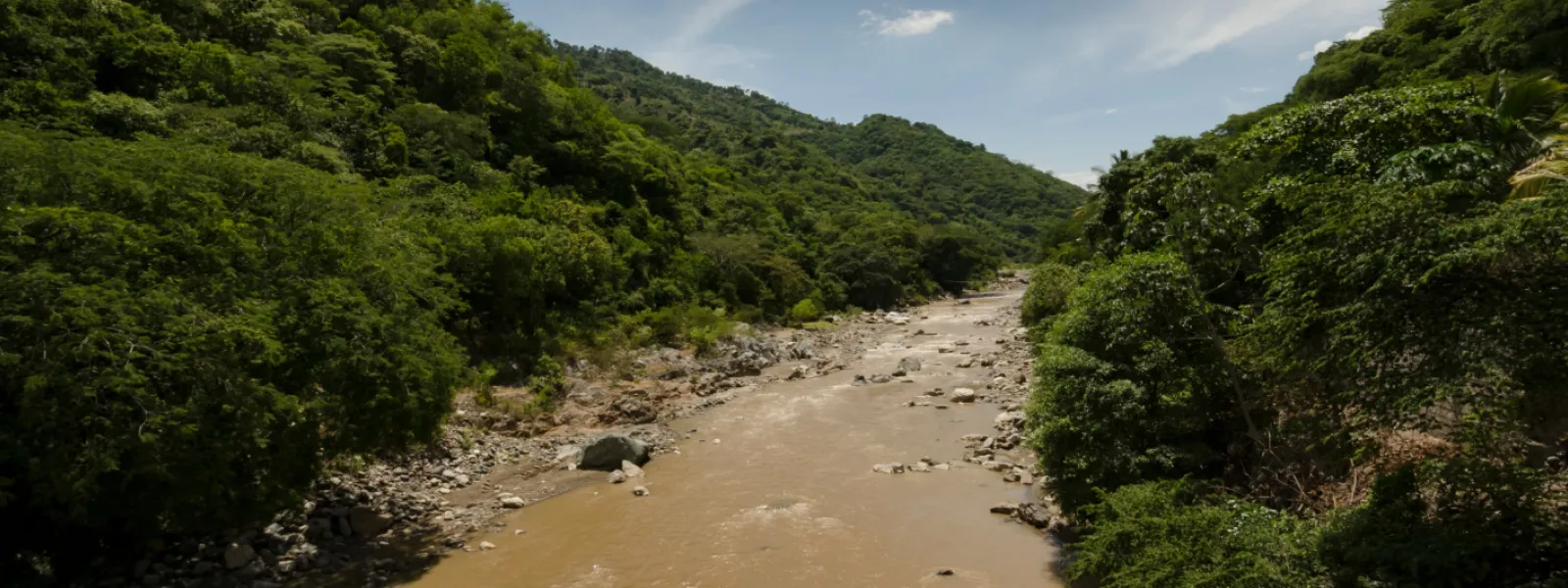
The Motagua River basin—Guatemala’s largest and most important river—is severely polluted with wastewater, solid waste, and other types of debris.
This is a cross-border issue because the Motagua’s polluted waters flow into the Caribbean Sea, reach the coast of Honduras, and threaten the Mesoamerican Reef System.
For decades, this has violated the rights to health, water, development, and a healthy environment of all the people living in the river basin.
In June 2025, the Poqomam Maya community of Santa Cruz Chinautla—supported by AIDA, the Indigenous Peoples’ Law Firm, and allied organizations—achieved an unprecedented legal victory to halt degradation in the basin. In response to the lawsuit it filed, a Guatemalan court ordered the municipality of Chinautla to comply with a series of obligations to curb the pollution of the area’s rivers and soil.
The government's response to the ruling has so far been limited to technical working group meetings. Meanwhile, the community continues to work toward the proper implementation of the ruling and to take other actions to defend its territory and its rights.
Background
The Motagua River, which is 486 km long, flows through 96 municipalities and 14 departments in Guatemala. It originates in Quiché, a department located in the northwest, and empties into the Caribbean Sea.
Polluting activities occur throughout the entire basin, including sub-basins and micro-basins. The largest volume of pollution comes from Guatemala City, the country’s capital, and is carried by the waters of the Las Vacas River, which in turn receives a large amount of waste from the Chinautla River.
The Chinautla River, which flows through the municipality of the same name, carries solid waste from a landfill located in Zone 3 of the capital—where trash from at least 14 municipalities in the department of Guatemala is dumped—as well as sewage generated by some 500,000 people living in the northern part of the capital, which undergoes no prior treatment.
Other sources of pollution include the numerous illegal dumps in the municipality of Chinautla, the waste that private vehicles and garbage trucks dump along the banks of its rivers, as well as the sand-mining companies—which began setting up operations in the area between 1996 and 1997—whose activities weaken the rivers' basins, causing solid waste to be more easily carried away by the river currents.
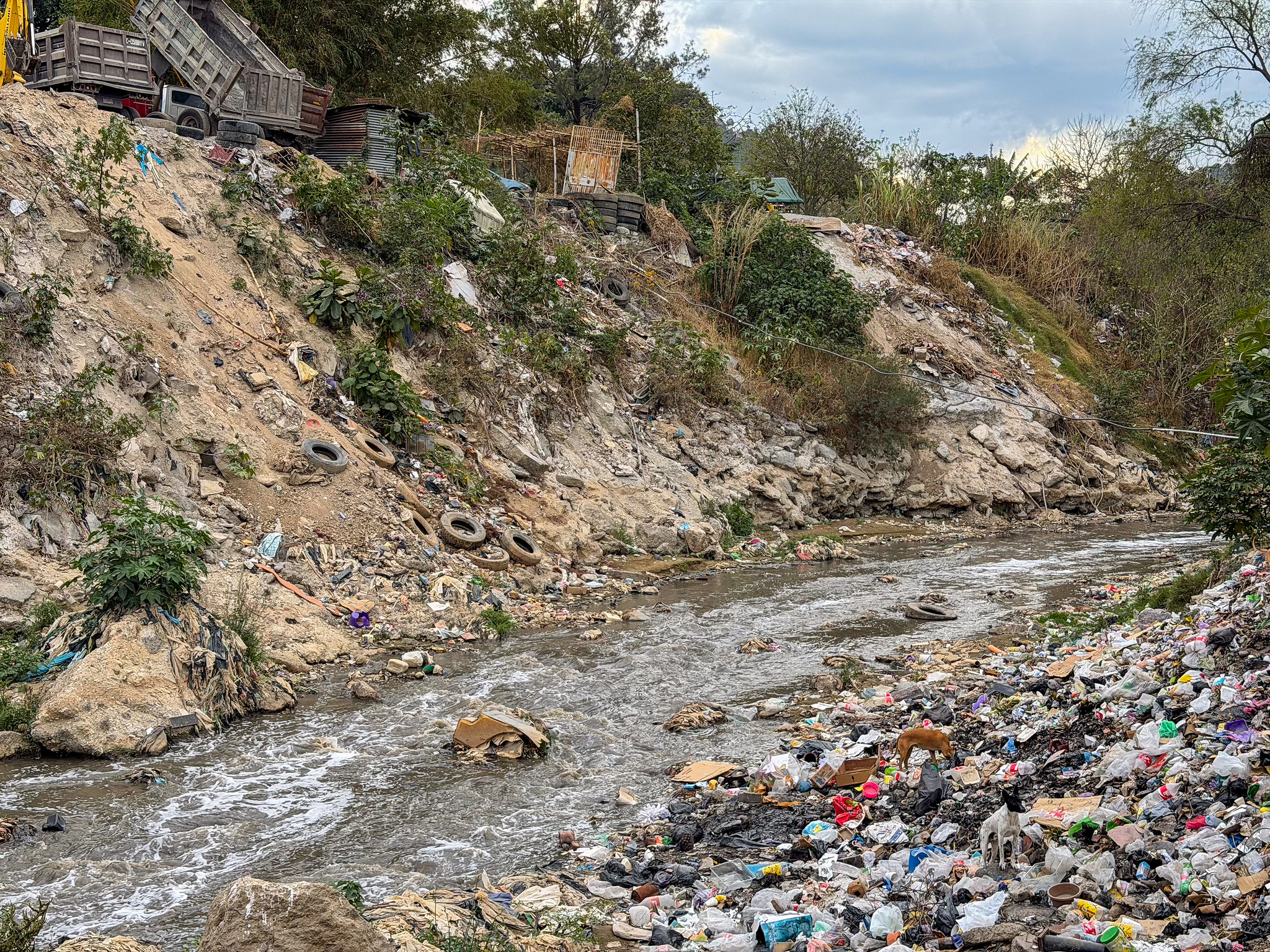
Photo: Mayela Sánchez García.
The situation extends beyond national borders. Every year, the Motagua River discharges some 20,000 metric tons of plastic into the Caribbean Sea, making it one of the rivers that contributes the most plastic pollution to the ocean worldwide, according to estimates contained in a 2025 report by the Inter-American Commission on Human Rights (IACHR).
The river flows into the Mesoamerican Reef at its mouth, so pollution also threatens to degrade one of the largest and most biodiverse transboundary reefs on the planet, which spans the territorial waters of Belize, Guatemala, Honduras, and Mexico.
In addition, the contaminated water reaches the coast of Honduras and spreads into Amatique Bay, located along the eastern coast of Guatemala, affecting the Caribbean Sea.
The roots of this chronic, cross-border problem are structural. Data from the Integrated Environmental Management of the Motagua River Basin project, funded by the United Nations Development Program (UNDP), show that in Guatemala, 66% of municipal solid waste is not collected, and there is no guarantee that the remaining 34% is disposed of properly. Furthermore, of all landfills nationwide, 88.32% are illegal or lack municipal authorization.
In other words, the core issues that need to be addressed are the mismanagement of solid waste and water resources in Guatemala; noncompliance with existing regulations on wastewater discharge and the disposal and treatment of solid waste and residues; and the lack of a water law.
The Poqomam Maya people's quest for justice
The rivers of Santa Cruz Chinautla, a community of the Poqomam Maya people located just twelve kilometers from Guatemala City, have become conduits of pollution that are degrading the Motagua River.
For decades, the local population has seen its health and livelihoods—including pottery, one of the main economic activities and a source of identity—damaged due to the lack of waste management in the municipality of Chinautla and the urban area of the country’s capital, as well as the activities of sand-mining companies.
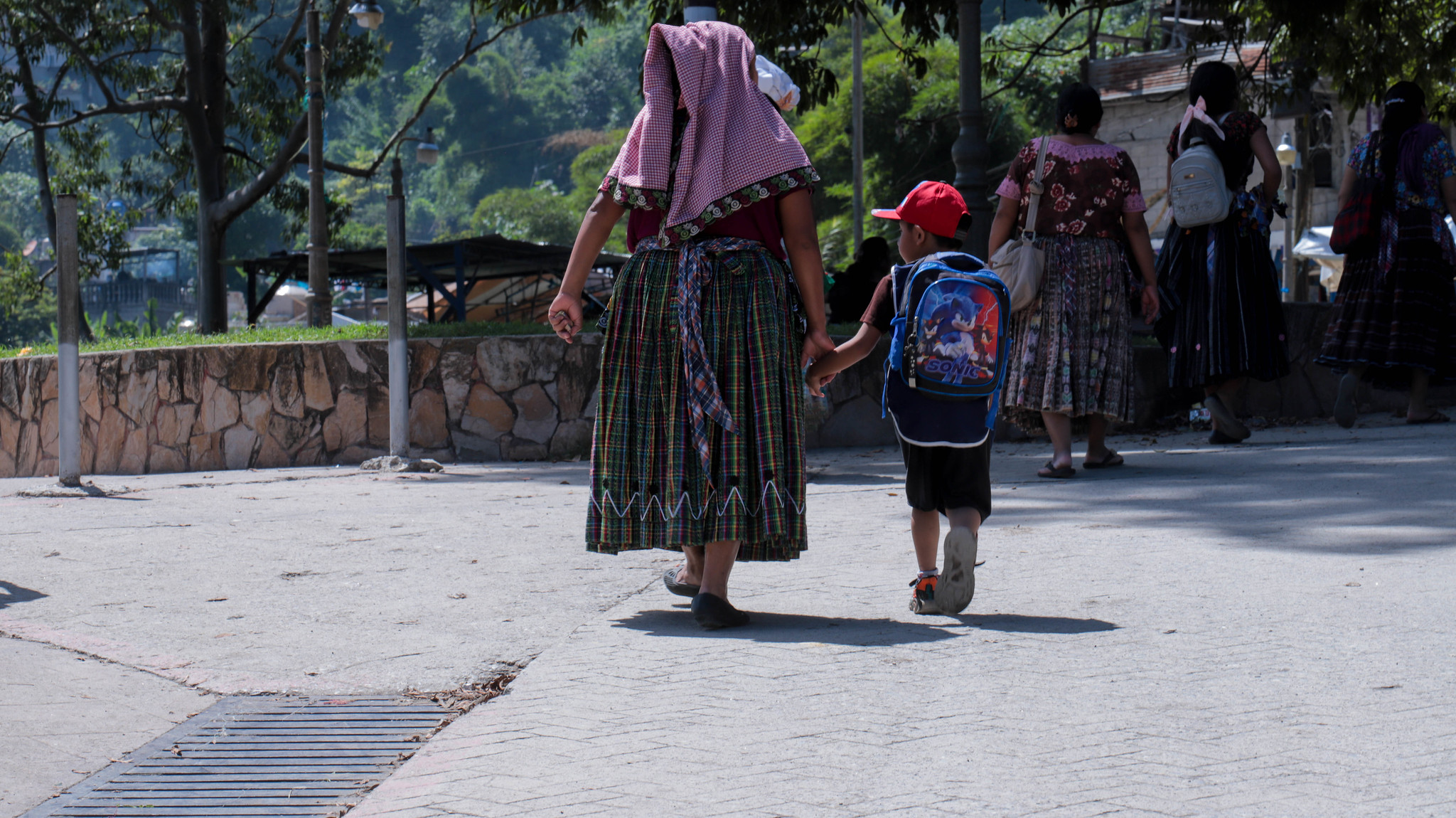
Photo: Mario Winter.
Voices for the Motagua River: Olga Vázquez.
Voices for the Motagua River: Nazario Pascual.
In early 2000, the Maya community organized to stop sand mining on their territory. At that time, the companies held mining permits that remained valid through 2021 and 2022. And although the permits expired, some companies continued to operate after requesting extensions. In June 2022, the indigenous authorities of the Poqomam people began a sit-in protest in front of the Piedrinera San Luis company, which they maintained for four years.
In July 2024, the Special Rapporteur on Economic, Social, Cultural, and Environmental Rights of the IACHR visited Santa Cruz Chinautla. During his visit, traditional authorities and community members spoke about the environmental, water-related, health, economic, and cultural impacts of the pollution in their rivers.
That same year, in October, the community—with support from AIDA, the Indigenous Peoples’ Law Firm, and partner organizations—filed a lawsuit (petition for amparo) against the municipality of Chinautla over its failure to take measures to address the contamination of its rivers and soil caused by improper solid waste management and the existence of illegal landfills.
AIDA’s scientific team, together with local residents and community authorities, collected key information on illegal landfills in the area. This community science initiative supported the litigation by highlighting the severity of the pollution, demonstrating the ongoing use of such practices, and providing evidence of the municipal authorities’ failure to fulfill their legal obligations regarding waste management.
Learn more about this community science initiative.
In June 2025, the Poqomam community won the support of the Guatemalan justice system when a constitutional court ordered the municipality of Chinautla to effectively address the claims in the lawsuit aimed at stopping the pollution of the rivers and soil in Santa Cruz Chinautla.
This is the first time a Guatemalan court has recognized a community's right to a healthy environment and its central role in finding solutions.
Find out the details of the legal victory.
Current situation
Since the ruling was issued, the municipality of Chinautla has held a series of “technical working groups” with representatives from the central government, civil society, and the community. A smaller group of technical experts was later created to develop a work plan with clear goals. Several months have passed without the municipality convening these working groups.
Furthermore, in December 2025, the IACHR noted in its report Human Rights Situation in Guatemala that the Motagua River basin is facing a severe pollution crisis that has had profound impacts on biodiversity and has resulted in systematic violations of the human rights of local communities, including the Maya Poqomam people.
And in May 2026, the Ministry of the Environment and Natural Resources revoked the license of the sand mining company Piedrinera San Luis for "failure to comply with environmental commitments."
AIDA continues to monitor the implementation of the court ruling to ensure the right to a healthy environment for the Poqomam Maya community and all those living in the Motagua River basin. Meanwhile, the residents of Santa Cruz Chinautla remain organized and mobilized to improve their environment and defend their rights.
Related projects
Latin America and its little-known biodiversity
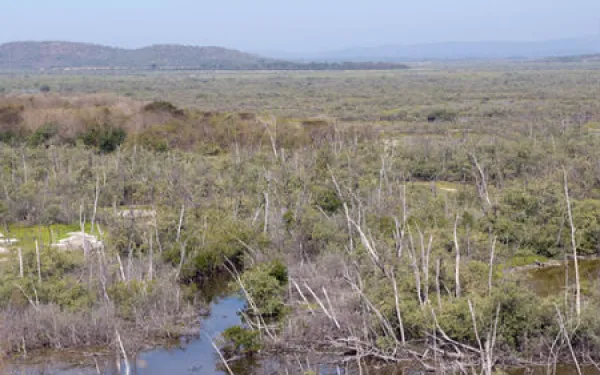
By Tania Paz, general assistant, AIDA, @TaniaNinoshka Latin America and the Caribbean stretches over more than two billion hectares, or about 15% of the earth’s total land surface area. The region possesses the richest persity of species and ecoregions in the world. It is home to one third of the world’s renewable water resources and close to 30% of the world’s total runoff, or the free flow of surface water into a drainage basin, according to the Economic Commission for Latin America and the Caribbean (ECLAC, 2002). Even so, there are still many ecosystems that we don’t know much about despite their important role in maintaining the health and wellbeing of the environment and human society. These include mangrove forests, glaciers and páramos. Mangroves According to Mexico’s National Commission for the Knowledge and Use of Biopersity (CONABIO, in Spanish), mangroves are plant formations grouped into a distinct biome known as mangal, or a tree or shrub with branches that reach down and take root in the ground. They are a unique plant species for their resistance to salt and for growing in tropical coastal environments near estuaries and coastal lagoons. They are the transition between terrestrial and marine ecosystems. Mangrove forests form a natural protective barrier that prevents wind and tide erosion. They play an important role in the environment by filtering water and allowing it to flow into underground aquifers, and they act as carbon sinks that helpmitigate the effects of climate change. The major threats to mangrove ecosystems stem from urban, industrial, tourism and agricultural development given that they compete for land with these fragile ecosystems and cause heavy pollution. This is happening in Marismas Nacionales and Laguna Huizache-Caimanero, where a mega-tourism resort is threatening a wetland ecosystem that protects Mexico’s last remaining mangrove forests and 60 endangered species. Páramos Páramos (in Spanish) are wetlands found between 2,500 and 3,600 meters above sea level in a climate of high rainfall and dry winds. Páramos are known as water factories for their capacity to generate clean water. They also act as a climate regulator with capacity to absorb carbon dioxide. Colombia is home to the largest surface area of páramo ecosystems in the world, holding 98% of páramo plant species. These ecosystems also are home to an immense persity of flora and fauna, including the spectacled bear and Andean condor, the world’s largest flying land bird. Rich in precious metals, the páramos are threatened by mining developments, both existing and planned. In Colombia, for example, miners are looking to undertake extractive activities in the Santurbán páramo, which would put in peril a vital source of fresh water for millions of Colombians. AIDA is leading a campaign (in Spanish) that calls for a proper demarcation of the Santurbán páramo’s territorial boundaries in an effort to stop mining development, an activity prohibited in officially declared páramo zones. Glaciers Glaciers are large bodies of dense ice, snow and rocks. They can stretch down or across mountainsides -- depending on their weight -- as they flow into the water system. They can melt, evaporate or break up into icebergs. In Latin America, 70% of the earth’s tropical glaciers are found high in the Andes mountain range of Bolivia, Ecuador and Peru (OLCA, 2013, in Spanish). Glaciers regulate water supplies by releasing water in the form of meltwater in the hot and dry seasons and by storing it as ice during cold and wet periods. In Ecuador, the city of Quito gets 50% of its water from glacier reservoirs and likewise Bolivia’s La Paz gets 30% from glacier catchment areas. Glacier melt, caused by the effects of climate change, is the greatest threat to the glaciers. Since 1970 the Andean glaciers have lost 20% of their volume, according to a report by Peru’s National Meteorology and Hydrology Service (SENAMHI, in Spanish). See the documentary La Era del Deshielo (The Age of the Thawing) by Señal Colombia. Source: YouTube Glacier melt is putting the water production of Andean countries at risk. In Peru, for example, the volume of surface ice that has been lost as a consequence of melting equates to seven billion cubic meters of water, a quantity that represents around 10 years worth of water supplies for the city of Lima. If all the world’s glaciers melted, sea levels could rise by some 66 meters, causing catastrophic impacts on coastal cities (OLCA, 2013, in Spanish). Como vemos, América Latina es una región totalmente rica en biopersidad que juega un papel importante en el mundo y en la continuidad de la especie humana. La belleza y riqueza del continente quedan expresadas en la letra de América, canción de Nino Bravo: “Cuando Dios hizo el Edén, pensó en América”. ¡Defendamos y preservemos nuestro Edén!
Read moreMexico’s government is held internationally accountable for authorizing tourism infrastructure in the Gulf of California
The Commission for Environmental Cooperation (CEC) called on Mexican authorities to respond by January 8, 2014 to a complaint of breaching environmental legislation in the permits for four mega resorts. Mexico City, Mexico. The Commission for Environmental Cooperation (CEC) requested an explanation from the Mexican government for authorizing tourism projects in the Gulf of California. The international organization, established under the North American Free Trade Agreement, made the determination after reviewing a citizen petition submitted by Mexican and U.S. organizations[i] denouncing the systematic violation of Mexican environmental law in permits for the construction of four mega resorts that put at risk fragile coral reefs, mangroves and wetlands. The Interamerican Association for Environmental Defense (AIDA) and Earthjustice filed the petition[ii] with the CEC in April on behalf of 11 Mexican and international organizations. In the petition, the four resort projects are presented as an example of how Mexico’s Secretariat of Environment and Natural Resources (SEMARNAT) endorsed massive tourism infrastructure in the Gulf of California in violation of norms for environmental impact assessment, the protection of endangered species and the conservation of coastal ecosystems. The CEC Secretariat determined that the Mexican government has until January 8, 2014 to provide a response on why it issued the permits, specifically in relation to these aspects: use of the best available information, assessing the cumulative impacts and destruction of ecosystems, the lack of precautionary and preventive measures, and the omission of the power to suspend works. The CEC also requested information on the implementation of the resolutions and recommendations of the Ramsar Convention, an intergovernmental treaty for the protection of wetlands of international importance like those in the Gulf of California. “It is a breakthrough in national and international law because it recognizes these provisions as part of the implementation of the obligations in the international treaties ratified by Mexico,” said Sandra Moguel, an AIDA legal adviser. The Secretariat acknowledged, in particular, the resolutions adopted by the contracting parties to the Ramsar Convention, which establish standards for the environmental impact assessment and protection of wetlands. The Secretariat also acknowledged the recommendations of the Ramsar Missions that visited the Marismas Nacionales and Cabo Pulmo, concluding that large-scale tourism developments were not appropriate because of the vulnerability of these ecosystems[iii]. It asked Mexico to explain its failure to perform an environmental impact assessment in accordance with these provisions. “The CEC called for accountability from the Mexican government with respect to the abuse of discretion in considering technical reviews, as is the case with the Playa Espíritu project that lacked environmental viability according to the CONANP (National Commission on Protected Areas),” said Eduardo Nájera, director of COSTASALVAjE, one of the petitioning organizations. “It is urgent that the new administration of SEMARNAT doesn’t not make the same mistakes as their predecessors, and that it carry out a transparent and non-arbitrary environmental impact assessment, especially in the case of projects that could put in danger wetlands of priority international importance such as Marismas Nacionales, Cabo Pulmo and the Bahía de la Paz,” said Carlos Eduardo Simental, director of the Ecological Network for the Development of Esquinapa (REDES), another petitioner.Finally, Carolina Herrera, a Latin America specialist for the Natural Resources Defense Council (NRDC), said that she expects that once it receives Mexico’s response, “the CEC will elaborate a detailed investigation of what happened in order to press Mexico to not relax its own environmental protection measures in favor of unsustainable coastal development.” See the CEC determination. [i] Ecological Network for the Development of Esquinapa (REDES), Friends for the Conservation of Cabo Pulmo (ACCP), Mexican Center for Environmental Defense, Natural Resources Defense Council (NRDC), COSTASALVAjE, SUMAR, Niparajá Natural History Society, Los Cabos Coastkeeper, Alliance for the Sustainability of the Northwestern Coast (ALCOSTA), Greenpeace Mexico and AIDA. [ii] For more information about the citizen submission mechanism, please see this link. [iii] These missions are a technical assistance facility of Ramsar whose primary purpose is to assist parties that have wetlands meriting priority attention due to changing ecological characteristics.
Read more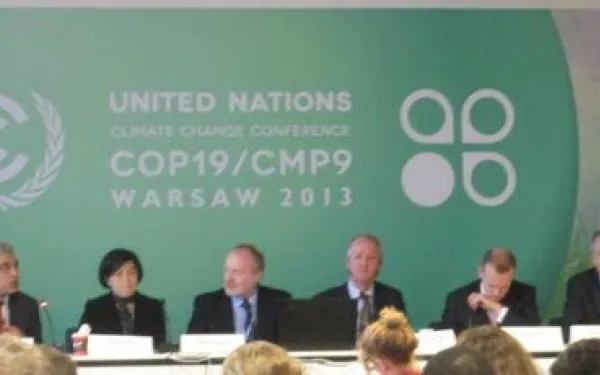
Green financing: Sources, preparation and the allocation of resources
By Andrea Rodríguez, legal advisor, AIDA,@arodriguezosuna, and Mónica Valtierra, AIDA volunteer Warsaw, Poland. The financing needed to fight climate change was a key issue at the side events of the Warsaw Climate Change Conference (COP19). Discussions dug deep into the issues of the sourcing of funds, the preparation to secure financing and how to turn financial support into real solutions. persifying the financial resources of the Green Climate Fund (GCF) The World Business Council for Sustainable Development (WBCSD) and the Climate Markets and Investment Association (CMIA) organized an event to discuss the theme of financial persification and the tools necessary to mobilize GCF funds. Giles Dickson, vice president of environmental policies and global advocacy at the multinational energy and transport conglomerate Alstom, said that for the private sector to provide capital, the GCF needs mechanisms for providing incentives and a framework for making investments through loans. It is important to break the myth that the private sector will use public resources to its own benefit, given that the true intention is to contribute to financial instruments in which the public sector is involved, he said. Jeanne Ng, director of environmental affairs at Hong Kong-based electric company CLP Group, said the private sector already has financed renewable energy projects without public resources. For this reason, she said it is important for the GCF to take into account these efforts and include them within its objectives, and also to make sure that public resources don’t go to projects that already are getting financing. Talking about the inclusion of the private sector in funding GCF investments, Ng said the Fund needs the help of private institutions to market low-carbon products. Vikram Widge, head of climate finance and policy at the International Finance Corp. (IFC), the private sector arm of the World Bank, said the GCF must play a participative role in capitalizing financial resources and generating profits. The financial instruments must guarantee the stability of private resources and the development of countries, he said. Alstom’s Dickson said private sector participation could come through three channels: in projects on the local and municipal level, in promoting new technologies and through the development of projects supported by private companies. This will only happen if governments put in place economic policies that guarantee positive results, he said. Readiness support The question of readiness support was the focus of discussion at another side event called Rolling up the sleeves for the Green Climate Fund: Expectations and experience from building GCF readiness, where representatives from different countries expressed their views: South Africa. Zaheer Fakir, chief policy advisor at South Africa’s Department of Environmental Affairs, said it is important to have a leader country to run the Fund’s projects, some of which are designed for specific environmental problems. There are solutions that cannot be replicated in each country because they rely on the institutional capacity of each country, he said. It’s not just about giving money to national entities. This is because there are concerns of money-laundering and also because some entities already have direct access to financial resources. The funding must go to projects that have the potential for transformation and for which the end goal should not be exclusively limited to the reduction of greenhouse gas emissions, he added. On the same topic, Richard Calland, an associate professor of public law at the University of Cape Town, presented a study on the preparation capacity of each country. It mentioned three indispensible prerequisites: the country must be relative, responsive and reasonable. In identifying the local difficulties in terms of planning, he proposed that each country form financial partnerships with research institutions. This is not about the ability to deploy financial resources, but rather to use the maximum capacity possible, he said. Lastly, on the subject of access of financial resources, he called on people to consider the possible modalities, fiduciary standards and safeguards. Germany. Norbert Gorben mentioned that Germany is considering the possibility next year of participating in the GCF and contributing to it 14 billion Euros through bilateral schemes and multilateral organizations. He said the Fund’s board should ask the GCF Secretariat to begin action on implementing programs and mobilizing resources as soon as possible. Ina von Frantzius, a policy advisor on climate policy and financing at the Federal Ministry for Economic Cooperation and Development, said Germany wants to offer specific help to each country that needs it. Peru. Gabriel Quijandria, vice minister of the strategic development of natural resources at the Ministry of the Environment, said that together with the Ministry of Finance he is working on a program to modernize the state. The two ministries have discussed establishing a national body charged with implementing and managing the country’s funds once the GCF starts to operate. The preparation for the program, he said, was not an easy concept to fathom, but one that requires the right attitude. In order to define the program, it is necessary to understand and pay attention to the perspective of poor communities, he said. As an example, he cited farmers who take out international insurance against the effects of climate phenomena such as El Niño. The allocation of resources The financing of projects by the Global South to countries in the Global South is a growing trend in the developing world. In most cases, the resources come from the private sector in these countries and are funneled to projects related to public policy. This issue was addressed at another side event at the COP19 in Warsaw called Developing Countries in the Driving Seat for Accelerating Green Finance. On this topic, Monique Barbut, head of the United Nations Convention to Combat Desertification (UNCCD), said the priority is to know exactly where the money goes. Some 60% of the financial resources for climate projects come from the private sector, with a large part of this money going toward renewable energy projects. This is not yet enough to combat climate change. Approximately 48% of government funds are allocated to adaptation projects related to sustainable use of the land, she said. On the importance of resource allocation, she clarified that this depends on the generation of social benefits. Funding sustainability projects can lead to less migration, poverty and insecurity for vulnerable communities, she explained. Zaheer Fakir, the representative of the South African government, also spoke about leadership. In his opinion, countries in the Global South are more interested in doing more to combat climate change than the countries in the Global North, and so they are more open to the idea of offering their money to help. “We cannot sit and wait for the multilateral process to be agreed upon” because it is now when countries are suffering extreme poverty, unemployment, uneducated youth and other problems that impel us to go home and do something about it rather than wait around. “How can we improve the lives of our citizens at home?” asked Fakir. It is a question of “being green,” of involving communities, indigenous groups and all levels of society in green projects, he said. More than the source of funding , it is important that money is invested in the adequate technology for resolving climactic problems in a country, said Nick Beglinger, president of Zurich-based clean technology business association Swisscleantech. Businesses can make money while also helping the environment, he said. He added that it is also necessary to start innovating in green finance. He suggested reviewing the use of the public money in pension funds in order to reach the common goals of the government and society, because pensioners are the ideal investors for long-term plans. On this issue, there is not much difference between developed and developing countries, he said, adding that the pisions between the Global South and North should be eliminated in order for the financing mechanisms to function in an efficient way regardless of the origin of the funds.
Read more