
Project
Shutterstock.
Pollution of the Motagua River in Guatemala: The Poqomam Maya people’s quest for environmental justice
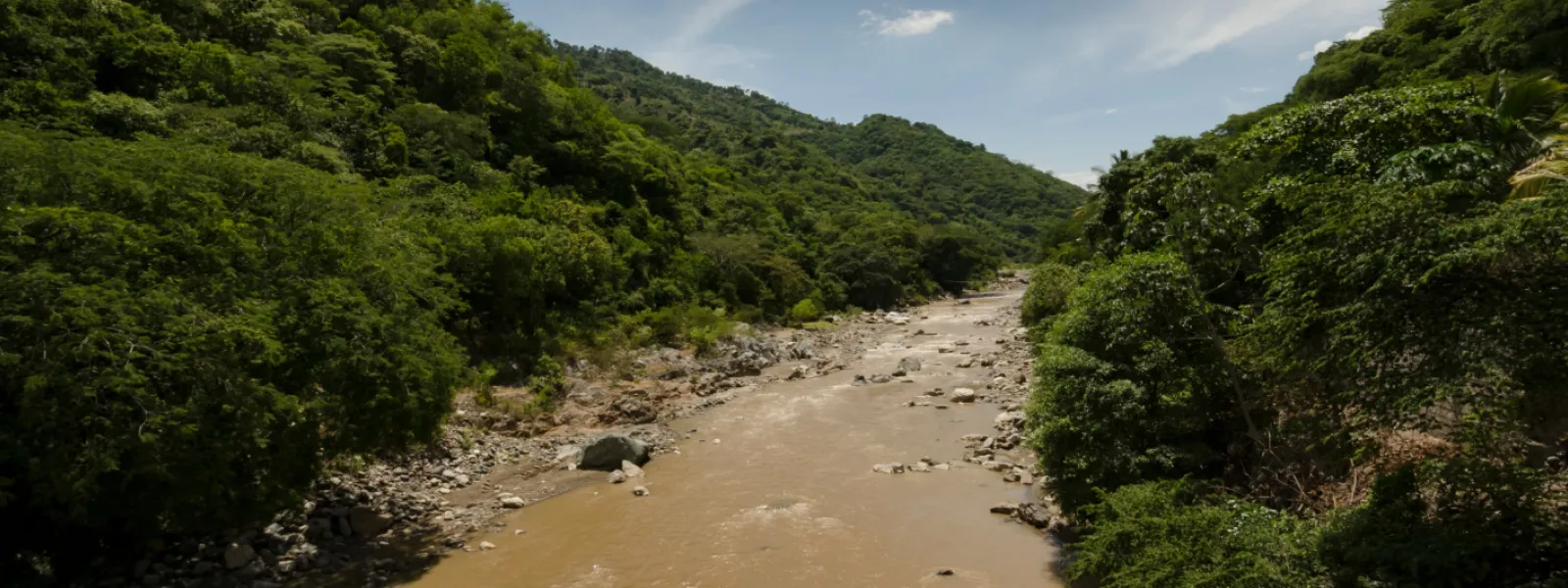
The Motagua River basin—Guatemala’s largest and most important river—is severely polluted with wastewater, solid waste, and other types of debris.
This is a cross-border issue because the Motagua’s polluted waters flow into the Caribbean Sea, reach the coast of Honduras, and threaten the Mesoamerican Reef System.
For decades, this has violated the rights to health, water, development, and a healthy environment of all the people living in the river basin.
In June 2025, the Poqomam Maya community of Santa Cruz Chinautla—supported by AIDA, the Indigenous Peoples’ Law Firm, and allied organizations—achieved an unprecedented legal victory to halt degradation in the basin. In response to the lawsuit it filed, a Guatemalan court ordered the municipality of Chinautla to comply with a series of obligations to curb the pollution of the area’s rivers and soil.
The government's response to the ruling has so far been limited to technical working group meetings. Meanwhile, the community continues to work toward the proper implementation of the ruling and to take other actions to defend its territory and its rights.
Background
The Motagua River, which is 486 km long, flows through 96 municipalities and 14 departments in Guatemala. It originates in Quiché, a department located in the northwest, and empties into the Caribbean Sea.
Polluting activities occur throughout the entire basin, including sub-basins and micro-basins. The largest volume of pollution comes from Guatemala City, the country’s capital, and is carried by the waters of the Las Vacas River, which in turn receives a large amount of waste from the Chinautla River.
The Chinautla River, which flows through the municipality of the same name, carries solid waste from a landfill located in Zone 3 of the capital—where trash from at least 14 municipalities in the department of Guatemala is dumped—as well as sewage generated by some 500,000 people living in the northern part of the capital, which undergoes no prior treatment.
Other sources of pollution include the numerous illegal dumps in the municipality of Chinautla, the waste that private vehicles and garbage trucks dump along the banks of its rivers, as well as the sand-mining companies—which began setting up operations in the area between 1996 and 1997—whose activities weaken the rivers' basins, causing solid waste to be more easily carried away by the river currents.
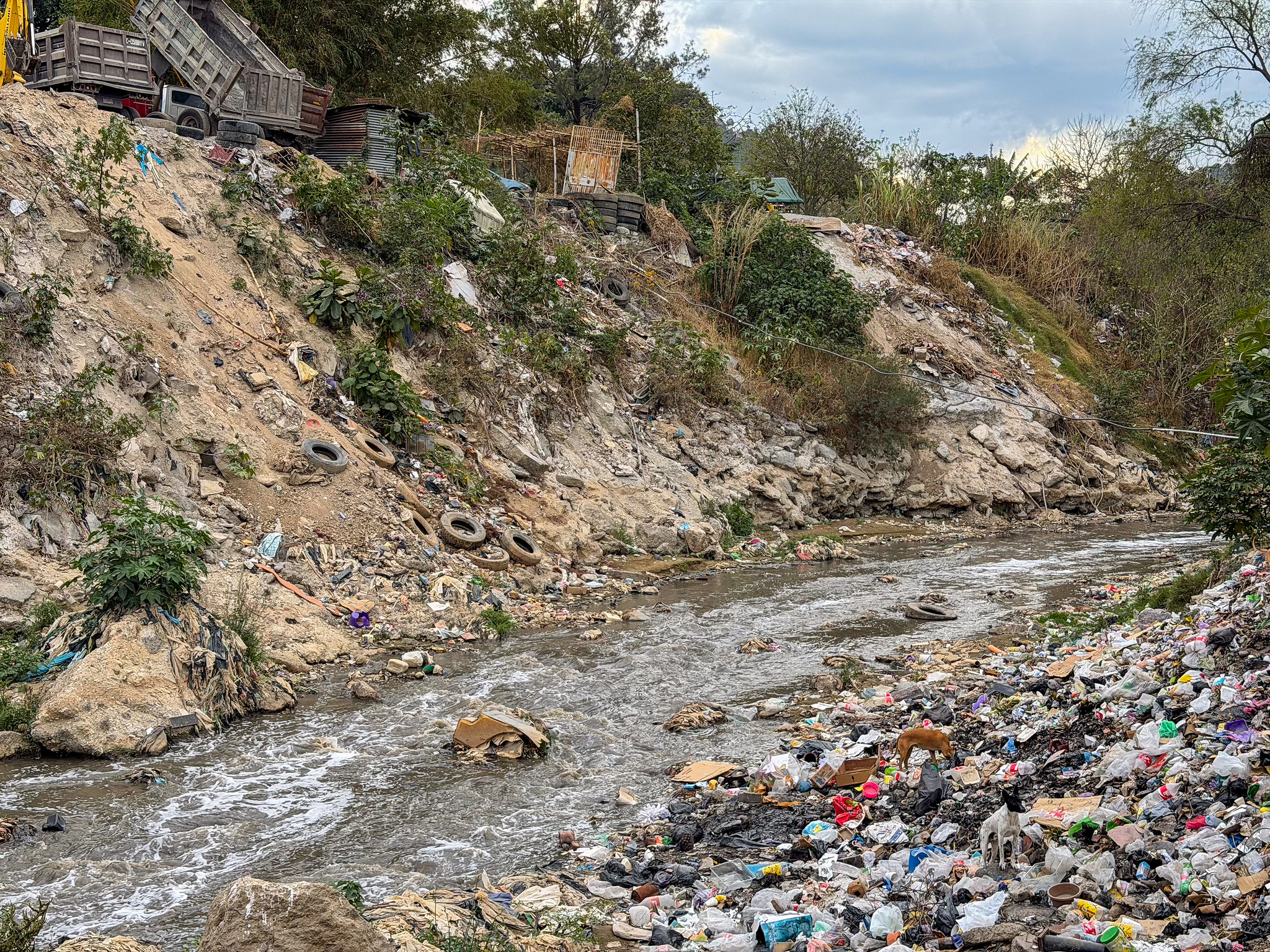
Photo: Mayela Sánchez García.
The situation extends beyond national borders. Every year, the Motagua River discharges some 20,000 metric tons of plastic into the Caribbean Sea, making it one of the rivers that contributes the most plastic pollution to the ocean worldwide, according to estimates contained in a 2025 report by the Inter-American Commission on Human Rights (IACHR).
The river flows into the Mesoamerican Reef at its mouth, so pollution also threatens to degrade one of the largest and most biodiverse transboundary reefs on the planet, which spans the territorial waters of Belize, Guatemala, Honduras, and Mexico.
In addition, the contaminated water reaches the coast of Honduras and spreads into Amatique Bay, located along the eastern coast of Guatemala, affecting the Caribbean Sea.
The roots of this chronic, cross-border problem are structural. Data from the Integrated Environmental Management of the Motagua River Basin project, funded by the United Nations Development Program (UNDP), show that in Guatemala, 66% of municipal solid waste is not collected, and there is no guarantee that the remaining 34% is disposed of properly. Furthermore, of all landfills nationwide, 88.32% are illegal or lack municipal authorization.
In other words, the core issues that need to be addressed are the mismanagement of solid waste and water resources in Guatemala; noncompliance with existing regulations on wastewater discharge and the disposal and treatment of solid waste and residues; and the lack of a water law.
The Poqomam Maya people's quest for justice
The rivers of Santa Cruz Chinautla, a community of the Poqomam Maya people located just twelve kilometers from Guatemala City, have become conduits of pollution that are degrading the Motagua River.
For decades, the local population has seen its health and livelihoods—including pottery, one of the main economic activities and a source of identity—damaged due to the lack of waste management in the municipality of Chinautla and the urban area of the country’s capital, as well as the activities of sand-mining companies.
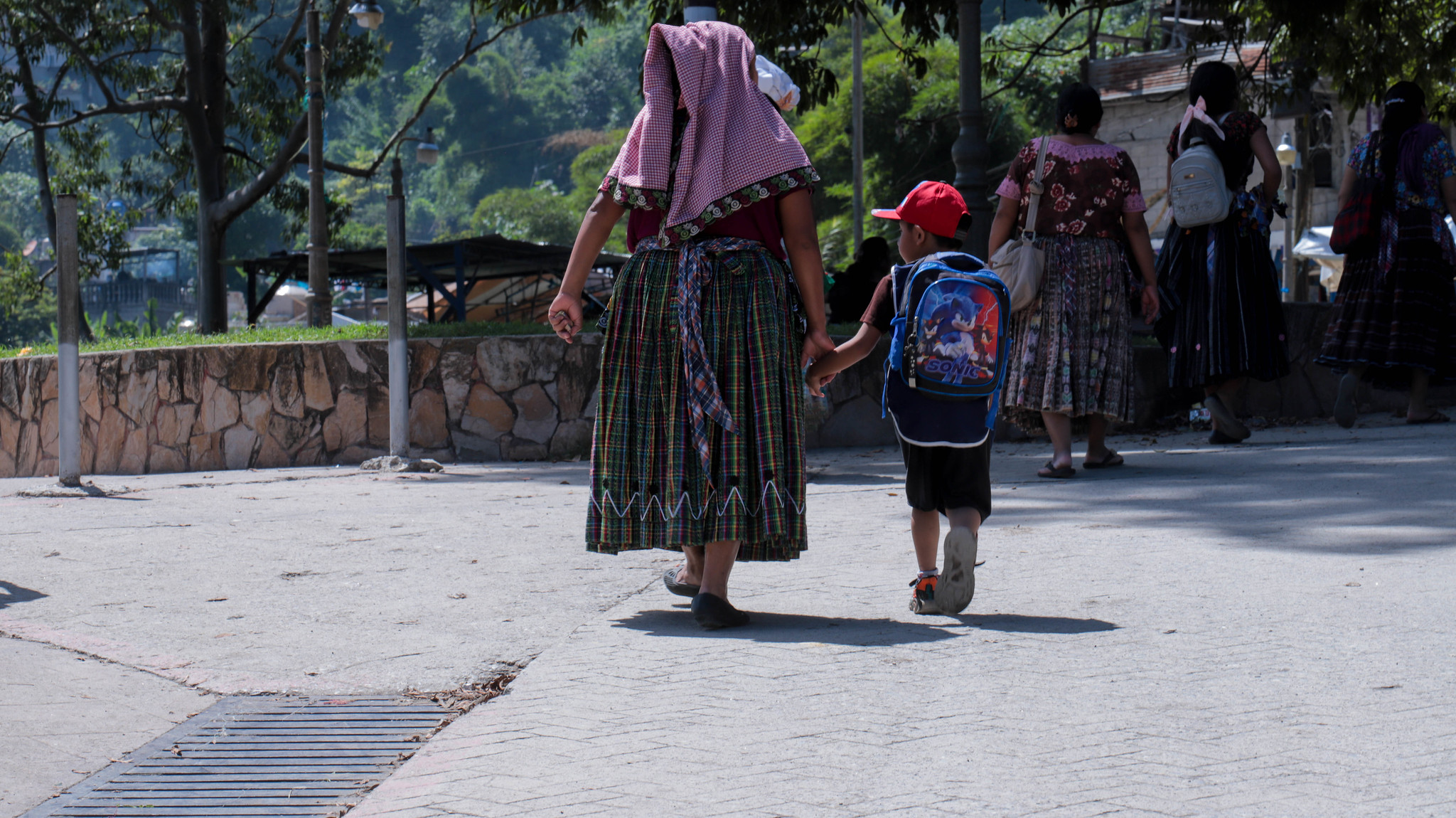
Photo: Mario Winter.
Voices for the Motagua River: Olga Vázquez.
Voices for the Motagua River: Nazario Pascual.
In early 2000, the Maya community organized to stop sand mining on their territory. At that time, the companies held mining permits that remained valid through 2021 and 2022. And although the permits expired, some companies continued to operate after requesting extensions. In June 2022, the indigenous authorities of the Poqomam people began a sit-in protest in front of the Piedrinera San Luis company, which they maintained for four years.
In July 2024, the Special Rapporteur on Economic, Social, Cultural, and Environmental Rights of the IACHR visited Santa Cruz Chinautla. During his visit, traditional authorities and community members spoke about the environmental, water-related, health, economic, and cultural impacts of the pollution in their rivers.
That same year, in October, the community—with support from AIDA, the Indigenous Peoples’ Law Firm, and partner organizations—filed a lawsuit (petition for amparo) against the municipality of Chinautla over its failure to take measures to address the contamination of its rivers and soil caused by improper solid waste management and the existence of illegal landfills.
AIDA’s scientific team, together with local residents and community authorities, collected key information on illegal landfills in the area. This community science initiative supported the litigation by highlighting the severity of the pollution, demonstrating the ongoing use of such practices, and providing evidence of the municipal authorities’ failure to fulfill their legal obligations regarding waste management.
Learn more about this community science initiative.
In June 2025, the Poqomam community won the support of the Guatemalan justice system when a constitutional court ordered the municipality of Chinautla to effectively address the claims in the lawsuit aimed at stopping the pollution of the rivers and soil in Santa Cruz Chinautla.
This is the first time a Guatemalan court has recognized a community's right to a healthy environment and its central role in finding solutions.
Find out the details of the legal victory.
Current situation
Since the ruling was issued, the municipality of Chinautla has held a series of “technical working groups” with representatives from the central government, civil society, and the community. A smaller group of technical experts was later created to develop a work plan with clear goals. Several months have passed without the municipality convening these working groups.
Furthermore, in December 2025, the IACHR noted in its report Human Rights Situation in Guatemala that the Motagua River basin is facing a severe pollution crisis that has had profound impacts on biodiversity and has resulted in systematic violations of the human rights of local communities, including the Maya Poqomam people.
And in May 2026, the Ministry of the Environment and Natural Resources revoked the license of the sand mining company Piedrinera San Luis for "failure to comply with environmental commitments."
AIDA continues to monitor the implementation of the court ruling to ensure the right to a healthy environment for the Poqomam Maya community and all those living in the Motagua River basin. Meanwhile, the residents of Santa Cruz Chinautla remain organized and mobilized to improve their environment and defend their rights.
Related projects

A Plan to Decontaminate Our Cities and Contain the Climate Crisis
In an open letter made public at COP25, more than 100 organizations from Latin America and around the world urged governments to include ambitious and measurable targets for confronting air pollution in their new climate commitments, which must be submitted to the United Nations by March 2020.Join the Global Call for Clean Air! SIGN NOW!Read it in Spanish In Portuguese Poor air quality is the environmental problem that claims the most lives worldwide.Each year, more than four million people die from the health damages caused by air pollution. Official data shows that, globally, nine out of ten people breathe polluted air, and that the problem affects more than 80 percent of urban residents. The majority of those affected are in developing countries and the damages most severely impact the most vulnerable sectors of the population: children, pregnant women and the elderly.At the same time, humanity is seriously threatened by a climatic emergency whose impacts are also suffered with greater force by the most vulnerable segments of the population.Both problems, the climate crisis and poor air quality, are related to the atmosphere around us and are a matter of human rights. In this sense, there is an efficient way forward on both fronts. It’s an opportunity we must seize, and it has to do with reducing emissions of short-lived climate pollutants (SLCPs).Short-lived climate pollutants are atmospheric agents that contribute to the climate crisis with much more intensity than carbon dioxide (CO2) and, as their name indicates, remain in the atmosphere a relatively short time, from days to decades—unlike CO2, which can last millennia in the atmosphere. In addition, these pollutants degrade air quality, affect glacial areas and reduce crop yields. They include black carbon, methane, tropospheric ozone and hydrofluorocarbons (HFCs).Aiming to mitigate them implies reducing global warming in the short term and, at the same time, advancing in the decontamination of cities.This opportunity has already been supported by science.The United Nations Intergovernmental Panel on Climate Change (IPCC), which brings together experts on the subject, stressed in its Special Report on 1.5°C that, in order to confront global warming, we must incorporate into our efforts the mitigation of pollutants other than CO2, specifically black carbon and methane.Recently, more than 11 thousand scientists from around the world joined the call. In a public declaration recognizing the climate emergency, they identified among the measures necessary to solve it the prompt reduction of short-lived climate pollutants, noting that this would reduce warming by more than 50 percent in the coming decades.The forthcoming update of Nationally Determined Contributions (NDCs)— containing the climate commitments that governments must submit to the United Nations Framework Convention on Climate Change (UNFCCC)—opens the possibility of betting on the mitigation of these pollutants and contributing effectively to the fight against the climate crisis and poor air quality.The deadline for governments to submit new and more ambitious Nationally Determined Contributions is March 2020.For all of the reasons stated above, the undersigned organizations consider that the States that are part of the UNFCCC must respect human rights, protect them with the highest standards, and consider them in their climate commitments.In this sense, we ask that governments:Include ambitious and measurable targets for the reduction of short-lived climate pollutants in the update of their NDCs by March 2020.Detail in their commitments the means of implementation, which must ensure compliance with the targets they set.Frame the fulfillment of commitments in comprehensive policies that recognize the different levels of impact among the population, with special emphasis on the protection of children and other vulnerable groups.Specify the monitoring, reporting and verification procedures that will accompany the implementation of their commitments.Ensure that local governments and companies respect the policies established and adapt their actions to the urgent need to improve air quality. Download the letter
Read more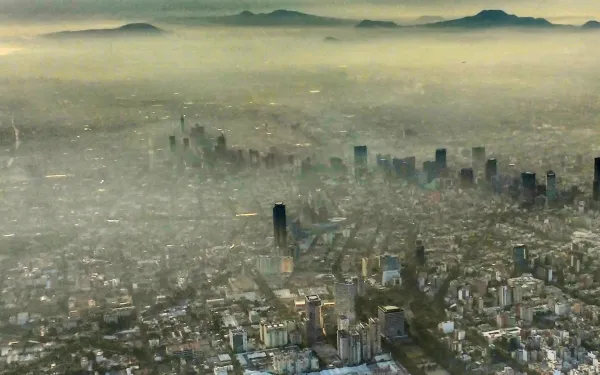
COP25: Organizations call on governments to improve air quality and, with it, slow the climate crisis
In a public letter, environmental and social organizations from Latin America and around the world urge governments to limit short-lived climate pollutants in their international climate commitments, which must be submitted to the United Nations by March 2020. Madrid, Spain. Governments must include ambitious and measurable targets for the reduction of short-lived climate pollutants in their new climate commitments, more than 100 organizations said in an open letter presented today, on the occasion of Human Rights Day, at the twenty-fifth Conference of the Parties (COP25) to the United Nations Framework Convention on Climate Change. "Mitigating short-lived climate pollutants implies reducing global warming in the short term and, at the same time, advancing in the decontamination of our cities," said Javier Dávalos, coordinator of the Climate Change Program at the Interamerican Association for Environmental Defense (AIDA). These pollutants are sometimes called "super climate pollutants" because they contribute to the climate crisis with much more intensity than carbon dioxide (CO2). As their name indicates, they stay a relatively short time in the atmosphere—from days to decades—unlike CO2, which can remain for millennia. Short-lived climate pollutants include black carbon, methane, tropospheric ozone and hydrofluorocarbons. They degrade air quality, affect glacial areas, and reduce crop yields. Poor air quality is the world's most deadly environmental problem. Each year, more than four million people die from the health damages caused by air pollution. The benefit of reducing these harmful emissions has been backed by science. The United Nations Intergovernmental Panel on Climate Change (IPCC), which brings together experts on the subject, stressed that to tackle global warming we must incorporate the mitigation of non-CO2 pollutants, specifically black carbon and methane. In addition, more than 11,000 scientists from around the world noted that the early reduction of short-lived climate pollutants would reduce warming by more than 50 percent over the next several decades. "The coming update of Nationally Determined Contributions opens up the possibility of governments betting on the elimination of these pollutants and thus contributing effectively to the fight against climate change and poor air quality," said Florencia Ortúzar, AIDA attorney. The deadline for governments to update their contributions is March 2020. That’s why the signatory organizations have called for the inclusion of ambitious and measurable goals for the reduction of these short-lived climate pollutants, and for governments to detail how the targets will be implemented, monitored and reported in the new commitments before the United Nations. "The solutions needed to reduce and eliminate each of the four short-lived climate pollutants are not mysteries. They are known and have been proven. But we need governments to prioritize those solutions if we are going to be able to avoid the worst impacts of climate change," commented Amanda Maxwell, director of the Latin America Project for the Natural Resources Defense Council (NRDC). In addition to the open letter, the organizations have launched an online petition for the cause to be supported with signatures from individuals around the world. Both problems, the climate crisis and poor air quality, most severely affect the most vulnerable segments of the population, among them children, pregnant women and the elderly. Confronting poor air quality is a human rights issue. Read the letter to governments. Read and sign the citizen petition. pRESS CONTACTS Victor Quintanilla (Mexico), AIDA, [email protected], +521 5570522107 Fabiola Nuñez, NRDC, [email protected], +1 (646) 889-1405 Renata Assumpção (Brazil), Instituto Alana, [email protected] Ricardo Ruiz (Mexico), CEMDA, [email protected], +5215559644162
Read more
Six measures to ensure our actions achieve climate justice
On December 2, the twenty-fifth Conference of the Parties (COP25) to the United Nations Framework Convention on Climate Change opened in Madrid. It’s a vital meeting for the planet, during which governments must drastically increase their ambitions and climate commitments if we hope to preserve life, as we know it today. So far, there have been more announcements than actions. That’s why I’d like to highlight six measures that will help us move towards the results the planet needs. The outlook is not encouraging. Change remains urgent. Every day, the climate crisis causes greater harm, particularly for the most vulnerable among us. According to the United Nations Emissions Gap report, emissions continue to rise and current actions are insufficient to achieving the necessary reductions. In an evident political and financial weakening, nations that once led climate actions are now withdrawing or refusing to comply with the agreements. Added to this are emerging social protests, particularly in Latin America. The governments of Ecuador, Chile and Colombia have declared curfews in recent weeks to deal with the serious situations in their countries; COP25 was moved from Santiago de Chile to Madrid. In some instances, abuse of force caused several deaths and hundreds of other injuries. All this demonstrates the urgency of heeding the social call, of acknowledging and dealing with inequality, of finding solutions and building countries where all have a place. One thing is clear: we’ve been moving in the wrong direction and we must change course. We need profound changes in energy, transportation and food systems, as well as in the negotiation, decision-making and implementation of climate actions. This is essential if we are to arrive at peak global emissions as soon as possible, cut them in half by 2030, and reach zero emissions by 2050. Significant efforts are undoubtedly being made. There are billion-dollar investments by governments, businesses, organizations and individuals. But it’s not enough. We must stop and assess what is serving us and what is not; what we should continue to do and what we must do differently. These six measures could make climate action more effective and help us achieve climate justice: 1. Include human rights as a transversal element (seriously). Although it’s been a petition of social movements, indigenous peoples and organizations for decades, official recognition of human rights has yet to materialize. Responding to this call is vital to increasing the ambition and responsibility that is so needed. While the Cancun and Paris Agreements refer to the importance of respecting human rights, their implementation has failed to include this perspective. This, despite the fact that human rights bodies have reminded States of their obligation to do so; and IPCC scientists have highlighted the importance of addressing social inequality and including the wisdom of indigenous communities as a fundamental element in resolving the climate crisis. 2. Ensure the effective participation of affected people and communities in the planning, discussion, decision-making and monitoring of climate actions. Indigenous peoples, rural communities, Afro-descendants, and youth are among the groups most affected by the climate crisis. In addition, local communities have protected millions of hectares of forests and other natural areas, essential for climate resilience. Yet spaces for the participation for these actors remain scarce and spaces for decision-making, in COPs and other instances, are almost non-existent. Ensuring that discussions and decisions are truly diverse is an essential step towards increasing climate ambition and effectiveness. Communities should be considered subjects of rights, not simply objects of protection projects and actions. 3. Secure the equitable distribution of funds We live in the midst of immense inequality, where wealth, property and privileges belong to a few, while the majority assume the negative impacts. The climate crisis is partly a result of this situation. Although Latin America is the most unequal region on the planet, inequality is underestimated, according to ECLAC. That’s why the distribution of economic and human resources must address this reality, ensuring that the Global South has access to opportunities to participate on equal footing towards true climate justice. This would increase the possibility of finding alternative solutions and replicating those already in place. 4. Hold accountable those responsible for the climate crisis Those causing the climate crisis should be held accountable for it, instead of attacking those who seek accountability and climate justice. This is one of the great obstacles to moving forward. It’s time to name those responsible and demand that they take charge and repair the damages, rather than accepting false solutions and ineffective voluntary actions. 5. Incorporate a feminine perspective, based in maternal love By this I mean the need to rescue a perspective of collaboration and serious dialogue in order to reach consensus, assuming responsibilities over differences and competition. Let us include a perspective that prioritizes the care of the Earth, of nature and of people. Let's stop putting economic interests and short-term vision above the health of our planet. Let's focus our efforts on agreeing how we can achieve climate justice, coming out of denial, and leaving behind excuses about why it can't be done. 6. Acknowledge the true costs of the climate crisis: social, economic, environmental and human. So far most economic assessments have focused on calculating the costs of the transition to a zero-emission economy. While there are estimates of the costs involved in not implementing the transition, these ignore the social, environmental and cultural impacts. This is particularly significant for regions such as Latin America, which, in addition to suffering human and cultural losses, are losing their natural wealth. Scientists have concluded that the changes will be more costly the longer they take to be implemented. COP25 could be an opportunity to incorporate these and many other measures in the battle against the climate emergency. At this point, insisting on the same thing will only bring more frustration and failures. Not taking action will condemn millions more people to suffer the consequences of the climate crisis, and of inadequate solutions that violate their rights. The reality is indisputable, which makes it imperative to include human rights as the crosscutting axis of our climate actions. If we do not, the actions resulting from the Conference of the Parties will resemble the emperor of the Brothers Grimm’s story. They will come out to the parade naked, proudly wearing a costly suit made with climate ambition, yet insufficient for what the planet needs. We must instead cover climate actions with a suit of climate justice—a visible one that we must weave together. We have no time to spare.
Read more