
Project
Shutterstock.
Pollution of the Motagua River in Guatemala: The Poqomam Maya people’s quest for environmental justice
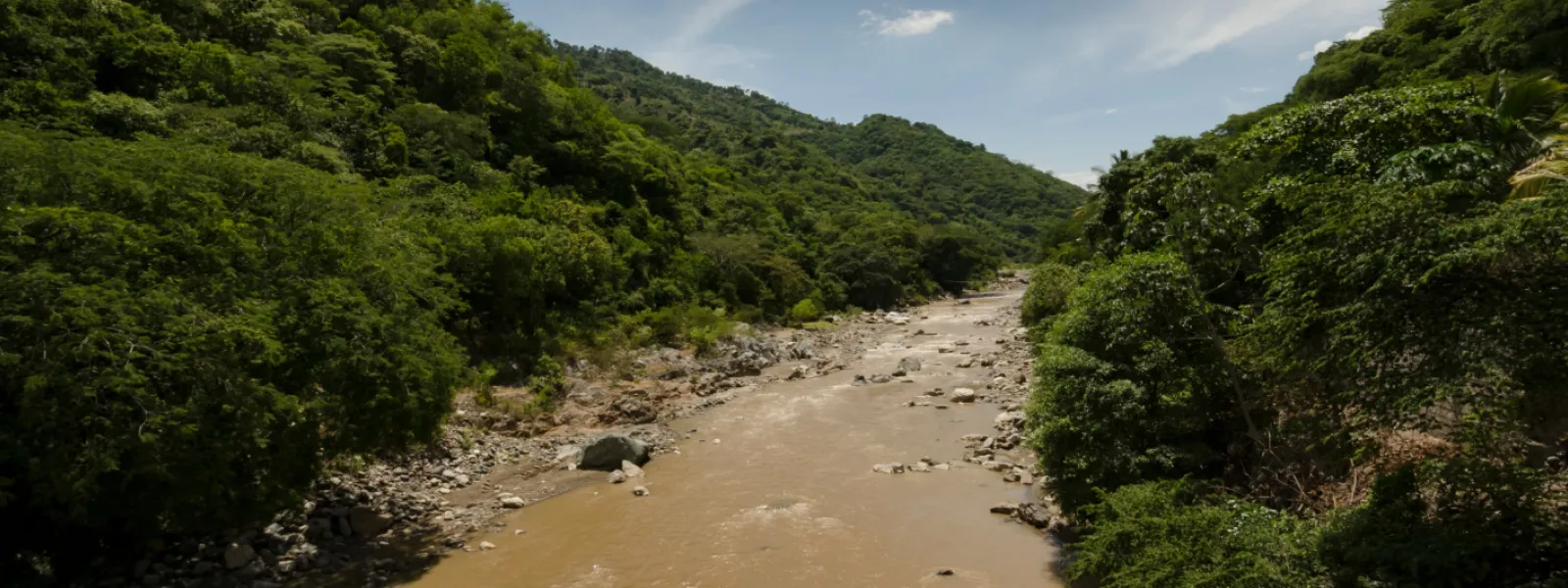
The Motagua River basin—Guatemala’s largest and most important river—is severely polluted with wastewater, solid waste, and other types of debris.
This is a cross-border issue because the Motagua’s polluted waters flow into the Caribbean Sea, reach the coast of Honduras, and threaten the Mesoamerican Reef System.
For decades, this has violated the rights to health, water, development, and a healthy environment of all the people living in the river basin.
In June 2025, the Poqomam Maya community of Santa Cruz Chinautla—supported by AIDA, the Indigenous Peoples’ Law Firm, and allied organizations—achieved an unprecedented legal victory to halt degradation in the basin. In response to the lawsuit it filed, a Guatemalan court ordered the municipality of Chinautla to comply with a series of obligations to curb the pollution of the area’s rivers and soil.
The government's response to the ruling has so far been limited to technical working group meetings. Meanwhile, the community continues to work toward the proper implementation of the ruling and to take other actions to defend its territory and its rights.
Background
The Motagua River, which is 486 km long, flows through 96 municipalities and 14 departments in Guatemala. It originates in Quiché, a department located in the northwest, and empties into the Caribbean Sea.
Polluting activities occur throughout the entire basin, including sub-basins and micro-basins. The largest volume of pollution comes from Guatemala City, the country’s capital, and is carried by the waters of the Las Vacas River, which in turn receives a large amount of waste from the Chinautla River.
The Chinautla River, which flows through the municipality of the same name, carries solid waste from a landfill located in Zone 3 of the capital—where trash from at least 14 municipalities in the department of Guatemala is dumped—as well as sewage generated by some 500,000 people living in the northern part of the capital, which undergoes no prior treatment.
Other sources of pollution include the numerous illegal dumps in the municipality of Chinautla, the waste that private vehicles and garbage trucks dump along the banks of its rivers, as well as the sand-mining companies—which began setting up operations in the area between 1996 and 1997—whose activities weaken the rivers' basins, causing solid waste to be more easily carried away by the river currents.
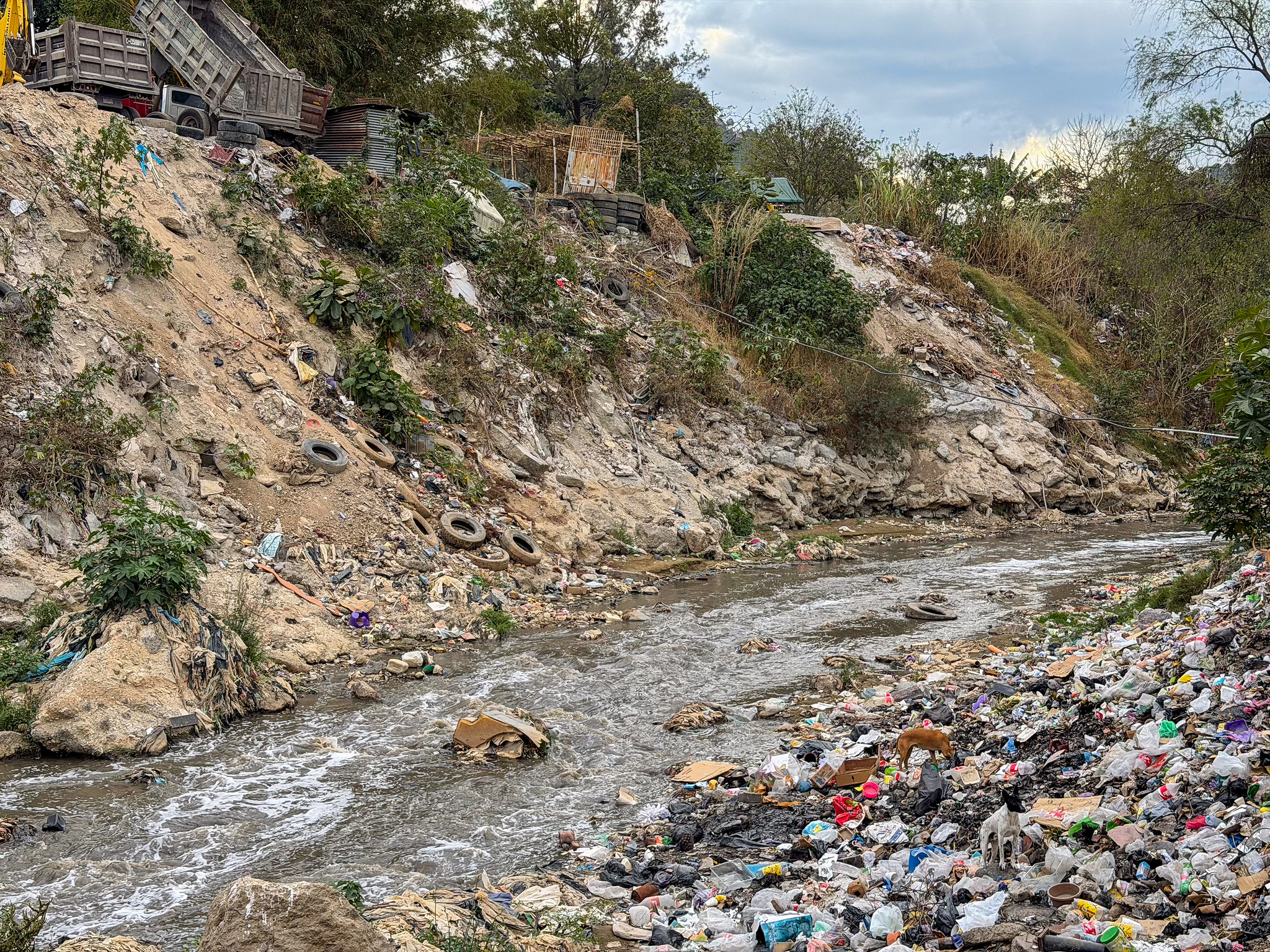
Photo: Mayela Sánchez García.
The situation extends beyond national borders. Every year, the Motagua River discharges some 20,000 metric tons of plastic into the Caribbean Sea, making it one of the rivers that contributes the most plastic pollution to the ocean worldwide, according to estimates contained in a 2025 report by the Inter-American Commission on Human Rights (IACHR).
The river flows into the Mesoamerican Reef at its mouth, so pollution also threatens to degrade one of the largest and most biodiverse transboundary reefs on the planet, which spans the territorial waters of Belize, Guatemala, Honduras, and Mexico.
In addition, the contaminated water reaches the coast of Honduras and spreads into Amatique Bay, located along the eastern coast of Guatemala, affecting the Caribbean Sea.
The roots of this chronic, cross-border problem are structural. Data from the Integrated Environmental Management of the Motagua River Basin project, funded by the United Nations Development Program (UNDP), show that in Guatemala, 66% of municipal solid waste is not collected, and there is no guarantee that the remaining 34% is disposed of properly. Furthermore, of all landfills nationwide, 88.32% are illegal or lack municipal authorization.
In other words, the core issues that need to be addressed are the mismanagement of solid waste and water resources in Guatemala; noncompliance with existing regulations on wastewater discharge and the disposal and treatment of solid waste and residues; and the lack of a water law.
The Poqomam Maya people's quest for justice
The rivers of Santa Cruz Chinautla, a community of the Poqomam Maya people located just twelve kilometers from Guatemala City, have become conduits of pollution that are degrading the Motagua River.
For decades, the local population has seen its health and livelihoods—including pottery, one of the main economic activities and a source of identity—damaged due to the lack of waste management in the municipality of Chinautla and the urban area of the country’s capital, as well as the activities of sand-mining companies.
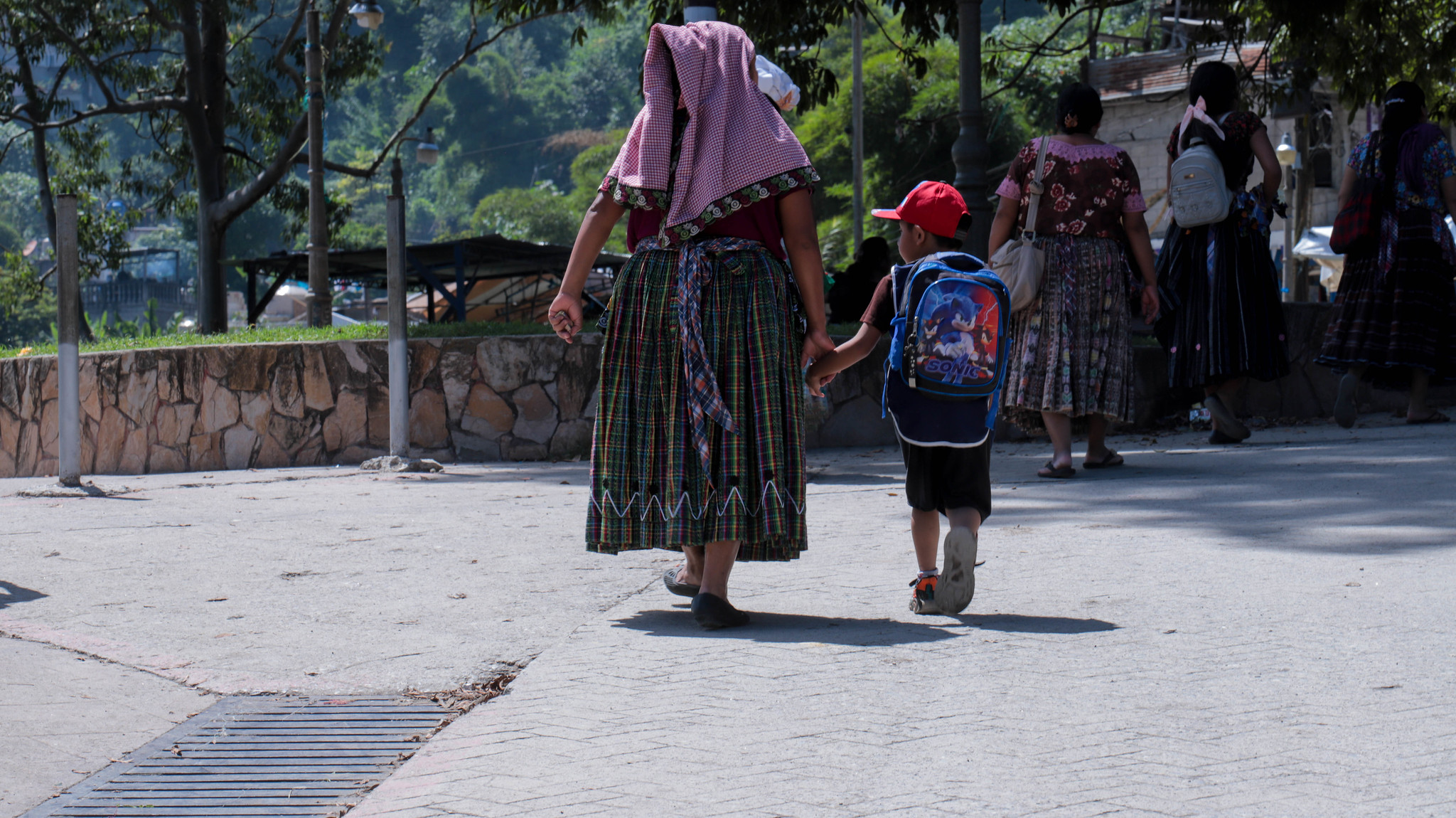
Photo: Mario Winter.
Voices for the Motagua River: Olga Vázquez.
Voices for the Motagua River: Nazario Pascual.
In early 2000, the Maya community organized to stop sand mining on their territory. At that time, the companies held mining permits that remained valid through 2021 and 2022. And although the permits expired, some companies continued to operate after requesting extensions. In June 2022, the indigenous authorities of the Poqomam people began a sit-in protest in front of the Piedrinera San Luis company, which they maintained for four years.
In July 2024, the Special Rapporteur on Economic, Social, Cultural, and Environmental Rights of the IACHR visited Santa Cruz Chinautla. During his visit, traditional authorities and community members spoke about the environmental, water-related, health, economic, and cultural impacts of the pollution in their rivers.
That same year, in October, the community—with support from AIDA, the Indigenous Peoples’ Law Firm, and partner organizations—filed a lawsuit (petition for amparo) against the municipality of Chinautla over its failure to take measures to address the contamination of its rivers and soil caused by improper solid waste management and the existence of illegal landfills.
AIDA’s scientific team, together with local residents and community authorities, collected key information on illegal landfills in the area. This community science initiative supported the litigation by highlighting the severity of the pollution, demonstrating the ongoing use of such practices, and providing evidence of the municipal authorities’ failure to fulfill their legal obligations regarding waste management.
Learn more about this community science initiative.
In June 2025, the Poqomam community won the support of the Guatemalan justice system when a constitutional court ordered the municipality of Chinautla to effectively address the claims in the lawsuit aimed at stopping the pollution of the rivers and soil in Santa Cruz Chinautla.
This is the first time a Guatemalan court has recognized a community's right to a healthy environment and its central role in finding solutions.
Find out the details of the legal victory.
Current situation
Since the ruling was issued, the municipality of Chinautla has held a series of “technical working groups” with representatives from the central government, civil society, and the community. A smaller group of technical experts was later created to develop a work plan with clear goals. Several months have passed without the municipality convening these working groups.
Furthermore, in December 2025, the IACHR noted in its report Human Rights Situation in Guatemala that the Motagua River basin is facing a severe pollution crisis that has had profound impacts on biodiversity and has resulted in systematic violations of the human rights of local communities, including the Maya Poqomam people.
And in May 2026, the Ministry of the Environment and Natural Resources revoked the license of the sand mining company Piedrinera San Luis for "failure to comply with environmental commitments."
AIDA continues to monitor the implementation of the court ruling to ensure the right to a healthy environment for the Poqomam Maya community and all those living in the Motagua River basin. Meanwhile, the residents of Santa Cruz Chinautla remain organized and mobilized to improve their environment and defend their rights.
Related projects
AIDA Statement on the Situation in Ecuador
The Interamerican Association for Environmental Defense (AIDA) recognizes the positive steps made in Ecuador through the United Nations-mediated dialogue between the government and the indigenous movement. The mediation follows weeks of conflict stemming from the government’s elimination of diesel and gas subsidies through decree 883. In a context of global climate emergency, it is necessary to eliminate subsidies for fossil fuels and any other market distortion that promotes their continued exploitation and use. However, no measure will be successful if it is not done with full awareness of the impacts it implies for the most vulnerable segments of the population, directly affected by increased prices of transportation and consumer goods. The energy transition must be progressive and respectful of human rights. Only in this way will we be able to move towards true climate justice. Measures such as those adopted in Ecuador must also be framed within proper planning, aimed at moving towards a low-carbon economy, as well as reducing dependence on oil, large-scale mining and other sectors that contribute to the climate crisis. AIDA commends the commitment of the government and the indigenous movement to developing a new decree in a joint and participatory manner. The recent conflict demonstrates the need to strengthen a plurinational and multicultural State, where decisions are discussed and agreed upon with indigenous peoples and all national actors. Ecuador now has the opportunity to set a key precedent at the global level by designing comprehensive policies that support the fulfillment of its climate commitments and at the same time respect and protect its people, especially vulnerable groups. We hope that the dialogue will be successful and will serve as an example of the collective construction of climate solutions to ensure participation, respect for human rights, gender equity and, in short, the well-being of present and future generations. press contact: Victor Quintanilla (Mexico), [email protected], +5215570522107
Read more
Want to solve the climate crisis? Let's bet on the ocean
So far, the ocean has featured little in the United Nations climate negotiations. Yet without it, solutions to the climate crisis would be incomplete. The annual sessions of the UN Convention on Climate Change have emphasized reducing greenhouse gas emissions, but have not recognized the role of the ocean and its importance in meeting climate change goals. A healthy ocean is a natural carbon reservoir and its degradation implies the intensification of the climate crisis. Without its help, we cannot prevent the planet from warming to an unsustainable level. But the ocean is beginning to crumble due to pressure from factors such as overfishing and pollution, in addition to the climate crisis. The latest report from the Intergovernmental Panel on Climate Change (IPCC) shows that the ocean suffers from overheating, acidification, and loss of oxygen—an element essential for life under the sea. The report revealed the worst: the climate crisis is the ocean crisis. However, we still have windows of opportunity to bring the ocean back to health by improving its governance and controlling the planet's temperature. Decadent health The ocean plays a key role in maintaining life on the planet. It produces half the oxygen we breathe, circulates fresh water, and generates nutrients. The livelihoods of fishing and tourism communities depend on its good health. In recent years, the ocean has been a buffer. Standing between our communities and the worst effects of the climate crisis, the ocean has absorbed 93 percent of the excess heat and 28 percent of the carbon dioxide in the atmosphere, UN experts said. But this natural protection has serious consequences. By absorbing and interacting with pollutants, the rate of increase in ocean temperature has more than doubled since the end of the 20th century, according to the IPCC. Recent scientific evidence is not just another warning, but perhaps the last and most urgent call to protect the ocean through accelerated climate action. Act now An opportunity to rescue this ecosystem is in each country's plans to reduce emissions and contain global warming to 1.5 degrees Celsius (or as close as possible to that figure). The twenty-fifth Conference of the Parties (COP25) to the United Nations Framework Convention on Climate Change, to be held in Chile in December, represents the final deadline for countries to submit new and more ambitious commitments by 2020. Costa Rica, as host of the COP25 preparatory meeting, decided to give nature space in the climate fight. In fact, the ocean is one of the issues that the government has placed on the agenda of the PreCOP, underway this week. Stronger commitments to reducing emissions will rid the ocean of one of the main pressure points that has it on the verge of collapse. Integral solution This is not the only action the international community is taking to save this ecosystem. A treaty is still being negotiated on the high seas: marine areas beyond national jurisdiction. Together they account for almost two-thirds of the ocean. Countries have between now and 2020 to achieve a treaty that protects the high seas and, with it, almost half of the planet. On the other hand, the States Parties to the Convention on Biological Diversity will negotiate new targets for the protection of biodiversity at a meeting to be held in 2020. The target for marine biodiversity should be the protection of at least 30 percent of the ocean through effectively protected areas and the sustainable management of the remaining 70 percent. Ending overfishing and pollution in all its forms, as well as preventing further loss of biodiversity, ecosystems and habitats, are essential measures within our reach. There is an urgent need for the political class to act accordingly and protect the ocean. The next decade is imperative.
Read more
Empowering fishermen to protect coral reefs, and their guardians
When he thinks of his childhood, Mario Smith remembers the abundance of fish, crabs and lobsters he and his father used to find while fishing, an activity now in decline on his island. "There used to be such abundance and today we are forbidden to fish for many things because of our irresponsibility in taking care of our resources," said Mario, who is now the leader of the San Luis Fishermen's Committee, whose members work on San Andres Island, Colombia. San Luis is a hamlet located on the east coast of San Andres with white sandy beaches and calm waters. I was there in August to support the dissemination of a very important resolution for the conservation of the coral ecosystems of the Colombian Caribbean. The law prohibits the capture and sale of several species of herbivorous and omnivorous fish that cleanse the corals of the algae that take away their light and space, thus supporting their survival. In recent years, a decrease in commercial species has led fishing communities have to go after herbivorous fish. This, in turn, has caused a reduction in populations of these species, particularly in the Caribbean. The resolution was issued on July 15 by the Corporation for the Sustainable Development of the Archipelago of San Andrés, Providencia and Santa Catalina (CORALINA), the environmental authority in that region. Disseminating and socializing these type of norms in local communities is very important so that residents, understanding the importance of these fish for the health of both the reefs and their economies, support actions aimed at their conservation. Along with CORALINA's education team, I visited several fishermen's committees, as well as schools and restaurants. I participated in a meeting of the Inter-Institutional Committee on Environmental Education, which was also attended by representatives of the government, the police, and the tourism and education sectors. The visits were very enriching, full of questions and emotions. In each of them I highlighted the benefits of taking care of our corals and the fish that help them thrive. Coral reefs are one of the most important ecosystems on the planet. They are home to more than 25% of our marine species and protect our coasts from hurricanes, storms and other weather events. At Cajasai School, the active participation of one student surprised me. He told me of his concern about garbage on his beaches and about catching parrotfish, one of the most important species of herbivorous fish. "I'm very concerned about my resources and that's why I made a foundation to take care of the beaches that are close to my home," he told me passionately. His empathy and desire to fight for his beaches and sea inspired me. The beautiful landscapes of San Andrés and the interest of all the people I spoke with filled me with satisfaction and energy to continue working. But there is still a lot to do. Our marine resources are in danger of disappearing in the face of the global climate crisis. And the urgency to do something about it is becoming ever more pressing. Our coral reefs are among the ecosystems most threatened by this crisis, mainly due to changes in the acidity and temperature of our oceans. In addition, human actions such as pollution and overfishing are causing irreversible damages. That’s why AIDA will continue to support local efforts to conserve important marine species, such as the parrotfish and his herbivorous relatives. LEARN MORE
Read more