
Project
Shutterstock.
Pollution of the Motagua River in Guatemala: The Poqomam Maya people’s quest for environmental justice
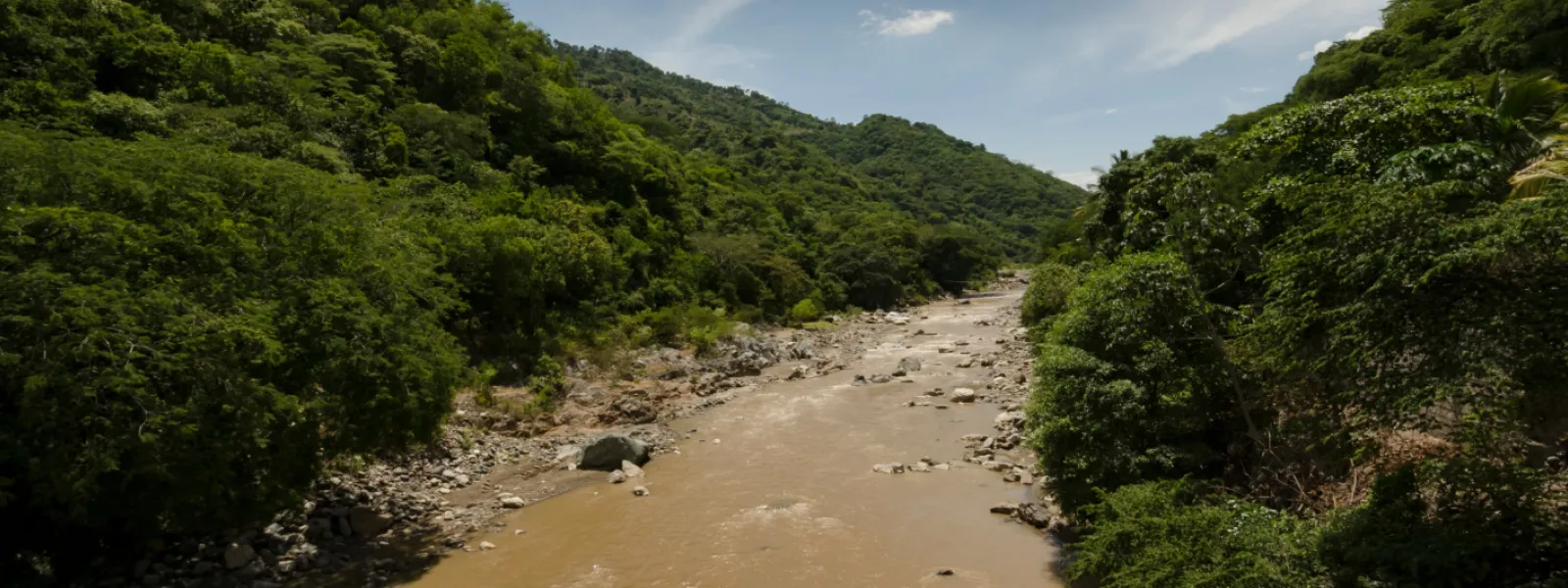
The Motagua River basin—Guatemala’s largest and most important river—is severely polluted with wastewater, solid waste, and other types of debris.
This is a cross-border issue because the Motagua’s polluted waters flow into the Caribbean Sea, reach the coast of Honduras, and threaten the Mesoamerican Reef System.
For decades, this has violated the rights to health, water, development, and a healthy environment of all the people living in the river basin.
In June 2025, the Poqomam Maya community of Santa Cruz Chinautla—supported by AIDA, the Indigenous Peoples’ Law Firm, and allied organizations—achieved an unprecedented legal victory to halt degradation in the basin. In response to the lawsuit it filed, a Guatemalan court ordered the municipality of Chinautla to comply with a series of obligations to curb the pollution of the area’s rivers and soil.
The government's response to the ruling has so far been limited to technical working group meetings. Meanwhile, the community continues to work toward the proper implementation of the ruling and to take other actions to defend its territory and its rights.
Background
The Motagua River, which is 486 km long, flows through 96 municipalities and 14 departments in Guatemala. It originates in Quiché, a department located in the northwest, and empties into the Caribbean Sea.
Polluting activities occur throughout the entire basin, including sub-basins and micro-basins. The largest volume of pollution comes from Guatemala City, the country’s capital, and is carried by the waters of the Las Vacas River, which in turn receives a large amount of waste from the Chinautla River.
The Chinautla River, which flows through the municipality of the same name, carries solid waste from a landfill located in Zone 3 of the capital—where trash from at least 14 municipalities in the department of Guatemala is dumped—as well as sewage generated by some 500,000 people living in the northern part of the capital, which undergoes no prior treatment.
Other sources of pollution include the numerous illegal dumps in the municipality of Chinautla, the waste that private vehicles and garbage trucks dump along the banks of its rivers, as well as the sand-mining companies—which began setting up operations in the area between 1996 and 1997—whose activities weaken the rivers' basins, causing solid waste to be more easily carried away by the river currents.
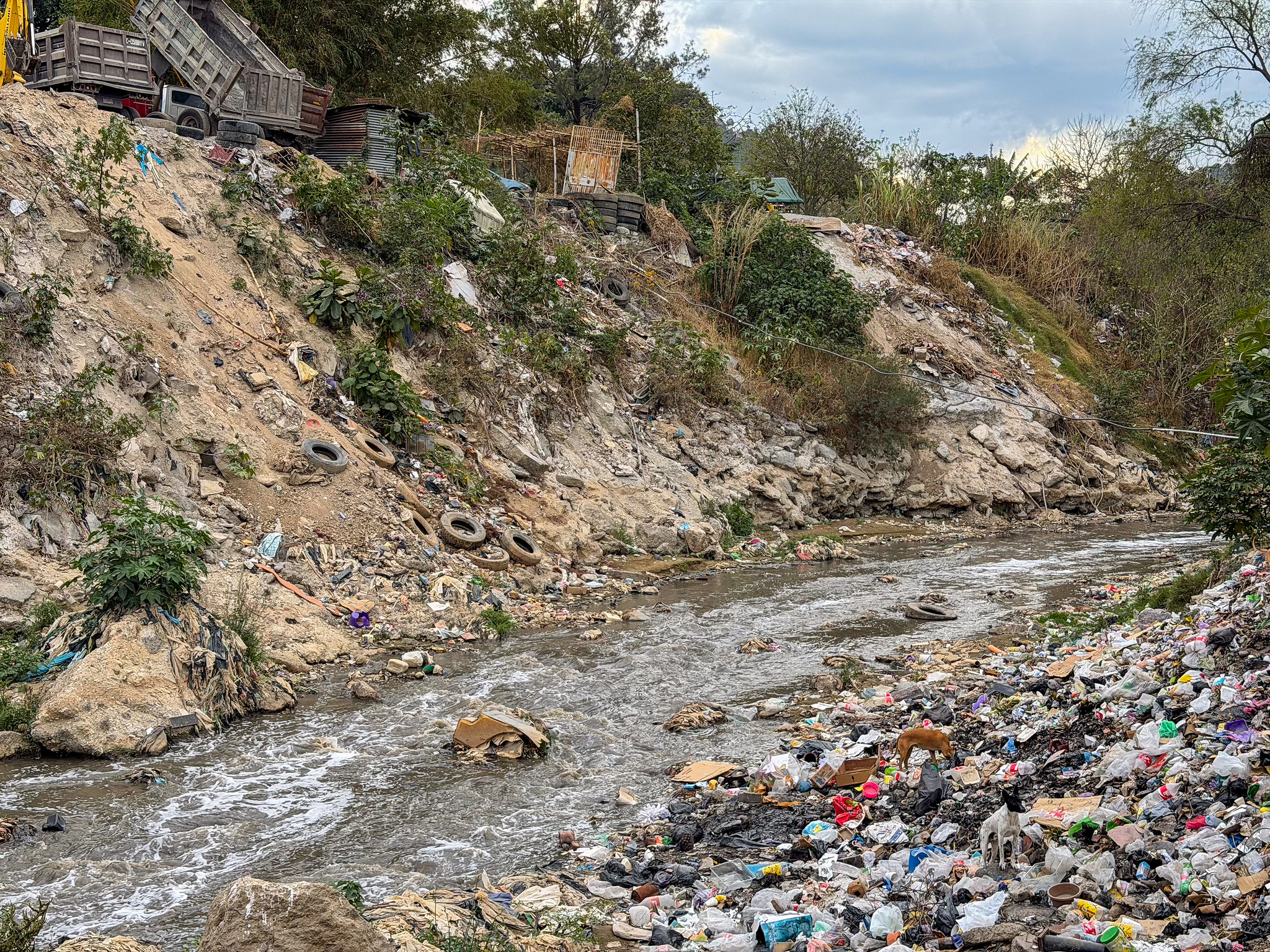
Photo: Mayela Sánchez García.
The situation extends beyond national borders. Every year, the Motagua River discharges some 20,000 metric tons of plastic into the Caribbean Sea, making it one of the rivers that contributes the most plastic pollution to the ocean worldwide, according to estimates contained in a 2025 report by the Inter-American Commission on Human Rights (IACHR).
The river flows into the Mesoamerican Reef at its mouth, so pollution also threatens to degrade one of the largest and most biodiverse transboundary reefs on the planet, which spans the territorial waters of Belize, Guatemala, Honduras, and Mexico.
In addition, the contaminated water reaches the coast of Honduras and spreads into Amatique Bay, located along the eastern coast of Guatemala, affecting the Caribbean Sea.
The roots of this chronic, cross-border problem are structural. Data from the Integrated Environmental Management of the Motagua River Basin project, funded by the United Nations Development Program (UNDP), show that in Guatemala, 66% of municipal solid waste is not collected, and there is no guarantee that the remaining 34% is disposed of properly. Furthermore, of all landfills nationwide, 88.32% are illegal or lack municipal authorization.
In other words, the core issues that need to be addressed are the mismanagement of solid waste and water resources in Guatemala; noncompliance with existing regulations on wastewater discharge and the disposal and treatment of solid waste and residues; and the lack of a water law.
The Poqomam Maya people's quest for justice
The rivers of Santa Cruz Chinautla, a community of the Poqomam Maya people located just twelve kilometers from Guatemala City, have become conduits of pollution that are degrading the Motagua River.
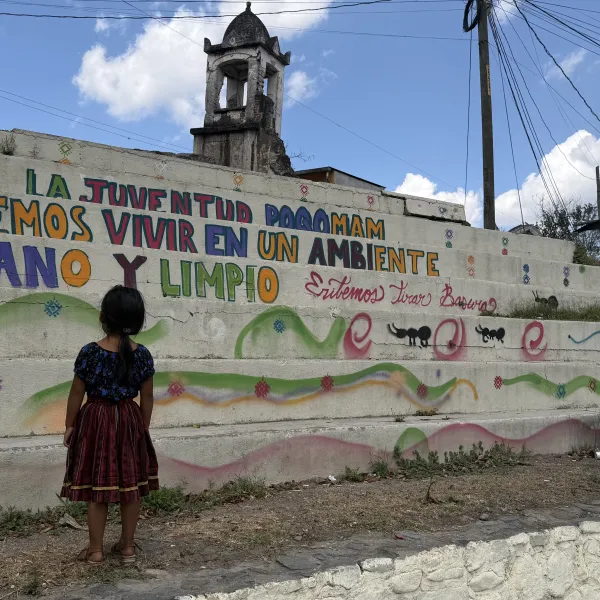
For decades, the local population has seen its health and livelihoods—including pottery, one of the main economic activities and a source of identity—damaged due to the lack of waste management in the municipality of Chinautla and the urban area of the country’s capital, as well as the activities of sand-mining companies.
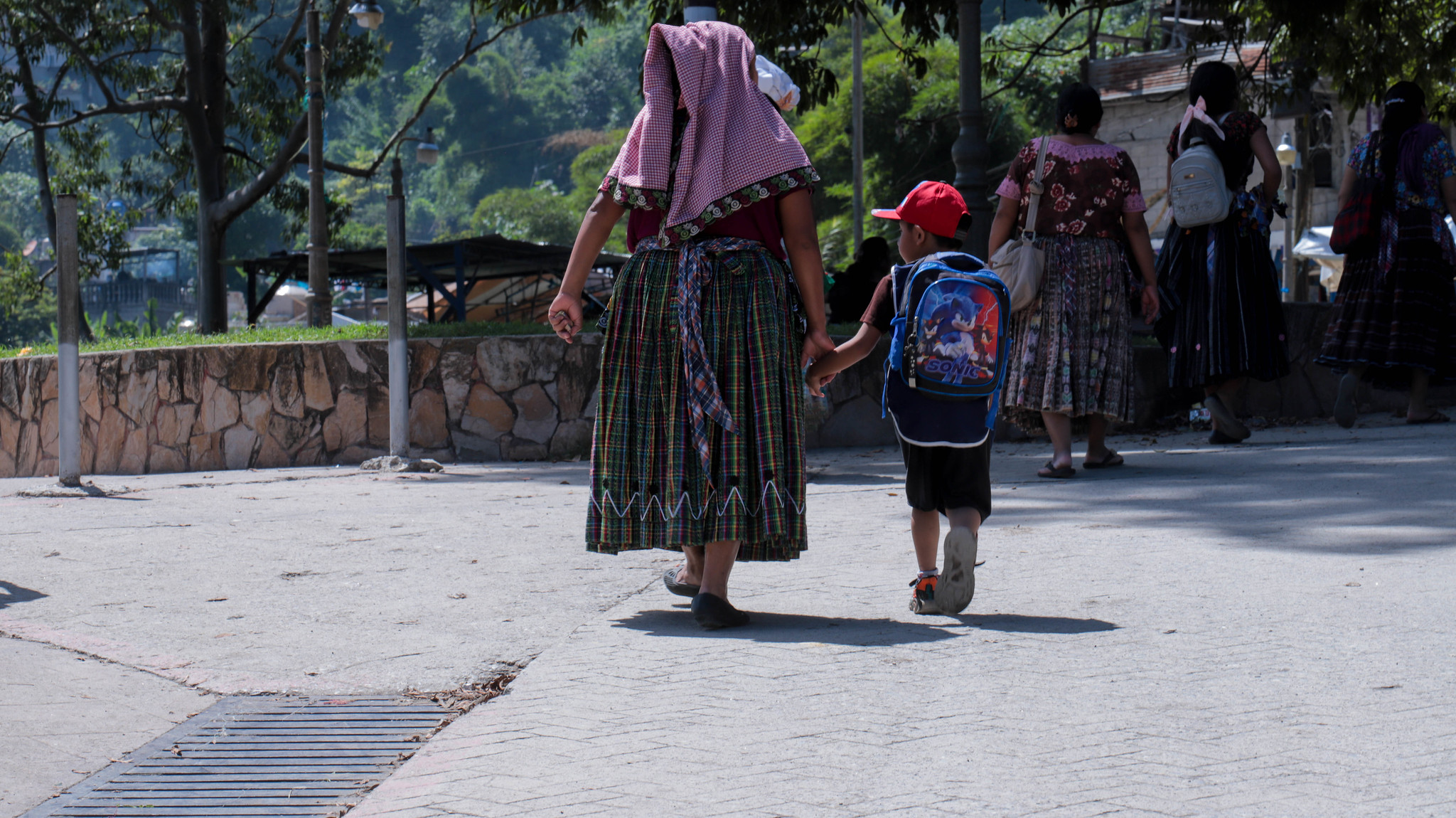
Photo: Mario Winter.
Voices for the Motagua River: Olga Vázquez.
Voices for the Motagua River: Nazario Pascual.
In early 2000, the Maya community organized to stop sand mining on their territory. At that time, the companies held mining permits that remained valid through 2021 and 2022. And although the permits expired, some companies continued to operate after requesting extensions. In June 2022, the indigenous authorities of the Poqomam people began a sit-in protest in front of the Piedrinera San Luis company, which they maintained for four years.
In July 2024, the Special Rapporteur on Economic, Social, Cultural, and Environmental Rights of the IACHR visited Santa Cruz Chinautla. During his visit, traditional authorities and community members spoke about the environmental, water-related, health, economic, and cultural impacts of the pollution in their rivers.
That same year, in October, the community—with support from AIDA, the Indigenous Peoples’ Law Firm, and partner organizations—filed a lawsuit (petition for amparo) against the municipality of Chinautla over its failure to take measures to address the contamination of its rivers and soil caused by improper solid waste management and the existence of illegal landfills.
AIDA’s scientific team, together with local residents and community authorities, collected key information on illegal landfills in the area. This community science initiative supported the litigation by highlighting the severity of the pollution, demonstrating the ongoing use of such practices, and providing evidence of the municipal authorities’ failure to fulfill their legal obligations regarding waste management.
Learn more about this community science initiative.
In June 2025, the Poqomam community won the support of the Guatemalan justice system when a constitutional court ordered the municipality of Chinautla to effectively address the claims in the lawsuit aimed at stopping the pollution of the rivers and soil in Santa Cruz Chinautla.
This is the first time a Guatemalan court has recognized a community's right to a healthy environment and its central role in finding solutions.
Find out the details of the legal victory.
Current situation
Since the ruling was issued, the municipality of Chinautla has held a series of “technical working groups” with representatives from the central government, civil society, and the community. A smaller group of technical experts was later created to develop a work plan with clear goals. Several months have passed without the municipality convening these working groups.
Furthermore, in December 2025, the IACHR noted in its report Human Rights Situation in Guatemala that the Motagua River basin is facing a severe pollution crisis that has had profound impacts on biodiversity and has resulted in systematic violations of the human rights of local communities, including the Maya Poqomam people.
And in May 2026, the Ministry of the Environment and Natural Resources revoked the license of the sand mining company Piedrinera San Luis for "failure to comply with environmental commitments."
AIDA continues to monitor the implementation of the court ruling to ensure the right to a healthy environment for the Poqomam Maya community and all those living in the Motagua River basin. Meanwhile, the residents of Santa Cruz Chinautla remain organized and mobilized to improve their environment and defend their rights.
Related projects
Statement on the suspension of COP25 in Chile
Today the Chilean government, after two weeks of mass demonstrations, cancelled the twenty-fifth Conference of the Parties (COP25) to the United Nations Framework Convention on Climate Change, scheduled for December in Santiago. We lament the decision and express our support to the Chilean people, facing a difficult situation that makes the nation unable to guarantee the safety that an event of such magnitude requires. We call on the Chilean State to ensure that the process of change the country is going through is developed with respect for the human rights of all those involved. Abuse from public forces is unacceptable, especially in a process that seeks to repair the social wounds that tarnish our societies. The Chilean government must comply with its human rights obligations. We also urge the State and private sector to take firm steps towards transforming Chile into a country with greater social, environmental and climate justice; and to set an example for Latin America, a region where inequality and injustice have intensified over the years. Underlying the social crisis in Chile is a very serious environmental crisis that has long corroded equity and is part of the spark that ignited social discontent. Two examples of this inadmissible reality include sacrifice zones, where coal-fired power plants have condemned families to suffering a large part of the country's atmospheric pollution, making them sick and truncating their development; and the privatization of water, meaning Chile fails to recognize access to drinking water and sanitation as a human right, and does not prioritize their use for human consumption and the maintenance of ecosystems. Similar problems occur in other countries of the region. We hope that Chile will continue in its role as President of the COP, pushing with more force than ever toward ambitious climate commitments that will help us keep global warming under control while complying with the Paris Agreement. The events of the past month clearly demonstrate that, in the face of crises, changes must come from the people, always protecting and favoring the most vulnerable members of society. Indigenous peoples and rural communities, who have suffered hardest from social and environmental injustice, can often best contribute to the solutions our planet needs. All efforts to combat the climate crisis must ensure a just, participatory energy transition that respects human rights. Chile today has the opportunity to make history by including environmental protection and climate justice as pillars in the construction of a cleaner, fairer and more equitable future. We warmly call on the international community to join in this show of support for the people of Chile. PRESS CONTACT: Victor Quintanilla (México), [email protected], +5215570522107
Read more
Lessons for moving into a world without fossil fuels
By Javier Dávalos and Florencia Ortúzar Recent social conflict in Ecuador, triggered by the abrupt suspension of diesel and gasoline subsidies, has demonstrated the need for a just energy transition that takes people into account. Measures aimed at ending government support for the production and use of fossil fuels must be progressive and consensual. The extraction of coal, oil and gas produces significant emissions of carbon dioxide and methane, contaminants that cause global warming. Burning these fuels to produce energy also contributes greatly to air pollution, which kills millions of people annually. Nevertheless, governments worldwide spend between 160 and 400 billion dollars each year to subsidize the fossil fuel industry, according to information from the United Nations Environment Program. Total financial support for renewable energy reaches only 121 billion. If we really want to combat the climate crisis and improve our air quality, we much change this situation. Understanding subsidies Public incentives to producers and consumers of coal, oil and natural gas include payments to consumers or businesses and tax deductions. Therefore, even if fuel prices rise steadily, subsidies keep them artificially low. As a result, transportation and trade costs are contained and remain internationally competitive. These subsidies weigh heavily on national economies, which are left without resources that could well be allocated to sectors such as health and education. Support for the industry deepens our dependence on fossil fuels and ties us to a crippling economic system that the planet desperately needs us to escape. It’s important to understand that this dependence is much more acute for the most vulnerable among us, for whom each dollar counts toward quality of life. A just energy transition The events in Ecuador have taught us a valuable lesson: a desirable result does not necessarily justify the way it is carried out. There, the subsidies for diesel and gasoline were eliminated by decree, unilaterally and without prior national dialogue, hitting the poorest sectors of society hardest. This provoked an intense and violent social conflict that forced the government to revoke its decree, which had not even considered the fight against the climate crisis (let alone a just energy transition). Actions of this type, which imply important changes in the basic needs of the population, like the fuel needed for transportation, must be accompanied by protective measures for society’s most vulnerable. It’s time to leave fossil fuel subsidies behind. But their elimination must be framed in serious plans that seek a real transition to a low-carbon way of life. And must be accompanied by supportive actions such as the promotion of local economies, the protection of ecosystems that naturally regulate the climate, the effective improvement of public transport systems, and investment in renewable energy sources. Only in this way will we begin walking in the direction of climate justice. A new social pact to tackle inequality Chile has also erupted in protests in recent weeks. Events there confirm that forgotten segments of society will no longer bear the burden of inequality, and that the time has come to change course. The Chilean crisis is not directly related to fossil fuels subsidies, but it is related to a fundamental problem in Latin America: abysmal social inequality that has for too reigned in our region. Deep social discontent erupted after the government increased the price of public transportation without considering the social consequences it would have. When commodity prices rise, the most vulnerable will always be the hardest hit. Therefore, these changes must incorporate actions that close social gaps rather than aggravate them. Like Ecuador, Chile has shown us that it is time to aim further, beyond palliative measures that affect the pockets of the poorest, in search of a new social pact. The current social and environmental crisis can be taken as a unique opportunity to begin building a more just society, putting an end to the serious inequalities that have long afflicted our countries, our region and the world.
Read more
Bogota Declaration for the protection of environmental defenders
As people from 10 different countries who have been awarded the Goldman Environmental Prize, in addition to other environmental defenders, who are contributing to the protection of the environment and the struggle for life, who have come together today in Bogotá with colleagues from throughout our region, we express our solidarity with advocates and communities in Colombia and throughout Latin America and the Caribbean that are currently facing the highest level of risk for their work to protect life on Earth. Therefore, we call on governments, companies, financial institutions, investors, and entities to actively and effectively protect and respect the life and rights of advocates, those of their families, and their communities. We are aware of the serious human rights violations of vulnerable populations, especially of local communities and indigenous people, communities of African descent and farmers, which we face in Latin America and throughout the world. We demand an end to legal persecution and criminalization of our brothers and sisters who defend life and justice, and justice for those whose lives have been forcibly taken from them in this struggle. We hope that our work inspires many young people and others, whose work in turn inspires many more globally. We are convinced that, together, we can address the climate crisis—through collaborative work focused around knowledge and respect for the rights and diverse communities of the world. We call on humanity to stand in solidarity and act in accordance with the work of advocates, and to use peaceful means, art, and motherly love to continue achieving the transformation that the planet and humanity require to protect both people and life. We urge Colombia to continue promoting the dream of achieving peace between Colombians and nature. Turning the page on violence is the path for the next generations to inherit: a better Colombia, Latin America, Caribbean and world. Signatories Francia Márquez (Colombia) Goldman Environmental Prize, 2018 Bertha Zuñiga Cáceres (Honduras), daughter of Bertha Cáceres, Goldman Environmental Prize, 2015 Ruth Buendía (Peru), Goldman Environmental Prize, 2014 Nohra Padilla (Colombia) Goldman Environmental Prize, 2013 Sofía Gatica (Argentina) Goldman Environmental Prize, 2012 Francisco Pineda (El Salvador) Goldman Environmental Prize, 2011 Humbero Ríos Labrada (Cuba) Goldman Environmental Prize, 2010 Jesús León Santos (Mexico) Goldman Environmental Prize, 2008 María Elena Foronda Farro (Peru) Goldman Environmental Prize, 2003 Jean La Rose (Guyana) Goldman Environmental Prize, 2002 Elías Díaz Peña (Paraguay) Goldman Environmental Prize, 2000 Oscar Rivas (Paraguay) Goldman Environmental Prize, 2000 Jorge Varela (Honduras) Goldman Environmental Prize, 1999 Berito Kuwaruwa (Colombia) Goldman Environmental Prize, 1998 Juan Pablo Orrego (Chile) Goldman Environmental Prize, 1997 Evaristo Nugkuag (Peru) Goldman Environmental Prize, 1991 Stiefen Petrust (Suriname) Eliana Torrico Tejada (Bolivia) Danielle Duarte Gomes (Brazil) Antonia Melo Da Silva (Brazil) Liliana Ávila (Colombia) Juana Hofman (Colombia) Javier Ibarraga Ospina (Colombia) Alix Mancilla (Colombia) Blanca Inés Pérez (Colombia) Rosa Peña (Colombia) Astrid Puentes Riaño (Colombia, Mexico) Andrea Cerami (Mexico) Jorge García Lucas (Guatemala) Severina Morales Pérez (Guatemala) Joaquín Raymundo González (Guatemala) Jovita Tzul (Guatemala) Julián López (Mexico) Marcelina López (Mexico) Leydy Aracely Pech Martín (Mexico) Elena Villafuerte (Mexico) Liliana Caruhuaz (Peru) Eddy Peña (Peru) Katherine Sánchez (Peru)
Read more