
Project
Shutterstock.
Pollution of the Motagua River in Guatemala: The Poqomam Maya people’s quest for environmental justice
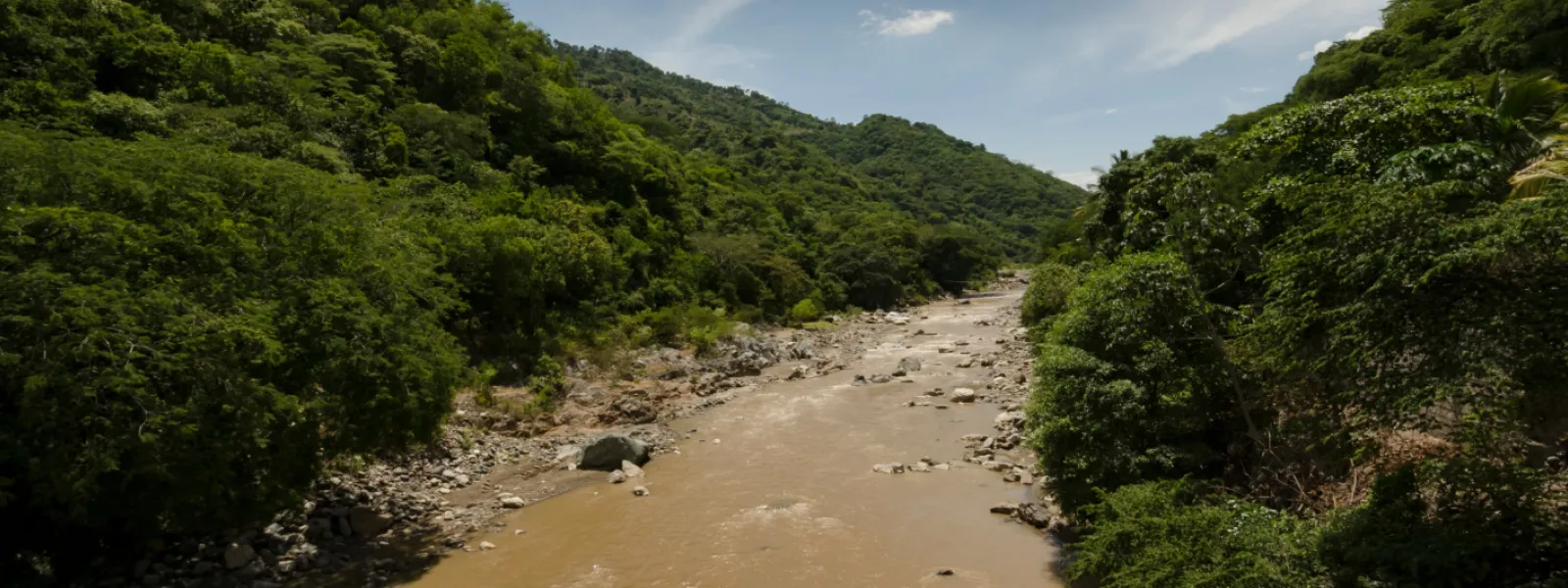
The Motagua River basin—Guatemala’s largest and most important river—is severely polluted with wastewater, solid waste, and other types of debris.
This is a cross-border issue because the Motagua’s polluted waters flow into the Caribbean Sea, reach the coast of Honduras, and threaten the Mesoamerican Reef System.
For decades, this has violated the rights to health, water, development, and a healthy environment of all the people living in the river basin.
In June 2025, the Poqomam Maya community of Santa Cruz Chinautla—supported by AIDA, the Indigenous Peoples’ Law Firm, and allied organizations—achieved an unprecedented legal victory to halt degradation in the basin. In response to the lawsuit it filed, a Guatemalan court ordered the municipality of Chinautla to comply with a series of obligations to curb the pollution of the area’s rivers and soil.
The government's response to the ruling has so far been limited to technical working group meetings. Meanwhile, the community continues to work toward the proper implementation of the ruling and to take other actions to defend its territory and its rights.
Background
The Motagua River, which is 486 km long, flows through 96 municipalities and 14 departments in Guatemala. It originates in Quiché, a department located in the northwest, and empties into the Caribbean Sea.
Polluting activities occur throughout the entire basin, including sub-basins and micro-basins. The largest volume of pollution comes from Guatemala City, the country’s capital, and is carried by the waters of the Las Vacas River, which in turn receives a large amount of waste from the Chinautla River.
The Chinautla River, which flows through the municipality of the same name, carries solid waste from a landfill located in Zone 3 of the capital—where trash from at least 14 municipalities in the department of Guatemala is dumped—as well as sewage generated by some 500,000 people living in the northern part of the capital, which undergoes no prior treatment.
Other sources of pollution include the numerous illegal dumps in the municipality of Chinautla, the waste that private vehicles and garbage trucks dump along the banks of its rivers, as well as the sand-mining companies—which began setting up operations in the area between 1996 and 1997—whose activities weaken the rivers' basins, causing solid waste to be more easily carried away by the river currents.
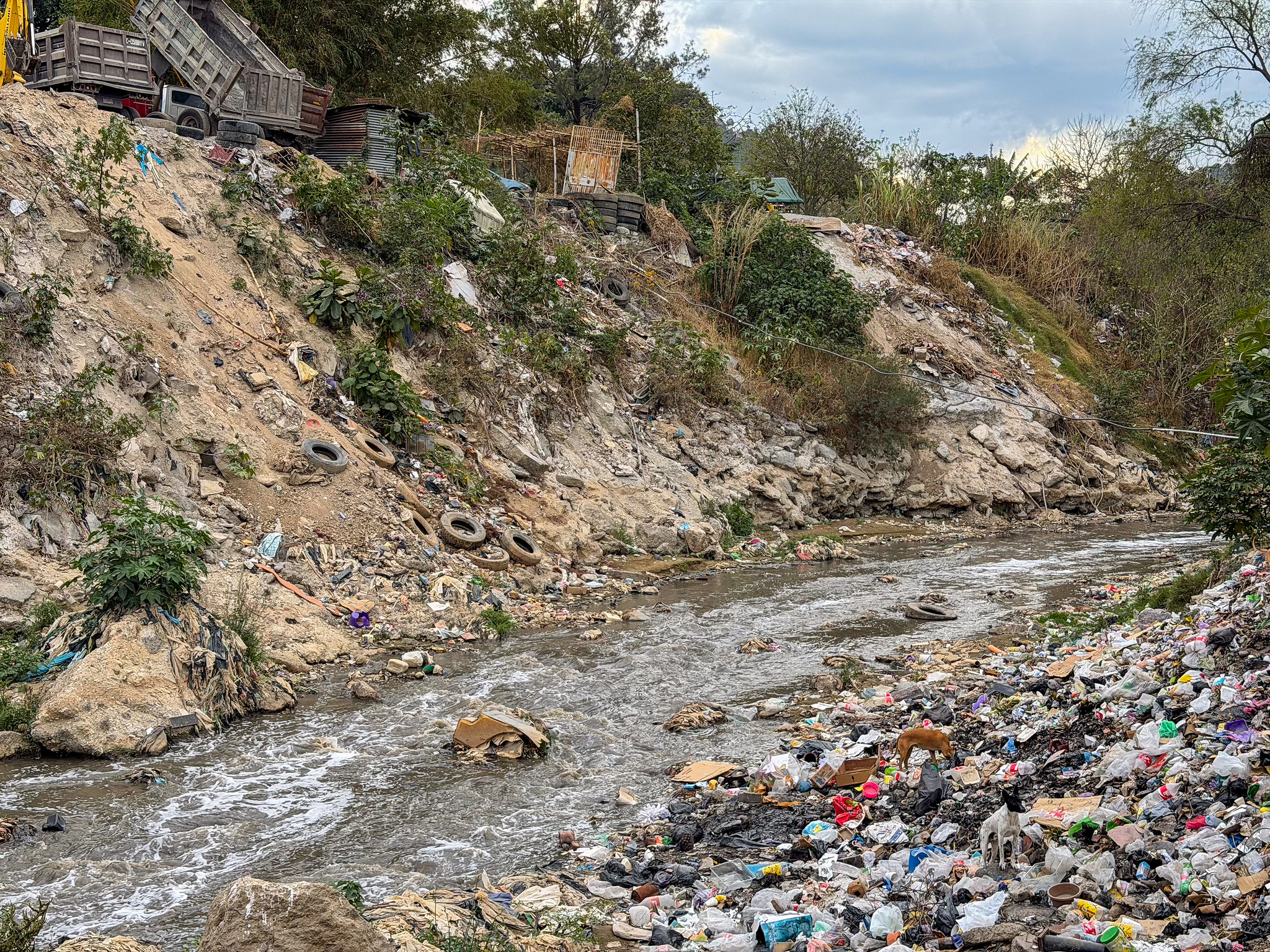
Photo: Mayela Sánchez García.
The situation extends beyond national borders. Every year, the Motagua River discharges some 20,000 metric tons of plastic into the Caribbean Sea, making it one of the rivers that contributes the most plastic pollution to the ocean worldwide, according to estimates contained in a 2025 report by the Inter-American Commission on Human Rights (IACHR).
The river flows into the Mesoamerican Reef at its mouth, so pollution also threatens to degrade one of the largest and most biodiverse transboundary reefs on the planet, which spans the territorial waters of Belize, Guatemala, Honduras, and Mexico.
In addition, the contaminated water reaches the coast of Honduras and spreads into Amatique Bay, located along the eastern coast of Guatemala, affecting the Caribbean Sea.
The roots of this chronic, cross-border problem are structural. Data from the Integrated Environmental Management of the Motagua River Basin project, funded by the United Nations Development Program (UNDP), show that in Guatemala, 66% of municipal solid waste is not collected, and there is no guarantee that the remaining 34% is disposed of properly. Furthermore, of all landfills nationwide, 88.32% are illegal or lack municipal authorization.
In other words, the core issues that need to be addressed are the mismanagement of solid waste and water resources in Guatemala; noncompliance with existing regulations on wastewater discharge and the disposal and treatment of solid waste and residues; and the lack of a water law.
The Poqomam Maya people's quest for justice
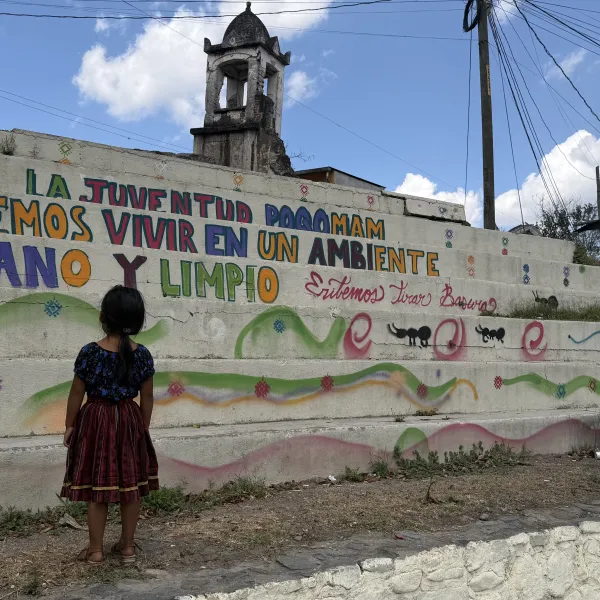
The rivers of Santa Cruz Chinautla, a community of the Poqomam Maya people located just twelve kilometers from Guatemala City, have become conduits of pollution that are degrading the Motagua River.
For decades, the local population has seen its health and livelihoods—including pottery, one of the main economic activities and a source of identity—damaged due to the lack of waste management in the municipality of Chinautla and the urban area of the country’s capital, as well as the activities of sand-mining companies.
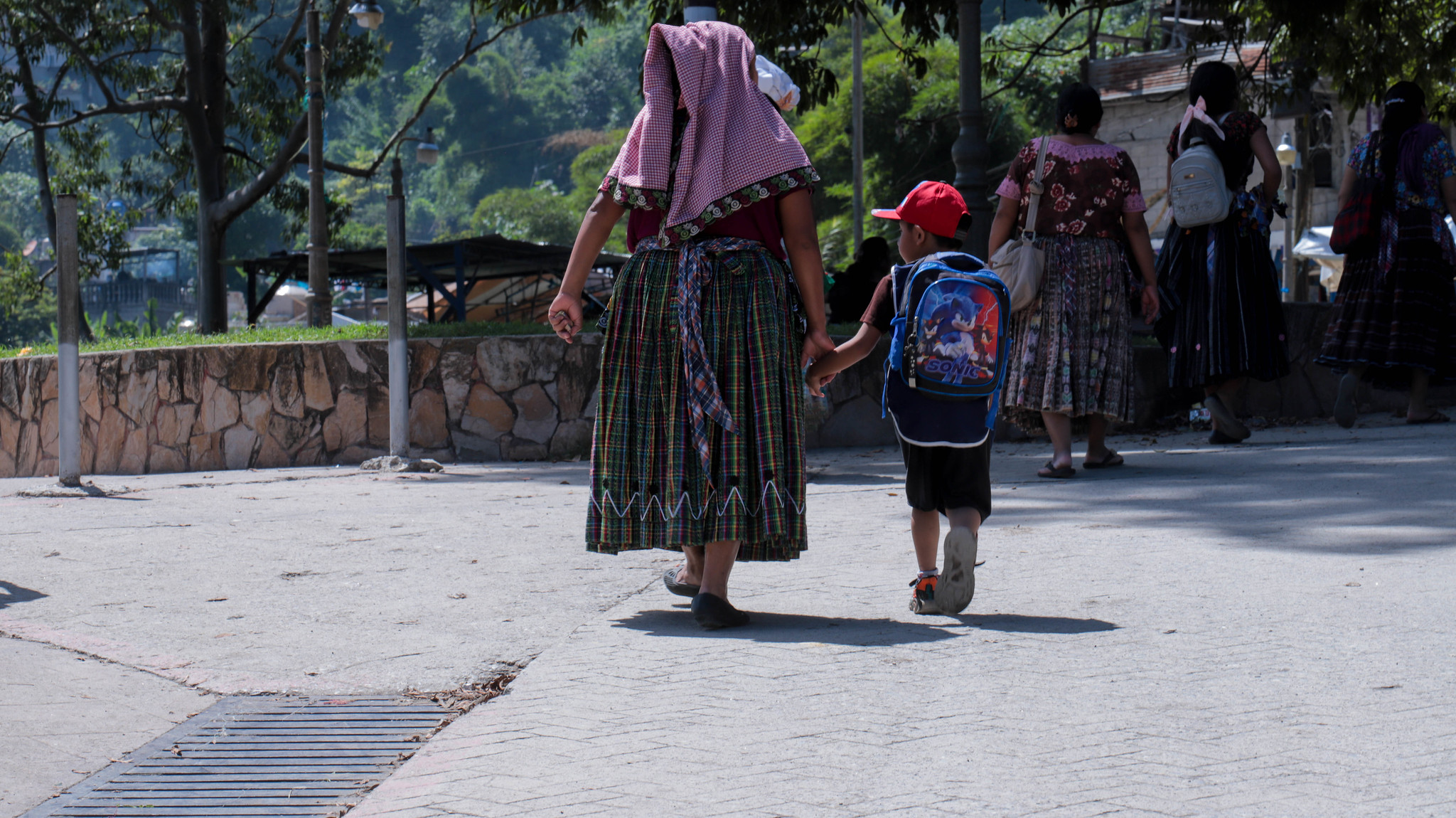
Photo: Mario Winter.
Voices for the Motagua River: Olga Vázquez.
Voices for the Motagua River: Nazario Pascual.
In early 2000, the Maya community organized to stop sand mining on their territory. At that time, the companies held mining permits that remained valid through 2021 and 2022. And although the permits expired, some companies continued to operate after requesting extensions. In June 2022, the indigenous authorities of the Poqomam people began a sit-in protest in front of the Piedrinera San Luis company, which they maintained for four years.
In July 2024, the Special Rapporteur on Economic, Social, Cultural, and Environmental Rights of the IACHR visited Santa Cruz Chinautla. During his visit, traditional authorities and community members spoke about the environmental, water-related, health, economic, and cultural impacts of the pollution in their rivers.
That same year, in October, the community—with support from AIDA, the Indigenous Peoples’ Law Firm, and partner organizations—filed a lawsuit (petition for amparo) against the municipality of Chinautla over its failure to take measures to address the contamination of its rivers and soil caused by improper solid waste management and the existence of illegal landfills.
AIDA’s scientific team, together with local residents and community authorities, collected key information on illegal landfills in the area. This community science initiative supported the litigation by highlighting the severity of the pollution, demonstrating the ongoing use of such practices, and providing evidence of the municipal authorities’ failure to fulfill their legal obligations regarding waste management.
Learn more about this community science initiative.
In June 2025, the Poqomam community won the support of the Guatemalan justice system when a constitutional court ordered the municipality of Chinautla to effectively address the claims in the lawsuit aimed at stopping the pollution of the rivers and soil in Santa Cruz Chinautla.
This is the first time a Guatemalan court has recognized a community's right to a healthy environment and its central role in finding solutions.
Find out the details of the legal victory.
Current situation
Since the ruling was issued, the municipality of Chinautla has held a series of “technical working groups” with representatives from the central government, civil society, and the community. A smaller group of technical experts was later created to develop a work plan with clear goals. Several months have passed without the municipality convening these working groups.
Furthermore, in December 2025, the IACHR noted in its report Human Rights Situation in Guatemala that the Motagua River basin is facing a severe pollution crisis that has had profound impacts on biodiversity and has resulted in systematic violations of the human rights of local communities, including the Maya Poqomam people.
And in May 2026, the Ministry of the Environment and Natural Resources revoked the license of the sand mining company Piedrinera San Luis for "failure to comply with environmental commitments."
AIDA continues to monitor the implementation of the court ruling to ensure the right to a healthy environment for the Poqomam Maya community and all those living in the Motagua River basin. Meanwhile, the residents of Santa Cruz Chinautla remain organized and mobilized to improve their environment and defend their rights.
Related projects
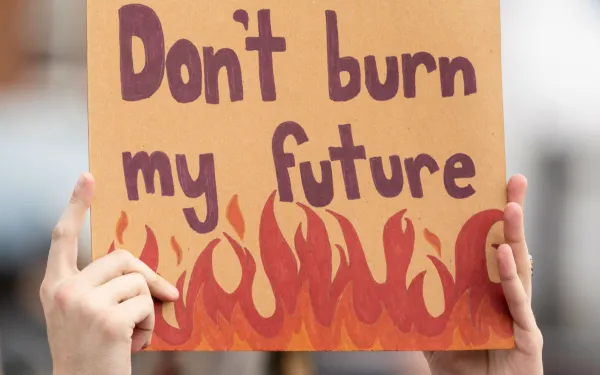
200 environmental and human rights leaders pledge to tackle climate emergency together
New York – In an unprecedented move, more than 200 representatives of Indigenous Peoples, workers, academia, environmental and human rights groups adopted a landmark declaration calling on governments and corporations to urgently tackle the climate emergency in order to ensure the survival of humanity. Gathered for the Peoples’ Summit on Climate, Rights and Human Survival, their goal is to unleash new power, energy, and resources to supercharge a connected, diverse, and action-oriented mass movement to overcome the climate crisis, by putting people and human rights at the core of its solutions. These leaders and their groups seek to put pressure on governments and corporations to ramp up climate commitments. Among other initiatives, they plan to pursue more concerted climate litigation efforts, target the financial sector’s funding of fossil fuels, make more effective use of human rights accountability mechanisms, and coordinate more mass mobilization campaigns at national and regional levels. They also expect to agree on the implementation of a set of related action plans in the following months. The Peoples’ Summit was organized by the United Nations Human Rights Office, Greenpeace International, Amnesty International, Center for International Environmental Law, Wallace Global Fund, and the New York University School of Law Center for Human Rights and Global Justice. The event is taking place on September 18 and 19, ahead of the United Nations Secretary General’s Climate Action Summit. Craig Mokhiber, New York Office Director at the United Nations Human Rights Office, said: “For those on the frontlines, climate change is already eroding the rights to food, water and sanitation, decent shelter, health, personal security, and even life itself. Many on small island states, in coastal communities, and in areas subject to creeping desertification are watching their right to self-determination slip away. Large-scale climate displacement threatens to force millions to undertake journeys of vulnerability and uncertainty. Ultimately, the adverse effects of climate change tear at the very fabric of human society. Every country must take urgent and meaningful action to address this threat to human rights. By bringing together the many strands of the climate justice movement, we seek to mobilize transformative, rights-based and inclusive climate action now.” Jennifer Morgan, International Executive Director at Greenpeace International, said: "The climate crisis is a human rights crisis. The human consequences of extreme weather disasters can be staggering, as we can see by the profound devastation and destruction left in the wake of Hurricane Dorian. This declaration marks a new era of climate activism. Lead by the youth and together with our allies, we will all take action and confront those responsible. Weak governments and toxic corporate power will have nowhere to hide as we put people at the center of our demands, and seek climate justice for the communities least responsible but most vulnerable to this climate emergency.” Kumi Naidoo, Secretary General at Amnesty International, said: “The world’s most urgent struggle needs the power and diversity that the global people’s movement for human rights can bring. We come with key constituencies, energy, and skills to the fight for climate justice. But we have been punching way below our weight so far. “Amnesty intends to do its part to change this. We want the Summit to help unleash the potential of the global human rights movement to protect present and future generations. United, we win.” Carroll Muffett, President and CEO at the Center for International Environmental Law, said: “The costs of continued inaction in the face of the climate crisis are measured in human rights, human livelihoods, and human lives. As Hurricane Dorian reminds us all too painfully, those costs are real and they are rising. Today’s declaration reflects a common commitment within the human rights community to put human rights at the center of the climate crisis, to phase out the fossil fuels that are driving that crisis, and to hold governments and companies accountable when they stand in the way.” Ellen Dorsey, Executive Director at Wallace Global Fund, said: “The human rights sector and movements from around the world are bringing new resources, a powerful global constituency of supporters, and unique human rights advocacy to the climate movement, calling for actions by governments and corporations commensurate with the scale and rapid pace of climate change to ensure the survival of humanity.” Philip Alston, Center for Human Rights and Global Justice Chair at New York University School of Law, said: “Climate change has been called a ‘false alarm’, but it is an alarm that will end up killing many of our children, and at least some of us. We read daily about large numbers of people dying of heat exposure, being drowned in floods or burned in wildfires, or just forced to flee their homes, but we fool ourselves that it won’t happen to us. While many of us are distracted on social media or determined to get on with normal life, the future disasters flowing from climate change are moving from possibilities to certainties. Human rights as we know them will be rendered increasingly meaningless unless we act immediately.” Link to the online declaration. Press contacts in New York: Amanda Kistler, [email protected], +1 202-742-5832 Kharunya Paramaguru, [email protected], +44 7508-394415 Lauren Stackpoole, [email protected], +1 212-998-6069 Rodrigo Estrada, [email protected], +1 202-344-9292
Read more
Declaration: Peoples’ Summit on Climate, Rights and Human Survival
We envisage a world where people thrive as part of nature and where human rights – including the rights of Indigenous Peoples – and the environment come before corporate profit, in an era in which people are more connected with each other and with the planet. We want to live in safe, equal, peaceful and just societies. In societies where every individual and all communities enjoy fair, secure and sustainable livelihoods; participate in decision-making on matters that affect their lives; and have access to information and justice. In a world where the commons are protected and sustainably managed by communities, and where governments and corporations act responsibly and are accountable for the consequences of their actions. We see the opportunity and urgent need to transform our economic, social, legal and political systems to ensure equity and the protection of human rights, to halt the climate crisis and mass extinctions, to protect our children’s future, to hold polluters accountable for their actions, and to make fossil fuels and all unsustainable business practices a relic of the past. We believe that this vision requires protecting, supporting and being in solidarity with those who are suffering from the violence of the climate crisis and those fighting for climate justice.The climate crisis can and must be addressed. An array of effective policy and technical solutions are already known, available and immediately deployable. Governments and corporations bear the primary responsibility for taking the actions that could address and reverse the drivers of climate change and build resilient, adaptable and sustainable communities. We will invigorate our existing efforts around mobilizing the most powerful, united and diverse Peoples’ movement ever assembled. Real and transformative climate action will not be possible without a fully-engaged civil society and population.To achieve climate justice, we, the undersigned, agree to the following:We will increase our efforts to place human rights at the core of climate activism. We will do so by following the lead of Indigenous Peoples, youth, women, people living in poverty, persons with disabilities, fisherfolk, peasants, pastoralcists, local communities, workers, and other disproportionately-affected groups, who are leading the call for climate justice and against activities that destroy the planet. We will demand immediate, bold, people-powered and human rights-consistent action of unprecedented scale to reduce greenhouse gas emissions, in order to protect people, ecosystems, and biodiversity from the climate breakdown. Such actions require transformative change of our economic, social and political systems, to address inequalities in all aspects of life. This transformative change includes the equitable distribution of resources, particularly reducing the unnecessary consumption of resources by privileged groups. It is essential that we achieve drastic and rapid reductions in emissions globally and a fossil-free future, to keep the temperature rise as low as possible and no higher than 1.5°C degrees, as current levels of warming are already resulting in human rights violations. We will demand that all government climate policies, measures, and actions respect, protect and fulfil human rights – including the right of people to be fully informed and empowered to participate in a meaningful way in climate decision- making – and that corporations fulfil their responsibilities to respect human rights across their supply chains. We will oppose any policy or action taken to combat climate change or support adaptation that comes at the cost of human rights, and those that would deepen inequalities and cause impoverishment, hunger, dispossession, and economic, social and political exclusion. We will increase the pressure on those countries and corporations most responsible for climate change and with the most resources available. We demand that all countries urgently establish and enforce science-based emission reduction targets compatible with the protection of human rights, and that they meet these targets on or ahead of schedule. We will oppose attempts to transfer the burden and responsibility for change from high-emitting countries to countries with fewer resources and lower historical emissions, and from corporations and privileged groups to less-privileged groups. We will compel those bearing more responsibility for the crisis to own their actions and take measures accordingly. We will call upon those States with the greatest responsibility for climate damage and with the most resources to provide the necessary financial and technological resources to countries in the global south to facilitate their ambitious actions for climate change mitigation and adaptation. We demand that those States also provide adequate means – including compensation – to affected communities and individuals to address the loss and damage caused by the climate crisis, in full consultation with them and respecting their individual and collective customs and rights. We will promote transparency and adequate use of those resources and will oppose the creation of additional financial burdens and debts as a result of this support. We will relentlessly challenge corporate capture of policies and institutions, and we will hold accountable climate destructive industries and their financial backers. We will demand a just, fair and inclusive transition away from fossil fuels and towards sustainable agriculture and renewable energy that empower Indigenous Peoples, workers, peasant farmers, pastoralists, fisherfolk, and communities, rather than disenfranchise them. We will seek measures to ensure that all people, particularly those facing discrimination, have access to climate education and to the resources, training, knowledge, and decent jobs required for a people-powered transition to a decarbonized and resilient society. We will work for the protection, respect, and fulfilment of the rights of Indigenous Peoples, including to their ancestral lands and territories. We will seek the protection, recognition, and promotion of local and traditional knowledge that has proven effective and appropriate in addressing the climate crisis as well as enabling the transition and resilience so urgently needed in our food systems, always with the consent of, and for the benefit of, Indigenous Peoples. We will demand effective and adequate access to justice for individuals and communities whose rights are impacted by the climate crisis or lack of climate action – including those facing climate-induced loss and damage and those whose rights are threatened due to climate-related displacement. We will work to ensure that they are able to enjoy access to justice and effective remedies and that those responsible for climate harms are held to account. We will proactively use national, regional and international human rights bodies and legal instruments to ensure that human rights and obligations are effectively upheld to promote climate justice. We will support all environmental human rights defenders, in particular those who individually and collectively protect their territory, access to land, livelihoods, and the environment, and those campaigning to defend the people and the planet from destructive activities and climate breakdown. We will demand a safe and enabling environment in which all human rights defenders, particularly those facing multiple and intersecting forms of discrimination and inequality, are effectively protected and able to defend and promote human rights without fear of punishment, reprisal, or intimidation. Read the full declarationRead the declaration in SpanishRead the declaration in Portuguese
Read more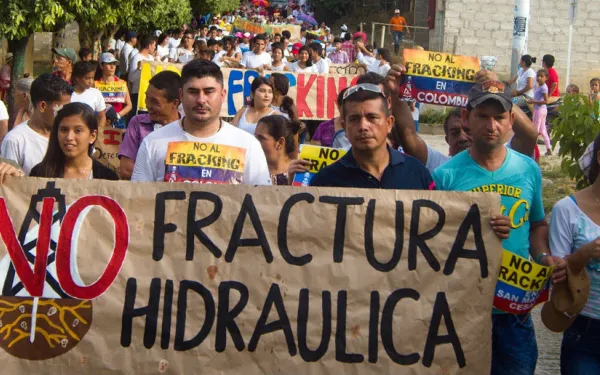
State Council maintains suspension of fracking in Colombia
We are proud to be part of the litigation in which this decision occured and hope that the high court will continue to prioritize the precautionary principle and consider the risks of harm that fracking poses to the environment and human health. Bogotá, Colombia. In response to an action filed by the Public Interest Legal Clinic of the Universidad del Norte, Colombia's State Council maintained the provisional suspension of the exploration and exploitation of non-conventional hydrocarbon deposits through hydraulic fracturing. This means that fracking continues to be suspended in Colombia, that it is currently illegal to carry it out, and that Colombia is in the midst of a moratorium on fracking by court order. With its decision, the State Council, a Colombian High Court, rejected the government's request, which sought to lift the suspension that has been in force since last November and give free rein to fracking in the country. AIDA celebrates the State Council's decision and we feel very honored to be part of this litigation. It is undoubtedly a step in the right direction given the high degree of uncertainty about the risks associated with fracking. These include: air pollution, the contamination of surface and groundwater sources, damages to human health, and emissions of methane—a potent greenhouse gas and one of the main aggravators of the climate crisis facing the world. In this scenario, the urgency of moving towards clean energy is evident. The high court concluded that the precautionary principle should be applied because, even without absolute scientific certainty, there is minimal evidence of potential damage resulting from an apparent deficiency in the measures contemplated in the regulation of fracking. Colombia today aims to be an example for Latin America. The provisional suspension of the regulation corresponds to a precautionary measure while the case is definitively resolved. It is essential that the State Council continue to give priority to the precautionary principle, taking into account the lack of full certainty about the risks of irreversible damage that fracking implies for the environment, the climate and for people. At AIDA, we welcome judicial independence, because it is fundamental for the legal protection of the environment. We hope that the ongoing judicial process will properly consider the evidence and arguments presented, including those related to an increasingly urgent task: the fight against the climate crisis. PRESS CONTACT: Victor Quintanilla (Mexico), AIDA, [email protected], +5215570522107
Read more