
Project
Shutterstock.
Pollution of the Motagua River in Guatemala: The Poqomam Maya people’s quest for environmental justice
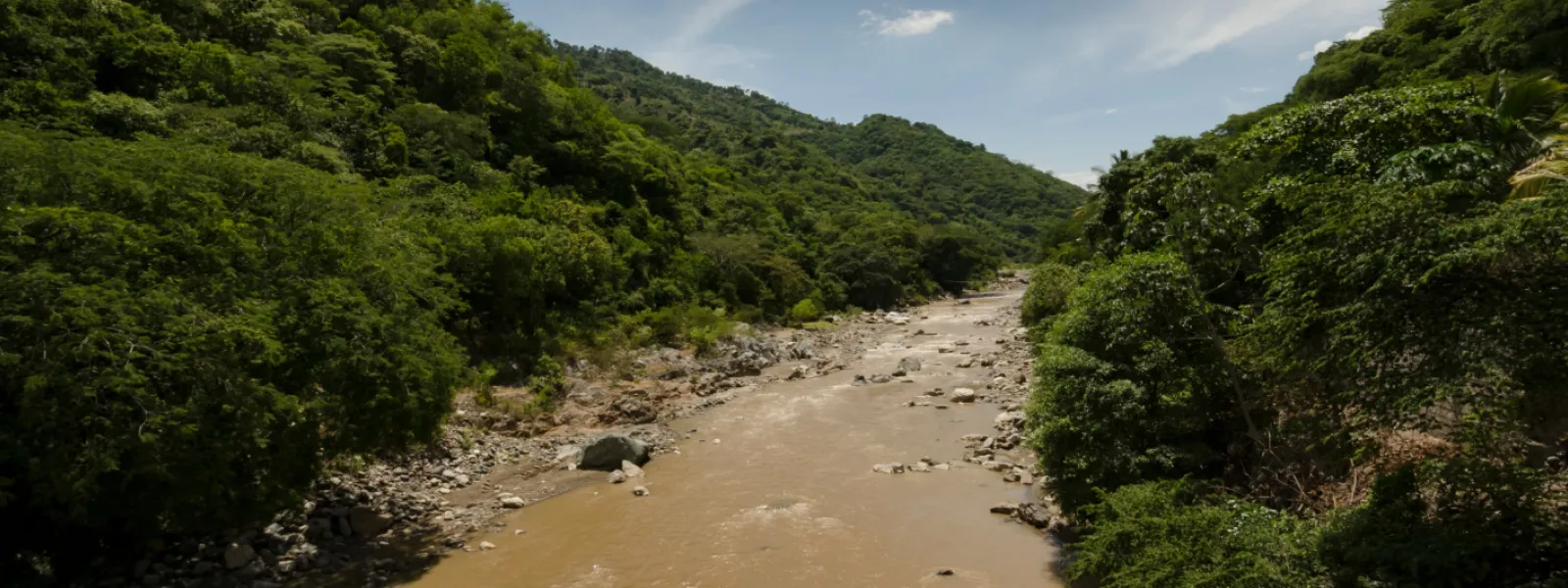
The Motagua River basin—Guatemala’s largest and most important river—is severely polluted with wastewater, solid waste, and other types of debris.
This is a cross-border issue because the Motagua’s polluted waters flow into the Caribbean Sea, reach the coast of Honduras, and threaten the Mesoamerican Reef System.
For decades, this has violated the rights to health, water, development, and a healthy environment of all the people living in the river basin.
In June 2025, the Poqomam Maya community of Santa Cruz Chinautla—supported by AIDA, the Indigenous Peoples’ Law Firm, and allied organizations—achieved an unprecedented legal victory to halt degradation in the basin. In response to the lawsuit it filed, a Guatemalan court ordered the municipality of Chinautla to comply with a series of obligations to curb the pollution of the area’s rivers and soil.
The government's response to the ruling has so far been limited to technical working group meetings. Meanwhile, the community continues to work toward the proper implementation of the ruling and to take other actions to defend its territory and its rights.
Background
The Motagua River, which is 486 km long, flows through 96 municipalities and 14 departments in Guatemala. It originates in Quiché, a department located in the northwest, and empties into the Caribbean Sea.
Polluting activities occur throughout the entire basin, including sub-basins and micro-basins. The largest volume of pollution comes from Guatemala City, the country’s capital, and is carried by the waters of the Las Vacas River, which in turn receives a large amount of waste from the Chinautla River.
The Chinautla River, which flows through the municipality of the same name, carries solid waste from a landfill located in Zone 3 of the capital—where trash from at least 14 municipalities in the department of Guatemala is dumped—as well as sewage generated by some 500,000 people living in the northern part of the capital, which undergoes no prior treatment.
Other sources of pollution include the numerous illegal dumps in the municipality of Chinautla, the waste that private vehicles and garbage trucks dump along the banks of its rivers, as well as the sand-mining companies—which began setting up operations in the area between 1996 and 1997—whose activities weaken the rivers' basins, causing solid waste to be more easily carried away by the river currents.
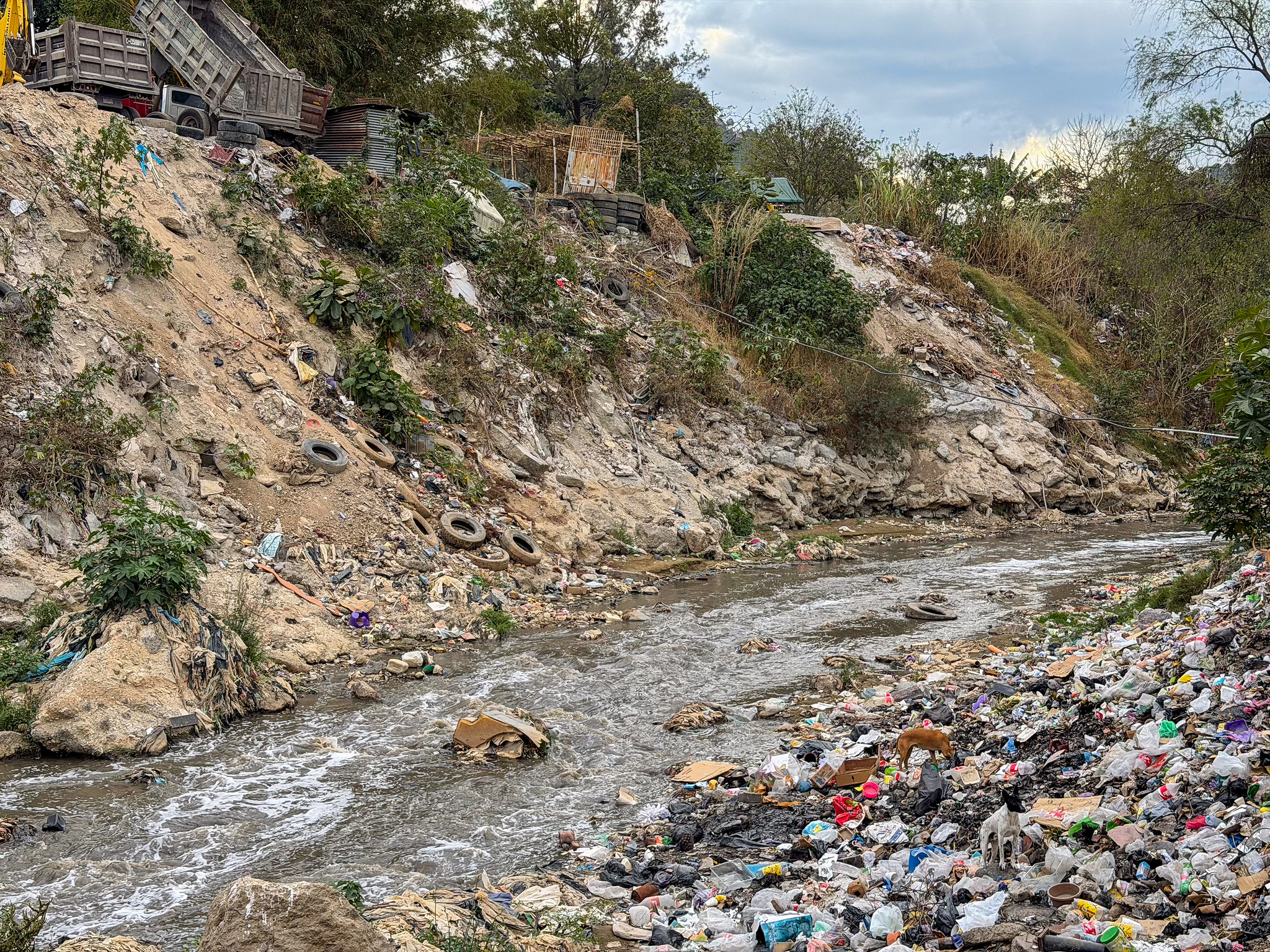
Photo: Mayela Sánchez García.
The situation extends beyond national borders. Every year, the Motagua River discharges some 20,000 metric tons of plastic into the Caribbean Sea, making it one of the rivers that contributes the most plastic pollution to the ocean worldwide, according to estimates contained in a 2025 report by the Inter-American Commission on Human Rights (IACHR).
The river flows into the Mesoamerican Reef at its mouth, so pollution also threatens to degrade one of the largest and most biodiverse transboundary reefs on the planet, which spans the territorial waters of Belize, Guatemala, Honduras, and Mexico.
In addition, the contaminated water reaches the coast of Honduras and spreads into Amatique Bay, located along the eastern coast of Guatemala, affecting the Caribbean Sea.
The roots of this chronic, cross-border problem are structural. Data from the Integrated Environmental Management of the Motagua River Basin project, funded by the United Nations Development Program (UNDP), show that in Guatemala, 66% of municipal solid waste is not collected, and there is no guarantee that the remaining 34% is disposed of properly. Furthermore, of all landfills nationwide, 88.32% are illegal or lack municipal authorization.
In other words, the core issues that need to be addressed are the mismanagement of solid waste and water resources in Guatemala; noncompliance with existing regulations on wastewater discharge and the disposal and treatment of solid waste and residues; and the lack of a water law.
The Poqomam Maya people's quest for justice
The rivers of Santa Cruz Chinautla, a community of the Poqomam Maya people located just twelve kilometers from Guatemala City, have become conduits of pollution that are degrading the Motagua River.
For decades, the local population has seen its health and livelihoods—including pottery, one of the main economic activities and a source of identity—damaged due to the lack of waste management in the municipality of Chinautla and the urban area of the country’s capital, as well as the activities of sand-mining companies.
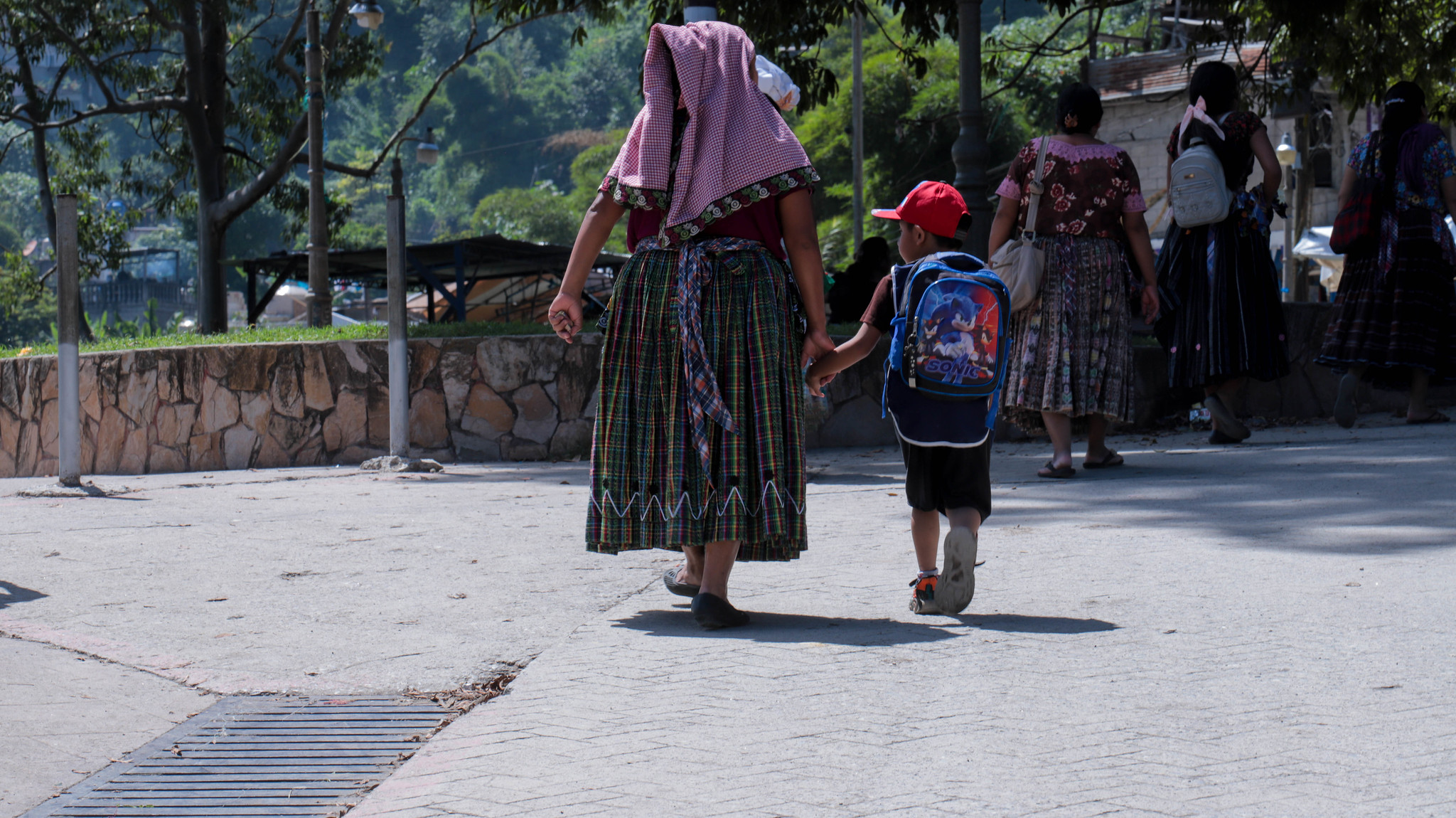
Photo: Mario Winter.
Voices for the Motagua River: Olga Vázquez.
Voices for the Motagua River: Nazario Pascual.
In early 2000, the Maya community organized to stop sand mining on their territory. At that time, the companies held mining permits that remained valid through 2021 and 2022. And although the permits expired, some companies continued to operate after requesting extensions. In June 2022, the indigenous authorities of the Poqomam people began a sit-in protest in front of the Piedrinera San Luis company, which they maintained for four years.
In July 2024, the Special Rapporteur on Economic, Social, Cultural, and Environmental Rights of the IACHR visited Santa Cruz Chinautla. During his visit, traditional authorities and community members spoke about the environmental, water-related, health, economic, and cultural impacts of the pollution in their rivers.
That same year, in October, the community—with support from AIDA, the Indigenous Peoples’ Law Firm, and partner organizations—filed a lawsuit (petition for amparo) against the municipality of Chinautla over its failure to take measures to address the contamination of its rivers and soil caused by improper solid waste management and the existence of illegal landfills.
AIDA’s scientific team, together with local residents and community authorities, collected key information on illegal landfills in the area. This community science initiative supported the litigation by highlighting the severity of the pollution, demonstrating the ongoing use of such practices, and providing evidence of the municipal authorities’ failure to fulfill their legal obligations regarding waste management.
Learn more about this community science initiative.
In June 2025, the Poqomam community won the support of the Guatemalan justice system when a constitutional court ordered the municipality of Chinautla to effectively address the claims in the lawsuit aimed at stopping the pollution of the rivers and soil in Santa Cruz Chinautla.
This is the first time a Guatemalan court has recognized a community's right to a healthy environment and its central role in finding solutions.
Find out the details of the legal victory.
Current situation
Since the ruling was issued, the municipality of Chinautla has held a series of “technical working groups” with representatives from the central government, civil society, and the community. A smaller group of technical experts was later created to develop a work plan with clear goals. Several months have passed without the municipality convening these working groups.
Furthermore, in December 2025, the IACHR noted in its report Human Rights Situation in Guatemala that the Motagua River basin is facing a severe pollution crisis that has had profound impacts on biodiversity and has resulted in systematic violations of the human rights of local communities, including the Maya Poqomam people.
And in May 2026, the Ministry of the Environment and Natural Resources revoked the license of the sand mining company Piedrinera San Luis for "failure to comply with environmental commitments."
AIDA continues to monitor the implementation of the court ruling to ensure the right to a healthy environment for the Poqomam Maya community and all those living in the Motagua River basin. Meanwhile, the residents of Santa Cruz Chinautla remain organized and mobilized to improve their environment and defend their rights.
Related projects
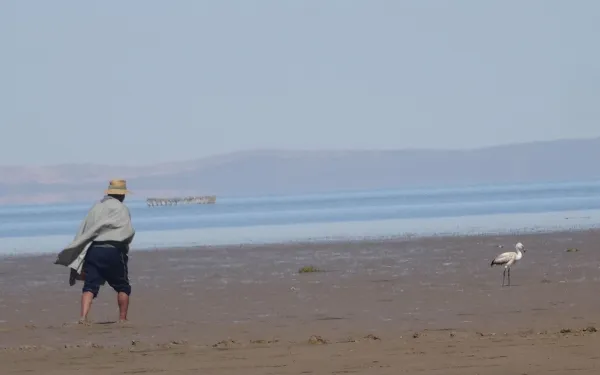
Communities request international support to save Bolivia’s Poopó and Uru Uru lakes
Local communities and organizations call on the Ramsar Convention to visit the lakes and issue recommendations for their preservation. The lakes are at grave risk from mining, river diversion and the climate crisis, threatening the subsistence of indigenous communities and the region’s unique plant and animal species. La Paz, Bolivia. Local communities along with a coalition of organizations request that the Ramsar Convention, an intergovernmental treaty for the protection of wetlands, send an expert mission to evaluate the health of lakes Poopó and Uru Uru, and issue recommendations to the Bolivian government for the urgent recovery of these key ecosystems. “The Ramsar Convention’s specialized knowledge on wetlands can be of great use to save lakes Poopó and Uru Uru,” said Carlos Lozano Acosta, senior attorney with the Interamerican Association for Environmental Defense (AIDA). These lakes are an important source of water for the plants and animals of the Central-Eastern Bolivian highlands, particularly for several endemic and migratory bird species. Lake Poopó is the second largest lake in Bolivia, after the iconic Lake Titicaca. Together, the lakes host the largest number of flamingos in the Bolivian highlands and, quite possibly, in the entire high Andean region of South America. These highland ecosystems are also home to unique species such as the Titicaca grebe (Rollandia microptera), an endangered species of flightless bird. The lives and livelihoods of peasant and indigenous populations—including Quechua, Aymara, and Uru Murato communities—depend on the preservation of lakes Poopó and Uru Uru. The Uru Murato are known as the “people of water” due to their dependence on the lakes, and are among the oldest native indigenous communities in Bolivia. “It was precisely to preserve the lakes that, in 2002, the government registered Poopó and Uru Uru as wetlands of international importance under the Ramsar Convention,” explained Sergio Vásquez, director of the Andean Communication and Development Center (CENDA). “As such, we ask that Ramsar support the Bolivian government in the protection of these and other high Andean wetlands.” In December 2015, the water levels of Lake Poopó were reduced to such a degree that the body of water actually disappeared, in what is now considered one of the largest environmental catastrophes in the country. The causes were various: sedimentation produced by mining activity; the diversion of the lake’s tributary rivers; and natural phenomenon aggravated by the climate crisis. Although the lake’s levels have since increased in times of rain, the situation remains critical during the dry season. “We’re requesting that Ramsar experts identify measures to strengthen the surveillance and monitoring of these ecosystems,” said Angela Cuenca, of the Coordinated Collective for Socio-Environmental Actions (CASA Collective). “We’d also like them to recommend mitigation and restoration actions for the damages caused by mining activities.” The degradation of lakes Poopó and Uru Uru directly affects the wellbeing of the people who depend on them, causing harms to public health, particularly among women, girls and boys. The grave situation of the lakes forced the Uru Murato people, previously dedicated to fishing, to migrate for work in the mines, placing them among the region’s first climate refugees. “We indigenous and rural women live and feel the effects of pollution and the lake’s disappearance, because we are responsible for feeding and sustaining our families,” explained Margarita Aquino, from the National Network of Women Defenders of Mother Earth (RENAMAT). “These water sources are vital for our communities and for Mother Earth Press contact: Victor Quintanilla (Mexico), AIDA, [email protected], +5215570522107
Read more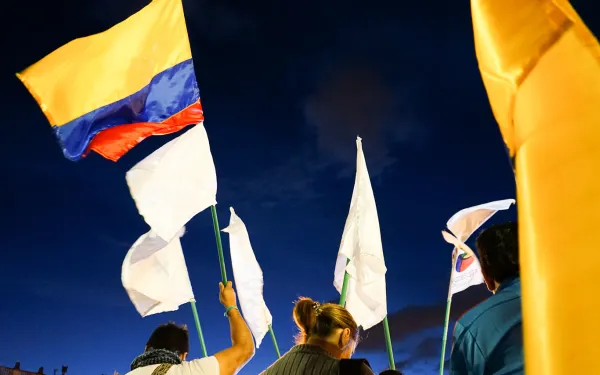
We Too Demand Peace: International Civil Society Organizations Join with Colombians Marching for Peace
Washington, D.C. Colombians march for peace in their country on July 26, we echo their call for a permanent end to the war that claimed 260,000 lives and forced 8 million people, the majority from Afro-descendant and indigenous communities, and mostly women and children, to flee their homes. We join their call for the Colombian government to protect the social leaders building peace in their communities. Hundreds have been killed since the peace accords were signed in 2016, while many more live under the constant pressure of daily threats and attacks. This tragedy must end. We vigorously support their demand that the Colombian government fully and faithfully implement the peace accords signed between the government and the FARC guerrillas—or this once-in-a-lifetime chance for peace will be lost. Finally, we call on the United States and the international community at large to back the effective implementation of the peace accords wholeheartedly. We stand in solidarity with the millions of Colombians who are struggling to build a just, complete, and lasting peace and who tomorrow say #26deJulioElGrito. Signed, 350.org Abogadas y Abogados para la Justicia y los Derechos Humanos Acción Solidaria ActionAid USA AFL-CIO ÁGORA Espacio Civil Paraguay Amazon Watch Asistencia Legal por los Derechos Humanos A.C. (ASILEGAL) Asociación Interamericana para la Defensa del Ambiente (AIDA) Center for Justice and International Law (CEJIL) Center for Reproductive Rights Centro de Derechos Humanos Fray Bartolomé de Las Casas, A.C. - México Centro de Derechos Humanos y Ambiente (CEDHA) Centro de Documentación en Derechos Humanos "Segundo Montes Mozo S.J." (CSMM) Chicago Religious Leadership Network on Latin America (CRLN) Christian Peacemaker Teams Ciudadanos en Apoyo a los Derechos Humanos, A.C. (CADHAC) CIVICUS - World Alliance for Citizen Participation Colombia Grassroot Support, New Jersey Colombia Human Rights Committee, Washington DC Comisión Ecuménica de Derechos Humanos Comisión Mexicana de Defensa y Promoción de los Derechos Humanos Comité de América Latina y el Caribe para la Defensa de los Derechos de las Mujeres Convergencia por los Derechos Humanos Coordinadora Nacional de Derechos Humanos Corporación Humanas Chile CSW Defensor de derechos humanos en México Equipo de Reflexión, Investigación y Comunicación de la Compañía de Jesús en Honduras (ERIC-SJ) Global Witness International Institute on Race, Equality and Human Rights (Race and Equality) International Labor Rights Forum International Rivers InterReligious Task Force On Central America and Colombia Latin America Working Group (LAWG) Movimiento Autónomo de Mujeres, Nicaragua Mujeres Libres COLEM, A.C. Grupo de Mujeres de San Cristóbal Las Casas, A.C. NJ Peace Council Not1More Oxfam Paz y Esperanza Presbyterian Church USA Presbyterian Peace Fellowship Red Para la Infancia y la Adolescencia de El Salvador (RIA) Redes por los Derechos de la Infancia (REDIM) Robert F. Kennedy Human Rights Servicio Internacional para los Derechos Humanos (ISHR) United Church of Christ, Justice and Witness Ministries Washington Office on Latin America (WOLA) Witness for Peace Solidarity Collective
Read more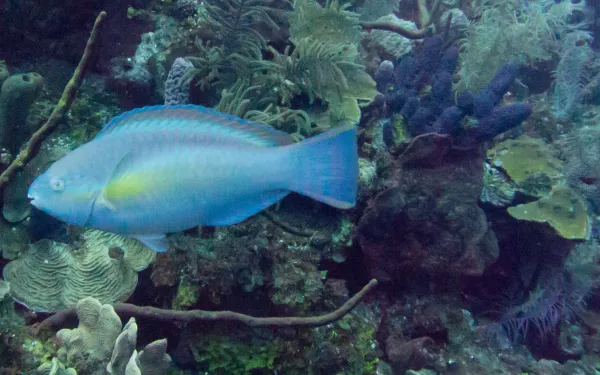
Resolution provides measures to protect corals in the Colombia Caribbean
Setting a positive precedent in Colombia and an important region of the Greater Caribbean, CORALINA has prohibited the fishing and commercialization of several species of herbivorous and omnivorous fish, a measure aimed at conserving the area’s coral reef ecosystems. San Andrés, Colombia. With the objective of conserving the coral reef and beach ecosystems of the Archipelago of San Andrés, Providencia and Santa Catalina, Colombia, the region’s autonomous corporation authority emitted a resolution prohibiting the capture and commercialization of several species of herbivorous and omnivorous fish. The waters around these Caribbean islands host the greatest marine and coastal biodiversity in Colombia, with more than 2,354 marine species registered to date. “This progress towards the conservation of corals and beaches occurs after a process of more than 20 years that included environmental education, research and monitoring,” said Nacor Bolaños, coordinator of protected areas for the Corporation for the Sustainable Development of the Archipelago of San Andrés, Providencia and Santa Catalina (CORALINA). “The need to protect parrotfish and other species of herbivorous and omnivorous fish was supported by artisanal fishermen themselves and by local communities, with whom we met.” The resolution issued by the decentralized public entity protects 14 species of parrotfish, four of surgeonfish, five of butterfly fish and six species of angelfish. It completely prohibits commercial, industrial, sport, or recreational fishing of these species. It also prohibits commercial fishing using harpoons and/or similar fishing gears. It also completely restricts their commercialization, possession and storage, as well as their transfer to other areas of the country. “The resolution is of great importance because it recognizes the benefits of corals for fishing, tourism, pharmaceutical resources, and protection against the impacts of the climate crisis,” said Maria José Gonzalez-Bernat, scientific advisor to AIDA. “It also recognizes the vital role several species of fish play in keeping these ecosystems healthy.” By feeding on algae that take away light and space from corals, herbivorous fish support the survival of these fragile environments. Numerous studies have demonstrated that parrotfish contribute to the growth of corals and the creation of sand for beaches. Some omnivorous species like angelfish also help to clean algae from corals. AIDA has supported CORALINA’s initiative since its inception, providing technical, scientific and legal information; and has advocated for the inclusion in the resolution of international and regional commitments that protect these fish. The Archipelago of San Andrés, Providencia and Santa Catalina concentrates 77 percent of the surface coral areas of Colombia and houses the third largest coral reef in the world. The area was declared a UNESCO Biosphere Reserve in 2000, and borders eight nations of the Greater Caribbean: Venezuela, the Dominican Republic, Haiti, Jamaica, Honduras, Nicaragua, Costa Rica and Panama. Yet its coral coverage has deteriorated over time due to natural phenomenon and human activities, as have populations of herbivorous fish like the parrotfish. “In this sense, this regulation is an example for other countries with coral reefs along their coasts,” said Gonzalez-Bernat. “The resolution is based on scientific information and emphasizes the international legal framework that recommends the protection of corals and the fish that support their conservation.” Press contacts: Victor Quintanilla (Mexico), AIDA, [email protected], +52 155 70522107 Claudia Marcela Delgado (Colombia), CORALINA, [email protected], +57 313 8517300
Read more