
Project
Shutterstock.
Pollution of the Motagua River in Guatemala: The Poqomam Maya people’s quest for environmental justice
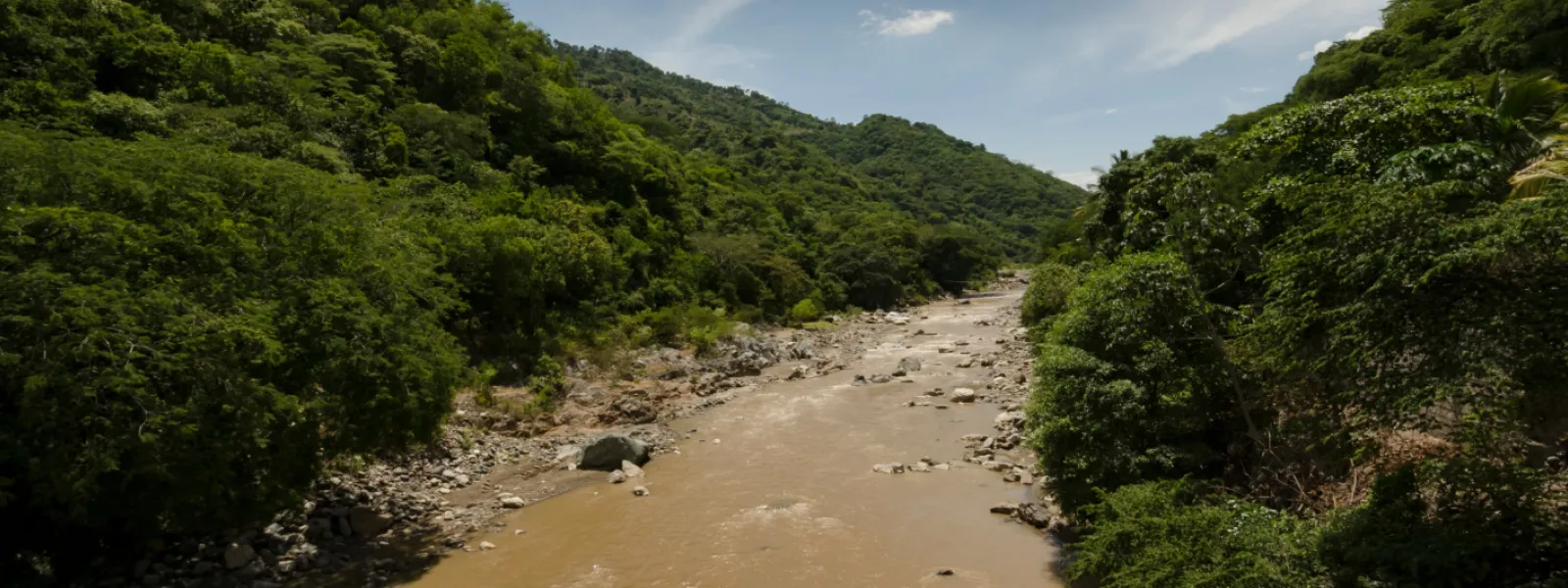
The Motagua River basin—Guatemala’s largest and most important river—is severely polluted with wastewater, solid waste, and other types of debris.
This is a cross-border issue because the Motagua’s polluted waters flow into the Caribbean Sea, reach the coast of Honduras, and threaten the Mesoamerican Reef System.
For decades, this has violated the rights to health, water, development, and a healthy environment of all the people living in the river basin.
In June 2025, the Poqomam Maya community of Santa Cruz Chinautla—supported by AIDA, the Indigenous Peoples’ Law Firm, and allied organizations—achieved an unprecedented legal victory to halt degradation in the basin. In response to the lawsuit it filed, a Guatemalan court ordered the municipality of Chinautla to comply with a series of obligations to curb the pollution of the area’s rivers and soil.
The government's response to the ruling has so far been limited to technical working group meetings. Meanwhile, the community continues to work toward the proper implementation of the ruling and to take other actions to defend its territory and its rights.
Background
The Motagua River, which is 486 km long, flows through 96 municipalities and 14 departments in Guatemala. It originates in Quiché, a department located in the northwest, and empties into the Caribbean Sea.
Polluting activities occur throughout the entire basin, including sub-basins and micro-basins. The largest volume of pollution comes from Guatemala City, the country’s capital, and is carried by the waters of the Las Vacas River, which in turn receives a large amount of waste from the Chinautla River.
The Chinautla River, which flows through the municipality of the same name, carries solid waste from a landfill located in Zone 3 of the capital—where trash from at least 14 municipalities in the department of Guatemala is dumped—as well as sewage generated by some 500,000 people living in the northern part of the capital, which undergoes no prior treatment.
Other sources of pollution include the numerous illegal dumps in the municipality of Chinautla, the waste that private vehicles and garbage trucks dump along the banks of its rivers, as well as the sand-mining companies—which began setting up operations in the area between 1996 and 1997—whose activities weaken the rivers' basins, causing solid waste to be more easily carried away by the river currents.
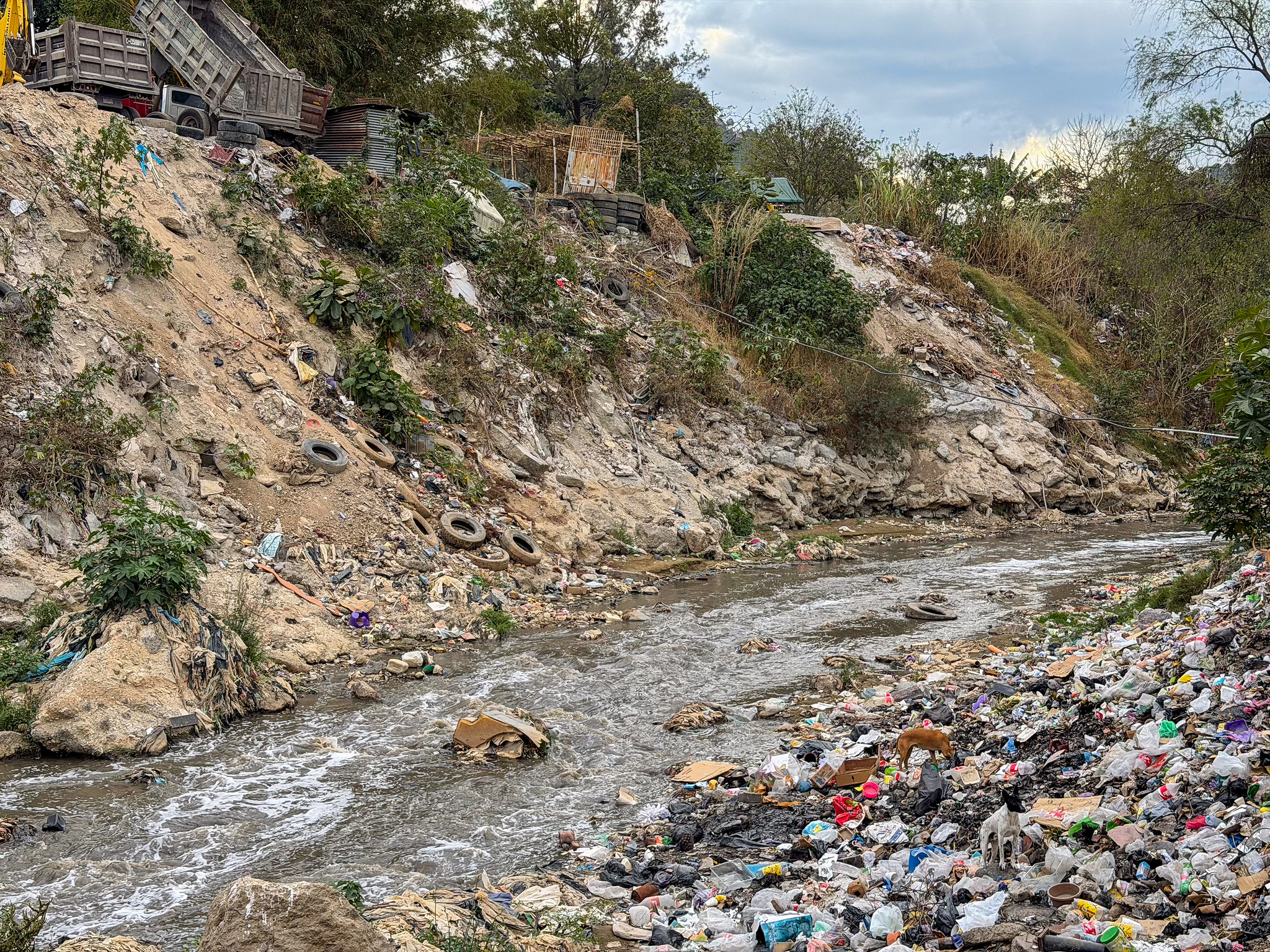
Photo: Mayela Sánchez García.
The situation extends beyond national borders. Every year, the Motagua River discharges some 20,000 metric tons of plastic into the Caribbean Sea, making it one of the rivers that contributes the most plastic pollution to the ocean worldwide, according to estimates contained in a 2025 report by the Inter-American Commission on Human Rights (IACHR).
The river flows into the Mesoamerican Reef at its mouth, so pollution also threatens to degrade one of the largest and most biodiverse transboundary reefs on the planet, which spans the territorial waters of Belize, Guatemala, Honduras, and Mexico.
In addition, the contaminated water reaches the coast of Honduras and spreads into Amatique Bay, located along the eastern coast of Guatemala, affecting the Caribbean Sea.
The roots of this chronic, cross-border problem are structural. Data from the Integrated Environmental Management of the Motagua River Basin project, funded by the United Nations Development Program (UNDP), show that in Guatemala, 66% of municipal solid waste is not collected, and there is no guarantee that the remaining 34% is disposed of properly. Furthermore, of all landfills nationwide, 88.32% are illegal or lack municipal authorization.
In other words, the core issues that need to be addressed are the mismanagement of solid waste and water resources in Guatemala; noncompliance with existing regulations on wastewater discharge and the disposal and treatment of solid waste and residues; and the lack of a water law.
The Poqomam Maya people's quest for justice
The rivers of Santa Cruz Chinautla, a community of the Poqomam Maya people located just twelve kilometers from Guatemala City, have become conduits of pollution that are degrading the Motagua River.
For decades, the local population has seen its health and livelihoods—including pottery, one of the main economic activities and a source of identity—damaged due to the lack of waste management in the municipality of Chinautla and the urban area of the country’s capital, as well as the activities of sand-mining companies.
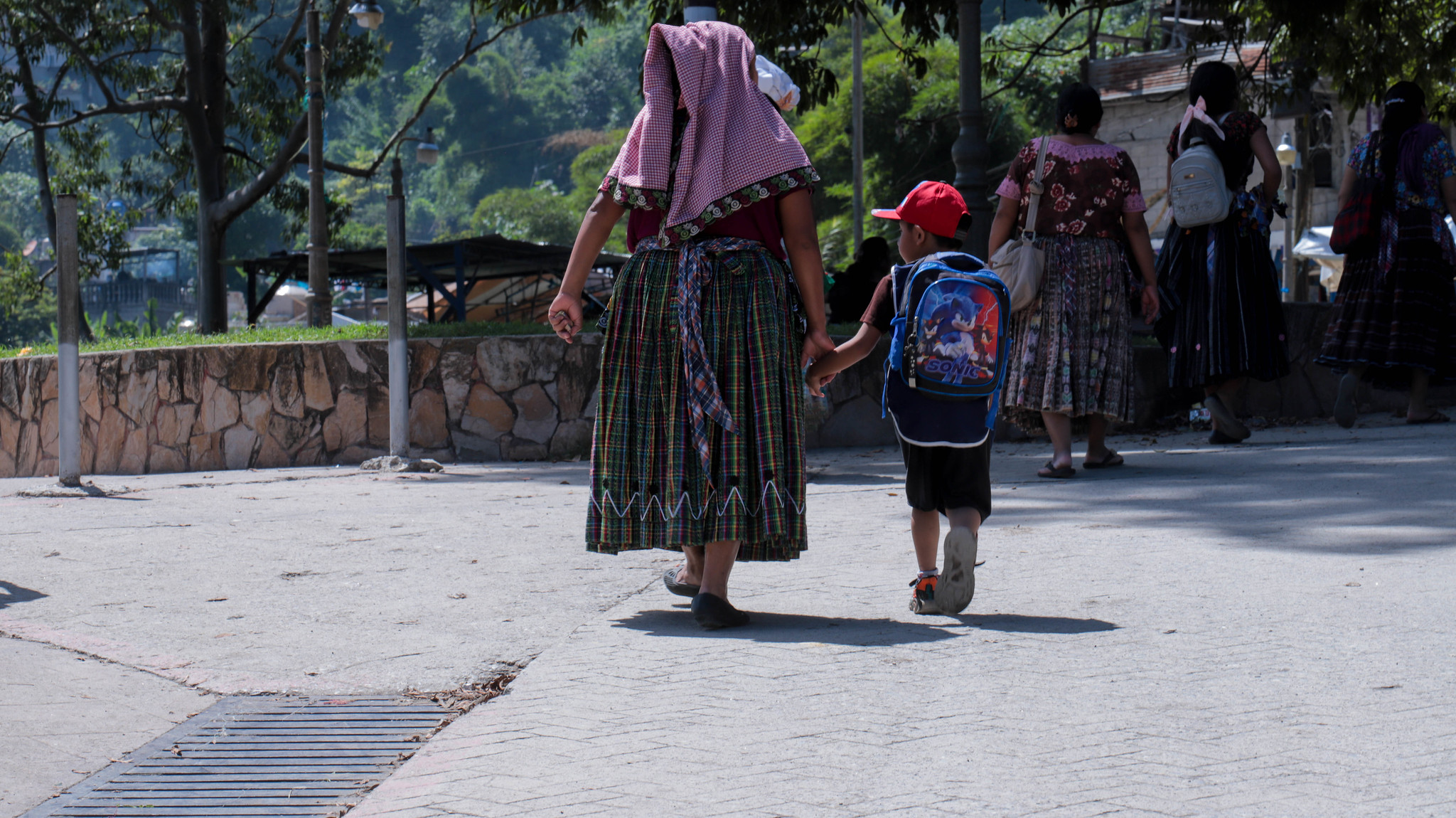
Photo: Mario Winter.
Voices for the Motagua River: Olga Vázquez.
Voices for the Motagua River: Nazario Pascual.
In early 2000, the Maya community organized to stop sand mining on their territory. At that time, the companies held mining permits that remained valid through 2021 and 2022. And although the permits expired, some companies continued to operate after requesting extensions. In June 2022, the indigenous authorities of the Poqomam people began a sit-in protest in front of the Piedrinera San Luis company, which they maintained for four years.
In July 2024, the Special Rapporteur on Economic, Social, Cultural, and Environmental Rights of the IACHR visited Santa Cruz Chinautla. During his visit, traditional authorities and community members spoke about the environmental, water-related, health, economic, and cultural impacts of the pollution in their rivers.
That same year, in October, the community—with support from AIDA, the Indigenous Peoples’ Law Firm, and partner organizations—filed a lawsuit (petition for amparo) against the municipality of Chinautla over its failure to take measures to address the contamination of its rivers and soil caused by improper solid waste management and the existence of illegal landfills.
AIDA’s scientific team, together with local residents and community authorities, collected key information on illegal landfills in the area. This community science initiative supported the litigation by highlighting the severity of the pollution, demonstrating the ongoing use of such practices, and providing evidence of the municipal authorities’ failure to fulfill their legal obligations regarding waste management.
Learn more about this community science initiative.
In June 2025, the Poqomam community won the support of the Guatemalan justice system when a constitutional court ordered the municipality of Chinautla to effectively address the claims in the lawsuit aimed at stopping the pollution of the rivers and soil in Santa Cruz Chinautla.
This is the first time a Guatemalan court has recognized a community's right to a healthy environment and its central role in finding solutions.
Find out the details of the legal victory.
Current situation
Since the ruling was issued, the municipality of Chinautla has held a series of “technical working groups” with representatives from the central government, civil society, and the community. A smaller group of technical experts was later created to develop a work plan with clear goals. Several months have passed without the municipality convening these working groups.
Furthermore, in December 2025, the IACHR noted in its report Human Rights Situation in Guatemala that the Motagua River basin is facing a severe pollution crisis that has had profound impacts on biodiversity and has resulted in systematic violations of the human rights of local communities, including the Maya Poqomam people.
And in May 2026, the Ministry of the Environment and Natural Resources revoked the license of the sand mining company Piedrinera San Luis for "failure to comply with environmental commitments."
AIDA continues to monitor the implementation of the court ruling to ensure the right to a healthy environment for the Poqomam Maya community and all those living in the Motagua River basin. Meanwhile, the residents of Santa Cruz Chinautla remain organized and mobilized to improve their environment and defend their rights.
Related projects
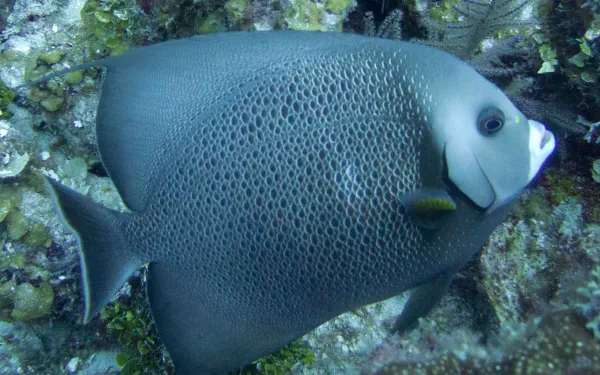
Empowering fishermen to protect coral reefs, and their guardians
When he thinks of his childhood, Mario Smith remembers the abundance of fish, crabs and lobsters he and his father used to find while fishing, an activity now in decline on his island. "There used to be such abundance and today we are forbidden to fish for many things because of our irresponsibility in taking care of our resources," said Mario, who is now the leader of the San Luis Fishermen's Committee, whose members work on San Andres Island, Colombia. San Luis is a hamlet located on the east coast of San Andres with white sandy beaches and calm waters. I was there in August to support the dissemination of a very important resolution for the conservation of the coral ecosystems of the Colombian Caribbean. The law prohibits the capture and sale of several species of herbivorous and omnivorous fish that cleanse the corals of the algae that take away their light and space, thus supporting their survival. In recent years, a decrease in commercial species has led fishing communities have to go after herbivorous fish. This, in turn, has caused a reduction in populations of these species, particularly in the Caribbean. The resolution was issued on July 15 by the Corporation for the Sustainable Development of the Archipelago of San Andrés, Providencia and Santa Catalina (CORALINA), the environmental authority in that region. Disseminating and socializing these type of norms in local communities is very important so that residents, understanding the importance of these fish for the health of both the reefs and their economies, support actions aimed at their conservation. Along with CORALINA's education team, I visited several fishermen's committees, as well as schools and restaurants. I participated in a meeting of the Inter-Institutional Committee on Environmental Education, which was also attended by representatives of the government, the police, and the tourism and education sectors. The visits were very enriching, full of questions and emotions. In each of them I highlighted the benefits of taking care of our corals and the fish that help them thrive. Coral reefs are one of the most important ecosystems on the planet. They are home to more than 25% of our marine species and protect our coasts from hurricanes, storms and other weather events. At Cajasai School, the active participation of one student surprised me. He told me of his concern about garbage on his beaches and about catching parrotfish, one of the most important species of herbivorous fish. "I'm very concerned about my resources and that's why I made a foundation to take care of the beaches that are close to my home," he told me passionately. His empathy and desire to fight for his beaches and sea inspired me. The beautiful landscapes of San Andrés and the interest of all the people I spoke with filled me with satisfaction and energy to continue working. But there is still a lot to do. Our marine resources are in danger of disappearing in the face of the global climate crisis. And the urgency to do something about it is becoming ever more pressing. Our coral reefs are among the ecosystems most threatened by this crisis, mainly due to changes in the acidity and temperature of our oceans. In addition, human actions such as pollution and overfishing are causing irreversible damages. That’s why AIDA will continue to support local efforts to conserve important marine species, such as the parrotfish and his herbivorous relatives. LEARN MORE
Read more
Human rights, the great absentees at the UN Climate Summit
The United Nations Climate Action Summit on September 23rd was an interesting step toward the future. Some commitments were announced to confront the climate crisis. But one key aspect was absent: the express, transversal and decisive inclusion of human rights. Goals of the global meeting included preventing the development of new coal projects, achieving zero net emissions by 2050, ending fossil fuel subsidies, and making those who pollute pay. To this end, 19 states—supported by various organizations—worked in coalition to achieve goals on mitigation, social and political drivers, youth and public mobilization, energy transition, industrial transition, nature-based solutions, adaptation and resilience, climate finance and carbon pricing, as well as infrastructure, cities and local action. Although previous meetings were held with indigenous peoples, and some coalitions recognized that solutions shouldn’t increase inequality—but be fair and include a gender perspective—what we needed was an explicit reference to human rights. It was conspicuous for its absence. This is not a minor need. It’s enough to see those who suffer first and worst the impacts of the climate emergency: families in Central America who, after losing their crops, leave everything behind to migrate to the United States; residents of the Bahamas, devastated by Hurricane Dorian; and those who live in the Amazon, partially destroyed by fires. The climate crisis is already affecting human rights. Michelle Bachelet, UN High Commissioner for Human Rights, called it their greatest threat. Some measures to address the climate emergency actually aggravate it, while ignoring human rights. This is the case with wind projects and large hydroelectric dams in Brazil, Mexico, Colombia and Honduras, which have been implemented without consulting local communities, some of them indigenous. It was therefore essential that world leaders use Summit to expressly include in their commitments a respect for human rights, a recognition already found in the Paris Agreement. That did not happen. Nevertheless, hope is fuelled by growing awareness, which increases pressure on governments, companies and other sectors to contribute more. Millions of students around the world are on strike and dropping out of school on Fridays. Mobilizations have multiplied and so have their supporters. Having true ambition for climate justice means putting human rights at the center of our solutions, not least because indigenous and traditional communities have knowledge essential to preserving the planet.
Read more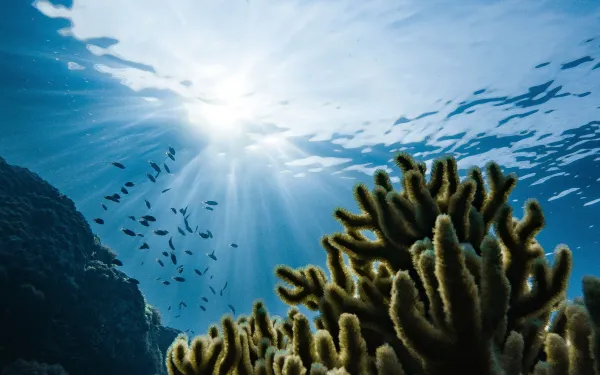
Ocean scientists and NGOs call time on government neglect of earth’s life support system
The Intergovernmental Panel on Climate Change (IPCC) Special Report on the Ocean and Crysophere in a Changing Climate reveals the extent of the crisis facing humanity as the ocean and its services begin to show signs of collapse. Although the ocean is inextricably linked with the climate, the two working together to make planet Earth habitable, this is the first time that the IPCC has turned its attention to the marine realm. The resulting report conveys what marine scientists and NGOs have been saying for years, that the ocean is beginning to crumble under an onslaught of needless stressors from overfishing to pollution, compounded by climate breakdown. The effect of climate breakdown is the most serious, creating acidification, heating and deoxygenation. These three factors have been present in every mass extinction event in Earth’s history; all three are active in the ocean now. Professor Dan Laffoley of the IUCN World Commission on Protected Areas: “We are an ocean world, run and regulated by a single ocean and we are pushing that life support system to its very limits through heating, deoxygenation and acidification. We are well past 'wake up calls' - what we need now is enlightened self-interest to deliver the actions that protect the ocean and climate and which in turn protect and support humanity.” The timescales at work within the ocean mean that changes already put into its system – such as warming – will remain at work for hundreds of years, consequently, even with immediate action to curb temperature rise and cut CO2 emissions, ocean services to the planet could still be at risk. This is why it is so important that all extraneous stressors on the ocean which can be controlled, are. Overfishing, pollution, destruction of habitats, ecosystems and biodiversity are all stressors which can be stopped to support the resilience of the ocean to withstand the climate crisis. Gladys Martínez, senior attorney of the Interamerican Association for Environmental Defense (AIDA): “The IPCC report makes it crystal clear that time is running out for ocean action. We have a small window of opportunity to achieve a strong High Seas Treaty by 2020 and to protect at least 30% of the ocean by 2030, two measures that will help defend the resilience of the ocean. The treaty is being negotiated before the United Nations and states must complete it by 2020, in line with the UN General Assembly resolution and demonstrating high ambitions.” Although the picture painted by the IPCC is undeniably bleak, there are measures which can be taken now to help bolster the resilience of the ocean and which governments need to finally and robustly take action on. State parties to the legally binding Convention on Biological Diversity will negotiate new targets to protect biodiversity at a meeting in 2020. The target for marine biodiversity should be to protect at least 30% of the ocean through implemented highly and fully protected areas, with the remaining 70% of the ocean sustainably managed. Bringing an end to overfishing and pollution in all its forms and preventing further biodiversity, ecosystem and habitat loss are essential measures within our reach. Tackling climate breakdown and holding warming at or as close to 1.5 degrees Celsius as possible is essential if the ecosystem services of the ocean are to survive. All states need to commit to new and more ambitious plans (NDCs) in 2020 to achieve this. Press contacts: Victor Quintanilla in Mexico - [email protected], +521 5570522107 Patricia Roy in Paris - [email protected], +34 696 905 907 Mirella von Lindenfels in London - [email protected], +44 7717 844 352 Karen Rausch in Santiago - [email protected], +56 967354769 Sophie Hulme in NYC - [email protected], +44 7973 712869
Read more