
Project
Alberto Peña Kay
Protecting the Santurban páramo from mining's damage
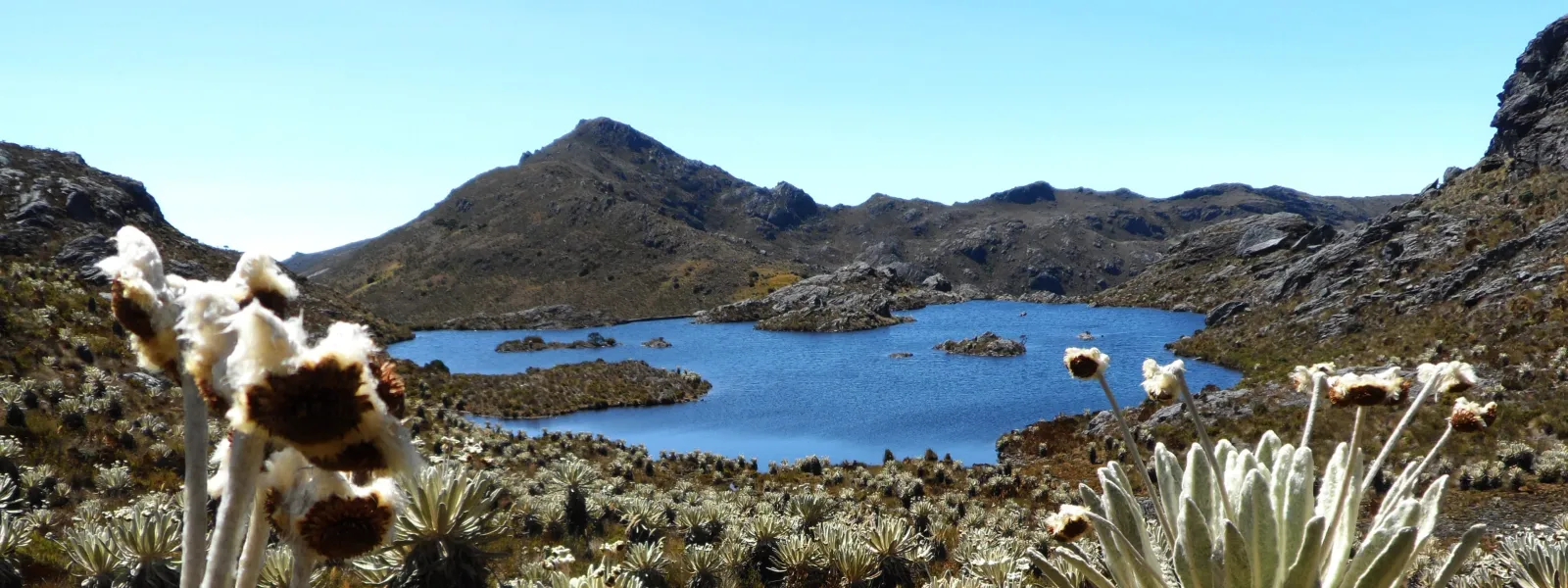
In the Andean region, high-mountain ecosystems known as páramos capture water from the fog and supply it to the lowlands. One such ecosystem is the Santurbán páramo, which provides fresh water to more than two million people in Colombia.
Santurbán, like the other páramos on the continent, also captures large amounts of carbon, making it a key ally in mitigating the climate crisis. It is also a refuge for hundreds of endangered species, including the iconic spectacled bear.
The land in and around the páramo contains gold and other minerals. This has put Santurbán in the spotlight of the multinational mining industry, which for decades has sought to establish large-scale projects in the ecosystem that threaten to degrade it.
The Committee for the Defense of Water and the Santurbán Páramo—a coalition of environmental advocates—has thwarted these ongoing attempts, with support from AIDA and other civil society organizations.
Background
The Santurbán páramo is located in the heart of the Eastern Cordillera of the Colombian Andes, in the departments of Santander and Norte de Santander, at an elevation ranging from 2,200 to 4,290 meters above sea level.
It covers an area of 129,743 hectares and is home to 57 lakes. It serves as a habitat for 457 plant species and 293 species of vertebrate fauna.
There are mineral deposits in Santurbán, primarily gold, but also silver and copper. This explains the region’s mining tradition, particularly in the part of the páramo located in Santander, in the province of Soto Norte. The communities in the area have built their culture and identity around gold mining, which is mainly artisanal and small-scale.
But since the 1990s, the gold deposits in the páramo have also attracted foreign mining conglomerates seeking to develop large-scale projects. This has raised concerns among the population that relies on the Santurbán water sources, who have mobilized in defense of water, their land, and life.
Although national and international regulations prohibit mining in páramos, the Colombian government has granted mining concessions to transnational corporations in Santurbán.

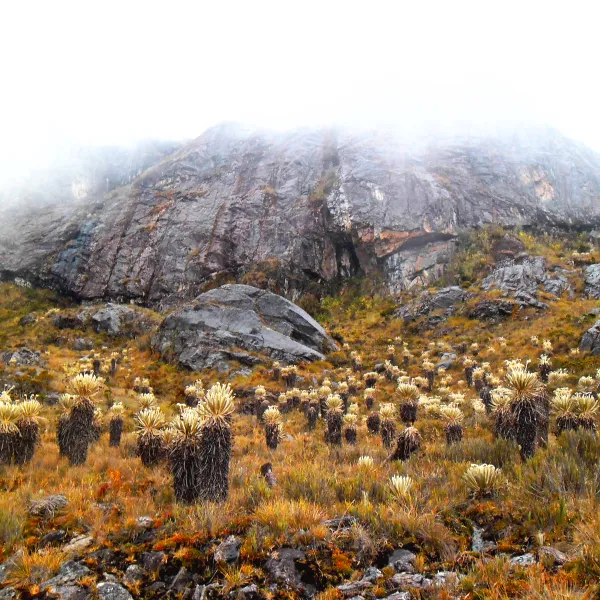
Photo: Keishpixl / Pixabay.
The long struggle to protect the páramo
One of the companies that sought to develop large-scale mining in Santurbán is Eco Oro Minerals Corp.—formerly Greystar Resources—a Canadian company that intended to establish the Angostura open-pit mine there to extract gold and silver. Between 1994 and 1995, the company acquired its mining titles and conducted exploration. And in 2010, it applied for a mining permit.
That was the year AIDA became involved in defending the ecosystem, supporting the Committee for the Defense of Water and the Santurbán Páramo. Our legal work helped convince the Colombian government to deny the mine an environmental permit in May 2011.
In January 2013, the government designated a portion of the páramo (11,700 hectares) as a Regional Natural Park. That year—together with the committee and partner organizations—we carried out a campaign and advocacy efforts to urge the government to recognize the entire Santurbán area as a páramo ecosystem through a delimitation based on scientific criteria. In December 2014, the Ministry of the Environment established a delimitation that protected 76% of the páramo (98,954 hectares).
Furthermore, as a result of a litigation supported by AIDA, in February 2016, Colombia’s highest court reaffirmed that mining in páramos is prohibited.
That same year, in December, the International Finance Corporation (IFC), the World Bank Group’s private sector arm, decided to divest from Eco Oro Minerals. This achievement was the result of a process that began in 2012, when the committee—advised and supported by AIDA and international partner organizations—filed a complaint before an independent accountability mechanism, which concluded that the IFC’s investment in the Angostura project failed to take into account the project’s social and environmental impacts, thereby contradicting the financial institution’s internal policies.
Also in 2016, Eco Oro Minerals filed an arbitration claim against the Colombian government with the International Centre for Settlement of Investment Disputes (ICSID), arguing that it had been adversely affected by government decisions aimed at protecting the country’s páramos, including the delimitation of Santurbán.
In 2017, the Constitutional Court invalidated the delimitation because the affected communities were not consulted. The high court ordered that a participatory delimitation be carried out.
And that year, a new threat to Santurbán emerged when the Canadian multinational Aris Mining applied for an environmental permit for Soto Norte, a gold mining project located near the páramo. Following citizen protests and technical objections, in October 2020, the National Environmental Licensing Authority shelved the project.
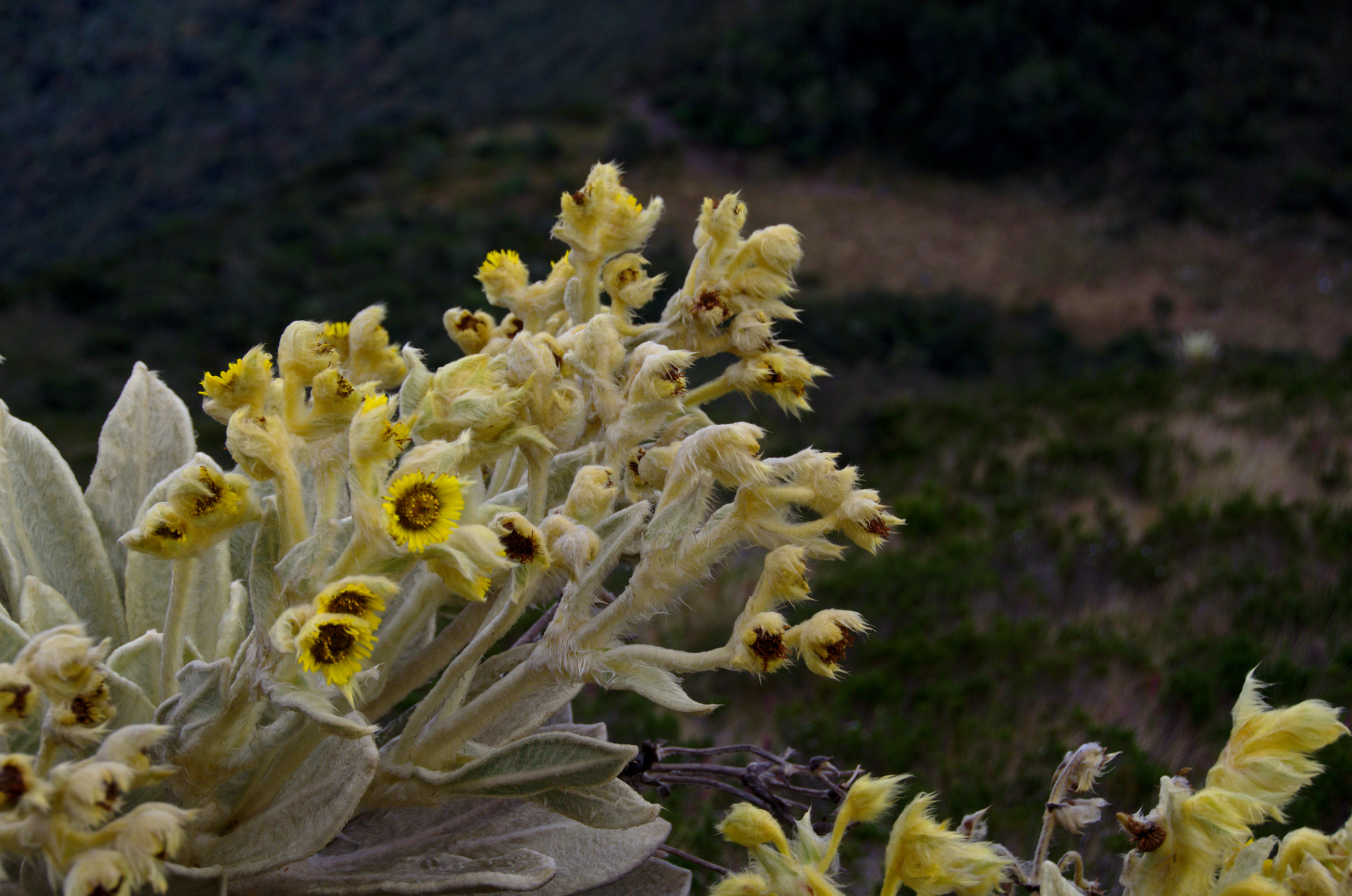
Photo: Aztlec.
Current situation
In March 2025, the Colombian government designated the western flank of the Santurbán massif as a temporary renewable natural resource reserve area, delimiting and protecting an area of 75,344.65 hectares. This resulted in a two-year suspension of the Soto Norte project. However, Aris Mining's contract to formalize Calimineros' small-scale mining activities through the purchase and processing of mineralized material remains in effect.
In addition, the Canadian mining company continues to move the project forward. In September 2025, it released its prefeasibility study, revising the mine’s original design.
Meanwhile, members of the Committee for the Defense of Water and the Santurbán Páramo face threats and stigmatization because of their work. In March 2025, UN Special Rapporteurs and the Working Group on Business and Human Rights denounced these incidents in communications sent to the governments of Colombia, Canada, and the United Arab Emirates, as well as to the companies Aris Mining and MDC Industry Holding Company LLC, the former co-owner of the Soto Norte project.
Regarding the arbitration claim filed by Eco Oro Minerals, in July 2024, ICSID ruled in favor of the Colombian government and rejected the Canadian company’s claim for USD 1.1 billion in compensation.
Concerning the delimitation of Santurbán, in July 2026, the Ministry of the Environment issued a resolution introducing the concept of "progressive delimitation." On that basis, the government proposes to progressively demarcate the páramo, covering 29,199 hectares across 19 municipalities—those where the participatory agreements required by the Constitutional Court in its 2017 ruling have already been finalized. It also proposes two measures on the creation and expansion of reserves to restrict mining in the ecosystem.
Learn more about the impacts of mining on the páramos of Latin America (in Spanish).
Partners:
Related projects
Who can protect us if the Inter-American System of Human Rights is weakened?
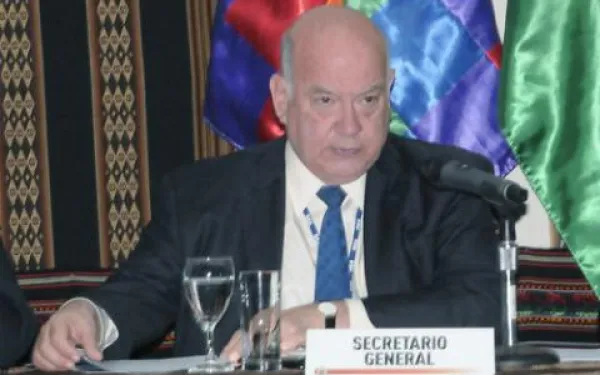
By Astrid Puentes, co-director of AIDA, @astridpuentes I’m writing from Cochabamba, where I’m attending the 42nd General Assembly of the Organization of American States (OAS). This is the first time I have come to Bolivia and to a General Assembly. I am here to support our efforts to truly “strengthen the Inter-American System” and to stand against proposals from OAS member states that could limit the independence and effectiveness of the Inter-American Commission on Human Rights (IACHR). Our goal is to preserve the autonomy and role of the IACHR, and, thus, to guarantee human rights in the region: To protect our rights, yours and mine. Here’s a summary of what is a complex story. A number of member states launched an effort to strengthen the Inter-American System of the Protection of Human Rights in 2011, two years after the IACHR and the Inter-American Court of Human Rights modified their rules of procedure. This effort is a direct response from several member states after the IACHR brought up concerns about human rights in their countries. A working group was then created last year to evaluate how the Inter-American System of Human Rights could be “strengthened.” The group produced a report that the Commission has responded to and that NGOs like ours will also comment on. A few days ago, the Secretary General of the OAS, José Miguel Insulza, published a report on the subject. Personally, I think it is inadequate because several of his recommendations will actually weaken, and not strengthen, the system. For example, he says there is “a loophole in the statute of the commission on the figure of the precautionary measures that could be filled by... the General Assembly of the OAS.” It is worth mentioning that it is the IACHR that determines its own rules, a way to ensure its independence. Insulza’s report left out issues he’d been asked to address, such as options for improving the financing for the Inter-American System. Based on his recommendations, the result would be contrary to the same objective that Insulza and member states have set as their main goal. Fortunately, Insulza in his declarations during the General Assembly dismissed some of the recommendations that could have drained the strength of the Inter-American Human Rights System. The important points of the “strengthening” process that will be discussed at the General Assembly in Cochabamba – and no doubt afterwards – include: Financing the Inter-American Human Rights System. This is essential, as you can’t ask the IACHR to operate efficiently on a meager budget. “Unify in a constructive manner” what the member states and the IACHR understand as the precautionary measures. This is an issue presented by some member states and brought up by Secretary Insulza. It was frankly a surprise that this point came from the very report of the secretary for two reasons: a) abiding by what the system dictates is part of what member states already agreed to in creating the System, and b) because the Inter-American Court has been very clear in determining that the measures are obligatory. What can we expect of member states? I mean, who likes to get their dirty laundry published in the media? This is not to say that they are acting irrationally. Whether the IACHR should have a greater role in promoting human rights than protecting them. That is to say, whether it should provide more advice to the member states on how to respect human rights, or rather review complaints of human rights violations that come its way. Pulling Ears To understand this process it is important to know the motivations that have prompted member states to push for these changes. Coincidentally, states like Brazil, Colombia, Ecuador, Peru and Venezuelawant “to strengthen” the system precisely when the IACHR has handed down important decisions against them, namely: 1. It has called on Brazil to suspend construction of the Belo Monte dam in Brazil for violating indigenous rights and threatening the environment, 2. The Report on Democracy and Human Rights in Venezuela exposed serious violations, 3. The severe human rights violations in Colombia have been included a number of times in Chapter IV of the commission’s annual report, 4. Ecuador has been questioned multiple times by the Special Rapporteur for Freedom of Expression, among other examples. A Conflict of Interests If we put this differently and speak instead of member states but of a director whose organization is about to hire a close relative, there would be no doubt that this would be declared incompatible because of a conflict of interests. Or, put even more plainly, if a referee was assigned to the final of the World Cup of Soccer and he had the same nationality as one of the teams, then obviously there would be protests from the other team. These impediments don’t exist in the OAS. The same member states against whom the complaints are made by the IACHR can modify its functions through the General Assembly. It is exactly for this reason that restraint is required even when they don’t agree with the System’s decisions. It is vital that the states respect the independence of the Inter-American System in discourse and practice. They must reiterate their compromise with the agreements dating back more than 60 years and support the bodies that were created for the very purpose of guaranteeing justice in cases of human rights violations. (This text in Spanish)
Read moreBelo Monte Dam controversy to be part of UN’s Review of Brazil’s Human Rights Record
Geneva, Switzerland. On May 25, the United Nations will examine the Brazilian government’s track record for human rights during its Universal Periodic Review (UPR) in Geneva, Switzerland. Central to this debate will be the multiple claims of human rights violations surrounding the construction of the Belo Monte Hydroelectric dam, slated for the Xingu River in Brazil. Many Brazilian and international groups have already sent extensive documentation to the UN highlighting the human rights violations suffered by the indigenous and rural communities in the dam’s path. The UN High Commissioner for Human Rights will present information from these and other reports as part of the review or the Brazilian government’s performance on its human rights obligations. Key to the controversy over the dam will be the lack of compliance with an April 2011 resolution from the Inter-American Commission on Human Rights (IACHR), an international human rights body of the Organization of American States. The Commission requested that the government halt the project and take steps to protect indigenous communities, including un-contacted tribes in voluntary isolation. Up until now, the Brazilian government has refused to either implement the IACHR’s resolution or dialogue with affected communities in the case. Two civil society reports sent by a coalition of Brazilian and international groups last November highlighted these and other problems with Brazil’s contentious hydroelectric project. The report concludes that the government did not consult with affected communities nor obtain their free, prior, and informed consent, as required by international human rights law. It also documents violations to the rights to life and health, and the possible forced displacement of nearly 40 thousand families. The two reports form part of a growing body of allegations regarding human rights violations related to the Brazilian government’s plans to push the construction of large dams in the Amazon region. “We hope that as a result of the UPR, the Brazilian government will take a hard look at the damage that its energy and hydropower policies are causing for the rights of indigenous and traditional peoples,” stated Astrid Puentes, Co-director of the Interamerican Association for Environmental Defense (AIDA), which co-authored the reports. “Brazil has a great opportunity to change its development model toward one that is truly sustainable and respects human rights.” According to Andressa Caldas, Director of the Brazilian human rights NGO, Global Justice, Belo Monte is now synonymous with violations of indigenous peoples’ rights and environmental irresponsibility. “The Brazilian government will have to respond to these allegations and is already expanding its delegation for the UPR with experts specifically to defend the Belo Monte dam. But there is no way to justify such an absurd project.” What is the UPR? The Universal Periodic Review is a proceeding in which all UN nations are reviewed every four years by the UN Human Rights Council, which is made up of representatives from different countries. During the process each country is given the opportunity to demonstrate the steps it has taken to improve the human rights situation and meet its obligations under international law.
Read morePrior consultation: An opportunity for life, respect and diversity
By Héctor Herrera, legal advisor, AIDA, @RJAColombia Colombia’s ethnic groups have decrees and laws that protect their cultural persity, that defend the individual and collective livelihood of these native and traditional peoples and communities. Article 6 of Convention No. 169 of the International Labour Organization (ILO) stipulates that indigenous peoples have the right to prior consultation. That means that they should participate in defining the measures that could have a direct impact on them, whether legislative (such as laws or decrees) or administrative (environmental permits for highways, dams, mines, oil wells, and the like). The negotiations should be carried out in good faith and with the goal of reaching agreements on all sides. This has become very important in Colombia, a multiethnic, multicultural, and diverse country. According to the Luis Ángel Arango Library, 65 indigenous languages in 12 language families are spoken in Colombia, of which 34 have less than one thousand speakers. Traditional Afro groups speak two different Creole languages. Yet all of these languages are in danger. Colombia also is extremely diverse in biological species globally, ranking first in birds, second in amphibians and butterflies, third in reptiles, and fourth in mammals, according to the Humboldt Institute. Colombian newspaper El Espectador reported 2011 data showing that 10% of all biodiversity is found on 1% of the planet’s surface. In Columbia, 29.8% of this is collective indigenous territory and 5% is collective traditional Afro territory. Understanding this, prior consultation emerges as an opportunity to protect the cultural and ethnic persity of Colombia and defend the inpidual and collective livelihood of the many native and traditional peoples and communities. It is, too, an opportunity to protect the ecosystems that these ethnic groups inhabit as well as to protect life in all its forms. This does not mean forcing anybody to adopt a conservation, extractive, or development model. It simply means making sure that an effective space is provided for clear, honest, and intercultural dialogue with ethnic groups on measures that could affect them, whether legislative or administrative measures or national laws or extractive mining projects. This is completely in line with the stipulations of Article 6 of Convention No. 169 of the ILO . This right has also been recognized in numerous national and international legal documents. On the international level, we have the United Nations Declaration on the Rights of Indigenous Peoples, adopted in 2007 (PDF file). In Colombia, we have the Political Constitution, which protects the rights of ethnic groups to their collective territory and the rights of all of society to a healthy environment. With the backing of international legal documents and the Political Constitution, the Constitutional Court of Colombia upheld the right to prior consultation for the “Embera indigenous people” in relation to the construction of the Urrá dam in 1998 and for Amazon indigenous peoples on the fumigation of illegal crops in 2003. In other cases, the High Court declared unconstitutional the National Development Plan of 2006-2010, the forestry law of 2006 and the mining code reform of 2010 because the proponents had not consulted with ethnic groups. There are yet more cases outside Colombia, such as Bolivia with the Multinational Constitution of 2009 and Ecuador with the Intercultural and Multinational Constitution of 1998, both of which recognize the right to prior consultation. So too Peru, where a law on this right was just passed this year. Culture, language and a view of the world – all of these can live on through time if we respect them and guarantee people’s rights, including the right to prior consultation. The protection of this right could also contribute to the protection of important ecosystems and of biological persity, both of which are vital issues as we face unprecedented climate change and environmental degradation.
Read more