
Project
Alberto Peña Kay
Protecting the Santurban páramo from mining's damage
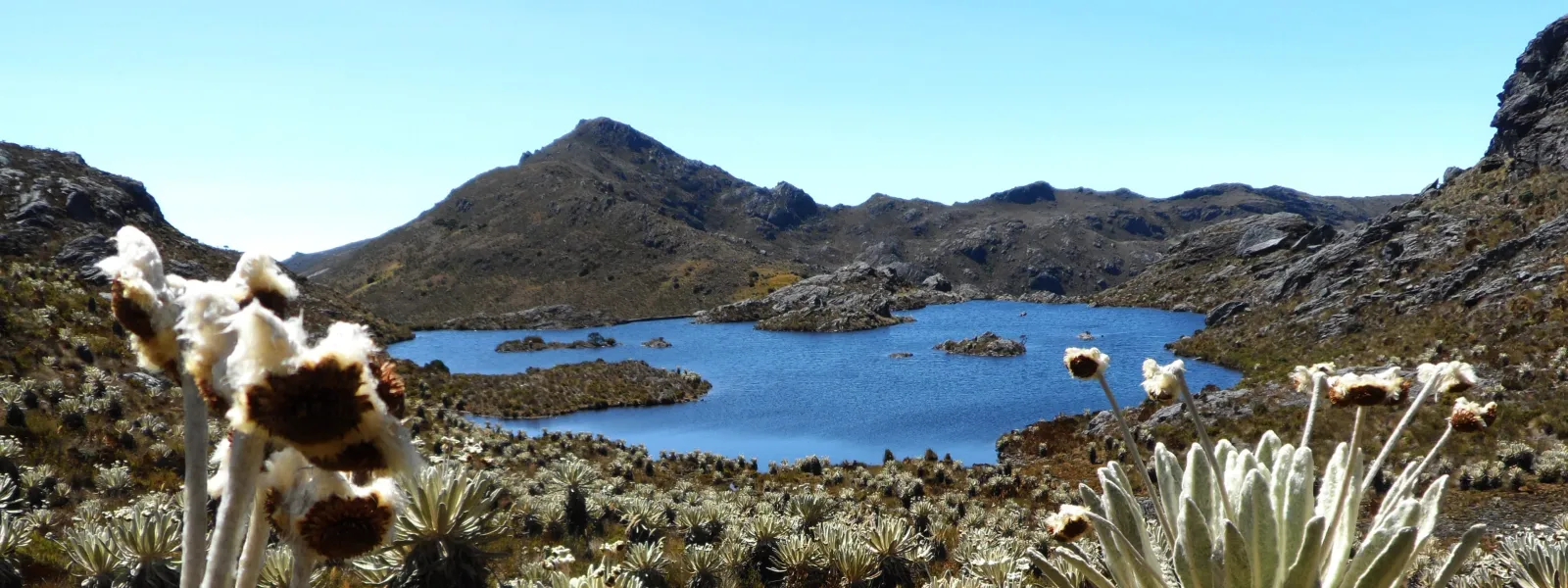
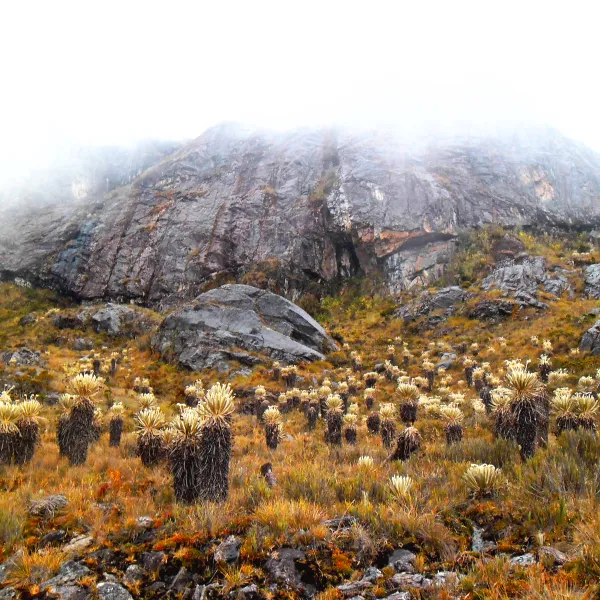
In the Andean region, high-mountain ecosystems known as páramos capture water from the fog and supply it to the lowlands. One such ecosystem is the Santurbán páramo, which provides fresh water to more than two million people in Colombia.
Santurbán, like the other páramos on the continent, also captures large amounts of carbon, making it a key ally in mitigating the climate crisis. It is also a refuge for hundreds of endangered species, including the iconic spectacled bear.
The land in and around the páramo contains gold and other minerals. This has put Santurbán in the spotlight of the multinational mining industry, which for decades has sought to establish large-scale projects in the ecosystem that threaten to degrade it.
The Committee for the Defense of Water and the Santurbán Páramo—a coalition of environmental advocates—has thwarted these ongoing attempts, with support from AIDA and other civil society organizations.
Background
The Santurbán páramo is located in the heart of the Eastern Cordillera of the Colombian Andes, in the departments of Santander and Norte de Santander, at an elevation ranging from 2,200 to 4,290 meters above sea level.
It covers an area of 129,743 hectares and is home to 57 lakes. It serves as a habitat for 457 plant species and 293 species of vertebrate fauna.
There are mineral deposits in Santurbán, primarily gold, but also silver and copper. This explains the region’s mining tradition, particularly in the part of the páramo located in Santander, in the province of Soto Norte. The communities in the area have built their culture and identity around gold mining, which is mainly artisanal and small-scale.
But since the 1990s, the gold deposits in the páramo have also attracted foreign mining conglomerates seeking to develop large-scale projects. This has raised concerns among the population that relies on the Santurbán water sources, who have mobilized in defense of water, their land, and life.
Although national and international regulations prohibit mining in páramos, the Colombian government has granted mining concessions to transnational corporations in Santurbán.

Photo: Keishpixl / Pixabay.
The long struggle to protect the páramo
One of the companies that sought to develop large-scale mining in Santurbán is Eco Oro Minerals Corp.—formerly Greystar Resources—a Canadian company that intended to establish the Angostura open-pit mine there to extract gold and silver. Between 1994 and 1995, the company acquired its mining titles and conducted exploration. And in 2010, it applied for a mining permit.
That was the year AIDA became involved in defending the ecosystem, supporting the Committee for the Defense of Water and the Santurbán Páramo. Our legal work helped convince the Colombian government to deny the mine an environmental permit in May 2011.
In January 2013, the government designated a portion of the páramo (11,700 hectares) as a Regional Natural Park. That year—together with the committee and partner organizations—we carried out a campaign and advocacy efforts to urge the government to recognize the entire Santurbán area as a páramo ecosystem through a delimitation based on scientific criteria. In December 2014, the Ministry of the Environment established a delimitation that protected 76% of the páramo (98,954 hectares).
Furthermore, as a result of a litigation supported by AIDA, in February 2016, Colombia’s highest court reaffirmed that mining in páramos is prohibited.
That same year, in December, the International Finance Corporation (IFC), the World Bank Group’s private sector arm, decided to divest from Eco Oro Minerals. This achievement was the result of a process that began in 2012, when the committee—advised and supported by AIDA and international partner organizations—filed a complaint before an independent accountability mechanism, which concluded that the IFC’s investment in the Angostura project failed to take into account the project’s social and environmental impacts, thereby contradicting the financial institution’s internal policies.
Also in 2016, Eco Oro Minerals filed an arbitration claim against the Colombian government with the International Centre for Settlement of Investment Disputes (ICSID), arguing that it had been adversely affected by government decisions aimed at protecting the country’s páramos, including the delimitation of Santurbán.
In 2017, the Constitutional Court invalidated the delimitation because the affected communities were not consulted. The high court ordered that a participatory delimitation be carried out.
And that year, a new threat to Santurbán emerged when the Canadian multinational Aris Mining applied for an environmental permit for Soto Norte, a gold mining project located near the páramo. Following citizen protests and technical objections, in October 2020, the National Environmental Licensing Authority shelved the project.
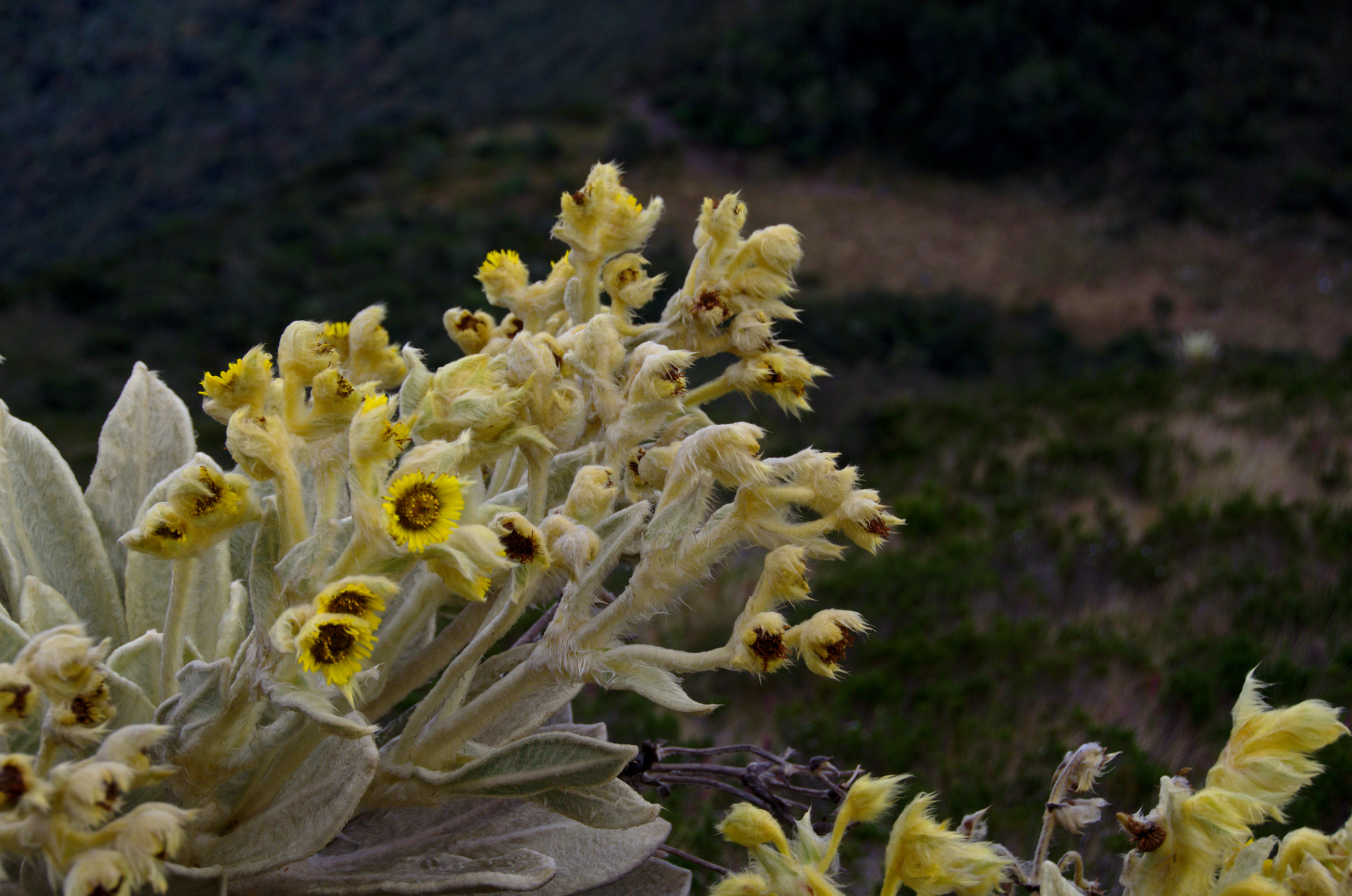
Photo: Aztlec.
Current situation
In March 2025, the Colombian government designated the western flank of the Santurbán massif as a temporary renewable natural resource reserve area, delimiting and protecting an area of 75,344.65 hectares. This resulted in a two-year suspension of the Soto Norte project. However, Aris Mining's contract to formalize Calimineros' small-scale mining activities through the purchase and processing of mineralized material remains in effect.
In addition, the Canadian mining company continues to move the project forward. In September 2025, it released its prefeasibility study, revising the mine’s original design.
Meanwhile, members of the Committee for the Defense of Water and the Santurbán Páramo face threats and stigmatization because of their work. In March 2025, UN Special Rapporteurs and the Working Group on Business and Human Rights denounced these incidents in communications sent to the governments of Colombia, Canada, and the United Arab Emirates, as well as to the companies Aris Mining and MDC Industry Holding Company LLC, the former co-owner of the Soto Norte project.
Regarding the arbitration claim filed by Eco Oro Minerals, in July 2024, ICSID ruled in favor of the Colombian government and rejected the Canadian company’s claim for USD 1.1 billion in compensation.
Concerning the delimitation of Santurbán, in July 2026, the Ministry of the Environment issued a resolution introducing the concept of "progressive delimitation." On that basis, the government proposes to progressively demarcate the páramo, covering 29,199 hectares across 19 municipalities—those where the participatory agreements required by the Constitutional Court in its 2017 ruling have already been finalized. It also proposes two measures on the creation and expansion of reserves to restrict mining in the ecosystem.
Learn more about the impacts of mining on the páramos of Latin America (in Spanish).
Partners:
Related projects
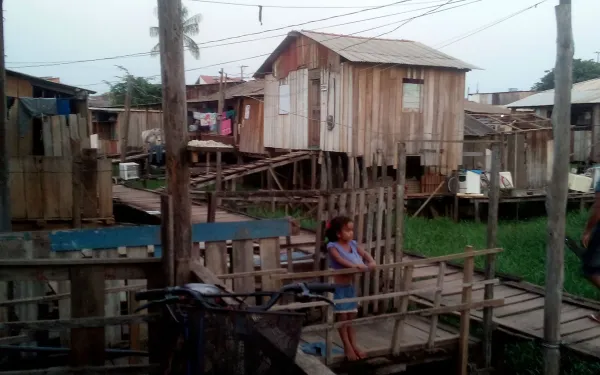
Brazilian Government questioned yet again by international human rights body over Belo Monte Dam controversy
Brasilia, Brazil - On April 11, the Inter-American Commission on Human Rights (IACHR), the human rights arm of the Organization of American States (OAS), asked the Brazilian government to explain reports of poor water quality and forced evictions in indigenous communities affected by the construction of the Belo Monte Hydroelectric Dam in the Xingu River Basin, Brazil. This is the second time that the Inter-American Commission has asked the government to explain the health and human rights impact of construction since requesting precautionary measures in favor of indigenous communities in April of last year. The IACHR also repeated its request that Brazil detail specific measures designed to mitigate the dam’s impact. The commission gave Brazil 20 days to respond regarding the situation in the Xingu River Basin. “We hope the Brazilian government will react quickly to this latest resolution by taking steps to protect the human rights of affected communities,” said Jacob Kopas, legal counsel with the Interamerican Association for Environmental Defense (AIDA). The IACHR is currently reviewing an international lawsuit filed by the Xingu River Alive Forever Movement (MXVPS), Para Society for the Defense of Human Rights (SDDH), Global Justice, and AIDA. The lawsuit highlights the damages the project is causing to the Paquiçamba and Arara da Volta Grande Indigenous Reservations. “The case before the IACHR aims for Brazil to meet its obligations under international human rights treaties,” explained Roberta Amanajás, lawyer with SDDH. “And in the Belo Monte case, there is abundant evidence these rights are being violated.” This past January, indigenous communities downstream of the construction site registered several cases of diarrhea and skin rashes associated with the sudden deterioration in the water quality of the river, on which they depend for drinking, bathing and cooking. In response, the Brazilian Federal Public Ministry conducted an independent water quality analysis but results have not been published yet. According to Public Ministry officials, constant water control tests are necessary to avoid the risk of contaminating the river’s waters. Another complaint under investigation by the IACHR concerns the forced eviction of impoverished, rural communities, in an area where most small farmers do not have formal deeds to their land. Fearing evictions without any compensation whatsoever, many families have accepted payments worth less than half the market value of their lands. This was the case of farmers from the Santo Antonio village, where only 26 out of 252 rural properties had a formal deed. In one case, a farmer received only $3,775 USD for a property that would have fetched almost $12,000 USD on the open market a few years ago.
Read morePeru’s efforts to require La Oroya clean up should not be chilled by investment arbitration
San Francisco, CA – The following is a statement from the international organizations Earthjustice, the Inter-American Association for Environmental Defense (AIDA), the Peruvian Society for Environmental Law (SPDA), and Public Citizen: In 1997, Doe Run Peru (DRP), an American company, bought from the government of Peru a metallurgical complex located in La Oroya, Peru. As a condition of the purchase, DRP agreed to comply with a number of environmental requirements aimed at protecting the environment and health of the local population. For 15 years, Doe Run has failed to fulfill these commitments. Now, rather than live up to its responsibilities, DRP and its parent company, the Renco Group, are using questionable legal and political tactics to continue to avoid its commitments—most prominently through an international arbitration case against the State of Peru. In 2011, the Renco Group brought a claim in an international arbitration tribunal for US $800 million against the State of Peru, alleging Peru’s non-compliance with and failure to honor its legal obligations. However, Peru should not be deterred from its efforts to require the company to clean up La Oroya. Here are just a few of the reasons why: 1. Even if the Peruvian Congress were to grant DRP another PAMA extension, the liability claims in Renco’s arbitration case against Peru would remain because Doe Run’s case against Peru involves more than the PAMA extension contemplated in the proposed law. The Peruvian legislature is currently debating a bill to extend Doe Run’s environmental remediation obligations (known by its Spanish acronym, PAMA) for a third time. The legislature’s Energy and Mining Committee quickly approved the bill. However, policymakers should not presume that Doe Run will drop its arbitration case against Peru if the legislature grants the extension. Indeed, the company is likely to find it advantageous to keep the investment case going (or launch new ones) in order to pressure the government through the international arbitration proceedings. 2. The company is using the investment arbitration to insulate itself from penalties in a case in Missouri courts. In 2007, attorneys filed lawsuits in Missouri (where Doe Run is headquartered) on behalf of children in La Oroya alleged to have experienced serious health problems from exposure to toxic pollution from the smelter in Peru. In a similar case resolved last year regarding harms to 16 children from Missouri, the Missouri court awarded the children US $358 million. In the aforementioned 2007 case about La Oroya in Missouri, DRP has insisted that the Peruvian government—not the company—should be held liable for these tort claims (even though the children are only claiming damages that occurred after Doe Run purchased the smelter). Therefore, the company will likely attempt to keep its international investment arbitration case alive until the Missouri case is resolved, so the Renco Group can use the arbitration to force Peruvian taxpayers to pay any penalty awarded against DRP. 3. The Renco Group is using the arbitration case to move the Missouri case to federal court and evade liability. Doe Run has aggressively tried to derail the Missouri case by insisting that the La Oroyan children’s claims be heard in US federal courts, where it appears Doe Run believes it is more likely to win the case. Twice, the Missouri judge refused to allow the company to do so. After launching the international investment arbitration against Peru, however, Doe Run made a new argument, and convinced the judge to move the La Oroyan children’s case to US federal court, which has jurisdiction over treaty-related claims. The Renco Group has an incentive to keep the international arbitration pending against Peru—regardless of whether the Peruvian legislature extends the PAMA—in order to maintain its argument that the case belongs in federal court 4. Giving in to the threat of the international investment arbitration would set a bad precedent for Peru and the world. As explained above, DRP is using the investment arbitration to serve many different interests. In each case, the common factor is that the arbitration threatens to make Peru—and Peruvian citizens—responsible for the contamination in La Oroya and any resulting penalties. If Peru responds to this threat by giving DRP special treatment at the expense of the children of La Oroya, it will send a message to DRP and multinational companies around the world that such threats are effective. This will weaken Peru’s ability to protect its interests, including the environment and human rights, in the face of corporate misbehavior. 5. DRP is using false arguments to try to shift the blame to others. In addition to the arbitration claims, DRP has long argued that Activos Mineros—a state-owned firm—should complete its PAMA obligations to remediate soils around the complex. Now DRP is claiming unfair treatment because Activos Mineros has not yet been required to do so. This argument makes no sense. It is well known that cleaned soils will quickly become re-contaminated if nearby smelter pollution continues. In Missouri, the authorities calculated that soils near the Doe Run smelter would be re-contaminated only a few years after Doe Run had remediated them at a cost of millions of dollars. Doe Run is well aware of this, yet argues that Peruvian taxpayers should spend millions of dollars cleaning soils in La Oroya that would be re-contaminated in mere months if the smelter were to reopen without first installing all necessary pollution controls. This would be a waste of resources and would not solve La Oroya’s health problems. Activos Mineros should indeed remediate the soils. But it makes no sense to do so until either DRP completes installing the control technology it has promised yet failed to deliver for 15 years, or after a decision is made to permanently close. The government of Peru should take these facts into account and make sure that it does NOT allow Doe Run to pressure it into reopening the complex in La Oroya. The government of Peru needs to ensure it is considering and protecting not only the rights of the workers, the economy of the region, and the health and human rights of the citizens in La Oroya that would be harmed by reopening the complex, but also protecting the national economic interests. Reopening the complex without clarifying the responsibilities for third party claims from cases such as the case pending in Missouri, would be folly and pose a significant economic risk for the nation. This could even result in economic costs for the people of Peru that exceed the benefits obtained from operating the complex. If the Peruvian legislature believes that it can or should extend the PAMA, it should insist on at least three non-negotiable positions. First, that the Renco Group drop its international arbitration claim. Second, that Doe Run agree that it will assume any liability in Missouri related to contamination stemming from the smelter in La Oroya. Third, that DRP complete all of its environmental requirements—before starting any operation—so that Peru can begin its soil remediation efforts and protect the health and human rights of the children of La Oroya. Every day that the fate of the La Oroya metallurgical complex remains undecided without a final solution to the contamination, the citizens of La Oroya suffer grave health risks which in turn increase the harms for which both DRP and the government of Peru could be held liable.
Read moreEnvironmental law and women
By Natalia Jiménez, legal advisor, AIDA The role of environmental law is weak on gender. This can be seen in Latin America where there is constant approval of economic and development plans affecting the female view of the world, and that could lead to new ways of violating our rights. Just like with ethnic communities, there are social groups with unique values of environmental protection, and to protect these ways of thinking is to protect the environment. Women play a decisive role in the protection of the environment in a distinct and particular way. While not the same for all and while many women may not feel the need for this recognition, the way of understanding nature or creation on the one side and environmental damage on the other is different between men and women. This is a reason why we promote a variety of proposals for environmental management. There are a lot of good books on this in Spanish. Here are three: a) “Abrazar la vida. Mujer, ecología y desarrollo,” by Vandana Shiva, published in Uruguay, b) “Desarrollo y feminización de la pobreza” and “Ecofeminismo: hacia una redefinición filosófico-política de ‘Naturaleza’ y ‘Ser humano,’” both by Alicia Puleo and published in Spain. >The experience of Ecuador in protecting the moor ecosystems> is >a beautiful and inspiring example of a female environmental fight in Latin America. It also is proof of what has been said, such as that >women are the best defenders in negotiations on climate change> and that >their ideas are even more effective and sustainable when it comes to fighting hunger and poverty>. But while ethnic groups have gained a good degree of legal defense through prior consent, numerous social groups are still waiting for creative lawyers with the capacity to defend their visions in the courts. Prior consent allows ethnic groups to make decisions about plans or legislative initiatives that affect their territories in order to protect their cultural, social, and economic integrity. It is a right that has been >recognized> in countries like Colombia. In Latin America, the social aspect that comes up most in big legal battles for environmental protection is the right of ethnic groups to prior consent over a development project that could damage their existence and culture. But little to nothing has been said in the courts on the illegality and social inconvenience of such a project violating women’s rights and their vision of the world. We need legal tools as jurisprudential precedents to make it possible to litigate and determine, for example, that a development plan is or could represent discriminatory action against women. I am not talking about multiplying the number of existing mechanisms for participation in decision-making or the number of women involved or making decisions. We need laws that set precedents to protect the environment based on the female view of the world. We need more creative legal tools that, like prior consent, can incorporate the environmental values of women into local and global environmental practices in a real and efficient way.
Read more