
Project
Alberto Peña Kay
Protecting the Santurban páramo from mining's damage
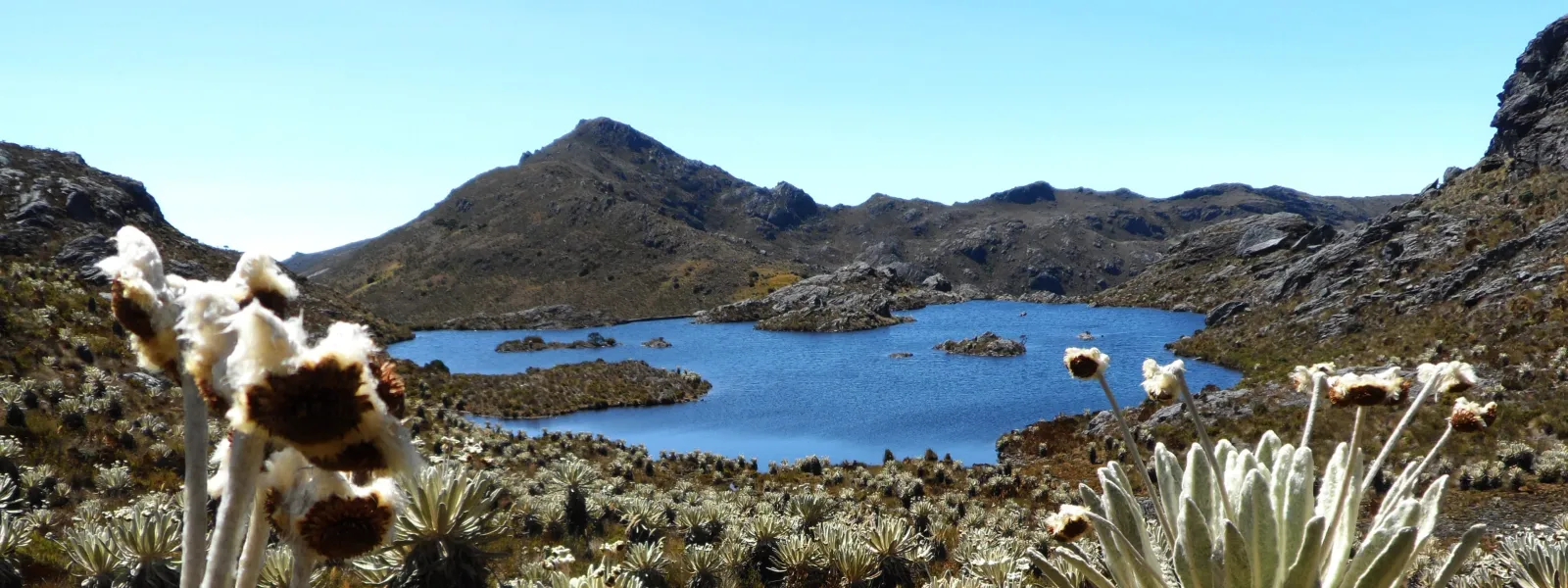
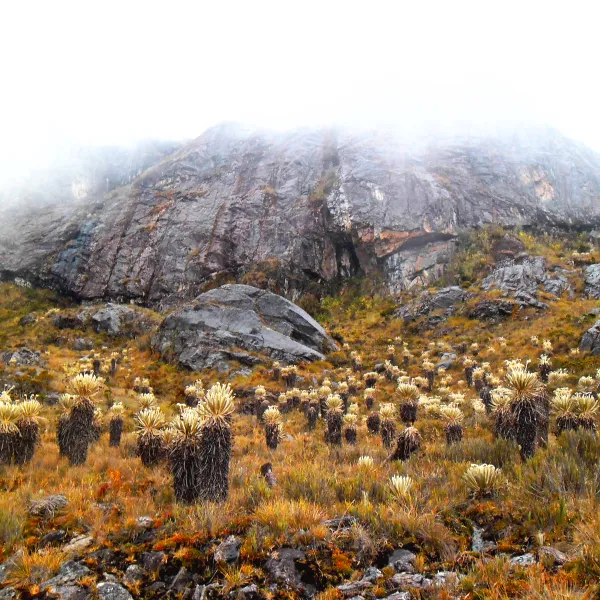
In the Andean region, high-mountain ecosystems known as páramos capture water from the fog and supply it to the lowlands. One such ecosystem is the Santurbán páramo, which provides fresh water to more than two million people in Colombia.
Santurbán, like the other páramos on the continent, also captures large amounts of carbon, making it a key ally in mitigating the climate crisis. It is also a refuge for hundreds of endangered species, including the iconic spectacled bear.
The land in and around the páramo contains gold and other minerals. This has put Santurbán in the spotlight of the multinational mining industry, which for decades has sought to establish large-scale projects in the ecosystem that threaten to degrade it.
The Committee for the Defense of Water and the Santurbán Páramo—a coalition of environmental advocates—has thwarted these ongoing attempts, with support from AIDA and other civil society organizations.
Background
The Santurbán páramo is located in the heart of the Eastern Cordillera of the Colombian Andes, in the departments of Santander and Norte de Santander, at an elevation ranging from 2,200 to 4,290 meters above sea level.
It covers an area of 129,743 hectares and is home to 57 lakes. It serves as a habitat for 457 plant species and 293 species of vertebrate fauna.
There are mineral deposits in Santurbán, primarily gold, but also silver and copper. This explains the region’s mining tradition, particularly in the part of the páramo located in Santander, in the province of Soto Norte. The communities in the area have built their culture and identity around gold mining, which is mainly artisanal and small-scale.
But since the 1990s, the gold deposits in the páramo have also attracted foreign mining conglomerates seeking to develop large-scale projects. This has raised concerns among the population that relies on the Santurbán water sources, who have mobilized in defense of water, their land, and life.
Although national and international regulations prohibit mining in páramos, the Colombian government has granted mining concessions to transnational corporations in Santurbán.

Photo: Keishpixl / Pixabay.
The long struggle to protect the páramo
One of the companies that sought to develop large-scale mining in Santurbán is Eco Oro Minerals Corp.—formerly Greystar Resources—a Canadian company that intended to establish the Angostura open-pit mine there to extract gold and silver. Between 1994 and 1995, the company acquired its mining titles and conducted exploration. And in 2010, it applied for a mining permit.
That was the year AIDA became involved in defending the ecosystem, supporting the Committee for the Defense of Water and the Santurbán Páramo. Our legal work helped convince the Colombian government to deny the mine an environmental permit in May 2011.
In January 2013, the government designated a portion of the páramo (11,700 hectares) as a Regional Natural Park. That year—together with the committee and partner organizations—we carried out a campaign and advocacy efforts to urge the government to recognize the entire Santurbán area as a páramo ecosystem through a delimitation based on scientific criteria. In December 2014, the Ministry of the Environment established a delimitation that protected 76% of the páramo (98,954 hectares).
Furthermore, as a result of a litigation supported by AIDA, in February 2016, Colombia’s highest court reaffirmed that mining in páramos is prohibited.
That same year, in December, the International Finance Corporation (IFC), the World Bank Group’s private sector arm, decided to divest from Eco Oro Minerals. This achievement was the result of a process that began in 2012, when the committee—advised and supported by AIDA and international partner organizations—filed a complaint before an independent accountability mechanism, which concluded that the IFC’s investment in the Angostura project failed to take into account the project’s social and environmental impacts, thereby contradicting the financial institution’s internal policies.
Also in 2016, Eco Oro Minerals filed an arbitration claim against the Colombian government with the International Centre for Settlement of Investment Disputes (ICSID), arguing that it had been adversely affected by government decisions aimed at protecting the country’s páramos, including the delimitation of Santurbán.
In 2017, the Constitutional Court invalidated the delimitation because the affected communities were not consulted. The high court ordered that a participatory delimitation be carried out.
And that year, a new threat to Santurbán emerged when the Canadian multinational Aris Mining applied for an environmental permit for Soto Norte, a gold mining project located near the páramo. Following citizen protests and technical objections, in October 2020, the National Environmental Licensing Authority shelved the project.
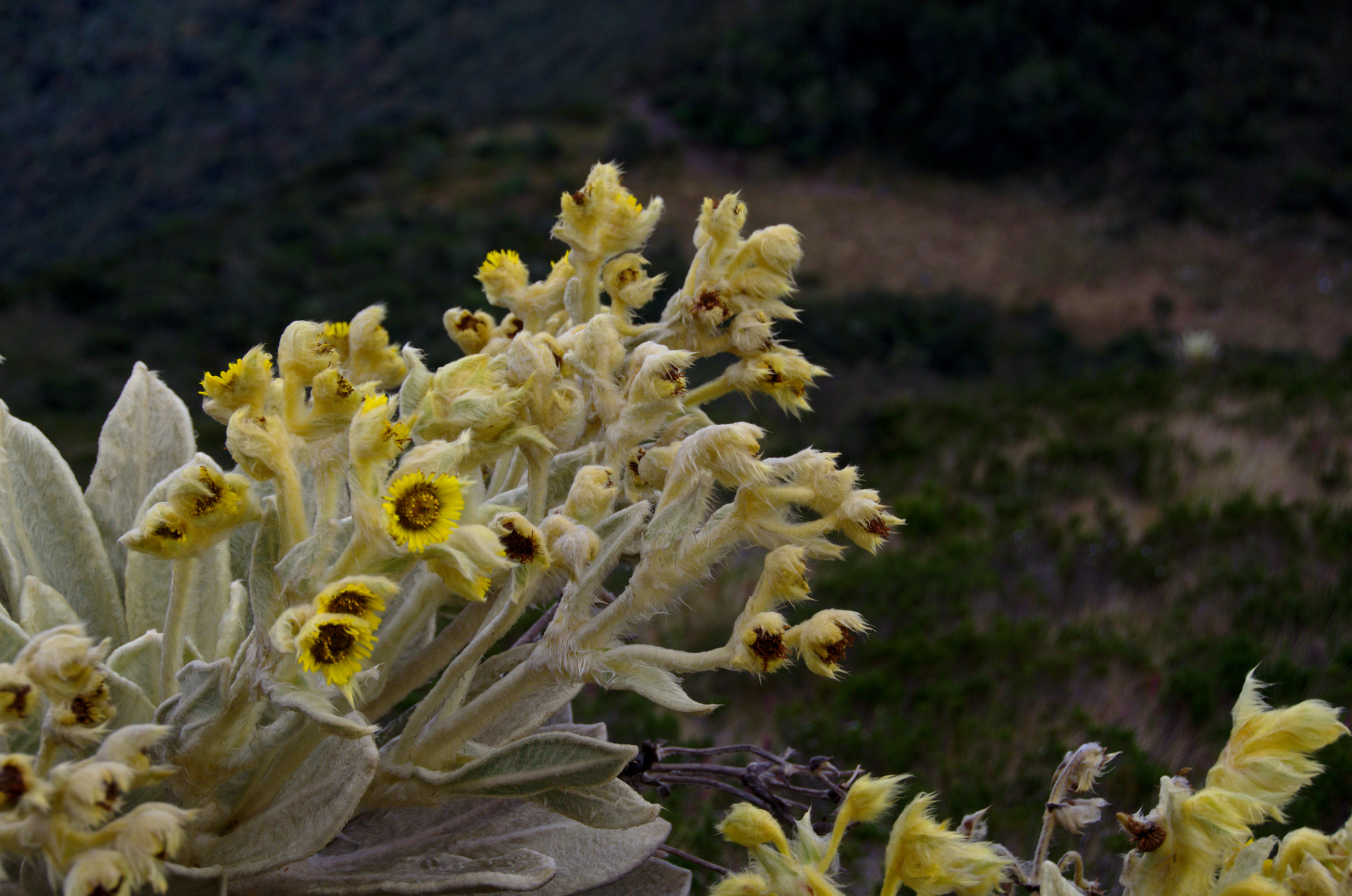
Photo: Aztlec.
Current situation
In March 2025, the Colombian government designated the western flank of the Santurbán massif as a temporary renewable natural resource reserve area, delimiting and protecting an area of 75,344.65 hectares. This resulted in a two-year suspension of the Soto Norte project. However, Aris Mining's contract to formalize Calimineros' small-scale mining activities through the purchase and processing of mineralized material remains in effect.
In addition, the Canadian mining company continues to move the project forward. In September 2025, it released its prefeasibility study, revising the mine’s original design.
Meanwhile, members of the Committee for the Defense of Water and the Santurbán Páramo face threats and stigmatization because of their work. In March 2025, UN Special Rapporteurs and the Working Group on Business and Human Rights denounced these incidents in communications sent to the governments of Colombia, Canada, and the United Arab Emirates, as well as to the companies Aris Mining and MDC Industry Holding Company LLC, the former co-owner of the Soto Norte project.
Regarding the arbitration claim filed by Eco Oro Minerals, in July 2024, ICSID ruled in favor of the Colombian government and rejected the Canadian company’s claim for USD 1.1 billion in compensation.
Concerning the delimitation of Santurbán, in July 2026, the Ministry of the Environment issued a resolution introducing the concept of "progressive delimitation." On that basis, the government proposes to progressively demarcate the páramo, covering 29,199 hectares across 19 municipalities—those where the participatory agreements required by the Constitutional Court in its 2017 ruling have already been finalized. It also proposes two measures on the creation and expansion of reserves to restrict mining in the ecosystem.
Learn more about the impacts of mining on the páramos of Latin America (in Spanish).
Partners:
Related projects

Organisations demand justice in criminalization case against Rigoberto Juárez, ancestral authority and environmental and human rights defender of Guatemala
Organisations dedicated to the protection of human rights defenders, and national and international organisations working on the promotion and protection of human rights and indigenous peoples rights, express our concern over the criminalization process against Rigoberto Juárez, ancestral authority, environmental and human rights defender, and general coordinator of the Plurinational Ancestral Government of the Original Nations Mayas Akateka, Chuj, Q’anjob’al y Popti’.The judicial process against Rigoberto began in 2015 due to his role as a mediator and ancestral authority in a land conflict within the Q'anjob'al territory, specifically in the Ixquisis micro-region. This conflict arose from the indigenous Maya community's resistance to the poorly implemented and unconsulted hydroelectric projects by Energía y Renovación S.A., financed by BID Invest.The judicial process lacked an intercultural and differentiated approach. Additionally, the decisions made in the second instance and by the cassation court have ignored the factual and legal arguments presented by the defense regarding Rigoberto Juárez's role as an ancestral authority, which involved, at the community's request, assuming a mediator role in the high-conflict situation.From the perspective of the signing organizations, this judicial process has been used as a reprisal mechanism against the human rights defender’s legitimate human rights work. In particular, due to his crucial role in bringing visibility to, and reporting on, the Ixquisis case through a complaint submitted to the Independent Consultation and Investigation Mechanism (MICI) of the Inter-American Development Bank. Evidence of this can be found in the temporal overlaps of this process with crucial moments of the complaint filed with the MICI.In view of this concerning situation, we request judicial authorities to consider the arguments submitted by the legal defense of Rigoberto Juárez in the amparo action filed on 22 August and to make a decision that takes into account the specific guarantees of Rigoberto Juárez as an ancestral authority and as an environmental and human rights defender. Likewise, we call on international human rights institutions to urge the State of Guatemala to resolve the case of Rigoberto in accordance with their international obligations, and to prevent and address the serious trend of criminalization of indigenous authorities exercising their rights and responsibilities. Signed by:International Platform against ImpunityProtection International MesoaméricaInteramerican Association for Environmental Defense (AIDA)Franciscans InternationalRed Nacional por la Defensa de la Soberanía Alimentaria en Guatemala (REDSAG)Bank Information CenterInternational Service for Human RightsFront Line DefendersNISGUA (Network in Solidarity with the People of Guatemala)ASERJUSP. Marco Tulio Recinos Torres. CPPS.Center for International Environmental Law (CIEL)María Eugenia Solís GarcíaAlba Cecilia del Rosario Mérida PiedrasantaPress contact:Víctor Quintanilla (Mexico), AIDA, [email protected], +521 5570522107
Read more
The Manaus Declaration on Human Rights in the Climate Emergency
Indigenous Peoples, local communities, Afrodescendants, tribal and rural communities, children and adolescents, women, LGBTQI+, non-governmental organizations, platforms, institutions, and individuals urge the Court and States to adopt minimum standards for the protection of human rights in the context of the climate emergency, as elaborated during the public hearings of the Advisory Opinion, particularly the one held in Manaus, Brazil, from May 25-29, where communities, peoples and civil society of the region met in an unprecedented judicial setting.We notice that the overall balance, after more than 30 years of international discussions regarding the climate emergency, is regrettable, as there is no evidence of an effective commitment by States to avoid greenhouse gas (GHG) emissions, to grant reparations to those who have suffered climate damage, and to ensure that changes in their internal laws and policies, including economic policies, are compatible with the average global temperature limit set in the Paris Agreement.We highlight that several international courts, including the Inter-American Court of Human Rights, have the historic opportunity to formally clarify the human rights obligations of States in the context of the climate emergency through its advisory function, and in that sense, to set robust standards for the protection of rights based on current international standards relating to the protection those populations that have been historically excluded and discriminated against, and that are significantly more vulnerable to the climate emergency. Read and download the declaration
Read more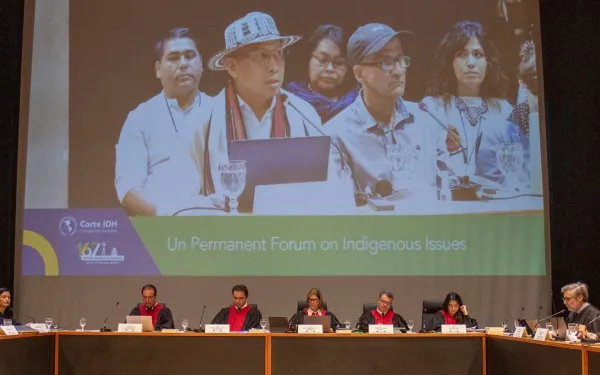
Declaration of Manaus urges the Inter-American Court to clarify State obligations in climate emergency
San Jose, Costa Rica - Today, a coalition comprising over 400 communities, Indigenous and Tribal Peoples, and representatives of civil society presented the “Declaration of Manaus on Human Rights in the Climate Emergency” to the Inter-American Court of Human Rights (IACtHR). The widely endorsed declaration calls on the Court to articulate, in its forthcoming Advisory Opinion on the Climate Emergency and Human Rights, minimum standards for respecting and protecting human rights in the context of the climate crisis. It draws upon the insights of more than 150 participants who contributed during the public hearings on the process of the Advisory Opinion mentioned.The hearings, conducted in Bridgetown, Barbados (April 22–25), Brasilia (May 24), and Manaus (May 25–29), Brazil, served as a forum for the presentation of compelling testimonies from individuals and entire communities impacted by the climate emergency. In Manaus, in the heart of the Amazon, there was a strong emphasis on the expectation that the Court would issue a robust advisory opinion aimed at ensuring the protection of both people and the planet.The Declaration urges the Court to clarify the human rights obligations of States and reinforce the accountability of corporations and financial actors for their role in the climate crisis."The role played by the IACtHR Advisory Opinion is strategic at a historic moment for climate justice globally. The Court’s decision can reinforce and expand on what has already been established by the International Tribunal for the Law of the Sea (ITLOS) on the obligations to protect the oceans from climate change. It will undoubtedly influence the subsequent interpretation of the International Court of Justice (ICJ) on the duties of States to protect communities and the planet in the face of the climate crisis," said Marcella Ribeiro, senior attorney with the Human Rights and Environment Program of the Interamerican Association for Environmental Defense. "The standards set by the Court will set new paradigms for access to justice in the context of the triple planetary crisis, influencing pending and future cases, as well as laws and policies inside and outside the continent. Lastly, this decision has great potential to help overcome the political impasse in the international climate negotiations."The Declaration, signed by over 400 parties, requests the Court to:Acknowledge that in the face of the climate emergency, all human rights, including the right to a healthy environment, must be upheld by all States. This obligation should be interpreted under the principle of Common but Differentiated Responsibilities and in line with the average global temperature increase limit established by the Paris Agreement and informed by the best available science.Specify that States need to transition to fossil-free economies without harming local communities and causing environmental impacts that exceed planetary limits.Ensure public access to information and participation, as well as the right to climate justice. This includes providing legal and institutional mechanisms for communities affected by the crisis to seek legal recourse, as well as raising awareness and training the judiciary on climate-related issues.Protect and facilitate the work of environmental defenders in the context of the climate emergency and energy transition.Guarantee adaptation measures to address the effects of climate change, ensuring the protection of all human rights, especially for vulnerable or historically discriminated groups.Uphold the right to self-determination of Indigenous and Tribal Peoples by obtaining their consent for measures directly affecting them in the context of climate change and energy transition.Ensure that victims and survivors of climate-related harm are granted comprehensive and just reparations and that climate judgments have financial resources for their implementation. "The Manaus Declaration also addresses corporate responsibility for the crisis. We urge the Court to reinforce States’ obligations to regulate corporate actors and ensure that those responsible for human rights violations related to the climate crisis are held accountable," adds Luisa Gómez Betancur, senior attorney at the Center for International Environmental Law (CIEL). "Consistent with the polluter pays principle in international law, fossil fuel and agribusiness companies that are the primary drivers of climate change must cover the costs of mitigation and adaptation, as well as provide full reparation to victims for climate harm."Those supporting the Declaration are urging the IACtHR, as a guardian of human rights, to take a strong and forward-thinking stance. This approach should hold those who have had the most impact on the climate crisis responsible, guide inter-American policies towards environmentally sustainable economies, and establish a foundation for climate, environmental, and social justice worldwide, starting with Latin America."We hope that by listening to the testimonies of those of us who suffer the worst consequences of the climate emergency, the IACtHR will heed our call and order the States to respect our right to self-determination and the way in which we relate to our territories, prioritizing their care and conservation. For this reason, we join our voices in the Manaus declaration to remind the Court of the unique opportunity it has to mark a before and after in the fight for climate justice and the protection of our rights," said Everildys Córdoba Borja, legal representative of the Community Council of Black Communities of the Tolo River Basin and Southern Coastal Zone (COCOMASUR), Colombia.Read and download the declaration Press contactsNiccolo Sarno, CIEL, [email protected] Arista, EarthRights International, [email protected], +51 941 242 447Karina Saravia, CANLA, [email protected], +505 84331292
Read more