
Project
Alberto Peña Kay
Protecting the Santurban páramo from mining's damage
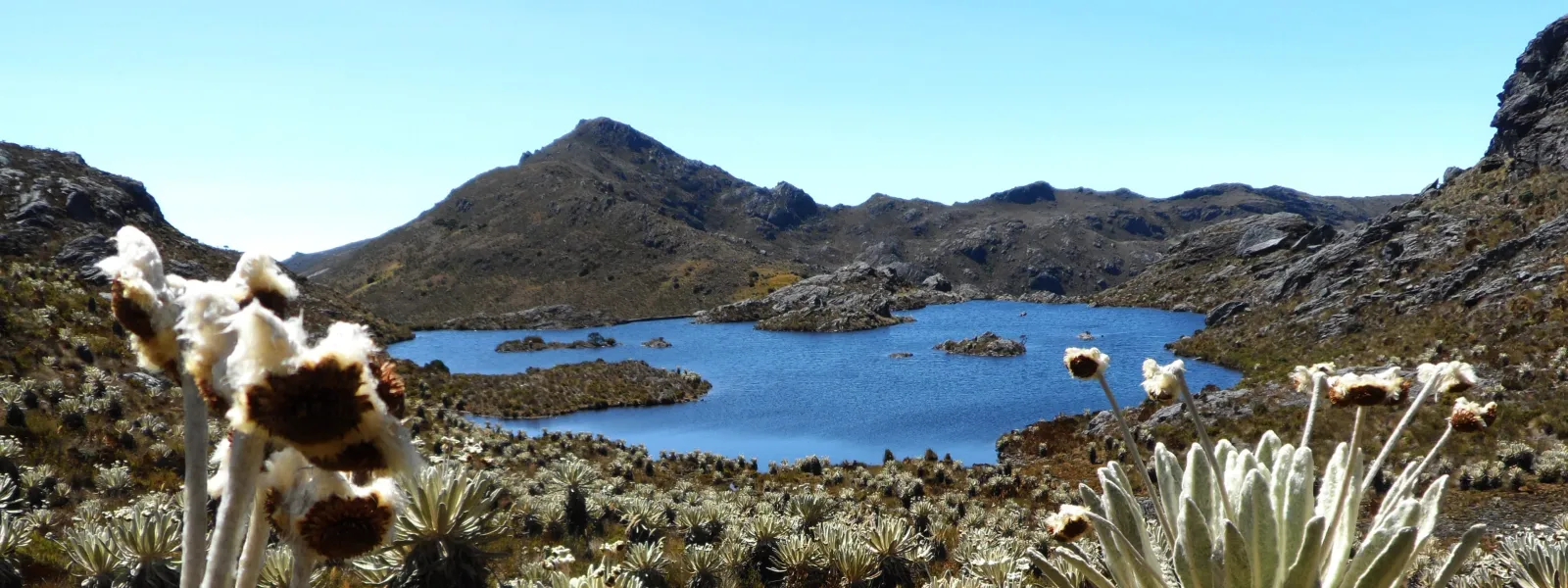
In the Andean region, high-mountain ecosystems known as páramos capture water from the fog and supply it to the lowlands. One such ecosystem is the Santurbán páramo, which provides fresh water to more than two million people in Colombia.
Santurbán, like the other páramos on the continent, also captures large amounts of carbon, making it a key ally in mitigating the climate crisis. It is also a refuge for hundreds of endangered species, including the iconic spectacled bear.
The land in and around the páramo contains gold and other minerals. This has put Santurbán in the spotlight of the multinational mining industry, which for decades has sought to establish large-scale projects in the ecosystem that threaten to degrade it.
The Committee for the Defense of Water and the Santurbán Páramo—a coalition of environmental advocates—has thwarted these ongoing attempts, with support from AIDA and other civil society organizations.
Background
The Santurbán páramo is located in the heart of the Eastern Cordillera of the Colombian Andes, in the departments of Santander and Norte de Santander, at an elevation ranging from 2,200 to 4,290 meters above sea level.
It covers an area of 129,743 hectares and is home to 57 lakes. It serves as a habitat for 457 plant species and 293 species of vertebrate fauna.
There are mineral deposits in Santurbán, primarily gold, but also silver and copper. This explains the region’s mining tradition, particularly in the part of the páramo located in Santander, in the province of Soto Norte. The communities in the area have built their culture and identity around gold mining, which is mainly artisanal and small-scale.
But since the 1990s, the gold deposits in the páramo have also attracted foreign mining conglomerates seeking to develop large-scale projects. This has raised concerns among the population that relies on the Santurbán water sources, who have mobilized in defense of water, their land, and life.
Although national and international regulations prohibit mining in páramos, the Colombian government has granted mining concessions to transnational corporations in Santurbán.

Photo: Keishpixl / Pixabay.
The long struggle to protect the páramo
One of the companies that sought to develop large-scale mining in Santurbán is Eco Oro Minerals Corp.—formerly Greystar Resources—a Canadian company that intended to establish the Angostura open-pit mine there to extract gold and silver. Between 1994 and 1995, the company acquired its mining titles and conducted exploration. And in 2010, it applied for a mining permit.
That was the year AIDA became involved in defending the ecosystem, supporting the Committee for the Defense of Water and the Santurbán Páramo. Our legal work helped convince the Colombian government to deny the mine an environmental permit in May 2011.
In January 2013, the government designated a portion of the páramo (11,700 hectares) as a Regional Natural Park. That year—together with the committee and partner organizations—we carried out a campaign and advocacy efforts to urge the government to recognize the entire Santurbán area as a páramo ecosystem through a delimitation based on scientific criteria. In December 2014, the Ministry of the Environment established a delimitation that protected 76% of the páramo (98,954 hectares).
Furthermore, as a result of a litigation supported by AIDA, in February 2016, Colombia’s highest court reaffirmed that mining in páramos is prohibited.
That same year, in December, the International Finance Corporation (IFC), the World Bank Group’s private sector arm, decided to divest from Eco Oro Minerals. This achievement was the result of a process that began in 2012, when the committee—advised and supported by AIDA and international partner organizations—filed a complaint before an independent accountability mechanism, which concluded that the IFC’s investment in the Angostura project failed to take into account the project’s social and environmental impacts, thereby contradicting the financial institution’s internal policies.
Also in 2016, Eco Oro Minerals filed an arbitration claim against the Colombian government with the International Centre for Settlement of Investment Disputes (ICSID), arguing that it had been adversely affected by government decisions aimed at protecting the country’s páramos, including the delimitation of Santurbán.
In 2017, the Constitutional Court invalidated the delimitation because the affected communities were not consulted. The high court ordered that a participatory delimitation be carried out.
And that year, a new threat to Santurbán emerged when the Canadian multinational Aris Mining applied for an environmental permit for Soto Norte, a gold mining project located near the páramo. Following citizen protests and technical objections, in October 2020, the National Environmental Licensing Authority shelved the project.
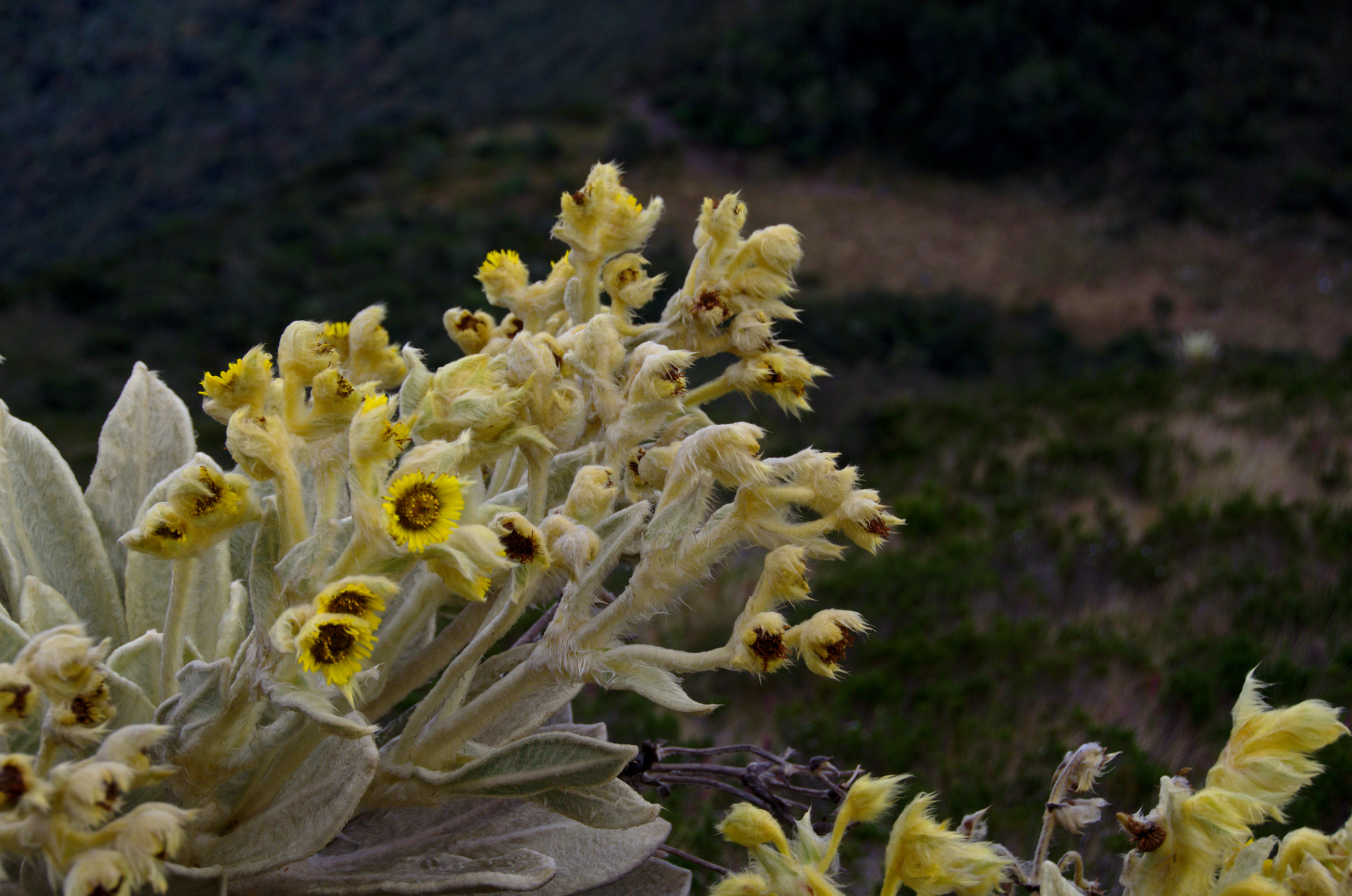
Photo: Aztlec.
Current situation
In March 2025, the Colombian government designated the western flank of the Santurbán massif as a temporary renewable natural resource reserve area, delimiting and protecting an area of 75,344.65 hectares. This resulted in a two-year suspension of the Soto Norte project. However, Aris Mining's contract to formalize Calimineros' small-scale mining activities through the purchase and processing of mineralized material remains in effect.
In addition, the Canadian mining company continues to move the project forward. In September 2025, it released its prefeasibility study, revising the mine’s original design.
Meanwhile, members of the Committee for the Defense of Water and the Santurbán Páramo face threats and stigmatization because of their work. In March 2025, UN Special Rapporteurs and the Working Group on Business and Human Rights denounced these incidents in communications sent to the governments of Colombia, Canada, and the United Arab Emirates, as well as to the companies Aris Mining and MDC Industry Holding Company LLC, the former co-owner of the Soto Norte project.
Regarding the arbitration claim filed by Eco Oro Minerals, in July 2024, ICSID ruled in favor of the Colombian government and rejected the Canadian company’s claim for USD 1.1 billion in compensation.
Concerning the delimitation of Santurbán, in July 2026, the Ministry of the Environment issued a resolution introducing the concept of "progressive delimitation." On that basis, the government proposes to progressively demarcate the páramo, covering 29,199 hectares across 19 municipalities—those where the participatory agreements required by the Constitutional Court in its 2017 ruling have already been finalized. It also proposes two measures on the creation and expansion of reserves to restrict mining in the ecosystem.
Learn more about the impacts of mining on the páramos of Latin America (in Spanish).
Partners:
Related projects
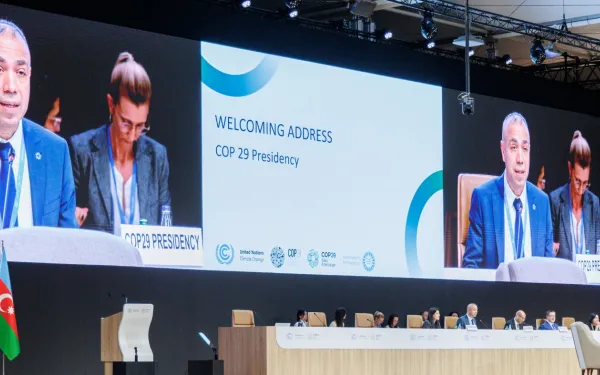
COP29: Climate target disappoints and invites us to look elsewhere for hope
The twenty-ninth United Nations Climate Change Conference (COP29), held in Baku, Azerbaijan, was dubbed "the COP of finance" because the most anticipated decision was the establishment of the New Collective and Quantifiable Global Climate Finance Goal (NCQG), the amount that developed countries would pledge to finance climate action in developing countries. This issue grabbed all the attention, overshadowing everything else.In addition, the recent re-election of Donald Trump as President of the United States, accompanied by his threat to abandon the Paris Agreement and reverse the country's climate action, set the tone for the event.The negotiations, which took place from November 11 to 22, were intense and ended almost two full days late, with the approval of a text that caused great disappointment.However, the invitation is not to be blinded by disappointment. As much as we want, demand and hope, the international climate negotiations are not delivering what we so desperately need. Let us look for hope in what is happening and working, such as local, community-led projects and the work of civil society that is not giving up.Here is a review of COP29 based on what was agreed on climate finance and other relevant issues. A new climate finance targetThe mandate was clear: the new target should exceed the previous one of $100 billion per year and respond to the needs and priorities of developing countries. But while developing countries demanded $1.3 trillion per year, the offer was a mere $300 billion (less than a third and just 12% of the global military budget in 2023) by 2035. "Is this a joke?" exclaimed the head of the Bolivian delegation at a press conference.Developing countries also demanded that financing be adequate, i.e. based mainly on public resources, in the form of grants and highly concessional instruments that would not add to the heavy debts they already carry. They also called for the explicit inclusion of loss and damage as one of the objectives of financing (along with mitigation and adaptation), as well as a specific target for adaptation.None of this was achieved. The target was left open to private financing, further diluting the responsibility of developed countries. There was no specific target for adaptation, nor was there any mention of loss and damage. In case there was any doubt, all references to human rights were removed from the final text.The only saving grace was a call to mobilize $1.3 trillion in climate finance annually from a broad base of sources through the so-called Baku-Belem Roadmap, with a view to achieving this goal by 2035. However, this is a "call" and not a binding commitment, the concrete results of which will depend on political will in the coming years. Global stocktaking and gender issuesNo significant progress was made on the results of last year's Global Stocktaking on the implementation of the Paris Agreement, particularly on the transition away from fossil fuels. The issue was deferred to COP30, which will be held next year in the Brazilian city of Belém do Pará.While there has also been insufficient progress on gender issues, some progress should be recognized, such as the extension of the Lima Work Program to 10 years, which lays the groundwork for the development of a Gender Action Plan and provides an opportunity to further deepen the integration of gender into climate action, particularly as countries develop updates to their Nationally Determined Contributions (NDCs).In addition, the text of the NCQG recognizes women as beneficiaries of funds but fails to ensure that the specific circumstances and intersectional discrimination that many women face are addressed. Carbon marketsWhat did see advances during the negotiations were carbon markets, with the approval of the rules for a global market. Carbon markets are trading systems where carbon credits are bought and sold. Each credit represents one ton of CO₂, or its equivalent in other greenhouse gases, removed from the atmosphere. The credits are generated by projects that reduce emissions (such as forest conservation, renewable energy, or energy efficiency). The buyers are polluting companies that want to offset their emissions in order to remain in compliance.The issue has been under discussion for more than a decade due to the difficulty of ensuring the credibility of the system to reduce emissions. Although it is the last outstanding issue of the Paris Agreement, signed more than 10 years ago, civil society is not celebrating. These markets allow companies to continue polluting if they pay for carbon reductions elsewhere in the world. Methane emission reductionsA promising development was the signing of the Declaration on Methane Reduction from Organic Waste by more than 30 countries. The signatories, representing nearly half of global emissions, committed to setting sector-specific methane reduction targets in their future NDCs, underscoring the importance of organic waste management in the fight against climate change. Closing thoughtsIn the end, the results are not surprising. Conventions on climate change are often not much to celebrate, but we must not forget that they are a unique space where all countries sit down to seek consensus to advance a common goal. Its very existence reflects an intention to acknowledge historical responsibilities in favor of justice and a world where we can live together in harmony. It is a platform from which to push, even if it brings more frustration than results.On the other hand, it is very encouraging and motivating to see civil society in action. Hundreds of representatives from different organizations and movements are doing their best to achieve results that reflect the fulfillment of international commitments of developed countries towards their developing counterparts, the climate and the natural balance of our planet.Finally, the side events that take place parallel to the negotiations are a source of inspiration. On the sidelines, without much fanfare, there are people from communities and indigenous peoples who are implementing climate solutions in their territories, with concrete, successful results. These people, like seeds silently germinating, are a powerful source of hope.
Read more
The ABCs of "critical" or transition minerals and their role in energy production
By Mayela Sánchez, David Cañas and Javier Oviedo* There is no doubt that we need to move away from fossil fuels to address the climate crisis. But what does it mean to switch to other energy sources?To make a battery or a solar panel, raw materials from nature are also used.Some of these raw materials are minerals which, due to their characteristics and in the context of the energy transition, have been descriptively named "critical" minerals or transition minerals.What are these minerals, where are they found, and how are they used?Below we answer the most important questions about these mineral resources, because it is crucial to know which natural resources will supply the new energy sources, and to ensure that their extraction respects human rights and planetary limits, so that the energy transition is just. What are "critical" or transition minerals and why are they called that?They are a group of minerals with a high capacity to store and conduct energy. Because of these properties, they are used in the development of renewable energy technologies, such as solar panels, batteries for electric mobility, or wind turbines.They are so called because they are considered strategic to the energy transition. The term "critical" refers to elements that are vital to the economy and national security, but whose supply chain is vulnerable to disruption. This means that transition minerals may be strategic minerals, but not critical in terms of security and the economy.However, given the urgency of climate action, some states and international organizations have classified transition minerals as "critical" minerals in order to promote and facilitate access to these raw materials.They are also often referred to as transition minerals because they are considered essential for the technological development of renewable energy sources, such as those mentioned above. And in the context of the energy transition, energy sources that use these minerals are the most sought-after to replace fossil energy sources. What are the most important "critical" or transition minerals?The most important transition minerals are cobalt, copper, graphite, lithium, nickel and rare earth.But there are at least 19 minerals used in various renewable energy technologies: bauxite, cadmium, cobalt, copper, chromium, tin, gallium, germanium, graphite, indium, lithium, manganese, molybdenum, nickel, selenium, silicon, tellurium, titanium, zinc, and the "rare" earth. What are "rare" earth elements and why are they so called?The "rare" earth elements are the 16 chemical elements of the lanthanoid or lanthanide group, plus Ithrium (Y), whose chemical behavior is virtually the same as that of the lanthanoids.They are Scandium, Ithrium, Lanthanum, Cerium, Praseodymium, Neodymium, Samarium, Europium, Gadolinium, Terbium, Dysprosium, Holmium, Erbium, Tullium, Iterbium and Lutetium.They are so called because when they were discovered in the 18th and 19th centuries, they were less well known than other elements considered similar, such as calcium. But the name is now outdated.Nor does the term "rare" refer to their abundance, because although they are not usually concentrated in deposits that can be exploited (so their mines are few), even the less abundant elements in this group are much more common than gold. What are "critical" or transition minerals used for? What technologies are based on them?The uses of transition minerals in the technological development of renewable energy sources are diverse:Solar technologies: bauxite, cadmium, tin, germanium, gallium, indium, selenium, silicon, tellurium, zinc.Electrical installations: copper.Wind energy: bauxite, copper, chromium, manganese, molybdenum, rare earths, zinc.Energy storage: bauxite, cobalt, copper, graphite, lithium, manganese, molybdenum, nickel, rare earths, titanium.Batteries: cobalt, graphite, lithium, manganese, nickel, rare earths. In addition, they are used in a variety of modern technologies, for example in the manufacture of displays, cell phones, computer hard drives and LED lights, among others. Where are "critical" or transition minerals found?The geography of transition minerals is broad, ranging from China to Canada, from the United States to Australia. But their extraction has been concentrated in countries of the global south.Several Latin American countries are among the top producers of various transition minerals. These materials are found in complex areas rich in biological and cultural diversity, such as the Amazon and the Andean wetlands.Argentina: lithiumBrazil: aluminum, bauxite, lithium, manganese, rare earths, titaniumBolivia: lithiumChile: copper, lithium, molybdenumColombia: nickelMexico: copper, tin, molybdenum, zincPeru: tin, molybdenum, zinc How do "critical" or transition minerals support the energy transition and decarbonization?Transition minerals are seen as indispensable links in the energy transition to decarbonization, i.e. the shift away from fossil energy sources.But the global interest in these materials also raises questions about the benefits and challenges of mining transition minerals.The issue has become so relevant that last September, the United Nations Panel on Critical Minerals for Energy Transition issued a set of recommendations and principles to ensure equitable, fair and sustainable management of these minerals.In addition, as a result of the intensification and expansion of their extraction in countries of the region, the issue was brought before the Inter-American Commission on Human Rights for the first time on November 15.In a public hearing, representatives of communities and organizations from Argentina, Bolivia, Chile and Colombia, as well as regional organizations, presented information and testimonies on the environmental and social impacts of transition mineral mining.Given the current energy transition process, it is necessary to know where the resources that will enable the technologies to achieve this transition will come from.The extraction and use of transition minerals must avoid imposing disproportionate environmental and social costs on local communities and ecosystems. *Mayela Sánchez is a digital community specialist at AIDA; David Cañas and Javier Oviedo are scientific advisors.Sources consulted:-Olivera, B., Tornel, C., Azamar, A., Minerales críticos para la transición energética. Conflictos y alternativas hacia una transformación socioecológica, Heinrich Böll Foundation Mexico City/Engenera/UAM-Unidad Xochimilco.-Science History Institute Museum & Library, “History and Future of Rare Earth Elements”.-FIMA NGO, Narratives on the extraction of critical minerals for the energy transition: Critiques from environmental and territorial justice.-Haxel, Hedrick & Orris, “Rare Earth-Elements. Critical Resources for High Technology,” 2005.-USGS 2014, “The Rare-Earth elements. Vital to modern technology and lifestyle”, 2014.-Final Report for the Inter-American Commission on Human Rights (IACHR) Thematic Hearing: Minerals for Energy Transition and its Impact on Human Rights in the Americas, 2024.
Read more
Whales and salmon farming: how does the industry impact our gentle marine giants?
Chile is by nature a country of marine mammals. Of the 94 species of cetaceans existing in the world, 43 have their habitat in the country's waters. And just over a quarter of them are found in Patagonia. But Chile is also a country of salmon, occupying the second place in the world production, surpassed only by Norway. The overlap of the salmon industry with the habitat of these emblematic marine mammals represents a significant threat to cetaceans in Chile about which not enough is known.The recent deaths of three whales in protected areas of Chile's southern seas force us to ask ourselves why they are dying and how they are affected by the growing industry with which they share their habitat.Civil society is responding. In early November 2024, Greenpeace - together with the Kawésqar community Grupos Familiares Nómadas del Mar and with the support of AIDA - filed two criminal complaints against those responsible for the deaths of humpback whales in protected areas.These lawsuits, which have already been declared admissible, represent an unprecedented milestone in the country's criminal history, as they are the first take advantage of the amendaments made to the Penal Code by Law 21,595 on Economic and Environmental Crimes to the Penal Code to file a lawsuit for possible violations committed inside protected areas.In this context, AIDA, together with Greenpeace and the NGO FIMA - historical allies in the resistance to the expansion of salmon farming in the waters of Chilean Patagonia - commissioned a scientific report entitle “Cetaceans and Salmon Farming: Challenges for the Protection of Marine Biodiversity in Chilean Patagonia.”The report is currently available in Spanish, which lays out the available information on the impacts of salmon farming on the whales and dolphins of Chilean Patagonia. The results are alarming: serious risks have been identified, in addition to a lack of data that makes it difficult to understand the magnitude and consequences of the threats.One of the most evident impacts is the incidental capture of small and large cetaceans in farming centers. There are documented cases of entanglement and deaths, although the lack of official records makes it difficult to measure the severity of the problem.Another significant threat is the Intense maritime traffic in Patagonia, largely related to the salmon industry. Although there is no official data in Chile, there is evidence of deaths and serious injuries due to collisions between boats and whales. In addition, underwater noise from boat engines affects the health and well-being of the whales and dolphins, which depend on sound for communication and orientation.In addition to these, there are other problems of the industry, whose effects on whales and dolphins have not been adequately studied, but which we should consider while the studies are being conducted. One of these is the escape of salmonids, which compete with native species for food resources and may carry diseases that could affect smaller cetaceans in particular by reducing the availability of prey that serve as food.Microplastic pollution, 40 percent of which comes from salmon farming centers, is another under-researched environmental concern in terms of its impact on cetaceans. And the excessive use of antibiotics in Chilean salmon farming, one of the highest rates in the world, could be having negative indirect effects on the ecosystems that support these marine mammals.Finally, one of the most significant environmental impacts of the salmon farming in Chilean Patagonia is the generation of hypoxia and anoxia due to the excess of organic matter in the farming centers, coming from salmon feces and uneaten food that falls to the seabed. The decomposition of this matter consumes the oxygen in the water, creating zones in the sea where life becomes difficult or impossible.We hope that this report will fill the information gap that has become uncomfortable and even untenable in light of recent whale deaths.With this evidence, even in a scenario of limited knowledge, we will be able to encourage a governmental response towards the rapid implementation of effective protection measures for whales and dolphins in Chilean waters.Chile is a country of cetaceans, and as their guardians, we must ensure that our waters are a safe space for their development and well-being. Read and download the report (in Spanish)
Read more