
Project
Alberto Peña Kay
Protecting the Santurban páramo from mining's damage
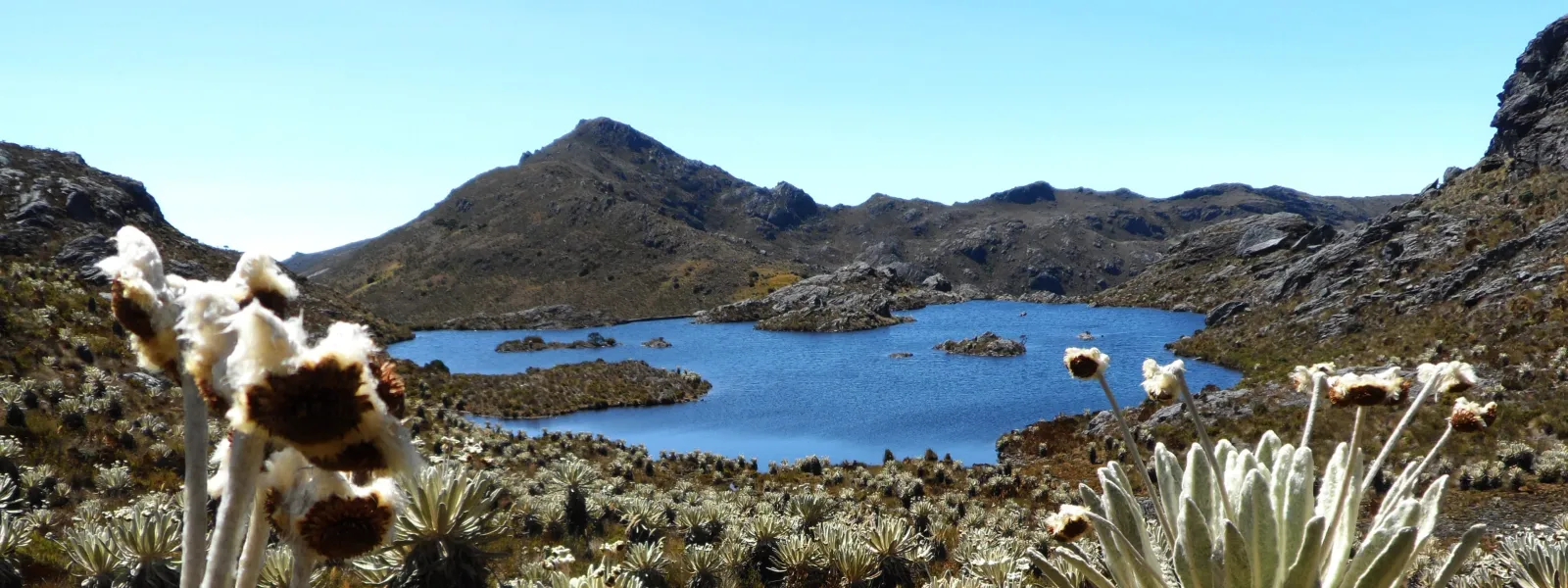
In the Andean region, high-mountain ecosystems known as páramos capture water from the fog and supply it to the lowlands. One such ecosystem is the Santurbán páramo, which provides fresh water to more than two million people in Colombia.
Santurbán, like the other páramos on the continent, also captures large amounts of carbon, making it a key ally in mitigating the climate crisis. It is also a refuge for hundreds of endangered species, including the iconic spectacled bear.
The land in and around the páramo contains gold and other minerals. This has put Santurbán in the spotlight of the multinational mining industry, which for decades has sought to establish large-scale projects in the ecosystem that threaten to degrade it.
The Committee for the Defense of Water and the Santurbán Páramo—a coalition of environmental advocates—has thwarted these ongoing attempts, with support from AIDA and other civil society organizations.
Background
The Santurbán páramo is located in the heart of the Eastern Cordillera of the Colombian Andes, in the departments of Santander and Norte de Santander, at an elevation ranging from 2,200 to 4,290 meters above sea level.
It covers an area of 129,743 hectares and is home to 57 lakes. It serves as a habitat for 457 plant species and 293 species of vertebrate fauna.
There are mineral deposits in Santurbán, primarily gold, but also silver and copper. This explains the region’s mining tradition, particularly in the part of the páramo located in Santander, in the province of Soto Norte. The communities in the area have built their culture and identity around gold mining, which is mainly artisanal and small-scale.
But since the 1990s, the gold deposits in the páramo have also attracted foreign mining conglomerates seeking to develop large-scale projects. This has raised concerns among the population that relies on the Santurbán water sources, who have mobilized in defense of water, their land, and life.
Although national and international regulations prohibit mining in páramos, the Colombian government has granted mining concessions to transnational corporations in Santurbán.

Photo: Keishpixl / Pixabay.
The long struggle to protect the páramo
One of the companies that sought to develop large-scale mining in Santurbán is Eco Oro Minerals Corp.—formerly Greystar Resources—a Canadian company that intended to establish the Angostura open-pit mine there to extract gold and silver. Between 1994 and 1995, the company acquired its mining titles and conducted exploration. And in 2010, it applied for a mining permit.
That was the year AIDA became involved in defending the ecosystem, supporting the Committee for the Defense of Water and the Santurbán Páramo. Our legal work helped convince the Colombian government to deny the mine an environmental permit in May 2011.
In January 2013, the government designated a portion of the páramo (11,700 hectares) as a Regional Natural Park. That year—together with the committee and partner organizations—we carried out a campaign and advocacy efforts to urge the government to recognize the entire Santurbán area as a páramo ecosystem through a delimitation based on scientific criteria. In December 2014, the Ministry of the Environment established a delimitation that protected 76% of the páramo (98,954 hectares).
Furthermore, as a result of a litigation supported by AIDA, in February 2016, Colombia’s highest court reaffirmed that mining in páramos is prohibited.
That same year, in December, the International Finance Corporation (IFC), the World Bank Group’s private sector arm, decided to divest from Eco Oro Minerals. This achievement was the result of a process that began in 2012, when the committee—advised and supported by AIDA and international partner organizations—filed a complaint before an independent accountability mechanism, which concluded that the IFC’s investment in the Angostura project failed to take into account the project’s social and environmental impacts, thereby contradicting the financial institution’s internal policies.
Also in 2016, Eco Oro Minerals filed an arbitration claim against the Colombian government with the International Centre for Settlement of Investment Disputes (ICSID), arguing that it had been adversely affected by government decisions aimed at protecting the country’s páramos, including the delimitation of Santurbán.
In 2017, the Constitutional Court invalidated the delimitation because the affected communities were not consulted. The high court ordered that a participatory delimitation be carried out.
And that year, a new threat to Santurbán emerged when the Canadian multinational Aris Mining applied for an environmental permit for Soto Norte, a gold mining project located near the páramo. Following citizen protests and technical objections, in October 2020, the National Environmental Licensing Authority shelved the project.
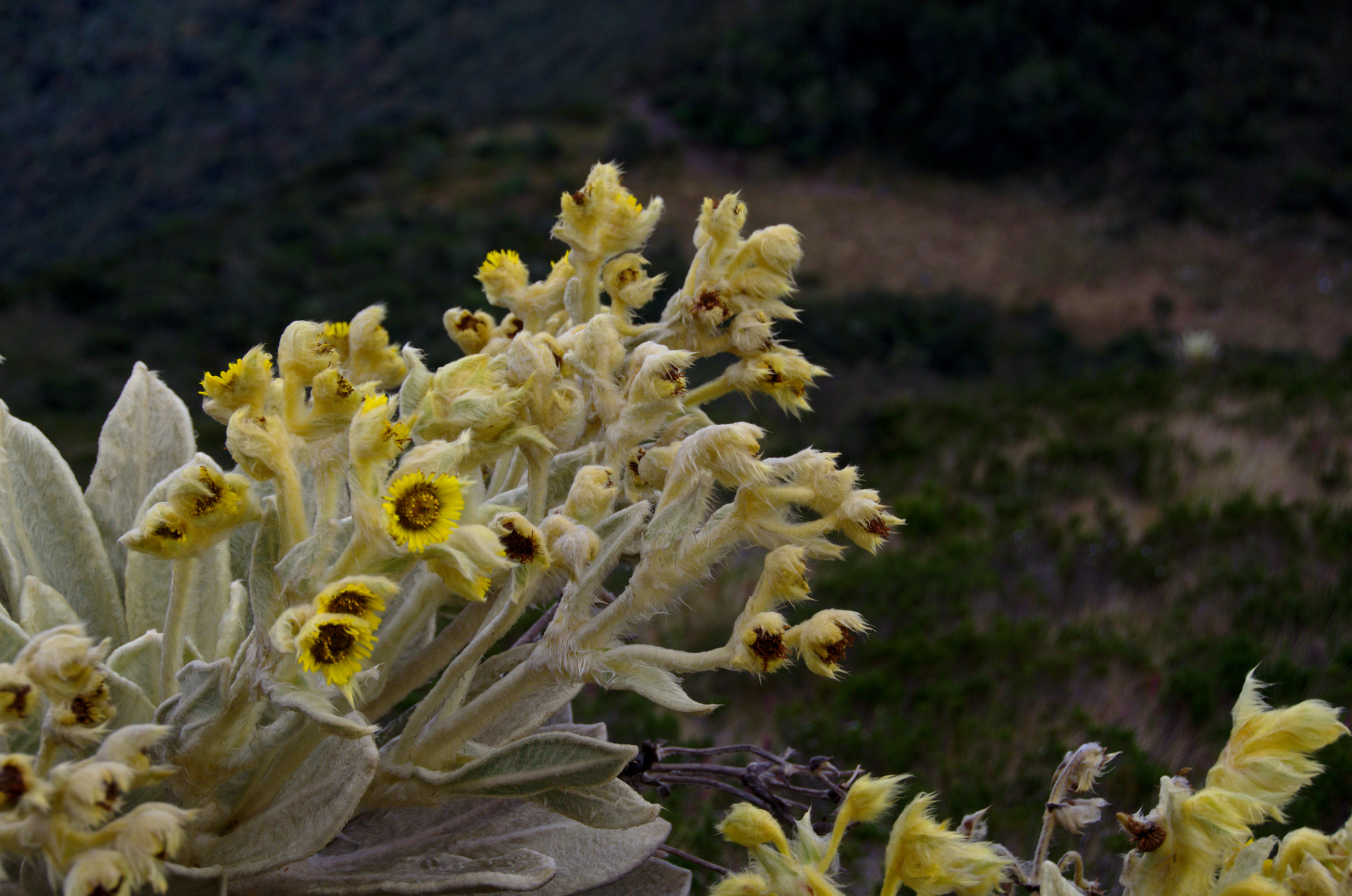
Photo: Aztlec.
Current situation
In March 2025, the Colombian government designated the western flank of the Santurbán massif as a temporary renewable natural resource reserve area, delimiting and protecting an area of 75,344.65 hectares. This resulted in a two-year suspension of the Soto Norte project. However, Aris Mining's contract to formalize Calimineros' small-scale mining activities through the purchase and processing of mineralized material remains in effect.
In addition, the Canadian mining company continues to move the project forward. In September 2025, it released its prefeasibility study, revising the mine’s original design.
Meanwhile, members of the Committee for the Defense of Water and the Santurbán Páramo face threats and stigmatization because of their work. In March 2025, UN Special Rapporteurs and the Working Group on Business and Human Rights denounced these incidents in communications sent to the governments of Colombia, Canada, and the United Arab Emirates, as well as to the companies Aris Mining and MDC Industry Holding Company LLC, the former co-owner of the Soto Norte project.
Regarding the arbitration claim filed by Eco Oro Minerals, in July 2024, ICSID ruled in favor of the Colombian government and rejected the Canadian company’s claim for USD 1.1 billion in compensation.
Concerning the delimitation of Santurbán, in July 2026, the Ministry of the Environment issued a resolution introducing the concept of "progressive delimitation." On that basis, the government proposes to progressively demarcate the páramo, covering 29,199 hectares across 19 municipalities—those where the participatory agreements required by the Constitutional Court in its 2017 ruling have already been finalized. It also proposes two measures on the creation and expansion of reserves to restrict mining in the ecosystem.
Learn more about the impacts of mining on the páramos of Latin America (in Spanish).
Partners:
Related projects
Why is lithium mining in Andean salt flats also called water mining?
By Víctor Quintanilla, David Cañas and Javier Oviedo* According to official figures, approximately 2.2 billion people worldwide lack access to drinking water.Despite this panorama, threats to this common good from overexploitation and pollution are increasing. One such threat is the accelerated extraction of lithium in Latin American countries, driven by corporate and state actors to meet the energy transition needs of the global North.Lithium extraction involves enormous water consumption and loss and is essentially water mining.On the continent, the advance of the lithium industry particularly threatens the salt flats and other Andean wetlands of the Gran Atacama region—located in the ecological region of the Puna, on the border of Argentina, Bolivia and Chile—where more than 53 percent of the mineral’s resources (potentially exploitable material) are located.Lithium mining exacerbates the natural water deficit in the area, threatening not only the salt flats, but also the many forms of life that live there. Where does the water used in lithium mining come from?First, it’s necessary to point out that salt flats are aquatic ecosystems located at the bottom of endorheic or closed basins. There, rivers do not flow into the sea but into the interior of the territory, so the water forms lakes or lagoons often accompanied by salt flats due to evaporation.In the salt flats, freshwater and saltwater usually coexist in a delicate balance that allows life to survive.The regions with salt flats, such as the Gran Atacama, are arid or semi-arid, with high evaporation and low rainfall. There we find freshwater aquifers at the foot of the mountains and brine aquifers in the center of the salt flats, both connected and in equilibrium.Brine is basically water with a high salt content, although the lithium mining industry considers it a mineral to justify its exploitation and minimize the water footprint of its activities.In addition to being essential for life, the waters of the salt flats are a heritage resource because they are very old—up to tens of thousands of years—and have been the livelihood of the indigenous people who have inhabited the Puna for thousands of years.When the mining industry moves into a salt flat, it threatens the natural balance and directly affects the relationship between water and the social environment, as well as the relationship between water and other forms of life.To extract lithium from a salt flat, the traditional procedure is to drill the salt flat, pour the brine into large ponds, wait for the water to evaporate so that the lithium concentration increases, send the lithium concentrate to an industrial plant and subject it to chemical treatment to separate the lithium from other salts and finally obtain lithium carbonate or hydroxide: a raw material used mainly in the manufacture of batteries.The continuous and large-scale extraction of brine from saline aquifers alters the natural balance of groundwater. As a result, areas that were previously filled with brine are emptied, causing freshwater from nearby aquifers to move in and occupy those spaces, becoming salinized in the process.The final processes to extract lithium carbonate and separate it from the rest of the compound also require water, which is drawn from surface or underground sources that also supply local communities.Therefore, the water used in lithium mining comes from:Underground freshwater and brine aquifers.Surface sources such as rivers and vegas (land where water accumulates). Therefore, the inherent risk of lithium mining is the overexploitation of these water sources. How much water does lithium mining use?The extraction of lithium by the methods described above involves an enormous consumption and loss of water, which is not returned to the environment because it completely used up, because its properties change, or because it is simply lost through evaporation.According to scientific data, the average water overconsumption in lithium mining is as follows:150 m3 of fresh water used to produce one ton of lithium.350 m3 of brine per ton of lithium.Between 100 and 1000 m3 of water evaporated per ton of lithium produced. To illustrate the loss of water resources in lithium mining, the water lost to evaporation is equivalent to the total water consumption of the population of Antofagasta (166,000 people) for two years. This Chilean city is located 200 km from the Salar de Atacama, where more than 90 percent of the country's lithium reserves are located.In addition to water depletion, lithium mining can also contaminate the resource by producing wastewater containing toxic substances. Our vital relationship with waterUnlike the mining industry, which sees water as just another resource to be exploited, the indigenous communities living in the area have an ancestral connection to the resource on which their economic and productive activities depend, as well as their customs, traditions and worldview.These communities must now confront the pressures on water from the advance of lithium mining, driven by outside interests.But they are doing so with courage, developing processes of defense of water and territory.Let us learn from them to defend a common good without which no way of life is possible.Learn more about the impacts of lithium mining on Andean salt flats in this StoryMap (in Spanish)Watch the recording of the webinar “Evidence of hyperconsumption of water in lithium extraction and production” (in Spanish) *Víctor Quintanilla is AIDA's Content Coordinator; David Cañas and Javier Oviedo are scientific advisors.
Read more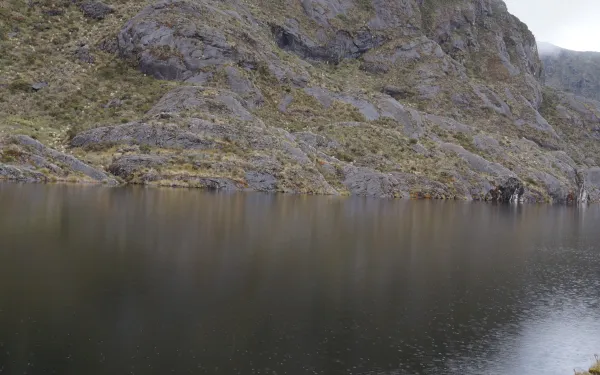
Declaration of a Temporary Reserve Area in the Santurbán Páramo is a victory for the defense of water in Latin America
Civil society organizations celebrate the measure taken by the Colombian Ministry of the Environment, which involves a two year suspension of Canadian company Aris Mining's gold mining project in the páramo.Bogotá, Colombia. The Interamerican Association for Environmental Defense (AIDA), the Institute for Policy Studies (IPS) - Mining and Trade Project, MiningWatch Canada, the Center for International Environmental Law (CIEL) and Common Frontiers Canada celebrate the Colombian Ministry of Environment and Sustainable Development’s (MADS) resolution that declares the western side of the Santurbán massif a temporary renewable natural resource reserve area. This major step strengthens the protection of one of the most emblematic high-altitude Andean wetlands, known as páramo, and its related ecosystems, which are fundamental for climate change adaptation and water security in the region for an estimated 2 million people.Resolution 0221, issued on March 3, 2025 by the Ministry of Environment and Sustainable Development (MADS), delimits and protects an area of 75,344.65 hectares, ensuring a two year provisional suspension of the Soto Norte gold mining project owned by Canadian company Aris Mining and its Colombian subsidiary, Sociedad Minera de Santander S.A.S. (Minesa), which puts Santurbán at risk. Citing the precautionary principle, the resolution prohibits the granting of “new mining concessions, special exploration and exploitation contracts, (...) as well as new environmental permits or licenses for the exploration or exploitation of minerals” in the area until the necessary technical studies are carried out toward its definitive protection. This resolution does not affect agricultural, livestock or tourism activity in the area.However, we are concerned that the resolution leaves in force the concession contract with Calimineros, which has had a subcontract with Minesa to formalize [its small-scale mining activities] since 2020, and from which Minesa promises to buy and process mineralized material. We encourage the competent authorities to suspend evaluation of its environmental license application and extension of the formalization subcontract, due to potential environmental impacts on Santurbán and because it is effectively part of the Soto Norte project.The páramo and related ecosystems are highly sensitive, recognized for their role in water regulation, carbon capture, and the conservation of endemic biodiversity. The removal of vegetation cover and the fragmentation of ecosystems that mining in Santurbán would generate could affect the ecological balance, biodiversity, and the provision of ecosystem services essential for life; acidify and reduce the amount of available fresh-water; and break the ecological interconnectivity with other biomes and ecosystems, destroying their capacity to sequester carbon and causing irreparable damage.For these reasons, we appreciate that the resolution seeks to prevent mining development in this highly sensitive and environmentally important area, preventing degradation of the watersheds that arise from Santurbán and preserving the water cycle.Sebastián Abad-Jara, an attorney for AIDA, pointed out that "by protecting Santurbán, Colombia ratifies its commitment to meet global environmental goals in terms of biodiversity, climate and wetlands, and sets a high bar for the governments of other countries where these ecosystems are similarly threatened by mining activity, such as Peru and Ecuador.""We celebrate this declaration as an important first step toward the consolidation of the western side of the Santurbán massif as a permanent reserve area, definitively protecting this important water source, vital for all who depend on it," said Jen Moore, associate fellow at IPS - Mining and Trade Project.Viviana Herrera, Latin America Program Coordinator for MiningWatch Canada, added that "this resolution is the result of the Committee for the Defence of Water and Páramo of Santurbán’s hard work, which has faced harassment and intimidation for its work in defense of the páramo, as well as disinformation campaigns about the supposed harmful effects of the resolution on agricultural activity."AIDA, IPS-Mining and Trade Project, MiningWatch Canada, CIEL and Common Frontiers Canada support the adoption of this protection measure for Santurbán. We also encourage the national and local government to carry out the necessary technical studies for its definitive protection, and to take preventive measures to avoid the cumulative environmental impacts of mining in the area given other projects that already have mining licenses. Furthermore, we reiterate the urgency of adopting measures to protect environment defenders in Colombia who stand up for the páramo.The Santurbán experience provides valuable lessons and should serve as an example to promote legislation for environmental protection in Latin America that focuses on the human right to water and the balance and integrity of fragile ecosystems, such as the páramo and other high-altitude ecosystems.#OurGoldIsWater Press contactsVictor Quintanilla (Mexico), AIDA, [email protected], +5215570522107Jennifer Moore, IPS, [email protected], +12027049011 (prensa IPS)Viviana Herrera, Mining Watch Canada, [email protected], +14389931264Alexandra Colón-Amil, CIEL, [email protected], +12024550253
Read more
Learn about the negotiations to reduce maritime shipping emissions
The decarbonization of productive and economic activities is essential and urgent to address the triple crisis –climate, pollution and biodiversity loss– that the world is facing.In maritime shipping –which moves 10 billion tons of cargo each year and accounts for 2.9% of global greenhouse gas (GHG) emissions, including carbon dioxide (CO2)– the global need to reduce and eventually eliminate these emissions is being addressed by the International Maritime Organization (IMO), the UN specialized agency responsible for setting standards for safe, efficient and environmentally sound shipping.The move toward decarbonization is critical because without significant change, shipping emissions could increase by as much as 50% by 2050.The IMO has a revised emissions reduction strategy that was agreed in 2023 by the 175 countries that make up the organization. It is expected to reduce emissions from the sector by up to 30% by 2030, 80% by 2040 and reach net zero by around 2050. Implementation of the strategy is currently the subject of international negotiations.AIDA is participating in these negotiations as part of the Clean Shipping Coalition, an international coalition of organizations. In addition, AIDA is coordinating efforts with Ocean Conservancy and Fundación Cethus to generate advocacy with Latin American countries and to collaborate with updated technical information on the progress of the negotiations and their implications for the region.The decarbonization of global shipping and its economic impact is a very important discussion for Latin America and the Caribbean. It is necessary that all countries and economic sectors align themselves with clear targets and that all impacts are assessed equally and fairly, as well as the ways in which countries can mitigate them. Read on to learn more about this important process. What measures are being discussed to reduce emissions from maritime shipping?Negotiations are underway at the international level to select the package of measures needed to meet the 2023 targets for reducing greenhouse gas emissions from shipping. This package will include both technical and economic measures. Its final structure will be decided in April this year at the IMO headquarters in London, marking a global milestone in the fight against the climate crisis.Technical measures include a global fuel standard, carbon capture on ships, energy efficiency measures for the fuels used, and reductions in ship speed. They all aim to make maritime transport as efficient as possible in terms of the fuels used and to gradually phase out the use of the most polluting fuels. This means using the least amount of energy, emitting the least amount of carbon dioxide and keeping the sector in operation.In addition to technical measures, economic measures are proposed to put a price on carbon emissions from maritime transport. Increasing the efficiency of ships is expected to have not only a technological component but also a market incentive. This combination is crucial for achieving emission reduction targets, as it will provide both the public and private sectors with the necessary resources:The economic resources to invest in the new technologies, new fuels, and other investments needed for the energy transition.An economic stimulus to close the current cost gap between fossil fuels and near-zero emission clean technologies. To define a price for carbon dioxide emissions, there are two main proposals:The first has a flexible structure with respect to emissions. In its simplest form, it takes account of differences in emissions when implementing the measure. To this end, a "permissible limit" of carbon dioxide emissions is envisaged, with ships being divided into those below and those above the limit. The former could receive a financial reward, and the latter would pay a fee for the carbon dioxide emitted under a system of emission quotas. In this sense, although there is a mechanism to regulate emissions below the set limit, the tolerance of these limits offers the possibility of an accelerated reduction, which could delay the energy transition that the climate crisis requires.The second has a universal structure, i.e. a fixed price for all CO2 emissions generated by the operation of the maritime fleet. The aim is to create a market stimulus that will increase the demand for new low-emission technologies (new ships and fuels) and encourage maritime operators to purchase them in order to avoid paying a fee. This measure is expected to provide more accurate monitoring of total emissions from ships, motivate a faster and more pronounced energy transition, and collect and then redistribute a significant number of economic resources among maritime operators and countries to mitigate the disproportionate costs and negative impacts of the decarbonization process. What does decarbonizing shipping mean for Latin America and the Caribbean?According to the United Nations Development Program (UNDP), Latin America and the Caribbean is one of the most vulnerable regions to climate change-related disasters, so actions aimed at achieving decarbonization targets in different sectors of the regional economy are essential to address the climate crisis.On the other hand, actions specifically aimed at decarbonizing maritime transport will have different impacts in the short, medium and long term in each of the countries of the continent. For example, the choice of one or the other proposal for the payment of a tariff for the sector's CO2 emissions - the flexible modality or the fixed price - will have a different impact in each country. What all scenarios have in common is that the region will be strongly affected by the process of decarbonizing maritime transport.In this context, it is important for countries to identify the scenarios that allow them a greater range of actions to compensate for these impacts and to ensure that the transition is equitable and fair, without leaving any country behind.In economic terms, the introduction of a universal price on CO2 emissions would allow States to receive part of the economic resources generated to compensate and mitigate the effects of decarbonization. The amounts and forms of this transfer of resources will be agreed within the IMO. The combination of more ambitious measures (technical and economic) is expected to raise up to $120 billion annually in the coming years. The flexible proposal for paying for emissions does not include mechanisms for redistributing resources, as these would go directly to ship operators and fuel producers. This would leave countries to mitigate the impact of decarbonization with their own resources.From an environmental perspective, without the incentive of a universal price, there is a risk that the flexible scheme will indirectly encourage the continued use of fuels that generate CO2 emissions, particularly in regions with limited economic resources to invest in the least polluting state-of-the-art technology. This would result in a delay in achieving emission reduction targets for the world's shipping fleet and would move countries away from meeting their climate change commitments under the IMO.In general, the costs of reducing CO2 emissions from shipping and other sectors, which are at the root of the current climate crisis, are a reality for all countries, although the impact varies by region. The active participation of Latin America and the Caribbean in the international discussions on this issue throughout 2025 is essential to ensure that the energy transition and the reduction of maritime emissions are fair and equitable. It is important that the countries of the continent adopt a position that allows them to protect their economic and environmental interests from the economic consequences of this process. If the IMO's decarbonization strategy does not live up to its ambitions, we will have a shipping industry that exacerbates the climate crisis and its impacts. The success of this strategy will be the achievement of a global consensus on environmental considerations. The equity and fairness of the transition must be one of the key elements. Recognizing the differentiated impacts of maritime decarbonization measures and their compensation, especially in the most affected countries, will ensure a triumph based on criteria of justice and environmental equity.
Read more