
Project
Alberto Peña Kay
Protecting the Santurban páramo from mining's damage
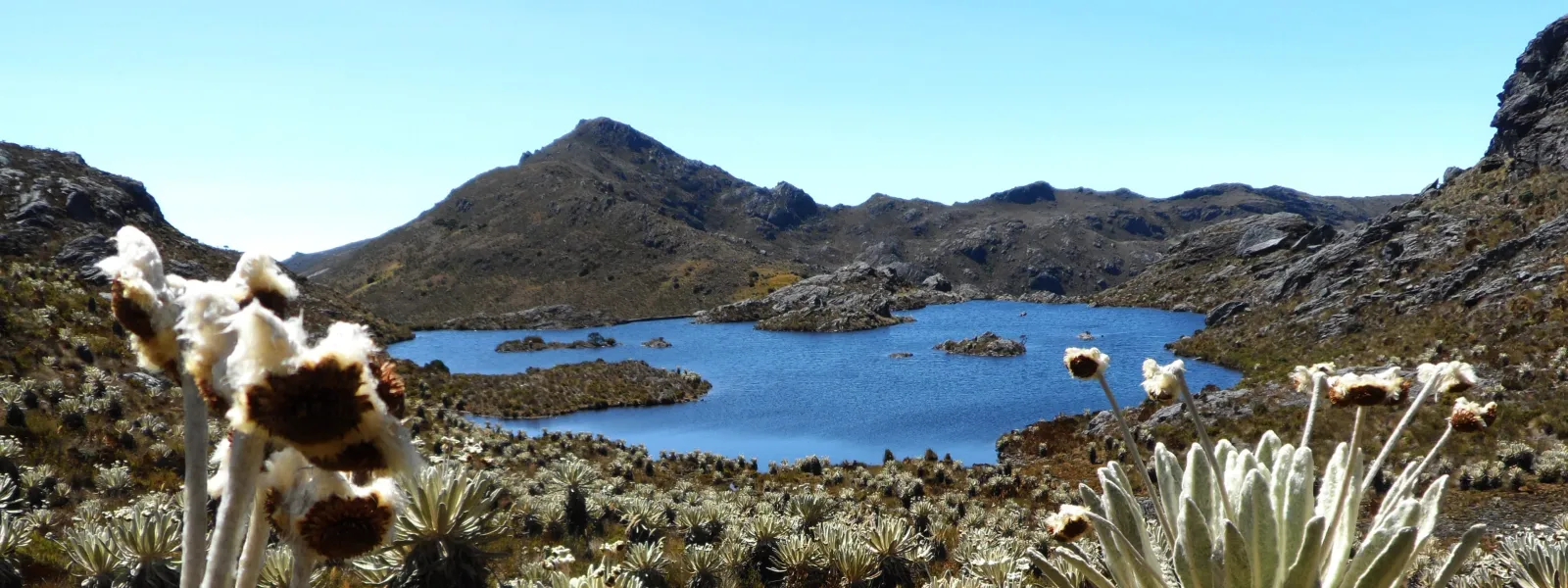
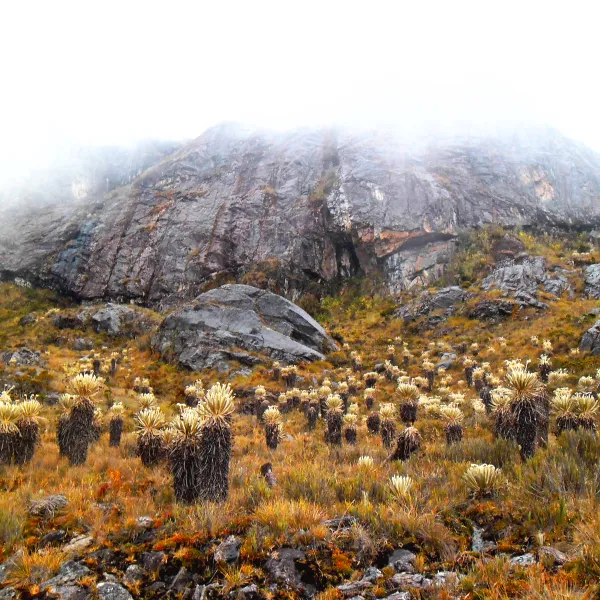
In the Andean region, high-mountain ecosystems known as páramos capture water from the fog and supply it to the lowlands. One such ecosystem is the Santurbán páramo, which provides fresh water to more than two million people in Colombia.
Santurbán, like the other páramos on the continent, also captures large amounts of carbon, making it a key ally in mitigating the climate crisis. It is also a refuge for hundreds of endangered species, including the iconic spectacled bear.
The land in and around the páramo contains gold and other minerals. This has put Santurbán in the spotlight of the multinational mining industry, which for decades has sought to establish large-scale projects in the ecosystem that threaten to degrade it.
The Committee for the Defense of Water and the Santurbán Páramo—a coalition of environmental advocates—has thwarted these ongoing attempts, with support from AIDA and other civil society organizations.
Background
The Santurbán páramo is located in the heart of the Eastern Cordillera of the Colombian Andes, in the departments of Santander and Norte de Santander, at an elevation ranging from 2,200 to 4,290 meters above sea level.
It covers an area of 129,743 hectares and is home to 57 lakes. It serves as a habitat for 457 plant species and 293 species of vertebrate fauna.
There are mineral deposits in Santurbán, primarily gold, but also silver and copper. This explains the region’s mining tradition, particularly in the part of the páramo located in Santander, in the province of Soto Norte. The communities in the area have built their culture and identity around gold mining, which is mainly artisanal and small-scale.
But since the 1990s, the gold deposits in the páramo have also attracted foreign mining conglomerates seeking to develop large-scale projects. This has raised concerns among the population that relies on the Santurbán water sources, who have mobilized in defense of water, their land, and life.
Although national and international regulations prohibit mining in páramos, the Colombian government has granted mining concessions to transnational corporations in Santurbán.
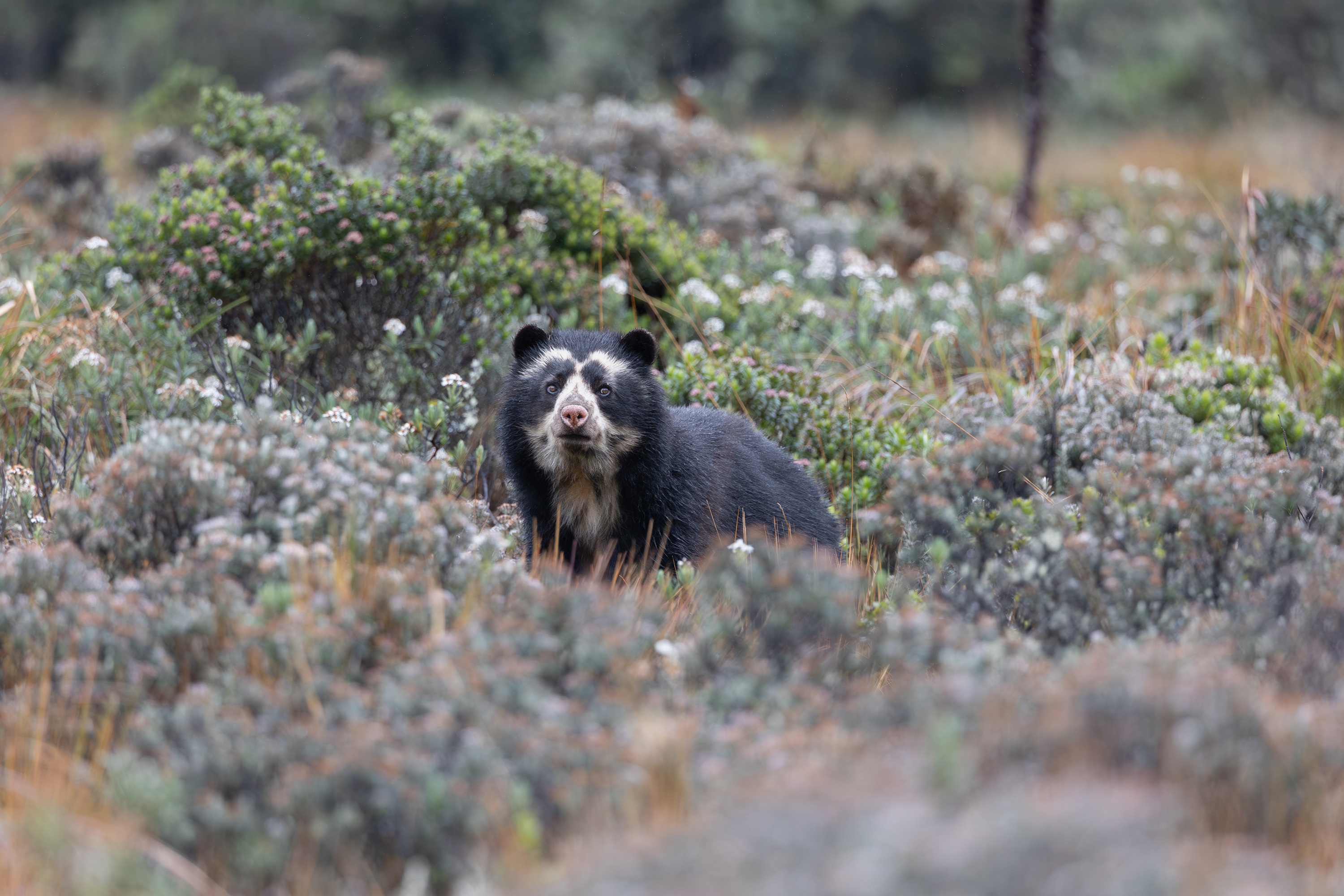
Photo: Keishpixl / Pixabay.
The long struggle to protect the páramo
One of the companies that sought to develop large-scale mining in Santurbán is Eco Oro Minerals Corp.—formerly Greystar Resources—a Canadian company that intended to establish the Angostura open-pit mine there to extract gold and silver. Between 1994 and 1995, the company acquired its mining titles and conducted exploration. And in 2010, it applied for a mining permit.
That was the year AIDA became involved in defending the ecosystem, supporting the Committee for the Defense of Water and the Santurbán Páramo. Our legal work helped convince the Colombian government to deny the mine an environmental permit in May 2011.
In January 2013, the government designated a portion of the páramo (11,700 hectares) as a Regional Natural Park. That year—together with the committee and partner organizations—we carried out a campaign and advocacy efforts to urge the government to recognize the entire Santurbán area as a páramo ecosystem through a delimitation based on scientific criteria. In December 2014, the Ministry of the Environment established a delimitation that protected 76% of the páramo (98,954 hectares).
Furthermore, as a result of a litigation supported by AIDA, in February 2016, Colombia’s highest court reaffirmed that mining in páramos is prohibited.
That same year, in December, the International Finance Corporation (IFC), the World Bank Group’s private sector arm, decided to divest from Eco Oro Minerals. This achievement was the result of a process that began in 2012, when the committee—advised and supported by AIDA and international partner organizations—filed a complaint before an independent accountability mechanism, which concluded that the IFC’s investment in the Angostura project failed to take into account the project’s social and environmental impacts, thereby contradicting the financial institution’s internal policies.
Also in 2016, Eco Oro Minerals filed an arbitration claim against the Colombian government with the International Centre for Settlement of Investment Disputes (ICSID), arguing that it had been adversely affected by government decisions aimed at protecting the country’s páramos, including the delimitation of Santurbán.
In 2017, the Constitutional Court invalidated the delimitation because the affected communities were not consulted. The high court ordered that a participatory delimitation be carried out.
And that year, a new threat to Santurbán emerged when the Canadian multinational Aris Mining applied for an environmental permit for Soto Norte, a gold mining project located near the páramo. Following citizen protests and technical objections, in October 2020, the National Environmental Licensing Authority shelved the project.
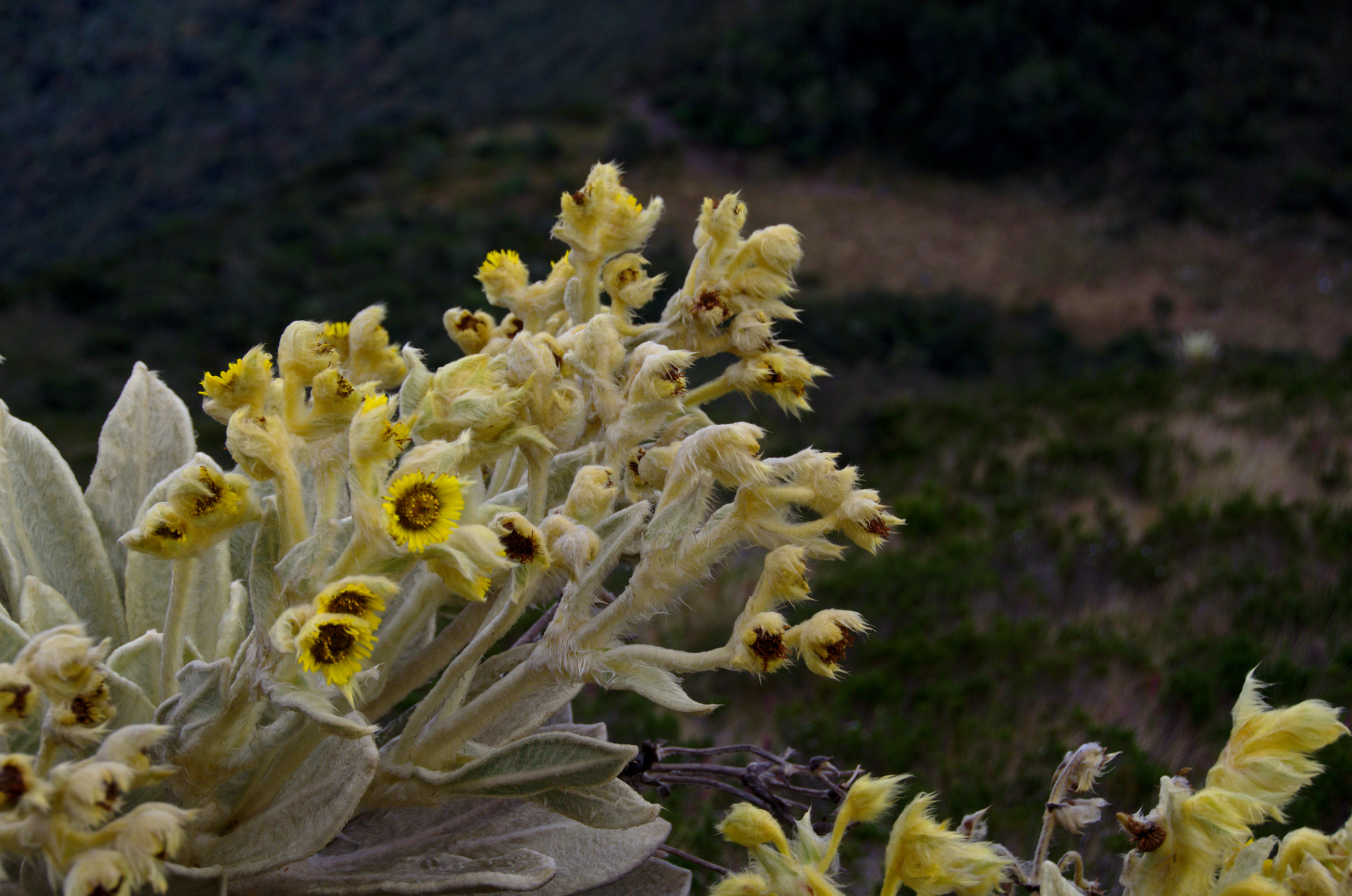
Photo: Aztlec.
Current situation
In March 2025, the Colombian government designated the western flank of the Santurbán massif as a temporary renewable natural resource reserve area, delimiting and protecting an area of 75,344.65 hectares. This resulted in a two-year suspension of the Soto Norte project. However, Aris Mining's contract to formalize Calimineros' small-scale mining activities through the purchase and processing of mineralized material remains in effect.
In addition, the Canadian mining company continues to move the project forward. In September 2025, it released its prefeasibility study, revising the mine’s original design.
Meanwhile, members of the Committee for the Defense of Water and the Santurbán Páramo face threats and stigmatization because of their work. In March 2025, UN Special Rapporteurs and the Working Group on Business and Human Rights denounced these incidents in communications sent to the governments of Colombia, Canada, and the United Arab Emirates, as well as to the companies Aris Mining and MDC Industry Holding Company LLC, the former co-owner of the Soto Norte project.
Regarding the arbitration claim filed by Eco Oro Minerals, in July 2024, ICSID ruled in favor of the Colombian government and rejected the Canadian company’s claim for USD 1.1 billion in compensation.
Concerning the delimitation of Santurbán, in July 2026, the Ministry of the Environment issued a resolution introducing the concept of "progressive delimitation." On that basis, the government proposes to progressively demarcate the páramo, covering 29,199 hectares across 19 municipalities—those where the participatory agreements required by the Constitutional Court in its 2017 ruling have already been finalized. It also proposes two measures on the creation and expansion of reserves to restrict mining in the ecosystem.
Learn more about the impacts of mining on the páramos of Latin America (in Spanish).
Partners:
Related projects
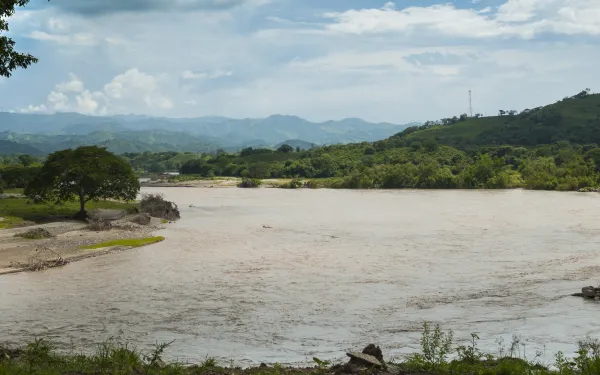
Motagua River: A story of contamination and a call for justice
The Motagua River, Guatemala's largest river, is severely polluted with sewage, solid waste, and other types of waste.It flows into the Caribbean Sea, so contamination reaches those waters, as well as the Mesoamerican Barrier Reef System - the world's largest transboundary reef - and the Honduran coast, causing unquantifiable social and environmental damage.Polluting activities occur throughout the river basin, including sub-basins and micro-basins.In general terms, the contamination has deteriorated the health and violated the right to water, development and a healthy environment of all the people living in the basin.The contamination of the Motagua is a problem that has been going on for decades and requires urgent long-term measures that contribute to the sanitation and integrated management of the river basin.Where is the Motagua River?The Motagua River is one of the main rivers in Guatemala. With a length of 486 km, it crosses 96 municipalities and 14 departments of the country. It originates in Quiché, a department located in the northwest, and flows into the Caribbean Sea.It is at its mouth that its flow meets the Mesoamerican Reef, which extends for approximately 1,000 km and covers the territorial waters of Belize, Guatemala, Honduras and Mexico. Thus, the pollution carried by the river deteriorates the health of the reef system, which is home to the second longest barrier reef in the world.The Mesoamerican Reef protects thousands of kilometers of coastline from currents, waves and storms. In addition to being a breeding and feeding ground for a great diversity of species, it is a carbon dioxide sink and a detoxifier of water and air. The ecological and economic health of the entire South Atlantic area depends on its conservation.In addition, pollution from the Motagua River reaches the coast of Honduras and spreads to Amatique Bay, located along the eastern coast of Guatemala and Belize. This is clearly a transboundary problem.Where does the pollution in of the Motagua River come from?The largest volume of contamination of the Motagua River comes from Guatemala City, the capital of the country, mainly through the waters of the Las Vacas River, which receives a large amount of solid waste from the Chinautla River, as well as sewage that is discharged into its waters on a daily basis.Solid waste from the Chinautla River, which flows through the municipality of the same name, comes from a landfill located in Zone 3 of the capital. Any small landslide in this landfill generates waste that is automatically dumped into the river at any time of the year.The pollution that the Chinautla river carries also consists of a large amount of sewage, generated by at least 500,000 people living in the northern part of Guatemala City, which does not receive any previous cleaning treatment.In the municipality of Chinautla there are numerous illegal landfills. In addition, many private vehicles and collection trucks dump waste on the banks of the Chinautla and Las Vacas rivers.According to data from the Integrated Environmental Management of the Motagua River Basin project, financed by the United Nations Development Program (UNDP), it is estimated that 66% of urban solid waste in Guatemala is not collected and there is no guarantee that the remaining 34% is properly disposed of. In addition, of the total number of landfills in the country, 88.32% are illegal or do not have municipal authorization.Most of the waste is dumped in streams and/or on surfaces that are susceptible to dragging, ending up in one way or another in water sources, such as the Motagua basin.In other words, the main source of contamination of the Motagua River is the poor management of solid waste and water resources in the country; the lack of compliance with existing regulations on wastewater discharge, disposal and treatment of waste and solid waste; as well as the lack of a water law.Who is affected by the contamination of the Motagua River?The contamination of the Motagua River affects the entire population of Guatemala. In the lower basin, it directly affects people dedicated to fishing, who have seen their catches reduced.And, by harming tourism in the Caribbean, it also affects the communities that depend on tourism for their livelihoods.As a basin-wide problem, the contamination of the Motagua affects those living in the main sub-basins and micro-basins of the river, including the indigenous communities of the Mayan Poqomam people in the cities of Chuarrancho and Chinautla.In Chinautla, the contamination affects the living conditions, health, environment, water sources, economy and culture of more than 18,000 people.The restoration of the Motagua River is crucial to improve the quality of life of at least 30% of the Guatemalan population, as well as those affected in neighboring countries.Actions to rescue the Motagua River from contaminationIn the face of the serious degradation of Guatemala's largest river basin, the damage to key ecosystems such as the Mesoamerican Reef, and the human rights violations that pollution generates, urgent measures are required, among them:Verify compliance with environmental and municipal regulations, as well as prevent and halt environmental damage at the source through regulation, monitoring, supervision and oversight of activities that affect the rights of the inhabitants of the Motagua River basin.Strengthen regulations related to wastewater disposal and solid waste management so that they are implemented in a timely manner through complete treatment systems in the municipalities of the basin.Initiate actions to enable the socio-environmental restoration of affected ecosystems throughout the basin, including political, legislative and administrative measures to strengthen the legal system and allocate sufficient financial resources to ensure the protection of waters and territories.
Read more
The treaty protecting life on the high seas: Why should governments ratify it?
The ocean covers two-thirds of the planet. It is so immense and vast that 64% of its waters are outside any border, in a space known as the high seas.It is an area that lies outside national jurisdictions and represents 40% of the Earth's surface.Because of the wealth of marine life it harbors - including species new to science - the high seas are one of the world's greatest reserves of biodiversity. It is also a source of food and oxygen, regulates the climate, cushions the impacts of the climate crisis and sustains the livelihoods of fishing and tourism communities.Despite their importance, only 1.2% of the waters of the high seas have international protection.To fill this gap, in June 2023, UN member countries formally adopted an agreement to protect biodiversity in the high seas, which needs ratification by at least 60 countries to enter into force.Find out how many and which countries have ratified the treaty. As a reservoir of global common goods, the protection and sustainable use of the high seas is a right and an obligation of all governments. What does the High Seas Treaty state?The High Seas Treaty - short name for the Agreement on the Conservation and Sustainable Use of Marine Biological Diversity of Areas beyond National Jurisdiction (BBNJ Agreement) - is universal and can benefit all countries, even those that are not party to the United Nations Convention on the Law of the Sea (UNCLOS), such as Colombia, El Salvador, Peru and Venezuela.The treaty contains the following key elements:Area-based management tools. The treaty establishes a legal framework and a clear process for creating networks of marine protected areas, which can provide comprehensive protection for biodiversity in the high seas from multiple activities, maintaining the health and resilience of this part of the ocean.Environmental impact assessments. Under the treaty, any new activity on the high seas is subject to detailed, modern environmental impact assessments that include the cumulative impacts of multiple activities affecting the same ecosystem. Developing countries will be supported to take part in this task.Fair and equitable sharing of benefits from marine genetic resources. The agreement establishes obligations to share monetary and non-monetary benefits from the utilization of genetic resources found in the high seas (genetic material of any animal, plant or microbe) to develop new medicines, for example.Capacity building and technology transfer. The treaty provides for the provision of financing and technology transfer on fair terms for developing countries to increase their marine scientific and technological capacity, including data exchange, infrastructure development and improvement, and respect for traditional knowledge. Why should governments ratify the High Seas Treaty?Having a High Seas Treaty took more than two decades, including five years of negotiations at the UN. To secure this historic breakthrough, the agreement must enter into force - become law under international law - which will occur 120 days after 60 countries have ratified it. So far, 28 countries have ratified the treaty.Ratification means that countries, in addition to signing it, give their formal consent to the treaty, which often involves ensuring that their national laws are consistent with it.There are many reasons why ratification of the agreement will benefit developing countries, particularly those in Latin America and the Caribbean. Some of these are:The treaty brings us closer to environmental justice. It will benefit countries historically excluded from access to the resources of the high seas, providing them with new opportunities for technological, scientific and economic development. It will also allow all countries to be active players in a global platform for decision-making, coordination and cooperation for the protection and sustainable use of these resources.The treaty allows for the conservation of key ecosystems. Under the treaty, all countries will be able to propose marine protected areas on the high seas, including landlocked countries (such as Bolivia and Paraguay). This will allow the protection of areas rich in biodiversity and endemic species in Latin America, such as the Salas y Gómez & Nazca submarine mountain ranges (Chile-Peru) or the Thermal Dome in the Central American Pacific.The treaty benefits local livelihoods and economies. By promoting a healthy and resilient high seas, the treaty will have positive effects on coastal areas and economic activities that depend on migratory species, such as whale and turtle watching, diving, tourism, commercial and sport fishing. Highly migratory species such as squid are vital to Latin American economies.The treaty provides a voice in decision-making on the high seas. Countries that have signed the treaty will participate in the meetings of the Preparatory Commission and those that ratify it will be able to participate in the Conference of the Parties (COP) of the agreement, the first version of which will take place one year after its entry into force, where key aspects of its implementation and the realization of its benefits will be decided.The call is therefore for all countries to ratify the High Seas Treaty, thus protecting 64% of our ocean, which today lacks effective protection.It is time to act for marine life and for future generations.
Read more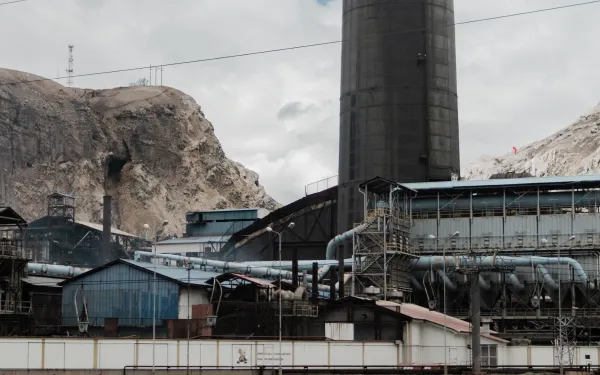
Families of La Oroya demand Peru comply with Inter-American Court ruling
One year after the decision, the state has still not implemented the ordered reparations. The population lacks comprehensive health care and is once again exposed to toxic contamination due to the reactivation of the La Oroya smelter complex, which is operating without adequate environmental management.One year after the Inter-American Court of Human Rights ordered the Peruvian state to provide comprehensive reparations to the residents of La Oroya, after finding it responsible for violating their rights, the victims are still waiting for the ruling to be implemented and for state to comply with its international obligations."It's already been a year since the ruling was announced, how much longer will we have to wait?" asked Yolanda Zurita, a resident of La Oroya and a petitioner in the case. "Enough is enough! We demand that the Peruvian state immediately comply with the ruling of the Inter-American Court, which will benefit not only the victims of the case, but also the population of La Oroya and the country exposed to toxic substances from the indiscriminate development of extractive and industrial activities in our territories."On March 22, 2024, in a landmark decision for the protection of a healthy environment in Latin America, the Court responded to the long and tireless search for justice by the families of La Oroya, who have been affected for decades by the extreme levels of contamination from the La Oroya Metallurgical Complex (CMLO) and the lack of adequate protective measures by the State, which today ignores the ruling and underestimates its importance.Although the Court ordered the State to ensure that CMLO's operations comply with international environmental standards and to prevent and mitigate damage to the environment and human health, the opposite is currently the case: the complex has reactivated its operations without having modernized its facilities to prevent and mitigate the environmental and health risks it generates for the population.It is urgent that the CMLO stops polluting and that the Peruvian State adopts the measures required by the Court to modernize it in accordance with international environmental standards of environmental protection, in compliance with the ruling."With the reactivation of the metallurgical complex, the people of La Oroya are once again being exposed to levels of pollution that endanger their lives; the Inter-American Court's ruling is clear and the State is obligated to comply," said Rosa Peña, senior attorney with the Inter-American Association for Environmental Defense (AIDA). "The delay in complying with the ruling is re-victimizing the families who have been demanding justice for more than 20 years."The court also ordered the state to provide free medical care to the victims and to guarantee specialized care to residents with symptoms and illnesses related to contamination from the mining and metallurgical activities. Today, however, comprehensive health care is not guaranteed in La Oroya. It is necessary that the State, through and in coordination with the Ministry of Health, the Regional Health Directorate of Junín, the General Directorate of Environmental Health, and health care providers, create and implement the protocol for comprehensive care for victims in La Oroya, as established by the Court.The ruling set a historic precedent for the control of industrial pollution by states. For the Peruvian State to make real progress in its implementation, it is imperative that the Attorney General's Office issue the Compliance Resolution."Despite the deadlines set by the Inter-American Court for the Peruvian State, there has been virtually no progress in the implementation of the ruling," said Christian Huaylinos, coordinator of the legal department of the Pro Human Rights Association (APRODEH). "Above all, the nature of the case must be taken into account, which implies that La Oroya has been classified as a sacrifice zone due to the high levels of contamination; therefore, the need to fully compensate the victims is urgent." Background of the caseLa Oroya is located in the central mountain range of Peru, in the department of Junin, 176 km from Lima. In 1992, the US company Cerro de Pasco Corporation installed the La Oroya Metallurgical Complex (CMLO) to process mineral concentrates. The complex was nationalized in 1974 and operated by the state under the name Centromin Peru until 1997, when it was taken over by Doe Run Peru, which operated it until 2009. In short, the CMLO is over 100 years old.In La Oroya, most of the people affected by the CMLO contamination, including children, have lead levels higher than those recommended by the World Health Organization. In some cases, they have registered higher levels of arsenic and cadmium, in addition to stress, anxiety, skin problems, stomach problems, chronic headaches, and respiratory or cardiac problems, among others.In the absence of effective responses at the national level and on behalf of the victims, an international coalition of organizations filed a complaint against the Peruvian State with the Inter-American Commission on Human Rights in 2006. In October 2021, the Commission found the Peruvian government responsible and referred the case to the Inter-American Court. In October 2022, more than 16 years after the international complaint was filed, the victims, represented by AIDA and APRODEH with the assistance of Earthjustice, brought the case before the Court. Press contactsVíctor Quintanilla (Mexico), AIDA, [email protected], +52 5570522107María Nieve Sullón (Peru), APRODEH, [email protected], +51 984926868
Read more