
Project
Alberto Peña Kay
Protecting the Santurban páramo from mining's damage
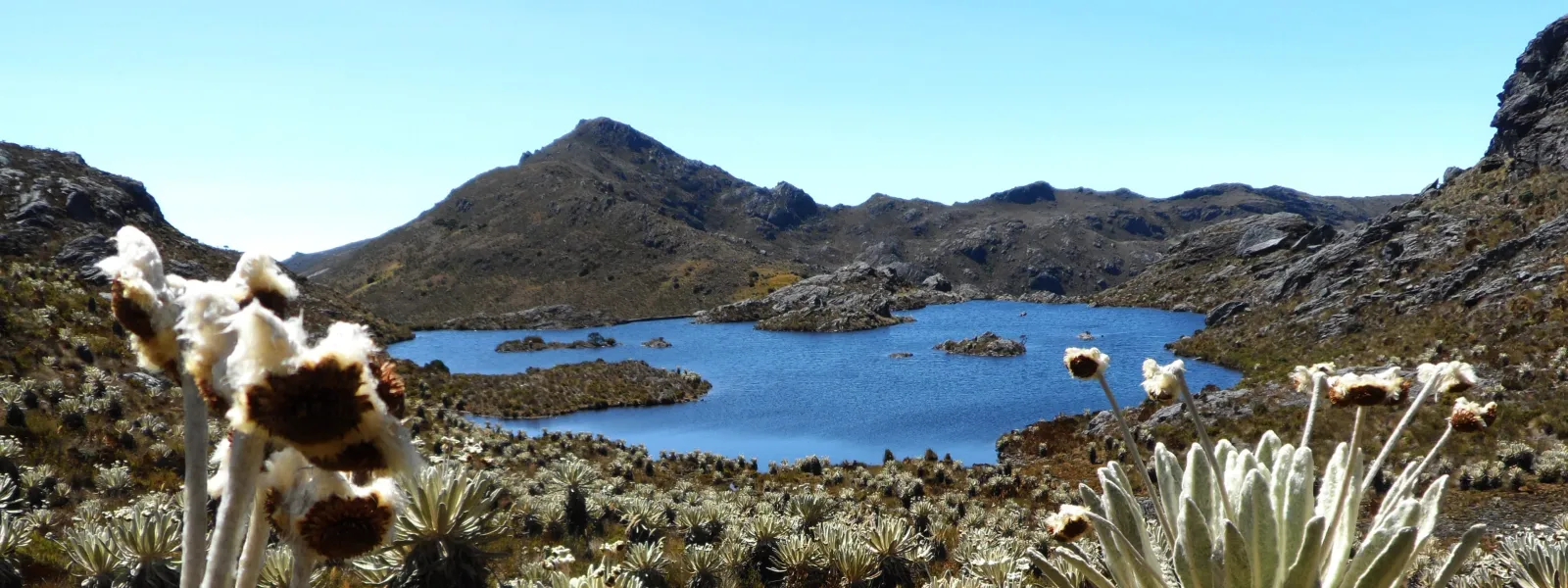
In the Andean region, high-mountain ecosystems known as páramos capture water from the fog and supply it to the lowlands. One such ecosystem is the Santurbán páramo, which provides fresh water to more than two million people in Colombia.
Santurbán, like the other páramos on the continent, also captures large amounts of carbon, making it a key ally in mitigating the climate crisis. It is also a refuge for hundreds of endangered species, including the iconic spectacled bear.
The land in and around the páramo contains gold and other minerals. This has put Santurbán in the spotlight of the multinational mining industry, which for decades has sought to establish large-scale projects in the ecosystem that threaten to degrade it.
The Committee for the Defense of Water and the Santurbán Páramo—a coalition of environmental advocates—has thwarted these ongoing attempts, with support from AIDA and other civil society organizations.
Background
The Santurbán páramo is located in the heart of the Eastern Cordillera of the Colombian Andes, in the departments of Santander and Norte de Santander, at an elevation ranging from 2,200 to 4,290 meters above sea level.
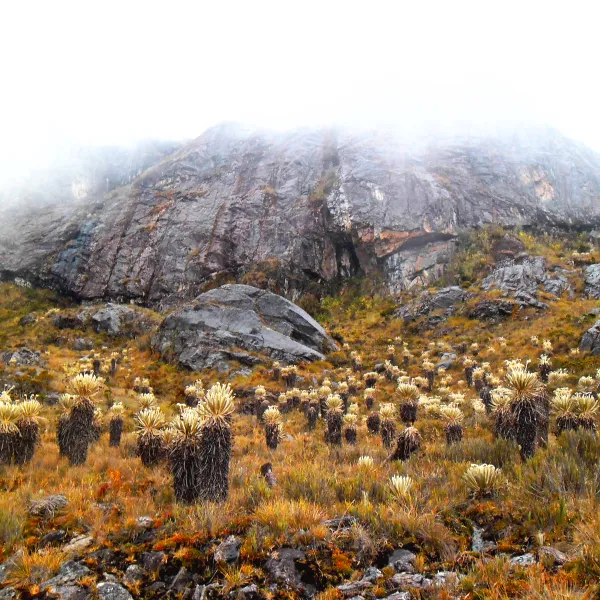
It covers an area of 129,743 hectares and is home to 57 lakes. It serves as a habitat for 457 plant species and 293 species of vertebrate fauna.
There are mineral deposits in Santurbán, primarily gold, but also silver and copper. This explains the region’s mining tradition, particularly in the part of the páramo located in Santander, in the province of Soto Norte. The communities in the area have built their culture and identity around gold mining, which is mainly artisanal and small-scale.
But since the 1990s, the gold deposits in the páramo have also attracted foreign mining conglomerates seeking to develop large-scale projects. This has raised concerns among the population that relies on the Santurbán water sources, who have mobilized in defense of water, their land, and life.
Although national and international regulations prohibit mining in páramos, the Colombian government has granted mining concessions to transnational corporations in Santurbán.

Photo: Keishpixl / Pixabay.
The long struggle to protect the páramo
One of the companies that sought to develop large-scale mining in Santurbán is Eco Oro Minerals Corp.—formerly Greystar Resources—a Canadian company that intended to establish the Angostura open-pit mine there to extract gold and silver. Between 1994 and 1995, the company acquired its mining titles and conducted exploration. And in 2010, it applied for a mining permit.
That was the year AIDA became involved in defending the ecosystem, supporting the Committee for the Defense of Water and the Santurbán Páramo. Our legal work helped convince the Colombian government to deny the mine an environmental permit in May 2011.
In January 2013, the government designated a portion of the páramo (11,700 hectares) as a Regional Natural Park. That year—together with the committee and partner organizations—we carried out a campaign and advocacy efforts to urge the government to recognize the entire Santurbán area as a páramo ecosystem through a delimitation based on scientific criteria. In December 2014, the Ministry of the Environment established a delimitation that protected 76% of the páramo (98,954 hectares).
Furthermore, as a result of a litigation supported by AIDA, in February 2016, Colombia’s highest court reaffirmed that mining in páramos is prohibited.
That same year, in December, the International Finance Corporation (IFC), the World Bank Group’s private sector arm, decided to divest from Eco Oro Minerals. This achievement was the result of a process that began in 2012, when the committee—advised and supported by AIDA and international partner organizations—filed a complaint before an independent accountability mechanism, which concluded that the IFC’s investment in the Angostura project failed to take into account the project’s social and environmental impacts, thereby contradicting the financial institution’s internal policies.
Also in 2016, Eco Oro Minerals filed an arbitration claim against the Colombian government with the International Centre for Settlement of Investment Disputes (ICSID), arguing that it had been adversely affected by government decisions aimed at protecting the country’s páramos, including the delimitation of Santurbán.
In 2017, the Constitutional Court invalidated the delimitation because the affected communities were not consulted. The high court ordered that a participatory delimitation be carried out.
And that year, a new threat to Santurbán emerged when the Canadian multinational Aris Mining applied for an environmental permit for Soto Norte, a gold mining project located near the páramo. Following citizen protests and technical objections, in October 2020, the National Environmental Licensing Authority shelved the project.
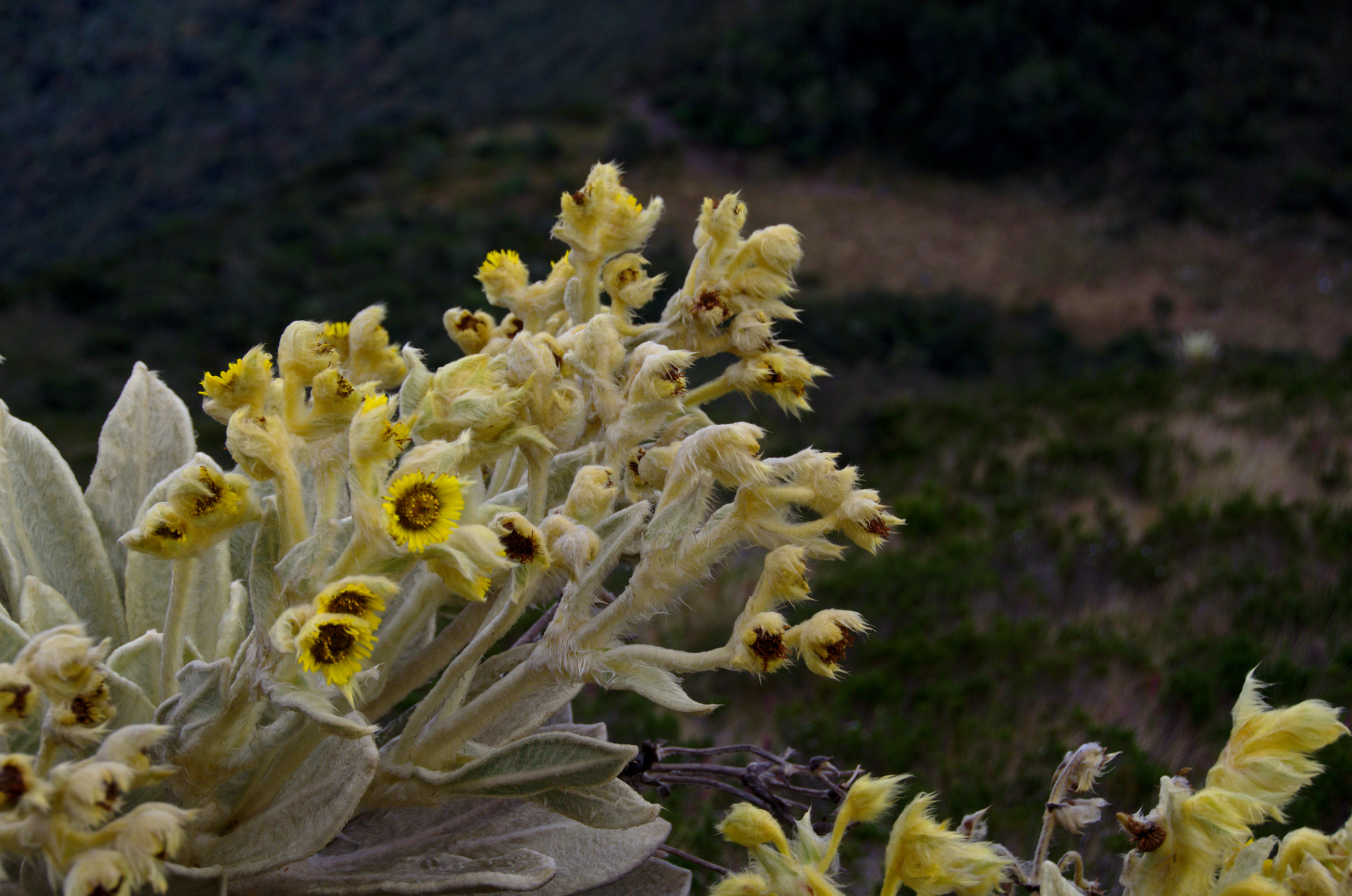
Photo: Aztlec.
Current situation
In March 2025, the Colombian government designated the western flank of the Santurbán massif as a temporary renewable natural resource reserve area, delimiting and protecting an area of 75,344.65 hectares. This resulted in a two-year suspension of the Soto Norte project. However, Aris Mining's contract to formalize Calimineros' small-scale mining activities through the purchase and processing of mineralized material remains in effect.
In addition, the Canadian mining company continues to move the project forward. In September 2025, it released its prefeasibility study, revising the mine’s original design.
Meanwhile, members of the Committee for the Defense of Water and the Santurbán Páramo face threats and stigmatization because of their work. In March 2025, UN Special Rapporteurs and the Working Group on Business and Human Rights denounced these incidents in communications sent to the governments of Colombia, Canada, and the United Arab Emirates, as well as to the companies Aris Mining and MDC Industry Holding Company LLC, the former co-owner of the Soto Norte project.
Regarding the arbitration claim filed by Eco Oro Minerals, in July 2024, ICSID ruled in favor of the Colombian government and rejected the Canadian company’s claim for USD 1.1 billion in compensation.
Concerning the delimitation of Santurbán, in July 2026, the Ministry of the Environment issued a resolution introducing the concept of "progressive delimitation." On that basis, the government proposes to progressively demarcate the páramo, covering 29,199 hectares across 19 municipalities—those where the participatory agreements required by the Constitutional Court in its 2017 ruling have already been finalized. It also proposes two measures on the creation and expansion of reserves to restrict mining in the ecosystem.
Learn more about the impacts of mining on the páramos of Latin America (in Spanish).
Partners:
Related projects

Historic milestone for global ocean protection: 60th ratification triggers entry into force of High Seas Treaty
Following the deposit of ratification instruments by four new countries this week at the United Nations–Sri Lanka, St. Vincent and the Grenadines, Sierra Leone and Morocco- the High Seas Treaty has reached the milestone of 60 state ratifications needed to trigger its entry into force. Formally known as the Agreement under the United Nations Convention on the Law of the Sea on the Conservation and Sustainable Use of Marine Biological Diversity of Areas Beyond National Jurisdiction (or BBNJ Agreement), the Treaty will become legally effective 120 days from today (17 January 2026).“This historic moment is the culmination of years of dedication and global diplomacy by governments and stakeholders” said Rebecca Hubbard, Director of the High Seas Alliance. “The High Seas Treaty is a powerful testament to multilateralism- showing what the world can achieve when we come together for the common good for our ocean, which covers more than 70% of the planet. Today marks an important step when promises start becoming action.”The Treaty is the first legally binding international agreement safeguarding marine life in the High Seas, which covers two-thirds of the world’s ocean and plays a critical role in ensuring a healthy planet. It provides new tools to halt biodiversity loss and ocean degradation through enabling the creation of marine protected areas (MPAs) in international waters and ensuring environmental impact assessments of planned human activities. It will also boost equity for developing countries through increasing knowledge and technology access, strengthening capacity, and ensuring the equitable access and sharing of the benefits of marine genetic resources.These provisions are vital to achieving climate and biodiversity global goals, including the Kunming-Montreal Global Biodiversity Framework (GBF) 30×30 target to protect 30% of the planet’s land and ocean by 2030.Adopted in June 2023, after nearly two decades of discussion and negotiations, the Treaty opened for signature on 20 September 2023. Palau became the first country to ratify on 22 January 2024, and since then States from every region have joined. In addition to the 60 ratifications, 142 countries plus the European Union have signed, signaling their intent to ratify.Under the Treaty, the first Conference of the Parties (CoP) must convene within a year of entry into force, likely toward the end of 2026. Preparatory work is already underway at the UN to build the institutions and processes in time for CoP1 that will ensure the Treaty’s ambition and long-term effectiveness. Governments and stakeholders are also laying the groundwork for developing High Seas MPA proposals to protect critical biodiversity sites once the Treaty is operational. These include the Salas y Gómez and Nazca Ridges, the Lord Howe Rise and South Tasman Sea, the Sargasso Sea and the Thermal Dome in the Eastern Pacific.“Achieving 60 ratifications is not the finish line–it’s just the starting block,” said Rebecca Hubbard. “The Treaty’s true strength lies in universal participation. While we must celebrate this incredible progress, we urge all remaining nations to join this historic Agreement and help us go from 60 to global ahead of the first CoP.”Further ratifications are expected during the upcoming UN General Assembly High-Level Week in New York (beginning 22 September 2025). Notes to editorThe official status of signatures and ratifications can be found on the UN website and the High Seas Alliance’s ratification tracker. Note: The number shown on the High Seas Alliance tracker reflects only the ratifications that count toward entry into force and does not include the EU’s ratification and therefore differs from the UN’s total count. The High Seas Alliance (HSA) sometimes uses the term "High Seas Treaty" as a short-hand for the BBNJ Agreement. HSA acknowledges that the scope of the BBNJ Agreement encompasses all Areas beyond national jurisdiction, including the seafloor and water column. This choice of wording is intended to ease understanding for broad audiences and does not convey a prioritization among the components or principles of the BBNJ Agreement.
Read more
Circular economy: what is it and what role does it play regarding the climate crisis and energy transition?
Life on the planet, including our own, depends on nature.To create more sustainable ways of life and keep global warming under control, we need to ensure healthy, resilient, and productive ecosystems.The climate crisis, as well as the pollution and biodiversity loss crises, stem from human activities that exploit nature beyond its limits, without giving it a chance to recover, degrading ecosystems and pushing them to points of “no return.”These activities are based on the conventional economic model, which is linear and follows the logic of extracting, producing, using, and discarding resources.A more sustainable use of natural resources requires a different economic model.One option among many is the circular economy, an economic model of production and consumption traditionally described as a combination of reduction, reuse, and recycling activities.However, most current approaches to the circular economy, incorporated into various public policies, focus on extending the life cycle of products that have already been manufactured. They do not comprehensively incorporate the processes of extracting the materials needed to manufacture the products or their final disposal. This considerably reduces the protection of nature and territories during the economic cycle.That is why it is important to understand what the circular economy is and what it should include, in theory and in practice, so that it can truly contribute to a more sustainable and fair world. Circular economy: Definition and challengesAs an alternative to the linear economic system, the circular economy involves closing the economic cycle through various mechanisms. These include reducing the use of virgin natural resources, increasing the use of recycled materials, and minimizing waste through the repair and reuse of products, keeping them in circulation for as long as possible.It also means creating additional value for products whose useful life has ended when their materials are used again and again. In the face of our continued and unsustainable use of resources, the concept of the circular economy is becoming increasingly prevalent in different areas.Although it is a living and evolving concept, when it becomes public policy, most definitions of the circular economy consider its main objective to be economic prosperity, with environmental care as a secondary result.In 2020, a legal definition of the circular economy in the European Union considered it to be “aneconomic system whereby the value of products, materials and other resources in the economy is maintained for as long as possible, enhancing their efficient use in production and consumption, thereby reducing the environmental impact of their use, minimising waste and the release of hazardous substances at all stages of their life cycle” …This and other definitions show that the positive effects of the circular economy on nature tend to be taken for granted, when certain theories or practices associated with the concept may actually hinder the protection of ecosystems and the people who depend on them.This is happening with the type of circular economy promoted to make extractive processes linked to the energy transition, designed to address the climate crisis, environmentally friendly. Circular economy and energy transitionHistorically, extractive activities such as mining have degraded ecosystems and violated human rights in Latin America, creating so-called “sacrifice zones.”Today, to address the climate crisis, several international organizations have positioned an energy transition that requires doubling the production of renewable energies and electromobility to decarbonize the global energy matrix.This also implies intensifying the extraction of so-called "critical" minerals for the development of clean technologies. One of these is lithium, a mineral of which the region has large reserves.Thus, far from putting an end to it, the energy transition promoted by the Global North is renewing the historical extractivist trend, generating great pressure on Latin American territories rich in minerals for the transition, affecting ecosystems and populations near extraction areas.In this context, the circular economy is promoted as a tool to make mining an environmentally responsible process. However, international proposals in this regard do not guarantee the resilience of ecosystems or the well-being of communities.This is evident in countries such as Argentina, Bolivia, and Chile due to the growing global demand for minerals such as lithium.Currently, the circular economy applied to mining in Latin America focuses on the internal processes of mining companies, but not on the consequences that their interactions with ecosystems and communities generate in the extraction territories, without stopping the expansion of extractivism or the high socio-environmental impacts caused.Obtaining lithium for electromobility, for example, involves a complex, transnational supply chain. This includes mineral extraction, refining, the production of electrodes for batteries, battery manufacturing, and finally, the manufacture of electric vehicles.From a global northern perspective, the circular economy is mainly applied here to battery recycling and industrial improvements for mining. However, it does not include measures to protect the biophysical limits and resilience of the ecosystems where lithium is extracted, ensure environmental restoration, prevent damage to local economies, guarantee human rights, and repair those that have already been violated. Proposals from Latin America for a just circular economyTo ensure that the energy transition does not become a new extractive process that generates the same conflicts and environmental impacts that it has systematically caused and that are precursors to the current climate crisis, it is essential that the circular economy comprehensively integrates the mineral extraction territories.Circular economy schemes must avoid the creation, expansion, and/or deepening of “sacrifice zones.” They must also recognize the strategic value of ecosystems as natural capital for countries and communities, given the ecosystem functions they provide, including freshwater supply and carbon capture.To move towards a just circular economy in the extraction territories, the following principles must be respected:Protection of the human rights of local populations, guaranteeing their permanence in the territory and the continuity of their economic activities, linked to their livelihoods and their relationship with ecosystems.Promotion of environmental balance in accordance with the biophysical limits of ecosystems, recognizing their intrinsic values, which favor the conservation of their functions.Internalization of environmental costs in mineral value chains, incorporating the value of ecosystem services used for extraction into prices.Learn more in our policy brief Reimagining the circular economy from the extraction territories. Proposals from Latin America.
Read more
Mapuche defend against extractive industry and forced evictions from ancestral lands in Argentina
Mapuche communities urge Inter-American Commission on Human Rights to further investigate abuses at nexus of extractive industry and land dispossession.Río Negro, Neuquén, Mendoza, Argentina - Organizations of the Indigenous Mapuche People addressed the urgent situation arising from conflicts with extractive projects on Indigenous land in Argentina in a public hearing before the Inter-American Commission on Human Rights today. The human rights body of the Organization of American States heard testimony of those impacted by mining, oil, and gas projects that have been compounded by the lack of territorial recognition, ongoing evictions, and the criminalization of indigenous communities."The rapid expansion of extractive projects across ancestral Mapuche territories in Argentina is driving the eviction of our communities as projects proceed without their free, prior, and informed consent," emphasized Mirta Ñancunao y Hugo Aranea, werken (spokespeople) of the Mapuche-Tehuelche Parliament of Río Negro. This includes new mining projects across 1,800 square kilometers in Malargüe, oil and gas developments stretching 600 kilometers along the Vaca Muerta shale formation in Neuquén, and at least 53 new mining and energy projects in Río Negro, particularly in the Calcatreu open-pit gold and silver mining project, which threatens nearby water sources."The exploitation of natural resources has been accompanied by the intention to vacate traditional territories," said Lorena Bravo of the Mapuche Federation of Neuquen, Xaunko Regional Council. "The evictions have direct consequences including preventing the use of and access to land, sacred sites, impacts to health, access to water, impacting indigenous economies and traditional practices."Gabriel Jofré, werken of the Malalweche Organization, asserted that the "advance of extractive companies into the traditional territory of Mapuche communities is predicated on the lack of effective state recognition of Mapuche communities." He emphasized that the state has dismantled the processes used by Mapuche communities to assert their territorial rights, including the recognition of their legal status. Jofré also noted that the national government rolled back protections in Law 26.160, which had suspended evictions of recognized indigenous communities."The advance of land extraction is not possible without installing a racist and discriminatory discourse," which Jofre maintains endangers human rights and environmental defenders. Both national and provincial politicians have fueled racist and hateful discourses against Mapuche communities, labeling them "terrorists" and denying their Indigenous identities. This rhetoric has further stigmatized Indigenous defenders and increased the risks they face for engaging in rights advocacy.The communities urged the Commission to further investigate human rights violations occurring at the intersection of extractive industry expansion and the dispossession of Mapuche communities from their ancestral lands. In December 2024, the Commission issued a public statement calling on Argentina to respect the land rights of Indigenous Peoples.Organizations participating in the hearing included the Malalweche Organization from Mendoza, The Mapuche Confederation of Neuquén, and the Coordination of Mapuche Parlement of Río Negro, with support from the Observatory on the Human Rights of Indigenous Peoples, and the Interamerican Association for Environmental Defense. Earthjustice has partnered with the Malalweche Organization in defending territorial rights of the Mapuche people since 2022.Entre las organizaciones que participaron en la audiencia se encuentran la Organización Malalweche de Mendoza, la Confederación Mapuche de Neuquén y la Coordinadora del Parlamento Mapuche de Río Negro, con el apoyo del Observatorio de Derechos Humanos de Pueblos Indígenas, la Asamblea Permanente por los Derechos Humanos (APDH), la Asociación Interamericana para la Defensa del Ambiente (AIDA) y Earthjustice.Press contactVíctor Quintanilla (Mexico), AIDA, [email protected], +52 5570522107
Read more