
Project
Alberto Peña Kay
Protecting the Santurban páramo from mining's damage
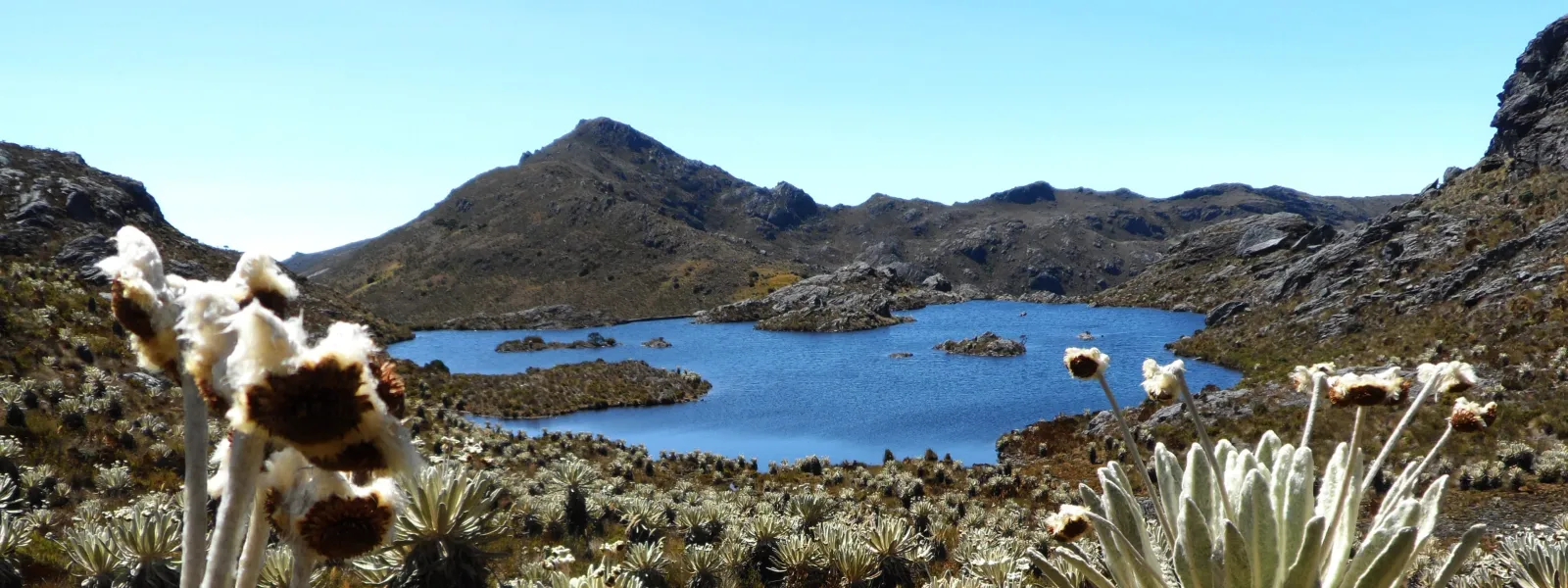
In the Andean region, high-mountain ecosystems known as páramos capture water from the fog and supply it to the lowlands. One such ecosystem is the Santurbán páramo, which provides fresh water to more than two million people in Colombia.
Santurbán, like the other páramos on the continent, also captures large amounts of carbon, making it a key ally in mitigating the climate crisis. It is also a refuge for hundreds of endangered species, including the iconic spectacled bear.
The land in and around the páramo contains gold and other minerals. This has put Santurbán in the spotlight of the multinational mining industry, which for decades has sought to establish large-scale projects in the ecosystem that threaten to degrade it.
The Committee for the Defense of Water and the Santurbán Páramo—a coalition of environmental advocates—has thwarted these ongoing attempts, with support from AIDA and other civil society organizations.
Background
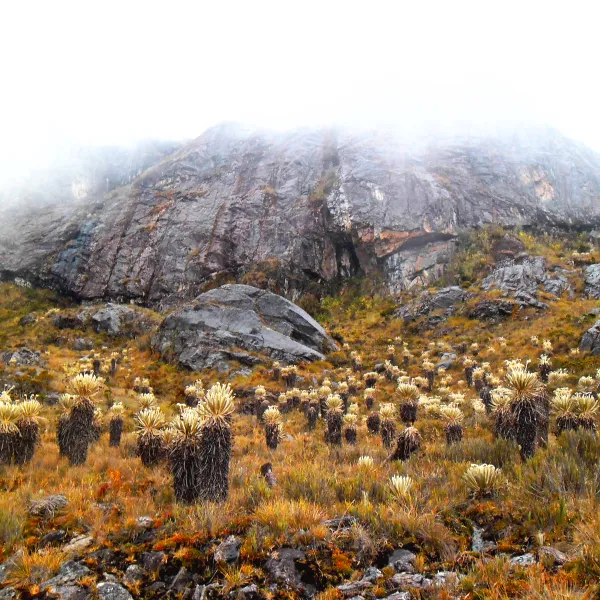
The Santurbán páramo is located in the heart of the Eastern Cordillera of the Colombian Andes, in the departments of Santander and Norte de Santander, at an elevation ranging from 2,200 to 4,290 meters above sea level.
It covers an area of 129,743 hectares and is home to 57 lakes. It serves as a habitat for 457 plant species and 293 species of vertebrate fauna.
There are mineral deposits in Santurbán, primarily gold, but also silver and copper. This explains the region’s mining tradition, particularly in the part of the páramo located in Santander, in the province of Soto Norte. The communities in the area have built their culture and identity around gold mining, which is mainly artisanal and small-scale.
But since the 1990s, the gold deposits in the páramo have also attracted foreign mining conglomerates seeking to develop large-scale projects. This has raised concerns among the population that relies on the Santurbán water sources, who have mobilized in defense of water, their land, and life.
Although national and international regulations prohibit mining in páramos, the Colombian government has granted mining concessions to transnational corporations in Santurbán.
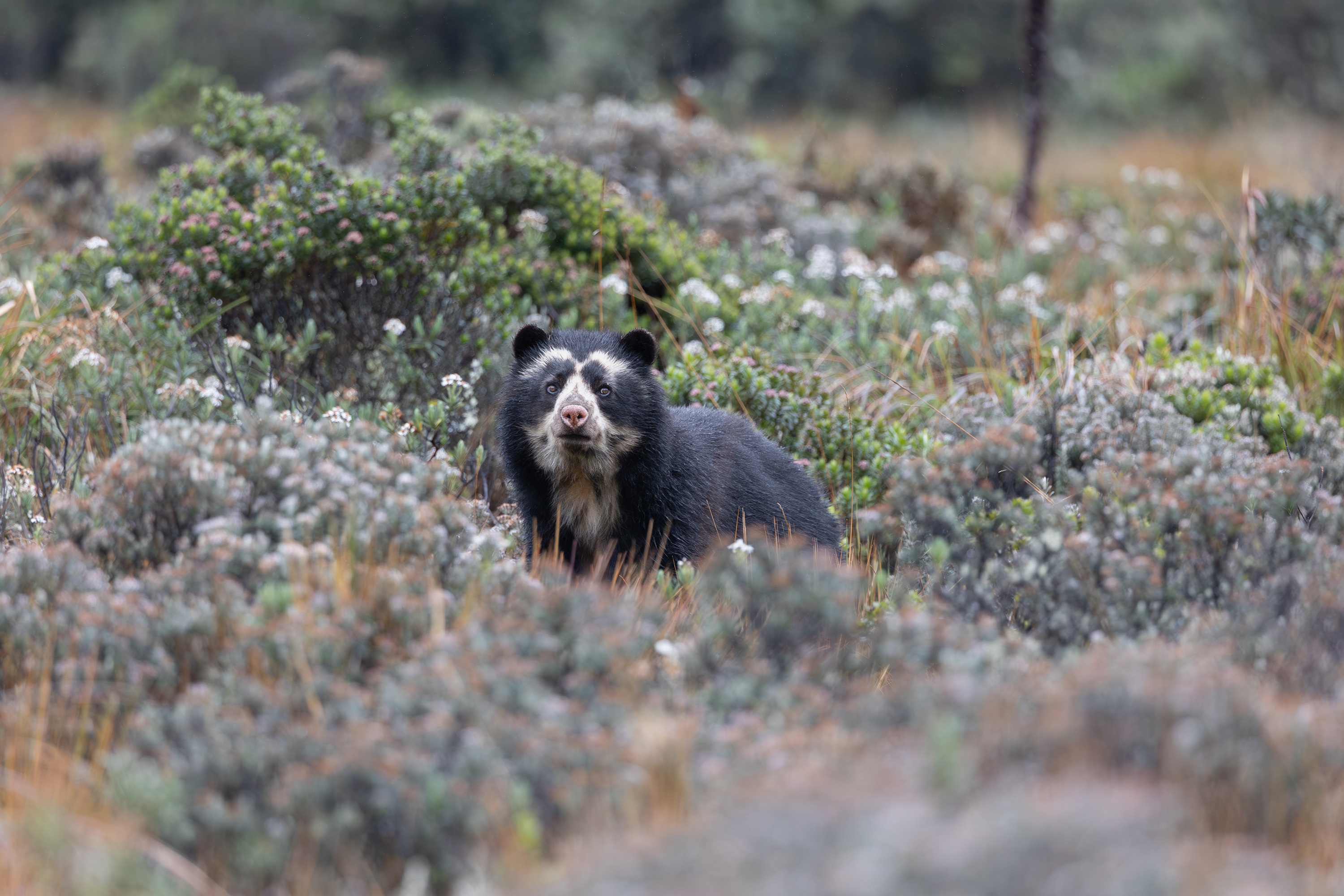
Photo: Keishpixl / Pixabay.
The long struggle to protect the páramo
One of the companies that sought to develop large-scale mining in Santurbán is Eco Oro Minerals Corp.—formerly Greystar Resources—a Canadian company that intended to establish the Angostura open-pit mine there to extract gold and silver. Between 1994 and 1995, the company acquired its mining titles and conducted exploration. And in 2010, it applied for a mining permit.
That was the year AIDA became involved in defending the ecosystem, supporting the Committee for the Defense of Water and the Santurbán Páramo. Our legal work helped convince the Colombian government to deny the mine an environmental permit in May 2011.
In January 2013, the government designated a portion of the páramo (11,700 hectares) as a Regional Natural Park. That year—together with the committee and partner organizations—we carried out a campaign and advocacy efforts to urge the government to recognize the entire Santurbán area as a páramo ecosystem through a delimitation based on scientific criteria. In December 2014, the Ministry of the Environment established a delimitation that protected 76% of the páramo (98,954 hectares).
Furthermore, as a result of a litigation supported by AIDA, in February 2016, Colombia’s highest court reaffirmed that mining in páramos is prohibited.
That same year, in December, the International Finance Corporation (IFC), the World Bank Group’s private sector arm, decided to divest from Eco Oro Minerals. This achievement was the result of a process that began in 2012, when the committee—advised and supported by AIDA and international partner organizations—filed a complaint before an independent accountability mechanism, which concluded that the IFC’s investment in the Angostura project failed to take into account the project’s social and environmental impacts, thereby contradicting the financial institution’s internal policies.
Also in 2016, Eco Oro Minerals filed an arbitration claim against the Colombian government with the International Centre for Settlement of Investment Disputes (ICSID), arguing that it had been adversely affected by government decisions aimed at protecting the country’s páramos, including the delimitation of Santurbán.
In 2017, the Constitutional Court invalidated the delimitation because the affected communities were not consulted. The high court ordered that a participatory delimitation be carried out.
And that year, a new threat to Santurbán emerged when the Canadian multinational Aris Mining applied for an environmental permit for Soto Norte, a gold mining project located near the páramo. Following citizen protests and technical objections, in October 2020, the National Environmental Licensing Authority shelved the project.
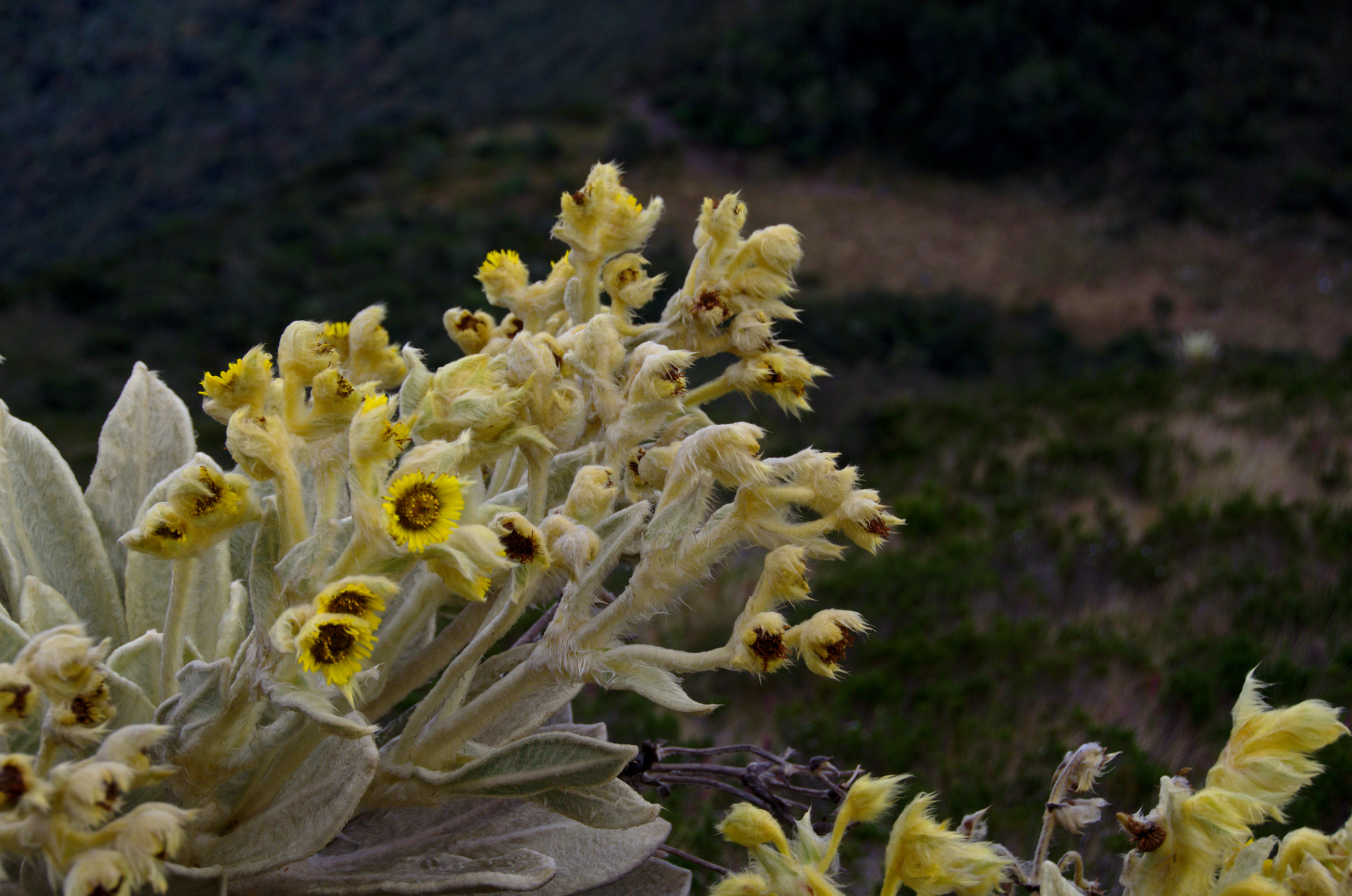
Photo: Aztlec.
Current situation
In March 2025, the Colombian government designated the western flank of the Santurbán massif as a temporary renewable natural resource reserve area, delimiting and protecting an area of 75,344.65 hectares. This resulted in a two-year suspension of the Soto Norte project. However, Aris Mining's contract to formalize Calimineros' small-scale mining activities through the purchase and processing of mineralized material remains in effect.
In addition, the Canadian mining company continues to move the project forward. In September 2025, it released its prefeasibility study, revising the mine’s original design.
Meanwhile, members of the Committee for the Defense of Water and the Santurbán Páramo face threats and stigmatization because of their work. In March 2025, UN Special Rapporteurs and the Working Group on Business and Human Rights denounced these incidents in communications sent to the governments of Colombia, Canada, and the United Arab Emirates, as well as to the companies Aris Mining and MDC Industry Holding Company LLC, the former co-owner of the Soto Norte project.
Regarding the arbitration claim filed by Eco Oro Minerals, in July 2024, ICSID ruled in favor of the Colombian government and rejected the Canadian company’s claim for USD 1.1 billion in compensation.
Concerning the delimitation of Santurbán, in July 2026, the Ministry of the Environment issued a resolution introducing the concept of "progressive delimitation." On that basis, the government proposes to progressively demarcate the páramo, covering 29,199 hectares across 19 municipalities—those where the participatory agreements required by the Constitutional Court in its 2017 ruling have already been finalized. It also proposes two measures on the creation and expansion of reserves to restrict mining in the ecosystem.
Learn more about the impacts of mining on the páramos of Latin America (in Spanish).
Partners:
Related projects

Protecting the Environment Through Collaboration: A Community Science Experience
When environmental damage occurs, the first warning often comes from the people or communities directly affected. Residents living near a river are usually the first to notice waste being dumped or fish dying when the water is polluted. Similarly, who live near an open pit mine are the who see when illness becomes more common or when water begins to run scarce.One powerful way to turn lived experience into scientific evidence is through community science. This approach allows people to share, validate, and integrate local knowledge into scientific research and efforts to defend their territories.At AIDA, we believe in the power of science to advance environmental justice. That’s why we generate and apply scientific knowledge in the legal cases we support. Recently, we had the opportunity to take part in a community science initiative that helped us reflect on—and learn from—the value of this collaborative methodology and the shared knowledge it produces. Local Knowledge: A Powerful Response to Environmental Degradation In April 2024, at the request of the Poqomam Maya community of Santa Cruz Chinautla—a village near Guatemala’s capital—AIDA senior scientist Javier Oviedo and attorney Bryslie Cifuentes carried out a field visit to gather information and assess the solid waste pollution that has affected the community for years.One of their main objectives was to identify illegal dump sites on the banks of the Chinautla River. The disposal of waste and debris in this area has contaminated both the soil and waters of this tributary of the Motagua River, the longest river in Guatemala.While preparing for the trip, Javier realized the team would face several challenges. The time available would not be enough to collect all the necessary data, and the team’s limited familiarity with the area could make locating the dumpsites difficult and potentially unsafe.Then Javier had an idea: to involve members of the community in supporting the team with this task.His plan made perfect sense—after all, who better to locate the illegal dumpsites than the people who know the territory best? Beyond that, by witnessing the impacts of pollution firsthand, community members could also appreciate the importance of documenting these issues.I spoke with Javier about how this idea came about, and he shared the following: Beyond seeking support from community members, this approach was rooted in a recognition of the irreplaceable value of their knowledge as residents of their territory. How the Work Was Carried Out Javier’s idea was that, with the help of an accessible and easy-to-use mobile app, community members could send information about illegal landfills directly to the AIDA Science team, who would then validate and analyze the data.To make this possible, the team designed a form specifying the data they needed to collect: the location of the landfill, its dimensions, the type of waste identified, associated social issues, and other relevant details.In Chinautla, two community residents, along with authorities from the Poqomam Maya village, visited several landfills they had previously identified with Javier and Bryslie. During these visits, Javier showed them how to use the app and fill out the form. Later, one of the residents continued the process independently.Thanks to this collaborative effort, data was collected on 10 of the most critical illegal dumpsites. While this does not capture all of them—unfortunately, many more exist—this sample allowed the team to estimate the extent of waste and debris pollution in the community and to illustrate how poor management has exacerbated the problem.The information gathered was crucial in highlighting the severity of the pollution, demonstrating the continued use of illegal dumping, and exposing the municipal authorities’ failure to meet their legal obligations regarding waste management.This evidence formed the basis for the lawsuit the community filed against the municipality of Chinautla in October 2024, citing the lack of measures to address river and soil contamination caused by inadequate waste management and illegal landfills. In June 2025, an appeals court ordered the municipality to take action to address the serious environmental crisis affecting the community. Lessons Learned from the Experience According to Javier, involving the people of Chinautla in a knowledge-building process led to mutual learning.For community members, it meant acquiring new technological skills. For the AIDA team, it prompted new questions about how to move knowledge-sharing with a community beyond simple collaboration.Javier summarized his learnings in three points: At AIDA, science is a core part of our work and a key element of the strategic litigation we pursue to protect and defend a healthy environment across Latin America. Involving the communities we support in this process broadens our perspective, allowing us to integrate their knowledge and experiences into the science we seek to build.
Read more
Science in the Service of Environmental Justice
By David Cañas and Mayela Sánchez* Science—or rather, the sciences—are the systems of knowledge that different social groups have developed over time to describe the phenomena of nature and society. Thanks to these knowledge systems, humanity has been able to find solutions to countless challenges, and today, more than ever, they must respond to global crises such as climate change, pollution, and biodiversity loss.Understanding ecosystem processes is essential for protecting the environment and providing verifiable, replicable evidence of natural phenomena and the impacts of human activities. It also enables the development of innovative solutions to protect and restore the environment.For science to contribute meaningfully to environmental justice—a concept centered on ensuring that all people enjoy a healthy environment—scientific work must be grounded in the realities of the people and communities affected by environmental degradation, who live in or rely on ecosystems vulnerable to harm. It must also be built on empathy and respect for other forms of knowledge, while seeking to reduce social inequalities.At AIDA, science is a central part of our work, supporting and complementing the strategic litigation we pursue to protect a healthy environment in Latin America. Through science, we can demonstrate the environmental impacts caused by human activities and hold those responsible accountable. How Do We Do Science at AIDA? The AIDA scientific team is a multidisciplinary group of professionals specializing in diverse fields, including geography, geology, biology, marine biology, oceanography, anthropology, and economics.Among other tasks, they collect and develop scientific evidence to strengthen the legal arguments in the cases we support across our various lines of work—from protecting the ocean and other critical ecosystems to defending human rights, such as the right to health and access to safe drinking water.The strategic use of science has been central to AIDA’s work since the organization was founded more than 25 years ago. One early example is the case of La Oroya in Peru, where a group of residents sued the government for failing to protect them from decades of heavy metal pollution caused by a metallurgical complex.Then we did something that had not been done before: we connected existing studies with the lived reality of La Oroya. This approach allowed us to demonstrate the relevance of the case and establish a clear link between pollution and its impact on the health of the city’s residents. Our analysis, compiled in the report La Oroya Cannot Wait, served to build the legal case and formulate proposals to the Peruvian government for corrective and preventive measures to address the problem. In 2024, in a decision that set a historic precedent for state oversight of industrial pollution, the Inter-American Court of Human Rights held the Peruvian state responsible and ordered it to adopt comprehensive reparations measures. Among the scientific team’s more recent contributions is a geospatial analysis of the Salar del Hombre Muerto in the Argentine provinces of Catamarca and Salta. Using maps and satellite imagery, the team documented water loss in this ecosystem caused by lithium mining.Another example is the expert report on solid waste pollution in the tributaries of the Motagua River in Guatemala, in which we recorded and characterized illegal dumps along the banks of the Chinautla River. This work enabled the affected communities to gather the evidence needed for the lawsuit they filed against the municipality of Chinautla for failing to address the contamination of rivers and soil caused by inadequate solid waste management. The Right to Science When science serves social and environmental justice, its benefits extend to everyone. This purpose was recently upheld by the Inter-American Court of Human Rights in its Advisory Opinion 32, which recognizes the “right to science” as the right of all people to enjoy the benefits of scientific and technological progress, as well as to have opportunities to contribute to scientific activity without discrimination.The Court also recognized indigenous, traditional, and local knowledge as equally valid forms of knowledge. This acknowledges how the deep understanding that indigenous peoples and local communities have of their environment—their worldview based on respect and interdependence, and their spiritual connection to nature—has been fundamental to ecosystem conservation.As an organization that uses science as a tool for environmental protection, we believe in a science that embodies these principles: one built on dialogue between different forms of knowledge, whose benefits reach all people, and which contributes to the socio-ecological transformation the planet urgently needs. *David Cañas is AIDA's Interim Director of Science; Mayela Sánchez is our digital community specialist.
Read moreScience in the Service of Environmental Justice
By David Cañas and Mayela Sánchez* Science—or rather, the sciences—are the systems of knowledge that different social groups have developed over time to describe the phenomena of nature and society. Thanks to these knowledge systems, humanity has been able to find solutions to countless challenges, and today, more than ever, they must respond to global crises such as climate change, pollution, and biodiversity loss.Understanding ecosystem processes is essential for protecting the environment and providing verifiable, replicable evidence of natural phenomena and the impacts of human activities. It also enables the development of innovative solutions to protect and restore the environment.For science to contribute meaningfully to environmental justice—a concept centered on ensuring that all people enjoy a healthy environment—scientific work must be grounded in the realities of the people and communities affected by environmental degradation, who live in or rely on ecosystems vulnerable to harm. It must also be built on empathy and respect for other forms of knowledge, while seeking to reduce social inequalities.At AIDA, science is a central part of our work, supporting and complementing the strategic litigation we pursue to protect a healthy environment in Latin America. Through science, we can demonstrate the environmental impacts caused by human activities and hold those responsible accountable. How Do We Do Science at AIDA? The AIDA scientific team is a multidisciplinary group of professionals specializing in diverse fields, including geography, geology, biology, marine biology, oceanography, anthropology, and economics.Among other tasks, they collect and develop scientific evidence to strengthen the legal arguments in the cases we support across our various lines of work—from protecting the ocean and other critical ecosystems to defending human rights, such as the right to health and access to safe drinking water.The strategic use of science has been central to AIDA’s work since the organization was founded more than 25 years ago. One early example is the case of La Oroya in Peru, where a group of residents sued the government for failing to protect them from decades of heavy metal pollution caused by a metallurgical complex.Then we did something that had not been done before: we connected existing studies with the lived reality of La Oroya. This approach allowed us to demonstrate the relevance of the case and establish a clear link between pollution and its impact on the health of the city’s residents. Our analysis, compiled in the report La Oroya Cannot Wait, served to build the legal case and formulate proposals to the Peruvian government for corrective and preventive measures to address the problem. In 2024, in a decision that set a historic precedent for state oversight of industrial pollution, the Inter-American Court of Human Rights held the Peruvian state responsible and ordered it to adopt comprehensive reparations measures. Among the scientific team’s more recent contributions is a geospatial analysis of the Salar del Hombre Muerto in the Argentine provinces of Catamarca and Salta. Using maps and satellite imagery, the team documented water loss in this ecosystem caused by lithium mining.Another example is the expert report on solid waste pollution in the tributaries of the Motagua River in Guatemala, in which we recorded and characterized illegal dumps along the banks of the Chinautla River. This work enabled the affected communities to gather the evidence needed for the lawsuit they filed against the municipality of Chinautla for failing to address the contamination of rivers and soil caused by inadequate solid waste management. The Right to Science When science serves social and environmental justice, its benefits extend to everyone. This purpose was recently upheld by the Inter-American Court of Human Rights in its Advisory Opinion 32, which recognizes the “right to science” as the right of all people to enjoy the benefits of scientific and technological progress, as well as to have opportunities to contribute to scientific activity without discrimination.The Court also recognized indigenous, traditional, and local knowledge as equally valid forms of knowledge. This acknowledges how the deep understanding that indigenous peoples and local communities have of their environment—their worldview based on respect and interdependence, and their spiritual connection to nature—has been fundamental to ecosystem conservation.As an organization that uses science as a tool for environmental protection, we believe in a science that embodies these principles: one built on dialogue between different forms of knowledge, whose benefits reach all people, and which contributes to the socio-ecological transformation the planet urgently needs. *David Cañas is AIDA's Interim Director of Science; Mayela Sánchez is our digital community specialist.
Read more