
Project
Alberto Peña Kay
Protecting the Santurban páramo from mining's damage
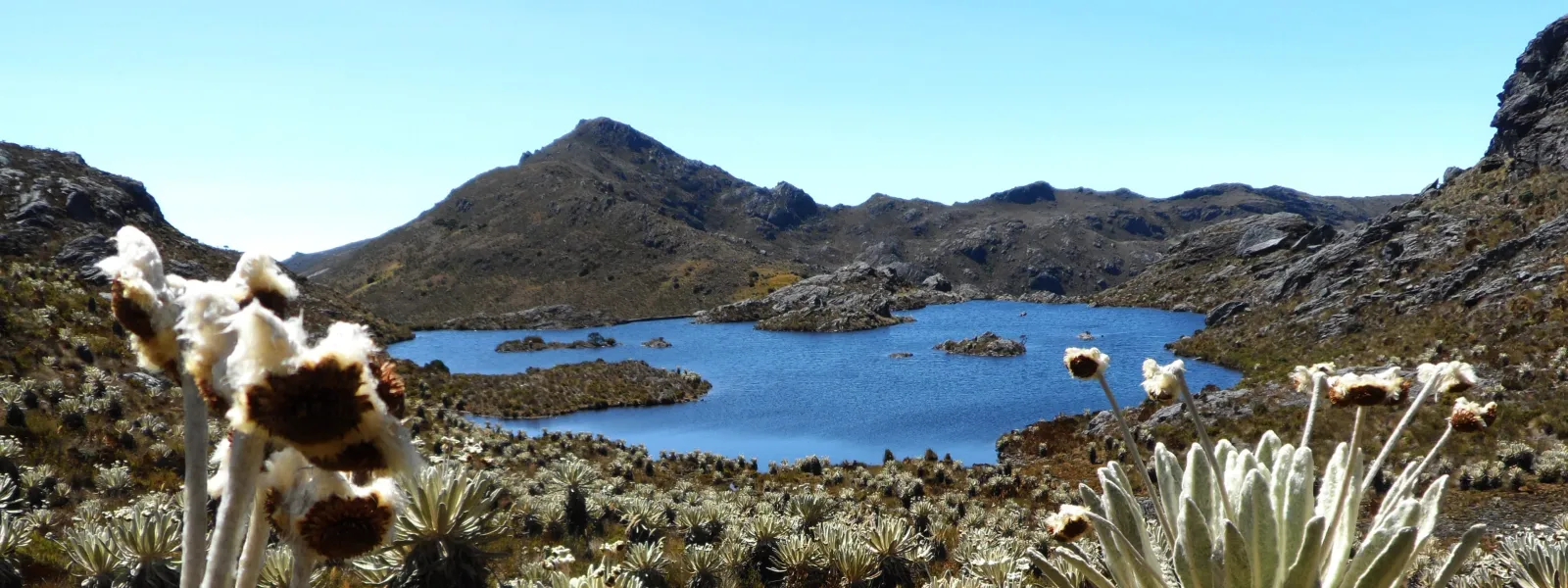
In the Andean region, high-mountain ecosystems known as páramos capture water from the fog and supply it to the lowlands. One such ecosystem is the Santurbán páramo, which provides fresh water to more than two million people in Colombia.
Santurbán, like the other páramos on the continent, also captures large amounts of carbon, making it a key ally in mitigating the climate crisis. It is also a refuge for hundreds of endangered species, including the iconic spectacled bear.
The land in and around the páramo contains gold and other minerals. This has put Santurbán in the spotlight of the multinational mining industry, which for decades has sought to establish large-scale projects in the ecosystem that threaten to degrade it.
The Committee for the Defense of Water and the Santurbán Páramo—a coalition of environmental advocates—has thwarted these ongoing attempts, with support from AIDA and other civil society organizations.
Background
The Santurbán páramo is located in the heart of the Eastern Cordillera of the Colombian Andes, in the departments of Santander and Norte de Santander, at an elevation ranging from 2,200 to 4,290 meters above sea level.
It covers an area of 129,743 hectares and is home to 57 lakes. It serves as a habitat for 457 plant species and 293 species of vertebrate fauna.
There are mineral deposits in Santurbán, primarily gold, but also silver and copper. This explains the region’s mining tradition, particularly in the part of the páramo located in Santander, in the province of Soto Norte. The communities in the area have built their culture and identity around gold mining, which is mainly artisanal and small-scale.
But since the 1990s, the gold deposits in the páramo have also attracted foreign mining conglomerates seeking to develop large-scale projects. This has raised concerns among the population that relies on the Santurbán water sources, who have mobilized in defense of water, their land, and life.
Although national and international regulations prohibit mining in páramos, the Colombian government has granted mining concessions to transnational corporations in Santurbán.
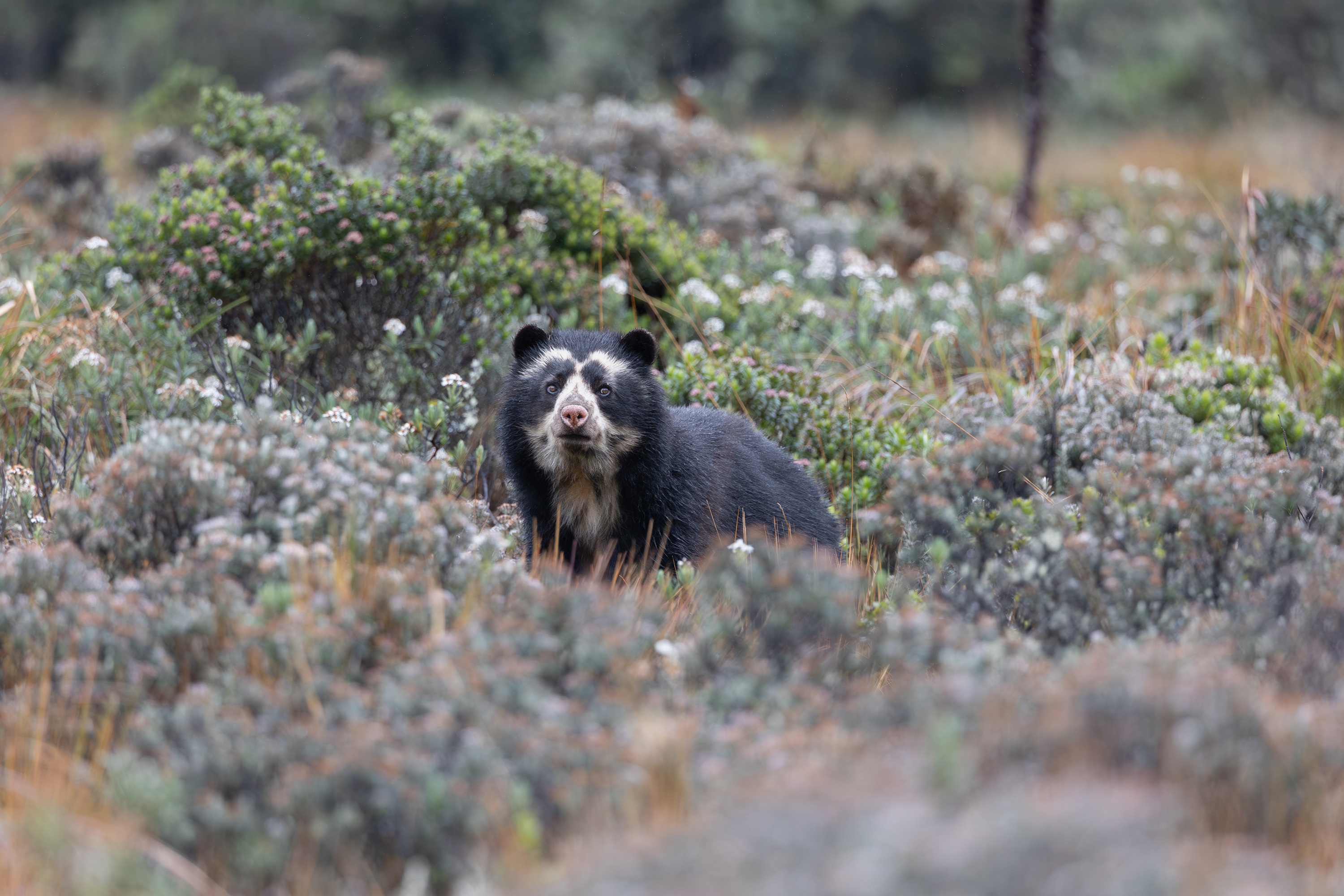
Photo: Keishpixl / Pixabay.
The long struggle to protect the páramo
One of the companies that sought to develop large-scale mining in Santurbán is Eco Oro Minerals Corp.—formerly Greystar Resources—a Canadian company that intended to establish the Angostura open-pit mine there to extract gold and silver. Between 1994 and 1995, the company acquired its mining titles and conducted exploration. And in 2010, it applied for a mining permit.
That was the year AIDA became involved in defending the ecosystem, supporting the Committee for the Defense of Water and the Santurbán Páramo. Our legal work helped convince the Colombian government to deny the mine an environmental permit in May 2011.
In January 2013, the government designated a portion of the páramo (11,700 hectares) as a Regional Natural Park. That year—together with the committee and partner organizations—we carried out a campaign and advocacy efforts to urge the government to recognize the entire Santurbán area as a páramo ecosystem through a delimitation based on scientific criteria. In December 2014, the Ministry of the Environment established a delimitation that protected 76% of the páramo (98,954 hectares).
Furthermore, as a result of a litigation supported by AIDA, in February 2016, Colombia’s highest court reaffirmed that mining in páramos is prohibited.
That same year, in December, the International Finance Corporation (IFC), the World Bank Group’s private sector arm, decided to divest from Eco Oro Minerals. This achievement was the result of a process that began in 2012, when the committee—advised and supported by AIDA and international partner organizations—filed a complaint before an independent accountability mechanism, which concluded that the IFC’s investment in the Angostura project failed to take into account the project’s social and environmental impacts, thereby contradicting the financial institution’s internal policies.
Also in 2016, Eco Oro Minerals filed an arbitration claim against the Colombian government with the International Centre for Settlement of Investment Disputes (ICSID), arguing that it had been adversely affected by government decisions aimed at protecting the country’s páramos, including the delimitation of Santurbán.
In 2017, the Constitutional Court invalidated the delimitation because the affected communities were not consulted. The high court ordered that a participatory delimitation be carried out.
And that year, a new threat to Santurbán emerged when the Canadian multinational Aris Mining applied for an environmental permit for Soto Norte, a gold mining project located near the páramo. Following citizen protests and technical objections, in October 2020, the National Environmental Licensing Authority shelved the project.
Photo: Aztlec.
Current situation
In March 2025, the Colombian government designated the western flank of the Santurbán massif as a temporary renewable natural resource reserve area, delimiting and protecting an area of 75,344.65 hectares. This resulted in a two-year suspension of the Soto Norte project. However, Aris Mining's contract to formalize Calimineros' small-scale mining activities through the purchase and processing of mineralized material remains in effect.
In addition, the Canadian mining company continues to move the project forward. In September 2025, it released its prefeasibility study, revising the mine’s original design.
Meanwhile, members of the Committee for the Defense of Water and the Santurbán Páramo face threats and stigmatization because of their work. In March 2025, UN Special Rapporteurs and the Working Group on Business and Human Rights denounced these incidents in communications sent to the governments of Colombia, Canada, and the United Arab Emirates, as well as to the companies Aris Mining and MDC Industry Holding Company LLC, the former co-owner of the Soto Norte project.
Regarding the arbitration claim filed by Eco Oro Minerals, in July 2024, ICSID ruled in favor of the Colombian government and rejected the Canadian company’s claim for USD 1.1 billion in compensation.
Concerning the delimitation of Santurbán, in July 2026, the Ministry of the Environment issued a resolution introducing the concept of "progressive delimitation." On that basis, the government proposes to progressively demarcate the páramo, covering 29,199 hectares across 19 municipalities—those where the participatory agreements required by the Constitutional Court in its 2017 ruling have already been finalized. It also proposes two measures on the creation and expansion of reserves to restrict mining in the ecosystem.
Learn more about the impacts of mining on the páramos of Latin America (in Spanish).
Partners:
Related projects
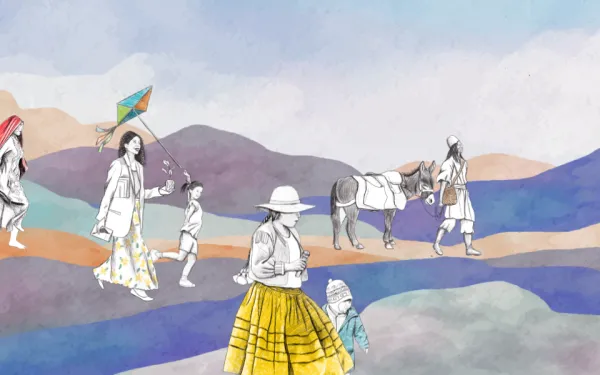
Communities bring their voice on the climate crisis before the Inter-American Court
By Liliana Ávila and Marcella Ribeiro* The hearing was held May 25 to 29 in Manaus, Brazil's largest Amazon city, where the mighty Amazon River is born when the dark waters of the Negro River meet the lighter waters of the Solimões. A delegation of seven communities and a network of trans and non-binary people from different corners of the continent arrived there to tell the Inter-American Court of Human Rights where they come from, what territory and habitat they occupy, how the climate crisis and environmental injustice affect their way of life, and what they propose so that the international court can help guarantee their rights in the face of the global crisis and actions to combat it. As in Bridgetown, Barbados, a month earlier, Manaus was the venue for the public hearings of the Advisory Opinion on Climate Emergency and Human Rights, an opinion in which the Court will clarify the obligations of the hemisphere's states to protect people, especially those in vulnerable situations, from the effects of the climate crisis. The voices from the territories Oral hearings are part of the process by which the Court delivers its advisory opinions. In these hearings, the judges of the Court listen to States and other actors in interventions that should not exceed 10 minutes. The history of peoples and their struggles do not fit into 10 minutes. Nevertheless, the testimonies of each member of the delegation were full of wisdom, dignity and hope. Francis Cruz, representative of the Honduran Climate Change Alliance and resident of the community of Marcovia, told how the sea destroyed his house and restaurant, everything he had. Coastal erosion has taken away more than 12 meters of land in his community, which depends on fishing and tourism. In fact, the community and others in the southern part of the country live with the constant threat of meteorological events whose intensity and frequency are linked to climate change and the environmental degradation it causes. The Court also learned that the extraction of hydrocarbons through fracking in the province of Mendoza, Argentina, is limiting the resilience of Mapuche communities in the face of the climate crisis and is exacerbating the serious situation of water scarcity in the area. This was explained by Gabriel Jofré, spokesperson for the Malalweche Territorial Identity Organization, who highlighted the traditional knowledge of the Mapuche people as a source of answers to their situation of climate vulnerability. In her testimony, Katta Alonso, spokesperson for the territorial movement MUZOSARE (Mujeres de Zona de Sacrificio en Resistencia), described what it is like to live in Quintero and Puchuncaví, Chile, a highly polluted place that has been transformed forever into an industrial complex of thermoelectric, oil and chemical plants, where energy conversion projects are exacerbating the problem. "Climate change affects us because it affects everyone, but even more because we are already in a situation of environmental vulnerability. We are also affected by the policies and measures that the government adopts in its attempts to deal with the climate crisis, because they are sacrificing us again. Once again, they are offering our territories for the installation of harmful industries that will supposedly solve the problem. There is no information, no participation, no possibility of defense," she said. On behalf of Mujeres Unidas en Defensa del Agua: Lago Titicaca Perú-Bolivia, María Eugenia Millares spoke about the contamination of the lake and how temperature changes affect planting, food production cycles and food preservation. She highlighted the role of women: "Our capacity to adapt is diminishing as we lose our livelihoods due to the climate crisis and the failure of the state. But we know that we can change this situation. We women, who are the most affected because we use the water for household and other activities, must be heard and recognized for our role in saving the lake and its life." Angelica Ortiz, representing the communities of La Gran Parada and El Rocío - located in the department of La Guajira, Colombia - and the organization Wayuu Women's Forces, also spoke at the hearing. She highlighted the reality of the Wayuu indigenous people, whose ability to adapt to the climate emergency has been diminished in a situation of economic vulnerability, water crisis, decades of coal exploitation and, more recently, wind energy projects being developed in their territories without consulting them. "We don't know when it will rain, so we don't know when to plant.” The Court also heard the case of the four indigenous communities of the Sierra Nevada de Santa Marta, an ecosystem that has lost more than 90 percent of its glaciers due to global warming. "Our mother is sick, the climate crisis is the disease that we have caused to the mother, and that is the message we are receiving today," said Jaime Luis Arias, Cabildo Governor of the Kankuamo people. Among other things, the climate crisis threatens the ancestral knowledge system of these peoples, their traditional practices and their spiritual life. Finally, Yoko Ruiz, Territorial Coordinator of the Trans Health League, spoke about the differentiated impacts of the climate crisis on women, girls and LGBTIQ+ people. She urged that the Court's decision to clarify state obligations to protect human rights in the face of climate emergency be consistent with the realities of discrimination and structural violence faced by these populations. Contributing from experience and wisdom The members of the delegation came to Manaus not only to talk about the problems they face. As agents of change, they also brought concrete proposals on how to urgently address the climate crisis, based on their knowledge and experience, and respecting human rights. Their proposals are a cry of hope that they wish to be heard by the Court. They are a call to rethink the structural causes of the natural and spiritual imbalance; and to stop the affronts to Mother Earth, her sacred elements, organs and vital systems. Among many other things, they suggested to: Establish a declaration of integral protection for ethnic and rural territories and ecosystems that are highly vulnerable to the climate crisis. Strengthen the adaptive capacity of populations through ancestral knowledge, community monitoring and other mechanisms that ensure the climate resilience of their inhabitants. Recognize the validity of ancestral knowledge and urge states to strengthen the capacity of populations to monitor and care for ecosystems as a means of promoting climate adaptation. Ensure that plans for prevention, preparedness, response, recovery and adaptation to climate disasters include a gender perspective and guarantee services and inputs related to health in general and the sexual and reproductive health of women, girls and LGBTQ+ people. The convening of the peoples of the Americas to prepare for the Advisory Opinion of the Inter-American Court is more than a formality and a 10-minute presentation. It is above all a bet on hope, an affirmation that the fight against the climate crisis will be with and for the peoples, or not at all. AIDA supported various communities in the region to bring their voices to the process by participating in the hearings in Bridgetown and Manaus, and by submitting legal briefs to the Court highlighting the multiple socio-environmental impacts of the climate emergency and valuable proposals to address them. This experience reflects our commitment to build ethical, collective and horizontal processes together with Latin American communities to strengthen the reach of their voices and promote the renewal of international law based on their knowledge. For our team, it is essential to be a bridge between defenders who fight for life every day. We seek to change the traditionally exclusionary logic of international decision-making spaces, promoting the exchange of diverse knowledge and working to ensure that decisions about nature include the voice of those who truly protect it and live in harmony with it. *Liliana Ávila is the Director of AIDA's Human Rights and Environment Program; Marcella Ribeiro is a senior attorney with the program.
Read more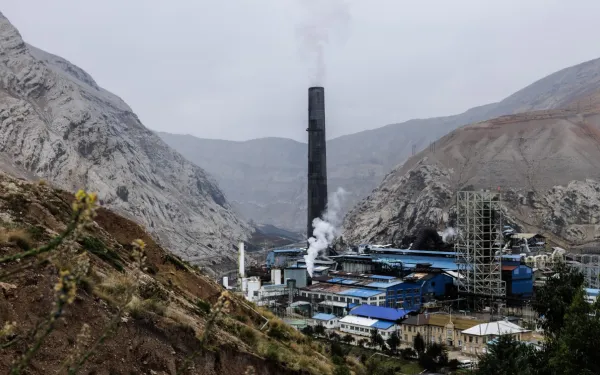
La Oroya v. Peru: Historic precedent on human rights and the environment
The Inter-American Court of Human Rights set an important precedent for state oversight of industrial pollution. By Rosa Peña and Jacob Kopas*This past March, the Inter-American Court of Human Rights, the human rights tribunal for the Americas, released an historic ruling condemning Peru for failing to control toxic industrial pollution. The ruling set an important precedent for the right to a healthy environment and state oversight of corporate activities across the Americas.This victory began as a petition that the Interamerican Association for Environmental Defense (AIDA) and Earthjustice, together with partner organizations, presented in 2006 on behalf of families and environmental defenders in La Oroya, a small town in the heart of the Peruvian Andes. For more than 100 years, an industrial smelter has exposed La Oroya to extreme levels of toxic pollution, leading to nearly all the town’s children having dangerously high levels of lead and other heavy metals in their blood.The court’s binding judgment is a powerful condemnation that the families of La Oroya are today using to demand concrete action from the Peruvian government. In addition to financial compensation, the court ordered Peru to halt further harmful pollution from the smelter, clean up the toxic metals in the soil and water, and provide specialized health care for the victims and inhabitants of La Oroya. The court's judgment itself also constitutes a form of reparations for the victims, by acknowledging the legitimacy of their work as environmental defenders.The significance of the ruling goes far beyond the immediate benefits for people in La Oroya and Peru. Ensuring the environmental quality of water and air in Latin America remains a major challenge across the Americas. This is the first time that the Inter-American Court has held that industrial pollution can harm human rights, opening a path to justice for communities in so-called “Sacrifice Zones” overburdened with industrial pollution.The court’s landmark ruling establishes several key precedents with significance for both international and domestic jurisprudence. Innovative new measures for collective reparations.This case went beyond previous cases by ordering not only individual reparations, but also collective reparations that benefit all inhabitants of La Oroya. These include environmental remediation of the surrounding ecosystem (para. 351), comprehensive and specialized health care for any inhabitant who presents symptoms (para. 348), and support for relocating inhabitants who wish to do so (para. 355). In addition, the court ordered differentiated measures for women, children, and elderly victims. The judgment also ordered environmental and public health measures that will improve the lives of all Peruvians impacted by the mining industry, including bringing air quality standards in line with international standards (para. 346), guaranteeing that mining companies adhere to the UN Guiding Principles on Business and Human Rights (para. 352), and creating an information system that proactively provides updated air and water quality data in mining areas (para. 354). Showing causality: Exposure to a significant health risk is enough to prove a human rights violation.One major obstacle to access to justice for communities exposed to dangerous pollution is showing causality, that is, proving that pollution caused a specific health condition. Showing causality is often difficult because many communities lack access to proper health care and diagnostic tests, because some conditions such as cancer can be latent and lie undetected for years, and because many different factors contribute to poor health. To account for this reality, the court held that it is sufficient to show that an exposure to pollution created a significant health risk, without having to prove that the exposure caused a concrete condition or disease (para. 204). The court also went a step further, and noted that under the precautionary principle, the lack of scientific certainty regarding those risks cannot be an excuse for failing to adopt measures to protect public health (para. 207). The right to clean air and water as substantive elements of the right to a healthy environment.In the judgment, the Court established that the right to a healthy environment includes the rights to air and water that are free of pollution which could constitute a significant risk to health and rights. These rights also entail specific obligations for states. These include:Setting environmental quality standards that do not constitute a risk to health and that are based on the best available scienceMonitoring air and water quality and providing access to information on pollution that endangers healthCreating plans to maintain air and water qualityEffectively enforcing environmental quality standards and ensuring the proper management of water resources (paras. 120-121) Access to public participation in environmental decisions.This ruling is also the first time that the Inter-American Court has condemned a state for failing to guarantee effective public participation in environmental decision-making affecting the general public (para. 256). In prior cases, the court examined the right to public participation only in the context of consultation with Indigenous Peoples, who have special protections under international law. In addition, the court held that the mere existence of formal procedures for public participation may not be sufficient for states to satisfy their obligations under the American Convention. Authorities must also ensure that these procedures provide an effective opportunity to be heard and participate in decision making (para. 260). The judgment also consolidated advances in other important issues for environmental justice in the region:Business and human rights obligations. The court emphasized states’ obligations to protect human rights and their duties to supervise and control companies (paras. 109-110). It also held that companies themselves have responsibilities to respect human rights and act with due diligence, regardless of their size, sector, operational context, ownership, or structure (para. 111).Environmental pollution violates the right to a dignified life. Because pollution impacted many different areas of the lives of families in La Oroya, it also violated their right to a dignified life. These impacts included not being able to carry out a life project under normal circumstances, which affected their personal, family, psychological, and professional development (paras. 220-230).The effects of environmental contamination fall disproportionately on individuals, groups, and communities that already bear the burden of poverty, discrimination, and systemic marginalization. The court recognized that pregnant women, children, teenagers and the elderly, who, given their condition, are frequently exposed to a greater risk of harm from pollution (para. 134). Given the principle of intergenerational equity, states have particular obligations to protect children’s health from environmental pollution and provide specialized care for those that acquired illnesses as a result of exposure (para. 141).The right to a healthy environment as jus cogens. The ruling noted that guaranteeing the interest of both present and future generations from serious, extensive, long-lasting, and irreversible damage to the environment is fundamental for the survival of humanity. The court thereby called on the international community to recognize such environmental harm as violating a preemptory norm (jus cogens) of international law (para. 129).Weakening air quality standards violates international law. The court found that when Peru rolled back national air quality standards for sulfur dioxide, it violated its duty against retrogressive measures inherent in the right to a healthy environment (paras. 182-186). The court held that any such rollbacks must be justified in light of the state’s maximum available resources for guaranteeing human rights and be consistent with the precautionary principle (para. 186).Obligation of active transparency when guaranteeing access to information. This case is the first time the court has found a state responsible for failing its obligation of “active transparency,” which requires states to not only respond to requests for accessing environmental information, but also to actively distribute and publicize environmental information (para. 247). This information must be complete, comprehensible, and in an accessible language (para. 255). The ruling is poised to a significant legal precedent for the many communities affected by industrial pollution. Its ultimate impact will depend on how it is implemented by courts in Peru and throughout Latin America. In Peru alone, the Peruvian Human Rights Ombudsman estimated that over 10 million people (31% of the population) are at risk of exposure to heavy metal pollutants and other chemicals related to the mining industry. With this new ruling as a powerful legal tool, hopefully other communities will not have to wait 100 years to finally breath clean air. Learn more about the legal contributions of the ruling of the Inter-American Court in the La Oroya case *Rosa Peña is a senior attorney with AIDA's Human Rights and Environment Program; Jacob Kopas is a senior attorney with Earthjustice's International Program.
Read more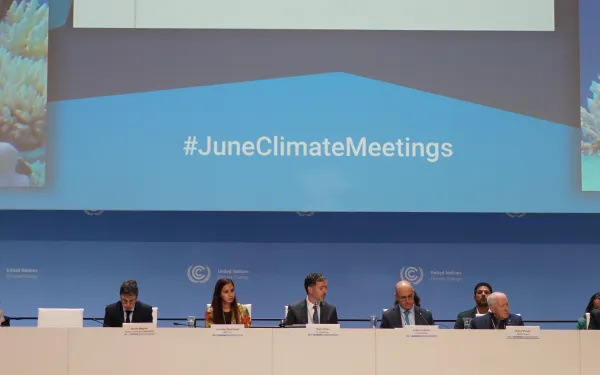
Climate negotiations: Reflections after the Bonn meeting ahead of COP29
By Florencia Ortúzar and Javier Dávalos* The 60th session of the UN Subsidiary Bodies on Climate Change (SB60) was held in Bonn, Germany, from June 3-13, 2024. These sessions, held twice a year, consist of technical meetings at which government delegates advance the agenda for international climate negotiations. The Bonn session was part of the preparations for the twenty-ninth United Nations Climate Change Conference (COP29) to be held in Baku, Azerbaijan, in November, and was guided by the agreements reached at COP28, held last year in Dubai, United Arab Emirates. AIDA participated in SB60 to bring the voice of Latin America to the negotiations from a human rights and gender perspective. The following are reflections on the four main issues addressed at the meeting: just transition, global accounting, the new financing target, and the Loss and Damage Fund. Work Programme on Just Transition On June 2 and 3, the long-awaited first dialogue took place on the Just Transition Work Programme, which was created at COP27 to address the challenges of the transition to low-carbon economies and societies. The goal is to achieve an equitable and inclusive process that promotes the protection of workers and affected communities. Civil society observer organizations noted that the principles of a just transition require an assessment of the impact of climate action on all human rights - including labor, social, economic and environmental rights - in key areas. To this end, decision-making in the work programme must include social dialogue and multiple levels of consultation with groups and communities. AIDA advocated for the justice dimension to consider the differentiated impacts of the transition in different areas of the planet, particularly in the Global South, where the extraction of transition minerals (lithium, cobalt and copper, among others) threatens fragile ecosystems, species and vulnerable communities. The problems of fossil fuel extraction are being repeated. Safeguards, participatory approaches and international cooperation are therefore relevant. It is also important to support economic diversification approaches that protect us from a new dependence on the sale of raw materials and encourage the search for new sources of income. Follow-up to the Global Stocktake Dialogue The Global Stocktake is a collective assessment mechanism to review global progress on climate mitigation, adaptation and finance every five years. The exercise will allow us to know whether global efforts are sufficient to meet the goals of the Paris Agreement to limit the global temperature rise to below 2°C, and hopefully 1.5°C. The results of the stocktaking should have a direct impact on countries' climate commitments contained in their Nationally Determined Contributions (NDCs). The text of the first stocktaking, adopted in 2023, gave way to the process of updating the NDCs, which countries must submit in 2025 and which must reinforce the historic commitment made at COP28 to phase out fossil fuels, set specific targets to reduce methane emissions, triple renewable energy, and double energy efficiency. The updated NDCs must include clear adaptation measures based on the conservation of biodiversity and key ecosystems such as the Amazon, wetlands and oceans. AIDA will monitor and follow up to ensure that countries in the region make progressive climate commitments that are consistent with what was agreed in the Global Stocktake. The new collective quantified goal on climate finance In 2009, developed countries agreed to mobilize $100 billion per year by 2020 to support climate action in developing countries. Then, in 2015, when the Paris Agreement was signed, it was agreed to set a new collective quantified goal on climate finance (NCQG). This target should be adopted in November, during COP29, and the Bonn meeting should pave the way for it. In addition, the new target will be an indicator of developing countries' ability to meet their updated NDCs, as well as a sign of fairness that could strengthen the credibility of the climate negotiation system. However, reaching an agreement has not been easy due to the number of decisions needed to outline the new target in its entirety. The most difficult point to agree on is the amount that developed countries will have to commit to. So far, they have only agreed that it should exceed US$100 billion. The Latin American countries, for their part, have not been able to propose figures based on the needs of the region. The list of countries that will contribute to the target is also still under discussion. According to the developed countries, some countries at an advanced stage of development could begin to contribute. There is also debate over whether the new target should also be used to finance loss and damage compensation, an issue that was not considered when the previous target was discussed and for which there is now a special fund. Another challenge for developing countries is that the financing resulting from the new target should not increase public debt. There are other details that still require agreement. The COP co-chairs must now propose a document that reconciles divergent visions and serves to reach agreement at COP29. Countries can apply the lessons learned from the first target and secure a new target that is more effective in terms of quantity and implementation. Financing climate action is neither a handout nor a charity, but a duty and responsibility of developed countries. It is also in their interest: the effects of the climate crisis are global. Without a goal, there are no financial flows, and without financing, there is no way to address the crisis. Launching the loss and damage fund The Loss and Damage Fund was established in 2022 at COP27, and its operationalization was agreed a year later at COP28. While the creation of the fund is welcome, it is only a first step in making it the channel of support so desperately needed by countries already suffering the worst impacts of the climate crisis. There are many challenges ahead. The Bonn meeting confirmed that the World Bank will be the interim administrator of the fund for the first four years. For civil society and developing countries in general, loss and damage must be recognized as the third pillar of climate action, alongside mitigation and adaptation. However, some developed countries seem to be suggesting that with the creation of the fund, it would no longer be necessary to include the issue as part of the new collective quantified climate finance goal, which does not make sense. Moreover, the amount that developed countries have pledged to the fund so far is less than 0.2% of what is needed annually. There is still no strategy that proposes how much contributing countries should contribute according to their responsibilities and capacities. The fund must be decentralized and involve civil society, indigenous communities, youth, women and other vulnerable groups from the outset to ensure that the money reaches those who need it. It must also be efficient and sufficient, providing financial and quality assistance as quickly as possible. On the other hand, developing countries, including those in Latin America and the Caribbean, must make efforts to monitor and report losses and damage in their territories, which often poses economic, technical and even methodological challenges that require support, training and guidance. The results of international climate negotiations are slow and the process often frustrating. The attitude of many industrialized countries, which shirk their responsibilities while enjoying development at the expense of the global climate balance, is disappointing. However, in the face of such a scenario, lowering our guard is not an option. The organized civil society working around these negotiations is a cause for hope. It is a demonstration of solidarity and competence that achieves results and does not give up. By being there, representing our region, we are contributing to this movement with the wisdom and strength that comes from the Global South. *Florencia Ortúzar is a senior attorney with AIDA y Javier Dávalos is the Director of AIDA's Climate Program.
Read more