
Project
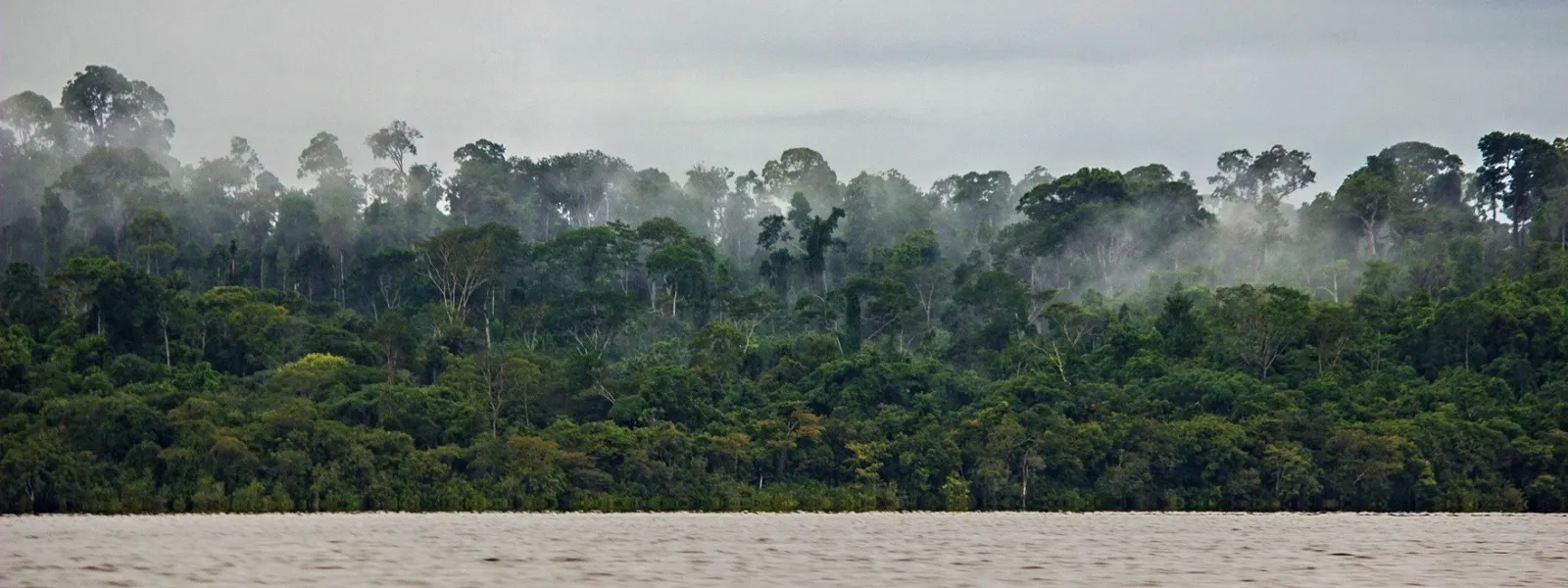
Amazon Watch / Maíra Irigaray
Barragem de Belo Monte no rio Xingu: 10 anos de impactos na Amazônia e de busca por reparações
A usina hidrelétrica de Belo Monte causou um desastre ambiental e social no coração da Amazônia: um dos ecossistemas mais importantes do planeta.
Essa situação só piorou desde que a usina começou a operar em 2016. A busca por justiça e reparação para as comunidades indígenas e ribeirinhas afetadas continua até hoje.
Em 2011, a Comissão Interamericana de Direitos Humanos (CIDH) concedeu a essas comunidades medidas de proteção, que até hoje não foram totalmente implementadas pelo Estado brasileiro.
E, desde junho daquele mesmo ano, a CIDH mantém um processo contra o Estado por sua responsabilidade internacional no caso.
A CIDH pode encaminhar o caso à Corte Interamericana de Direitos Humanos, que tem o poder de emitir uma sentença condenatória contra o Estado brasileiro.
Consulta o expediente de fatos do caso
Após 10 anos de operação da usina hidrelétrica e mais de 15 anos de violações de direitos humanos documentadas, é hora da justiça ser feita para as comunidades afetadas.
Leia a carta aberta das organizações que levam o caso à CIDH
Leia nosso comunicado à imprensa
Contexto
A usina hidrelétrica de Belo Monte — a quarta maior do mundo em capacidade instalada (11.233 MW) — foi construída no rio Xingu, no estado do Pará, norte do Brasil.
Foi inaugurada em 5 de maio de 2016, com uma única turbina. Naquela época, 80% do curso do rio foi desviado e 516 km² de terra foram inundados, uma área maior que a cidade de Chicago. Desse total, 400 km² eram de mata nativa. A usina começou a operar em plena capacidade em novembro de 2019.
Belo Monte foi construída e é operada pelo consórcio Norte Energia S.A., composto principalmente por empresas estatais. Foi financiada pelo Banco Nacional de Desenvolvimento Econômico e Social (BNDES), que aportou ao consórcio 25,4 bilhões de reais (aproximadamente US$ 10,16 bilhões), o maior investimento de sua história. Portanto, o BNDES também é legalmente responsável pelos impactos socioambientais associados ao projeto hidrelétrico.
Décadas de danos ambientais e humanos
As violações dos direitos humanos e a degradação da Amazônia remontam ao início do projeto. Em março de 2011, a Norte Energia iniciou a construção da barragem sem consulta adequada e sem o consentimento prévio, livre e informado das comunidades afetadas.
A construção levou ao deslocamento forçado de mais de 40.000 pessoas, rompendo laços sociais e culturais. O plano de reassentamento em Altamira — cidade diretamente afetada pelo projeto hidrelétrico — incluía moradias na periferia da cidade, sem serviços públicos adequados, moradias dignas para as famílias reassentadas e moradias diferenciadas para aqueles pertencentes a comunidades indígenas.
A operação da barragem de Belo Monte impôs uma seca permanente e artificial na Volta Grande do rio Xingu, agravada pelas secas históricas na Amazônia em 2023 e 2024. Como resultado, a morte de milhões de ovos de peixe foi documentada por quatro anos consecutivos (de 2021 a 2024) e, nos últimos três anos, não houve migração de peixes rio acima para desovar e se reproduzir. Assim, a pesca artesanal, principal fonte de proteína para os povos indígenas e comunidades ribeirinhas, foi severamente afetada: o consumo de peixe caiu de 50% para 30% do total de proteínas consumidas, sendo substituído por alimentos processados. Em suma, houve um colapso ambiental e humanitário que resultou no colapso da pesca como modo de vida tradicional, insegurança alimentar e falta de acesso à água potável para milhares de famílias, empobrecimento e doenças.
Além disso, a construção da barragem aumentou o desmatamento e intensificou a extração ilegal de madeira e a insegurança em terras indígenas e tribais, colocando em risco a sobrevivência dessas comunidades. Outra consequência foi o agravamento da pobreza e dos conflitos sociais, bem como a sobrecarga dos sistemas de saúde, educação e segurança pública em Altamira, cidade considerada a mais violenta do país em 2017, onde houve aumento do tráfico de pessoas e da violência sexual. Também foram registrados casos de violência contra defensores de direitos humanos envolvidos no caso.
Em 2025, durante a 30ª Conferência das Nações Unidas sobre Mudanças Climáticas (COP30), realizada no Brasil, o Ministério Público Federal classificou os danos causados por Belo Monte como ecocídio.
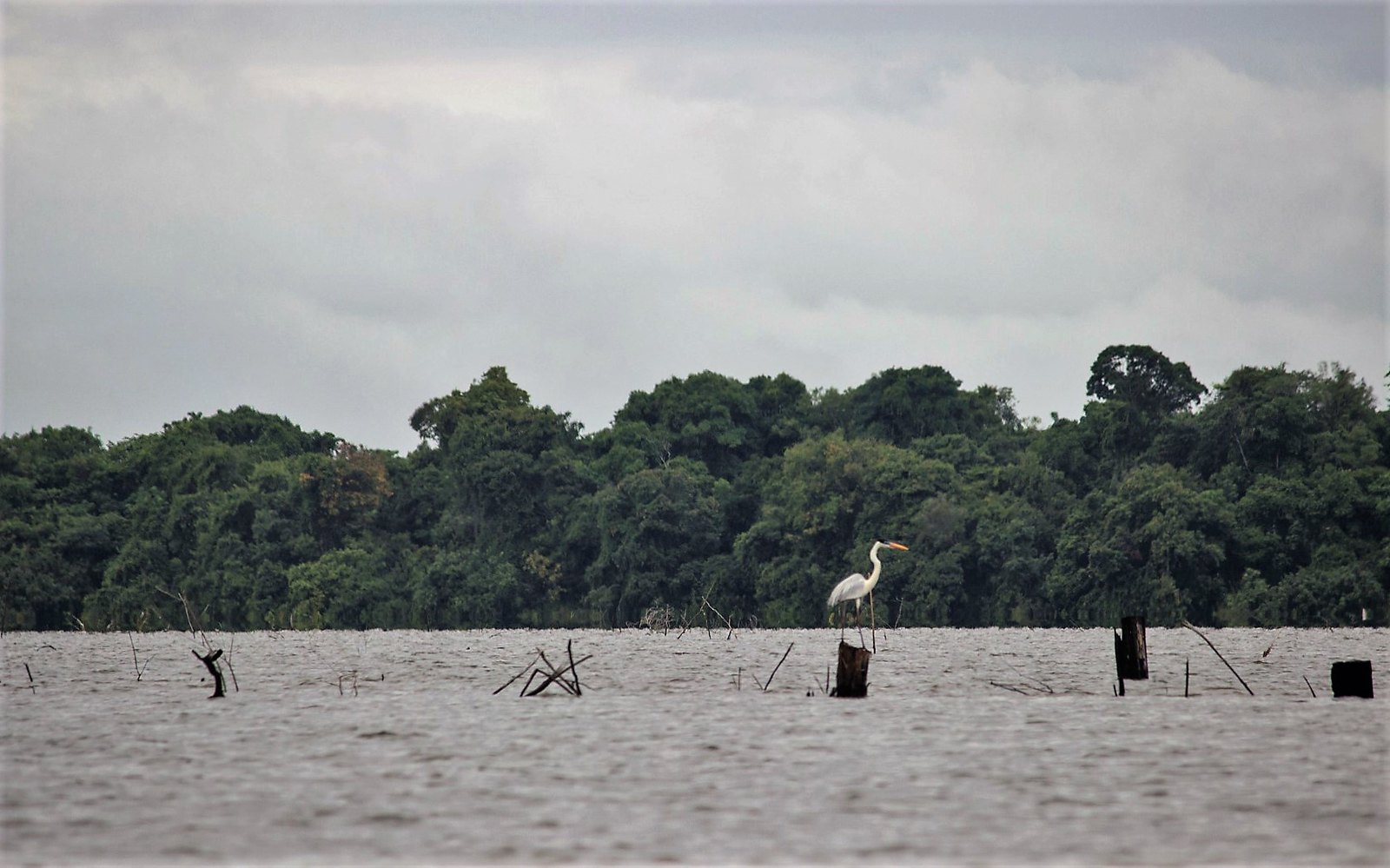
Foto: Amazon Watch / Maíra Irigaray.
A busca por justiça e reparação
Ao longo dos anos, o Ministério Público Federal do Pará, a Defensoria Pública e organizações da sociedade civil impetraram dezenas de ações judiciais em tribunais brasileiros para contestar as diversas irregularidades do projeto, bem como seus impactos. A maioria das ações permanece sem solução, algumas há mais de 10 anos.
Essas ações não obtiveram sucesso porque o governo federal tem reiteradamente anulado decisões favoráveis às comunidades afetadas, recorrendo a um mecanismo pelo qual o presidente do Supremo Tribunal Federal pode suspender uma decisão judicial com base unicamente em argumentos genéricos como "interesse nacional" ou "ordem econômica".
Diante da falta de respostas eficazes em nível nacional, a AIDA — juntamente com uma coalizão de organizações aliadas — levou o caso à Comissão Interamericana de Direitos Humanos (CIDH) e, em 2010, solicitou medidas cautelares para proteger a vida, a integridade e a saúde das comunidades indígenas afetadas.
Em 1º de abril de 2011, a CIDH concedeu essas medidas e solicitou ao Estado brasileiro a suspensão das licenças ambientais e de quaisquer obras de construção até que as condições relativas à consulta prévia e à proteção da saúde e integridade das comunidades fossem atendidas.
E, em 16 de junho de 2011, apresentamos uma denúncia formal à CIDH — juntamente com o Movimento Xingu Vivo Para Siempre, a Coordenação das Organizações Indígenas da Amazônia Brasileira, a Diocese de Altamira, o Conselho Missionário Indígena, a Sociedade Pará de Defesa dos Direitos Humanos e a Global Justice — contra o Estado brasileiro por sua responsabilidade internacional nas violações de direitos humanos contra os povos afetados neste caso. A denúncia foi apresentada em dezembro de 2015.
Em 3 de agosto de 2011, a CIDH modificou as medidas cautelares para solicitar — em vez da suspensão de licenças e obras — a proteção dos povos que vivem em isolamento voluntário, a saúde das comunidades indígenas e a regularização e proteção das terras ancestrais.
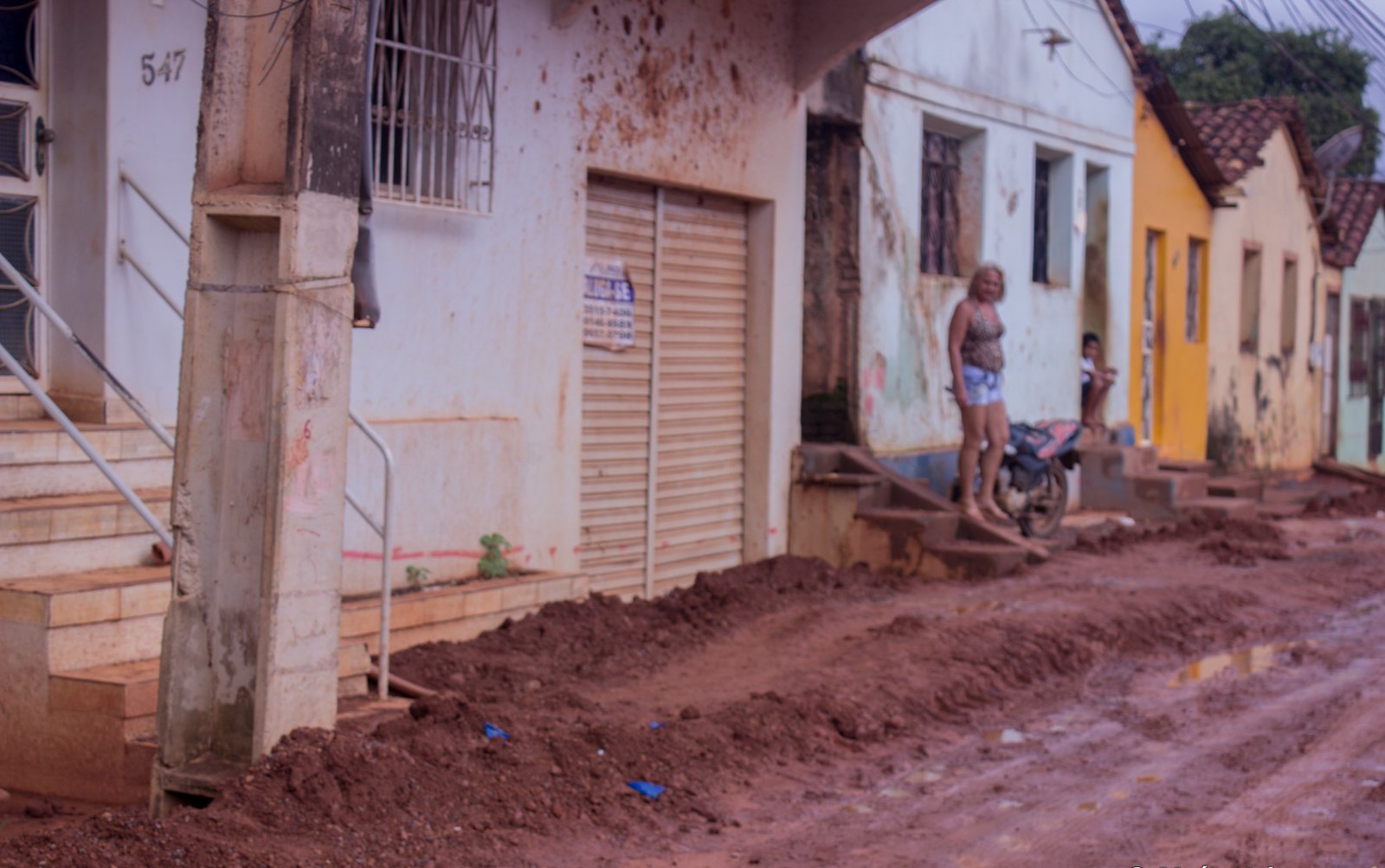
Foto: Amazon Watch / Maíra Irigaray.
Situação atual
As medidas de proteção concedidas pela CIDH permanecem em vigor, mas o Estado brasileiro não as cumpriu integralmente, relatando apenas ações genéricas. As comunidades documentaram as contínuas violações de seus direitos. A situação que motivou o pedido dessas medidas — o risco à vida, à segurança e aos meios de subsistência das comunidades — persiste e se agravou com a usina hidrelétrica operando em plena capacidade e com as recentes secas extremas na Amazônia.
Além do ocorrido em Belo Monte, existe o risco de maiores danos sociais e ambientais decorrentes da implementação de outro megaprojeto de mineração na Volta Grande do Xingu. Lá, a empresa canadense Belo Sun pretende construir a maior mina de ouro a céu aberto do Brasil.
Os impactos sinérgicos e cumulativos da usina e da mina não foram avaliados. O Estado excluiu povos indígenas, comunidades ribeirinhas e comunidades camponesas do processo de licenciamento ambiental do projeto. Apesar disso, dos protestos indígenas e de outras irregularidades em torno do projeto, o governo do estado do Pará autorizou formalmente a mina em abril de 2026.
Belo Monte, assim como outras usinas hidrelétricas, agrava a emergência climática ao gerar emissões de gases de efeito estufa em seu reservatório. Além disso, é ineficiente diante das secas prolongadas e intensas causadas pela crise, pois perde capacidade de geração de energia.
O caso perante a Comissão Interamericana
Em outubro de 2017, a CIDH anunciou que decidiria conjuntamente sobre a admissibilidade (se o caso preenche os requisitos para admissão) e o mérito (se houve, de fato, violação de direitos humanos) da denúncia internacional contra o Estado brasileiro.
Quinze anos após a apresentação da denúncia, as comunidades afetadas e as organizações que as representam ainda aguardam essa decisão. Caso a CIDH conclua que houve violações de direitos humanos e emita recomendações que o Estado brasileiro não cumpra, poderá encaminhar o caso à Corte Interamericana de Direitos Humanos, cujas decisões são vinculativas.
Uma possível decisão da Corte Internacional de Direitos Humanos neste caso estabeleceria um precedente jurídico regional em relação aos direitos dos povos indígenas e ribeirinhos, à participação pública em megaprojetos e à responsabilidade do Estado no contexto da crise climática. Isso é particularmente relevante à luz do Parecer Consultivo nº 32 da Corte, que reafirmou as obrigações dos Estados de proteger pessoas e comunidades em todo o continente da emergência climática.
Partners:
Related projects

How supporting women is linked to environmental justice
Although women lead struggles for the conservation of nature around the world, they are often excluded from decisions about the use of land, water and other natural resources. They’re disproportionately affected when inadequately implemented projects pollute air and water, or cause forced displacements and other damages. And they’re often more seriously impacted by climate change. In all of these cases, women—particularly indigenous women—are highly vulnerable to losing their way of life, their income, and their homes. At AIDA, we incorporate a gender perspective into our defense of the environment and human rights, recognizing that combating inequalities and differentiated harms is fundamental to achieving environmental justice in Latin America. “The gender approach allows us to defend the rights of women in an integral way, understanding that the risks and harms, as well as the policies needed to confront them, are different for men and women,” explained Senior Attorney Liliana Ávila. “Making this visible helps break through discrimination scenarios and effectively guarantee the right to equality.” Uplifting women’s voices Working with a gender focus, Liliana explained, has been a fascinating professional experience that has allowed her to understand how environmental damage affects men and women differently. She has listened to women explain how they view their territory, and what happens to it, distinctly from the men in their communities. In Northwest Guatemala, in the micro-region of Ixquisis, the construction of the Pojom II and San Andrés dams has damaged water sources. It has spread diseases and harmed fishing and agriculture, subsistence activities for local communities, largely made up of indigenous Mayan women. “It’s necessary to promote methodologies and spaces that make women’s voices heard, that enable and strengthen their participation, that demonstrate the differentiated harms they face, and that promote change to guarantee their rights,” Liliana said. AIDA legally supports the resistance of the women of Ixquisis to the dam projects, both in national courts and before the Inter-American Development Bank, which finances the projects despite obvious conflict with its operating policies. Our work in Guatemala is possible thanks to the Global Alliance for Green and Gender Action (GAGGA), which supports collaboration between movements and grassroots organizations to strengthen their role in the defense and promotion of women's rights and environmental justice. Since 2016, GAGGA has provided funds to women's movements and environmental organizations at the national, regional and global levels in more than 30 countries across Latin America, Africa, Asia and Europe. Women’s role in environmental defense By working hand in hand with communities across Latin America, AIDA attorneys have a close knowledge of the fundamental role that women play in protecting the environment and building equitable societies. “In Nayarit, Mexico indigenous women are playing a key role in defense of their land, water and the San Pedro Mezquital River,” said Camilo Thompson, AIDA attorney in Mexico. “And in the Gulf of California, women are leading efforts toward proper fisheries management.” Claudia Velarde, an AIDA attorney in Bolivia, says that her country has recognized that peasant women produce more food, so their experiences, visions, and knowledge must be incorporated into public food policies. “Personally, it has been very enriching for me to work both with and from the perspective of women,” she explained. “I’ve have had the opportunity to meet incredible women fighting to defend their territories from extractive activities like fracking. It’s helped me understand that the impacts of a single activity are experienced quite differently according to socially assigned gender roles.”
Read more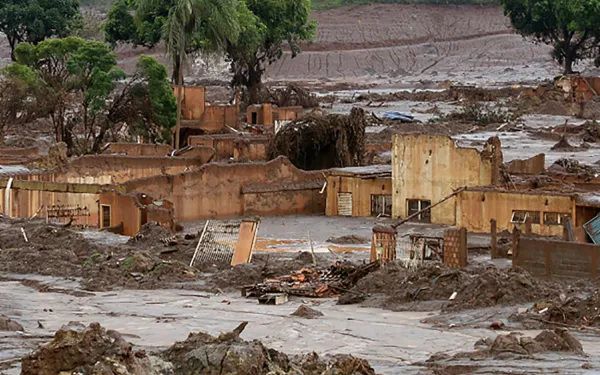
Mine tailings dams: a history of failures
Once again, tragedy looms over Brazil. Last Friday, for the second time in less than four years, a tailings dam broke in the State of Minas Gerais—this time in the municipality of Brumadinho—leaving catastrophic human and environmental damage in its wake. Once again, the losses are incalculable. We’re faced with disappearances and death. We see the same, disconcerting images: survivors evacuated by helicopter; trees, animals, and homes covered in toxic sludge; a swollen river carrying mining waste downstream. Once again, nature and society have been damaged, torn apart. As if in an endless loop, the tragedy has repeated in Minas Gerais. Five similar incidents, at least of which there is evidence, occurred in 1986, 2001, 2007, 2014, and 2015. The tragedy in November 2015 in the city of Mariana is considered the worst environmental disaster in the history of Brazil. It destroyed the town of Bento Rodrigues and contaminated the Doce River basin, carrying toxic sludge all the way to the Atlantic Ocean. A tragic cycle Far from isolated events, the failures of mine tailings dams have become a common occurrence, and statistics suggest we can expect many more in the future. Like any infrastructure work, a dam has a certain useful life—a period of operation with a firm beginning and end. That period is based on the dam having adequate design, execution, and maintenance, something that often does not occur. Thanks to the World Information Service on Energy’s Uranium Project, we know that over the last 30 years there have been 73 accidents or incidents involving mine tailings dams worldwide. The United States (17), China (8) and the Philippines (7) lead the list of affected countries. The project’s database offers an account of the main accidents and indicators including breakdowns, overshoots, collapses, partial failures, and lining ruptures. These figures should lead us to reflect on large-scale mining, particularly metal mining, which requires these types of dams and impoundments. Instead of continuing to build mines, wouldn’t it be better to concentrate our efforts on recovering and reusing the metal we discard? When will we transition to a circular economy that avoids such catastrophes? How many more disasters can our ecosystems and our human populations endure? Quite often, affected communities do not have objective or sufficient information about the benefits and harms of the mining projects proposed near their homes. Breaking that information gap is urgent. At AIDA we contribute to this task by providing useful information about the potential harms of mining, and using it to strengthen legal actions undertaken to protect people and the environment. It’s urgent that the governmental, non-governmental and private sectors do whatever is necessary to avoid more tragedies like those we’ve seen in Brazil. They must make a conscious decision to put the value of people and nature above profit. For more information, consult the database of major tailings dam failures: http://www.wise-uranium.org/mdaf.html 73 tailings dams have failed over the last 30 years, wreaking havoc on the environment and affected communities: https://t.co/G6xZibNIAk How many more avoidable disasters can we endure? #MinasGerais #BrumadinhoSOS #ValeAssassina #mining pic.twitter.com/ceuNTUUpkL — AIDA Americas (@AIDAorg) January 28, 2019
Read more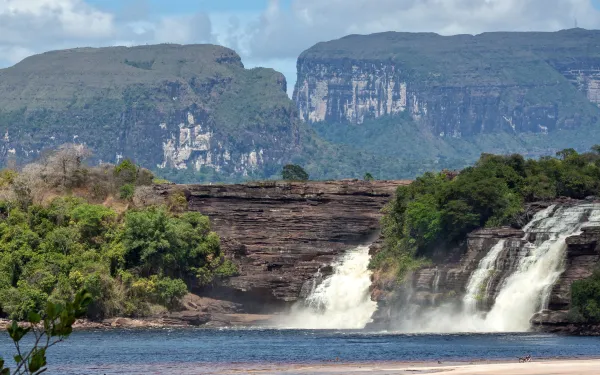
Mining Arc threatens majestic lands of Southern Venezuela
For decades, one of the greatest socio-ecological tragedies in Latin America has been developing in Venezuela. Small-scale gold mining is inflicting irreversible damage to one of the continent’s most biodiverse natural areas. It’s happening South of the Orinoco River, amidst majestic waterfalls, impressive mesas, and long-established indigenous communities. Despite its major impacts on the states of Amazonas and Bolívar, mining there has advanced rather silently. Up until a few years ago, not many researchers were even paying attention. The situation changed in 2011, when then-President Hugo Chavez announced the creation of the Orinoco Mining Arc National Strategic Development Zone, a project finalized five years later through a presidential decree. Photo: Bram Ebus / Infoamazonía. Mining’s large-scale damages The Orinoco Mining Arc involves permitting undefined mining activities in 111,843 square kilometers of territory—an area larger than Guatemala and almost twice the size of the Orinoco Oil Belt. Its implementation has legitimized and exacerbated the damages of small-scale mining, chief among them water pollution, deforestation and the destruction of fertile soils. The project also aims to develop large-scale mining in this mega-diverse region. Now, independent researchers like Carlos Eduardo Pacheco and others, hailing from organizations such as the Venezuelan Society of Ecology and Provita, warn of the huge damages that may occur due to the nation’s lack of environmental regulation. Thanks to their studies, additional research, and an analysis of satellite images, we know that: in the area around the Mining Arc there exist at least five or six large pockets of deforestation, and hundreds of smaller ones; the Caroní and Ikabarú river basins are being destroyed; and damages have reached Caura and Canaima National Parks, as well as the territories of the Pemón, Yekuana, Akawayo and Yanomami indigenous people, among others. The consequences, the researchers warn, are not only ecological; they are social as well. There has been a mass exodus from major cities, people fleeing poverty and heading to the Mining Arc to seek economic opportunity. Photo: Bram Ebus / Infoamazonía. In addition, mining activity has lead to multiple reports of human trafficking, prostitution, drug trafficking, extortion, murder, and the presence of both paramilitary groups and guerillas from Colombia. Many of the mining projects in the zone are under the control of a mafia known as “Pranato Minero,” whose leaders are relatively unknown. Increased mining has also caused serious harms to the health of informal miners and their families due to the use of mercury. Statistics from the Ministry of People’s Power for Health demonstrate a strong increase in mortality—at least 500 percent between 2002 and 2013 in municipalities close to the Arc, including Sifontes, El Callao, Cedeño and Roscio. And large-scale transnational mining hasn’t been left out of the picture. Even Canadian companies that recently sued Venezuela for controversies related to their investments have returned as partners in the mining exploitation of Orinoco. Raising awareness of Orinoco In all this development, where is the social and environmental responsibility? There seems to be no place for accountability in Venezuela, a nation with non-existent institutions and inapplicable laws. We must to ask what we can do, as members of civil society, in the face of this latest chronicle of deforestation, mercury contamination, and outright destruction of the natural world of Southern Venezuela. At AIDA, we’re doing what we can by providing technical and scientific support to the Venezuelan organizations studying the Mining Arc’s development. By supporting them, we’re working to raise awareness of the issue and put one of the most serious social and environmental attacks in the region in the public eye.
Read more