
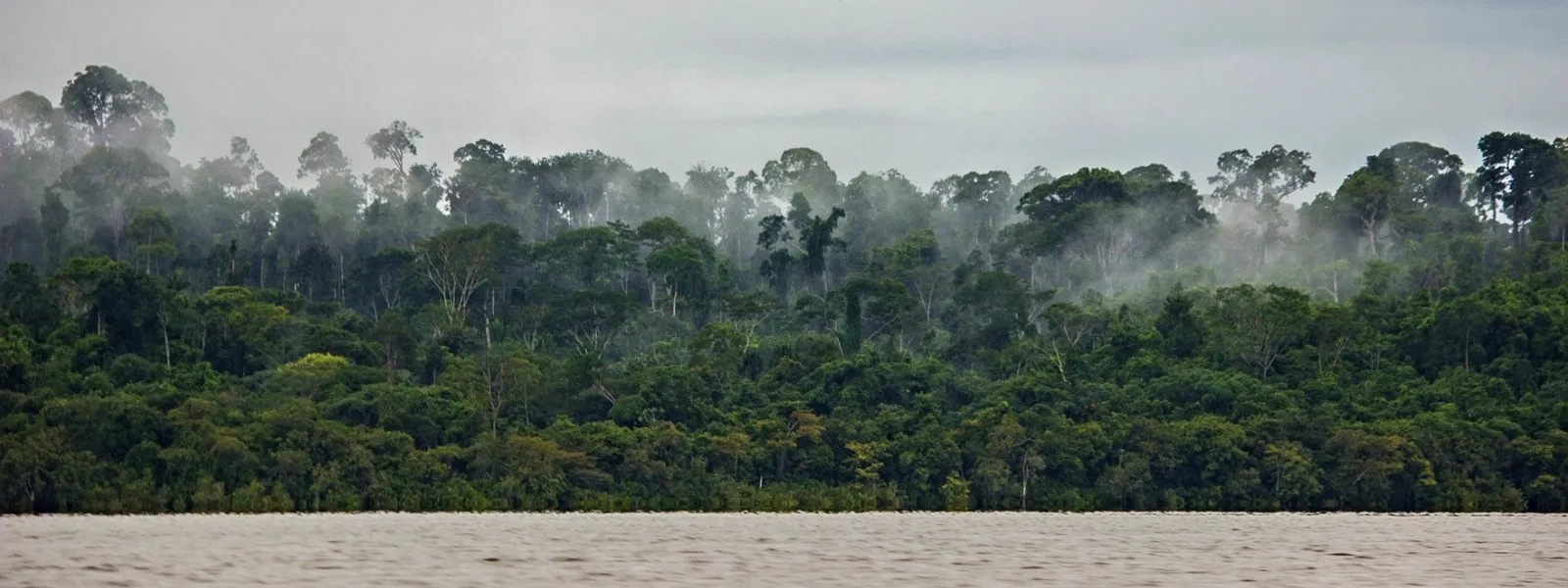
Project
Amazon Watch / Maíra Irigaray
Barragem de Belo Monte no rio Xingu: 10 anos de impactos na Amazônia e de busca por reparações
A usina hidrelétrica de Belo Monte causou um desastre ambiental e social no coração da Amazônia: um dos ecossistemas mais importantes do planeta.
Essa situação só piorou desde que a usina começou a operar em 2016. A busca por justiça e reparação para as comunidades indígenas e ribeirinhas afetadas continua até hoje.
Em 2011, a Comissão Interamericana de Direitos Humanos (CIDH) concedeu a essas comunidades medidas de proteção, que até hoje não foram totalmente implementadas pelo Estado brasileiro.
E, desde junho daquele mesmo ano, a CIDH mantém um processo contra o Estado por sua responsabilidade internacional no caso.
A CIDH pode encaminhar o caso à Corte Interamericana de Direitos Humanos, que tem o poder de emitir uma sentença condenatória contra o Estado brasileiro.
Consulta o expediente de fatos do caso
Após 10 anos de operação da usina hidrelétrica e mais de 15 anos de violações de direitos humanos documentadas, é hora da justiça ser feita para as comunidades afetadas.
Leia a carta aberta das organizações que levam o caso à CIDH
Leia nosso comunicado à imprensa
Contexto
A usina hidrelétrica de Belo Monte — a quarta maior do mundo em capacidade instalada (11.233 MW) — foi construída no rio Xingu, no estado do Pará, norte do Brasil.
Foi inaugurada em 5 de maio de 2016, com uma única turbina. Naquela época, 80% do curso do rio foi desviado e 516 km² de terra foram inundados, uma área maior que a cidade de Chicago. Desse total, 400 km² eram de mata nativa. A usina começou a operar em plena capacidade em novembro de 2019.
Belo Monte foi construída e é operada pelo consórcio Norte Energia S.A., composto principalmente por empresas estatais. Foi financiada pelo Banco Nacional de Desenvolvimento Econômico e Social (BNDES), que aportou ao consórcio 25,4 bilhões de reais (aproximadamente US$ 10,16 bilhões), o maior investimento de sua história. Portanto, o BNDES também é legalmente responsável pelos impactos socioambientais associados ao projeto hidrelétrico.
Décadas de danos ambientais e humanos
As violações dos direitos humanos e a degradação da Amazônia remontam ao início do projeto. Em março de 2011, a Norte Energia iniciou a construção da barragem sem consulta adequada e sem o consentimento prévio, livre e informado das comunidades afetadas.
A construção levou ao deslocamento forçado de mais de 40.000 pessoas, rompendo laços sociais e culturais. O plano de reassentamento em Altamira — cidade diretamente afetada pelo projeto hidrelétrico — incluía moradias na periferia da cidade, sem serviços públicos adequados, moradias dignas para as famílias reassentadas e moradias diferenciadas para aqueles pertencentes a comunidades indígenas.
A operação da barragem de Belo Monte impôs uma seca permanente e artificial na Volta Grande do rio Xingu, agravada pelas secas históricas na Amazônia em 2023 e 2024. Como resultado, a morte de milhões de ovos de peixe foi documentada por quatro anos consecutivos (de 2021 a 2024) e, nos últimos três anos, não houve migração de peixes rio acima para desovar e se reproduzir. Assim, a pesca artesanal, principal fonte de proteína para os povos indígenas e comunidades ribeirinhas, foi severamente afetada: o consumo de peixe caiu de 50% para 30% do total de proteínas consumidas, sendo substituído por alimentos processados. Em suma, houve um colapso ambiental e humanitário que resultou no colapso da pesca como modo de vida tradicional, insegurança alimentar e falta de acesso à água potável para milhares de famílias, empobrecimento e doenças.
Além disso, a construção da barragem aumentou o desmatamento e intensificou a extração ilegal de madeira e a insegurança em terras indígenas e tribais, colocando em risco a sobrevivência dessas comunidades. Outra consequência foi o agravamento da pobreza e dos conflitos sociais, bem como a sobrecarga dos sistemas de saúde, educação e segurança pública em Altamira, cidade considerada a mais violenta do país em 2017, onde houve aumento do tráfico de pessoas e da violência sexual. Também foram registrados casos de violência contra defensores de direitos humanos envolvidos no caso.
Em 2025, durante a 30ª Conferência das Nações Unidas sobre Mudanças Climáticas (COP30), realizada no Brasil, o Ministério Público Federal classificou os danos causados por Belo Monte como ecocídio.
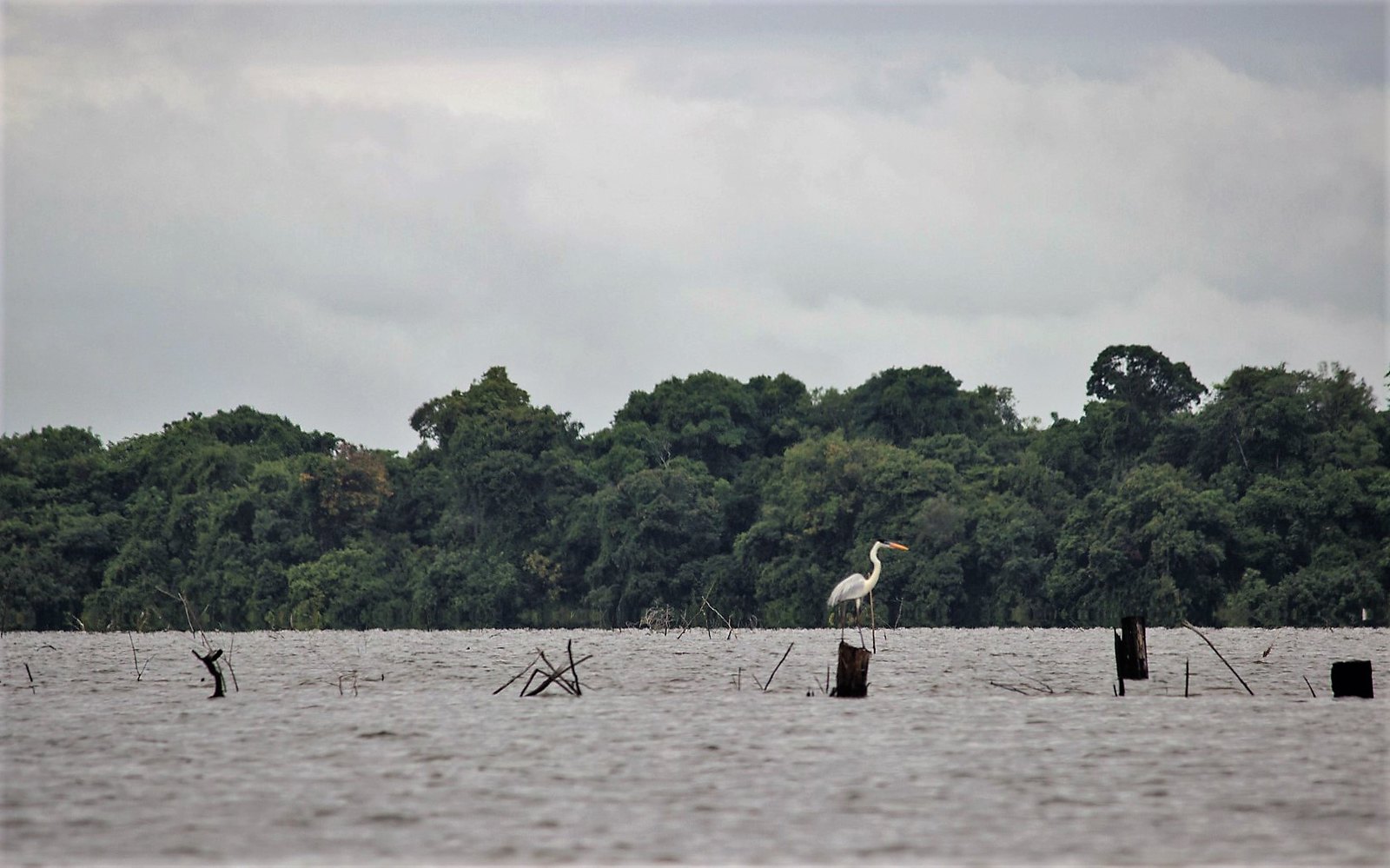
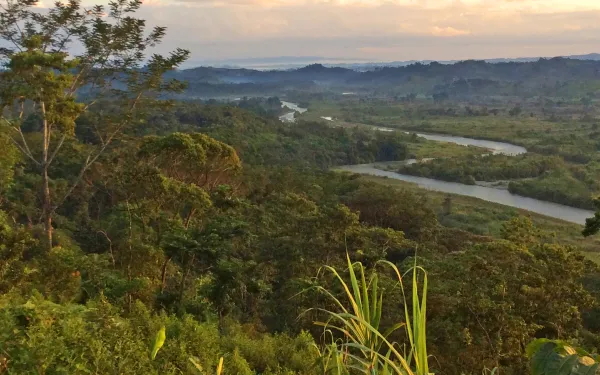
Foto: Amazon Watch / Maíra Irigaray.
A busca por justiça e reparação
Ao longo dos anos, o Ministério Público Federal do Pará, a Defensoria Pública e organizações da sociedade civil impetraram dezenas de ações judiciais em tribunais brasileiros para contestar as diversas irregularidades do projeto, bem como seus impactos. A maioria das ações permanece sem solução, algumas há mais de 10 anos.
Essas ações não obtiveram sucesso porque o governo federal tem reiteradamente anulado decisões favoráveis às comunidades afetadas, recorrendo a um mecanismo pelo qual o presidente do Supremo Tribunal Federal pode suspender uma decisão judicial com base unicamente em argumentos genéricos como "interesse nacional" ou "ordem econômica".
Diante da falta de respostas eficazes em nível nacional, a AIDA — juntamente com uma coalizão de organizações aliadas — levou o caso à Comissão Interamericana de Direitos Humanos (CIDH) e, em 2010, solicitou medidas cautelares para proteger a vida, a integridade e a saúde das comunidades indígenas afetadas.
Em 1º de abril de 2011, a CIDH concedeu essas medidas e solicitou ao Estado brasileiro a suspensão das licenças ambientais e de quaisquer obras de construção até que as condições relativas à consulta prévia e à proteção da saúde e integridade das comunidades fossem atendidas.
E, em 16 de junho de 2011, apresentamos uma denúncia formal à CIDH — juntamente com o Movimento Xingu Vivo Para Siempre, a Coordenação das Organizações Indígenas da Amazônia Brasileira, a Diocese de Altamira, o Conselho Missionário Indígena, a Sociedade Pará de Defesa dos Direitos Humanos e a Global Justice — contra o Estado brasileiro por sua responsabilidade internacional nas violações de direitos humanos contra os povos afetados neste caso. A denúncia foi apresentada em dezembro de 2015.
Em 3 de agosto de 2011, a CIDH modificou as medidas cautelares para solicitar — em vez da suspensão de licenças e obras — a proteção dos povos que vivem em isolamento voluntário, a saúde das comunidades indígenas e a regularização e proteção das terras ancestrais.
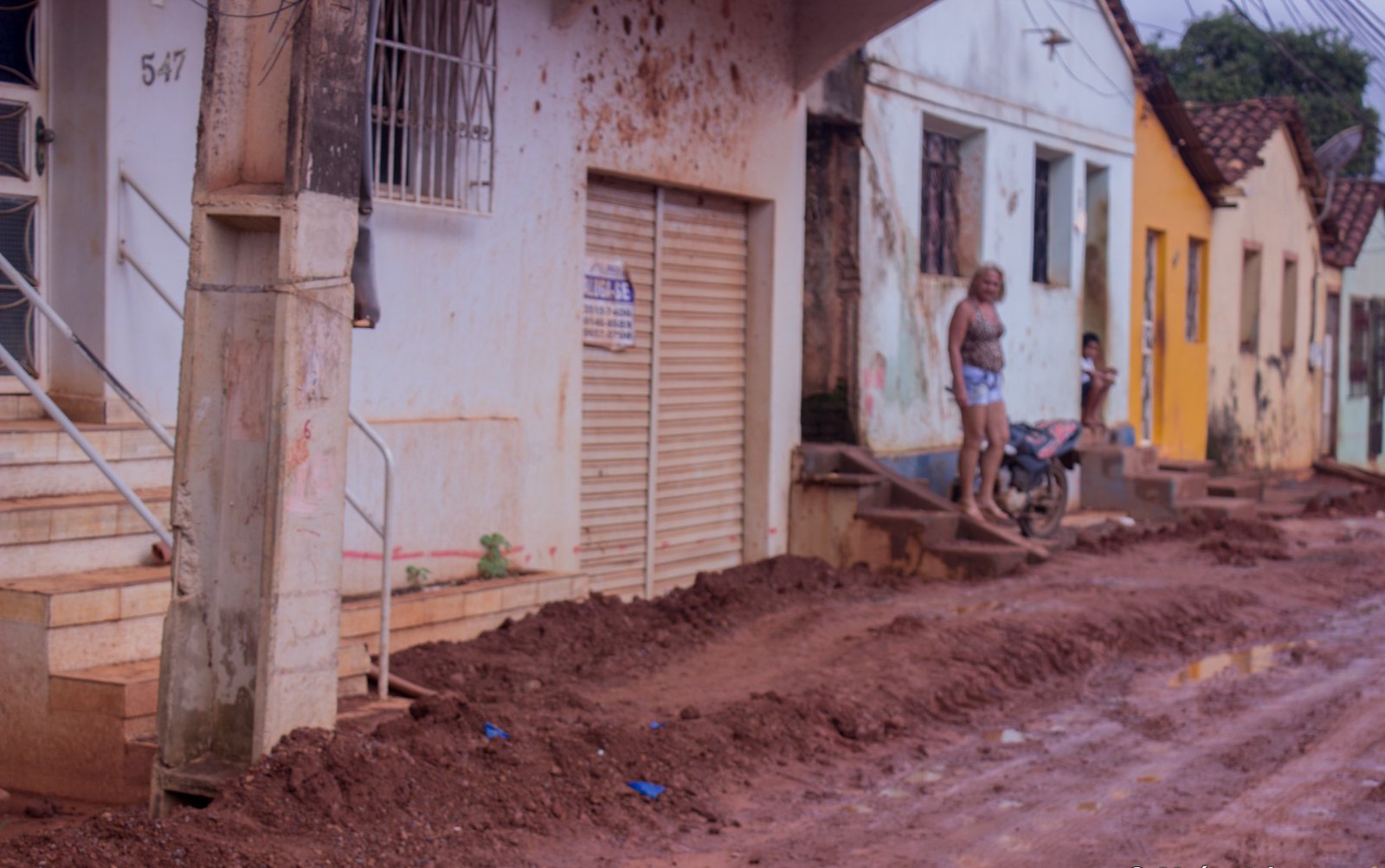
Foto: Amazon Watch / Maíra Irigaray.
Situação atual
As medidas de proteção concedidas pela CIDH permanecem em vigor, mas o Estado brasileiro não as cumpriu integralmente, relatando apenas ações genéricas. As comunidades documentaram as contínuas violações de seus direitos. A situação que motivou o pedido dessas medidas — o risco à vida, à segurança e aos meios de subsistência das comunidades — persiste e se agravou com a usina hidrelétrica operando em plena capacidade e com as recentes secas extremas na Amazônia.
Além do ocorrido em Belo Monte, existe o risco de maiores danos sociais e ambientais decorrentes da implementação de outro megaprojeto de mineração na Volta Grande do Xingu. Lá, a empresa canadense Belo Sun pretende construir a maior mina de ouro a céu aberto do Brasil.
Os impactos sinérgicos e cumulativos da usina e da mina não foram avaliados. O Estado excluiu povos indígenas, comunidades ribeirinhas e comunidades camponesas do processo de licenciamento ambiental do projeto. Apesar disso, dos protestos indígenas e de outras irregularidades em torno do projeto, o governo do estado do Pará autorizou formalmente a mina em abril de 2026.
Belo Monte, assim como outras usinas hidrelétricas, agrava a emergência climática ao gerar emissões de gases de efeito estufa em seu reservatório. Além disso, é ineficiente diante das secas prolongadas e intensas causadas pela crise, pois perde capacidade de geração de energia.
O caso perante a Comissão Interamericana
Em outubro de 2017, a CIDH anunciou que decidiria conjuntamente sobre a admissibilidade (se o caso preenche os requisitos para admissão) e o mérito (se houve, de fato, violação de direitos humanos) da denúncia internacional contra o Estado brasileiro.
Quinze anos após a apresentação da denúncia, as comunidades afetadas e as organizações que as representam ainda aguardam essa decisão. Caso a CIDH conclua que houve violações de direitos humanos e emita recomendações que o Estado brasileiro não cumpra, poderá encaminhar o caso à Corte Interamericana de Direitos Humanos, cujas decisões são vinculativas.
Uma possível decisão da Corte Internacional de Direitos Humanos neste caso estabeleceria um precedente jurídico regional em relação aos direitos dos povos indígenas e ribeirinhos, à participação pública em megaprojetos e à responsabilidade do Estado no contexto da crise climática. Isso é particularmente relevante à luz do Parecer Consultivo nº 32 da Corte, que reafirmou as obrigações dos Estados de proteger pessoas e comunidades em todo o continente da emergência climática.
Partners:
Related projects
Indigenous victory as development bank withdraws investment and drafts exit plan following rights violation in Guatemala
In a historic advance, the Inter-American Development Bank has designed a responsible exit plan to accompany their divestment from two controversial large dams in the Yichk'isis micro-region of Guatemala. Affected Mayan communities celebrate the decision, a response to their 2018 complaint, while acknowledging that the Bank has several challenges left to confront. Washington, DC, U.S.A. The Inter-American Development Bank (IDB) announced its decision to withdraw financing from the San Mateo and San Andrés hydroelectric projects, run by the company Energía y Renovación S.A. in the micro-region of Yichk'isis (Ixquisis) in northern Guatemala. The Bank designed a responsible exit and institutional strengthening plan to address the weaknesses the case revealed. The Bank’s decision stems from a complaint affected Mayan communities filed in 2018 before the IDB Group's Independent Consultation and Investigation Mechanism (MICI, for it’s Spanish initials). In resolving the complaint, the accountability office concluded that IDB Invest failed to comply with the bank’s operational policies and safeguards in the framework of project financing, and opened the possibility of a withdrawal of investment. "It’s an opportunity for the bank to take into account the lessons learned from the case: among them the relevance of understanding the local contexts of projects, the socio-cultural dynamics of the populations that will be directly affected, and the local perspective of development to determine the viability of the financing," says Liliana Avila, senior attorney of the Human Rights and Environment Program of the Interamerican Association for Environmental Defense (AIDA). "It is also an opportunity for the bank to strengthen the monitoring and supervision of the projects it supports in order to prevent non-compliance.” The divestment was finalized in October 2021, when IDB Invest and Energía y Renovación S.A. signed settlement agreements. Notably, this is the first time that the IDB Group, as a result of a complaint, has drawn up a plan to make its exit responsible. However, there are still challenges and pending issues that the financial institution must address in the process of exiting hydroelectric projects. "In order to prepare the responsible exit plan, IDB Invest must carry out consultation processes with the affected communities, which will largely define the plan's capacity to effectively address and offer viable solutions to the damages recognized in the MICI report, such as the increase in conflict, the lack of knowledge of the existence of indigenous peoples and their rights, the effects on ancestral cultural heritage, the differentiated impacts on women and the lack of prevention and consequent environmental degradation," said Carolina Juaneda, of the Bank Information Center. "If these issues are not addressed and included in the responsible exit plan, all this effort will not have been worthwhile since, ultimately, it will not lead to any improvement or reconstitution of living conditions for the affected people and the environment." The action plan proposed by the entity establishes that IDB Invest will create a transition plan translated into the native languages of the affected communities, as well as a gender-differentiated impact assessment, and an investment to promote financial inclusion and women's empowerment in the area. In addition, the plan contains actions to address MICI's recommendations for structural changes at the institutional level. In this regard, the bank plans to strengthen the environmental and social safeguards unit of IDB Invest in the area of indigenous peoples, as well as to establish a zero tolerance policy for gender-based violence, which will be included in the contractual conditions of operations approved by the bank. Existing protocols will include tools to follow up on acts of violence associated with projects financed by IDB Invest. Regarding the categorization of projects, an update will be made so that the internal supervision classification will be modified to a higher one when circumstances are identified that raise the risks and impacts of a project after its financing was approved. "The bank's responsibility in the investment process and in the non-compliance with its social and environmental safeguards is evident; therefore, it must promote during the exit process the effectiveness of the actions in a participatory manner, free of manipulation and in an inclusive manner with the community to reduce the risks of re-victimization and violation of the affected population," indicates Mara Bocaletti, Director of the International Platform against Impunity. "This experience is a first step to maximize the benefits in the territories so as to make amends for the damage caused." The communities submitted their complaint to MICI in August 2018 with the accompaniment of AIDA, the International Platform against Impunity and the Plurinational Ancestral Government of the Akateko, Chuj, Q'anjob'al and Popti' Native Nations. In it, they requested that IDB Invest withdraw its investment due to the damage that the implementation of the projects has caused to the environment, indigenous peoples and women of Ixquisis. In September 2021, the IDB Group Board of Directors approved the MICI report, which concluded that IDB Invest failed to comply with its own operational policies and safeguards for at least five reasons: 1) validating an inadequate characterization of the affected population, which denied the existence of indigenous peoples; 2) failing to verify the completion of an identification of gender-differentiated impacts on women; 3) failing to ensure that the client made an adequate identification and management of environmental impacts; 4) failing to ensure that the communities were properly informed and consulted; and 5) failing to carry out adequate monitoring of local conflict risks that could be generated in the area because of the projects. "The MICI report confirms that IDB Invest failed to comply with its policies, generating adverse impacts on the lives of the communities. The company Energía y Renovación did not act with due diligence in the framework of its operations and, on the contrary, has implemented strategies contrary to the respect of human rights. Currently, several indigenous authorities and human rights defenders are criminalized, making undeniable the continued risk for the communities," says Rigoberto Juárez, General Coordinator of the Plurinational Ancestral Government. "Given this evidence, it’s important that IDB Invest guarantee actions aimed at repairing the damages caused to the communities in the framework of the financing of these projects, and more strongly recognize its responsibility." press contacts: Victor Quintanilla (México), AIDA, [email protected], +521 5570522107 Camila Castellanos, Plataforma Internacional contra la Impunidad, [email protected]
Read more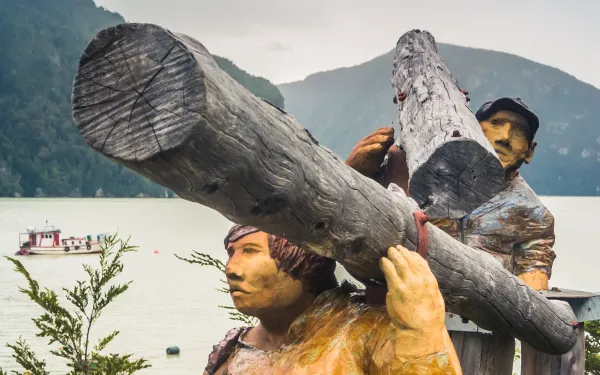
In Chile, progress for indigenous participation in decisions affecting their territories
In January, Chile’s Supreme Court ruled that indigenous communities have the right to be informed of and participate in decisions affecting their territory and way of life. The high court ordered industrial salmon farmer Nova Austral to engage in public participation processes prior to authorizing the relocation of four farms into the Kawésqar National Reserve. The government's Environmental Evaluation Service had authorized the relocation of those farms without implementing mechanisms for consultation with the Kawésqar communities, and later rejecting their requests for public participation. It did so by arguing that the farms posed no harmful environmental impacts. The case at hand Since 2018, AIDA has been working in strategic alliance with Greenpeace Chile and FIMA to exclude industrial salmon farming from protected areas in the Magallanes Region, in the heart of Chilean Patagonia, and to defend the rights of the Kawésqar peoples, ancestral inhabitants of the area's canals and fjords. By approving the relocation, the environmental authority ignored the effects that salmon farms have had in the Los Lagos region, in the extreme north of Patagonia, demonstrating the serious risks posed by the industry's expansion into the extreme south of Patagonia, still a pristine natural area. These effects include biological contamination from the introduction of exotic species, the indiscriminate use of antibiotics, and frequent mass salmon escapes, as well as the accumulation of food and feces on the seabed, generating total or partial loss of oxygen and red tides. The environmental agency also overlooked the fact that salmon farming is incompatible with the protection objectives of the Kawésqar National Reserve, one of which is "to comply with the fundamental demands of the Kawésqar people." In fact, when the reserve was created in 2018, an indigenous consultation process chose to exclude industrial aquaculture, considering the fragility of the ecosystems of the area and the indigenous cultural legacy, closely linked to the sea. An appeal for improvement Faced with the government’s authorization of salmon farming in their territory, Kawésqar communities—with the support of the coalition formed by AIDA, Greenpeace Chile and FIMA—filed an appeal before the Supreme Court for the protection of constitutional guarantees. The judgment in favor of public participation was significant due to the fact that Chile has often been questioned for its low standard of compliance with ILO Convention 169, the most important international instrument for guaranteeing indigenous rights, including the right to prior consultation. One of the main criticisms is that the regulation for incorporating indigenous consultation into the environmental assessment encourages this not to take place. This is particularly relevant in projects evaluated by Environmental Impact Statements, for which a consultative mechanism of lesser incidence is applied and which is subject to a great deal of discretion on the part of the authority to be carried out. Moreover, in precisely those cases—including the relocation of salmon farms— public participation is not mandatory, as it is for projects evaluated by environmental impact studies. This further diminishes the possibility for communities to have their voices heard in this type of procedure. The future of participation in Chile The Supreme Court’s decision in this case is a contribution to the deepening of public participation as a tool to improve environmental decision-making. It highlights the voice of indigenous communities in matters affecting their ancestral territory. It also broadens the geographic scope of citizen participation by recognizing that these communities exercise a legitimate interest in environmental conservation, thus breaking with the idea that direct involvement depends only on their proximity to where people live. We hope that this is the first step to completely rejecting the installation of salmon farms in the Kawésqar National Reserve, in any protected area and, in general, in the seas of Chilean Patagonia.
Read more
Peru’s Constitutional Court to hear case on Amazonian oil spills
The Court expects to resolve an amparo that communities of the Peruvian Amazon filed requesting the maintenance of the Norperuvian oil pipeline to prevent further spills. The lawsuit was supported with arguments on the international obligations of the Peruvian State to guarantee the rights to a dignified life and a healthy environment, among others. Lima, Peru. The Constitutional Court can stop the oil spills in the Peruvian Amazon and, with them, the systematic violation of the fundamental human rights of the indigenous peoples who live there. On Thursday, March 4, the Court is scheduled to hear and resolve an amparo filed by community members from Quebrada de Cuninico, Urarinas district of Loreto province, demanding the maintenance of the Norperuano oil pipeline, which would prevent new spills. In 2014, due to a leak in the pipeline, 2,500 barrels of oil were spilled into the creek, which negatively impacted the health and natural environment of the native communities of San Francisco, Nueva Esperanza, Cuninico and Santa Rosa. The unconstitutional amparo, filed in June 2018 with support from the Instituto de Defensa Legal (IDL), seeks a final judicial decision requiring the state-owned company Petroperu to oversee and monitor the operations of the Norperuvian Pipeline, the longest in the country, as well as to maintain all its pipelines in safe working order to prevent further spills. "It is urgent that the Peruvian authorities put an end to this structural problem that has affected the Peruvian Amazon for decades," said Juan Carlos Ruiz, IDL's lawyer. Recently, the Interamerican Association for Environmental Defense (AIDA) presented an amicus brief supporting the communities’ demand, using international human rights law to outline the State’s obligation to guarantee the adoption of administrative, legal, political and cultural measures necessary to protect the rights to a dignified life and a healthy environment. "The Amazon is an indispensable ecosystem for conserving the planet's climate," said Liliana Avila, coordinator of AIDA's Human Rights and Environment Program. "In contexts of climate crisis, the protection of this ecosystem and the indigenous peoples who inhabit it is an urgent and vital mandate." The brief also highlights the toxicity of oil to the environment and the duties of the Peruvian State and Petroperu to guarantee the health and integrity of those most vulnerable to hazardous substances, such as children, women and traditional communities. "There is evidence that the oil spills in the Peruvian Amazon, which directly affect indigenous peoples, are mostly caused by the corrosion of pipelines," says Connie Espinoza, Regional Technical Coordinator of the All Eyes on the Amazon Program (TOA). "The volume spilled is so large that se are finding it impossible to attend to all the remediation needs derived from each and every spill." According to The Shadow of Oil, an OXFAM report, pipeline corrosion and operational failures caused 65 percent of the 474 spills that occurred in Amazonian oil lots and in the Norperuvian Pipeline between 2000 and 2019—which affected the territory of 41 indigenous peoples—, while third parties caused just 28 percent. Pipeline operators are responsible for the vast majority of spills. The document also shows that, of the 2,000 sites impacted and contaminated by oil activity in Block 192, only 32 were prioritized for remediation, and that the volume of contamination, on average, would fill 231 national soccer stadiums. The lack of maintenance of the Norperuvian oil pipeline gravely impacts the Peruvian Amazon and violates the fundamental rights of native communities to enjoy a balanced environment, health, physical integrity, natural resources, territory and other rights of constitutional importance. press contacts: Gerardo Saravia, IDL, +51 997 574 695, [email protected] Nora Sánchez, HIVOS, +593 99 821 5617, [email protected] Victor Quintanilla, AIDA, +521 5570522107, [email protected]
Read more