
Project
Amazon Watch / Maíra Irigaray
Barragem de Belo Monte no rio Xingu: 10 anos de impactos na Amazônia e de busca por reparações
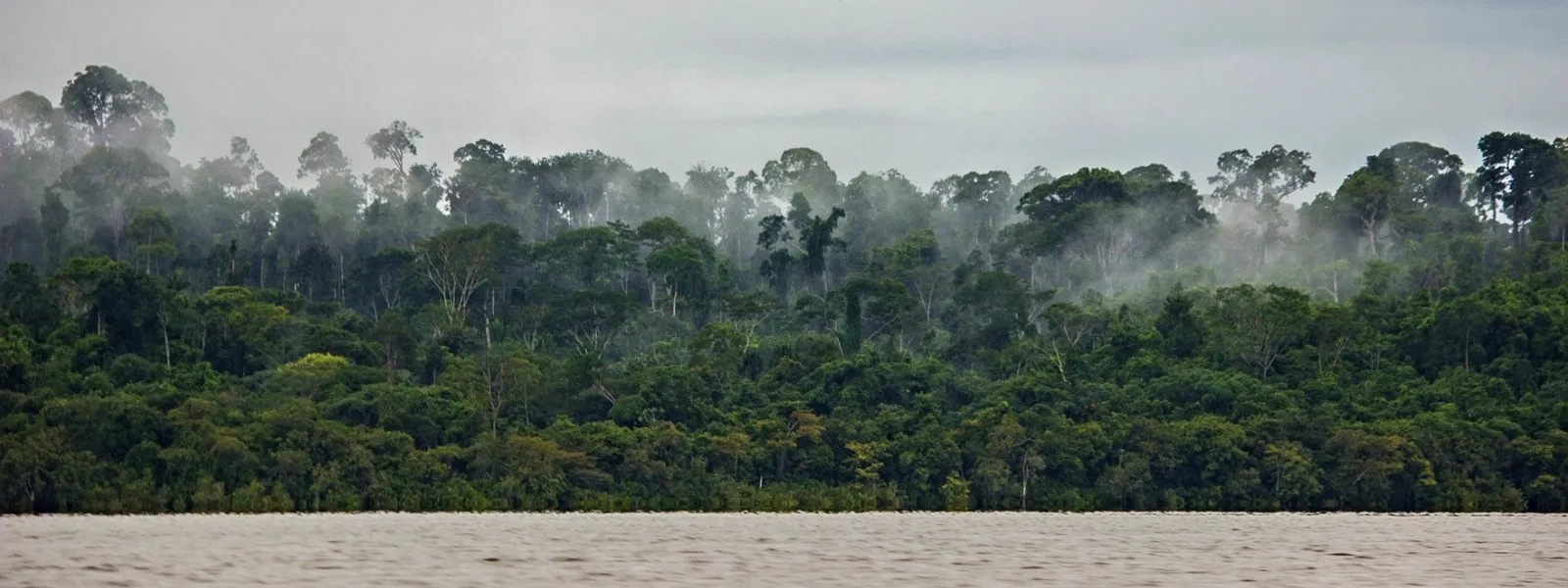
A usina hidrelétrica de Belo Monte causou um desastre ambiental e social no coração da Amazônia: um dos ecossistemas mais importantes do planeta.
Essa situação só piorou desde que a usina começou a operar em 2016. A busca por justiça e reparação para as comunidades indígenas e ribeirinhas afetadas continua até hoje.
Em 2011, a Comissão Interamericana de Direitos Humanos (CIDH) concedeu a essas comunidades medidas de proteção, que até hoje não foram totalmente implementadas pelo Estado brasileiro.
E, desde junho daquele mesmo ano, a CIDH mantém um processo contra o Estado por sua responsabilidade internacional no caso.
A CIDH pode encaminhar o caso à Corte Interamericana de Direitos Humanos, que tem o poder de emitir uma sentença condenatória contra o Estado brasileiro.
Consulta o expediente de fatos do caso
Após 10 anos de operação da usina hidrelétrica e mais de 15 anos de violações de direitos humanos documentadas, é hora da justiça ser feita para as comunidades afetadas.
Leia a carta aberta das organizações que levam o caso à CIDH
Leia nosso comunicado à imprensa
Contexto
A usina hidrelétrica de Belo Monte — a quarta maior do mundo em capacidade instalada (11.233 MW) — foi construída no rio Xingu, no estado do Pará, norte do Brasil.
Foi inaugurada em 5 de maio de 2016, com uma única turbina. Naquela época, 80% do curso do rio foi desviado e 516 km² de terra foram inundados, uma área maior que a cidade de Chicago. Desse total, 400 km² eram de mata nativa. A usina começou a operar em plena capacidade em novembro de 2019.
Belo Monte foi construída e é operada pelo consórcio Norte Energia S.A., composto principalmente por empresas estatais. Foi financiada pelo Banco Nacional de Desenvolvimento Econômico e Social (BNDES), que aportou ao consórcio 25,4 bilhões de reais (aproximadamente US$ 10,16 bilhões), o maior investimento de sua história. Portanto, o BNDES também é legalmente responsável pelos impactos socioambientais associados ao projeto hidrelétrico.
Décadas de danos ambientais e humanos
As violações dos direitos humanos e a degradação da Amazônia remontam ao início do projeto. Em março de 2011, a Norte Energia iniciou a construção da barragem sem consulta adequada e sem o consentimento prévio, livre e informado das comunidades afetadas.
A construção levou ao deslocamento forçado de mais de 40.000 pessoas, rompendo laços sociais e culturais. O plano de reassentamento em Altamira — cidade diretamente afetada pelo projeto hidrelétrico — incluía moradias na periferia da cidade, sem serviços públicos adequados, moradias dignas para as famílias reassentadas e moradias diferenciadas para aqueles pertencentes a comunidades indígenas.
A operação da barragem de Belo Monte impôs uma seca permanente e artificial na Volta Grande do rio Xingu, agravada pelas secas históricas na Amazônia em 2023 e 2024. Como resultado, a morte de milhões de ovos de peixe foi documentada por quatro anos consecutivos (de 2021 a 2024) e, nos últimos três anos, não houve migração de peixes rio acima para desovar e se reproduzir. Assim, a pesca artesanal, principal fonte de proteína para os povos indígenas e comunidades ribeirinhas, foi severamente afetada: o consumo de peixe caiu de 50% para 30% do total de proteínas consumidas, sendo substituído por alimentos processados. Em suma, houve um colapso ambiental e humanitário que resultou no colapso da pesca como modo de vida tradicional, insegurança alimentar e falta de acesso à água potável para milhares de famílias, empobrecimento e doenças.
Além disso, a construção da barragem aumentou o desmatamento e intensificou a extração ilegal de madeira e a insegurança em terras indígenas e tribais, colocando em risco a sobrevivência dessas comunidades. Outra consequência foi o agravamento da pobreza e dos conflitos sociais, bem como a sobrecarga dos sistemas de saúde, educação e segurança pública em Altamira, cidade considerada a mais violenta do país em 2017, onde houve aumento do tráfico de pessoas e da violência sexual. Também foram registrados casos de violência contra defensores de direitos humanos envolvidos no caso.
Em 2025, durante a 30ª Conferência das Nações Unidas sobre Mudanças Climáticas (COP30), realizada no Brasil, o Ministério Público Federal classificou os danos causados por Belo Monte como ecocídio.
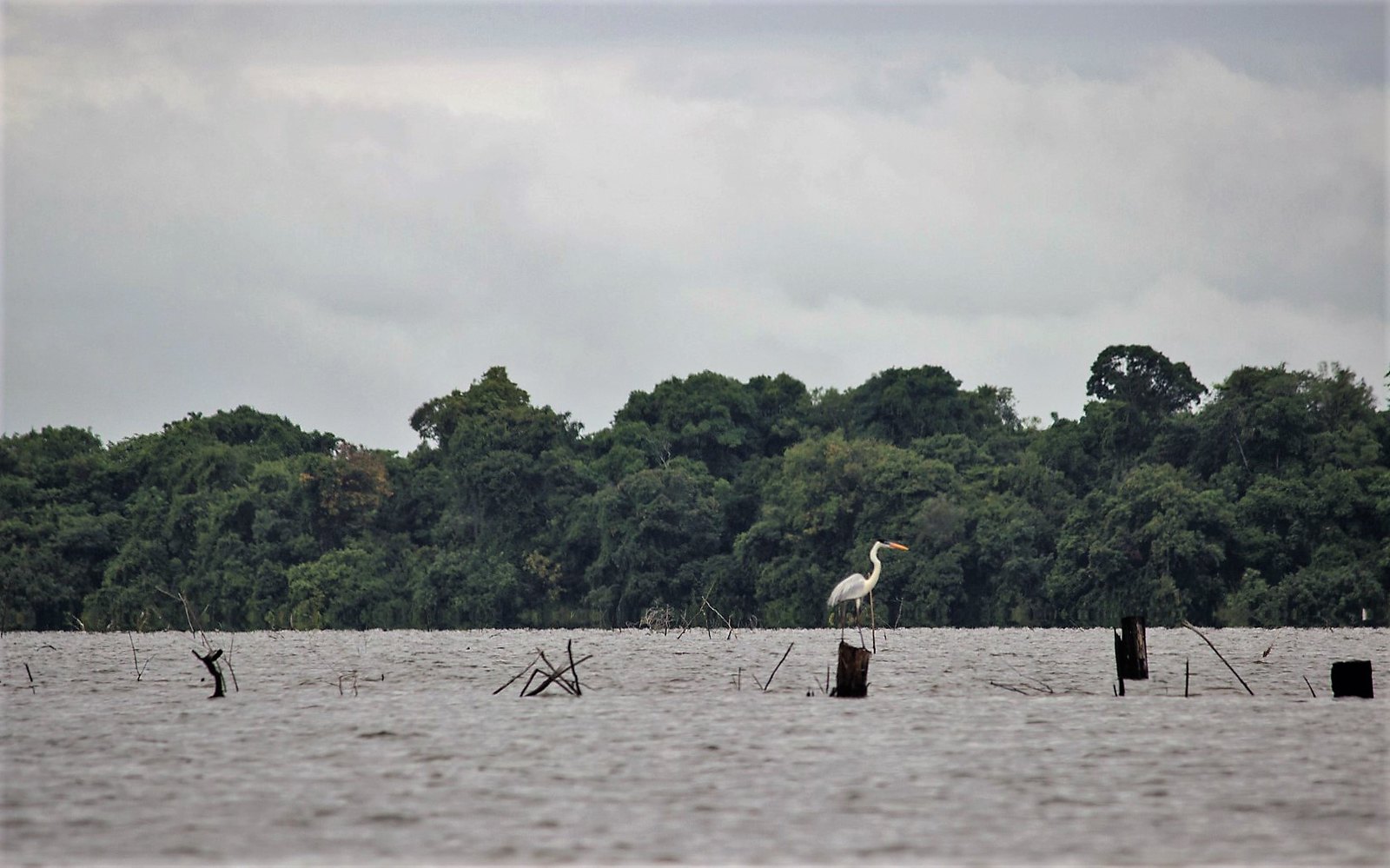
Foto: Amazon Watch / Maíra Irigaray.
A busca por justiça e reparação
Ao longo dos anos, o Ministério Público Federal do Pará, a Defensoria Pública e organizações da sociedade civil impetraram dezenas de ações judiciais em tribunais brasileiros para contestar as diversas irregularidades do projeto, bem como seus impactos. A maioria das ações permanece sem solução, algumas há mais de 10 anos.
Essas ações não obtiveram sucesso porque o governo federal tem reiteradamente anulado decisões favoráveis às comunidades afetadas, recorrendo a um mecanismo pelo qual o presidente do Supremo Tribunal Federal pode suspender uma decisão judicial com base unicamente em argumentos genéricos como "interesse nacional" ou "ordem econômica".
Diante da falta de respostas eficazes em nível nacional, a AIDA — juntamente com uma coalizão de organizações aliadas — levou o caso à Comissão Interamericana de Direitos Humanos (CIDH) e, em 2010, solicitou medidas cautelares para proteger a vida, a integridade e a saúde das comunidades indígenas afetadas.
Em 1º de abril de 2011, a CIDH concedeu essas medidas e solicitou ao Estado brasileiro a suspensão das licenças ambientais e de quaisquer obras de construção até que as condições relativas à consulta prévia e à proteção da saúde e integridade das comunidades fossem atendidas.
E, em 16 de junho de 2011, apresentamos uma denúncia formal à CIDH — juntamente com o Movimento Xingu Vivo Para Siempre, a Coordenação das Organizações Indígenas da Amazônia Brasileira, a Diocese de Altamira, o Conselho Missionário Indígena, a Sociedade Pará de Defesa dos Direitos Humanos e a Global Justice — contra o Estado brasileiro por sua responsabilidade internacional nas violações de direitos humanos contra os povos afetados neste caso. A denúncia foi apresentada em dezembro de 2015.
Em 3 de agosto de 2011, a CIDH modificou as medidas cautelares para solicitar — em vez da suspensão de licenças e obras — a proteção dos povos que vivem em isolamento voluntário, a saúde das comunidades indígenas e a regularização e proteção das terras ancestrais.
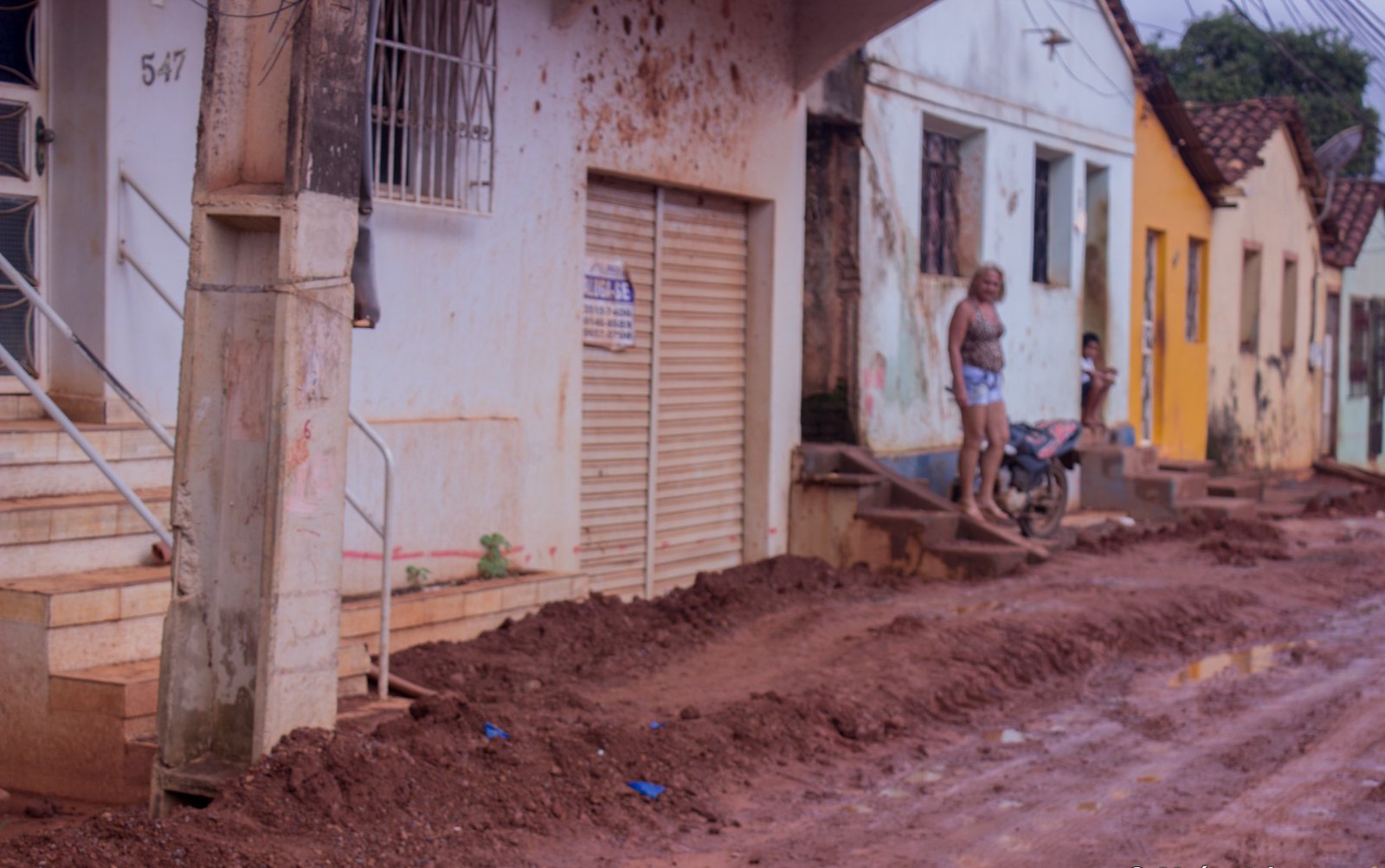
Foto: Amazon Watch / Maíra Irigaray.
Situação atual
As medidas de proteção concedidas pela CIDH permanecem em vigor, mas o Estado brasileiro não as cumpriu integralmente, relatando apenas ações genéricas. As comunidades documentaram as contínuas violações de seus direitos. A situação que motivou o pedido dessas medidas — o risco à vida, à segurança e aos meios de subsistência das comunidades — persiste e se agravou com a usina hidrelétrica operando em plena capacidade e com as recentes secas extremas na Amazônia.
Além do ocorrido em Belo Monte, existe o risco de maiores danos sociais e ambientais decorrentes da implementação de outro megaprojeto de mineração na Volta Grande do Xingu. Lá, a empresa canadense Belo Sun pretende construir a maior mina de ouro a céu aberto do Brasil.
Os impactos sinérgicos e cumulativos da usina e da mina não foram avaliados. O Estado excluiu povos indígenas, comunidades ribeirinhas e comunidades camponesas do processo de licenciamento ambiental do projeto. Apesar disso, dos protestos indígenas e de outras irregularidades em torno do projeto, o governo do estado do Pará autorizou formalmente a mina em abril de 2026.
Belo Monte, assim como outras usinas hidrelétricas, agrava a emergência climática ao gerar emissões de gases de efeito estufa em seu reservatório. Além disso, é ineficiente diante das secas prolongadas e intensas causadas pela crise, pois perde capacidade de geração de energia.
O caso perante a Comissão Interamericana
Em outubro de 2017, a CIDH anunciou que decidiria conjuntamente sobre a admissibilidade (se o caso preenche os requisitos para admissão) e o mérito (se houve, de fato, violação de direitos humanos) da denúncia internacional contra o Estado brasileiro.
Quinze anos após a apresentação da denúncia, as comunidades afetadas e as organizações que as representam ainda aguardam essa decisão. Caso a CIDH conclua que houve violações de direitos humanos e emita recomendações que o Estado brasileiro não cumpra, poderá encaminhar o caso à Corte Interamericana de Direitos Humanos, cujas decisões são vinculativas.
Uma possível decisão da Corte Internacional de Direitos Humanos neste caso estabeleceria um precedente jurídico regional em relação aos direitos dos povos indígenas e ribeirinhos, à participação pública em megaprojetos e à responsabilidade do Estado no contexto da crise climática. Isso é particularmente relevante à luz do Parecer Consultivo nº 32 da Corte, que reafirmou as obrigações dos Estados de proteger pessoas e comunidades em todo o continente da emergência climática.
Partners:
Related projects
Declaration: Peoples’ Summit on Climate, Rights and Human Survival
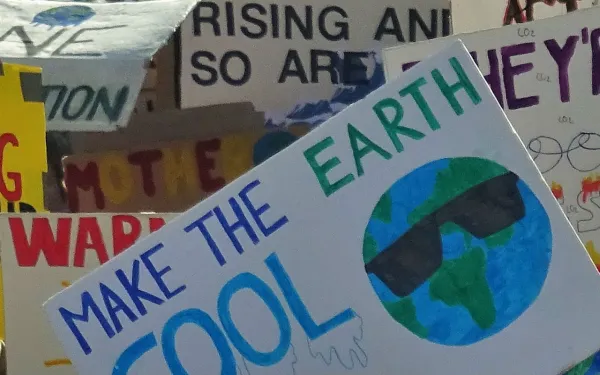
We envisage a world where people thrive as part of nature and where human rights – including the rights of Indigenous Peoples – and the environment come before corporate profit, in an era in which people are more connected with each other and with the planet. We want to live in safe, equal, peaceful and just societies. In societies where every individual and all communities enjoy fair, secure and sustainable livelihoods; participate in decision-making on matters that affect their lives; and have access to information and justice. In a world where the commons are protected and sustainably managed by communities, and where governments and corporations act responsibly and are accountable for the consequences of their actions. We see the opportunity and urgent need to transform our economic, social, legal and political systems to ensure equity and the protection of human rights, to halt the climate crisis and mass extinctions, to protect our children’s future, to hold polluters accountable for their actions, and to make fossil fuels and all unsustainable business practices a relic of the past. We believe that this vision requires protecting, supporting and being in solidarity with those who are suffering from the violence of the climate crisis and those fighting for climate justice.The climate crisis can and must be addressed. An array of effective policy and technical solutions are already known, available and immediately deployable. Governments and corporations bear the primary responsibility for taking the actions that could address and reverse the drivers of climate change and build resilient, adaptable and sustainable communities. We will invigorate our existing efforts around mobilizing the most powerful, united and diverse Peoples’ movement ever assembled. Real and transformative climate action will not be possible without a fully-engaged civil society and population.To achieve climate justice, we, the undersigned, agree to the following:We will increase our efforts to place human rights at the core of climate activism. We will do so by following the lead of Indigenous Peoples, youth, women, people living in poverty, persons with disabilities, fisherfolk, peasants, pastoralcists, local communities, workers, and other disproportionately-affected groups, who are leading the call for climate justice and against activities that destroy the planet. We will demand immediate, bold, people-powered and human rights-consistent action of unprecedented scale to reduce greenhouse gas emissions, in order to protect people, ecosystems, and biodiversity from the climate breakdown. Such actions require transformative change of our economic, social and political systems, to address inequalities in all aspects of life. This transformative change includes the equitable distribution of resources, particularly reducing the unnecessary consumption of resources by privileged groups. It is essential that we achieve drastic and rapid reductions in emissions globally and a fossil-free future, to keep the temperature rise as low as possible and no higher than 1.5°C degrees, as current levels of warming are already resulting in human rights violations. We will demand that all government climate policies, measures, and actions respect, protect and fulfil human rights – including the right of people to be fully informed and empowered to participate in a meaningful way in climate decision- making – and that corporations fulfil their responsibilities to respect human rights across their supply chains. We will oppose any policy or action taken to combat climate change or support adaptation that comes at the cost of human rights, and those that would deepen inequalities and cause impoverishment, hunger, dispossession, and economic, social and political exclusion. We will increase the pressure on those countries and corporations most responsible for climate change and with the most resources available. We demand that all countries urgently establish and enforce science-based emission reduction targets compatible with the protection of human rights, and that they meet these targets on or ahead of schedule. We will oppose attempts to transfer the burden and responsibility for change from high-emitting countries to countries with fewer resources and lower historical emissions, and from corporations and privileged groups to less-privileged groups. We will compel those bearing more responsibility for the crisis to own their actions and take measures accordingly. We will call upon those States with the greatest responsibility for climate damage and with the most resources to provide the necessary financial and technological resources to countries in the global south to facilitate their ambitious actions for climate change mitigation and adaptation. We demand that those States also provide adequate means – including compensation – to affected communities and individuals to address the loss and damage caused by the climate crisis, in full consultation with them and respecting their individual and collective customs and rights. We will promote transparency and adequate use of those resources and will oppose the creation of additional financial burdens and debts as a result of this support. We will relentlessly challenge corporate capture of policies and institutions, and we will hold accountable climate destructive industries and their financial backers. We will demand a just, fair and inclusive transition away from fossil fuels and towards sustainable agriculture and renewable energy that empower Indigenous Peoples, workers, peasant farmers, pastoralists, fisherfolk, and communities, rather than disenfranchise them. We will seek measures to ensure that all people, particularly those facing discrimination, have access to climate education and to the resources, training, knowledge, and decent jobs required for a people-powered transition to a decarbonized and resilient society. We will work for the protection, respect, and fulfilment of the rights of Indigenous Peoples, including to their ancestral lands and territories. We will seek the protection, recognition, and promotion of local and traditional knowledge that has proven effective and appropriate in addressing the climate crisis as well as enabling the transition and resilience so urgently needed in our food systems, always with the consent of, and for the benefit of, Indigenous Peoples. We will demand effective and adequate access to justice for individuals and communities whose rights are impacted by the climate crisis or lack of climate action – including those facing climate-induced loss and damage and those whose rights are threatened due to climate-related displacement. We will work to ensure that they are able to enjoy access to justice and effective remedies and that those responsible for climate harms are held to account. We will proactively use national, regional and international human rights bodies and legal instruments to ensure that human rights and obligations are effectively upheld to promote climate justice. We will support all environmental human rights defenders, in particular those who individually and collectively protect their territory, access to land, livelihoods, and the environment, and those campaigning to defend the people and the planet from destructive activities and climate breakdown. We will demand a safe and enabling environment in which all human rights defenders, particularly those facing multiple and intersecting forms of discrimination and inequality, are effectively protected and able to defend and promote human rights without fear of punishment, reprisal, or intimidation. Read the full declarationRead the declaration in SpanishRead the declaration in Portuguese
Read more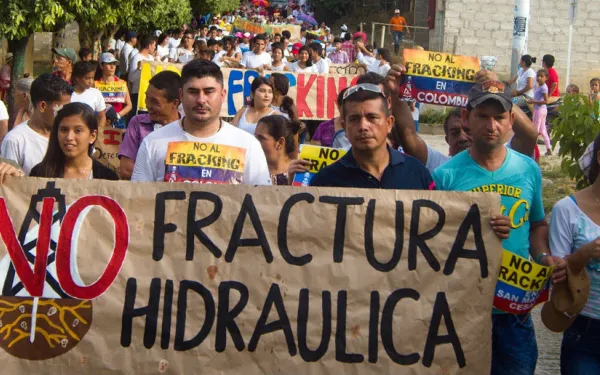
State Council maintains suspension of fracking in Colombia
We are proud to be part of the litigation in which this decision occured and hope that the high court will continue to prioritize the precautionary principle and consider the risks of harm that fracking poses to the environment and human health. Bogotá, Colombia. In response to an action filed by the Public Interest Legal Clinic of the Universidad del Norte, Colombia's State Council maintained the provisional suspension of the exploration and exploitation of non-conventional hydrocarbon deposits through hydraulic fracturing. This means that fracking continues to be suspended in Colombia, that it is currently illegal to carry it out, and that Colombia is in the midst of a moratorium on fracking by court order. With its decision, the State Council, a Colombian High Court, rejected the government's request, which sought to lift the suspension that has been in force since last November and give free rein to fracking in the country. AIDA celebrates the State Council's decision and we feel very honored to be part of this litigation. It is undoubtedly a step in the right direction given the high degree of uncertainty about the risks associated with fracking. These include: air pollution, the contamination of surface and groundwater sources, damages to human health, and emissions of methane—a potent greenhouse gas and one of the main aggravators of the climate crisis facing the world. In this scenario, the urgency of moving towards clean energy is evident. The high court concluded that the precautionary principle should be applied because, even without absolute scientific certainty, there is minimal evidence of potential damage resulting from an apparent deficiency in the measures contemplated in the regulation of fracking. Colombia today aims to be an example for Latin America. The provisional suspension of the regulation corresponds to a precautionary measure while the case is definitively resolved. It is essential that the State Council continue to give priority to the precautionary principle, taking into account the lack of full certainty about the risks of irreversible damage that fracking implies for the environment, the climate and for people. At AIDA, we welcome judicial independence, because it is fundamental for the legal protection of the environment. We hope that the ongoing judicial process will properly consider the evidence and arguments presented, including those related to an increasingly urgent task: the fight against the climate crisis. PRESS CONTACT: Victor Quintanilla (Mexico), AIDA, [email protected], +5215570522107
Read more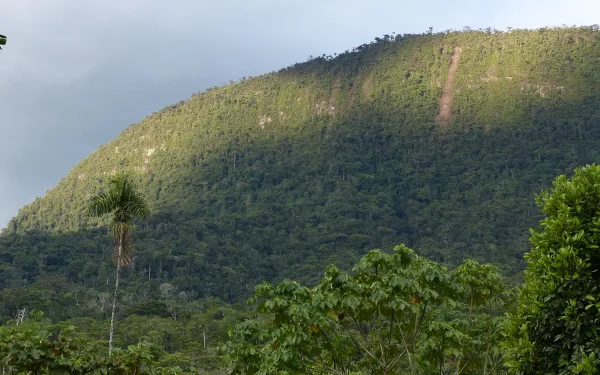
Ecuador bets on a mining boom, at the expense of nature
In southeast Ecuador, in the heart of its Amazon, stands an imposing mountain massif that stretches more than 160 kilometers in length: the Condor Mountain Range, which, once largely unknown, retains an expansive intact and unexplored territory. In this area of vital importance for life, science and conservation, an open-pit copper mine known as the Mirador project, with an expected lifespan of 30 years, began operating in July. The launch of the project marks the beginning of large-scale mining in Ecuador, with which the government intends to sustain the economy and leave behind its dependence on oil. This is a sad novelty because large-scale mining involves the risk of enormous environmental damages, which are most serious in ecosystems of great biodiversity and proximity to water sources such as the Condor Range, where indigenous and peasant communities also live. This impulse toward extractive activity contradicts the progress made in 2008, when Ecuador was the first country in the world to recognize the rights of nature in its Constitution. As the Amazon burns in flames, and takes our future with it, Ecuador has a responsibility to change course. The nation must serve as an example for other countries of the Amazon Basin, and the world, of the effective protection of the rainforest and those who depend on it. The resources we must conserve "This country lacks resources." Based on these words, the Mirador project and the presence of the mining industry in Ecuador has been intensified without precedent. They were said by spokespersons of the Chinese company Ecuacorriente (in charge of the mining concession) and echoed, in turn, by government representatives. But what will happen to the biodiversity and environmental services of the priceless Condor Range? These Amazonian mountains protect cloud forests and páramos (high mountain wetlands), both natural carbon sinks. They are home to more than 2,000 species of flora, including one of the few carnivorous plants in Ecuador, and hosts 613 species of birds. According to studies, there are another 2,000 plant species to be discovered in this unique environment. It is there that excavations of 300 to 500 meters deep will be carried out to access subsoil minerals, and where risky dams will be built to deposit tons of waste. The damages are already occurring. The company confirmed that 1,422 hectares of forest have been cleared for the project. And local organizations have denounced serious legal and constitutional violations surrounding the project. The discourse of large profits in store for the country from the exploitation and sale of subsoil resources has gained strength in recent months. Official data shows that currently 7.5% of the territory is concessioned for mineral exploration, and the government is analyzing the granting of new concessions. By 2020, the government plans to have a map of the new areas where mining will be permitted. These plans ignore the perpetual impacts of large-scale mining, including impacts on the landscape and damage to water quality. In the case of Mirador, the project has already caused the diversion of the Tundayme River, just to name one of its impacts, recognized as irreversible by the company itself. "Be coherent, stop using cell phones and bicycles and other objects made from materials extracted from the mines," challenged Vice President Otto Sonnenholzner, one of mining's biggest promoters, to those who oppose the projects. "I propose another challenge: you stop using water and food," replied Yaku Perez, a defender of water and prefect of the province of Azuay. The above is the clearest metaphor of what is at stake with the blind advance of open-pit mining in Ecuador. The climate crisis demands a new vision of development The accelerated move towards large-scale mining in Ecuador means acting negligently in the face of the global climate crisis, which forces us to change our development model this decade in order to achieve the goals of mitigation and adaptation. The international scientific community warned in 2018 that we only have a dozen years to maintain global warming at a maximum of 1.5°C (with respect to the pre-industrial era) and that exceeding that limit would make the risks of droughts, floods and extreme heat worse. This requires unprecedented transitions in sectors such as energy and industrial systems. Boosting large-scale mining is reversing and deepening the development model that has caused the climate emergency. It means destroying natural carbon sinks such as those in the Condor Mountain Range and the Amazon as a whole. Ecuador can and must take a new step forward. It must, as it did in 2008 with the recognition of the rights of nature, find a development model that effectively respects its obligations to the climate and to human rights. Ecuador cannot continue to mortgage the present and future of entire communities and ecosystems under the pretext of the immediate and ephemeral profits of mining. New paths are possible and, above all, urgent.
Read more