
Project
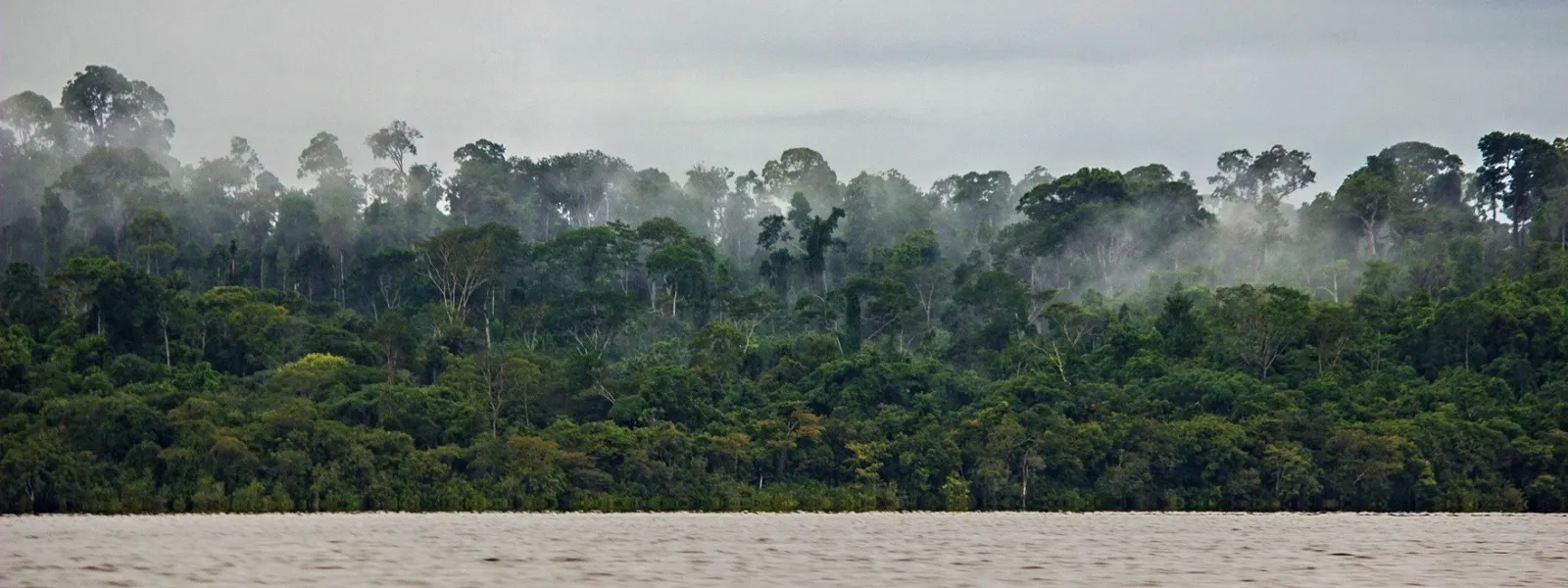
Amazon Watch / Maíra Irigaray
Barragem de Belo Monte no rio Xingu: 10 anos de impactos na Amazônia e de busca por reparações
A usina hidrelétrica de Belo Monte causou um desastre ambiental e social no coração da Amazônia: um dos ecossistemas mais importantes do planeta.
Essa situação só piorou desde que a usina começou a operar em 2016. A busca por justiça e reparação para as comunidades indígenas e ribeirinhas afetadas continua até hoje.
Em 2011, a Comissão Interamericana de Direitos Humanos (CIDH) concedeu a essas comunidades medidas de proteção, que até hoje não foram totalmente implementadas pelo Estado brasileiro.
E, desde junho daquele mesmo ano, a CIDH mantém um processo contra o Estado por sua responsabilidade internacional no caso.
A CIDH pode encaminhar o caso à Corte Interamericana de Direitos Humanos, que tem o poder de emitir uma sentença condenatória contra o Estado brasileiro.
Consulta o expediente de fatos do caso
Após 10 anos de operação da usina hidrelétrica e mais de 15 anos de violações de direitos humanos documentadas, é hora da justiça ser feita para as comunidades afetadas.
Leia a carta aberta das organizações que levam o caso à CIDH
Leia nosso comunicado à imprensa
Contexto
A usina hidrelétrica de Belo Monte — a quarta maior do mundo em capacidade instalada (11.233 MW) — foi construída no rio Xingu, no estado do Pará, norte do Brasil.
Foi inaugurada em 5 de maio de 2016, com uma única turbina. Naquela época, 80% do curso do rio foi desviado e 516 km² de terra foram inundados, uma área maior que a cidade de Chicago. Desse total, 400 km² eram de mata nativa. A usina começou a operar em plena capacidade em novembro de 2019.
Belo Monte foi construída e é operada pelo consórcio Norte Energia S.A., composto principalmente por empresas estatais. Foi financiada pelo Banco Nacional de Desenvolvimento Econômico e Social (BNDES), que aportou ao consórcio 25,4 bilhões de reais (aproximadamente US$ 10,16 bilhões), o maior investimento de sua história. Portanto, o BNDES também é legalmente responsável pelos impactos socioambientais associados ao projeto hidrelétrico.
Décadas de danos ambientais e humanos
As violações dos direitos humanos e a degradação da Amazônia remontam ao início do projeto. Em março de 2011, a Norte Energia iniciou a construção da barragem sem consulta adequada e sem o consentimento prévio, livre e informado das comunidades afetadas.
A construção levou ao deslocamento forçado de mais de 40.000 pessoas, rompendo laços sociais e culturais. O plano de reassentamento em Altamira — cidade diretamente afetada pelo projeto hidrelétrico — incluía moradias na periferia da cidade, sem serviços públicos adequados, moradias dignas para as famílias reassentadas e moradias diferenciadas para aqueles pertencentes a comunidades indígenas.
A operação da barragem de Belo Monte impôs uma seca permanente e artificial na Volta Grande do rio Xingu, agravada pelas secas históricas na Amazônia em 2023 e 2024. Como resultado, a morte de milhões de ovos de peixe foi documentada por quatro anos consecutivos (de 2021 a 2024) e, nos últimos três anos, não houve migração de peixes rio acima para desovar e se reproduzir. Assim, a pesca artesanal, principal fonte de proteína para os povos indígenas e comunidades ribeirinhas, foi severamente afetada: o consumo de peixe caiu de 50% para 30% do total de proteínas consumidas, sendo substituído por alimentos processados. Em suma, houve um colapso ambiental e humanitário que resultou no colapso da pesca como modo de vida tradicional, insegurança alimentar e falta de acesso à água potável para milhares de famílias, empobrecimento e doenças.
Além disso, a construção da barragem aumentou o desmatamento e intensificou a extração ilegal de madeira e a insegurança em terras indígenas e tribais, colocando em risco a sobrevivência dessas comunidades. Outra consequência foi o agravamento da pobreza e dos conflitos sociais, bem como a sobrecarga dos sistemas de saúde, educação e segurança pública em Altamira, cidade considerada a mais violenta do país em 2017, onde houve aumento do tráfico de pessoas e da violência sexual. Também foram registrados casos de violência contra defensores de direitos humanos envolvidos no caso.
Em 2025, durante a 30ª Conferência das Nações Unidas sobre Mudanças Climáticas (COP30), realizada no Brasil, o Ministério Público Federal classificou os danos causados por Belo Monte como ecocídio.
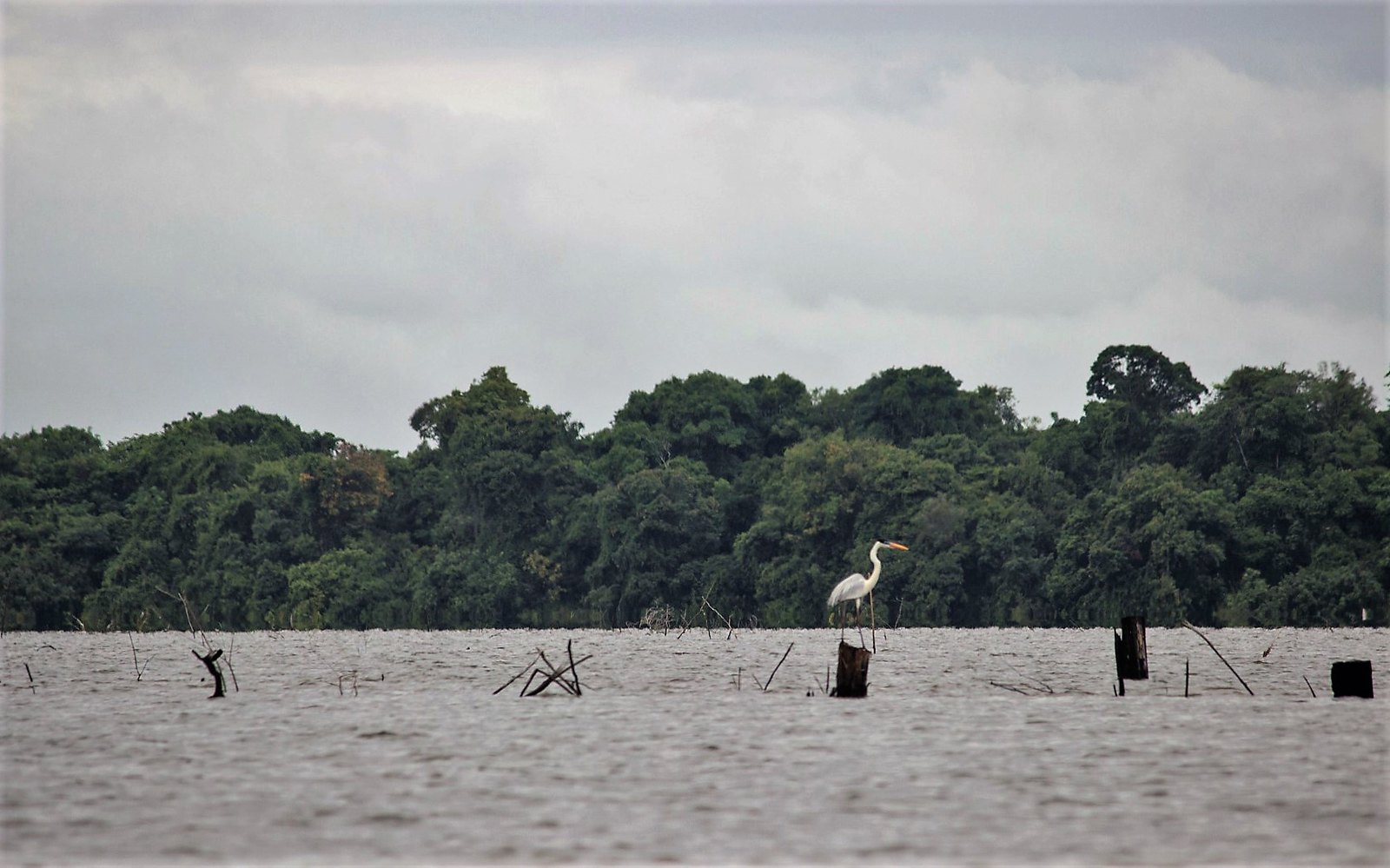
Foto: Amazon Watch / Maíra Irigaray.
A busca por justiça e reparação
Ao longo dos anos, o Ministério Público Federal do Pará, a Defensoria Pública e organizações da sociedade civil impetraram dezenas de ações judiciais em tribunais brasileiros para contestar as diversas irregularidades do projeto, bem como seus impactos. A maioria das ações permanece sem solução, algumas há mais de 10 anos.
Essas ações não obtiveram sucesso porque o governo federal tem reiteradamente anulado decisões favoráveis às comunidades afetadas, recorrendo a um mecanismo pelo qual o presidente do Supremo Tribunal Federal pode suspender uma decisão judicial com base unicamente em argumentos genéricos como "interesse nacional" ou "ordem econômica".
Diante da falta de respostas eficazes em nível nacional, a AIDA — juntamente com uma coalizão de organizações aliadas — levou o caso à Comissão Interamericana de Direitos Humanos (CIDH) e, em 2010, solicitou medidas cautelares para proteger a vida, a integridade e a saúde das comunidades indígenas afetadas.
Em 1º de abril de 2011, a CIDH concedeu essas medidas e solicitou ao Estado brasileiro a suspensão das licenças ambientais e de quaisquer obras de construção até que as condições relativas à consulta prévia e à proteção da saúde e integridade das comunidades fossem atendidas.
E, em 16 de junho de 2011, apresentamos uma denúncia formal à CIDH — juntamente com o Movimento Xingu Vivo Para Siempre, a Coordenação das Organizações Indígenas da Amazônia Brasileira, a Diocese de Altamira, o Conselho Missionário Indígena, a Sociedade Pará de Defesa dos Direitos Humanos e a Global Justice — contra o Estado brasileiro por sua responsabilidade internacional nas violações de direitos humanos contra os povos afetados neste caso. A denúncia foi apresentada em dezembro de 2015.
Em 3 de agosto de 2011, a CIDH modificou as medidas cautelares para solicitar — em vez da suspensão de licenças e obras — a proteção dos povos que vivem em isolamento voluntário, a saúde das comunidades indígenas e a regularização e proteção das terras ancestrais.
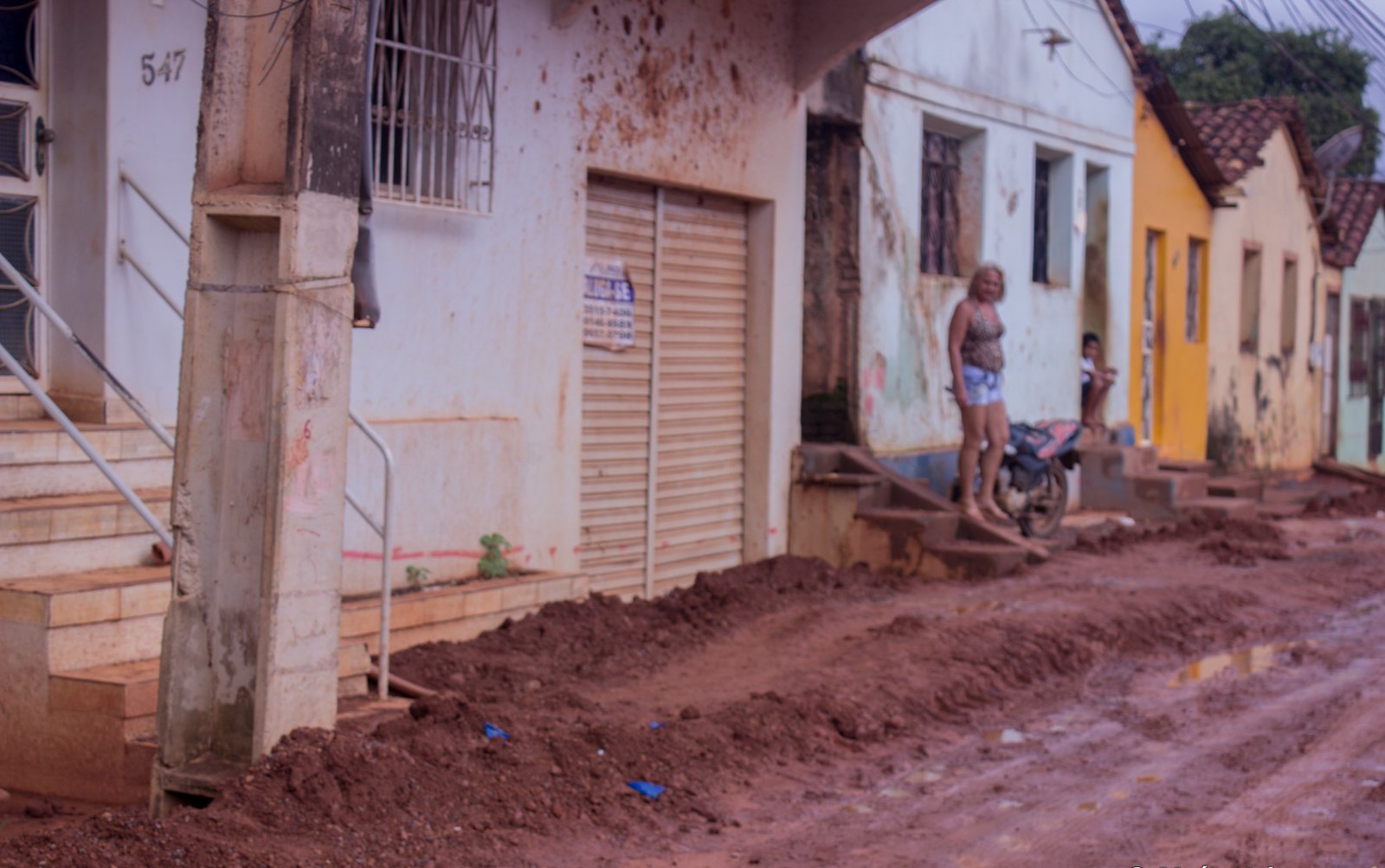
Foto: Amazon Watch / Maíra Irigaray.
Situação atual
As medidas de proteção concedidas pela CIDH permanecem em vigor, mas o Estado brasileiro não as cumpriu integralmente, relatando apenas ações genéricas. As comunidades documentaram as contínuas violações de seus direitos. A situação que motivou o pedido dessas medidas — o risco à vida, à segurança e aos meios de subsistência das comunidades — persiste e se agravou com a usina hidrelétrica operando em plena capacidade e com as recentes secas extremas na Amazônia.
Além do ocorrido em Belo Monte, existe o risco de maiores danos sociais e ambientais decorrentes da implementação de outro megaprojeto de mineração na Volta Grande do Xingu. Lá, a empresa canadense Belo Sun pretende construir a maior mina de ouro a céu aberto do Brasil.
Os impactos sinérgicos e cumulativos da usina e da mina não foram avaliados. O Estado excluiu povos indígenas, comunidades ribeirinhas e comunidades camponesas do processo de licenciamento ambiental do projeto. Apesar disso, dos protestos indígenas e de outras irregularidades em torno do projeto, o governo do estado do Pará autorizou formalmente a mina em abril de 2026.
Belo Monte, assim como outras usinas hidrelétricas, agrava a emergência climática ao gerar emissões de gases de efeito estufa em seu reservatório. Além disso, é ineficiente diante das secas prolongadas e intensas causadas pela crise, pois perde capacidade de geração de energia.
O caso perante a Comissão Interamericana
Em outubro de 2017, a CIDH anunciou que decidiria conjuntamente sobre a admissibilidade (se o caso preenche os requisitos para admissão) e o mérito (se houve, de fato, violação de direitos humanos) da denúncia internacional contra o Estado brasileiro.
Quinze anos após a apresentação da denúncia, as comunidades afetadas e as organizações que as representam ainda aguardam essa decisão. Caso a CIDH conclua que houve violações de direitos humanos e emita recomendações que o Estado brasileiro não cumpra, poderá encaminhar o caso à Corte Interamericana de Direitos Humanos, cujas decisões são vinculativas.
Uma possível decisão da Corte Internacional de Direitos Humanos neste caso estabeleceria um precedente jurídico regional em relação aos direitos dos povos indígenas e ribeirinhos, à participação pública em megaprojetos e à responsabilidade do Estado no contexto da crise climática. Isso é particularmente relevante à luz do Parecer Consultivo nº 32 da Corte, que reafirmou as obrigações dos Estados de proteger pessoas e comunidades em todo o continente da emergência climática.
Partners:
Related projects
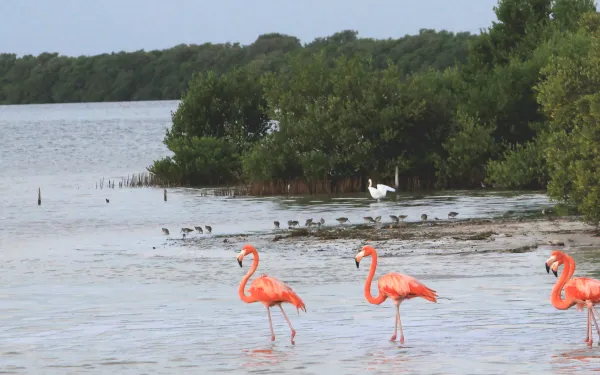
Defend Yum Balam, a key ecosystem for biodiversity and the climate
AIDA presented an amicus brief demonstrating the importance of the protected area, as well as Mexico’s international environmental and human rights obligations to preserve it in the face of a 21,000-room hotel project that would imply significant damage to the site. Cancun, Mexico. The Interamerican Association for Environmental Defense (AIDA) presented a legal brief (Amicus Curiae) before the Seventh District Court of the State of Quintana Roo to defend the Yum Balam Flora and Fauna Protection Area, located in the north of the state. In 2018, when the site's Management Program was published, private and communal landowners filed several lawsuits against the program and the decree that created the protected area, arguing that it affected their rights to participation, property, and legality. Prior to the publication of the Management Program, the Advisory Council of the protected area received a report from a consultant who recommended the construction within Yum Balam of a mega tourism project that includes 21,000 hotel rooms, deeming it economically viable. "That viability is in doubt because each hotel room would generate changes in land use, population growth, loss of flora and fauna, and other irreversible damages to the ecological characteristics of the place," said Camilo Thompson, AIDA attorney. "What is at stake is Yum Balam’s contribution to the enjoyment of a healthy environment for present and future generations." The decree creating the protected area, which dates back to 1994, puts the public interest and regulation of natural environments that benefit the entire country above private interests. The Management Program is aimed at regulating the conservation and sustainable use of Yum Balam. The site is considered a Priority Wetland of International Importance under the Ramsar Convention. "According to a study, Yum Balam's mangroves and sea grasses prevent 38.5 million tons of carbon dioxide from escaping, equivalent to the greenhouse gas emissions of 9.4 million Mexican people," said Pilar Diez, Regional Director of the Mexican Center for Environmental Law (CEMDA-Southeast). In its 152 thousand hectares, the site also has reefs and coastal dunes. It is home to more than 90 percent of the endemic birds of the Yucatan Peninsula, sea turtles with special protection status, whale sharks, dolphins, and endangered terrestrial species like the jaguar. In fact, in the Maya language, Yum Balam means Señor Jaguar. "Our brief seeks to document the national and international importance of Yum Balam in the context of the climate crisis," Thompson added. "Betting on the development of tourism megaprojects is incompatible with the urgent task of confronting this crisis and achieving climate justice.” Both the United Nations Intergovernmental Panel on Climate Change (IPCC) and the Intergovernmental Platform for Science and Policy on Biodiversity and Ecosystem Services (IPBES) have been very firm about the current situation of ecosystem loss and the urgent actions that all countries must take in the face of the climate crisis. "We’ve documented the international legal framework under which the Mexican State is obliged to guarantee fundamental human rights, such as the right to a healthy environment," Thompson explained. "Mexico has the obligation to conserve its biodiversity, including coastal wetlands, forests, jungles and other ecosystems that regulate the climate and contribute to fishing and tourism." The Court's decision must reflect these obligations and uphold Yum Balam's protection. press contact: Victor Quintanilla (Mexico), AIDA, [email protected], +521 5570522107
Read more
Letters to the Inter-American Commission 10 years after the admission of the case of La Oroya
In a letter to the Inter-American Commission on Human Rights (IACHR) on the tenth anniversary of the admission of their case, people affected by heavy metal poisoning in La Oroya, Peru call on the Commission to issue the Merit Report on the case. This step implies the hope of achieving justice in the face of the human rights violations the residents of La Oroya have been suffering for more than a decade. The case of La Oroya was the first to demonstrate the serious problem of heavy metal pollution in Peru and the first to be brought before an international mechanism. Seeing as instances of heavy metal pollution have increased in the country due to mining and oil activities, the resolution of the case of La Oroya in favor of the affected people is vital to promoting a comprehensive public policy on the subject, which should be adequately implemented in compliance with Peru's international human rights obligations. That is why, together, AIDA and the Association for Human Rights (APRODEH)—which legally represent the affected people—as well as the National Platform of People Affected by Metals, Metalloids and Other Toxic Chemicals and the Technical Board on Human and Environmental Health, reiterate the community's request for justice through two accompanying letters, also addressed to the Commission. Letter from the affected residents of La Oroya "Today we know that our body is contaminated, but we don't know what the adequate treatment is for its recovery, despite daily suffering... Our case demonstrates the problem of heavy metal contamination that has been manifested across the country, in the face of which a prompt and adequate response from the Commission would not only contribute to positively transforming our realities and guaranteeing our rights, but would also allow for new paths toward justice and environmental health for the thousands of people currently affected by toxic metals in Peru..." Read the Letter (in Spanish) Letter from AIDA and APRODEH "... it's important to reiterate that case of La Oroya not only constitutes, in itself, an urgent and relevant case for the petitioners and for the mandate of the Commission, it is also an emblematic and strategic case in the context of Peru. A pronouncement from the Commission in the case of La Oroya, which would obligate the Peruvian government and send the case before the Inter-American Court, could create an important antecedent and provide guidelines for Peruvian cause, contributing to the guarantee of rights for various communities throughout the country, which have been grouped together in the National Platform of People Affected by Heavy Metals in Peru. Together, their main demands are the creation of a public policy for those affected by heavy metals, and the created of a multi-sectorial commission to bring attention to the problem..." Read the Letter (In Spanish) Letter from the National Platform of People Affected by Heavy Metals and the Technical Board on Human and Environmental Health "A timely statement from the Inter-American Commission on Human Rights on the Merit Report of the case of La Oroya would contribute to granting justice to dozens of families in that community who, over the past decade, have dedicated much of their lives to the defense of their health and of a healthy environment. It would also serve as an important antecedent for the Peruvian State to stop diluting the management of this situation and to implement the measures needed to attend to the environmental and public health problem associated with heavy metal pollution and, in this way, advance in compliance with its international human rights obligations..." Read the Letter (in Spanish)
Read more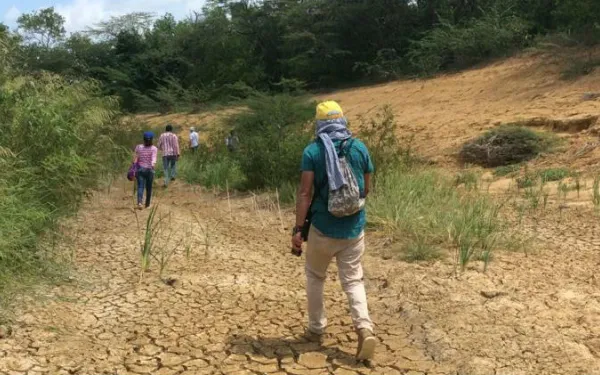
Coal or life: Walking where a stream once ran
The appointment was on a hot Sunday in July. Together with Wayuu indigenous and Afro-descendant communities displaced by coal mining, members of social and human rights organizations, employees of Cerrejón, and government officials, I walked for more than five hours over the barren land where the Bruno Stream once ran. What I saw in my path were the remains of snails that died of thirst, stuck to the mud, and the lifeless body of a tigrillo that showed us so clearly what mustn’t happen again. The Bruno is a vein of water that once irrigated the department of La Guajira, located in Colombia’s far north, a region hit years ago by extreme drought. It is a major tributary of the Ranchería River, one of the department’s most important water sources, and forms part of the underground water systems that have long given life to the region’s communities. It was painful to walk where the Bruno once flowed free, and to think—while doing so—that what is now a dry riverbed was once abundant with life. That Sunday, we also toured the area intended to be the artificial channel of the stream. In 2014, the National Environmental Licensing Authority authorized Cerrejón to divert 3.6 kilometers of Bruno’s flow to favor ongoing coal exploitation in La Guajira. Several things made on impact on me that day. One of them was that, although the rivers belong to us all and natural water sources are public, we were accompanied the entire time by employees of the company. While walking the stream, we entered the land “owned” by the coal-mining concessionaire. Communities that used to travel freely along the banks of the stream can no longer do so today. Although the Bruno is one of few streams in Colombia’s driest department and one of the scarce sources of fresh water for communities living there, its channel was clogged and diverted to facilitate mining. An engineering project has altered one of the most important streams for a thirsty region and created an artificial path through which not a single drop of water flows. “If they carry water, they’re rivers; if not, they’re roads,” a verse from Guatemalan indigenous poet Humberto Ak’abal teaches us. The new “channel” of the Bruno is not a river, but “a barren road” attesting to the deterioration of a sensitive ecosystem. The “road” does not recover or mitigate the damages from the stream’s diversion. On the contrary, it produces new ones. The world is facing a climate crisis, and coal mining is one of its primary causes. While many countries are replacing the use of coal in their energy matrices with cleaner options, Colombia has decided to dry up a river to exploit more and more coal. Walking paths of justice The day after the walk, the frustration of the absurd did not prevent me from embracing a glimmer of hope. On Monday, I joined representatives of indigenous communities and local organizations at a public hearing convened by several Congressmen to discuss what happened with the Bruno. The strength and dignity of their words, in which decades of resistance were encrypted, fed my soul. “This territory is ours, our rivers are our life and we care for life—for our children, for our present, for our future and that of the world.” As it has done many times before, La Guajira spoke to the country and the world. They told the Congressmen that it’s not possible to prioritize the use of water for mining over human consumption. They warned that the country must transition to an energy production that doesn’t cause the damages that coal mining has to the climate, human rights, and the species and ecosystems that sustain us. The stream must return to its channel, the snails must drink again from its waters, and no tigrillo should die due to the intentional destruction of its natural habitat. In a 2017 ruling, the Constitutional Court demonstrated that uncertainties exist as to the environmental and social impacts of the Bruno Stream riverbed modification project. The Court ordered the creation of an Inter-Institutional working group to resolve the complaints of the affected people. Communities will continue to demand compliance with that ruling and demonstrate that the uncertainties are, in fact, certain damages that will continue to undermine their lives. AIDA, along with our partner organizations, will continue to accompany this struggle to demonstrate the harms of coal mining and promote clean alternatives that respect both people and the environment.
Read more