
Project
Shutterstock.
Pollution of the Motagua River in Guatemala: The Poqomam Maya people’s quest for environmental justice
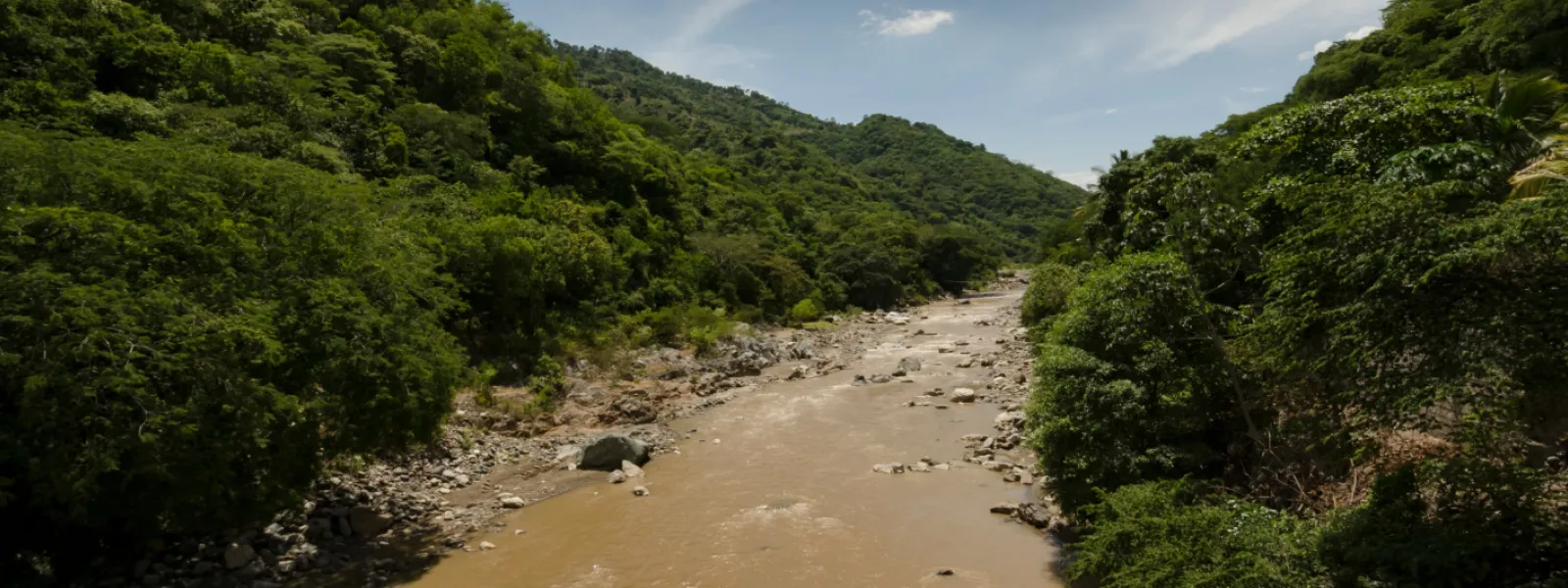
The Motagua River basin—Guatemala’s largest and most important river—is severely polluted with wastewater, solid waste, and other types of debris.
This is a cross-border issue because the Motagua’s polluted waters flow into the Caribbean Sea, reach the coast of Honduras, and threaten the Mesoamerican Reef System.
For decades, this has violated the rights to health, water, development, and a healthy environment of all the people living in the river basin.
In June 2025, the Poqomam Maya community of Santa Cruz Chinautla—supported by AIDA, the Indigenous Peoples’ Law Firm, and allied organizations—achieved an unprecedented legal victory to halt degradation in the basin. In response to the lawsuit it filed, a Guatemalan court ordered the municipality of Chinautla to comply with a series of obligations to curb the pollution of the area’s rivers and soil.
The government's response to the ruling has so far been limited to technical working group meetings. Meanwhile, the community continues to work toward the proper implementation of the ruling and to take other actions to defend its territory and its rights.
Background
The Motagua River, which is 486 km long, flows through 96 municipalities and 14 departments in Guatemala. It originates in Quiché, a department located in the northwest, and empties into the Caribbean Sea.
Polluting activities occur throughout the entire basin, including sub-basins and micro-basins. The largest volume of pollution comes from Guatemala City, the country’s capital, and is carried by the waters of the Las Vacas River, which in turn receives a large amount of waste from the Chinautla River.
The Chinautla River, which flows through the municipality of the same name, carries solid waste from a landfill located in Zone 3 of the capital—where trash from at least 14 municipalities in the department of Guatemala is dumped—as well as sewage generated by some 500,000 people living in the northern part of the capital, which undergoes no prior treatment.
Other sources of pollution include the numerous illegal dumps in the municipality of Chinautla, the waste that private vehicles and garbage trucks dump along the banks of its rivers, as well as the sand-mining companies—which began setting up operations in the area between 1996 and 1997—whose activities weaken the rivers' basins, causing solid waste to be more easily carried away by the river currents.
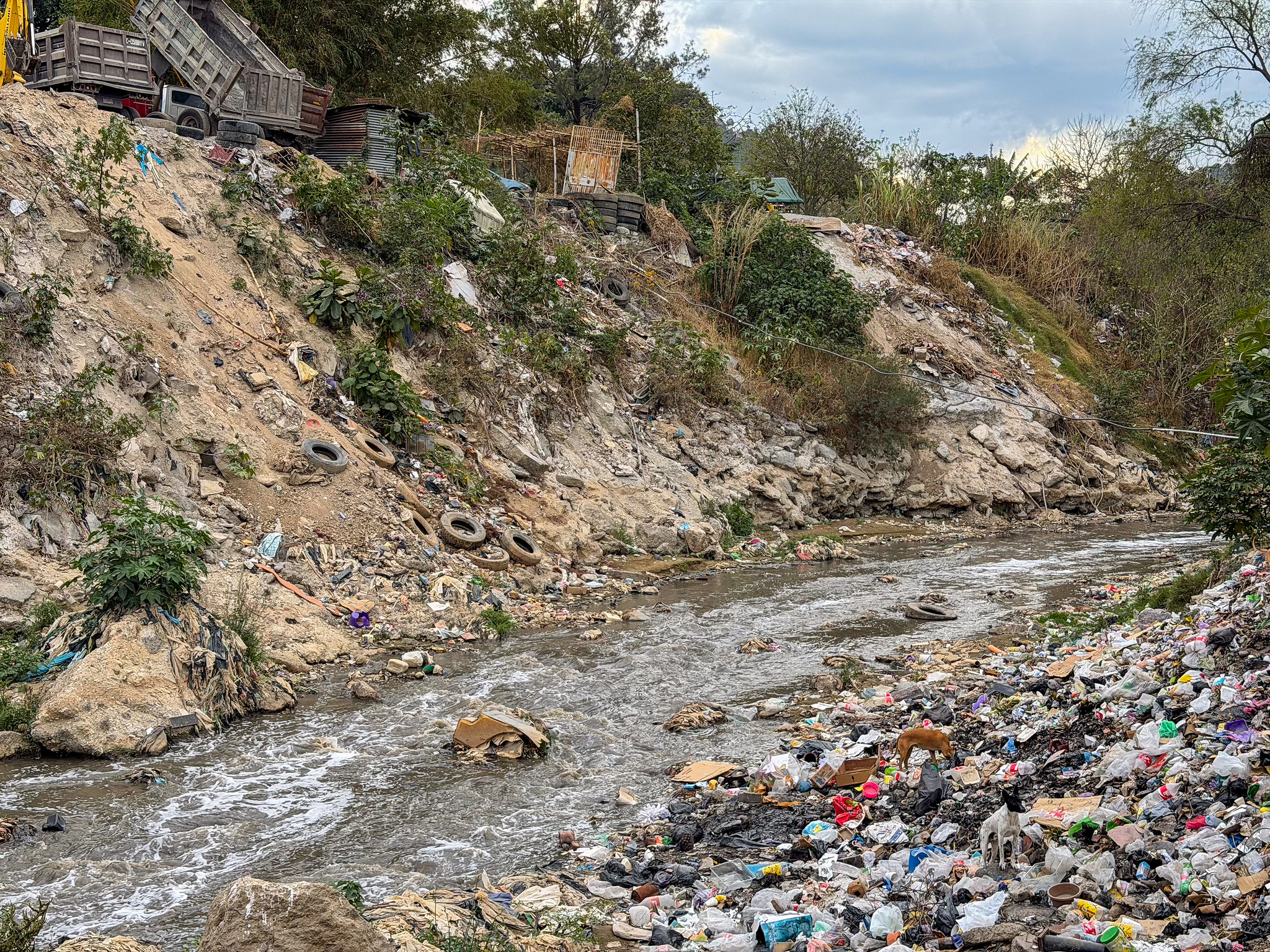
Photo: Mayela Sánchez García.
The situation extends beyond national borders. Every year, the Motagua River discharges some 20,000 metric tons of plastic into the Caribbean Sea, making it one of the rivers that contributes the most plastic pollution to the ocean worldwide, according to estimates contained in a 2025 report by the Inter-American Commission on Human Rights (IACHR).
The river flows into the Mesoamerican Reef at its mouth, so pollution also threatens to degrade one of the largest and most biodiverse transboundary reefs on the planet, which spans the territorial waters of Belize, Guatemala, Honduras, and Mexico.
In addition, the contaminated water reaches the coast of Honduras and spreads into Amatique Bay, located along the eastern coast of Guatemala, affecting the Caribbean Sea.
The roots of this chronic, cross-border problem are structural. Data from the Integrated Environmental Management of the Motagua River Basin project, funded by the United Nations Development Program (UNDP), show that in Guatemala, 66% of municipal solid waste is not collected, and there is no guarantee that the remaining 34% is disposed of properly. Furthermore, of all landfills nationwide, 88.32% are illegal or lack municipal authorization.
In other words, the core issues that need to be addressed are the mismanagement of solid waste and water resources in Guatemala; noncompliance with existing regulations on wastewater discharge and the disposal and treatment of solid waste and residues; and the lack of a water law.
The Poqomam Maya people's quest for justice
The rivers of Santa Cruz Chinautla, a community of the Poqomam Maya people located just twelve kilometers from Guatemala City, have become conduits of pollution that are degrading the Motagua River.
For decades, the local population has seen its health and livelihoods—including pottery, one of the main economic activities and a source of identity—damaged due to the lack of waste management in the municipality of Chinautla and the urban area of the country’s capital, as well as the activities of sand-mining companies.
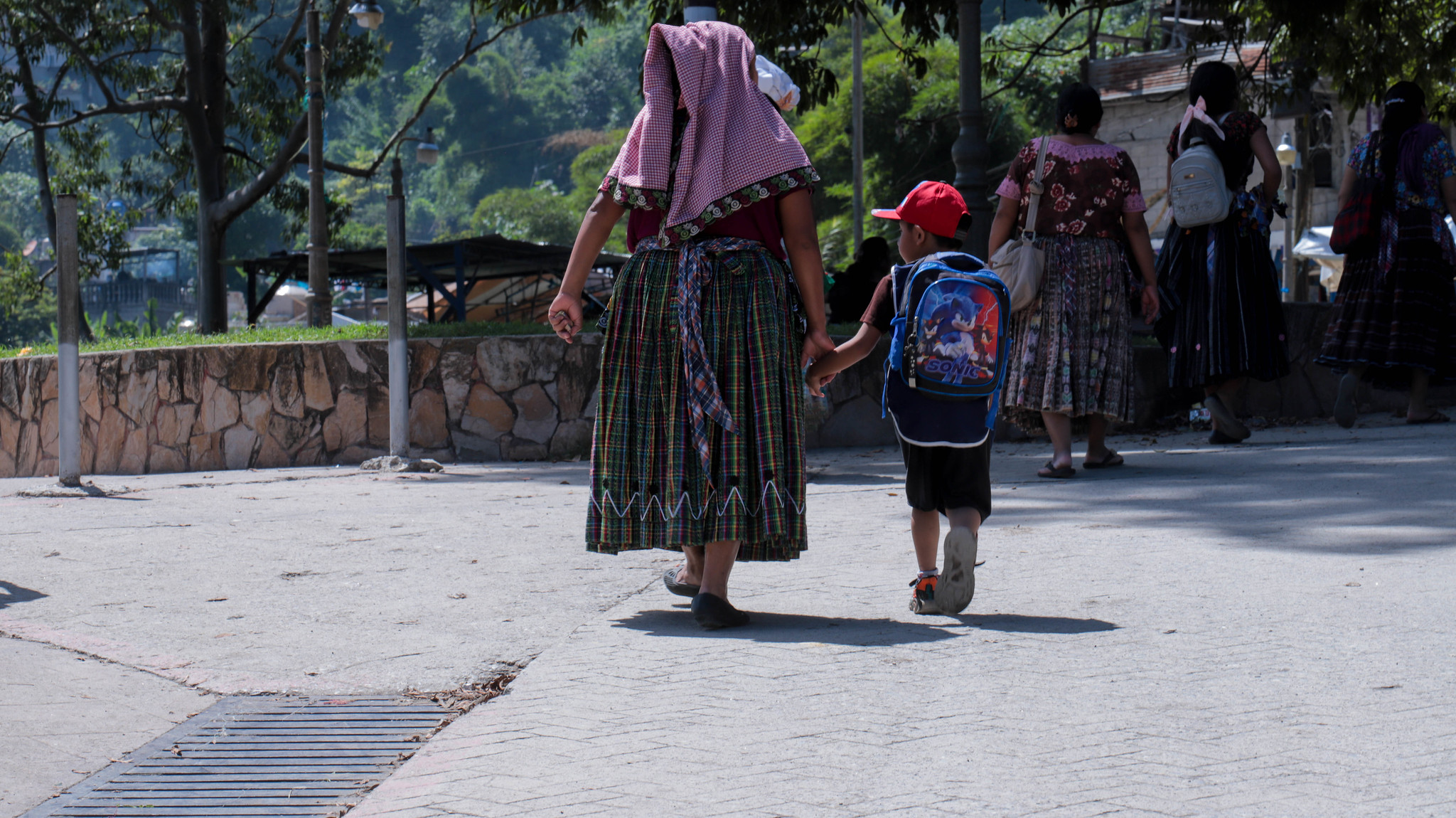
Photo: Mario Winter.
Voices for the Motagua River: Olga Vázquez.
Voices for the Motagua River: Nazario Pascual.
In early 2000, the Maya community organized to stop sand mining on their territory. At that time, the companies held mining permits that remained valid through 2021 and 2022. And although the permits expired, some companies continued to operate after requesting extensions. In June 2022, the indigenous authorities of the Poqomam people began a sit-in protest in front of the Piedrinera San Luis company, which they maintained for four years.
In July 2024, the Special Rapporteur on Economic, Social, Cultural, and Environmental Rights of the IACHR visited Santa Cruz Chinautla. During his visit, traditional authorities and community members spoke about the environmental, water-related, health, economic, and cultural impacts of the pollution in their rivers.
That same year, in October, the community—with support from AIDA, the Indigenous Peoples’ Law Firm, and partner organizations—filed a lawsuit (petition for amparo) against the municipality of Chinautla over its failure to take measures to address the contamination of its rivers and soil caused by improper solid waste management and the existence of illegal landfills.
AIDA’s scientific team, together with local residents and community authorities, collected key information on illegal landfills in the area. This community science initiative supported the litigation by highlighting the severity of the pollution, demonstrating the ongoing use of such practices, and providing evidence of the municipal authorities’ failure to fulfill their legal obligations regarding waste management.
Learn more about this community science initiative.
In June 2025, the Poqomam community won the support of the Guatemalan justice system when a constitutional court ordered the municipality of Chinautla to effectively address the claims in the lawsuit aimed at stopping the pollution of the rivers and soil in Santa Cruz Chinautla.
This is the first time a Guatemalan court has recognized a community's right to a healthy environment and its central role in finding solutions.
Find out the details of the legal victory.
Current situation
Since the ruling was issued, the municipality of Chinautla has held a series of “technical working groups” with representatives from the central government, civil society, and the community. A smaller group of technical experts was later created to develop a work plan with clear goals. Several months have passed without the municipality convening these working groups.
Furthermore, in December 2025, the IACHR noted in its report Human Rights Situation in Guatemala that the Motagua River basin is facing a severe pollution crisis that has had profound impacts on biodiversity and has resulted in systematic violations of the human rights of local communities, including the Maya Poqomam people.
And in May 2026, the Ministry of the Environment and Natural Resources revoked the license of the sand mining company Piedrinera San Luis for "failure to comply with environmental commitments."
AIDA continues to monitor the implementation of the court ruling to ensure the right to a healthy environment for the Poqomam Maya community and all those living in the Motagua River basin. Meanwhile, the residents of Santa Cruz Chinautla remain organized and mobilized to improve their environment and defend their rights.
Related projects
World Bank Group Opens Case on Eco Oro Minerals Gold Mine in Fragile Colombian Wetlands
FOR IMMEDIATE RELEASE Press Contact: Astrid Puentes Riaño, Co-Director, AIDA, (+52) 155-2301-6639, [email protected] Kristen Genovese, CIEL, (+31) 0652-773-272, [email protected] Jen Moore, MiningWatch, (+1) 613-569-3439, [email protected] Miguel Ramos, Comité por la Defensa del Agua, (+57) 314-416-4531, [email protected] World Bank Group Opens Case on Eco Oro Minerals Gold Mine in Fragile Colombian Wetlands IFC’s Ombudsman to hear complaints of downstream communities Bucaramanga, Colombia – Late last week, the World Bank Group accepted a complaint and will evaluate its investment in Eco Oro Mineral’s Angostura mining project, a proposed large-scale gold mine located in a fragile, high-altitude wetland called the Santurbán páramo, which provides water to over 2.2 million Colombians. The Compliance Advisor Ombudsman (CAO), the independent grievance mechanism of the International Finance Corporation (IFC), will review complaints alleging that the IFC failed to evaluate the project’s potentially severe and irreversible social and environmental impacts. The CAO’s decision was prompted by a complaint submitted last month by groups that would be affected by the project in Bucaramanga, Colombia. The complaint asserts that the IFC, the World Bank’s private-sector lending arm, ignored its own policies when it invested US$11.79 million in the Vancouver-based company’s project. “It is outrageous that such a damaging mining initiative has the backing of the World Bank, whose mission is to advance real and sustainable development,” said attorney Miguel Ramos of the Committee for the Defense of Water and the Santurbán Páramo, a coalition of nearly 40 local groups which spearheaded the complaint before the CAO. “There could be some 20 counties whose water will be affected by this project.” The CAO’s Ombudsman will evaluate the case before the CAO determines whether a full audit is warranted. An audit would examine if the IFC’s environmental and social policies have been violated. In May 2011, following controversial hearings and protests numbering in the tens of thousands, the Colombian Ministry of the Environment rejected Eco Oro’s initial request for an environmental license, citing environmental, constitutional and international law prohibiting mining activity in páramo wetlands. Páramos are fragile ecosystems that supply about 75% of Colombia’s freshwater, including the drinking water of millions of people, and play a key role in mitigating and adaptation to climate change. The Interamerican Association for Environmental Defense (AIDA), the Center for International Environmental Law (CIEL) and MiningWatch Canada supported the Committee’s request that the CAO audit the project and that the IFC withdraws its funding of the project. “The IFC sets the standard for future investment in Colombia, and must be extra careful to avoid promoting unsustainable projects such as Angostura,” said Astrid Puentes Riaño, Co-Director of AIDA. “We are confident that this investigation will reveal that the IFC did not even ensure minimal protection for communities and the environment when it failed to require necessary impact assessments before investing.” “Prior armed conflict in this area could further compound the deleterious impacts this project would have on communities and their water supplies. Nonetheless, the IFC invested, explicitly hoping to spur greater interest in Colombia’s mining sector,” said Jen Moore, Latin America Program Coordinator for MiningWatch Canada. “This evaluation is warranted and ultimately, the IFC should pull out.” The CAO will review allegations that the IFC glossed over potential security issues related to Eco Oro’s project. The complaint questions the IFC’s original assessment, providing documented evidence of violence associated with guerrilla and paramilitary activity following a major military operation and the establishment of military installations in the area around 2003. Eco Oro holds mining rights to nearly 30,000 hectares (74,130 acres) of land in the Santurbán páramo near the city of Bucaramanga in the northeastern department of Santander. Eco Oro’s project has already stimulated investments from at least five other companies in the immediate area, more than doubling the area under mining concessions in the páramo. Full text of the complaint here (in Spanish).
Read moreLeaders of Brazilian movement opposed to controversial Belo Monte dam threatened with imprisonment, for Lawful Protests
International Groups Denounce Attempts to Criminalize Civil Society Leaders before OAS and UN Human Rights Bodies. Altamira (PA), Brazil – Brazilian social movements and civil society organizations are facing politically motivated prosecutions for their lawful opposition to the Belo Monte dam complex in the heart of the Amazon, a leading international human rights and environmental organization said today. In a report issued to the human rights arms of the Organization of American States (OAS) and the United Nations (UN), Brazilian and international groups detailed attempts to prosecute human rights and environmental activists and seek the arrests of 11 civil society leaders. Among the accused are a local reporter, leaders of the Xingu Alive Forever Movement, a Catholic priest and nun who led a mass during the Xingu+23 protest, a documentary filmmaker and a fisherman whose house was recently demolished to make way for dam construction. “The complaints filed by the dam consortium and the request for arrest warrants are based on fabricated information and gross distortions of the facts, with the clear intention of criminalizing leaders of a legitimate social movement opposed to the federal government’s obsession with the construction of Belo Monte, regardless of the project’s human and environmental costs and the rule of law”, said Marco Apolo, lawyer and co-director of SDDH, a renowned human rights NGO based in the state of Para. The police request for the arrest still pending approval in a local court, came in response to a complaint filed by of the consortium of companies building the dam. The peaceful protests organized by Brazilian civil society groups were celebrating 23 years of resistance to the project. Activities were focused in Santo Antonio, a small riverside village whose inhabitants are being displaced by construction of the large dam. In an isolated incident, a small group of protestors autonomously entered the offices of the consortium, causing some damages. Despite the absence of evidence linking the incident to the leaders of the movement and the protests, the police request for arrest warrants charges them with invasion and damage to private property, theft, arson, and disturbing the peace. “We expect a prompt response from the OAS and the UN regarding this blatant attempt to intimidate and criminalize human rights and environmental defenders working to protect the communities affected by Belo Monte,” stated Joelson Cavalcante, a Brazilian lawyer with the Interamerican Association for Environmental Defense (AIDA), which co-authored the report. “The Brazilian government cannot simply silence critiques of its development policy by putting them in jail.” Some of the accused also are plaintiffs in a case before the Inter-American Commission on Human Rights against Brazil for failing to consult local communities and ignoring important safeguards to protect the rights and environment of the people affected by the dam. In April 2011, the Inter-American Commission requested special measures to protect the rights of 12 indigenous communities. The Brazilian government has refused to comply with the resolution so far. Brazilian and international groups, including AIDA, have raised multiple claims of human rights violations surrounding the development of the Belo Monte dam. The project would seriously harm the lands and livelihoods of indigenous and rural communities including un-contacted tribes in voluntary isolation. The dam is slated to be the world’s third largest and displace as many as 40,000 families. The attempt to silence protest against the project comes in the wake of recommendations from the UN Human Rights Council calling on the Brazilian government to safeguard the work of human rights defenders and protect the human rights of indigenous and African-descendant communities. “Belo Monte is a sad example of misdirected development policy gone awry,” said Astrid Puentes, Co-Director of AIDA. “We expect the Brazilian government to heed the recommendations of the UN and OAS and promote truly just and sustainable development, demonstrating that statements made at the Rio +20 Conference are real. Stopping the unwarranted criminalization of human right defenders in the Xingu would be a positive step in that direction.”
Read moreComplaint filed against World Bank Group for funding Eco Oro Minerals gold mine in fragile Colombian wetlands
Downstream community submits complaint to the IFC’s Ombudsman. Bucaramanga, Colombia – Today, local groups in Bucaramanga, Colombia filed a complaint against the World Bank Group’s investment in Eco Oro Mineral’s Angostura mining project with the Compliance Advisor Ombudsman (CAO), the independent grievance mechanism of the International Finance Corporation (IFC). The complaint cites, among ten main concerns, the IFC’s failure to evaluate the potentially severe and irreversible social and environmental impacts of the project, a large-scale gold mine located in a fragile, high-altitude wetland, called the Santurbán páramo, which provides water to over 2.2 million Colombians. The Committee for the Defense of Water and the Santurbán Páramo, a coalition of nearly 40 groups living downstream of the project in Bucaramanga, asserts that the IFC, the World Bank’s private-sector lending arm, ignored its own policies before investing US$11.79 million in Greystar Resources – now Eco Oro Minerals – in 2009. The IFC bought shares before the company had completed required environmental and social impact assessments. “There could be some twenty municipalities affected by this project. We think it is outrageous that such a damaging mining initiative has the backing of the World Bank, whose mission is to advance real and sustainable development,” said attorney Miguel Ramos, member of the Committee, which includes a diverse group of human rights, environmental, student and business organizations. Following tens of thousands-strong protests and controversial hearings, the Colombian Ministry of the Environment rejected the Vancouver-based company’s initial request for an environmental license, citing the country’s environmental and constitutional law prohibiting mining activity in páramo wetlands. Páramos are fragile ecosystems that supply about 75% of Colombia’s freshwater, including the drinking water of millions of people, and play a key role in mitigating and adaptation to climate change. The Interamerican Association for Environmental Defense (AIDA), the Center for International Environmental Law (CIEL) and MiningWatch Canada support the Committee’s request that the CAO audit the project and recommend a full withdrawal of IFC funds. “The IFC promotes itself as a leader in environmental and social standards,” said Natalia Jiménez Galindo, a lawyer with AIDA. “Its stamp of approval paves the way for other investors. In this case, the IFC did not even ensure minimal protection for communities and the environment by requiring an environmental and social impact assessment.” Eco Oro’s project has already stimulated investments from at least five other companies in the immediate area, more than doubling the area under mining concessions in the Santurbán Páramo. “The IFC invested in Eco Oro’s mine, explicitly stating that were it successful it would spur other investments in Colombia’s mining sector. But the IFC did not do its homework to consider the serious environmental, social and economic consequences, particularly in an area that has been a conflict zone,” said Jen Moore, Latin America Program Coordinator for MiningWatch Canada. “It should reevaluate its investment and pull out.” The complaint alleges that the IFC glossed over potential security issues related to Eco Oro’s project. It provides documented evidence of violence associated with guerrilla and paramilitary activity following the establishment of military installations in the area in 2003, which contradicts company claims. Eco Oro holds mining rights to nearly 30,000 hectares (74,130 acres) of land in the Santurbán páramo, near the city of Bucaramanga in the department of Santander. In response to the rejection of its 2009 open-pit mine proposal, the company said in 2011 that it would pursue a completely underground mining operation, but the people of Bucaramanga remain widely opposed to the project. The region is thought to contain important deposits of gold, coal and other minerals.
Read more