
Project
Shutterstock.
Pollution of the Motagua River in Guatemala: The Poqomam Maya people’s quest for environmental justice
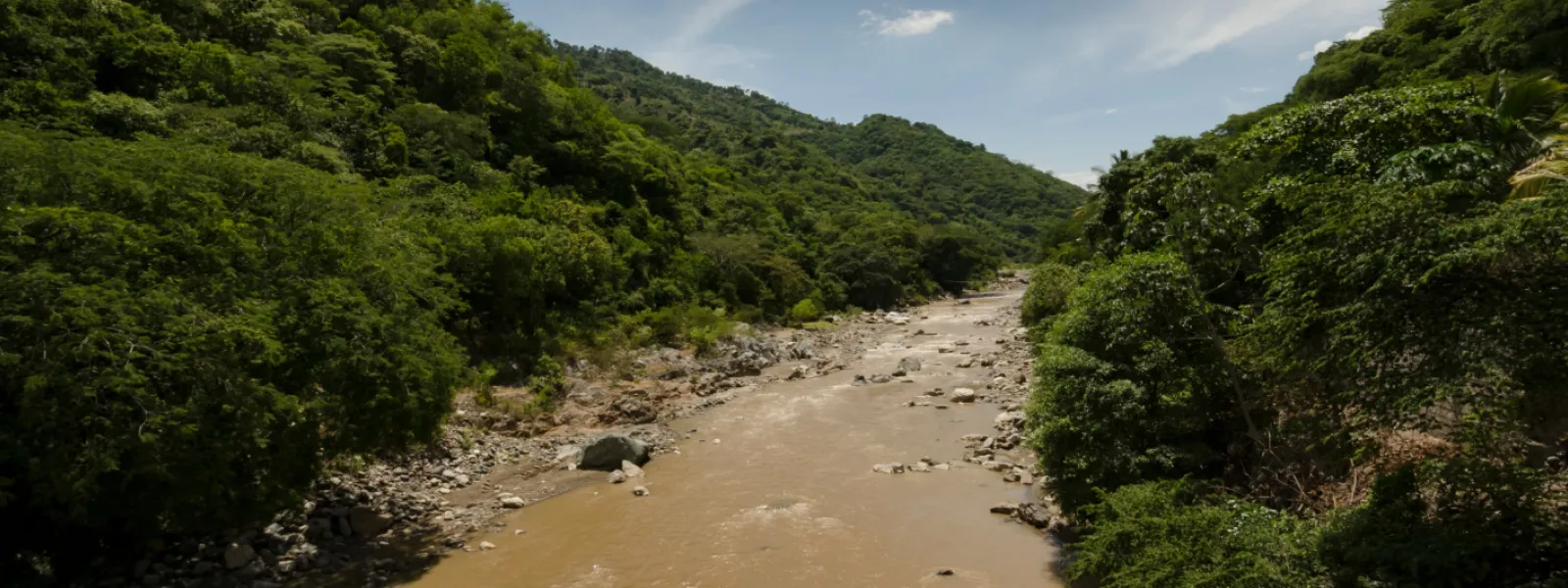
The Motagua River basin—Guatemala’s largest and most important river—is severely polluted with wastewater, solid waste, and other types of debris.
This is a cross-border issue because the Motagua’s polluted waters flow into the Caribbean Sea, reach the coast of Honduras, and threaten the Mesoamerican Reef System.
For decades, this has violated the rights to health, water, development, and a healthy environment of all the people living in the river basin.
In June 2025, the Poqomam Maya community of Santa Cruz Chinautla—supported by AIDA, the Indigenous Peoples’ Law Firm, and allied organizations—achieved an unprecedented legal victory to halt degradation in the basin. In response to the lawsuit it filed, a Guatemalan court ordered the municipality of Chinautla to comply with a series of obligations to curb the pollution of the area’s rivers and soil.
The government's response to the ruling has so far been limited to technical working group meetings. Meanwhile, the community continues to work toward the proper implementation of the ruling and to take other actions to defend its territory and its rights.
Background
The Motagua River, which is 486 km long, flows through 96 municipalities and 14 departments in Guatemala. It originates in Quiché, a department located in the northwest, and empties into the Caribbean Sea.
Polluting activities occur throughout the entire basin, including sub-basins and micro-basins. The largest volume of pollution comes from Guatemala City, the country’s capital, and is carried by the waters of the Las Vacas River, which in turn receives a large amount of waste from the Chinautla River.
The Chinautla River, which flows through the municipality of the same name, carries solid waste from a landfill located in Zone 3 of the capital—where trash from at least 14 municipalities in the department of Guatemala is dumped—as well as sewage generated by some 500,000 people living in the northern part of the capital, which undergoes no prior treatment.
Other sources of pollution include the numerous illegal dumps in the municipality of Chinautla, the waste that private vehicles and garbage trucks dump along the banks of its rivers, as well as the sand-mining companies—which began setting up operations in the area between 1996 and 1997—whose activities weaken the rivers' basins, causing solid waste to be more easily carried away by the river currents.
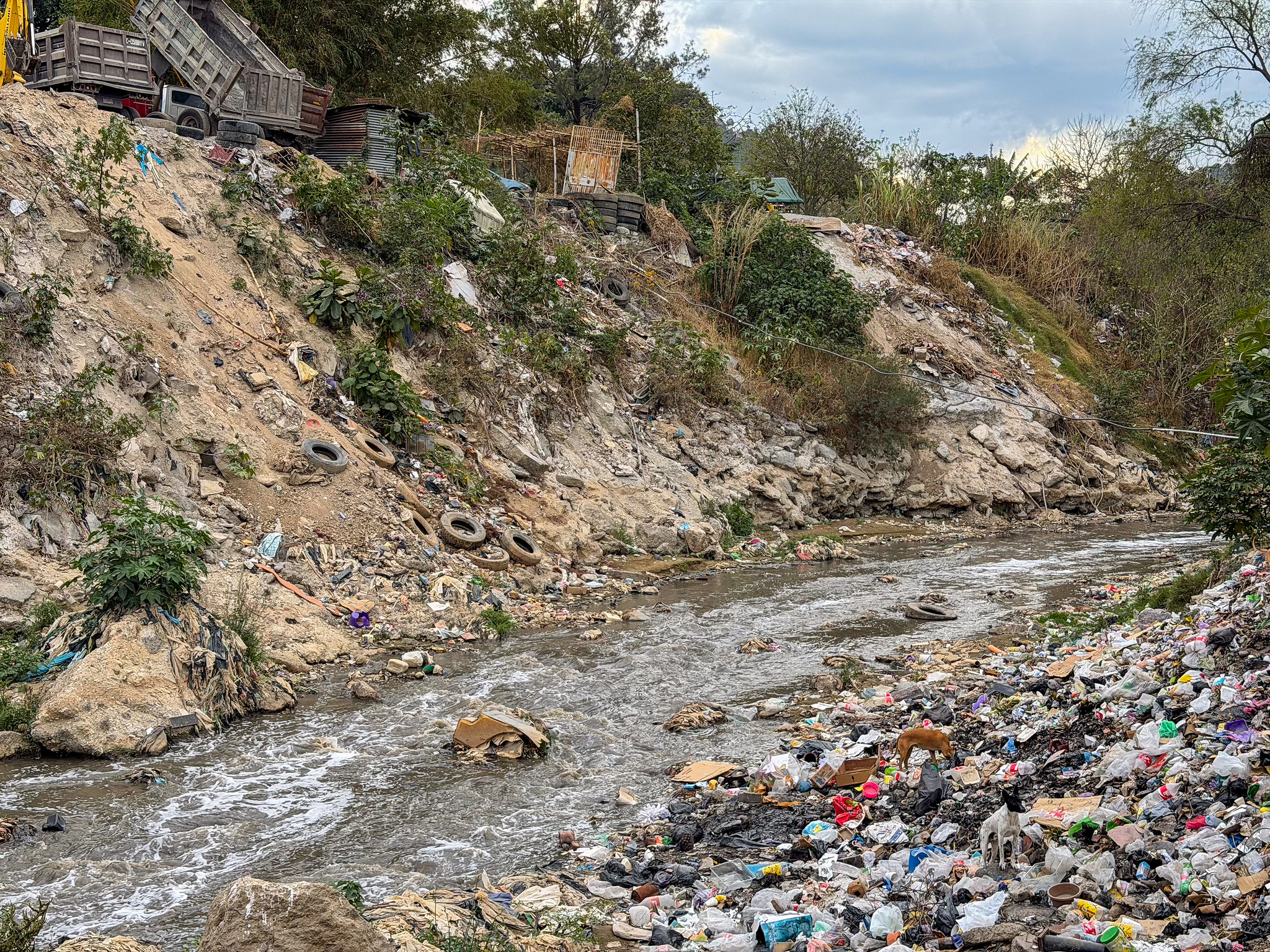
Photo: Mayela Sánchez García.
The situation extends beyond national borders. Every year, the Motagua River discharges some 20,000 metric tons of plastic into the Caribbean Sea, making it one of the rivers that contributes the most plastic pollution to the ocean worldwide, according to estimates contained in a 2025 report by the Inter-American Commission on Human Rights (IACHR).
The river flows into the Mesoamerican Reef at its mouth, so pollution also threatens to degrade one of the largest and most biodiverse transboundary reefs on the planet, which spans the territorial waters of Belize, Guatemala, Honduras, and Mexico.
In addition, the contaminated water reaches the coast of Honduras and spreads into Amatique Bay, located along the eastern coast of Guatemala, affecting the Caribbean Sea.
The roots of this chronic, cross-border problem are structural. Data from the Integrated Environmental Management of the Motagua River Basin project, funded by the United Nations Development Program (UNDP), show that in Guatemala, 66% of municipal solid waste is not collected, and there is no guarantee that the remaining 34% is disposed of properly. Furthermore, of all landfills nationwide, 88.32% are illegal or lack municipal authorization.
In other words, the core issues that need to be addressed are the mismanagement of solid waste and water resources in Guatemala; noncompliance with existing regulations on wastewater discharge and the disposal and treatment of solid waste and residues; and the lack of a water law.
The Poqomam Maya people's quest for justice
The rivers of Santa Cruz Chinautla, a community of the Poqomam Maya people located just twelve kilometers from Guatemala City, have become conduits of pollution that are degrading the Motagua River.
For decades, the local population has seen its health and livelihoods—including pottery, one of the main economic activities and a source of identity—damaged due to the lack of waste management in the municipality of Chinautla and the urban area of the country’s capital, as well as the activities of sand-mining companies.
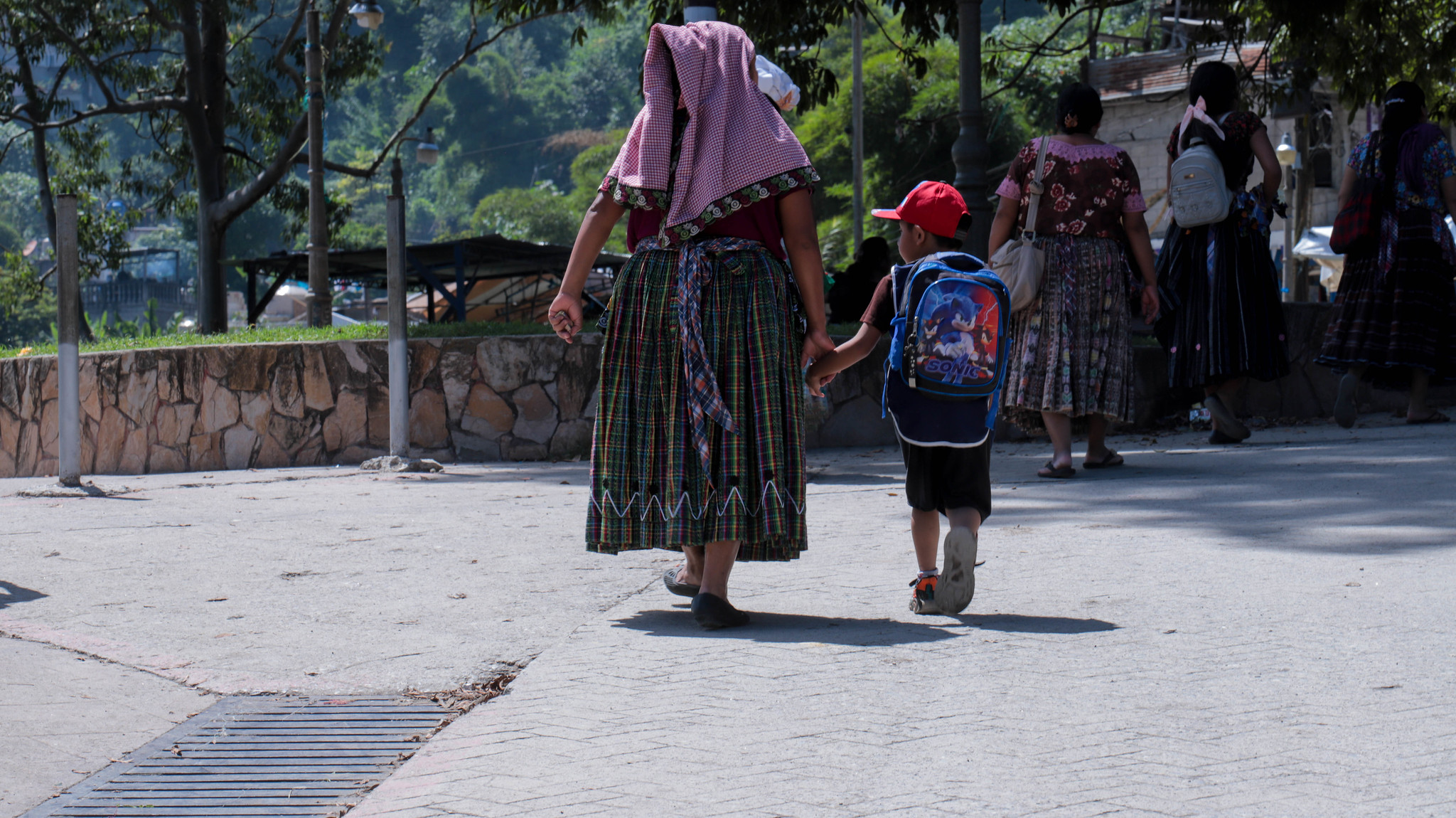
Photo: Mario Winter.
Voices for the Motagua River: Olga Vázquez.
Voices for the Motagua River: Nazario Pascual.
In early 2000, the Maya community organized to stop sand mining on their territory. At that time, the companies held mining permits that remained valid through 2021 and 2022. And although the permits expired, some companies continued to operate after requesting extensions. In June 2022, the indigenous authorities of the Poqomam people began a sit-in protest in front of the Piedrinera San Luis company, which they maintained for four years.
In July 2024, the Special Rapporteur on Economic, Social, Cultural, and Environmental Rights of the IACHR visited Santa Cruz Chinautla. During his visit, traditional authorities and community members spoke about the environmental, water-related, health, economic, and cultural impacts of the pollution in their rivers.
That same year, in October, the community—with support from AIDA, the Indigenous Peoples’ Law Firm, and partner organizations—filed a lawsuit (petition for amparo) against the municipality of Chinautla over its failure to take measures to address the contamination of its rivers and soil caused by improper solid waste management and the existence of illegal landfills.
AIDA’s scientific team, together with local residents and community authorities, collected key information on illegal landfills in the area. This community science initiative supported the litigation by highlighting the severity of the pollution, demonstrating the ongoing use of such practices, and providing evidence of the municipal authorities’ failure to fulfill their legal obligations regarding waste management.
Learn more about this community science initiative.
In June 2025, the Poqomam community won the support of the Guatemalan justice system when a constitutional court ordered the municipality of Chinautla to effectively address the claims in the lawsuit aimed at stopping the pollution of the rivers and soil in Santa Cruz Chinautla.
This is the first time a Guatemalan court has recognized a community's right to a healthy environment and its central role in finding solutions.
Find out the details of the legal victory.
Current situation
Since the ruling was issued, the municipality of Chinautla has held a series of “technical working groups” with representatives from the central government, civil society, and the community. A smaller group of technical experts was later created to develop a work plan with clear goals. Several months have passed without the municipality convening these working groups.
Furthermore, in December 2025, the IACHR noted in its report Human Rights Situation in Guatemala that the Motagua River basin is facing a severe pollution crisis that has had profound impacts on biodiversity and has resulted in systematic violations of the human rights of local communities, including the Maya Poqomam people.
And in May 2026, the Ministry of the Environment and Natural Resources revoked the license of the sand mining company Piedrinera San Luis for "failure to comply with environmental commitments."
AIDA continues to monitor the implementation of the court ruling to ensure the right to a healthy environment for the Poqomam Maya community and all those living in the Motagua River basin. Meanwhile, the residents of Santa Cruz Chinautla remain organized and mobilized to improve their environment and defend their rights.
Related projects
Coral reefs in Latin America: A natural spectacle at risk
Gladys Martínez de Lemos, legal advisor, AIDA Twenty five percent of all marine species have lived at some stage in coral reefs. In Costa Rica, these reefs are under threat from deforestation and other human activities. Coral reefs help maintain balance in the marine environment. They are home to many marine species for human consumption, they protect coasts from erosion and hurricanes, and they offer coastal communities a source of income from diving tourism. But a lack of clear policies and regulations is threatening their survival. These natural wonders help balance the ecosystem by providing a source of food to superior organisms, thus forming vital food webs. Their environmental value is so significant that economists have estimated that a hectare of reef is worth over one million dollars per year. Even though coral reefs cover about a tenth of the ocean floor, current estimates suggest that 25% of all marine species have lived in coral reefs at some stage of their life cycle. Despite this, coral reefs are under threat in Costa Rica and elsewhere from ocean acidification, destructive fishing practices, unsustainable coastal development, and pollution, among other factors. According to the Costa Rica's 15th State of the Nation Report, the loss of 75% of live corals in the Cahuita Reef is mostly due to sedimentation caused by basin deforestation and other human actions. Governmental inaction It's evident that coral reefs are endangered. There are no clear and widespread policies and regulations to deal with this issue; there are no mechanisms for the control, monitoring or even protection to preserve coral reefs. Even current international obligations on coral reef protection are overlooked. This can no longer be. Marine biodiversity and ecosystems must be preserved for future generations to see the beauty and diversity of coral reefs. We all have a son, nephew or cousin who we want to have the opportunity to enjoy the richness of the coral reefs, or the chance to savor fish and their valuable protein. Most Latin American countries and their decision makers have not yet created special laws to protect the coral reefs. They face a huge challenge -- and responsibility -- to protect the reefs.
Read moreCoral reefs in Latin America: A natural spectacle at risk
Gladys Martínez de Lemos, legal advisor, AIDA Twenty five percent of all marine species have lived at some stage in coral reefs. In Costa Rica, these reefs are under threat from deforestation and other human activities. Coral reefs help maintain balance in the marine environment. They are home to many marine species for human consumption, they protect coasts from erosion and hurricanes, and they offer coastal communities a source of income from diving tourism. But a lack of clear policies and regulations is threatening their survival. These natural wonders help balance the ecosystem by providing a source of food to superior organisms, thus forming vital food webs. Their environmental value is so significant that economists have estimated that a hectare of reef is worth over one million dollars per year. Even though coral reefs cover about a tenth of the ocean floor, current estimates suggest that 25% of all marine species have lived in coral reefs at some stage of their life cycle. Despite this, coral reefs are under threat in Costa Rica and elsewhere from ocean acidification, destructive fishing practices, unsustainable coastal development, and pollution, among other factors. According to the Costa Rica's 15th State of the Nation Report, the loss of 75% of live corals in the Cahuita Reef is mostly due to sedimentation caused by basin deforestation and other human actions. Governmental inaction It's evident that coral reefs are endangered. There are no clear and widespread policies and regulations to deal with this issue; there are no mechanisms for the control, monitoring or even protection to preserve coral reefs. Even current international obligations on coral reef protection are overlooked. This can no longer be. Marine biodiversity and ecosystems must be preserved for future generations to see the beauty and diversity of coral reefs. We all have a son, nephew or cousin who we want to have the opportunity to enjoy the richness of the coral reefs, or the chance to savor fish and their valuable protein. Most Latin American countries and their decision makers have not yet created special laws to protect the coral reefs. They face a huge challenge -- and responsibility -- to protect the reefs.
Read more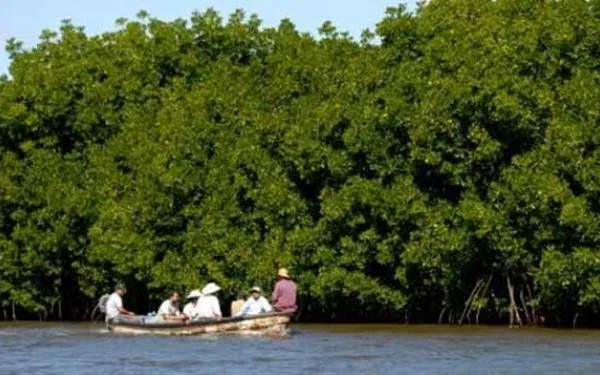
Protection of Sinaloa’s mangrove swamps put off
By Sandra Moguel, legal advisor, AIDA, @sandra_moguel Marismas Nacionales, the largest wetland in Mexico, is still at risk almost four years since the announcement of a proposed decree to protect it from threats such as major tourist developments. Mexico is the country with the largest number of sites designated as wetlands of international importance in Latin America and yet, surprisingly, these sites have not been looked after. By signing up to the Ramsar Convention[i], the Mexican government made a commitment to draw up plans for, defend and promote the wise useof these ecosystems, as well as to expand its system of protected areas[ii]. Marismas Nacionales is the largest wetland in Mexico, located between the states of Sinaloa and Nayarit. It has been a Ramsar site since 22 June 1995, which means it belongs to the international system for the protection and regulation of wetlands of international importance. The Recommendations of the Ramsar Advisory Mission from 2010 point out that although politically the ecosystem is pided into two different regions, ecologically the two sections of wetland have many things in common and therefore their management should be tackled as a whole. The federal government has already protected the Nayarit portion of the wetland, but four years since the publication of an official Announcement of Decree on the Sinaloa Marismas Nacionales Biosphere Reserve, the procedures for the creation of this Protected Natural Area, which would cover 47,556 hectares of mangrove forest, are yet to be completed. Meanwhile, the construction of massive infrastructure remains a threat to Marismas. The Pacific Coast Integrally Planned Centre – now known as Playa Espíritu (Spirit Beach) – and the Isla de Palma Development are both projects which put this site in jeopardy. The first of these projects has obtained environmental permission to build a 10,000-room resort (although the official proposal involved 44,000 rooms), while the second includes plans to construct accommodation for 200 guests, located in a nuclear zone according to the Sinaloa Marismas Nacionales Biosphere Reserve. The Mexican Secretariat of Environment and Natural Resources (SEMARNAT) justified its authorisation of the Integrally Planned Centre project explaining that the site had not been designated as a Protected Natural Area (or ANP by its Spanish acronym). It is currently studying the environmental impact study on the Isla de Palma development, but it is entirely possible that the argument of the effect it will have on a mangrove area and the habitat of highly migratory birds will not be enough to reject the application for environmental permission. In its Sectoral Program for the Environment and Natural Resources 2007-2012, the federal government promised to increase the total area of land designated as belonging to Protected Natural Areas from 22 million hectares in 2007 to 25.6 million in 2012. But how can this conservation objective be realised if the sites which are expected to be declared Protected Areas at the end of the six-year program have not been “protected”? The declaration of the Sinaloa Marismas Nacionales Biosphere Reserve is not the only decree of its kind to have been delayed: it is much the same story for La Sierra La Laguna and Balandra in Baja California Sur, Santuario Madera in Chihuahua and Ejido el Palmito in Sinaloa, to name but a few. The lack of coordination amongst administrative entities and the disparate organs which make up the environmental sector, combined with insufficient planning instruments such as ANP decrees, prevent decision-making which would favour conservation. Putting off these decrees is unjustifiable regardless of the fact that SEMARNAT’s legal department is swamped with ANP justification studies needing to be examined, or that there may be political reasons for delaying their approval. Issuing a decree on Sinaloa Marismas Nacionales is one way of guaranteeing the constitutional right to a healthy environment, as well as fulfilling international obligations such as Ramsar. It also protects the economic activities of the communities which depend on this ecosystem. [i] Ratified by Mexico on 20 December 1984 and published in the Official Gazette of the Federation on 24 January 1985. [ii] Resolution IX. 22 of the Ramsar Secretariat on wetlands and systems of protected areas, 9th Meeting of the Conference of the Contracting Parties, Uganda, 8-15 November 2005.
Read more