
Project
Shutterstock.
Pollution of the Motagua River in Guatemala: The Poqomam Maya people’s quest for environmental justice
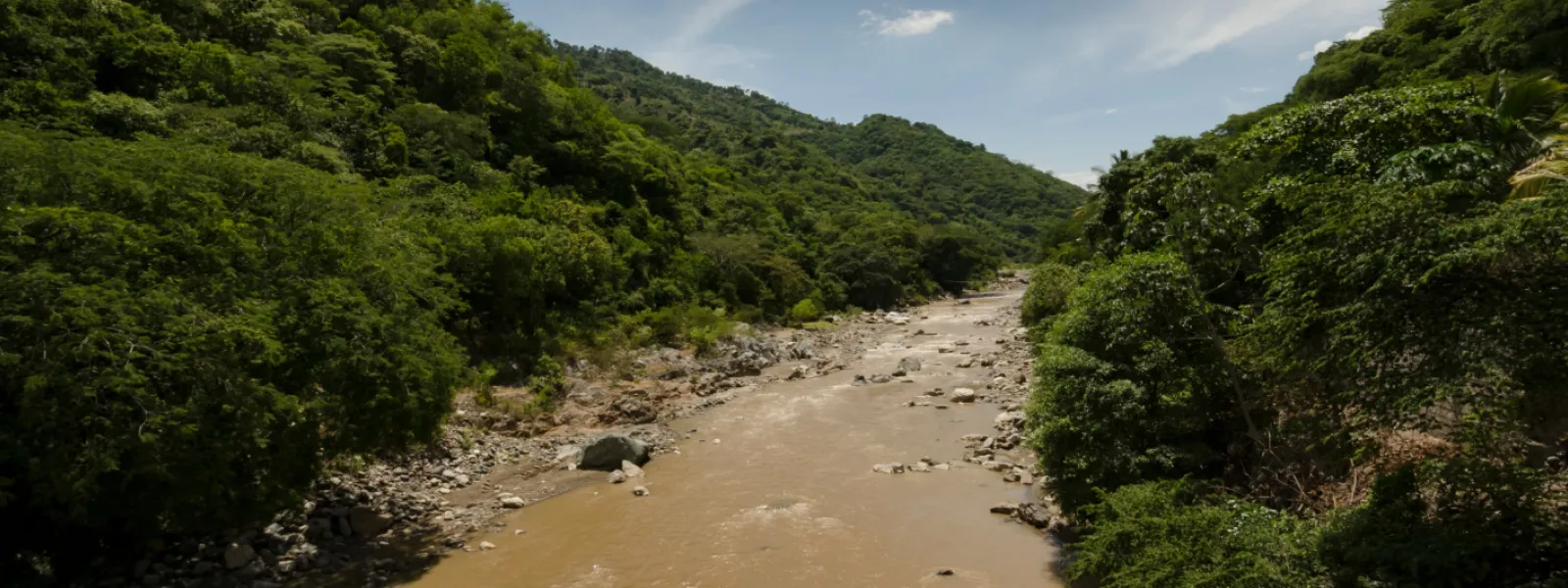
The Motagua River basin—Guatemala’s largest and most important river—is severely polluted with wastewater, solid waste, and other types of debris.
This is a cross-border issue because the Motagua’s polluted waters flow into the Caribbean Sea, reach the coast of Honduras, and threaten the Mesoamerican Reef System.
For decades, this has violated the rights to health, water, development, and a healthy environment of all the people living in the river basin.
In June 2025, the Poqomam Maya community of Santa Cruz Chinautla—supported by AIDA, the Indigenous Peoples’ Law Firm, and allied organizations—achieved an unprecedented legal victory to halt degradation in the basin. In response to the lawsuit it filed, a Guatemalan court ordered the municipality of Chinautla to comply with a series of obligations to curb the pollution of the area’s rivers and soil.
The government's response to the ruling has so far been limited to technical working group meetings. Meanwhile, the community continues to work toward the proper implementation of the ruling and to take other actions to defend its territory and its rights.
Background
The Motagua River, which is 486 km long, flows through 96 municipalities and 14 departments in Guatemala. It originates in Quiché, a department located in the northwest, and empties into the Caribbean Sea.
Polluting activities occur throughout the entire basin, including sub-basins and micro-basins. The largest volume of pollution comes from Guatemala City, the country’s capital, and is carried by the waters of the Las Vacas River, which in turn receives a large amount of waste from the Chinautla River.
The Chinautla River, which flows through the municipality of the same name, carries solid waste from a landfill located in Zone 3 of the capital—where trash from at least 14 municipalities in the department of Guatemala is dumped—as well as sewage generated by some 500,000 people living in the northern part of the capital, which undergoes no prior treatment.
Other sources of pollution include the numerous illegal dumps in the municipality of Chinautla, the waste that private vehicles and garbage trucks dump along the banks of its rivers, as well as the sand-mining companies—which began setting up operations in the area between 1996 and 1997—whose activities weaken the rivers' basins, causing solid waste to be more easily carried away by the river currents.
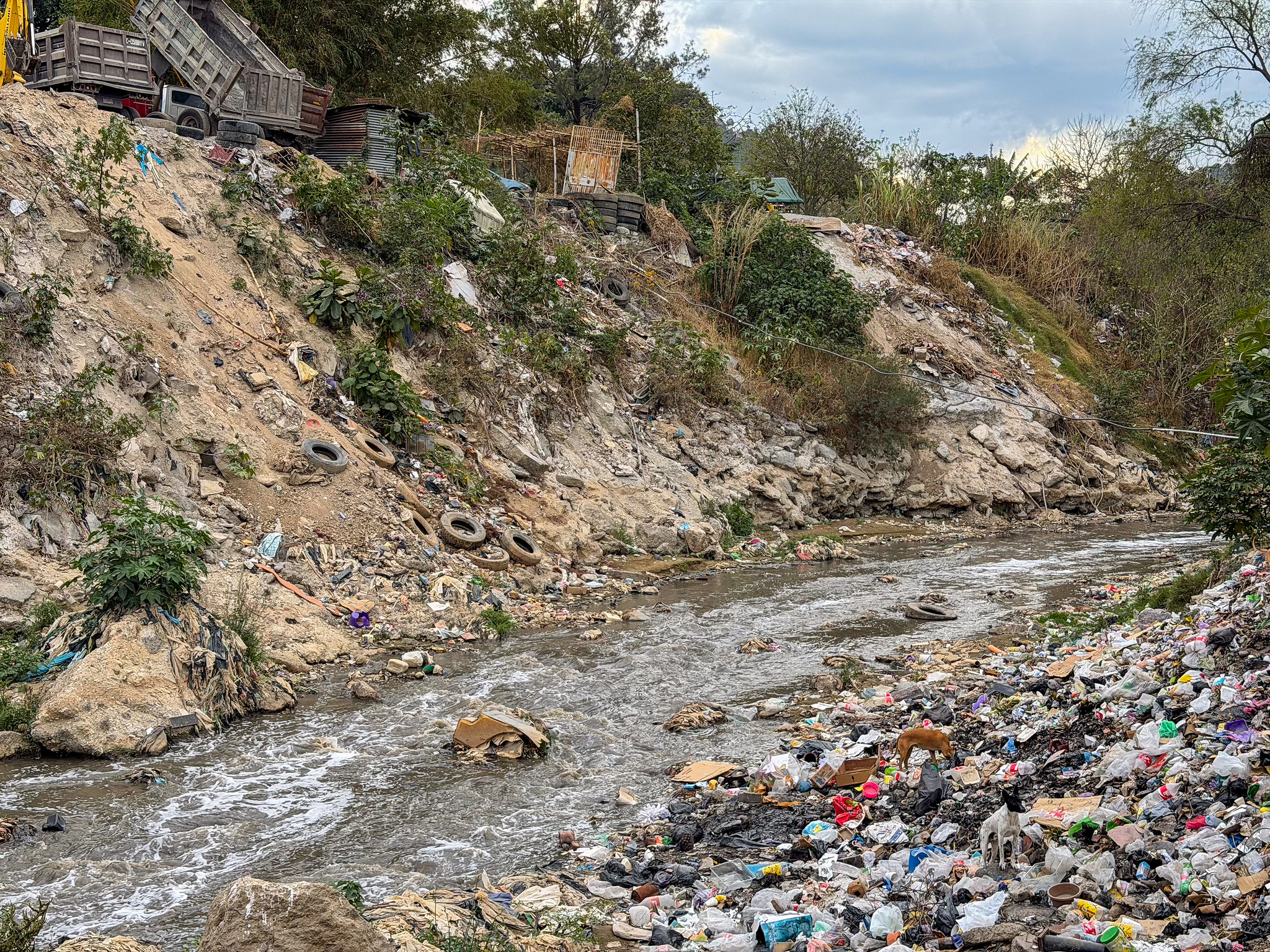
Photo: Mayela Sánchez García.
The situation extends beyond national borders. Every year, the Motagua River discharges some 20,000 metric tons of plastic into the Caribbean Sea, making it one of the rivers that contributes the most plastic pollution to the ocean worldwide, according to estimates contained in a 2025 report by the Inter-American Commission on Human Rights (IACHR).
The river flows into the Mesoamerican Reef at its mouth, so pollution also threatens to degrade one of the largest and most biodiverse transboundary reefs on the planet, which spans the territorial waters of Belize, Guatemala, Honduras, and Mexico.
In addition, the contaminated water reaches the coast of Honduras and spreads into Amatique Bay, located along the eastern coast of Guatemala, affecting the Caribbean Sea.
The roots of this chronic, cross-border problem are structural. Data from the Integrated Environmental Management of the Motagua River Basin project, funded by the United Nations Development Program (UNDP), show that in Guatemala, 66% of municipal solid waste is not collected, and there is no guarantee that the remaining 34% is disposed of properly. Furthermore, of all landfills nationwide, 88.32% are illegal or lack municipal authorization.
In other words, the core issues that need to be addressed are the mismanagement of solid waste and water resources in Guatemala; noncompliance with existing regulations on wastewater discharge and the disposal and treatment of solid waste and residues; and the lack of a water law.
The Poqomam Maya people's quest for justice
The rivers of Santa Cruz Chinautla, a community of the Poqomam Maya people located just twelve kilometers from Guatemala City, have become conduits of pollution that are degrading the Motagua River.
For decades, the local population has seen its health and livelihoods—including pottery, one of the main economic activities and a source of identity—damaged due to the lack of waste management in the municipality of Chinautla and the urban area of the country’s capital, as well as the activities of sand-mining companies.
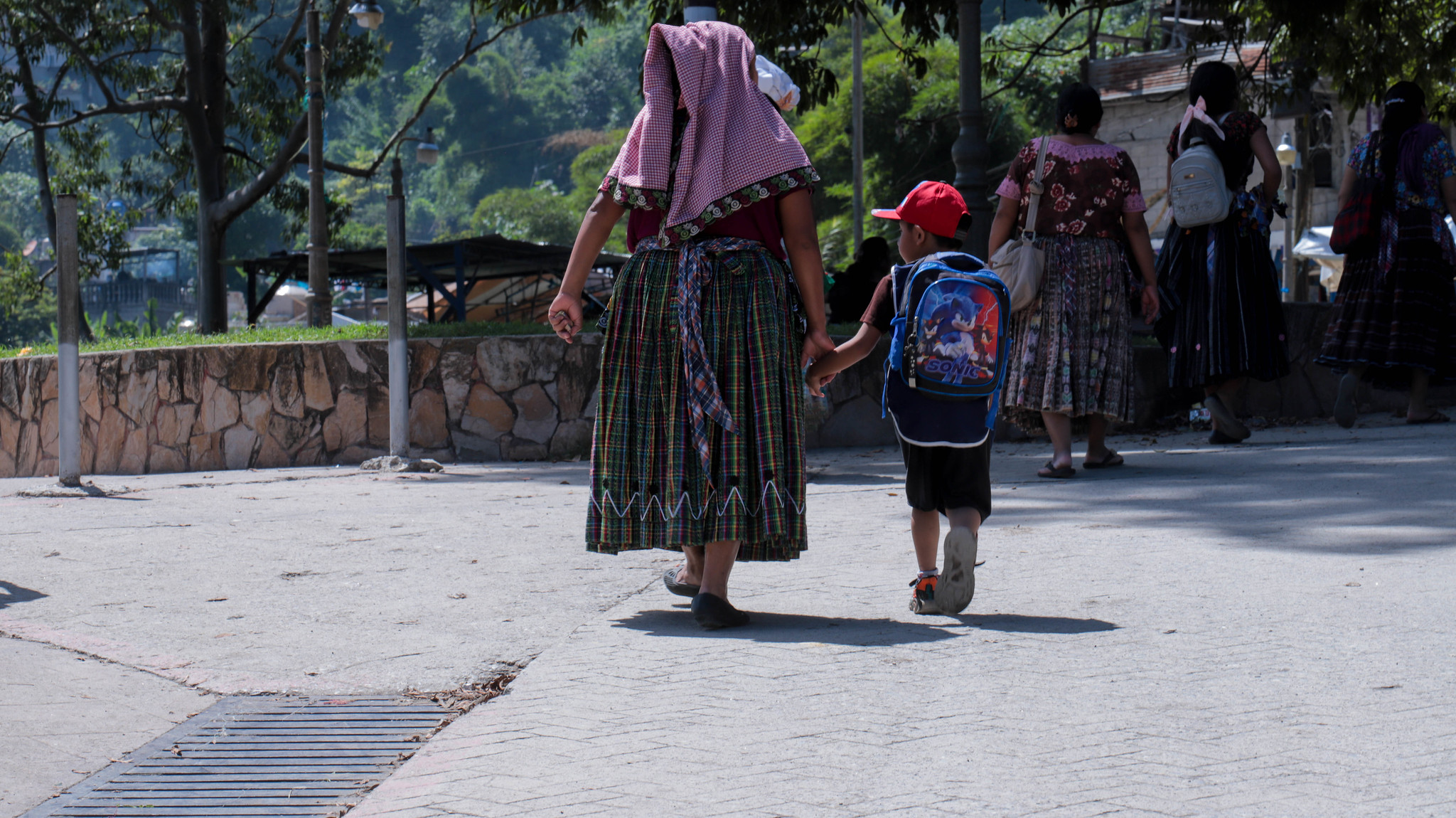
Photo: Mario Winter.
Voices for the Motagua River: Olga Vázquez.
Voices for the Motagua River: Nazario Pascual.
In early 2000, the Maya community organized to stop sand mining on their territory. At that time, the companies held mining permits that remained valid through 2021 and 2022. And although the permits expired, some companies continued to operate after requesting extensions. In June 2022, the indigenous authorities of the Poqomam people began a sit-in protest in front of the Piedrinera San Luis company, which they maintained for four years.
In July 2024, the Special Rapporteur on Economic, Social, Cultural, and Environmental Rights of the IACHR visited Santa Cruz Chinautla. During his visit, traditional authorities and community members spoke about the environmental, water-related, health, economic, and cultural impacts of the pollution in their rivers.
That same year, in October, the community—with support from AIDA, the Indigenous Peoples’ Law Firm, and partner organizations—filed a lawsuit (petition for amparo) against the municipality of Chinautla over its failure to take measures to address the contamination of its rivers and soil caused by improper solid waste management and the existence of illegal landfills.
AIDA’s scientific team, together with local residents and community authorities, collected key information on illegal landfills in the area. This community science initiative supported the litigation by highlighting the severity of the pollution, demonstrating the ongoing use of such practices, and providing evidence of the municipal authorities’ failure to fulfill their legal obligations regarding waste management.
Learn more about this community science initiative.
In June 2025, the Poqomam community won the support of the Guatemalan justice system when a constitutional court ordered the municipality of Chinautla to effectively address the claims in the lawsuit aimed at stopping the pollution of the rivers and soil in Santa Cruz Chinautla.
This is the first time a Guatemalan court has recognized a community's right to a healthy environment and its central role in finding solutions.
Find out the details of the legal victory.
Current situation
Since the ruling was issued, the municipality of Chinautla has held a series of “technical working groups” with representatives from the central government, civil society, and the community. A smaller group of technical experts was later created to develop a work plan with clear goals. Several months have passed without the municipality convening these working groups.
Furthermore, in December 2025, the IACHR noted in its report Human Rights Situation in Guatemala that the Motagua River basin is facing a severe pollution crisis that has had profound impacts on biodiversity and has resulted in systematic violations of the human rights of local communities, including the Maya Poqomam people.
And in May 2026, the Ministry of the Environment and Natural Resources revoked the license of the sand mining company Piedrinera San Luis for "failure to comply with environmental commitments."
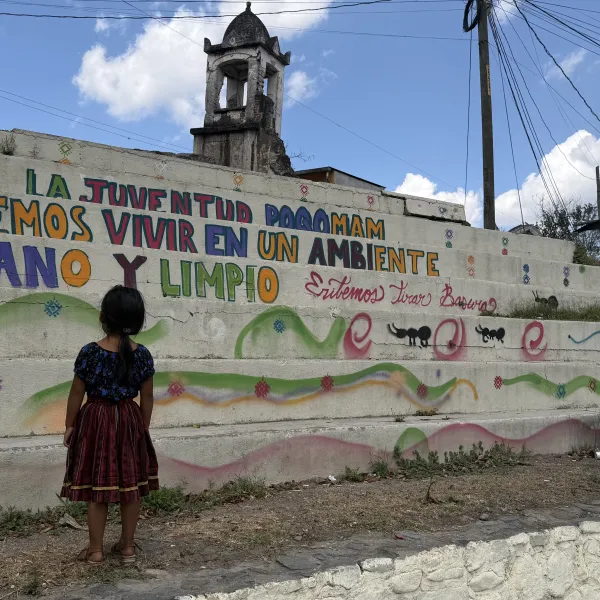
AIDA continues to monitor the implementation of the court ruling to ensure the right to a healthy environment for the Poqomam Maya community and all those living in the Motagua River basin. Meanwhile, the residents of Santa Cruz Chinautla remain organized and mobilized to improve their environment and defend their rights.
Related projects
Mexican Constitution protects human rights
On June 9, 2011, Mexico rewrote history. The Mexican Congress approved revisions that expressly recognize human rights in the national constitution for the first time. The new language requires all authorities to adhere to international human rights treaties Mexico is a signatory to when those treaties are more expansive than the "individual guarantees" currently on the books. As modified, Article 1 of the constitution now recognizes human rights in general and incorporates international law. This means groups such as AIDA and communities in Mexico will have better legal tools for defending the right to a healthy environment or clean drinking water. Or, for example, because indigenous communities’ right to free, prior, and informed consent is granted in international law, Mexico will now have to recognize this right. Moreover, although the Mexican constitution already recognized some rights, enforcement has been difficult. The revision provides additional legal tools and thus raises hopes for enhanced protection of those rights. These constitutional changes came after a four-year process initiated by the UN Office of the High Commissioner for Human Rights in Mexico, and involving academics, nongovernmental organization, and independent experts. AIDA contributed by evaluating existing legal tools for protecting human rights as well as international legal obligations. In 2008, the Mexican Congress started considering the human-rights-related constitutional revision, which was finally partially approved in June, 2011. While the Mexican Congress and government should be applauded for its vision, the constitutional change’s effectiveness remains to be seen. Recognizing human rights is only the first step, and the new commitment will mean little without compliance. In coordination with our allies in the country, AIDA will monitor Mexican cases to ensure enforcement of this profound advancement and improved protection of the right to a healthy environment.
Read more
Resort endangers Mexican mangroves and wetlands
A proposed resort three times the size of Cancun is bad news for Mexico’s fragile coastal mangrove ecosystems. Costa del Pacifico (CIP), a mega-resort that the Mexican government is planning to build near Mazatlan, is expected to attract three million visitors by the year 2025. If this project proceeds as planned, it will imperil nearby wetlands that safeguard Mexico’s last remaining mangrove forests and 60 endangered species. AIDA is working to protect these treasured ecosystems. There is still hope for the mangroves because Mexican authorities specified in May 2011 that CIP will be built in stages that require completion of environmental studies and permits. In June 2009, we submitted a petition to the Secretariat of the Ramsar Convention (SRC), an international treaty aimed at wetlands conservation. In this petition, AIDA and five co-signing environmental organizations called upon the SRC to encourage and support the Mexican government in conducting a comprehensive environmental review of the CIP project, as required by national and international laws. The proposed CIP resort is located at the edge of Marismas Nacionales and in close proximity to Laguna Huizache-Caimanero, both of which are classified as “wetlands of international importance". These biopersity hot spots support an astonishing array of wetlands wildlife including birds, fishes, mammals, reptiles and plants. Many are already threatened or endangered, such as the puma, jaguar, river otter, collared peccary, white-tailed deer, American Crocodile, Boa constrictor and Mexican Beaded Lizard. To provide water and electricity to resort guests, the Mexican government proposes building a hydroelectric dam in the San Pedro River. This dam would sharply reduce water flow to the Marismas wetlands, directly harming plant and animal populations and disrupting movement and migration patterns critical to many species’ survival. The government also plans to pert substantial amounts of water from the Presidio River for irrigation, an action likely to harm the Laguna Huizache-Caimanero wetlands as well. As with most golf courses, substantial amounts of chemical pesticides and fertilizers will likely be applied to the resort’s four courses and extensive landscaping. Toxic runoff from these areas would contaminate the wetlands, potentially poisoning many animal species and causing algae blooms that create oxygen-starved dead zones. All these different impacts combined would likely cause extensive damage to the forest of mangrove trees that dominate the wetlands. Mangroves are barrier ecosystems that shelter coastlines from the damaging impact of storms. Mangrove ecosystems are also thriving nurseries for breeding fish and migratory birds. Marismas Nacionales, for example, harbors more than 100 species of migratory birds. In addition, mangroves act as powerful carbon sinks that help buffer the effects of climate change. The trees actively remove excess carbon dioxide (CO2) in the atmosphere (up to 50 times more efficiently than tropical rainforests), and the peat sediment that nurtures the trees acts as a reservoir for large quantities of CO2. Consequently, when mangroves are destroyed, we lose both their ability to absorb excess CO2 and we introduce new carbon dioxide that was previously locked up in the sediment. At AIDA’s request, a SRC technical mission toured the area in June 2010 to gather information. The following August the SRC mission issued a report which recommended that the government carry out a strategic environmental evaluation to determine the cumulative effects of multiple mega-projects on these wetlands, take account of the multiple environmental goods and services provided by these wetlands, and document the inter-connected nature of the Huizache Caimanero-Marismas Nacionales ecosystems. The report further recommended that the relevant water, fishing, and environmental protection authorities be incorporated into the National Committee for Wetlands. The SRC mission noted that massive tourist developments should not be constructed in Ramsar protected wetlands, given the importance of these areas for Mexico and the international community. It also recommended that the Marismas Nacionales and Huizache Caimanero wetlands be added to the Register of Montreux, which contains a list of all Ramsar wetland sites that are gravely threatened. This is an important example of how civil society participation can help in the conservation of protected wetlands. AIDA will continue to play a role in the protection of Mexican wetlands by urging full compliance with the Ramsar Mission's recommendations.
Read moreBelo Monte Dam may lead Brazil to OAS High Court
Local communities and NGOs deliver petition exposing human rights violations to Inter-American Commission on Human Rights. Brasilia, Brazil—Local communities and NGOs delivered a petition to the Organization of American States’ (OAS) human rights body today claiming that Brazil has steamrolled human rights in its rush to fast-track construction of the controversial Belo Monte Dam, slated for construction on the Xingu River in the Amazon interior. The petition, signed by representatives of indigenous communities and other populations threatened by the dam, denounced the Brazilian government and called on the Inter-American Commission on Human Rights (IACHR) to declare human rights violations and order the Brazilian government to cancel the project and pay damages. Two weeks ago the Brazilian government defied IACHR’s demand that Brazil halt the dam’s licensing process. Brazil instead granted Belo Monte’s installation license, clearing the way to commence construction despite blatant non-compliance with social and environmental protections. Petition-signers scrutinized illegal aspects of the dam’s licensing process, especially with regard to the rights of indigenous peoples living along the Big Bend of the Xingu River, where 80% of the river's flow would be diverted to an artificial reservoir, undermining livelihoods and potentially leading to the forced displacement of thousands of people in clear violation of Brazil’s Constitution and international law. NGO and legal groups expect the Commission to determine that the Brazilian government has violated the rights of local peoples, and will recommend compensation. If the government continues to ignore the IACHR, the case could go to the Inter-American Court on Human Rights, which could formally condemn the Brazilian government for violations of its international obligations. The petition delivery today follows an initial complaint submitted last November that led to the granting of "precautionary measures" by the IACHR in April 2011. These measures recommended to the Brazilian government that urgent action be taken to guarantee the rights of indigenous peoples—as required by the Brazilian Constitution and international agreements such as the American Convention on Human Rights, Convention 169 of the International Labor Organization (ILO) and the UN Declaration on the Rights of Indigenous Peoples—before proceeding with dam construction. That decision by the IACHR provoked a defensive response from the administration of President Dilma Rousseff, which refused to take additional measures to protect indigenous rights. Eleven civil actions lawsuits against the Belo Monte Dam, filed by the Federal Public Prosecutor's Office, are still pending in Brazilian courts. “It is clear that the Brazilian judicial system is not working to protect human rights in the case of mega-infrastructure projects such as Belo Monte, given the tremendous economic and political pressures, often linked to corruption,” said Antonia Melo, coordinator of the Xingu Forever Alive Movement (Movimento Xingu Vivo para Sempre). “As a result, we have no alternative but to request the support of the Inter-American Commission on Human Rights.” “Our community is under threat and the leaders are the ones who suffer the most,” stated José Carlos Arara, an indigenous chief of the Arara village in the Big Bend region of the Xingu. “I am stuck in my village and no longer leave my community after receiving death threats.” "Brazilian diplomacy is in serious danger of an international embarrassment,” said Roberta Amanajás, a lawyer with the Pará Society for the Defense of Human Rights. “The Rousseff administration's aggressive response to the IACHR, followed by the Brazilian Senate’s vote to censure the OAS last week is a dangerous sign.” "The Brazilian government's position on Belo Monte goes against the image it promotes as a regional leader and its role as the host of the UN Conference on Sustainable Development (Rio +20) in 2012," said Astrid Puentes, Co-Director of the Inter-American Association for Environmental Defense (AIDA). "We hope that the governments of the region stop promoting environmentally and socially harmful projects and instead seek truly sustainable development based on respect for human rights.”
Read more