
Project
Shutterstock.
Pollution of the Motagua River in Guatemala: The Poqomam Maya people’s quest for environmental justice
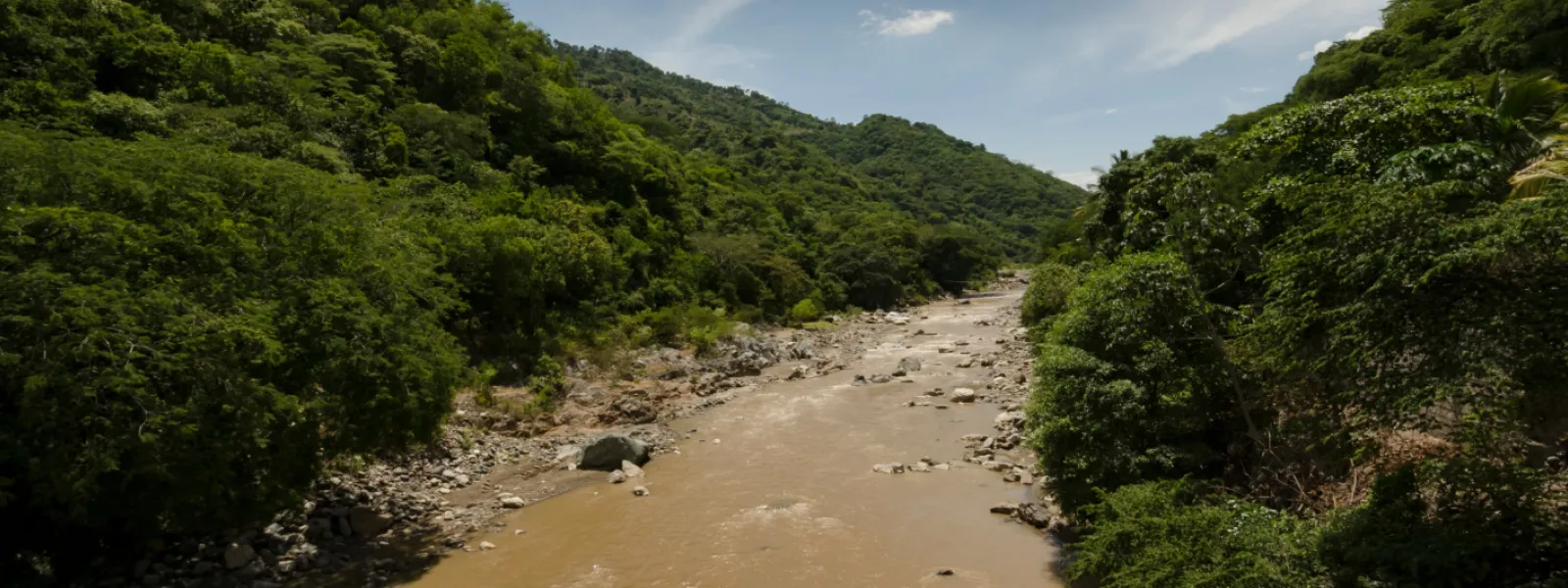
The Motagua River basin—Guatemala’s largest and most important river—is severely polluted with wastewater, solid waste, and other types of debris.
This is a cross-border issue because the Motagua’s polluted waters flow into the Caribbean Sea, reach the coast of Honduras, and threaten the Mesoamerican Reef System.
For decades, this has violated the rights to health, water, development, and a healthy environment of all the people living in the river basin.
In June 2025, the Poqomam Maya community of Santa Cruz Chinautla—supported by AIDA, the Indigenous Peoples’ Law Firm, and allied organizations—achieved an unprecedented legal victory to halt degradation in the basin. In response to the lawsuit it filed, a Guatemalan court ordered the municipality of Chinautla to comply with a series of obligations to curb the pollution of the area’s rivers and soil.
The government's response to the ruling has so far been limited to technical working group meetings. Meanwhile, the community continues to work toward the proper implementation of the ruling and to take other actions to defend its territory and its rights.
Background
The Motagua River, which is 486 km long, flows through 96 municipalities and 14 departments in Guatemala. It originates in Quiché, a department located in the northwest, and empties into the Caribbean Sea.
Polluting activities occur throughout the entire basin, including sub-basins and micro-basins. The largest volume of pollution comes from Guatemala City, the country’s capital, and is carried by the waters of the Las Vacas River, which in turn receives a large amount of waste from the Chinautla River.
The Chinautla River, which flows through the municipality of the same name, carries solid waste from a landfill located in Zone 3 of the capital—where trash from at least 14 municipalities in the department of Guatemala is dumped—as well as sewage generated by some 500,000 people living in the northern part of the capital, which undergoes no prior treatment.
Other sources of pollution include the numerous illegal dumps in the municipality of Chinautla, the waste that private vehicles and garbage trucks dump along the banks of its rivers, as well as the sand-mining companies—which began setting up operations in the area between 1996 and 1997—whose activities weaken the rivers' basins, causing solid waste to be more easily carried away by the river currents.
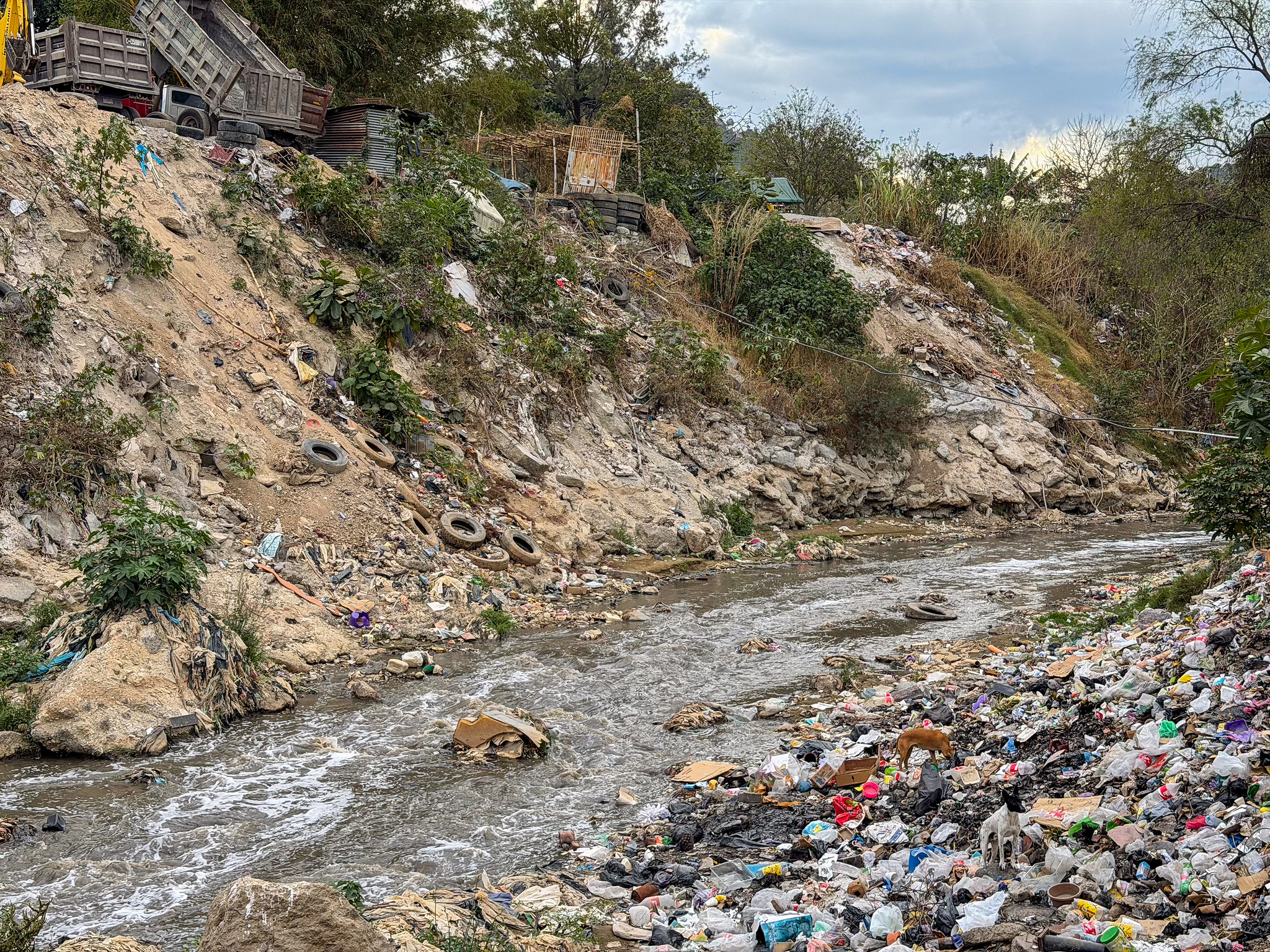
Photo: Mayela Sánchez García.
The situation extends beyond national borders. Every year, the Motagua River discharges some 20,000 metric tons of plastic into the Caribbean Sea, making it one of the rivers that contributes the most plastic pollution to the ocean worldwide, according to estimates contained in a 2025 report by the Inter-American Commission on Human Rights (IACHR).
The river flows into the Mesoamerican Reef at its mouth, so pollution also threatens to degrade one of the largest and most biodiverse transboundary reefs on the planet, which spans the territorial waters of Belize, Guatemala, Honduras, and Mexico.
In addition, the contaminated water reaches the coast of Honduras and spreads into Amatique Bay, located along the eastern coast of Guatemala, affecting the Caribbean Sea.
The roots of this chronic, cross-border problem are structural. Data from the Integrated Environmental Management of the Motagua River Basin project, funded by the United Nations Development Program (UNDP), show that in Guatemala, 66% of municipal solid waste is not collected, and there is no guarantee that the remaining 34% is disposed of properly. Furthermore, of all landfills nationwide, 88.32% are illegal or lack municipal authorization.
In other words, the core issues that need to be addressed are the mismanagement of solid waste and water resources in Guatemala; noncompliance with existing regulations on wastewater discharge and the disposal and treatment of solid waste and residues; and the lack of a water law.
The Poqomam Maya people's quest for justice
The rivers of Santa Cruz Chinautla, a community of the Poqomam Maya people located just twelve kilometers from Guatemala City, have become conduits of pollution that are degrading the Motagua River.
For decades, the local population has seen its health and livelihoods—including pottery, one of the main economic activities and a source of identity—damaged due to the lack of waste management in the municipality of Chinautla and the urban area of the country’s capital, as well as the activities of sand-mining companies.
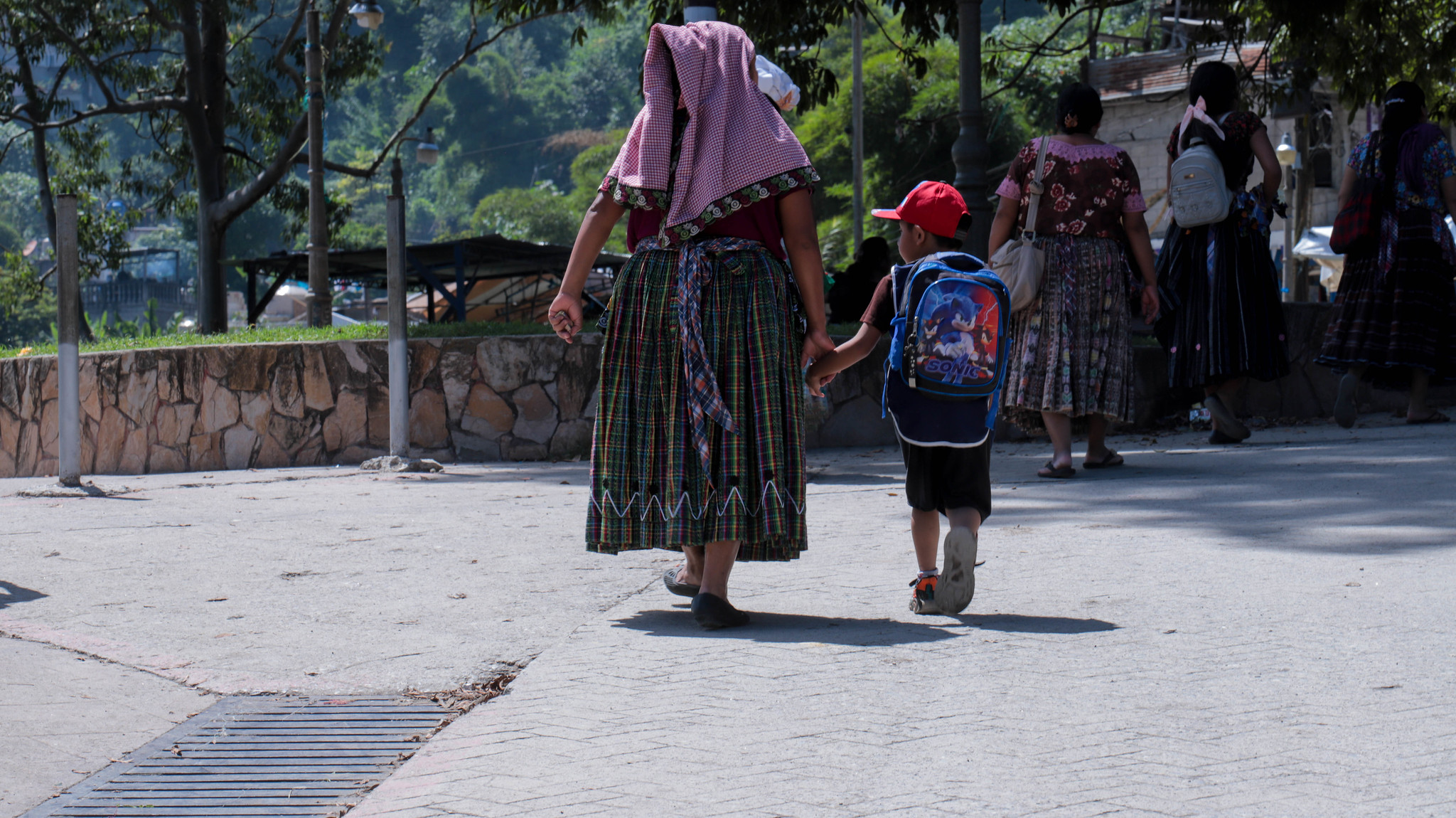
Photo: Mario Winter.
Voices for the Motagua River: Olga Vázquez.
Voices for the Motagua River: Nazario Pascual.
In early 2000, the Maya community organized to stop sand mining on their territory. At that time, the companies held mining permits that remained valid through 2021 and 2022. And although the permits expired, some companies continued to operate after requesting extensions. In June 2022, the indigenous authorities of the Poqomam people began a sit-in protest in front of the Piedrinera San Luis company, which they maintained for four years.
In July 2024, the Special Rapporteur on Economic, Social, Cultural, and Environmental Rights of the IACHR visited Santa Cruz Chinautla. During his visit, traditional authorities and community members spoke about the environmental, water-related, health, economic, and cultural impacts of the pollution in their rivers.
That same year, in October, the community—with support from AIDA, the Indigenous Peoples’ Law Firm, and partner organizations—filed a lawsuit (petition for amparo) against the municipality of Chinautla over its failure to take measures to address the contamination of its rivers and soil caused by improper solid waste management and the existence of illegal landfills.
AIDA’s scientific team, together with local residents and community authorities, collected key information on illegal landfills in the area. This community science initiative supported the litigation by highlighting the severity of the pollution, demonstrating the ongoing use of such practices, and providing evidence of the municipal authorities’ failure to fulfill their legal obligations regarding waste management.
Learn more about this community science initiative.
In June 2025, the Poqomam community won the support of the Guatemalan justice system when a constitutional court ordered the municipality of Chinautla to effectively address the claims in the lawsuit aimed at stopping the pollution of the rivers and soil in Santa Cruz Chinautla.
This is the first time a Guatemalan court has recognized a community's right to a healthy environment and its central role in finding solutions.
Find out the details of the legal victory.
Current situation
Since the ruling was issued, the municipality of Chinautla has held a series of “technical working groups” with representatives from the central government, civil society, and the community. A smaller group of technical experts was later created to develop a work plan with clear goals. Several months have passed without the municipality convening these working groups.
Furthermore, in December 2025, the IACHR noted in its report Human Rights Situation in Guatemala that the Motagua River basin is facing a severe pollution crisis that has had profound impacts on biodiversity and has resulted in systematic violations of the human rights of local communities, including the Maya Poqomam people.
And in May 2026, the Ministry of the Environment and Natural Resources revoked the license of the sand mining company Piedrinera San Luis for "failure to comply with environmental commitments."
AIDA continues to monitor the implementation of the court ruling to ensure the right to a healthy environment for the Poqomam Maya community and all those living in the Motagua River basin. Meanwhile, the residents of Santa Cruz Chinautla remain organized and mobilized to improve their environment and defend their rights.
Related projects
Lead Astray: What Happens when an American Company Offshores Pollution?
An article from Mother Jones magazine detailing the horrible effects of the Doe Run Peru smelter on the community of La Oroya.
Read morePublic Hearing on the Angostura Mine Suspended: AIDA Publishes Brief Urging the Colombian Government to Protect the Páramos (Spanish Text Only)
PARA PUBLICACION INMEDIATA CONTACTO: Natalia Jiménez, [email protected] Teléfono: (+57) 310-5734176 Suspendida audiencia pública del proyecto minero Angostura: AIDA publica su intervención en la que insta al Gobierno colombiano a proteger los páramos. Marzo 8 de 2011, Bogotá, Colombia – La audiencia pública programada para el viernes 4 de marzo en la ciudad de Bucaramanga (Departamento de Santander, Colombia) por el Ministerio de Ambiente, Vivienda y Desarrollo Territorial en el proceso de licenciamiento ambiental del proyecto de gran minería de oro a cielo abierto "Angostura" fue suspendida debido a situaciones que impidieron el normal desarrollo de la misma. Por esta razón, la Asociación Interamericana para la Defensa del Ambiente, AIDA hará llegar al gobierno colombiano su escrito de intervención sobre las obligaciones internacionales y constitucionales del Estado colombiano de proteger los páramos, que no pudo presentar en la suspendida audiencia. En los próximos días, el Ministerio de Ambiente, Vivienda y Desarrollo Territorial colombiano deberá pronunciarse sobre la cancelación total de la audiencia o sobre la posibilidad de reanudarla. Estaremos atentos a dicha notificación y nos aseguraremos de que los argumentos aportados por AIDA sean conocidos abiertamente y considerados dentro del proceso de solicitud de la Licencia Ambiental al proyecto Angostura. La misión de AIDA es fortalecer la capacidad de las personas para garantizar su derecho individual y colectivo a un ambiente sano por medio del desarrollo, aplicación y cumplimiento efectivo de la legislación nacional e internacional. La protección de agua dulce es una de nuestras líneas mediante la cual buscamos proteger el derecho al agua y asegurar recursos de agua dulce adecuados para las comunidades y los ecosistemas en las Américas AIDA, 426 17th Street, Oakland, CA 94612 T. (510) 550-6753, F. (510) 550-6740 AIDA Atlixco 138, Col. Condesa, México, DF, 06140, T/F (5255) 52120141 AIDA Diagonal 40 A No 14 – 75, Tel. (57 1) 3381277, Bogotá - Colombia AIDA Costa Rica, San Pedro c/o Centro de Derecho Ambiental y de los Recursos Naturales (CEDARENA) T. (506) 22837080 E-mail: [email protected], Website: www.aida-americas.org
Read moreThe Colombian Government Should Reject the Angosture Mining Project in the Páramos (Spanish Text Only)
PARA PUBLICACION INMEDIATA CONTACTO: Natalia Jiménez, [email protected] Teléfono: (+57) 310-5734176 El Estado colombiano debe rechazar proyecto de gran minería de oro "Angostura" en zona de páramo Desconocería obligaciones constitucionales internacionales Marzo 4 de 2011, Bucaramanga, Colombia – Hoy, La Asociación Interamericana para la Defensa del Ambiente (AIDA) instará al gobierno colombiano a detener un proyecto de gran minería de oro y otros metales que sería un precedente perjudicial para los ecosistemas frágiles en América Latina. El proyecto de minería a cielo abierto Angostura, planeado en el páramo de Santurbán, se encuentra en proceso de aprobación por parte del Ministerio de Ambiente, Vivienda y Desarrollo Territorial colombiano. Hoy se celebra una audiencia pública en la que el Ministerio recibirá argumentos de diferentes sectores. AIDA argumentará que las obligaciones internacionales y constitucionales del Estado colombiano de proteger el ambiente, especialmente áreas de gran importancia ecológica como los páramos, impiden la autorización. "Los páramos son ecosistemas altamente frágiles y la minería a cielo abierto causaría daños graves e irreversibles," dijo Natalia Jiménez, abogada de AIDA. "De acuerdo con la Constitución Política y los Principios de Río, la Convención de Biodiversidad y la de Cambio Climático, todos ratificados por Colombia, el Estado está obligado a conservar los páramos y procurar su intangibilidad." De ser aprobado el proyecto Angostura afectaría de forma definitiva por lo menos 575 ha del páramo de Santurbán (más del 50%), pudiendo afectar un área mayor. En Colombia, como en el resto de la región Andina en los páramos se origina la mayor parte del agua dulce que consumen los habitantes. Tienen una alta capacidad de purificar el ambiente, de estabilizar los suelos y el clima, de prevenir los deslaves y los derrumbes y de contener un alto nivel de animales y plantas. En efecto, son el hábitat de especies únicas en el mundo como el oso de anteojos y el cóndor de los Andes. La Procuraduría General de Colombia, miembros del Parlamento Andino y ex ministros de ambiente, así como organizaciones y expertos ambientales se oponen a la licencia. El proyecto carece de un adecuado Estudio de Impacto Ambiental integral, pues los impactos de la mina y los de la infraestructura complementaria, se analizan en dos procesos de forma fragmentada. Por ello, AIDA también solicita que el Ministerio los unifique y analice el impacto global del proyecto. Así lo ordenan los estándares internacionales y la Corte Suprema de Canadá, país de origen de la empresa Greystar Resources Ltds. que promueve el proyecto. La misión de AIDA es fortalecer la capacidad de las personas para garantizar su derecho individual y colectivo a un ambiente sano por medio del desarrollo, aplicación y cumplimiento efectivo de la legislación nacional e internacional. La protección de agua dulce es una de nuestras líneas mediante la cual buscamos proteger el derecho al agua y asegurar recursos de agua dulce adecuados para las comunidades y los ecosistemas en las Américas. AIDA, 426 17th Street, Oakland, CA 94612 T. (510) 550-6753, F. (510) 550-6740 AIDA Atlixco 138, Col. Condesa, México, DF, 06140, T/F (5255) 52120141 AIDA Diagonal 40 A No 14 – 75, Tel. (57 1) 3381277, Bogotá - Colombia AIDA Costa Rica, San Pedro c/o Centro de Derecho Ambiental y de los Recursos Naturales (CEDARENA) T. (506) 22837080 E-mail: [email protected], Website: www.aida-americas.org
Read more