
Project
Shutterstock.
Pollution of the Motagua River in Guatemala: The Poqomam Maya people’s quest for environmental justice
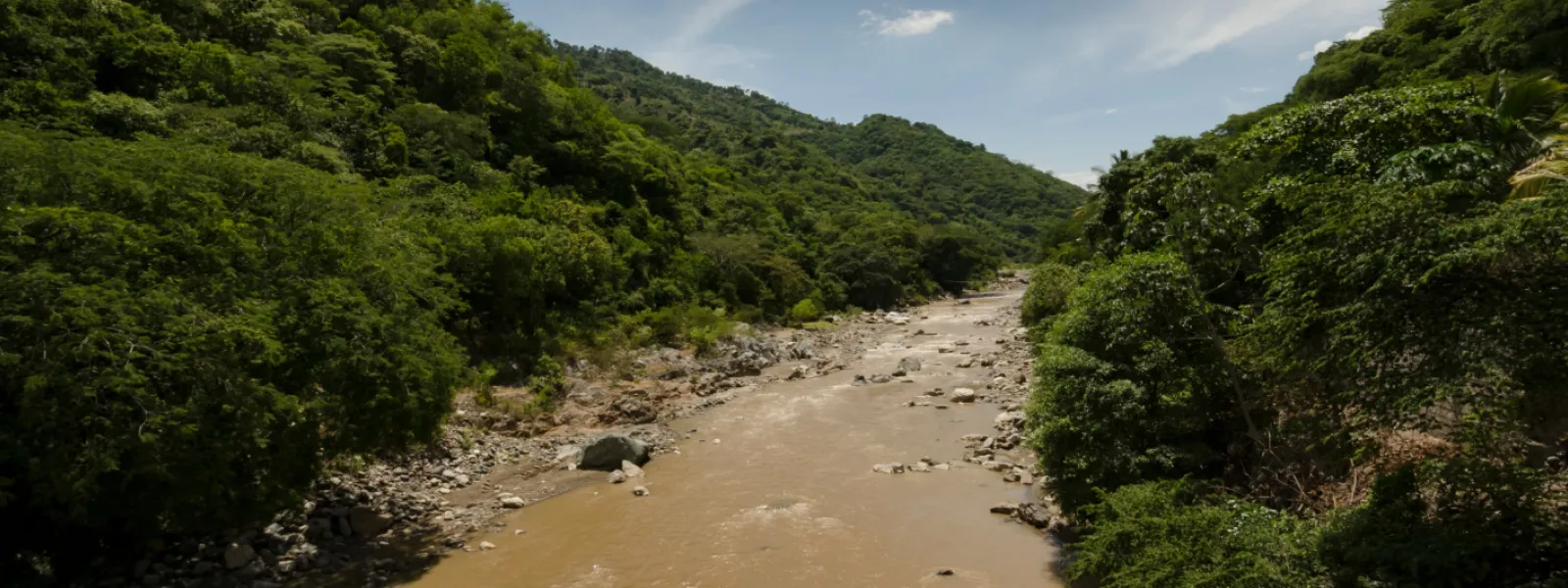
The Motagua River basin—Guatemala’s largest and most important river—is severely polluted with wastewater, solid waste, and other types of debris.
This is a cross-border issue because the Motagua’s polluted waters flow into the Caribbean Sea, reach the coast of Honduras, and threaten the Mesoamerican Reef System.
For decades, this has violated the rights to health, water, development, and a healthy environment of all the people living in the river basin.
In June 2025, the Poqomam Maya community of Santa Cruz Chinautla—supported by AIDA, the Indigenous Peoples’ Law Firm, and allied organizations—achieved an unprecedented legal victory to halt degradation in the basin. In response to the lawsuit it filed, a Guatemalan court ordered the municipality of Chinautla to comply with a series of obligations to curb the pollution of the area’s rivers and soil.
The government's response to the ruling has so far been limited to technical working group meetings. Meanwhile, the community continues to work toward the proper implementation of the ruling and to take other actions to defend its territory and its rights.
Background
The Motagua River, which is 486 km long, flows through 96 municipalities and 14 departments in Guatemala. It originates in Quiché, a department located in the northwest, and empties into the Caribbean Sea.
Polluting activities occur throughout the entire basin, including sub-basins and micro-basins. The largest volume of pollution comes from Guatemala City, the country’s capital, and is carried by the waters of the Las Vacas River, which in turn receives a large amount of waste from the Chinautla River.
The Chinautla River, which flows through the municipality of the same name, carries solid waste from a landfill located in Zone 3 of the capital—where trash from at least 14 municipalities in the department of Guatemala is dumped—as well as sewage generated by some 500,000 people living in the northern part of the capital, which undergoes no prior treatment.
Other sources of pollution include the numerous illegal dumps in the municipality of Chinautla, the waste that private vehicles and garbage trucks dump along the banks of its rivers, as well as the sand-mining companies—which began setting up operations in the area between 1996 and 1997—whose activities weaken the rivers' basins, causing solid waste to be more easily carried away by the river currents.
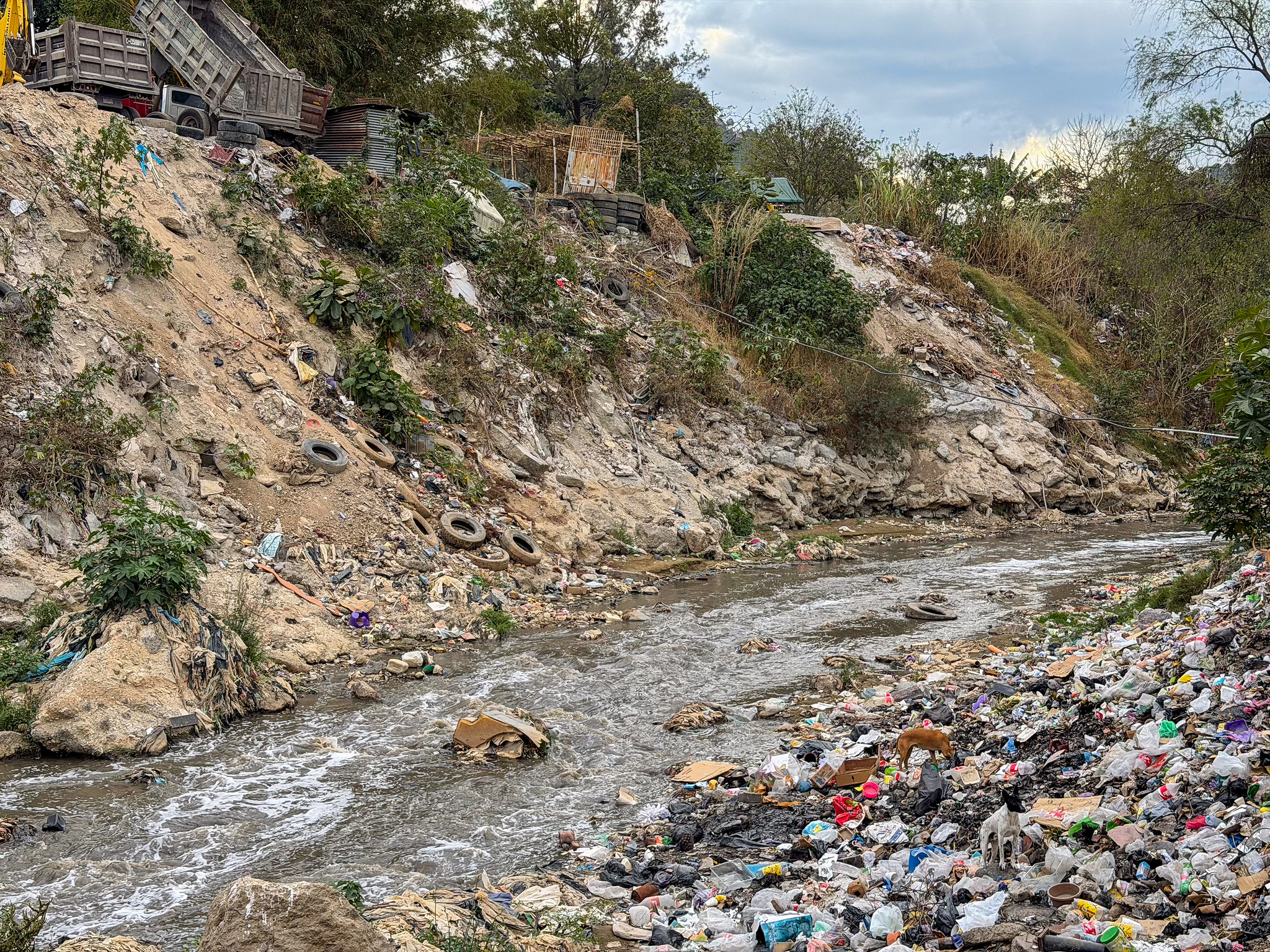
Photo: Mayela Sánchez García.
The situation extends beyond national borders. Every year, the Motagua River discharges some 20,000 metric tons of plastic into the Caribbean Sea, making it one of the rivers that contributes the most plastic pollution to the ocean worldwide, according to estimates contained in a 2025 report by the Inter-American Commission on Human Rights (IACHR).
The river flows into the Mesoamerican Reef at its mouth, so pollution also threatens to degrade one of the largest and most biodiverse transboundary reefs on the planet, which spans the territorial waters of Belize, Guatemala, Honduras, and Mexico.
In addition, the contaminated water reaches the coast of Honduras and spreads into Amatique Bay, located along the eastern coast of Guatemala, affecting the Caribbean Sea.
The roots of this chronic, cross-border problem are structural. Data from the Integrated Environmental Management of the Motagua River Basin project, funded by the United Nations Development Program (UNDP), show that in Guatemala, 66% of municipal solid waste is not collected, and there is no guarantee that the remaining 34% is disposed of properly. Furthermore, of all landfills nationwide, 88.32% are illegal or lack municipal authorization.
In other words, the core issues that need to be addressed are the mismanagement of solid waste and water resources in Guatemala; noncompliance with existing regulations on wastewater discharge and the disposal and treatment of solid waste and residues; and the lack of a water law.
The Poqomam Maya people's quest for justice
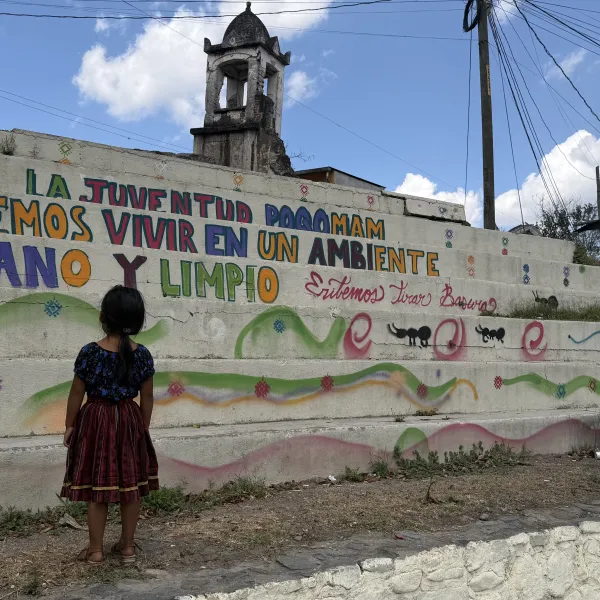
The rivers of Santa Cruz Chinautla, a community of the Poqomam Maya people located just twelve kilometers from Guatemala City, have become conduits of pollution that are degrading the Motagua River.
For decades, the local population has seen its health and livelihoods—including pottery, one of the main economic activities and a source of identity—damaged due to the lack of waste management in the municipality of Chinautla and the urban area of the country’s capital, as well as the activities of sand-mining companies.
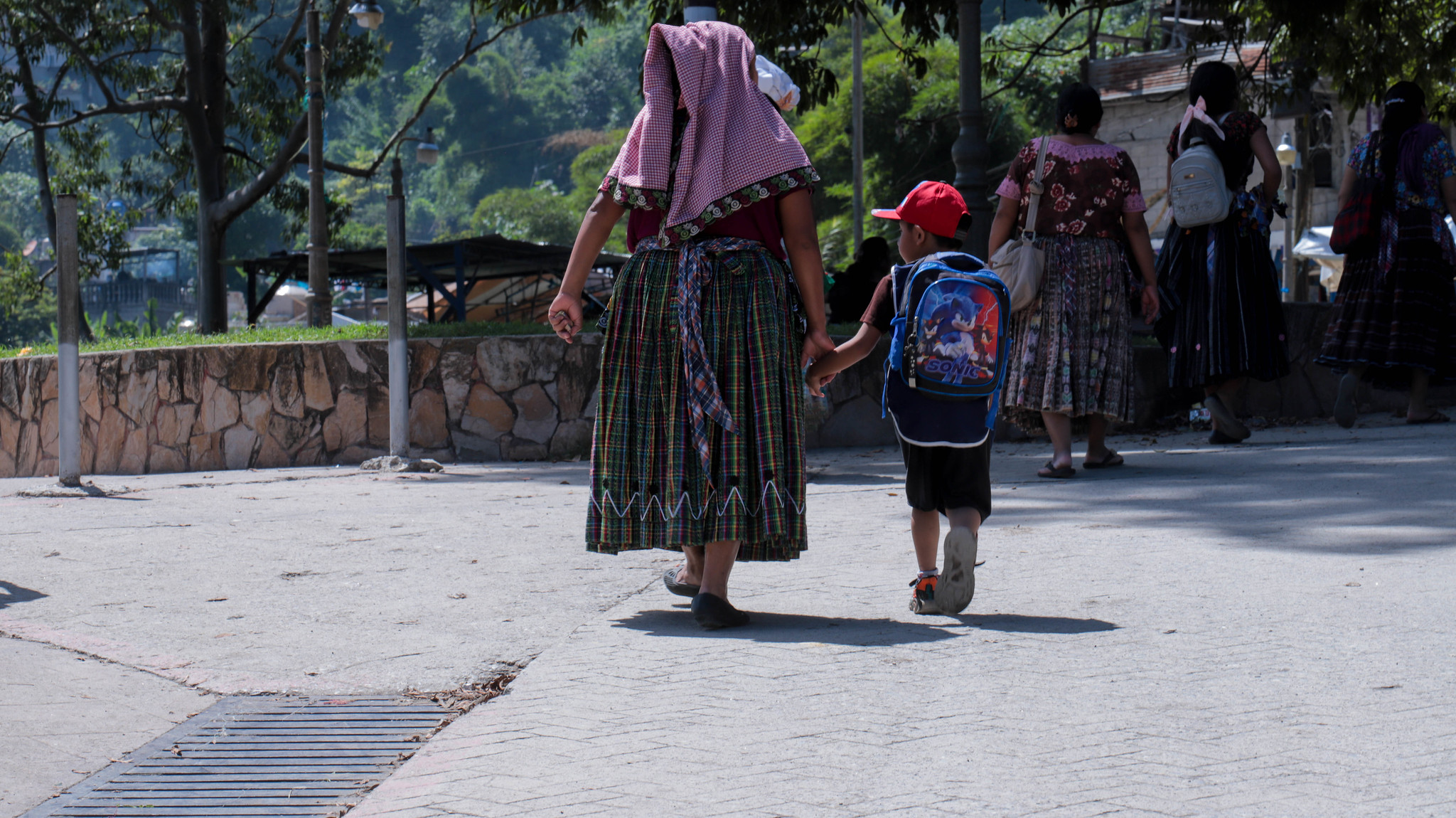
Photo: Mario Winter.
Voices for the Motagua River: Olga Vázquez.
Voices for the Motagua River: Nazario Pascual.
In early 2000, the Maya community organized to stop sand mining on their territory. At that time, the companies held mining permits that remained valid through 2021 and 2022. And although the permits expired, some companies continued to operate after requesting extensions. In June 2022, the indigenous authorities of the Poqomam people began a sit-in protest in front of the Piedrinera San Luis company, which they maintained for four years.
In July 2024, the Special Rapporteur on Economic, Social, Cultural, and Environmental Rights of the IACHR visited Santa Cruz Chinautla. During his visit, traditional authorities and community members spoke about the environmental, water-related, health, economic, and cultural impacts of the pollution in their rivers.
That same year, in October, the community—with support from AIDA, the Indigenous Peoples’ Law Firm, and partner organizations—filed a lawsuit (petition for amparo) against the municipality of Chinautla over its failure to take measures to address the contamination of its rivers and soil caused by improper solid waste management and the existence of illegal landfills.
AIDA’s scientific team, together with local residents and community authorities, collected key information on illegal landfills in the area. This community science initiative supported the litigation by highlighting the severity of the pollution, demonstrating the ongoing use of such practices, and providing evidence of the municipal authorities’ failure to fulfill their legal obligations regarding waste management.
Learn more about this community science initiative.
In June 2025, the Poqomam community won the support of the Guatemalan justice system when a constitutional court ordered the municipality of Chinautla to effectively address the claims in the lawsuit aimed at stopping the pollution of the rivers and soil in Santa Cruz Chinautla.
This is the first time a Guatemalan court has recognized a community's right to a healthy environment and its central role in finding solutions.
Find out the details of the legal victory.
Current situation
Since the ruling was issued, the municipality of Chinautla has held a series of “technical working groups” with representatives from the central government, civil society, and the community. A smaller group of technical experts was later created to develop a work plan with clear goals. Several months have passed without the municipality convening these working groups.
Furthermore, in December 2025, the IACHR noted in its report Human Rights Situation in Guatemala that the Motagua River basin is facing a severe pollution crisis that has had profound impacts on biodiversity and has resulted in systematic violations of the human rights of local communities, including the Maya Poqomam people.
And in May 2026, the Ministry of the Environment and Natural Resources revoked the license of the sand mining company Piedrinera San Luis for "failure to comply with environmental commitments."
AIDA continues to monitor the implementation of the court ruling to ensure the right to a healthy environment for the Poqomam Maya community and all those living in the Motagua River basin. Meanwhile, the residents of Santa Cruz Chinautla remain organized and mobilized to improve their environment and defend their rights.
Related projects
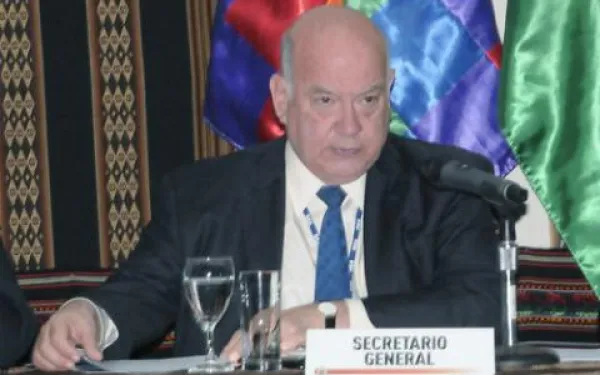
Who can protect us if the Inter-American System of Human Rights is weakened?
By Astrid Puentes, co-director of AIDA, @astridpuentes I’m writing from Cochabamba, where I’m attending the 42nd General Assembly of the Organization of American States (OAS). This is the first time I have come to Bolivia and to a General Assembly. I am here to support our efforts to truly “strengthen the Inter-American System” and to stand against proposals from OAS member states that could limit the independence and effectiveness of the Inter-American Commission on Human Rights (IACHR). Our goal is to preserve the autonomy and role of the IACHR, and, thus, to guarantee human rights in the region: To protect our rights, yours and mine. Here’s a summary of what is a complex story. A number of member states launched an effort to strengthen the Inter-American System of the Protection of Human Rights in 2011, two years after the IACHR and the Inter-American Court of Human Rights modified their rules of procedure. This effort is a direct response from several member states after the IACHR brought up concerns about human rights in their countries. A working group was then created last year to evaluate how the Inter-American System of Human Rights could be “strengthened.” The group produced a report that the Commission has responded to and that NGOs like ours will also comment on. A few days ago, the Secretary General of the OAS, José Miguel Insulza, published a report on the subject. Personally, I think it is inadequate because several of his recommendations will actually weaken, and not strengthen, the system. For example, he says there is “a loophole in the statute of the commission on the figure of the precautionary measures that could be filled by... the General Assembly of the OAS.” It is worth mentioning that it is the IACHR that determines its own rules, a way to ensure its independence. Insulza’s report left out issues he’d been asked to address, such as options for improving the financing for the Inter-American System. Based on his recommendations, the result would be contrary to the same objective that Insulza and member states have set as their main goal. Fortunately, Insulza in his declarations during the General Assembly dismissed some of the recommendations that could have drained the strength of the Inter-American Human Rights System. The important points of the “strengthening” process that will be discussed at the General Assembly in Cochabamba – and no doubt afterwards – include: Financing the Inter-American Human Rights System. This is essential, as you can’t ask the IACHR to operate efficiently on a meager budget. “Unify in a constructive manner” what the member states and the IACHR understand as the precautionary measures. This is an issue presented by some member states and brought up by Secretary Insulza. It was frankly a surprise that this point came from the very report of the secretary for two reasons: a) abiding by what the system dictates is part of what member states already agreed to in creating the System, and b) because the Inter-American Court has been very clear in determining that the measures are obligatory. What can we expect of member states? I mean, who likes to get their dirty laundry published in the media? This is not to say that they are acting irrationally. Whether the IACHR should have a greater role in promoting human rights than protecting them. That is to say, whether it should provide more advice to the member states on how to respect human rights, or rather review complaints of human rights violations that come its way. Pulling Ears To understand this process it is important to know the motivations that have prompted member states to push for these changes. Coincidentally, states like Brazil, Colombia, Ecuador, Peru and Venezuelawant “to strengthen” the system precisely when the IACHR has handed down important decisions against them, namely: 1. It has called on Brazil to suspend construction of the Belo Monte dam in Brazil for violating indigenous rights and threatening the environment, 2. The Report on Democracy and Human Rights in Venezuela exposed serious violations, 3. The severe human rights violations in Colombia have been included a number of times in Chapter IV of the commission’s annual report, 4. Ecuador has been questioned multiple times by the Special Rapporteur for Freedom of Expression, among other examples. A Conflict of Interests If we put this differently and speak instead of member states but of a director whose organization is about to hire a close relative, there would be no doubt that this would be declared incompatible because of a conflict of interests. Or, put even more plainly, if a referee was assigned to the final of the World Cup of Soccer and he had the same nationality as one of the teams, then obviously there would be protests from the other team. These impediments don’t exist in the OAS. The same member states against whom the complaints are made by the IACHR can modify its functions through the General Assembly. It is exactly for this reason that restraint is required even when they don’t agree with the System’s decisions. It is vital that the states respect the independence of the Inter-American System in discourse and practice. They must reiterate their compromise with the agreements dating back more than 60 years and support the bodies that were created for the very purpose of guaranteeing justice in cases of human rights violations. (This text in Spanish)
Read moreBelo Monte Dam controversy to be part of UN’s Review of Brazil’s Human Rights Record
Geneva, Switzerland. On May 25, the United Nations will examine the Brazilian government’s track record for human rights during its Universal Periodic Review (UPR) in Geneva, Switzerland. Central to this debate will be the multiple claims of human rights violations surrounding the construction of the Belo Monte Hydroelectric dam, slated for the Xingu River in Brazil. Many Brazilian and international groups have already sent extensive documentation to the UN highlighting the human rights violations suffered by the indigenous and rural communities in the dam’s path. The UN High Commissioner for Human Rights will present information from these and other reports as part of the review or the Brazilian government’s performance on its human rights obligations. Key to the controversy over the dam will be the lack of compliance with an April 2011 resolution from the Inter-American Commission on Human Rights (IACHR), an international human rights body of the Organization of American States. The Commission requested that the government halt the project and take steps to protect indigenous communities, including un-contacted tribes in voluntary isolation. Up until now, the Brazilian government has refused to either implement the IACHR’s resolution or dialogue with affected communities in the case. Two civil society reports sent by a coalition of Brazilian and international groups last November highlighted these and other problems with Brazil’s contentious hydroelectric project. The report concludes that the government did not consult with affected communities nor obtain their free, prior, and informed consent, as required by international human rights law. It also documents violations to the rights to life and health, and the possible forced displacement of nearly 40 thousand families. The two reports form part of a growing body of allegations regarding human rights violations related to the Brazilian government’s plans to push the construction of large dams in the Amazon region. “We hope that as a result of the UPR, the Brazilian government will take a hard look at the damage that its energy and hydropower policies are causing for the rights of indigenous and traditional peoples,” stated Astrid Puentes, Co-director of the Interamerican Association for Environmental Defense (AIDA), which co-authored the reports. “Brazil has a great opportunity to change its development model toward one that is truly sustainable and respects human rights.” According to Andressa Caldas, Director of the Brazilian human rights NGO, Global Justice, Belo Monte is now synonymous with violations of indigenous peoples’ rights and environmental irresponsibility. “The Brazilian government will have to respond to these allegations and is already expanding its delegation for the UPR with experts specifically to defend the Belo Monte dam. But there is no way to justify such an absurd project.” What is the UPR? The Universal Periodic Review is a proceeding in which all UN nations are reviewed every four years by the UN Human Rights Council, which is made up of representatives from different countries. During the process each country is given the opportunity to demonstrate the steps it has taken to improve the human rights situation and meet its obligations under international law.
Read morePrior consultation: An opportunity for life, respect and diversity
By Héctor Herrera, legal advisor, AIDA, @RJAColombia Colombia’s ethnic groups have decrees and laws that protect their cultural persity, that defend the individual and collective livelihood of these native and traditional peoples and communities. Article 6 of Convention No. 169 of the International Labour Organization (ILO) stipulates that indigenous peoples have the right to prior consultation. That means that they should participate in defining the measures that could have a direct impact on them, whether legislative (such as laws or decrees) or administrative (environmental permits for highways, dams, mines, oil wells, and the like). The negotiations should be carried out in good faith and with the goal of reaching agreements on all sides. This has become very important in Colombia, a multiethnic, multicultural, and diverse country. According to the Luis Ángel Arango Library, 65 indigenous languages in 12 language families are spoken in Colombia, of which 34 have less than one thousand speakers. Traditional Afro groups speak two different Creole languages. Yet all of these languages are in danger. Colombia also is extremely diverse in biological species globally, ranking first in birds, second in amphibians and butterflies, third in reptiles, and fourth in mammals, according to the Humboldt Institute. Colombian newspaper El Espectador reported 2011 data showing that 10% of all biodiversity is found on 1% of the planet’s surface. In Columbia, 29.8% of this is collective indigenous territory and 5% is collective traditional Afro territory. Understanding this, prior consultation emerges as an opportunity to protect the cultural and ethnic persity of Colombia and defend the inpidual and collective livelihood of the many native and traditional peoples and communities. It is, too, an opportunity to protect the ecosystems that these ethnic groups inhabit as well as to protect life in all its forms. This does not mean forcing anybody to adopt a conservation, extractive, or development model. It simply means making sure that an effective space is provided for clear, honest, and intercultural dialogue with ethnic groups on measures that could affect them, whether legislative or administrative measures or national laws or extractive mining projects. This is completely in line with the stipulations of Article 6 of Convention No. 169 of the ILO . This right has also been recognized in numerous national and international legal documents. On the international level, we have the United Nations Declaration on the Rights of Indigenous Peoples, adopted in 2007 (PDF file). In Colombia, we have the Political Constitution, which protects the rights of ethnic groups to their collective territory and the rights of all of society to a healthy environment. With the backing of international legal documents and the Political Constitution, the Constitutional Court of Colombia upheld the right to prior consultation for the “Embera indigenous people” in relation to the construction of the Urrá dam in 1998 and for Amazon indigenous peoples on the fumigation of illegal crops in 2003. In other cases, the High Court declared unconstitutional the National Development Plan of 2006-2010, the forestry law of 2006 and the mining code reform of 2010 because the proponents had not consulted with ethnic groups. There are yet more cases outside Colombia, such as Bolivia with the Multinational Constitution of 2009 and Ecuador with the Intercultural and Multinational Constitution of 1998, both of which recognize the right to prior consultation. So too Peru, where a law on this right was just passed this year. Culture, language and a view of the world – all of these can live on through time if we respect them and guarantee people’s rights, including the right to prior consultation. The protection of this right could also contribute to the protection of important ecosystems and of biological persity, both of which are vital issues as we face unprecedented climate change and environmental degradation.
Read more