
Project
Shutterstock.
Pollution of the Motagua River in Guatemala: The Poqomam Maya people’s quest for environmental justice
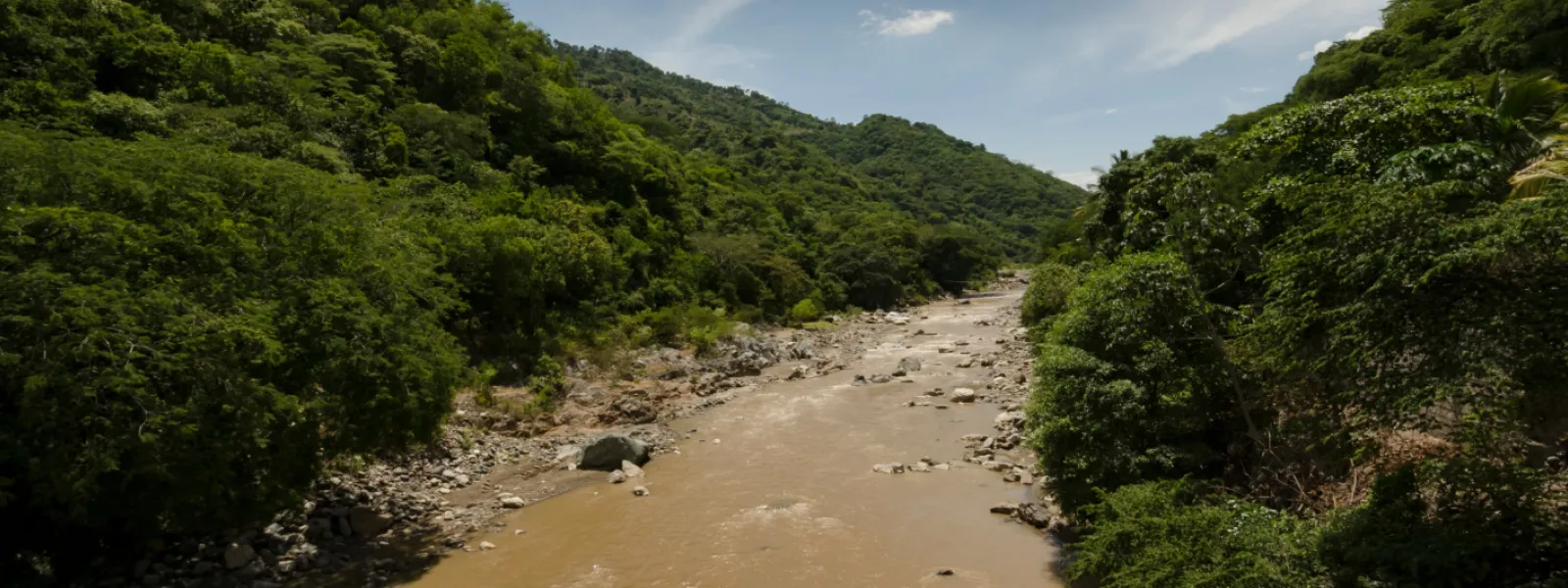
The Motagua River basin—Guatemala’s largest and most important river—is severely polluted with wastewater, solid waste, and other types of debris.
This is a cross-border issue because the Motagua’s polluted waters flow into the Caribbean Sea, reach the coast of Honduras, and threaten the Mesoamerican Reef System.
For decades, this has violated the rights to health, water, development, and a healthy environment of all the people living in the river basin.
In June 2025, the Poqomam Maya community of Santa Cruz Chinautla—supported by AIDA, the Indigenous Peoples’ Law Firm, and allied organizations—achieved an unprecedented legal victory to halt degradation in the basin. In response to the lawsuit it filed, a Guatemalan court ordered the municipality of Chinautla to comply with a series of obligations to curb the pollution of the area’s rivers and soil.
The government's response to the ruling has so far been limited to technical working group meetings. Meanwhile, the community continues to work toward the proper implementation of the ruling and to take other actions to defend its territory and its rights.
Background
The Motagua River, which is 486 km long, flows through 96 municipalities and 14 departments in Guatemala. It originates in Quiché, a department located in the northwest, and empties into the Caribbean Sea.
Polluting activities occur throughout the entire basin, including sub-basins and micro-basins. The largest volume of pollution comes from Guatemala City, the country’s capital, and is carried by the waters of the Las Vacas River, which in turn receives a large amount of waste from the Chinautla River.
The Chinautla River, which flows through the municipality of the same name, carries solid waste from a landfill located in Zone 3 of the capital—where trash from at least 14 municipalities in the department of Guatemala is dumped—as well as sewage generated by some 500,000 people living in the northern part of the capital, which undergoes no prior treatment.
Other sources of pollution include the numerous illegal dumps in the municipality of Chinautla, the waste that private vehicles and garbage trucks dump along the banks of its rivers, as well as the sand-mining companies—which began setting up operations in the area between 1996 and 1997—whose activities weaken the rivers' basins, causing solid waste to be more easily carried away by the river currents.
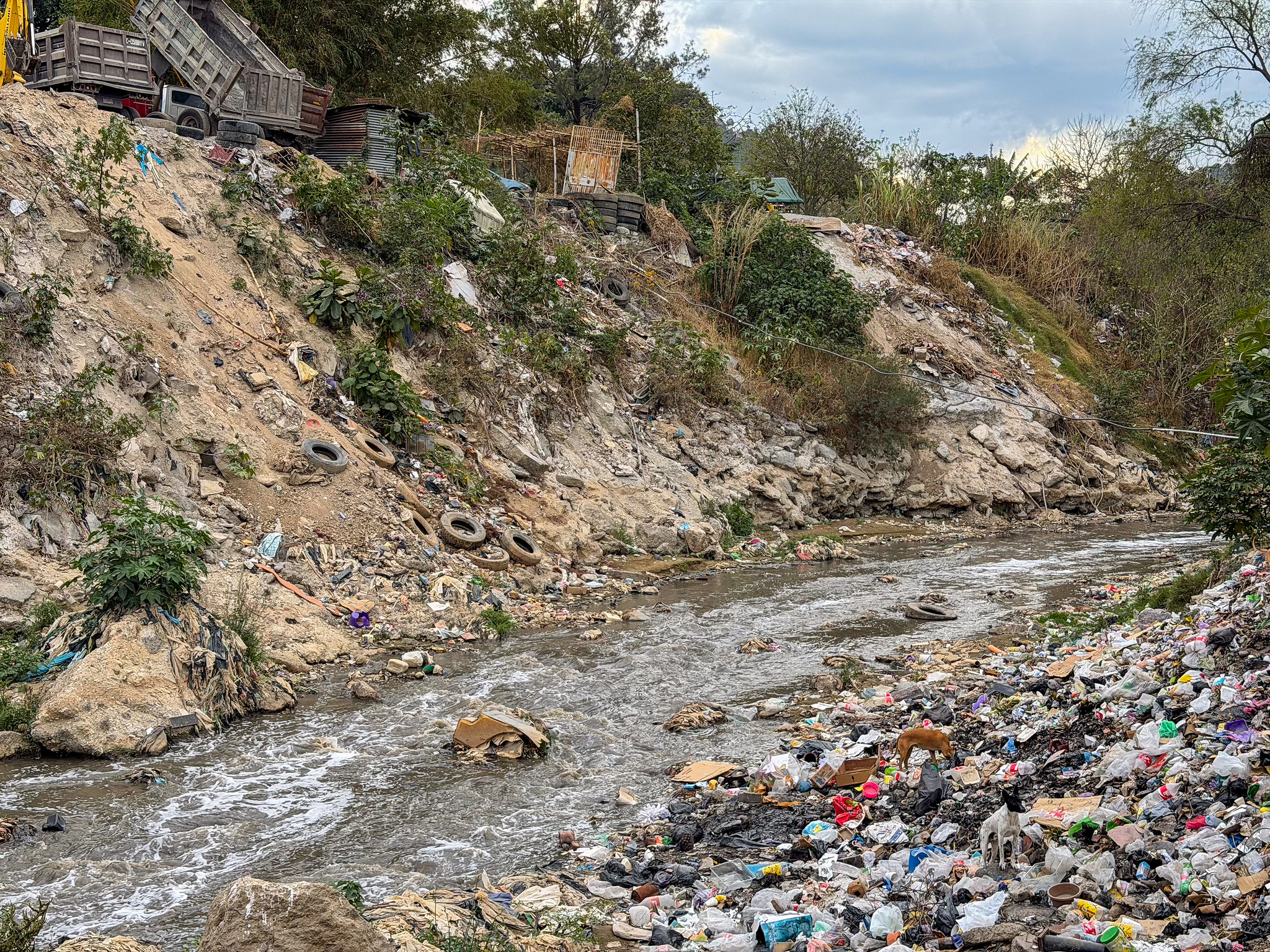
Photo: Mayela Sánchez García.
The situation extends beyond national borders. Every year, the Motagua River discharges some 20,000 metric tons of plastic into the Caribbean Sea, making it one of the rivers that contributes the most plastic pollution to the ocean worldwide, according to estimates contained in a 2025 report by the Inter-American Commission on Human Rights (IACHR).
The river flows into the Mesoamerican Reef at its mouth, so pollution also threatens to degrade one of the largest and most biodiverse transboundary reefs on the planet, which spans the territorial waters of Belize, Guatemala, Honduras, and Mexico.
In addition, the contaminated water reaches the coast of Honduras and spreads into Amatique Bay, located along the eastern coast of Guatemala, affecting the Caribbean Sea.
The roots of this chronic, cross-border problem are structural. Data from the Integrated Environmental Management of the Motagua River Basin project, funded by the United Nations Development Program (UNDP), show that in Guatemala, 66% of municipal solid waste is not collected, and there is no guarantee that the remaining 34% is disposed of properly. Furthermore, of all landfills nationwide, 88.32% are illegal or lack municipal authorization.
In other words, the core issues that need to be addressed are the mismanagement of solid waste and water resources in Guatemala; noncompliance with existing regulations on wastewater discharge and the disposal and treatment of solid waste and residues; and the lack of a water law.
The Poqomam Maya people's quest for justice
The rivers of Santa Cruz Chinautla, a community of the Poqomam Maya people located just twelve kilometers from Guatemala City, have become conduits of pollution that are degrading the Motagua River.
For decades, the local population has seen its health and livelihoods—including pottery, one of the main economic activities and a source of identity—damaged due to the lack of waste management in the municipality of Chinautla and the urban area of the country’s capital, as well as the activities of sand-mining companies.
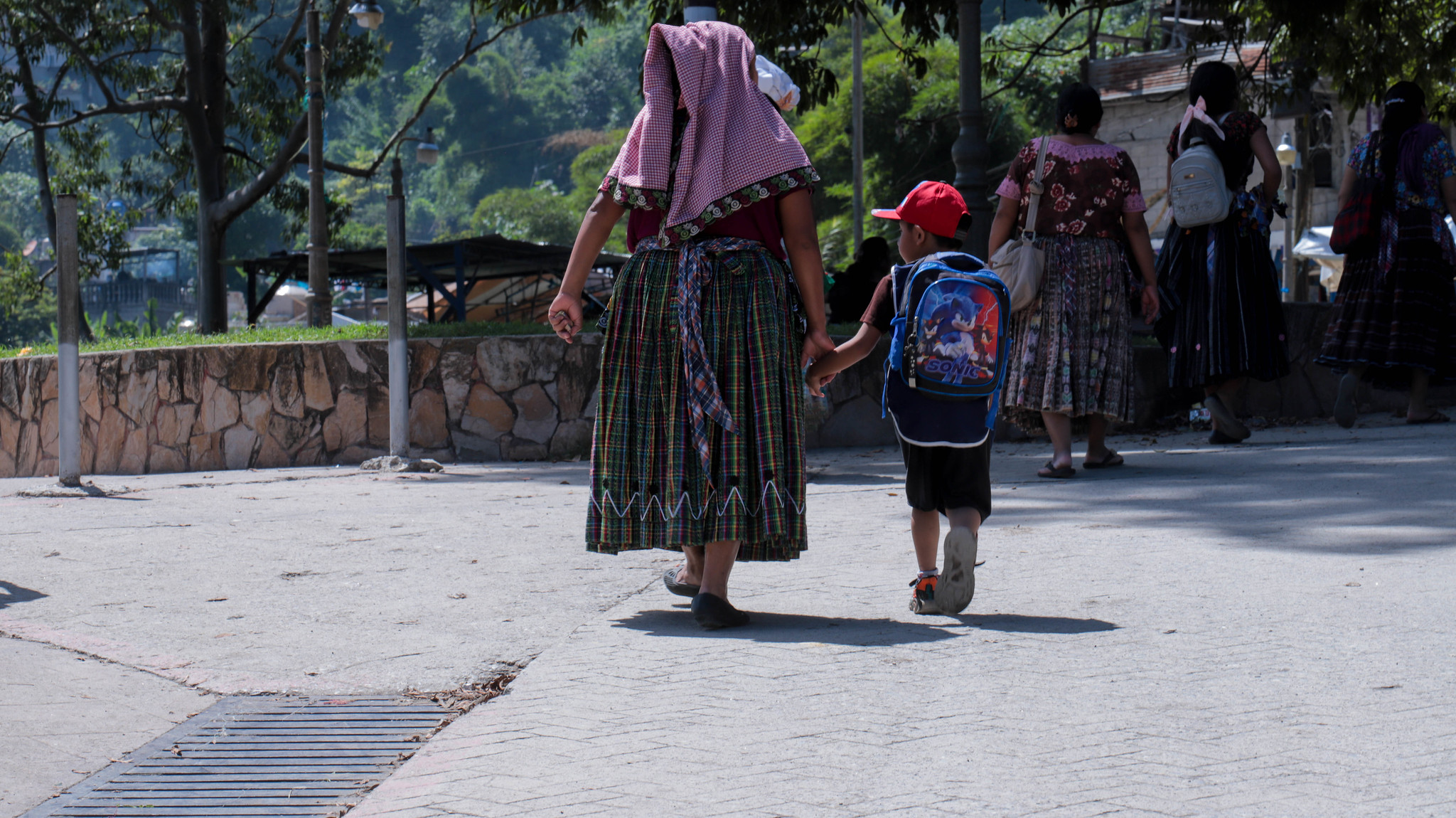
Photo: Mario Winter.
Voices for the Motagua River: Olga Vázquez.
Voices for the Motagua River: Nazario Pascual.
In early 2000, the Maya community organized to stop sand mining on their territory. At that time, the companies held mining permits that remained valid through 2021 and 2022. And although the permits expired, some companies continued to operate after requesting extensions. In June 2022, the indigenous authorities of the Poqomam people began a sit-in protest in front of the Piedrinera San Luis company, which they maintained for four years.
In July 2024, the Special Rapporteur on Economic, Social, Cultural, and Environmental Rights of the IACHR visited Santa Cruz Chinautla. During his visit, traditional authorities and community members spoke about the environmental, water-related, health, economic, and cultural impacts of the pollution in their rivers.
That same year, in October, the community—with support from AIDA, the Indigenous Peoples’ Law Firm, and partner organizations—filed a lawsuit (petition for amparo) against the municipality of Chinautla over its failure to take measures to address the contamination of its rivers and soil caused by improper solid waste management and the existence of illegal landfills.
AIDA’s scientific team, together with local residents and community authorities, collected key information on illegal landfills in the area. This community science initiative supported the litigation by highlighting the severity of the pollution, demonstrating the ongoing use of such practices, and providing evidence of the municipal authorities’ failure to fulfill their legal obligations regarding waste management.
Learn more about this community science initiative.
In June 2025, the Poqomam community won the support of the Guatemalan justice system when a constitutional court ordered the municipality of Chinautla to effectively address the claims in the lawsuit aimed at stopping the pollution of the rivers and soil in Santa Cruz Chinautla.
This is the first time a Guatemalan court has recognized a community's right to a healthy environment and its central role in finding solutions.
Find out the details of the legal victory.
Current situation
Since the ruling was issued, the municipality of Chinautla has held a series of “technical working groups” with representatives from the central government, civil society, and the community. A smaller group of technical experts was later created to develop a work plan with clear goals. Several months have passed without the municipality convening these working groups.
Furthermore, in December 2025, the IACHR noted in its report Human Rights Situation in Guatemala that the Motagua River basin is facing a severe pollution crisis that has had profound impacts on biodiversity and has resulted in systematic violations of the human rights of local communities, including the Maya Poqomam people.
And in May 2026, the Ministry of the Environment and Natural Resources revoked the license of the sand mining company Piedrinera San Luis for "failure to comply with environmental commitments."
AIDA continues to monitor the implementation of the court ruling to ensure the right to a healthy environment for the Poqomam Maya community and all those living in the Motagua River basin. Meanwhile, the residents of Santa Cruz Chinautla remain organized and mobilized to improve their environment and defend their rights.
Related projects

Organisations demand justice in criminalization case against Rigoberto Juárez, ancestral authority and environmental and human rights defender of Guatemala
Organisations dedicated to the protection of human rights defenders, and national and international organisations working on the promotion and protection of human rights and indigenous peoples rights, express our concern over the criminalization process against Rigoberto Juárez, ancestral authority, environmental and human rights defender, and general coordinator of the Plurinational Ancestral Government of the Original Nations Mayas Akateka, Chuj, Q’anjob’al y Popti’.The judicial process against Rigoberto began in 2015 due to his role as a mediator and ancestral authority in a land conflict within the Q'anjob'al territory, specifically in the Ixquisis micro-region. This conflict arose from the indigenous Maya community's resistance to the poorly implemented and unconsulted hydroelectric projects by Energía y Renovación S.A., financed by BID Invest.The judicial process lacked an intercultural and differentiated approach. Additionally, the decisions made in the second instance and by the cassation court have ignored the factual and legal arguments presented by the defense regarding Rigoberto Juárez's role as an ancestral authority, which involved, at the community's request, assuming a mediator role in the high-conflict situation.From the perspective of the signing organizations, this judicial process has been used as a reprisal mechanism against the human rights defender’s legitimate human rights work. In particular, due to his crucial role in bringing visibility to, and reporting on, the Ixquisis case through a complaint submitted to the Independent Consultation and Investigation Mechanism (MICI) of the Inter-American Development Bank. Evidence of this can be found in the temporal overlaps of this process with crucial moments of the complaint filed with the MICI.In view of this concerning situation, we request judicial authorities to consider the arguments submitted by the legal defense of Rigoberto Juárez in the amparo action filed on 22 August and to make a decision that takes into account the specific guarantees of Rigoberto Juárez as an ancestral authority and as an environmental and human rights defender. Likewise, we call on international human rights institutions to urge the State of Guatemala to resolve the case of Rigoberto in accordance with their international obligations, and to prevent and address the serious trend of criminalization of indigenous authorities exercising their rights and responsibilities. Signed by:International Platform against ImpunityProtection International MesoaméricaInteramerican Association for Environmental Defense (AIDA)Franciscans InternationalRed Nacional por la Defensa de la Soberanía Alimentaria en Guatemala (REDSAG)Bank Information CenterInternational Service for Human RightsFront Line DefendersNISGUA (Network in Solidarity with the People of Guatemala)ASERJUSP. Marco Tulio Recinos Torres. CPPS.Center for International Environmental Law (CIEL)María Eugenia Solís GarcíaAlba Cecilia del Rosario Mérida PiedrasantaPress contact:Víctor Quintanilla (Mexico), AIDA, [email protected], +521 5570522107
Read more
The Manaus Declaration on Human Rights in the Climate Emergency
Indigenous Peoples, local communities, Afrodescendants, tribal and rural communities, children and adolescents, women, LGBTQI+, non-governmental organizations, platforms, institutions, and individuals urge the Court and States to adopt minimum standards for the protection of human rights in the context of the climate emergency, as elaborated during the public hearings of the Advisory Opinion, particularly the one held in Manaus, Brazil, from May 25-29, where communities, peoples and civil society of the region met in an unprecedented judicial setting.We notice that the overall balance, after more than 30 years of international discussions regarding the climate emergency, is regrettable, as there is no evidence of an effective commitment by States to avoid greenhouse gas (GHG) emissions, to grant reparations to those who have suffered climate damage, and to ensure that changes in their internal laws and policies, including economic policies, are compatible with the average global temperature limit set in the Paris Agreement.We highlight that several international courts, including the Inter-American Court of Human Rights, have the historic opportunity to formally clarify the human rights obligations of States in the context of the climate emergency through its advisory function, and in that sense, to set robust standards for the protection of rights based on current international standards relating to the protection those populations that have been historically excluded and discriminated against, and that are significantly more vulnerable to the climate emergency. Read and download the declaration
Read more
Declaration of Manaus urges the Inter-American Court to clarify State obligations in climate emergency
San Jose, Costa Rica - Today, a coalition comprising over 400 communities, Indigenous and Tribal Peoples, and representatives of civil society presented the “Declaration of Manaus on Human Rights in the Climate Emergency” to the Inter-American Court of Human Rights (IACtHR). The widely endorsed declaration calls on the Court to articulate, in its forthcoming Advisory Opinion on the Climate Emergency and Human Rights, minimum standards for respecting and protecting human rights in the context of the climate crisis. It draws upon the insights of more than 150 participants who contributed during the public hearings on the process of the Advisory Opinion mentioned.The hearings, conducted in Bridgetown, Barbados (April 22–25), Brasilia (May 24), and Manaus (May 25–29), Brazil, served as a forum for the presentation of compelling testimonies from individuals and entire communities impacted by the climate emergency. In Manaus, in the heart of the Amazon, there was a strong emphasis on the expectation that the Court would issue a robust advisory opinion aimed at ensuring the protection of both people and the planet.The Declaration urges the Court to clarify the human rights obligations of States and reinforce the accountability of corporations and financial actors for their role in the climate crisis."The role played by the IACtHR Advisory Opinion is strategic at a historic moment for climate justice globally. The Court’s decision can reinforce and expand on what has already been established by the International Tribunal for the Law of the Sea (ITLOS) on the obligations to protect the oceans from climate change. It will undoubtedly influence the subsequent interpretation of the International Court of Justice (ICJ) on the duties of States to protect communities and the planet in the face of the climate crisis," said Marcella Ribeiro, senior attorney with the Human Rights and Environment Program of the Interamerican Association for Environmental Defense. "The standards set by the Court will set new paradigms for access to justice in the context of the triple planetary crisis, influencing pending and future cases, as well as laws and policies inside and outside the continent. Lastly, this decision has great potential to help overcome the political impasse in the international climate negotiations."The Declaration, signed by over 400 parties, requests the Court to:Acknowledge that in the face of the climate emergency, all human rights, including the right to a healthy environment, must be upheld by all States. This obligation should be interpreted under the principle of Common but Differentiated Responsibilities and in line with the average global temperature increase limit established by the Paris Agreement and informed by the best available science.Specify that States need to transition to fossil-free economies without harming local communities and causing environmental impacts that exceed planetary limits.Ensure public access to information and participation, as well as the right to climate justice. This includes providing legal and institutional mechanisms for communities affected by the crisis to seek legal recourse, as well as raising awareness and training the judiciary on climate-related issues.Protect and facilitate the work of environmental defenders in the context of the climate emergency and energy transition.Guarantee adaptation measures to address the effects of climate change, ensuring the protection of all human rights, especially for vulnerable or historically discriminated groups.Uphold the right to self-determination of Indigenous and Tribal Peoples by obtaining their consent for measures directly affecting them in the context of climate change and energy transition.Ensure that victims and survivors of climate-related harm are granted comprehensive and just reparations and that climate judgments have financial resources for their implementation. "The Manaus Declaration also addresses corporate responsibility for the crisis. We urge the Court to reinforce States’ obligations to regulate corporate actors and ensure that those responsible for human rights violations related to the climate crisis are held accountable," adds Luisa Gómez Betancur, senior attorney at the Center for International Environmental Law (CIEL). "Consistent with the polluter pays principle in international law, fossil fuel and agribusiness companies that are the primary drivers of climate change must cover the costs of mitigation and adaptation, as well as provide full reparation to victims for climate harm."Those supporting the Declaration are urging the IACtHR, as a guardian of human rights, to take a strong and forward-thinking stance. This approach should hold those who have had the most impact on the climate crisis responsible, guide inter-American policies towards environmentally sustainable economies, and establish a foundation for climate, environmental, and social justice worldwide, starting with Latin America."We hope that by listening to the testimonies of those of us who suffer the worst consequences of the climate emergency, the IACtHR will heed our call and order the States to respect our right to self-determination and the way in which we relate to our territories, prioritizing their care and conservation. For this reason, we join our voices in the Manaus declaration to remind the Court of the unique opportunity it has to mark a before and after in the fight for climate justice and the protection of our rights," said Everildys Córdoba Borja, legal representative of the Community Council of Black Communities of the Tolo River Basin and Southern Coastal Zone (COCOMASUR), Colombia.Read and download the declaration Press contactsNiccolo Sarno, CIEL, [email protected] Arista, EarthRights International, [email protected], +51 941 242 447Karina Saravia, CANLA, [email protected], +505 84331292
Read more