
Project
Shutterstock.
Pollution of the Motagua River in Guatemala: The Poqomam Maya people’s quest for environmental justice
The Motagua River basin—Guatemala’s largest and most important river—is severely polluted with wastewater, solid waste, and other types of debris.
This is a cross-border issue because the Motagua’s polluted waters flow into the Caribbean Sea, reach the coast of Honduras, and threaten the Mesoamerican Reef System.
For decades, this has violated the rights to health, water, development, and a healthy environment of all the people living in the river basin.
In June 2025, the Poqomam Maya community of Santa Cruz Chinautla—supported by AIDA, the Indigenous Peoples’ Law Firm, and allied organizations—achieved an unprecedented legal victory to halt degradation in the basin. In response to the lawsuit it filed, a Guatemalan court ordered the municipality of Chinautla to comply with a series of obligations to curb the pollution of the area’s rivers and soil.
The government's response to the ruling has so far been limited to technical working group meetings. Meanwhile, the community continues to work toward the proper implementation of the ruling and to take other actions to defend its territory and its rights.
Background
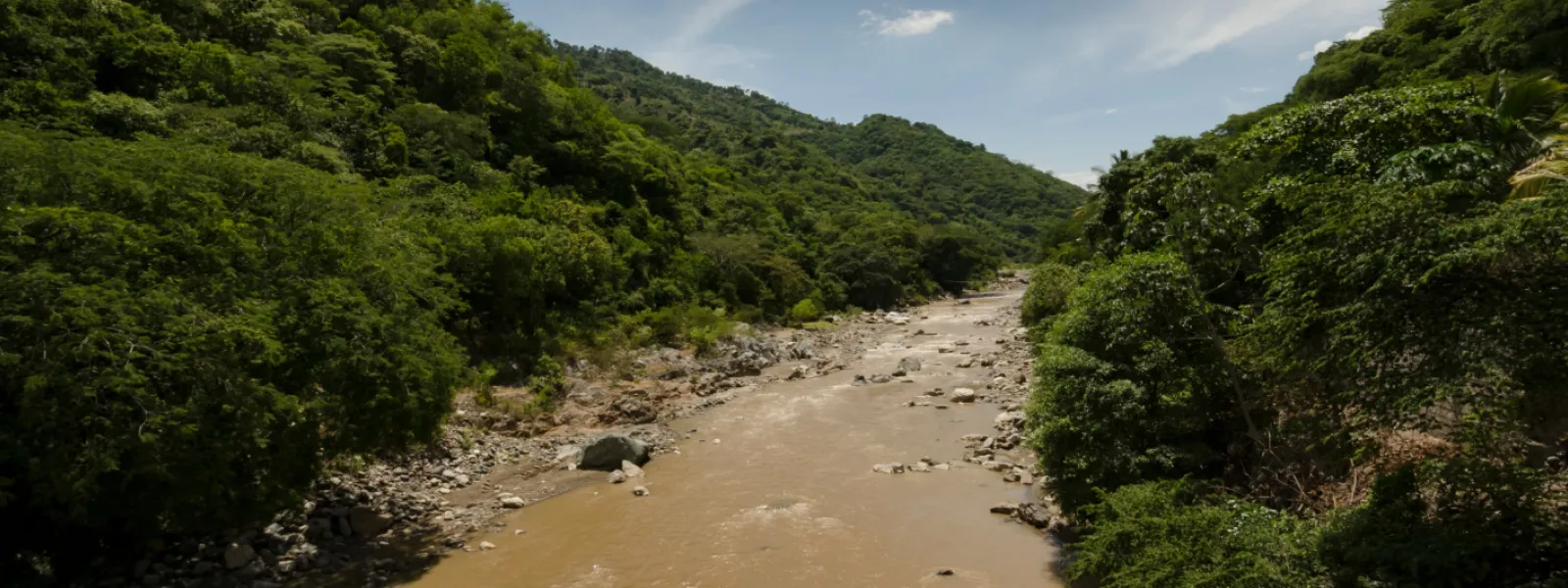
The Motagua River, which is 486 km long, flows through 96 municipalities and 14 departments in Guatemala. It originates in Quiché, a department located in the northwest, and empties into the Caribbean Sea.
Polluting activities occur throughout the entire basin, including sub-basins and micro-basins. The largest volume of pollution comes from Guatemala City, the country’s capital, and is carried by the waters of the Las Vacas River, which in turn receives a large amount of waste from the Chinautla River.
The Chinautla River, which flows through the municipality of the same name, carries solid waste from a landfill located in Zone 3 of the capital—where trash from at least 14 municipalities in the department of Guatemala is dumped—as well as sewage generated by some 500,000 people living in the northern part of the capital, which undergoes no prior treatment.
Other sources of pollution include the numerous illegal dumps in the municipality of Chinautla, the waste that private vehicles and garbage trucks dump along the banks of its rivers, as well as the sand-mining companies—which began setting up operations in the area between 1996 and 1997—whose activities weaken the rivers' basins, causing solid waste to be more easily carried away by the river currents.
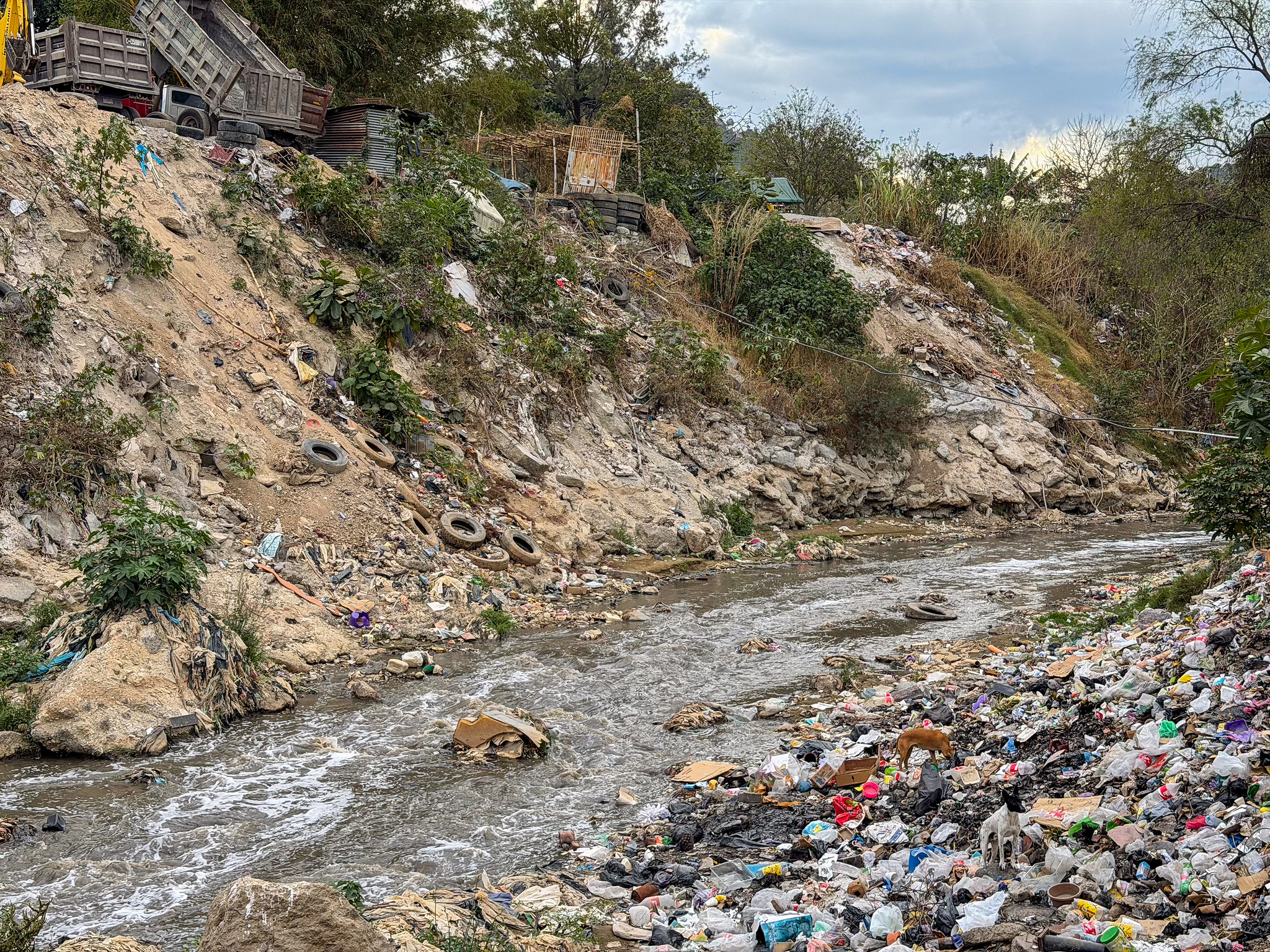
Photo: Mayela Sánchez García.
The situation extends beyond national borders. Every year, the Motagua River discharges some 20,000 metric tons of plastic into the Caribbean Sea, making it one of the rivers that contributes the most plastic pollution to the ocean worldwide, according to estimates contained in a 2025 report by the Inter-American Commission on Human Rights (IACHR).
The river flows into the Mesoamerican Reef at its mouth, so pollution also threatens to degrade one of the largest and most biodiverse transboundary reefs on the planet, which spans the territorial waters of Belize, Guatemala, Honduras, and Mexico.
In addition, the contaminated water reaches the coast of Honduras and spreads into Amatique Bay, located along the eastern coast of Guatemala, affecting the Caribbean Sea.
The roots of this chronic, cross-border problem are structural. Data from the Integrated Environmental Management of the Motagua River Basin project, funded by the United Nations Development Program (UNDP), show that in Guatemala, 66% of municipal solid waste is not collected, and there is no guarantee that the remaining 34% is disposed of properly. Furthermore, of all landfills nationwide, 88.32% are illegal or lack municipal authorization.
In other words, the core issues that need to be addressed are the mismanagement of solid waste and water resources in Guatemala; noncompliance with existing regulations on wastewater discharge and the disposal and treatment of solid waste and residues; and the lack of a water law.
The Poqomam Maya people's quest for justice
The rivers of Santa Cruz Chinautla, a community of the Poqomam Maya people located just twelve kilometers from Guatemala City, have become conduits of pollution that are degrading the Motagua River.
For decades, the local population has seen its health and livelihoods—including pottery, one of the main economic activities and a source of identity—damaged due to the lack of waste management in the municipality of Chinautla and the urban area of the country’s capital, as well as the activities of sand-mining companies.
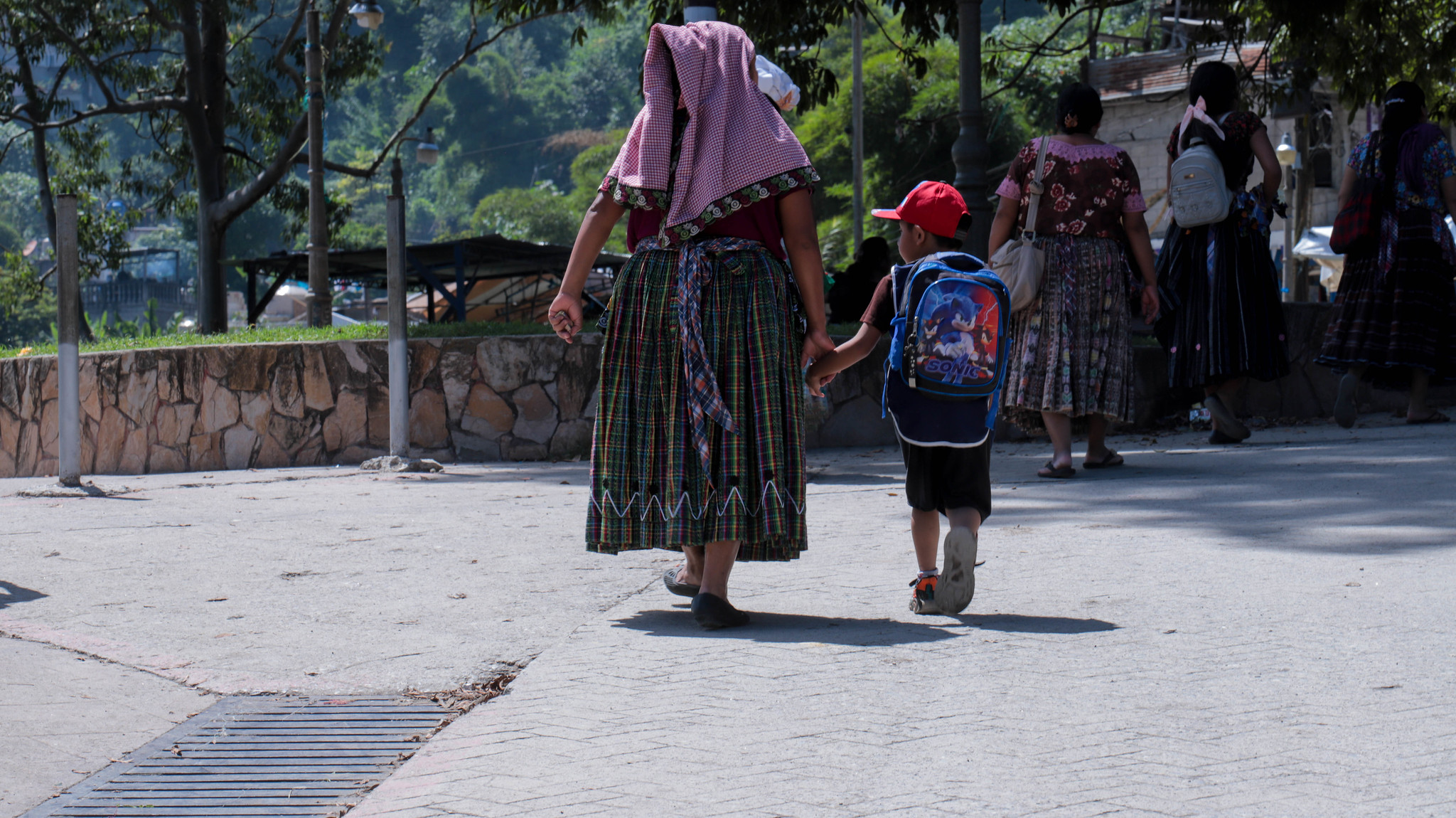
Photo: Mario Winter.
Voices for the Motagua River: Olga Vázquez.
Voices for the Motagua River: Nazario Pascual.
In early 2000, the Maya community organized to stop sand mining on their territory. At that time, the companies held mining permits that remained valid through 2021 and 2022. And although the permits expired, some companies continued to operate after requesting extensions. In June 2022, the indigenous authorities of the Poqomam people began a sit-in protest in front of the Piedrinera San Luis company, which they maintained for four years.
In July 2024, the Special Rapporteur on Economic, Social, Cultural, and Environmental Rights of the IACHR visited Santa Cruz Chinautla. During his visit, traditional authorities and community members spoke about the environmental, water-related, health, economic, and cultural impacts of the pollution in their rivers.
That same year, in October, the community—with support from AIDA, the Indigenous Peoples’ Law Firm, and partner organizations—filed a lawsuit (petition for amparo) against the municipality of Chinautla over its failure to take measures to address the contamination of its rivers and soil caused by improper solid waste management and the existence of illegal landfills.
AIDA’s scientific team, together with local residents and community authorities, collected key information on illegal landfills in the area. This community science initiative supported the litigation by highlighting the severity of the pollution, demonstrating the ongoing use of such practices, and providing evidence of the municipal authorities’ failure to fulfill their legal obligations regarding waste management.
Learn more about this community science initiative.
In June 2025, the Poqomam community won the support of the Guatemalan justice system when a constitutional court ordered the municipality of Chinautla to effectively address the claims in the lawsuit aimed at stopping the pollution of the rivers and soil in Santa Cruz Chinautla.
This is the first time a Guatemalan court has recognized a community's right to a healthy environment and its central role in finding solutions.
Find out the details of the legal victory.
Current situation
Since the ruling was issued, the municipality of Chinautla has held a series of “technical working groups” with representatives from the central government, civil society, and the community. A smaller group of technical experts was later created to develop a work plan with clear goals. Several months have passed without the municipality convening these working groups.
Furthermore, in December 2025, the IACHR noted in its report Human Rights Situation in Guatemala that the Motagua River basin is facing a severe pollution crisis that has had profound impacts on biodiversity and has resulted in systematic violations of the human rights of local communities, including the Maya Poqomam people.
And in May 2026, the Ministry of the Environment and Natural Resources revoked the license of the sand mining company Piedrinera San Luis for "failure to comply with environmental commitments."
AIDA continues to monitor the implementation of the court ruling to ensure the right to a healthy environment for the Poqomam Maya community and all those living in the Motagua River basin. Meanwhile, the residents of Santa Cruz Chinautla remain organized and mobilized to improve their environment and defend their rights.
Related projects
Presentes: Here and now for climate justice
Hope, too, needs a space when we talk about the climate crisis. While it’s true that humanity is facing our greatest collective challenge, it’s also true that there are people, communities, and organizations taking action, right now, to cocreate a better future. We cannot deny that we are already living with the impacts of the climate crisis. Yet we must speak honestly and urgently about them, without paralyzing ourselves in the process. Sharing information is a means to understanding our planet and creating meaningful conversations so that today, in the present moment, our societies can begin to build a more just tomorrow. Presentes was born as a collective and collaborative effort to change the narratives around climate justice. It’s a Latin American alliance that seeks to bring the climate conversation to a wider audience while simultaneously strengthening alliances among those already working for the cause. The challenge lies in demonstrating that when we talk about the energy transition –a fundamental step towards a better future– we must also talk about respecting human rights and the rights of nature, and caring for all forms of life on this planet. What better way to show this than by telling the stories of those working for it every day? Presentes is coordinated by AIDA, with the goal of bringing together civil society organizations, local communities, environmental defenders and citizens from across Latin America. Toward a better tomorrow What can we do to address the climate crisis? What is clean energy? How can we build a more just world for all beings, and what does that look like? There are some of the questions we’ll be exploring, together, through the Presentes platforms. Our goal is to extend this conversation to people from across Latin American, in all phases of their own climate journey. As a starting point, the founding organizations signed a manifesto recognizing that, to achieve a society with climate justice, it is essential to recognize our role in this new environmental reality, and make way for a just change that leaves no one behind, that is fueled by new forms of energy, and that responds to the call of those people who, with dignity and determination, continue to fight for the defense of life on Earth. View this post on Instagram A post shared by Presentes (@presentesorg) These are the pillars of Presentes and the point from which we can, from our own focuses and starting points, begin to visualize a better future for all the beings who live on this Earth. Join your voice to Presentes! Each participant, whether an organization or an individual, helps to enrich the ecosystem of sharing and solidarity that is forming around Presentes. Beginning from where you are now, you can: Add your organization to the alliance. By doing so, you’ll work with the diverse groups that form the Presentes, amplify your own organization's work, and receive a biweekly digital newsletter with valuable information to strengthen your communication efforts. Join the conversation in our WhatsApp group to receive free content to learn more about the climate crisis and how we confront it, together. Follow Presentes on Instagram and Facebook and help the content reach beyond our network, into yours. Because now is the only time there is, it’s the time to be present.
Read more
Governments of the world: Climate action is a legal duty
Climate action is a legal duty. After decades of empty promises, it is time for real action and accountability.Climate change is here now. Ecosystems are collapsing at an unprecedented rate. Vast regions of the world are becoming uninhabitable. Billions of people are facing the prospect of a dangerous and uncertain future. Extreme weather events have wreaked havoc across every continent this year alone. The “window of opportunity to secure a liveable and sustainable future for all” is closing fast.For decades, you have pledged to address the climate crisis. In successive treaties and decisions, you promised to slash greenhouse gas emissions. Just last year in Glasgow, you reaffirmed your commitment to limit global average temperature increase to 1.5°C and to ramp up mitigation ambition within the year. Yet countries’ latest global mitigation commitments show that we are completely off track. So far the vast majority of countries have not delivered on their commitment to strengthen their targets this year.We are on the precipice of the most serious intergenerational violation of human rights in history. But affected communities and those who stand with them are not giving up.We – lawyers and activists from across the globe – are standing with frontline communities to challenge your inadequate climate action. We have filed over 80 cases around the world to compel you to ramp-up your climate ambition: from the Netherlands to Nepal; from Canada to Colombia, from Belgium to Brazil, from Norway to New Zealand, from South Africa to South Korea.The law is on our side. Courts in dozens of countries have already recognized that you have a legal duty to address the climate crisis, and that this requires you to take more ambitious climate action. Cases have led to the adoption of new climate laws, stronger mitigation targets, and the closure of coal-fired power plants. The Intergovernmental Panel on Climate Change (IPCC) itself has recognised that climate litigation has the power to shape “the outcome and ambition of climate governance” towards aligning government action to best available science.COP27 is an opportunity for you to change course: to minimize the extent of suffering and human rights violations caused by your failure to address the crisis, and to live up to your legal obligations under domestic and international law.Governments of the world: your delay is costing lives. Strong action is needed now to protect people and the planet.If you continue to fail us, we will continue to turn to the courts to demand accountability.Signatories:Alana (Brazil), AIDA (Latin America and the Caribbean), Aurora (Sweden), The Australian Climate Case (Australia), Grata Fund (Australia), Phi Finney McDonald (Australia), Center for Environmental Rights (South Africa), Natural Justice (South Africa), Client Earth (Global), Climate Action Network Europe (Europe), Climate Case Ireland (Ireland), Ecojustice (Canada), Europäische Klimaklage (Austria), Germanwatch (Germany), Giudizio Universale (Italy), Rete Legalità per il Clima (Italy), A Sud (Italy), Global Legal Action Network (Global), Klimaatzak (Belgium), Klimatická (Czech Republic), Lawyers for Climate Action NZ (New Zealand), Lee Salmon Long (New Zealand), Notre Affaire à Tous (France), Adv. Padam Shrestha (Nepal), Plan B (UK), Protect the Planet (Germany), Russian Climate Case (Russia), Urgenda (Netherlands), Youth4ClimateAction (South Korea). Read and download the letter
Read more
An alliance for clean air in Latin America is born
In the face of environmental injustices, like poor air quality and its harm to human health, our societies respond together and organize in similar ways, without even knowing it. This was one of the takeaways from the Latin American Meeting for Clean Air, which in early August brought together researchers, government officials, youth leaders, civil society representatives and international cooperation agencies from Brazil, Chile, Colombia, Ecuador, Mexico and Peru. They met with three main objectives: to strengthen the link between air quality and climate justice, to exchange lessons learned, and to build networks for international collaboration. "Poor air quality and related health problems are a common problem in Latin America, knowing no borders or territorial boundaries," explained Anaid Velasco, Research Manager at the Mexican Center for Environmental Law (CEMDA). According to the World Health Organization, air pollution affects close to 90 percent of people living in urban areas around the world. Despite the magnitude of the problem, public actions and policies to improve the air we breathe are not fully standardized. In addition, air quality indices across the region are not uniform and do not allow people to be adequately informed of the dangers of air pollution in different environments. This represents a problem and, at the same time, an opportunity to collaboratively create and refine tools. Aware of the opportunity, meeting participants founded the Latin American Coalition for Clean Air (ALAIRE) to respond to three primary goals: To position a narrative that makes air quality a strategic priority in the public health and climate crisis management agendas in Latin America. To influence authorities and promote public policies that contribute to an improved management of the sources that contribute to poor air quality in the region. To advocate for conditions for civil society and the business sector to become involved in compliance with regulations, policies and the improvement of air quality in the continent. "The creation of this coalition is a fundamental step towards improving the air we breathe, across the region," Velasco said. "CEMDA is very proud to be part of it as clean air is a fundamental condition to guaranteeing the human right to a healthy environment." The Latin American Meeting for Clean Air was organized by AIDA, El Derecho a No Obedecer (a project of Corporación Otraparte), Trébola Organización Ecológica, Coalición Respirar, El Poder del Consumidor and the Heinrich Böll Foundation. It had open activities attended by 200 people, as well as closed meetings to reach agreements among the key organizations. The meeting served to reaffirm that the fight for clean air is also the fight to reduce greenhouse gases and confront the climate crisis, as well as a necessity to guarantee the right to health of people in the region. The event also confirmed the importance of citizen science, in which individuals are working to demonstrate the true levels of exposure to poor air quality in different cities in the region, in turn highlighting the urgency to act. The newly formed coalition will empower the efforts of citizens, academics, organizations and other actors, while contributing to the achievement of regional agreements for the development and implementation of public policies that improve air quality and protect human health.
Read more