
Project
Shutterstock.
Pollution of the Motagua River in Guatemala: The Poqomam Maya people’s quest for environmental justice
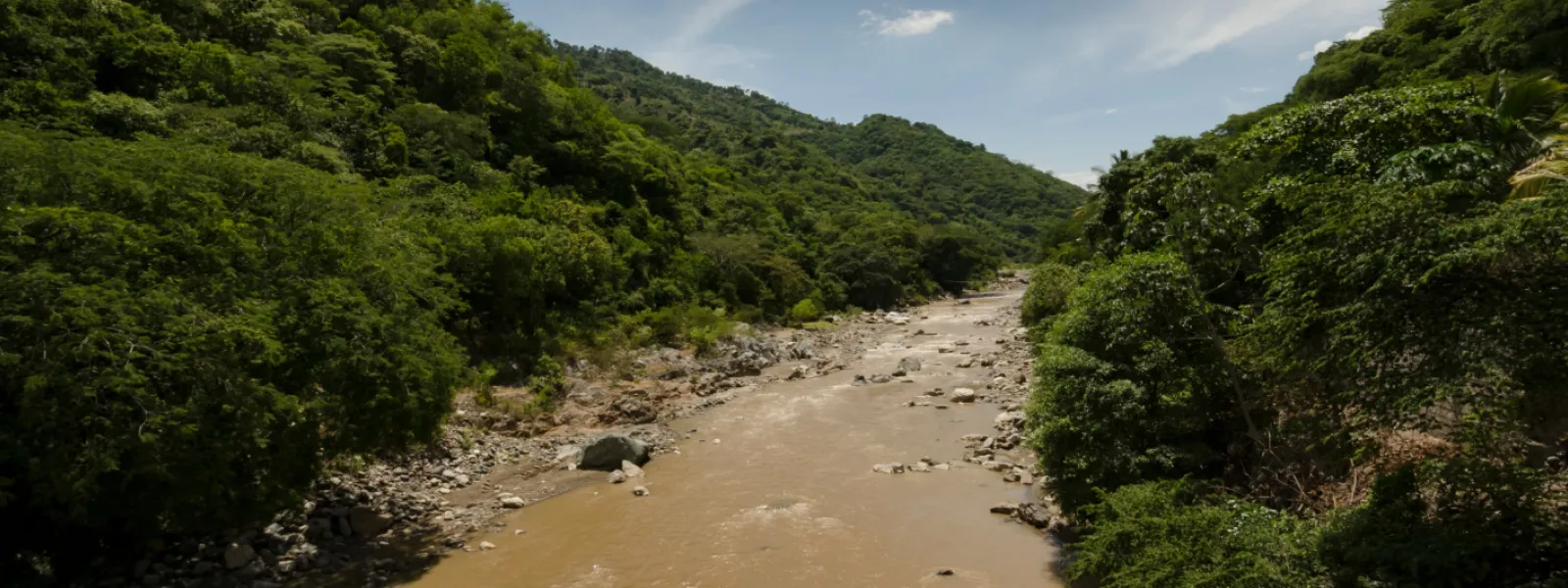
The Motagua River basin—Guatemala’s largest and most important river—is severely polluted with wastewater, solid waste, and other types of debris.
This is a cross-border issue because the Motagua’s polluted waters flow into the Caribbean Sea, reach the coast of Honduras, and threaten the Mesoamerican Reef System.
For decades, this has violated the rights to health, water, development, and a healthy environment of all the people living in the river basin.
In June 2025, the Poqomam Maya community of Santa Cruz Chinautla—supported by AIDA, the Indigenous Peoples’ Law Firm, and allied organizations—achieved an unprecedented legal victory to halt degradation in the basin. In response to the lawsuit it filed, a Guatemalan court ordered the municipality of Chinautla to comply with a series of obligations to curb the pollution of the area’s rivers and soil.
The government's response to the ruling has so far been limited to technical working group meetings. Meanwhile, the community continues to work toward the proper implementation of the ruling and to take other actions to defend its territory and its rights.
Background
The Motagua River, which is 486 km long, flows through 96 municipalities and 14 departments in Guatemala. It originates in Quiché, a department located in the northwest, and empties into the Caribbean Sea.
Polluting activities occur throughout the entire basin, including sub-basins and micro-basins. The largest volume of pollution comes from Guatemala City, the country’s capital, and is carried by the waters of the Las Vacas River, which in turn receives a large amount of waste from the Chinautla River.
The Chinautla River, which flows through the municipality of the same name, carries solid waste from a landfill located in Zone 3 of the capital—where trash from at least 14 municipalities in the department of Guatemala is dumped—as well as sewage generated by some 500,000 people living in the northern part of the capital, which undergoes no prior treatment.
Other sources of pollution include the numerous illegal dumps in the municipality of Chinautla, the waste that private vehicles and garbage trucks dump along the banks of its rivers, as well as the sand-mining companies—which began setting up operations in the area between 1996 and 1997—whose activities weaken the rivers' basins, causing solid waste to be more easily carried away by the river currents.
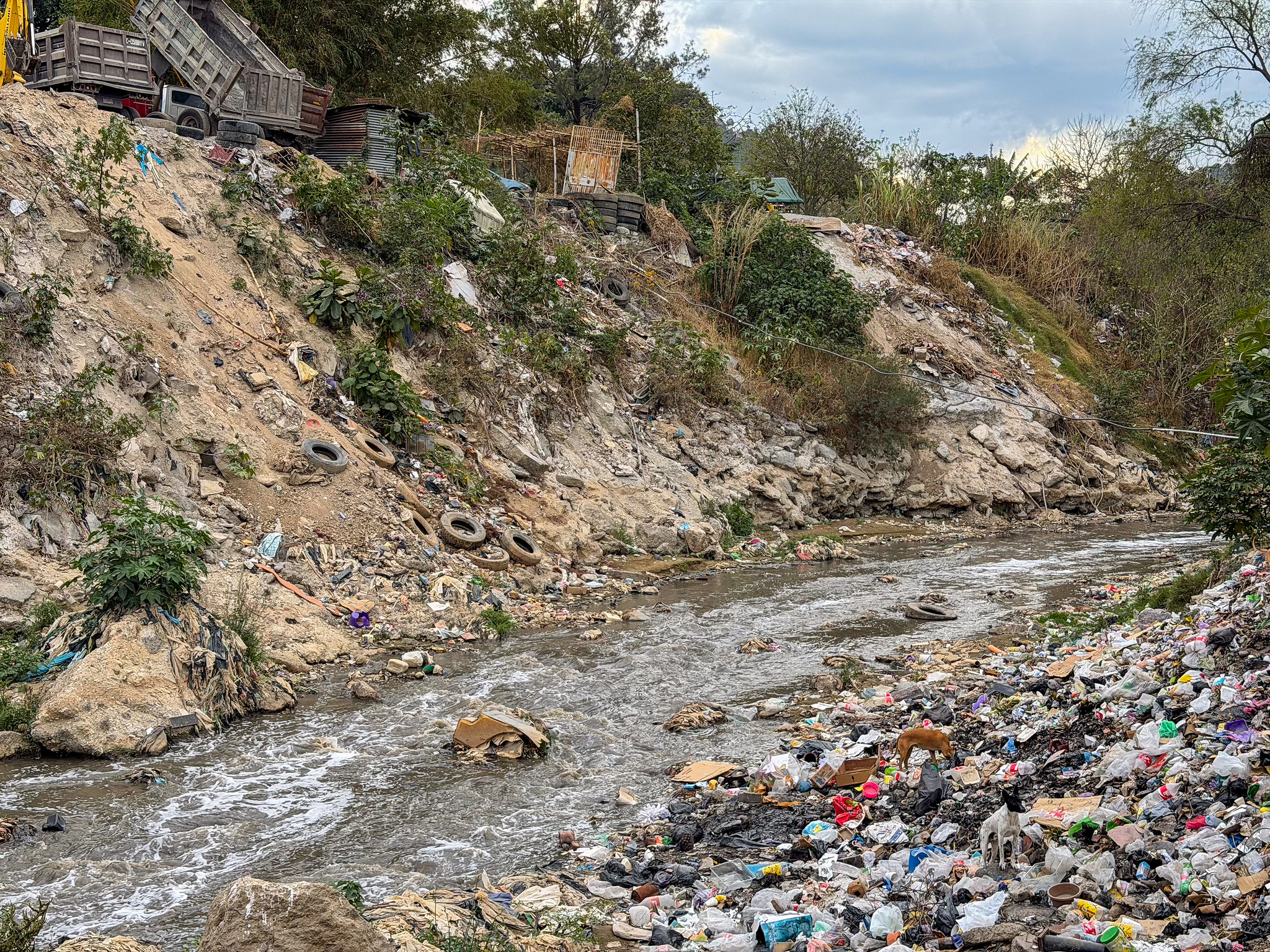
Photo: Mayela Sánchez García.
The situation extends beyond national borders. Every year, the Motagua River discharges some 20,000 metric tons of plastic into the Caribbean Sea, making it one of the rivers that contributes the most plastic pollution to the ocean worldwide, according to estimates contained in a 2025 report by the Inter-American Commission on Human Rights (IACHR).
The river flows into the Mesoamerican Reef at its mouth, so pollution also threatens to degrade one of the largest and most biodiverse transboundary reefs on the planet, which spans the territorial waters of Belize, Guatemala, Honduras, and Mexico.
In addition, the contaminated water reaches the coast of Honduras and spreads into Amatique Bay, located along the eastern coast of Guatemala, affecting the Caribbean Sea.
The roots of this chronic, cross-border problem are structural. Data from the Integrated Environmental Management of the Motagua River Basin project, funded by the United Nations Development Program (UNDP), show that in Guatemala, 66% of municipal solid waste is not collected, and there is no guarantee that the remaining 34% is disposed of properly. Furthermore, of all landfills nationwide, 88.32% are illegal or lack municipal authorization.
In other words, the core issues that need to be addressed are the mismanagement of solid waste and water resources in Guatemala; noncompliance with existing regulations on wastewater discharge and the disposal and treatment of solid waste and residues; and the lack of a water law.
The Poqomam Maya people's quest for justice
The rivers of Santa Cruz Chinautla, a community of the Poqomam Maya people located just twelve kilometers from Guatemala City, have become conduits of pollution that are degrading the Motagua River.
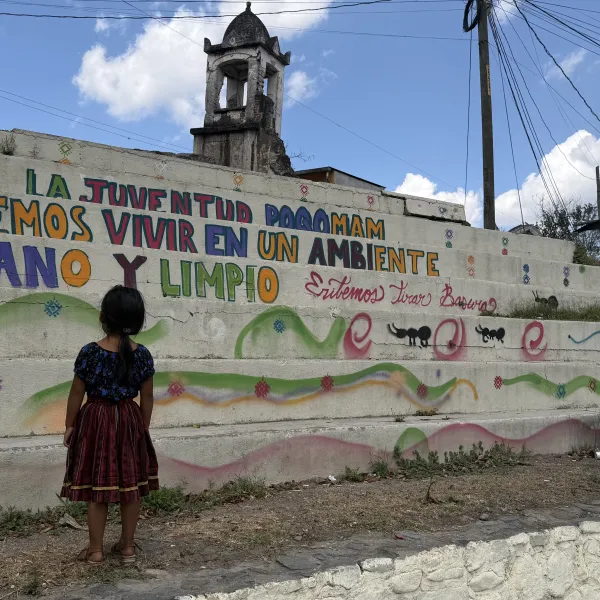
For decades, the local population has seen its health and livelihoods—including pottery, one of the main economic activities and a source of identity—damaged due to the lack of waste management in the municipality of Chinautla and the urban area of the country’s capital, as well as the activities of sand-mining companies.
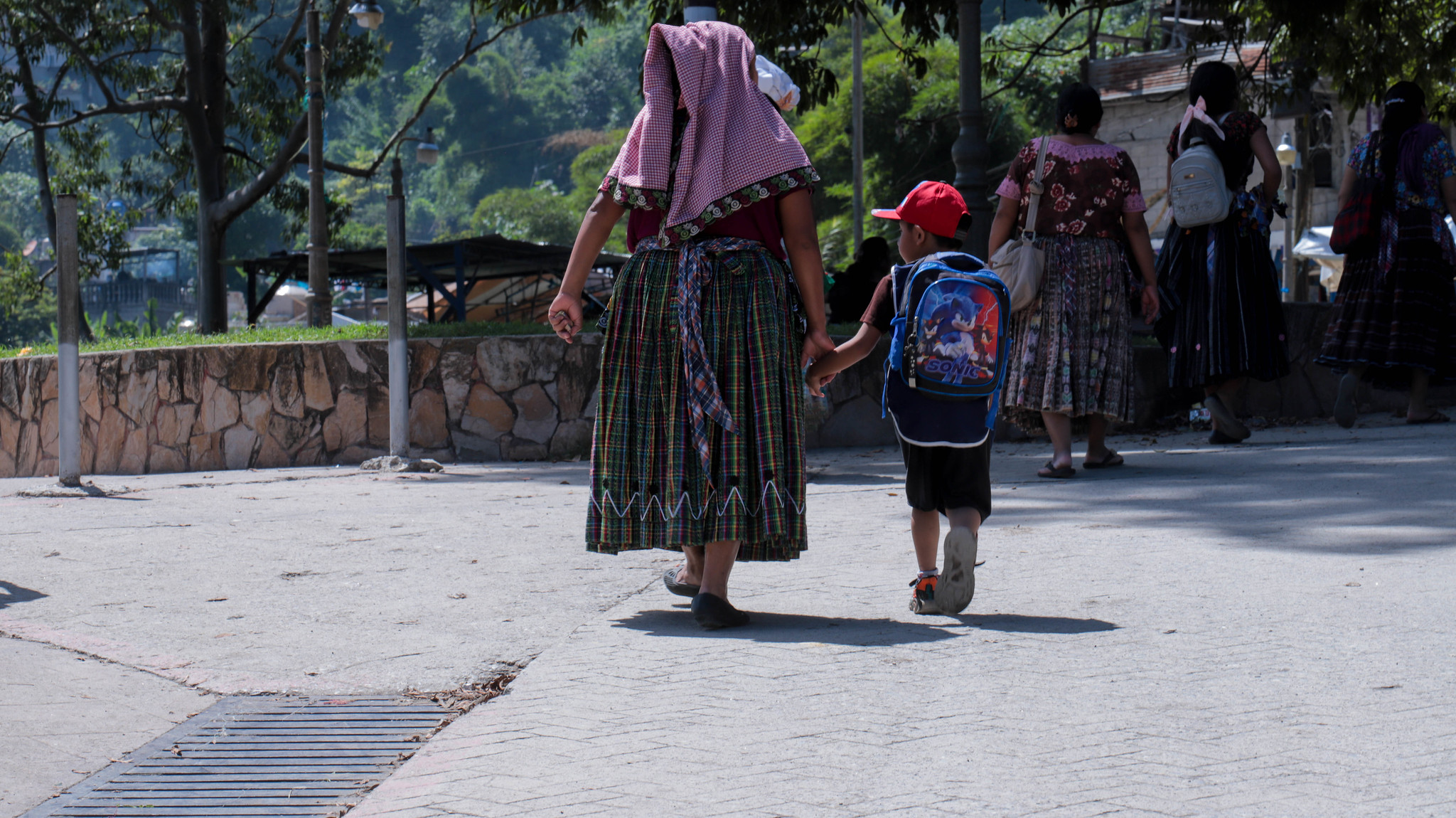
Photo: Mario Winter.
Voices for the Motagua River: Olga Vázquez.
Voices for the Motagua River: Nazario Pascual.
In early 2000, the Maya community organized to stop sand mining on their territory. At that time, the companies held mining permits that remained valid through 2021 and 2022. And although the permits expired, some companies continued to operate after requesting extensions. In June 2022, the indigenous authorities of the Poqomam people began a sit-in protest in front of the Piedrinera San Luis company, which they maintained for four years.
In July 2024, the Special Rapporteur on Economic, Social, Cultural, and Environmental Rights of the IACHR visited Santa Cruz Chinautla. During his visit, traditional authorities and community members spoke about the environmental, water-related, health, economic, and cultural impacts of the pollution in their rivers.
That same year, in October, the community—with support from AIDA, the Indigenous Peoples’ Law Firm, and partner organizations—filed a lawsuit (petition for amparo) against the municipality of Chinautla over its failure to take measures to address the contamination of its rivers and soil caused by improper solid waste management and the existence of illegal landfills.
AIDA’s scientific team, together with local residents and community authorities, collected key information on illegal landfills in the area. This community science initiative supported the litigation by highlighting the severity of the pollution, demonstrating the ongoing use of such practices, and providing evidence of the municipal authorities’ failure to fulfill their legal obligations regarding waste management.
Learn more about this community science initiative.
In June 2025, the Poqomam community won the support of the Guatemalan justice system when a constitutional court ordered the municipality of Chinautla to effectively address the claims in the lawsuit aimed at stopping the pollution of the rivers and soil in Santa Cruz Chinautla.
This is the first time a Guatemalan court has recognized a community's right to a healthy environment and its central role in finding solutions.
Find out the details of the legal victory.
Current situation
Since the ruling was issued, the municipality of Chinautla has held a series of “technical working groups” with representatives from the central government, civil society, and the community. A smaller group of technical experts was later created to develop a work plan with clear goals. Several months have passed without the municipality convening these working groups.
Furthermore, in December 2025, the IACHR noted in its report Human Rights Situation in Guatemala that the Motagua River basin is facing a severe pollution crisis that has had profound impacts on biodiversity and has resulted in systematic violations of the human rights of local communities, including the Maya Poqomam people.
And in May 2026, the Ministry of the Environment and Natural Resources revoked the license of the sand mining company Piedrinera San Luis for "failure to comply with environmental commitments."
AIDA continues to monitor the implementation of the court ruling to ensure the right to a healthy environment for the Poqomam Maya community and all those living in the Motagua River basin. Meanwhile, the residents of Santa Cruz Chinautla remain organized and mobilized to improve their environment and defend their rights.
Related projects

5 important advances for the environmental movement in 2021
Across the region and the world, civil society movements are becoming stronger and ensuring their voices are heard in important decision-making spaces. Actions born locally, and implemented across geography and ideology, are enabling progress on a common goal that transcends borders: the protection of our planet, and the people that most closely depend on it. The best cases and demands reach not only the highest level of their jurisdiction, but set replicable precedents for the movement at large. Given the considerable stress of the year, we wanted to take a moment to look at some of the good things that happened in 2021, all of which will help further and strengthen our work. These five advances were achieved thanks to countless activists, advocates, academics and governments from Latin America, and the world. They’re helping pave the way for accountability, the protection of human rights, and new legal tools that strengthen the global movement for climate and environmental justice. 1. Escazú Agreement enters into force On Earth Day 2021, the region celebrated the entry into force of the Escazú Agreement, the first environmental rights treaty in Latin America and the Caribbean and the only in the world to enshrine protection for environmental defenders. Escazú seeks to guarantee access to information, public participation and justice in environmental matters, all of which are necessary to facilitate the work and protect the lives of environmental defenders. It also recognizes the need for protection measures for communities in vulnerable situations. With the ratification of Argentina and Mexico, the necessary accessions for this breakthrough were achieved. The agreement is also the result of many years of work by civil society, a sector that promoted the development of Principle 10 of the Rio Declaration on Environment and Development, which is key to guaranteeing the human right to a healthy and sustainable environment. Now that it has entered into force, governments must integrate the responsibilities that Escazú establishes into their domestic systems so that defenders and communities can use it to their advantage. Only then will it truly be effective. 2. Court orders Shell to cut emissions by nearly half In a landmark ruling in the citizens' struggle for climate justice, the District Court of The Hague ordered the Anglo-Dutch company Shell to reduce its emissions by 45 percent by 2030. The verdict provides, for the first time, that a company and its subsidiaries must align their policies with global emissions reduction targets, such as those stipulated in the Paris Agreement. It sets a global precedent that was reached thanks to a lawsuit filed by several civil society organizations and more than 17,000 Dutch citizens. The main objective of the lawsuit was not to obtain financial compensation for damages, but to force the oil company to reduce its emissions. This case opened the discussion about the responsibility of companies in aggravating the climate crisis, and was a pioneer in the application of the UN guiding principles on business and human rights. Niels Hazekam, Senior Policy Advisor at Both Ends, one of the organizations involved in the lawsuit, explained the details of the Shell litigation in this AIDA webinar. This victory represents a major advance towards using judicial systems as tools to advance climate justice, with great potential for replication in other parts of the world, including Latin America. 3. International court reaffirms environmental protection in Costa Rica It is legitimate for a country to declare itself free of open-pit mining as part of its environmental protection objectives, declared the ICSID arbitration tribunal of the World Bank in response to a case filed by the mining company Infinito Gold against Costa Rica. In the arbitration, the mining company demanded the payment of $400 million dollars as compensation for the profits not received when the country annulled its mineral exploitation concession. In the early stages of the Crucitas mining project, AIDA warned the Costa Rican government of the threats it would pose to the environment and human rights. In 2008, the government issued a decree declaring the project of interest. Then, in 2011, the Supreme Court upheld a prior court decision to declare the Crucitas project illegal. Clearly unhappy with this decision, Infinito Gold began international arbitration and requested compensation for losses. This year, ICSID concluded that Costa Rica will not have to pay and clarified that the country did not deny the company access to local justice. The decision is an important step forward in the face of the growing intention of companies to sue governments for deciding to protect certain ecosystems. 4. The UN recognizes the human right to a healthy environment On October 8, in a historic day for the future of the planet, the United Nations Human Rights Council recognized that all people have a human right to a safe, healthy, clean and sustainable environment. Costa Rica, Slovenia, Maldives, Morocco and Switzerland led efforts within the Council in the latest stage of a long struggle, along with thousands of organizations, movements, businesses and advocates who joined the call for a #HealthyEnvironmentForAll. By circulating letters and inviting civil society around the world, they were able to show the legitimate interest in recognizing this right. This milestone in the history of international environmental law is the result of nearly 50 years of work by thousands of people who, since the Stockholm Declaration in 1972, have laid the groundwork for this day. Also on 8 October, the Council established the creation of a new Special Rapporteur to promote human rights in the context of climate change. This action responded to a request from civil society, in which AIDA was the meeting and coordination point in Latin America to mobilize the decision. 5. Pollution case goes to the Inter-American Court After more than 15 years, the case of human rights violations due to environmental contamination in La Oroya, Peru, reached the Inter-American Court of Human Rights. It is the first time that a case of air pollution caused by business activities in an urban context has reached the Court. The Inter-American Commission brought the case before the Court after establishing the international responsibility of the State, in response to a petition of a group of local residents—represented by AIDA and our allies—who have been chronically exposed to heavy metals from the Doe Run Peru metallurgical complex. The affected people appealed to the Inter-American Human Rights System because, despite the Peruvian Constitutional Court's order in 2006 for urgent measures to protect their rights, the State failed to comply. The presentation of the case before the Court represents a unique opportunity to restore the rights of the affected persons. Read more and learn about AIDA’s top victories of the year in our 2021 Annual Report!
Read more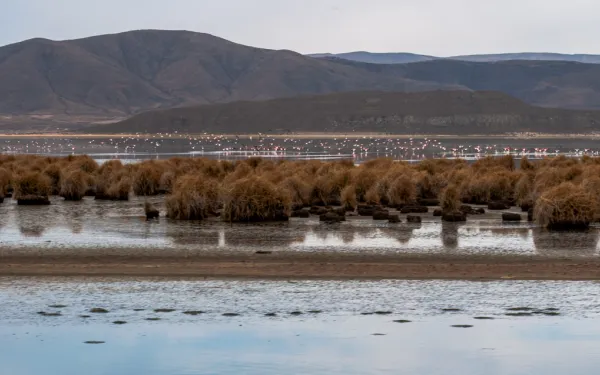
Three advances for climate and environmental justice in 2021
In the face of increasing environmental degradation and the climate crisis, the strength of the collective struggle shows that it’s possible to ensure a healthy environment and a sustainable future for all people. This year, AIDA made important advances on that path, hand-in-hand with communities and allies in the region. The stories below tell of achievements that bring us closer to the environmental and climate justice we urgently need and for which we work every day. They are the stories that inspire us to continue working for the future. 1. Mayan women pave the way for responsible financing In Guatemala, under our guidance and with the support of local and international allies, the struggle of the Mayan women of Ixquisis to defend their water and territory has made history. Following a complaint against the large dams being implemented in their territory, the Inter-American Development Bank’s accountability office recognized the damage the dams caused and, for the first time, acknowledged the possibility of a responsible withdrawal of its investment. leARN MORE 2. Court ruling upholds the preservation of natural protected areas The intention of large real estate developers to dismantle the Yum Balam protected area for flora and fauna in the Mexican Caribbean has hit a wall. Mexico's Supreme Court set a key legal precedent by determining that the management program, fundamental to the sustainable use of the site, is legal. AIDA helped defend Yum Balam in court and, years earlier, our attorneys helped build the management program. LEARN MORE 3. International support reaches high-Andean lakes in Bolivia Together with local communities and organizations, AIDA requested international technical support for the recovery of lakes Poopó and Uru Uru in the Bolivian highlands, which was finally formalized by the government. This support, scheduled for next year, is vital for the recuperation of these ecosystems, life-support systems for biodiversity and the indigenous and peasant communities in the area. learn more Read these stories and much more about this year's journey in our 2021 Annual Report!
Read moreThree advances for climate and environmental justice in 2021
In the face of increasing environmental degradation and the climate crisis, the strength of the collective struggle shows that it’s possible to ensure a healthy environment and a sustainable future for all people. This year, AIDA made important advances on that path, hand-in-hand with communities and allies in the region. The stories below tell of achievements that bring us closer to the environmental and climate justice we urgently need and for which we work every day. They are the stories that inspire us to continue working for the future. 1. Mayan women pave the way for responsible financing In Guatemala, under our guidance and with the support of local and international allies, the struggle of the Mayan women of Ixquisis to defend their water and territory has made history. Following a complaint against the large dams being implemented in their territory, the Inter-American Development Bank’s accountability office recognized the damage the dams caused and, for the first time, acknowledged the possibility of a responsible withdrawal of its investment. leARN MORE 2. Court ruling upholds the preservation of natural protected areas The intention of large real estate developers to dismantle the Yum Balam protected area for flora and fauna in the Mexican Caribbean has hit a wall. Mexico's Supreme Court set a key legal precedent by determining that the management program, fundamental to the sustainable use of the site, is legal. AIDA helped defend Yum Balam in court and, years earlier, our attorneys helped build the management program. LEARN MORE 3. International support reaches high-Andean lakes in Bolivia Together with local communities and organizations, AIDA requested international technical support for the recovery of lakes Poopó and Uru Uru in the Bolivian highlands, which was finally formalized by the government. This support, scheduled for next year, is vital for the recuperation of these ecosystems, life-support systems for biodiversity and the indigenous and peasant communities in the area. learn more Read these stories and much more about this year's journey in our 2021 Annual Report!
Read more