
Project
Shutterstock.
Pollution of the Motagua River in Guatemala: The Poqomam Maya people’s quest for environmental justice
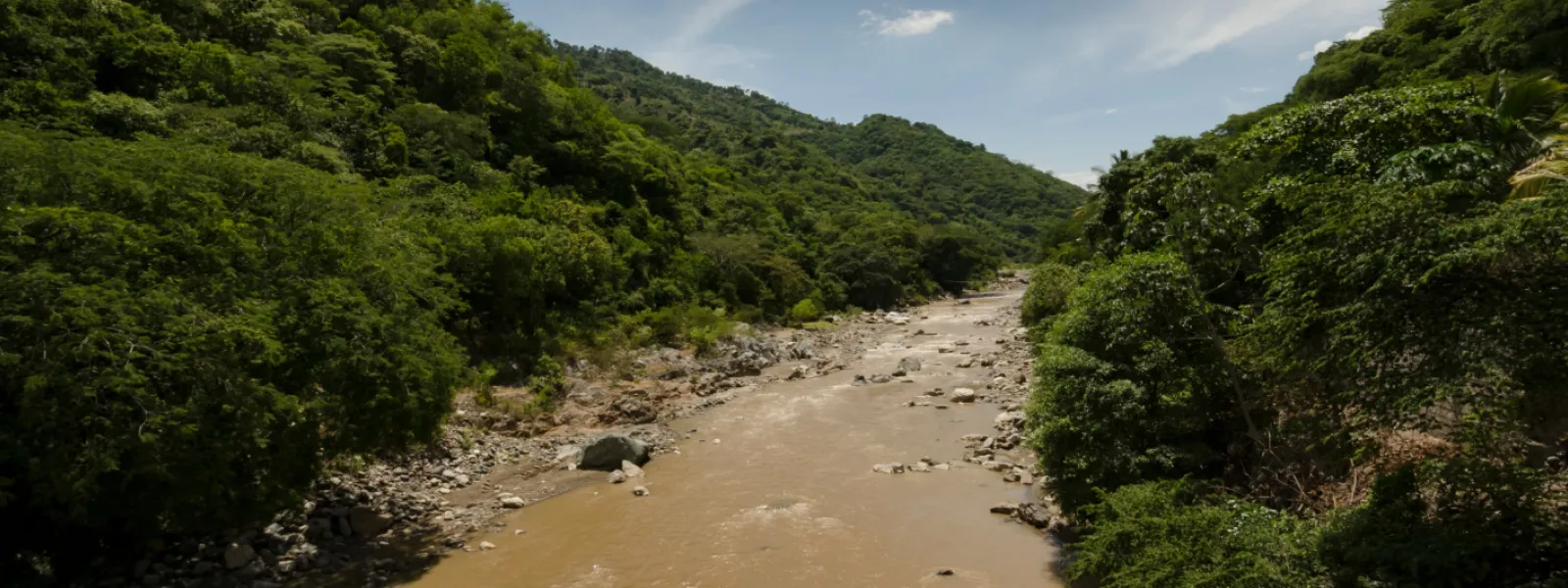
The Motagua River basin—Guatemala’s largest and most important river—is severely polluted with wastewater, solid waste, and other types of debris.
This is a cross-border issue because the Motagua’s polluted waters flow into the Caribbean Sea, reach the coast of Honduras, and threaten the Mesoamerican Reef System.
For decades, this has violated the rights to health, water, development, and a healthy environment of all the people living in the river basin.
In June 2025, the Poqomam Maya community of Santa Cruz Chinautla—supported by AIDA, the Indigenous Peoples’ Law Firm, and allied organizations—achieved an unprecedented legal victory to halt degradation in the basin. In response to the lawsuit it filed, a Guatemalan court ordered the municipality of Chinautla to comply with a series of obligations to curb the pollution of the area’s rivers and soil.
The government's response to the ruling has so far been limited to technical working group meetings. Meanwhile, the community continues to work toward the proper implementation of the ruling and to take other actions to defend its territory and its rights.
Background
The Motagua River, which is 486 km long, flows through 96 municipalities and 14 departments in Guatemala. It originates in Quiché, a department located in the northwest, and empties into the Caribbean Sea.
Polluting activities occur throughout the entire basin, including sub-basins and micro-basins. The largest volume of pollution comes from Guatemala City, the country’s capital, and is carried by the waters of the Las Vacas River, which in turn receives a large amount of waste from the Chinautla River.
The Chinautla River, which flows through the municipality of the same name, carries solid waste from a landfill located in Zone 3 of the capital—where trash from at least 14 municipalities in the department of Guatemala is dumped—as well as sewage generated by some 500,000 people living in the northern part of the capital, which undergoes no prior treatment.
Other sources of pollution include the numerous illegal dumps in the municipality of Chinautla, the waste that private vehicles and garbage trucks dump along the banks of its rivers, as well as the sand-mining companies—which began setting up operations in the area between 1996 and 1997—whose activities weaken the rivers' basins, causing solid waste to be more easily carried away by the river currents.
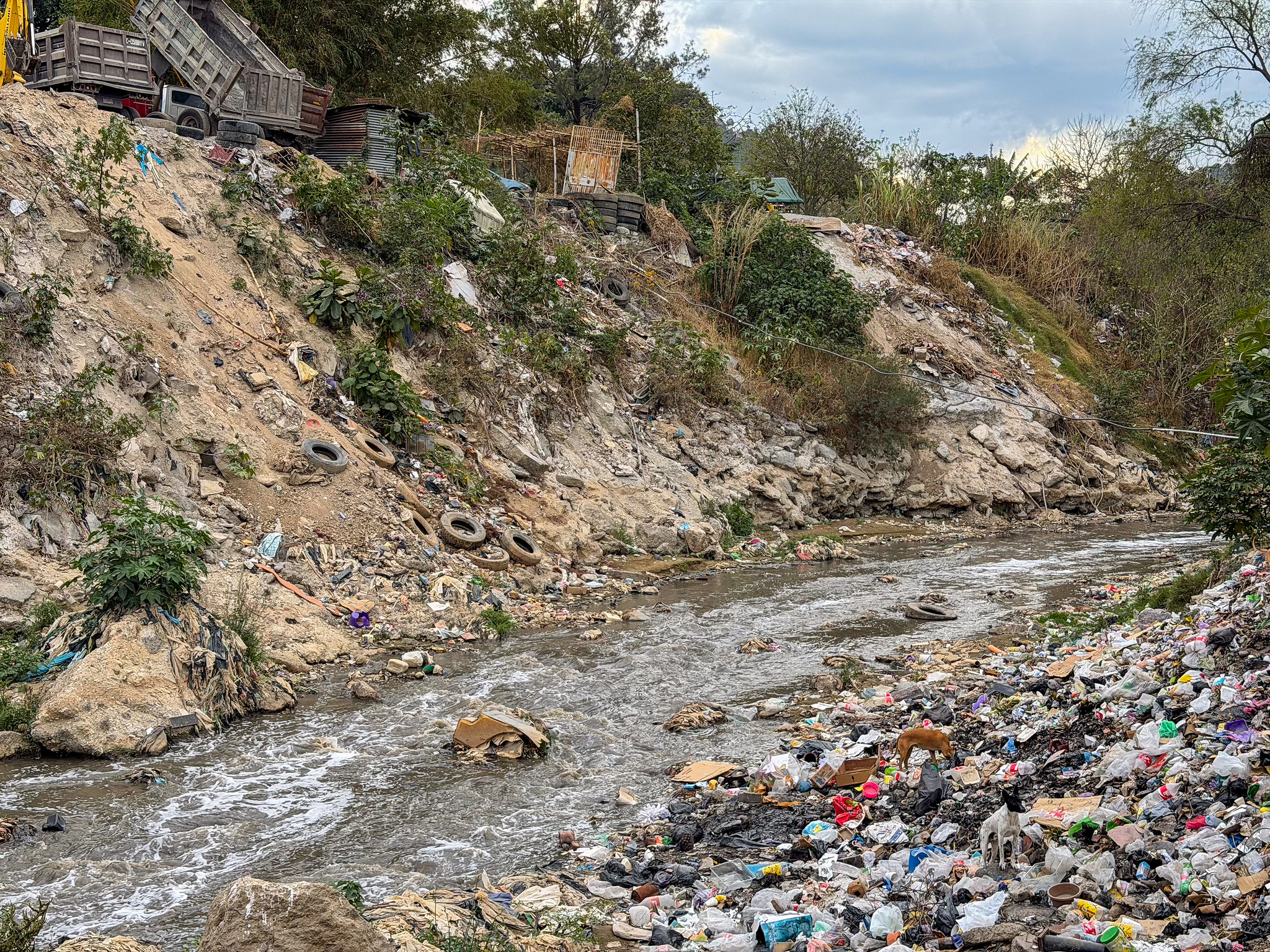
Photo: Mayela Sánchez García.
The situation extends beyond national borders. Every year, the Motagua River discharges some 20,000 metric tons of plastic into the Caribbean Sea, making it one of the rivers that contributes the most plastic pollution to the ocean worldwide, according to estimates contained in a 2025 report by the Inter-American Commission on Human Rights (IACHR).
The river flows into the Mesoamerican Reef at its mouth, so pollution also threatens to degrade one of the largest and most biodiverse transboundary reefs on the planet, which spans the territorial waters of Belize, Guatemala, Honduras, and Mexico.
In addition, the contaminated water reaches the coast of Honduras and spreads into Amatique Bay, located along the eastern coast of Guatemala, affecting the Caribbean Sea.
The roots of this chronic, cross-border problem are structural. Data from the Integrated Environmental Management of the Motagua River Basin project, funded by the United Nations Development Program (UNDP), show that in Guatemala, 66% of municipal solid waste is not collected, and there is no guarantee that the remaining 34% is disposed of properly. Furthermore, of all landfills nationwide, 88.32% are illegal or lack municipal authorization.
In other words, the core issues that need to be addressed are the mismanagement of solid waste and water resources in Guatemala; noncompliance with existing regulations on wastewater discharge and the disposal and treatment of solid waste and residues; and the lack of a water law.
The Poqomam Maya people's quest for justice
The rivers of Santa Cruz Chinautla, a community of the Poqomam Maya people located just twelve kilometers from Guatemala City, have become conduits of pollution that are degrading the Motagua River.
For decades, the local population has seen its health and livelihoods—including pottery, one of the main economic activities and a source of identity—damaged due to the lack of waste management in the municipality of Chinautla and the urban area of the country’s capital, as well as the activities of sand-mining companies.
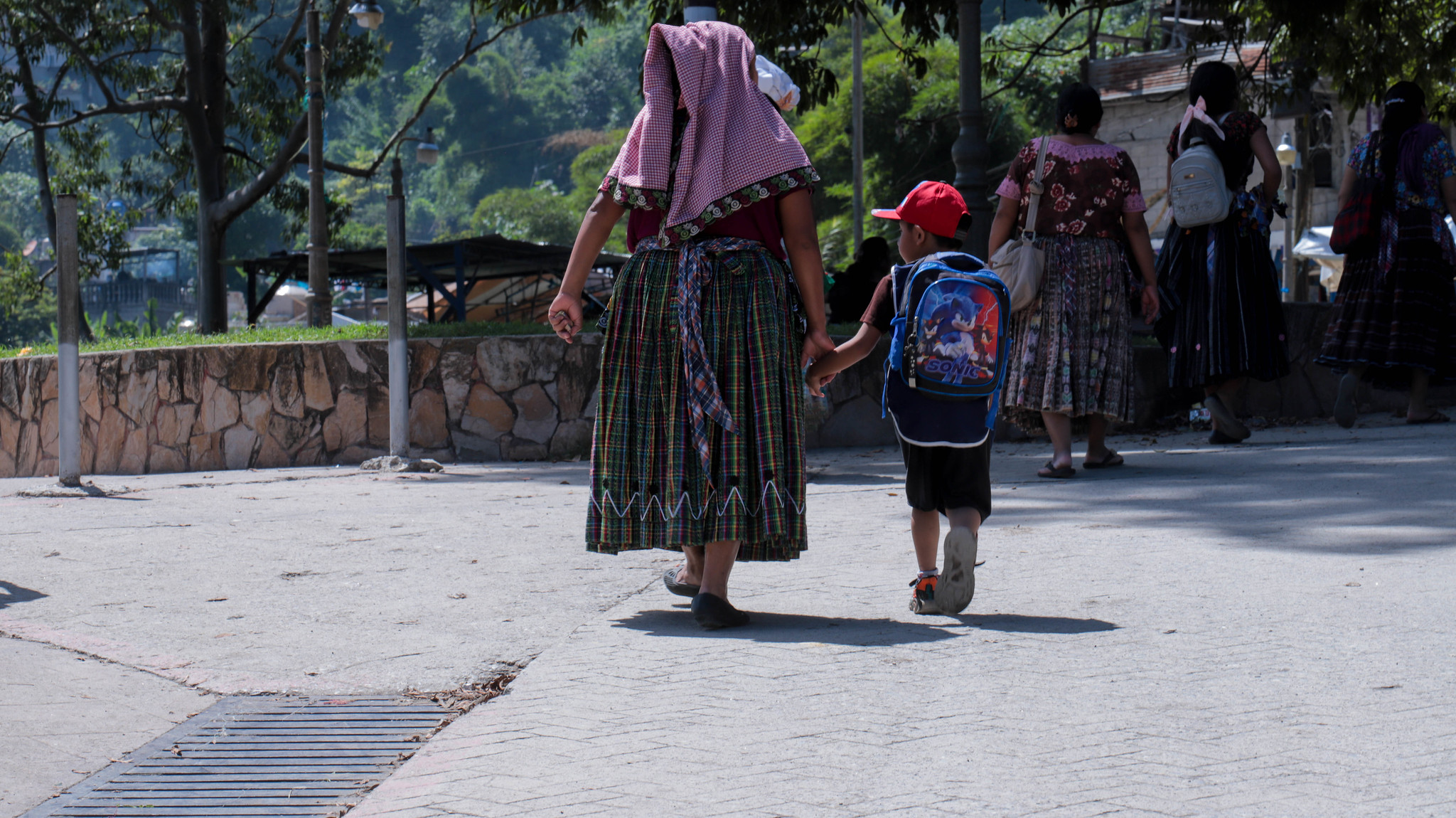
Photo: Mario Winter.
Voices for the Motagua River: Olga Vázquez.
Voices for the Motagua River: Nazario Pascual.
In early 2000, the Maya community organized to stop sand mining on their territory. At that time, the companies held mining permits that remained valid through 2021 and 2022. And although the permits expired, some companies continued to operate after requesting extensions. In June 2022, the indigenous authorities of the Poqomam people began a sit-in protest in front of the Piedrinera San Luis company, which they maintained for four years.
In July 2024, the Special Rapporteur on Economic, Social, Cultural, and Environmental Rights of the IACHR visited Santa Cruz Chinautla. During his visit, traditional authorities and community members spoke about the environmental, water-related, health, economic, and cultural impacts of the pollution in their rivers.
That same year, in October, the community—with support from AIDA, the Indigenous Peoples’ Law Firm, and partner organizations—filed a lawsuit (petition for amparo) against the municipality of Chinautla over its failure to take measures to address the contamination of its rivers and soil caused by improper solid waste management and the existence of illegal landfills.
AIDA’s scientific team, together with local residents and community authorities, collected key information on illegal landfills in the area. This community science initiative supported the litigation by highlighting the severity of the pollution, demonstrating the ongoing use of such practices, and providing evidence of the municipal authorities’ failure to fulfill their legal obligations regarding waste management.
Learn more about this community science initiative.
In June 2025, the Poqomam community won the support of the Guatemalan justice system when a constitutional court ordered the municipality of Chinautla to effectively address the claims in the lawsuit aimed at stopping the pollution of the rivers and soil in Santa Cruz Chinautla.
This is the first time a Guatemalan court has recognized a community's right to a healthy environment and its central role in finding solutions.
Find out the details of the legal victory.
Current situation
Since the ruling was issued, the municipality of Chinautla has held a series of “technical working groups” with representatives from the central government, civil society, and the community. A smaller group of technical experts was later created to develop a work plan with clear goals. Several months have passed without the municipality convening these working groups.
Furthermore, in December 2025, the IACHR noted in its report Human Rights Situation in Guatemala that the Motagua River basin is facing a severe pollution crisis that has had profound impacts on biodiversity and has resulted in systematic violations of the human rights of local communities, including the Maya Poqomam people.
And in May 2026, the Ministry of the Environment and Natural Resources revoked the license of the sand mining company Piedrinera San Luis for "failure to comply with environmental commitments."
AIDA continues to monitor the implementation of the court ruling to ensure the right to a healthy environment for the Poqomam Maya community and all those living in the Motagua River basin. Meanwhile, the residents of Santa Cruz Chinautla remain organized and mobilized to improve their environment and defend their rights.
Related projects

People v. Shell: A step towards climate justice
On May 26, the District Court in The Hague, Netherlands, issued a landmark climate ruling. It ordered Anglo-Dutch oil company Shell—one of the world's leading fossil fuel producers and suppliers—to reduce its carbon dioxide (CO2) emissions by 45 percent by 2030, compared to 2019 levels. The decision came in response to a 2019 lawsuit filed by Friends of the Earth, along with six other organizations and more than 17 thousand Dutch citizens. Although Shell publicly committed in 2020 to achieving net-zero emissions by 2050, the Dutch court found that this pledge was not enough. According to the verdict, the multinational is responsible for not only its own CO2 emissions, but also those of its suppliers and customers, which together threaten the fragile planetary balance and the realization of human rights. The ruling determines, for the first time, that a company and its subsidiaries must align their policies with global CO2 emission reduction targets. It bases this obligation on the emission reduction targets of the Paris Agreement, adopted in 2015. Thus, those who litigated against Shell fulfilled their main objective, which was not to obtain financial compensation for damages caused, but to force the oil company to reduce its emissions in compliance with the Paris Agreement's goal of limiting the increase in global temperatures to 2°C compared to pre-industrial levels, and to continue efforts to reach 1.5°C. The Shell group has been aware for nearly 60 years of the risks of climate change, as demonstrated by a documentary they themselves produced in the 1990s. However, the multinational responsible for nine times more emissions than the whole of the Netherlands has never stopped investing in fossil fuels, intentionally favoring its economic interests at the expense of the environment, the climate and people. Check here the recording of the conversation we had with Niels Hazekamp, Senior Policy Adviserat Both Ends, one of the organizations that sued Shell, where explains the details of the litigation. A worldwide precedent The ruling is a major step forward in the use of judicial systems as tools to advance climate justice, and it demonstrates that society, as a whole, is more determined than ever to stop the negative impacts that powerful multinationals have on the environment, the climate and the enjoyment of fundamental human rights. Despite being litigated on European soil, the case represents a significant step towards global climate justice, offering an interesting opportunity for replication in Latin America and the world. The case not only opened the discussion on corporate climate responsibility, but was also a pioneer in incorporating the use of the UN Guiding Principles on Business and Human Rights and the OECD Guidelines for Multinational Enterprises. The use of these instruments, which regulate multinational companies by requiring them to respect human rights, demonstrates their potential for global climate justice. The language of the verdict is based primarily on respect for human rights, thus opening the possibility of applying the same reasoning against other polluting companies, in accordance with the obligations set out in the above-mentioned instruments. More about the People v. Shell ruling Under the ruling, Shell must reduce Type 1 net emissions—those generated by its activities and those of its subsidiaries—and make a significant effort to reduce Type 2 and 3 net emissions—those generated by users of the oil and gas produced by the multinational. To account for the net reduction of its emissions, the oil company cannot resort to any of the carbon capture or offsetting tools established under the Paris Agreement, which consist of capturing CO2 emissions from coal and gas-fired power plants and heavy industry, for deep subway storage or reuse. It is worth noting that, although there is no certainty about the exact nature of the climate impacts caused by Shell, the judges highlighted the universally recognized risks to communities and ecosystems related to industrial pollution, and the company's financial priorities, to support their ruling. Primary doubts and concerns The primary doubts regarding this ruling have to do with its implementation. Although the court established that Shell may not use offsetting or absorption systems for its emissions, it does not oblige it to end the exploration, extraction and exploitation of fossil fuels. Furthermore, the subjectivity of the ruling does not allow for the identification of exactly what kind of effort could be considered significant for the reduction of emissions by the oil company's customers. Nor is there clarity regarding the responsibility of the Shell group for the sale of its refineries to other public companies in the Global South, which would allow the multinational to comply in part with emissions reductions, while the refineries continue to operate in some of the most vulnerable places on the planet. In addition to the use of the Paris Agreement, which assisted the judges in ruling in favor of the climate in this case, the litigation opened the door to the use of existing soft law instruments such as the UN Guiding Principles on Business and Human Rights, or others that are expected to be legally binding to regulate the activities of transnational corporations and other business enterprises. Likewise, considering the difficulty and possible manipulation in counting emissions, new avenues are opening up to establish specific obligations on polluting actors. As recommended by several civil society organizations, basing corporate emission reductions on the measurement of barrels of oil, cubic meters of gas and tons of carbon would be easier and more useful for the implementation of successful judgments such as this one. Finally, there are concerns about the rights of Shell workers, which could be negatively affected by the ruling. The drastic reduction that Shell will have to apply to its oil and gas activities must be framed in a fair and inclusive transition process, which includes respecting labor rights and transforming its activities by making them more sustainable. The case of People v. Shell has opened up valuable tools for a global shift towards climate justice and holding companies accountable for their environmental and human rights harms. For those of active in climate litigation, the case demonstrates the need to strengthen the capacities of our teams, the importance of creativity and the use of science, the importance of ensuring that we have the time and resources to pursue landmark cases and, finally, the relevance of building alliances to build upon the current momentum of the global climate justice movement.
Read more
Transition in AIDA's Executive Leadership
The board of directors and team of AIDA, the Interamerican Association for Environmental Defense, are announcing a transition in its leadership. After 18 years of dedicated service, Astrid Puentes Riaño has decided to step down from her role as co-executive director, effective August 31, 2021. Today, AIDA is a solid organization with regional presence, a committed board of directors and strong internal leadership. As such, the time is right for a transition and to further strengthen the organization for the benefit of Latin America’s people, communities, and environment. Anna Cederstav, current co-executive director, will continue in a leadership role, and in the coming weeks we will begin the process of recruiting new executive leadership. At this time of transition, we would like to express our deep appreciation and gratitude to Astrid. For nearly two decades, she and Anna have led AIDA and its team of legal and scientific professionals in working with hundreds of partner organizations in more than ten countries of Latin America. As a result, AIDA is today one of the most effective environmental law organizations in the region. Astrid’s vision, strategic leadership and powerful command of various issues, jurisdictions, and national and regional laws, have strengthened AIDA and increased its impact. At the same time, Astrid has become one of the savviest and most dedicated environmental rights litigators in Latin America. She has helped establish the link between human rights and the environment and spearheaded efforts on climate change and climate justice in the region. Astrid has been, and continues to be, a mentor to her colleagues, and we are all better because of her leadership, which we will miss. We are confident that she will continue to bring her passion, dedication and expertise to the defense of the environment and human rights in Latin America and around the world. The AIDA board and team congratulate Astrid on all she has accomplished with AIDA and look forward to continuing our collaboration with her. We thank her for all she has contributed and wish her the best in her future endeavors. We are grateful for the support of each of our allies and reiterate our commitment to working to achieve environmental justice, climate justice and strong environmental governance in our beloved region.
Read more
"Defenders prevent us from entering into a situation of no return"
If you’re seeking to improve air quality in your city or working to halt a project that poses risks to the people and environment in your community, you are an environmental defender, although you probably haven't thought of it that way. Defenders are on the front lines of the battle to protect the environment and human rights, challenging public and private interests. Many of them face great difficulties in doing so, suffering from serious rights violations like persecution, threats, the use of public force, legal sanctions and even assassination. According to Global Witness’ most recent report, 212 murders of environmental and territorial defenders were recorded in 2019. Latin America was the most affected region, with Colombia leading the list with 64 murders. Despite the fact that States have the obligation to protect, respect and guarantee the rights of those who defend the environment, violence against them is worsening. On April 22, Earth Day, the Escazú Agreement came into force. It is the first environmental treaty in Latin America and the Caribbean that values the work of environmental defenders and obliges States to protect them and punish actions that violate their rights. Marcella Ribeiro, a Brazilian attorney with AIDA's Human Rights and Environment Program discusses the reality of those who defend the environment in Latin America, and the leading role that governments should play in protecting them. What is the current situation of environmental defenders worldwide and particularly in Latin America? We are going through a moment of extreme vulnerability. At the beginning of the pandemic, and particularly in the countries that are home to the Amazon, media covered shifted to focus only on news related to COVID-19. In this context, defenders were increasingly threatened and some were even killed without any public repercussions. In what way did the pandemic exacerbate their vulnerability? I am going to speak from the perspective of Brazil, where I am located. Environmental human rights defenders have had to defend themselves against both the state and companies that seek to enter their territories and implement a vision of development that is not in line with the vision of the communities themselves. Why is it important to protect the people who defend the environment? Because they are the first force there is for the defense of territory, nature and human rights, not from an individual perspective, but from a collective one. What they do is protect all of us, our rights, our air and our water, even our food security. Defenders prevent our planet from entering into a situation of no return: once the forest is cut down or the river is polluted, there will be no way to recover those ecosystems. With the entry into force of the Escazú Agreement, how does the situation of these people change and how can they be guaranteed access to justice? The Escazú Agreement is the first international legal framework focused entirely on defenders that seeks to ensure that justice and guarantee their rights. Not all Latin American countries have ratified it. This agreement complements and supports efforts to protect them, but for it to be effective we need countries to truly integrate these responsibilities into their national systems so that defenders can use it to their advantage. Political will is vital to protect those who defend the environment, how do you assess progress in this regard? It is evident that environmental defenders in Latin America are being increasingly threatened, even murdered. As this issue gains visibility, I believe that we are seeing a change and an increase in concern from States, even if it is not entirely genuine. While it is difficult to believe in the political, autonomous and altruistic will of Latin American governments, I do believe that the visibility achieved by the Inter-American Human Rights System, the United Nations and NGOs working to document and link the motivations behind these murders gives us a collective strength. Megaprojects should be implemented with a human rights-based development, but what happens when a State opposes the will of people or communities to reject them? Often in Latin America, States decide that a project is going to be implemented regardless of community resistance, or environmental risks related to the project. That is not connected to development, but to corruption. Promoting projects that we know are going negatively impact thousands of people is directly connection to corruption. We need stronger links between those of us working on human rights and environmental issues and those investigating corruption, in order to try to break those links before they are implemented. Given their work for the common good of all humanity and the increasing violence defenders face, AIDA has developed a guide that explains the obligations States have regarding the protection of environmental defenders. Read more here!
Read more