
Project
Shutterstock.
Pollution of the Motagua River in Guatemala: The Poqomam Maya people’s quest for environmental justice
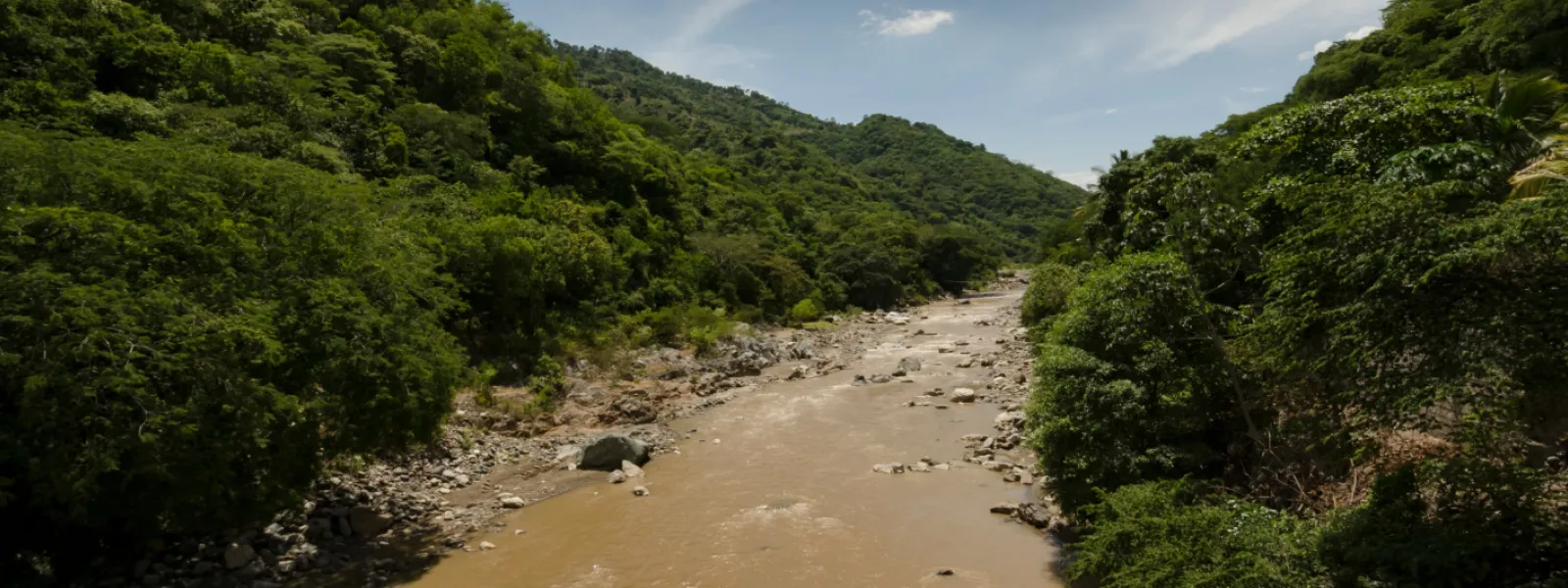
The Motagua River basin—Guatemala’s largest and most important river—is severely polluted with wastewater, solid waste, and other types of debris.
This is a cross-border issue because the Motagua’s polluted waters flow into the Caribbean Sea, reach the coast of Honduras, and threaten the Mesoamerican Reef System.
For decades, this has violated the rights to health, water, development, and a healthy environment of all the people living in the river basin.
In June 2025, the Poqomam Maya community of Santa Cruz Chinautla—supported by AIDA, the Indigenous Peoples’ Law Firm, and allied organizations—achieved an unprecedented legal victory to halt degradation in the basin. In response to the lawsuit it filed, a Guatemalan court ordered the municipality of Chinautla to comply with a series of obligations to curb the pollution of the area’s rivers and soil.
The government's response to the ruling has so far been limited to technical working group meetings. Meanwhile, the community continues to work toward the proper implementation of the ruling and to take other actions to defend its territory and its rights.
Background
The Motagua River, which is 486 km long, flows through 96 municipalities and 14 departments in Guatemala. It originates in Quiché, a department located in the northwest, and empties into the Caribbean Sea.
Polluting activities occur throughout the entire basin, including sub-basins and micro-basins. The largest volume of pollution comes from Guatemala City, the country’s capital, and is carried by the waters of the Las Vacas River, which in turn receives a large amount of waste from the Chinautla River.
The Chinautla River, which flows through the municipality of the same name, carries solid waste from a landfill located in Zone 3 of the capital—where trash from at least 14 municipalities in the department of Guatemala is dumped—as well as sewage generated by some 500,000 people living in the northern part of the capital, which undergoes no prior treatment.
Other sources of pollution include the numerous illegal dumps in the municipality of Chinautla, the waste that private vehicles and garbage trucks dump along the banks of its rivers, as well as the sand-mining companies—which began setting up operations in the area between 1996 and 1997—whose activities weaken the rivers' basins, causing solid waste to be more easily carried away by the river currents.
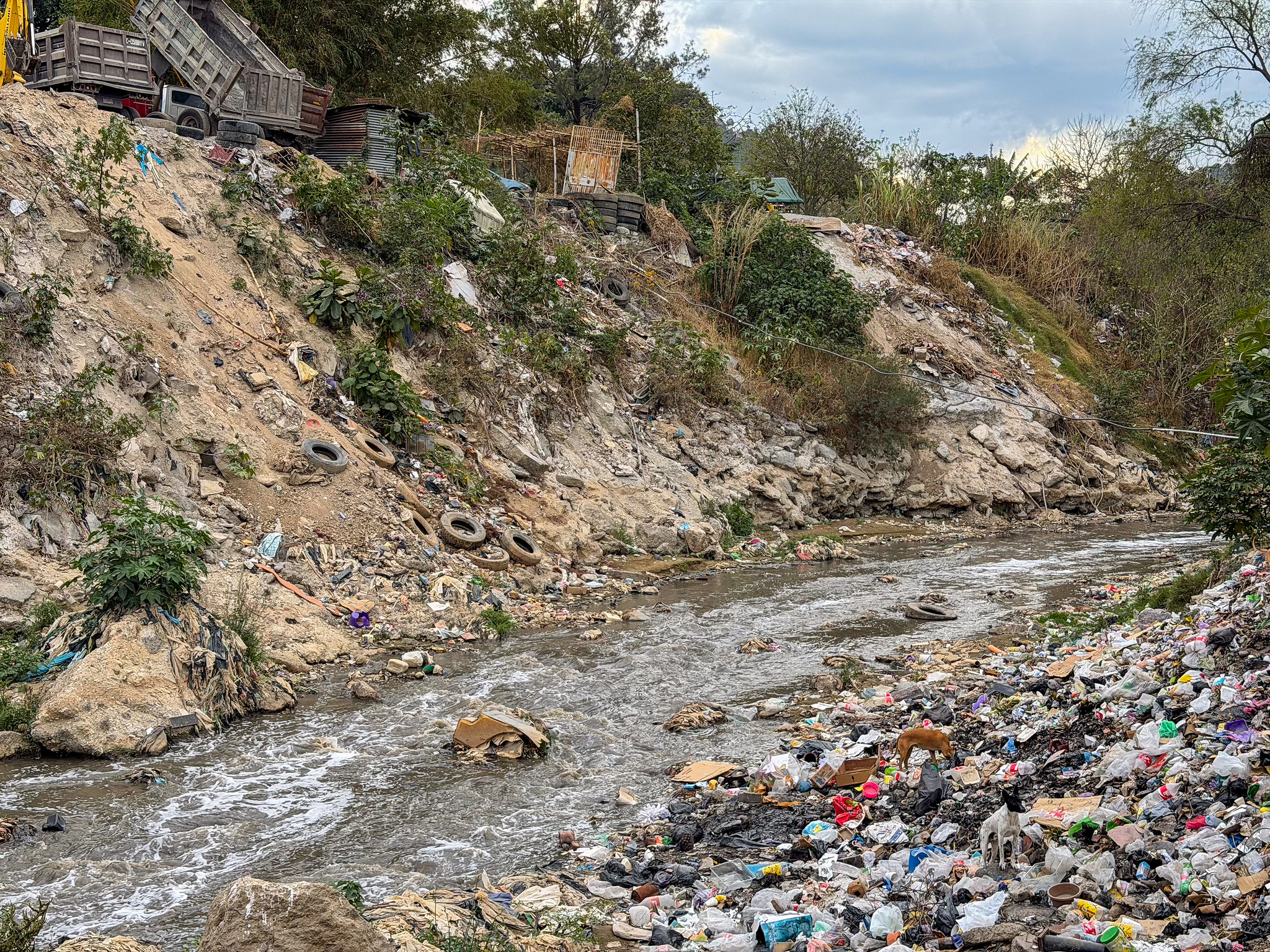
Photo: Mayela Sánchez García.
The situation extends beyond national borders. Every year, the Motagua River discharges some 20,000 metric tons of plastic into the Caribbean Sea, making it one of the rivers that contributes the most plastic pollution to the ocean worldwide, according to estimates contained in a 2025 report by the Inter-American Commission on Human Rights (IACHR).
The river flows into the Mesoamerican Reef at its mouth, so pollution also threatens to degrade one of the largest and most biodiverse transboundary reefs on the planet, which spans the territorial waters of Belize, Guatemala, Honduras, and Mexico.
In addition, the contaminated water reaches the coast of Honduras and spreads into Amatique Bay, located along the eastern coast of Guatemala, affecting the Caribbean Sea.
The roots of this chronic, cross-border problem are structural. Data from the Integrated Environmental Management of the Motagua River Basin project, funded by the United Nations Development Program (UNDP), show that in Guatemala, 66% of municipal solid waste is not collected, and there is no guarantee that the remaining 34% is disposed of properly. Furthermore, of all landfills nationwide, 88.32% are illegal or lack municipal authorization.
In other words, the core issues that need to be addressed are the mismanagement of solid waste and water resources in Guatemala; noncompliance with existing regulations on wastewater discharge and the disposal and treatment of solid waste and residues; and the lack of a water law.
The Poqomam Maya people's quest for justice
The rivers of Santa Cruz Chinautla, a community of the Poqomam Maya people located just twelve kilometers from Guatemala City, have become conduits of pollution that are degrading the Motagua River.
For decades, the local population has seen its health and livelihoods—including pottery, one of the main economic activities and a source of identity—damaged due to the lack of waste management in the municipality of Chinautla and the urban area of the country’s capital, as well as the activities of sand-mining companies.
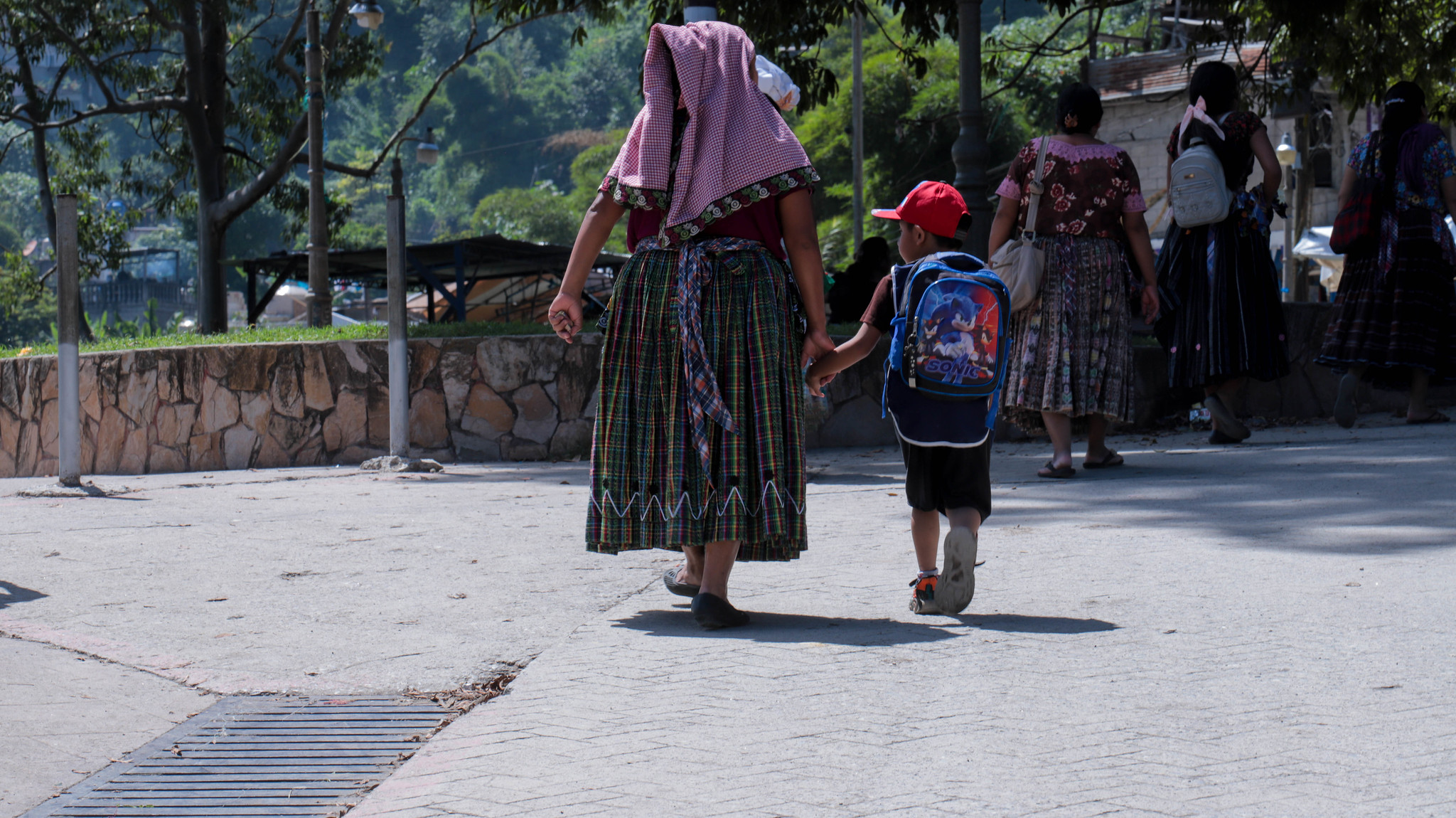
Photo: Mario Winter.
Voices for the Motagua River: Olga Vázquez.
Voices for the Motagua River: Nazario Pascual.
In early 2000, the Maya community organized to stop sand mining on their territory. At that time, the companies held mining permits that remained valid through 2021 and 2022. And although the permits expired, some companies continued to operate after requesting extensions. In June 2022, the indigenous authorities of the Poqomam people began a sit-in protest in front of the Piedrinera San Luis company, which they maintained for four years.
In July 2024, the Special Rapporteur on Economic, Social, Cultural, and Environmental Rights of the IACHR visited Santa Cruz Chinautla. During his visit, traditional authorities and community members spoke about the environmental, water-related, health, economic, and cultural impacts of the pollution in their rivers.
That same year, in October, the community—with support from AIDA, the Indigenous Peoples’ Law Firm, and partner organizations—filed a lawsuit (petition for amparo) against the municipality of Chinautla over its failure to take measures to address the contamination of its rivers and soil caused by improper solid waste management and the existence of illegal landfills.
AIDA’s scientific team, together with local residents and community authorities, collected key information on illegal landfills in the area. This community science initiative supported the litigation by highlighting the severity of the pollution, demonstrating the ongoing use of such practices, and providing evidence of the municipal authorities’ failure to fulfill their legal obligations regarding waste management.
Learn more about this community science initiative.
In June 2025, the Poqomam community won the support of the Guatemalan justice system when a constitutional court ordered the municipality of Chinautla to effectively address the claims in the lawsuit aimed at stopping the pollution of the rivers and soil in Santa Cruz Chinautla.
This is the first time a Guatemalan court has recognized a community's right to a healthy environment and its central role in finding solutions.
Find out the details of the legal victory.
Current situation
Since the ruling was issued, the municipality of Chinautla has held a series of “technical working groups” with representatives from the central government, civil society, and the community. A smaller group of technical experts was later created to develop a work plan with clear goals. Several months have passed without the municipality convening these working groups.
Furthermore, in December 2025, the IACHR noted in its report Human Rights Situation in Guatemala that the Motagua River basin is facing a severe pollution crisis that has had profound impacts on biodiversity and has resulted in systematic violations of the human rights of local communities, including the Maya Poqomam people.
And in May 2026, the Ministry of the Environment and Natural Resources revoked the license of the sand mining company Piedrinera San Luis for "failure to comply with environmental commitments."
AIDA continues to monitor the implementation of the court ruling to ensure the right to a healthy environment for the Poqomam Maya community and all those living in the Motagua River basin. Meanwhile, the residents of Santa Cruz Chinautla remain organized and mobilized to improve their environment and defend their rights.
Related projects
Legal resistance to the expansion of salmon farming in Chile
By Claudia Arancibia (AIDA), Victoria Belemmi (FIMA) y Estefanía González (Greenpeace Chile) In the Magallanes Region of Southern Patagonia, one of Chile’s most pristine natural areas, the indigenous communities who have lived amongst these awe-inspiring fjords and channels for six thousand years are now fighting to project them. A coalition of Kawésqar communities – organized as Kawésqar Atap, As Wal Lajep, Grupos Familiares Nómades del Mar, Residentes Río Primero e Inés Caro – are defending their land and seas from the expansion of the salmon industry into their ancestral territory. In February, they won an important legal victory. Chile’s Supreme Court ruled in their favor, repealing an environmental permit that had authorized the construction of a salmon farm in Lake Balmaceda, citing the project’s failure to consider the observations of local communities. The ruling overturns a 2018 decision of the Third Environment Court that had rejected the communities’ claims. This case sets an important precedent—the nation’s highest court recognized the value of indigenous participation in the environmental evaluation process of projects that could affect ancestral territories. It also reaffirmed the State's obligation to respect the indigenous consultation process and to comply with the provisions of national environmental law and Convention 169 of the International Labor Organization, ratified by Chile. The Supreme Court's ruling represents progress toward understanding that the participation of indigenous, local and traditional communities—in addition to being a right—is a valuable input for decision-making. In November 2020, another important legal development acknowledged the damages caused by these salmon farming operations. The Third Environmental Court recognized that the lack of oxygen in the waters of Chilean Patagonia is directly related to the operation of salmon farms. Despite being informed of the situation, the Environmental Superintendent had previously ignored the causal relationship between salmon farming and environmental damages, arguing that, often, the decrease of oxygen was due to natural causes such as marine currents, the geography of the area, or climate change. The Court’s ruling also constitutes a key precedent, as it associates industrial salmon production with the dangerous percentage of areas with low oxygen levels in the seas of Chilean Patagonia. Known as anaerobism, this condition is caused by the large amount of organic matter (uneaten food and feces) that the salmon industry discharges into the sea, inadequate handling of dead fish, and the amount of farmed fish per square meter, which exceeds the carrying capacity of the waters. What about sanctions? Despite the progress described above, Chilean authorities still face serious problems in adequately controlling salmon farming and preventing the damages the industry’s expansion is causing. It’s clear that the sanctions imposed on offending companies have not been sufficiently exemplary or dissuasive. In spite of multiple sanctioning procedures against several companies, no efforts have been made to improve sanitary and environmental standards, neither of which is considered by the environmental authorities when granting operating permits. For a revelatory case study, we need look no farther than a Magallanes scandal known as “Salmon Leaks.” In 2019, a journalistic investigation uncovered that the company Nova Austral was hiding the amount of fish that died daily in their farms in the Alberto de Agostini National Park. A subsequent report revealed that the company also adulterated the seabed with heavy machinery (until it was basically dead), in order to hide its anaerobic condition and obtain permission to continue farming salmon in biologically deteriorated marine areas. In response, the Court of Appeals of Punta Arenas sanctioned the company with the maximum fine and the suspension of a productive cycle. In 2020, the State Defense Council sued the company for possible fraud because it was collecting tax benefits under the Navarino Law in breach of its obligation to "make rational use of the natural resources of the Magallanes region, preserving nature and the environment." Then, General Treasury of the Republic withheld four payments covering up to four months of subsidies under the law. Despite the multiple scandals and sanctions imposed, the company continues to advertise the "sustainability" of its salmon. The future of the Kawésqar Reserve Now, Nova Austral is seeking to relocate four of its aquaculture concessions to Kawésqar National Reserve, with prior approval from the Environmental Evaluation Service. Six other projects are currently undergoing environmental evaluation for the same purpose. This is alarming for many reasons, but principal among them is the fact that the Reserve lacks an adequate management plan to safeguard its conservation objectives. This leaves the area exposed potentially serious impacts to its natural wealth and the ancestral rights of the Kawésqar indigenous communities. It’s urgent that the Reserve’s management plan prohibits salmon farming within its boundaries, due to the outright incompatibility of salmon farming with the reserve’s objectives. We have much to learn from the Kawésqar communities, who reaffirm the protection of the seas of the Patagonian archipelago as the basis for protecting their worldview, their cultural identity and their way of life. What will it take for the rest of the country to defend the Patagonian seas as a natural treasure vital not just for Chile, but for the world?
Read more
Belo Sun: at the worst moment of the pandemic, Brazilian government authorizes in-person meeting between mining company and impacted Indigenous peoples
Brazil’s National Indian Foundation claims lack of internet connection and completion of vaccination of Indigenous people, however, 77% of the Indigenous people received the first vaccine jab in the region, and only 34% the second dose. About 994 indigenous Brazilians have died since the COVID-19 pandemic began last March. Brazil (Altamira, Pará) – In a white paper published on February 10, 2021, the Brazilian National Indian Foundation (Fundação Nacional do Índio–FUNAI) gave details on "health protocols" so that Canadian mining company Belo Sun can hold meetings to present and validate its studies on environmental impact to Indigenous residents from the Indigenous Lands (ILs) located in Pará state - Arara da Volta Grande do Xingu and Paquiçamba - in a mixed format—in-person and virtually. The decision is taken at a time when the country faces the bleakest moment of the coronavirus pandemic, with Indigenous peoples being one of the most impacted and vulnerable groups. Brazil has recorded more than 266,000 deaths and 11 million cases since the pandemic began. About 994 indigenous Brazilians have died since the COVID-19 pandemic began last March, according to a tally by APIB, Brazil’s largest indigenous association. Altamira, a reference city for both ILs, has recorded 19,100 cases so far. Moreover, the regional hospital occupancy rate has exceeded 90%. It is expected that, after validation of the indigenous component of the Environmental Impact Study (EIA), the Installation License, suspended by the courts since 2017, will be re-issued by the Pará State Environment Secretariat (Secretaria de Meio Ambiente–SEMA). The Federal Public Defender's Office (DPU) addressed FUNAI on Wednesday (10) recommending that the agency do not authorize or participate in in-person meetings while the Covid-19 pandemic poses a threat to the Indigenous peoples of the region. According to the document, the proposal presented by the company "does not guarantee health security and the preservation of the lives of participants, and is based on information that is not compatible with the situation of the pandemic in the Altamira region." According to FUNAI, “different meetings are being planned for each IL, on consecutive dates (...), and the talks, at least partially in-person, are desirable, maintaining the format adopted throughout the process and which ensured a very fruitful consultation and dialogue process.” The company is intent on becoming the largest open pit gold miner in Brazil, and intends to operate out of Volta Grande do Xingu, one of the most biodiverse sites in the world that already experiences the impacts of the diversion of the Xingu River by the Belo Monte hydroelectric plant. In addition to the Juruna (Yudjá) and Arara ethnicities, the region is home to other non-villagers and several riverside communities. Contrary to what the company claims, the Indigenous peoples of Volta Grande have not yet been properly consulted. “Volta Grande do Xingu has already been dealing with the impacts of the Belo Monte hydroelectric plant. At this time, the Brazilian authorities should guarantee the protection of Indigenous peoples and address the serious technical shortcomings in the project. Authorizing in-person meetings makes it clear which side both FUNAI and the Brazilian government are on: that of the big mining companies,” notes Rosana Miranda of Amazon Watch, the organization is part of the group of institutions that have been denouncing the socio-environmental unfeasibility of Belo Sun’s project. FUNAI's decision is based on the assumption that the indigenous population would have been vaccinated by the end of January 2021. By early March, however, 77% of the Indigenous people served by the Altamira Special Indigenous Health District (Distrito Sanitário Especial Indígena–DSEI) received the first vaccine jab, and only 34% the second dose. According to data from the federal government surveyed by G1, on February 17, 71% of Indigenous people living in the Amazon had not been vaccinated against Covid. At the time, Brazil should have immunized 431,983 Indigenous people against the virus, however, only 164,592 had been vaccinated. The low vaccination coverage of Indigenous peoples is yet another chapter in the neglect of the federal government’s management of the pandemic. This is made clear by the increase in the number of deaths by Covid-19 among Indigenous populations by more than 108%, according to data from the Association of Indigenous Peoples of Brazil (APIB). Nearly 50,000 Indigenous people were infected and 988 died, according to APIB. The mining company expects to extract 74 tons of gold in 20 years of operation, one of the largest in Latin America. It has been striving to deny the potential impacts on Indigenous peoples, traditional communities and the environment since the project’s announcement in 2012. Three recent expert opinions attest that the project is not viable from a socio-environmental perspective and raise several technical issues regarding the impact studies on the Indigenous component [Access the documents]. Neither FUNAI nor SEMAS have responded to the technical inquiries made by the specialists. [See here the studies: 1,2,3] The expert opinions add up to examinations conducted by the Federal Public Prosecutor and the Pará State Public Defender's Office within the scope of at least six legal challenges against the project. The studies, carried out by independent researchers, are part of the efforts of several civil society organizations that have been denouncing the socio-environmental unfeasibility of the project, such as Rede Xingu +, Movimento Xingu Vivo para Sempre, Amazon Watch, Instituto Socioambiental (ISA), International Rivers, Above Ground and Interamerican Association for Environmental Defense (AIDA). Mining companies and the Brazilian government take part in meeting in Canada This Thursday, March 11, marks the end of the convention of the Prospectors and Developers Association of Canada (PDAC), an annual gathering where major investors and mining companies from Canada present “new business opportunities in the sector for the next decades.” With a busy schedule, the Brazilian government has among its main sponsors for the event Belo Sun Mining. In a pre-recorded presentation for the event, the Minister of Mines and Energy, Bento Albuquerque, stated that the Brazilian government is determined to expand access to mineral resources currently restricted to mining—such as Indigenous Lands and border areas. Belo Sun's CEO Peter Tagliamonte is listed as a speaker on the March 11 session entitled The Brazilian Mineral Exploration & Mining Industry Projects & Opportunities, organized by the Brazilian government. press contacts Camila Rossi, Amazon Watch, [email protected] Anna Miller, AIDA, [email protected]
Read more
Mexico’s climate commitments lack ambition
Nationally Determined Contributions (NDC) are the mechanism through which the countries that signed the Paris Agreement contribute to the fulfillment of the global pact's objective: to keep the increase in the planet's average temperature below 2°C. Each country's NDC outlines its national mitigation and adaptation commitments in the face of the climate crisis, including emission reduction efforts. The Paris Agreement stipulates that these commitments must be communicated to the United Nations Framework Convention on Climate Change (UNFCCC) every five years and that each successive NDC must represent a progression from the previous one, reflecting the highest possible ambition (Article 3). In addition, NDCs must contain sufficient information on clear, transparent and understandable targets (Article 8, paragraph 8). And, in the case of Mexico, the General Law on Climate Change (LGCC) considers the NDC as one of the planning instruments of the National Climate Change Policy (Article 58) and establishes that it must observe, among others, the principle of progressivity, which implies that the established goals must be progressive and gradual over time (Article 26, section XIII). In its most recent update, Mexico's NDC does not comply with the level of ambition required by the Paris Agreement and the LGCC. Ambition in the spotlight The Mexican State presented its first NDC in 2015. In it, the government made an unconditional commitment—through its own resources—to a 22 percent reduction in greenhouse gas emissions, and a 51 percent reduction in black carbon emissions, by 2030. Last December, Mexico presented its updated NDC, which should be more ambitious than the previous one. However, the new instrument merely reiterates the mitigation commitments made in 2015. Moreover, the Business As Usual (BAU) scenario—a tentative scenario in which there are no mitigation policies and which serves as a baseline for climate actions—was adjusted upwards with a higher total level of emissions by 2030 than indicated in the first NDC. This, according to the Climate Action Tracker (CAT), an independent scientific analysis that tracks governments’ climate action and compares it to what was agreed globally in the Paris Agreement. The CAT analysis states, "Because the NDC is based on a percentage reduction below BAU projections, a higher level of emissions in 2030 effectively reduces the country's mitigation ambition, even if the reduction targets remain unchanged." Due to its lack of ambition, Mexico's updated NDC was rated as "highly insufficient" in the CAT ranking. This means that the commitments adopted by the country "are not at all consistent with keeping [global] warming below 2°C [...]," being instead "consistent with warming levels of between 3°C and 4°C.” International agencies such as the United Nations Environment Programme (UNEP) and the European Commission have emphasized the need for Mexico to increase its mitigation ambition, especially in the energy sector, which contributes most to the climate crisis and where the greatest emissions reduction opportunities exist in the short and long term. But Mexico's recent NDC does not set out specific actions in key economic sectors to achieve the endorsed targets, although it does state that these will be developed in an NDC implementation roadmap to be presented in the next Biennial Update Report. In this sense, the instrument lacks sufficient information to have clear, transparent and understandable targets. Regarding the adaptation component, Mexico's updated NDC includes nature-based climate solutions. However, the inclusion of such actions is not sufficient to have the level of ambition required to address the climate crisis and meet the objective of the Paris Agreement. A violation of the principle of progressivity In light of the facts, the updating of Mexico's climate commitments fails to meet the level of ambition required by the Paris Agreement and with this the Mexican State also disregards the principle of progressivity established in the LGCC since the targets set do not represent a progression and gradualness with respect to the first NDC. Other countries in the region—including Argentina, Colombia, Costa Rica and Chile—have updated their NDCs, demonstrating increased climate ambition. Although they include measures that could be improved, their actions demonstrate a willingness to make further progress in terms of their contribution to global climate action. In this context, the Mexican State is leaving behind the progress and leadership it had years ago on climate issues. Its lack of ambition demonstrates indifference to the climate crisis and its impacts on the human rights of the most vulnerable populations. Mexico must assume its responsibility, one that comes from being on the list of the 20 largest emitters in the world. It must adopt mitigation and adaptation commitments compatible with the global goal of preventing global warming from reaching a point of catastrophic consequences.
Read more