
Project
Shutterstock.
Pollution of the Motagua River in Guatemala: The Poqomam Maya people’s quest for environmental justice
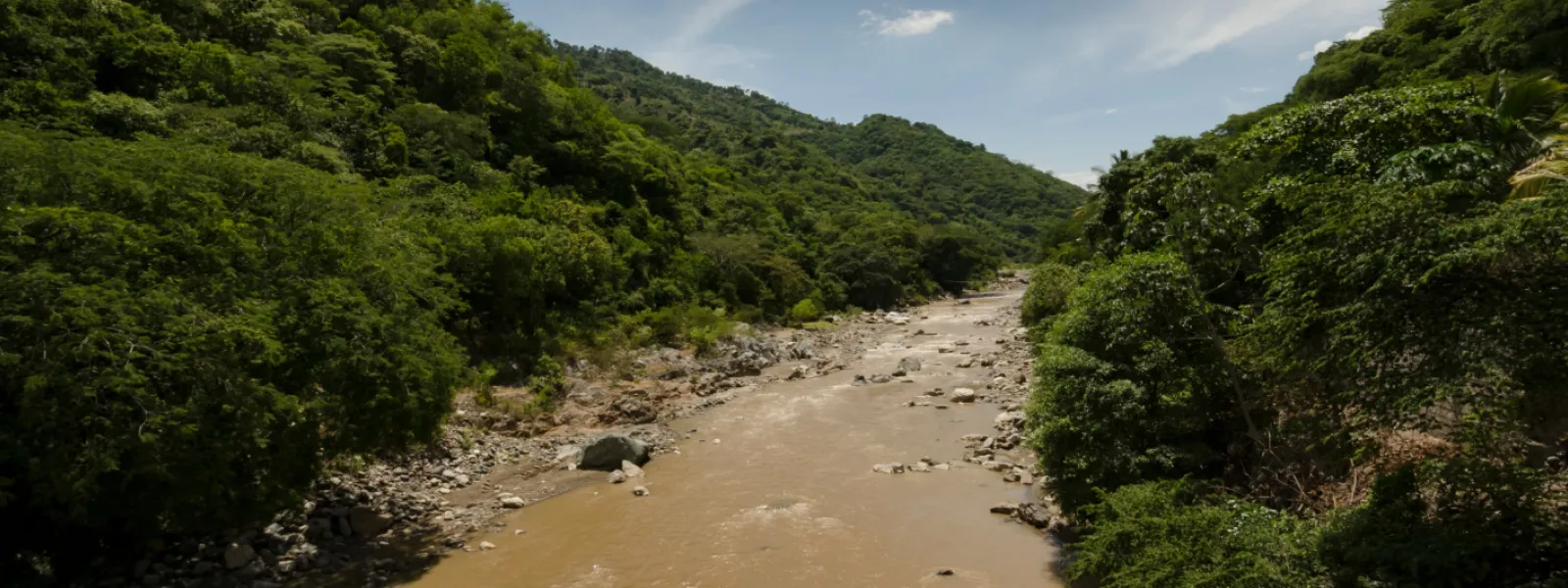
The Motagua River basin—Guatemala’s largest and most important river—is severely polluted with wastewater, solid waste, and other types of debris.
This is a cross-border issue because the Motagua’s polluted waters flow into the Caribbean Sea, reach the coast of Honduras, and threaten the Mesoamerican Reef System.
For decades, this has violated the rights to health, water, development, and a healthy environment of all the people living in the river basin.
In June 2025, the Poqomam Maya community of Santa Cruz Chinautla—supported by AIDA, the Indigenous Peoples’ Law Firm, and allied organizations—achieved an unprecedented legal victory to halt degradation in the basin. In response to the lawsuit it filed, a Guatemalan court ordered the municipality of Chinautla to comply with a series of obligations to curb the pollution of the area’s rivers and soil.
The government's response to the ruling has so far been limited to technical working group meetings. Meanwhile, the community continues to work toward the proper implementation of the ruling and to take other actions to defend its territory and its rights.
Background
The Motagua River, which is 486 km long, flows through 96 municipalities and 14 departments in Guatemala. It originates in Quiché, a department located in the northwest, and empties into the Caribbean Sea.
Polluting activities occur throughout the entire basin, including sub-basins and micro-basins. The largest volume of pollution comes from Guatemala City, the country’s capital, and is carried by the waters of the Las Vacas River, which in turn receives a large amount of waste from the Chinautla River.
The Chinautla River, which flows through the municipality of the same name, carries solid waste from a landfill located in Zone 3 of the capital—where trash from at least 14 municipalities in the department of Guatemala is dumped—as well as sewage generated by some 500,000 people living in the northern part of the capital, which undergoes no prior treatment.
Other sources of pollution include the numerous illegal dumps in the municipality of Chinautla, the waste that private vehicles and garbage trucks dump along the banks of its rivers, as well as the sand-mining companies—which began setting up operations in the area between 1996 and 1997—whose activities weaken the rivers' basins, causing solid waste to be more easily carried away by the river currents.
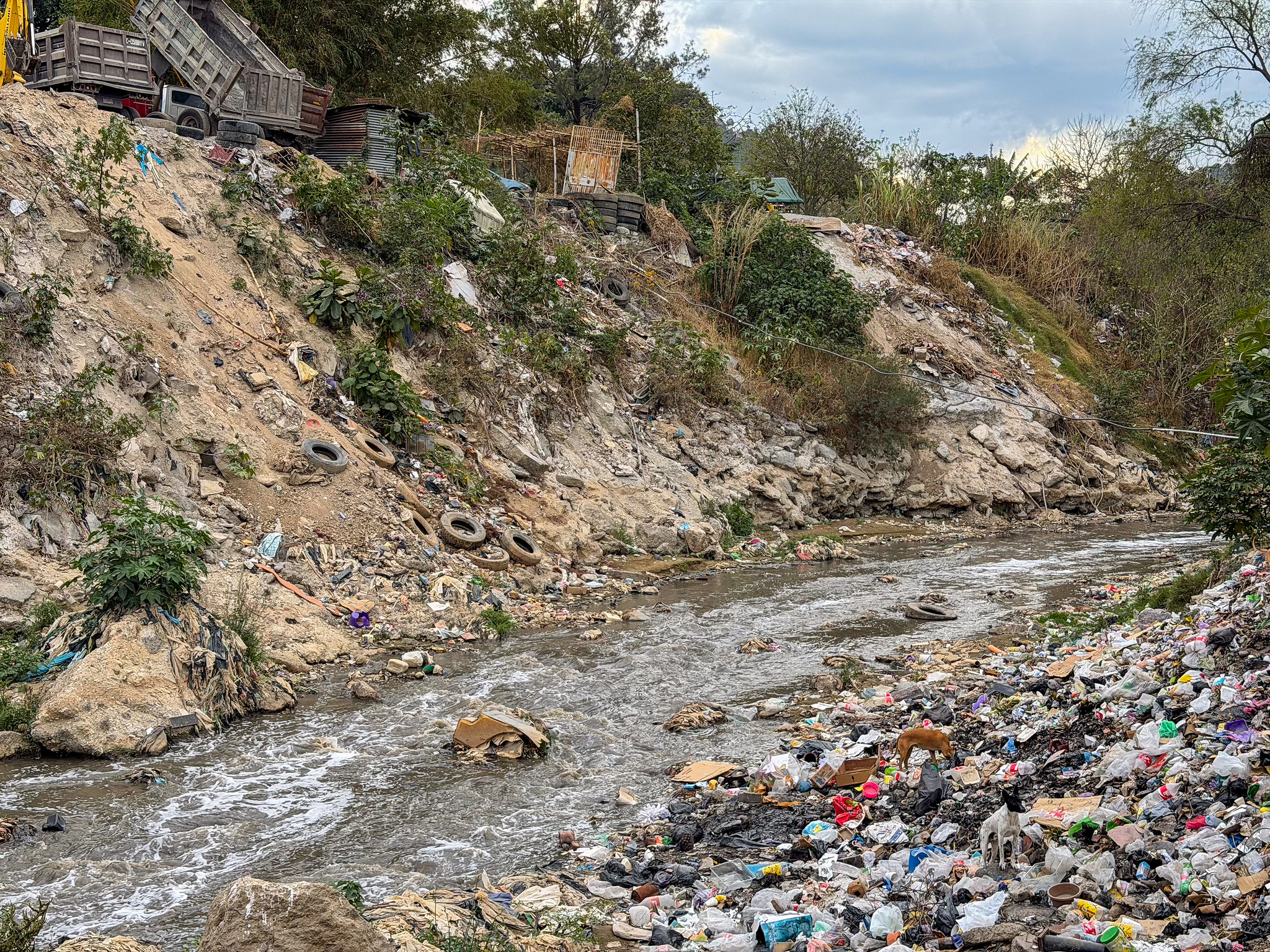
Photo: Mayela Sánchez García.
The situation extends beyond national borders. Every year, the Motagua River discharges some 20,000 metric tons of plastic into the Caribbean Sea, making it one of the rivers that contributes the most plastic pollution to the ocean worldwide, according to estimates contained in a 2025 report by the Inter-American Commission on Human Rights (IACHR).
The river flows into the Mesoamerican Reef at its mouth, so pollution also threatens to degrade one of the largest and most biodiverse transboundary reefs on the planet, which spans the territorial waters of Belize, Guatemala, Honduras, and Mexico.
In addition, the contaminated water reaches the coast of Honduras and spreads into Amatique Bay, located along the eastern coast of Guatemala, affecting the Caribbean Sea.
The roots of this chronic, cross-border problem are structural. Data from the Integrated Environmental Management of the Motagua River Basin project, funded by the United Nations Development Program (UNDP), show that in Guatemala, 66% of municipal solid waste is not collected, and there is no guarantee that the remaining 34% is disposed of properly. Furthermore, of all landfills nationwide, 88.32% are illegal or lack municipal authorization.
In other words, the core issues that need to be addressed are the mismanagement of solid waste and water resources in Guatemala; noncompliance with existing regulations on wastewater discharge and the disposal and treatment of solid waste and residues; and the lack of a water law.
The Poqomam Maya people's quest for justice
The rivers of Santa Cruz Chinautla, a community of the Poqomam Maya people located just twelve kilometers from Guatemala City, have become conduits of pollution that are degrading the Motagua River.
For decades, the local population has seen its health and livelihoods—including pottery, one of the main economic activities and a source of identity—damaged due to the lack of waste management in the municipality of Chinautla and the urban area of the country’s capital, as well as the activities of sand-mining companies.
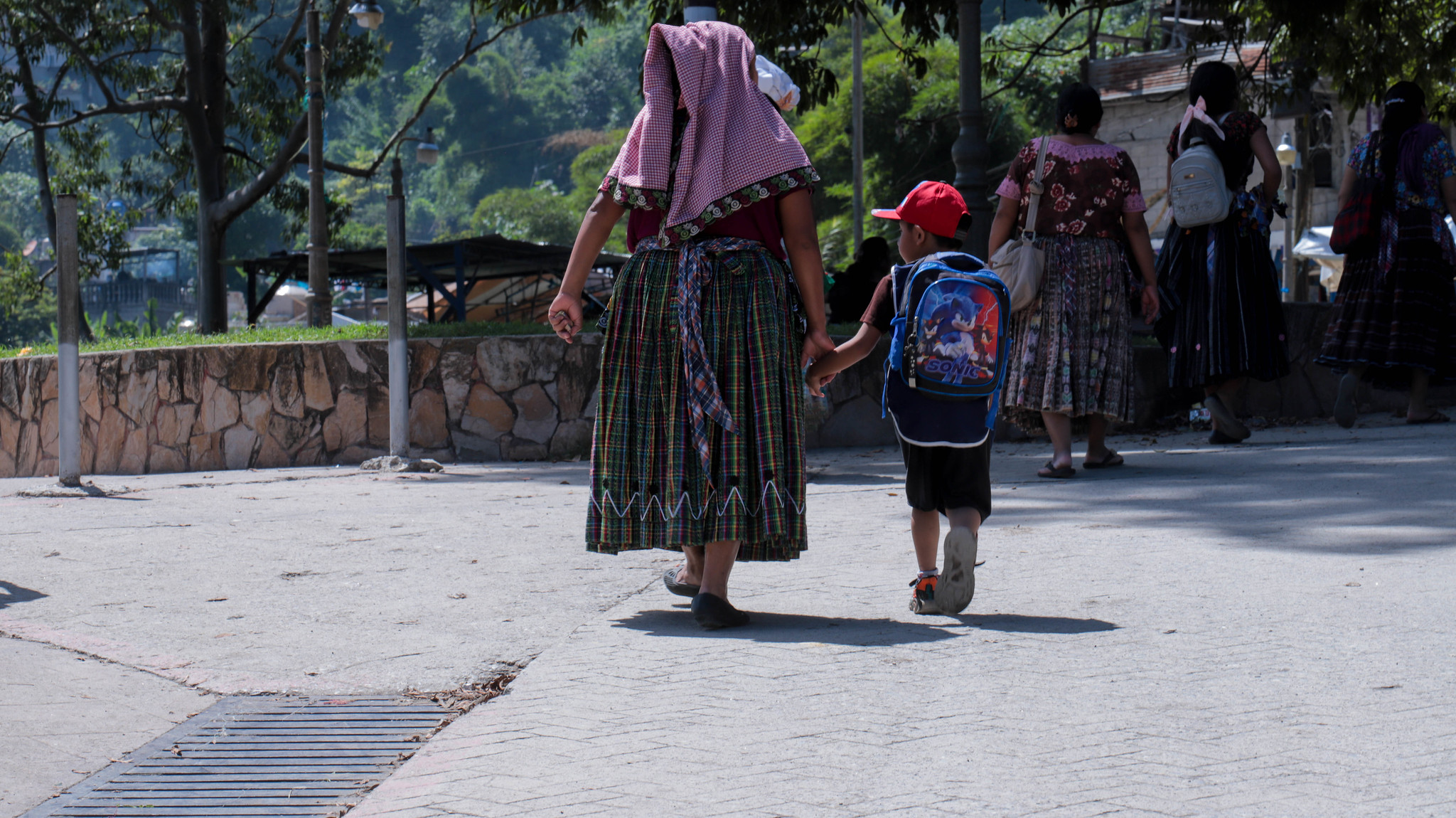
Photo: Mario Winter.
Voices for the Motagua River: Olga Vázquez.
Voices for the Motagua River: Nazario Pascual.
In early 2000, the Maya community organized to stop sand mining on their territory. At that time, the companies held mining permits that remained valid through 2021 and 2022. And although the permits expired, some companies continued to operate after requesting extensions. In June 2022, the indigenous authorities of the Poqomam people began a sit-in protest in front of the Piedrinera San Luis company, which they maintained for four years.
In July 2024, the Special Rapporteur on Economic, Social, Cultural, and Environmental Rights of the IACHR visited Santa Cruz Chinautla. During his visit, traditional authorities and community members spoke about the environmental, water-related, health, economic, and cultural impacts of the pollution in their rivers.
That same year, in October, the community—with support from AIDA, the Indigenous Peoples’ Law Firm, and partner organizations—filed a lawsuit (petition for amparo) against the municipality of Chinautla over its failure to take measures to address the contamination of its rivers and soil caused by improper solid waste management and the existence of illegal landfills.
AIDA’s scientific team, together with local residents and community authorities, collected key information on illegal landfills in the area. This community science initiative supported the litigation by highlighting the severity of the pollution, demonstrating the ongoing use of such practices, and providing evidence of the municipal authorities’ failure to fulfill their legal obligations regarding waste management.
Learn more about this community science initiative.
In June 2025, the Poqomam community won the support of the Guatemalan justice system when a constitutional court ordered the municipality of Chinautla to effectively address the claims in the lawsuit aimed at stopping the pollution of the rivers and soil in Santa Cruz Chinautla.
This is the first time a Guatemalan court has recognized a community's right to a healthy environment and its central role in finding solutions.
Find out the details of the legal victory.
Current situation
Since the ruling was issued, the municipality of Chinautla has held a series of “technical working groups” with representatives from the central government, civil society, and the community. A smaller group of technical experts was later created to develop a work plan with clear goals. Several months have passed without the municipality convening these working groups.
Furthermore, in December 2025, the IACHR noted in its report Human Rights Situation in Guatemala that the Motagua River basin is facing a severe pollution crisis that has had profound impacts on biodiversity and has resulted in systematic violations of the human rights of local communities, including the Maya Poqomam people.
And in May 2026, the Ministry of the Environment and Natural Resources revoked the license of the sand mining company Piedrinera San Luis for "failure to comply with environmental commitments."
AIDA continues to monitor the implementation of the court ruling to ensure the right to a healthy environment for the Poqomam Maya community and all those living in the Motagua River basin. Meanwhile, the residents of Santa Cruz Chinautla remain organized and mobilized to improve their environment and defend their rights.
Related projects
Litigation to promote (and accelerate) climate action
In 1990, the United Nations Intergovernmental Panel on Climate Change (IPCC) produced its first assessment report. It was the first time that the international scientific community officially and accurately demonstrated that greenhouse gas emissions, produced by human activities, would lead to additional warming of the planet's surface, with global consequences. Over more than two decades of international climate negotiations and agreements to drastically reduce emissions, progress has been slow. And so, climate litigation has become a tool increasingly used by organizations and communities to hold governments and companies accountable for the climate crisis. Legal cases have forced nations to adopt more concrete and ambitious measures to curb emissions and mitigate the human rights impacts of the climate crisis. In May, a Dutch court set a landmark precedent when it ordered multinational oil company Shell to reduce its carbon dioxide emissions by 45 percent over less than 10 years, marking a global environmental victory. "This judgment has been of great significance because Shell is one of the companies that most contributes to climate change," says Verónica Méndez, an attorney with AIDA's Climate Change Program. AIDA's legal and scientific team provides legal support and technical information to organizations and communities initiating climate litigation against governments and companies in Latin America. AIDA also developed a climate litigation platform, which systematizes key information on the cases developed in the region. The mapping of data is being done collaboratively with other organizations and will allow for the strengthening of joint litigation strategies. A brief overview of climate litigation Climate litigation includes cases that raise issues related to the legal obligations that states and companies have in relation to the climate crisis. They are brought before judicial bodies to seek, among other things, the enforcement of existing climate laws; an expansion in the scope of other laws to address climate change; recognition of the relationship between fundamental human rights and the impacts of the climate crisis; and compensation for loss and damage. This, according to a report prepared by the United Nations Environment Programme, in collaboration with the Sabine Center for Climate Change Law at Columbia University (New York), which assesses the global situation of this type of litigation. According to the report, as of July 1, 2020, at least 1,550 climate litigations have been registered in 38 countries, almost doubling the number of cases registered in 24 countries in 2017. The United States leads the list where the most litigation has been filed (1,200), followed by Australia (97), the United Kingdom (58) and the European Union (55). Climate lawsuits are also booming in Latin America, particularly in Mexico, Brazil, Colombia and Chile. To date, AIDA has analyzed nearly 50 cases that will form part of the region's climate litigation platform. Challenges and opportunities in climate litigation While climate litigation seeks to achieve justice for communities affected by the impacts of the climate crisis, one of its great challenges lies the implementation of decisions. In 2018, a historic judgement ruled in favor of 25 young Colombians, who sued the government for deforestation in the Amazon and its direct link to the violation of the right to a healthy environment for future generations. This lawsuit is considered a climate litigation due to the increase in greenhouse gas emissions associated with deforestation. In it, the Supreme Court of Justice recognized the Colombian Amazon as an entity subject to rights and ordered the creation of an action plan to reduce deforestation, and the adoption of an intergenerational pact for the life of the Colombian Amazon. However, the conclusions of follow-up reports on the case indicate that, to date, there has not been full compliance with the ruling. "A judgment does not end with the sentence,” explains Méndez. “It must be followed up with to ensure compliance." Demonstrating that corporations and governments have an enormous responsibility in the fight against the climate crisis not only requires scientific information that proves that the emissions generated or allowed contribute to climate change. It requires linking the facts to human rights to provide more reasons for the courts to act and issue a favorable ruling. "A purely scientific climate change litigation has less chance of success," Méndez emphasizes. "It’s strategic to link a case to direct impacts on the human rights of those people who will be disproportionately affected." According to a report by the Environment and Natural Resources Foundation (FARN), the outlook for climate demands in Latin America is encouraging because governments are making more commitments to climate action and, in addition, climate science is establishing direct links between extreme weather events and climate change. The coming together of communities and environmental organizations is crucial in the movement to accelerate strong policies and actions that will ensure a sustainable, just transformation for both people and the environment. Visit the Climate Litigation Platform for Latin America and the Caribbean
Read more
Reflections for a Bolivia free of fracking
Text written as part of the series #TRANSFORMAR LA CRISIS, Tomo II. Crisis Ecológica, extractivismo y poblaciones vulnerables by the foundation Friedrich-Ebert-Stiftung (FES) in Bolivia, to be published soon. It all began with a study, published in 2011 by the U.S. Energy Information Administration, reporting the existence of large quantities of unconventional hydrocarbons in Bolivia. The study created considerable expectations in the Andean Nation. Given the gradual depletion of conventional oil and gas deposits, fracking has since become a latent threat. Fracking is a risky, costly and highly polluting technique. As a region, Latin America is home to roughly seven thousand fracking wells. The technique’s advance—as well as related public policies, regulations and social opposition—has commonalities across the region, including its affects on protected areas and on urban, rural and indigenous populations. So far, Bolivia remains free from fracking. But without an intentional political decision to avoid it, and without a population better informed about its effects, fracking could soon become a reality here as well. The risks of fracking in Bolivia The implementation of fracking is a latent threat in Bolivia because of the nation’s significant dependence on fossil fuels. In 2013, the state-owned company YPFB signed a cooperative agreement with YPF Argentina to study the potential of unconventional hydrocarbons. It also asked the operating companies to extract samples from the Los Monos geological formation in the Chaco region. That same year, YPFB Chaco (a subsidiary of YPFB), with the support of Halliburton, carried out a "mini-fracture" in the Ingre X-2 well, part of the Tupambi formation, in Chuquisaca. This operation would have allowed for the discovery of tight sand oil. Based on this discovery, YPFB Chaco had proposed to perform a complete fracture of the reservoir in 2014. It is unknown if this occurred because, in the years following, YPFB stopped generating public information on the project. In 2018, Canadian company CanCambria Energy Corp. signed a study agreement with YPFB, the prelude to an exploration/exploitation contract, to determine the unconventional gas potential at Miraflores, also in Chuquisaca. CanCambria's preliminary data points to the possible existence of a mega-field in the area, whose potential gas resources would be comparable to those of Argentina’s Vaca Muerta. The Canadian firm has prepared a proposal to extract gas by drilling 800 wells over 202 square kilometers in the Miraflores area, in the municipality of Macharetí. Miraflores is located in the Heroes del Chaco Municipal Protected Area and is part of the Yrenda Toba Tarijeño Aquifer System, which Bolivia shares with Paraguay and Argentina. The people living in Macharetí, including Guaraní indigenous communities, were shocked to receive news of the project. The alarm raised by the possibility of fracking in this territory led those who live there to learn about the consequences of the technique, particularly in relation to the use and contamination of immense quantities of water. As a direct result, Macharetí included in its autonomous statute the prohibition of fracking in its territory, intensifying the controversy over the technique’s development in the area. Between extreme energy and an energy transition In the face of this controversy over fracking, two paths lay before us: on the first, is the deepening of the extractivist model and the generation of highly polluting energy, with serious and irreversible negative impacts on Mother Earth and local populations; on the second, is a just and democratic energy transition, which implies the decommodification of energy, a change in the energy matrix, and a shift in the development paradigm. Bolivia, and Latin America as a region, need to profoundly transform the way energy is produced; the new system should be formed with a long-term vision and based on the respect for human rights and the protection of nature. The development of fracking, far from initiating any transition, goes against this trend because it continues to promote a polluting, risky and costly energy system. It is based on dependence on non-renewable energy sources with negative impacts on the territories, inequity and lack of citizen participation in the construction of energy policies. Instead, Bolivia must bet on a socially just, economically viable and ecologically sustainable energy transition. "Bolivia should not move towards the implementation of fracking in its territory because it represents one of the greatest risks to its ecosystems, resources and populations," says Jorge Campanini, researcher at the Center for Documentation and Information Bolivia (CEDIB). "It is urgent to generate solid policies that declare a moratorium or indefinite ban on this technique throughout the country". The experience of Latin American countries that have bet on fracking clearly demonstrates the economic, environmental and social impacts of this technique. In this context, many organizations, communities and peoples have organized to confront the threat. The ongoing Covid-19 pandemic forces us to reflect on the future of fossil fuels, and the need for a just energy transition. Instead of considering fracking as an easy way to create jobs in difficult times, we must confront the health, economic and climate crises together. It’s time to think of resilient recovery, and thus an energy system that is not based on fracking. One idea usually associated with transition is the change of the energy matrix, yet, while necessary, the rapid and effective de-fossilization of that matrix is not enough. The energy transition must be comprehensive and incorporate environmental, economic and social dimensions so that it is also just and democratic. That’s why it’s so important that governments address the issue with a systemic approach.
Read more
Member countries of the World Trade Organization must reach an agreement on fisheries subsidies
We regret that the World Trade Organization (WTO) Ministerial Conference, held today in Geneva, failed to reach an agreement on fisheries subsidies, an urgent measure to achieve effective management of our fisheries resources, as well as to ensure global food security and the livelihoods of coastal communities. At the same time, we recognize that the negotiations are at an advanced stage and that we finally have a draft text. We wish to highlight the commitment and participation of Latin American delegations including Argentina, Chile, Colombia, Costa Rica, Guatemala, Mexico, Panama, Peru and Uruguay. We urge all WTO member countries to assume the great responsibility of reaching an agreement soon. After two decades of negotiations, the deadlines for completing the negotiations and reaching an agreement have been repeatedly missed. Although negotiations officially began in 2001, it was not until the 2017 Ministerial Conference that countries committed to take action and reach an agreement at the next conference, which was to take place in December 2020, but was suspended due to the pandemic. This commitment also responds to the fulfillment of target 14.6 of the United Nations Sustainable Development Goals. This target establishes that by 2020 "certain forms of fisheries subsidies which contribute to overcapacity and overfishing" should be prohibited, and aims to "eliminate subsidies that contribute to illegal, unreported and unregulated fishing and refrain from introducing new such subsidies, recognizing that appropriate and effective special and differential treatment for developing and least developed countries should be an integral part of the World Trade Organization fisheries subsidies negotiation." According to recent estimates, governments spend US$35 billion each year to support their fisheries sectors, of which US$22 billion represent negative subsidies, which promote overfishing. That practice results in alarming data, including that 63 percent of global fish stocks need to be rebuilt and that, according to a 2020 FAO report, 34 percent of them are fished at "biologically unsustainable" levels. While the agreement is being finalized, more needs to be done to ensure the sustainability of fish stocks. We urge WTO member countries to define without further delay commitments in this regard at the national and regional levels. For our part, AIDA attorneys will continue to work hand-in-hand with governments to reach an ambitious agreement. It is imperative that said agreement adopt solid rules, eliminate the possibility of creating legal loopholes, and seize the opportunity to establish ocean policies aimed at achieving greater sustainability and guaranteeing the satisfaction of the needs of current and future generations, as well as the conservation of our marine resources. press contact Victor Quintanilla (Mexico), [email protected], +525570522107
Read more