
Project
Shutterstock.
Pollution of the Motagua River in Guatemala: The Poqomam Maya people’s quest for environmental justice
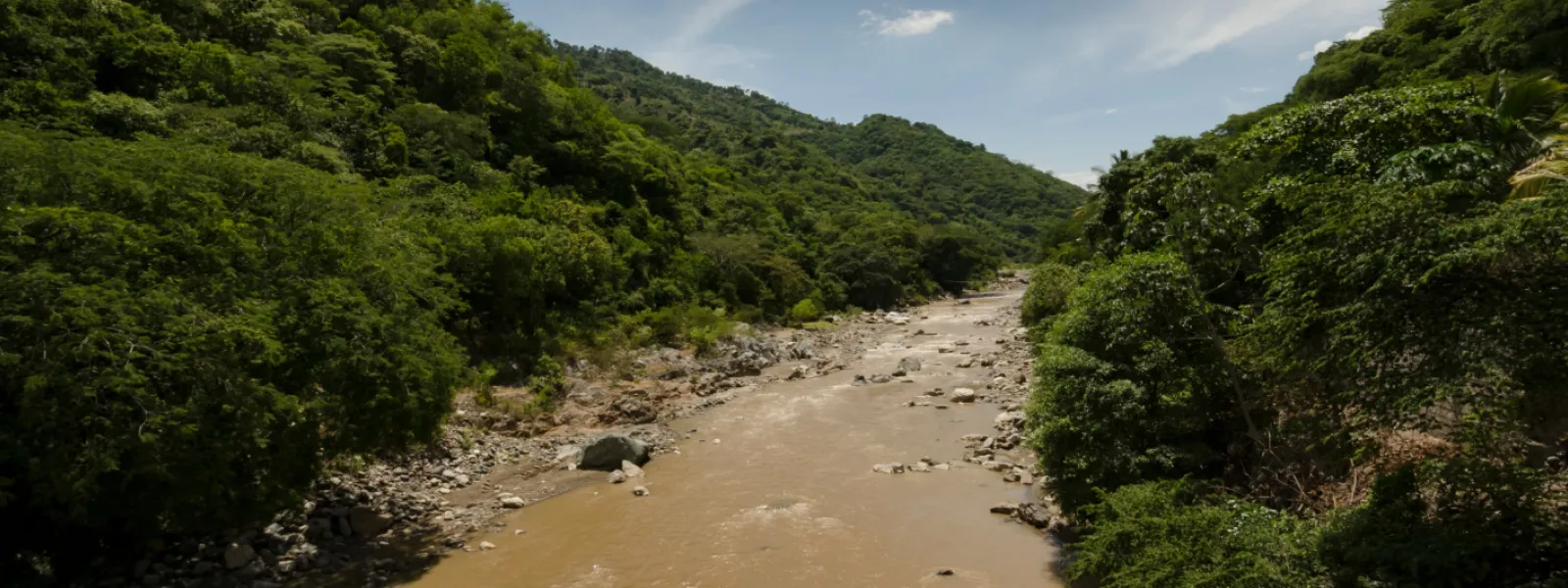
The Motagua River basin—Guatemala’s largest and most important river—is severely polluted with wastewater, solid waste, and other types of debris.
This is a cross-border issue because the Motagua’s polluted waters flow into the Caribbean Sea, reach the coast of Honduras, and threaten the Mesoamerican Reef System.
For decades, this has violated the rights to health, water, development, and a healthy environment of all the people living in the river basin.
In June 2025, the Poqomam Maya community of Santa Cruz Chinautla—supported by AIDA, the Indigenous Peoples’ Law Firm, and allied organizations—achieved an unprecedented legal victory to halt degradation in the basin. In response to the lawsuit it filed, a Guatemalan court ordered the municipality of Chinautla to comply with a series of obligations to curb the pollution of the area’s rivers and soil.
The government's response to the ruling has so far been limited to technical working group meetings. Meanwhile, the community continues to work toward the proper implementation of the ruling and to take other actions to defend its territory and its rights.
Background
The Motagua River, which is 486 km long, flows through 96 municipalities and 14 departments in Guatemala. It originates in Quiché, a department located in the northwest, and empties into the Caribbean Sea.
Polluting activities occur throughout the entire basin, including sub-basins and micro-basins. The largest volume of pollution comes from Guatemala City, the country’s capital, and is carried by the waters of the Las Vacas River, which in turn receives a large amount of waste from the Chinautla River.
The Chinautla River, which flows through the municipality of the same name, carries solid waste from a landfill located in Zone 3 of the capital—where trash from at least 14 municipalities in the department of Guatemala is dumped—as well as sewage generated by some 500,000 people living in the northern part of the capital, which undergoes no prior treatment.
Other sources of pollution include the numerous illegal dumps in the municipality of Chinautla, the waste that private vehicles and garbage trucks dump along the banks of its rivers, as well as the sand-mining companies—which began setting up operations in the area between 1996 and 1997—whose activities weaken the rivers' basins, causing solid waste to be more easily carried away by the river currents.
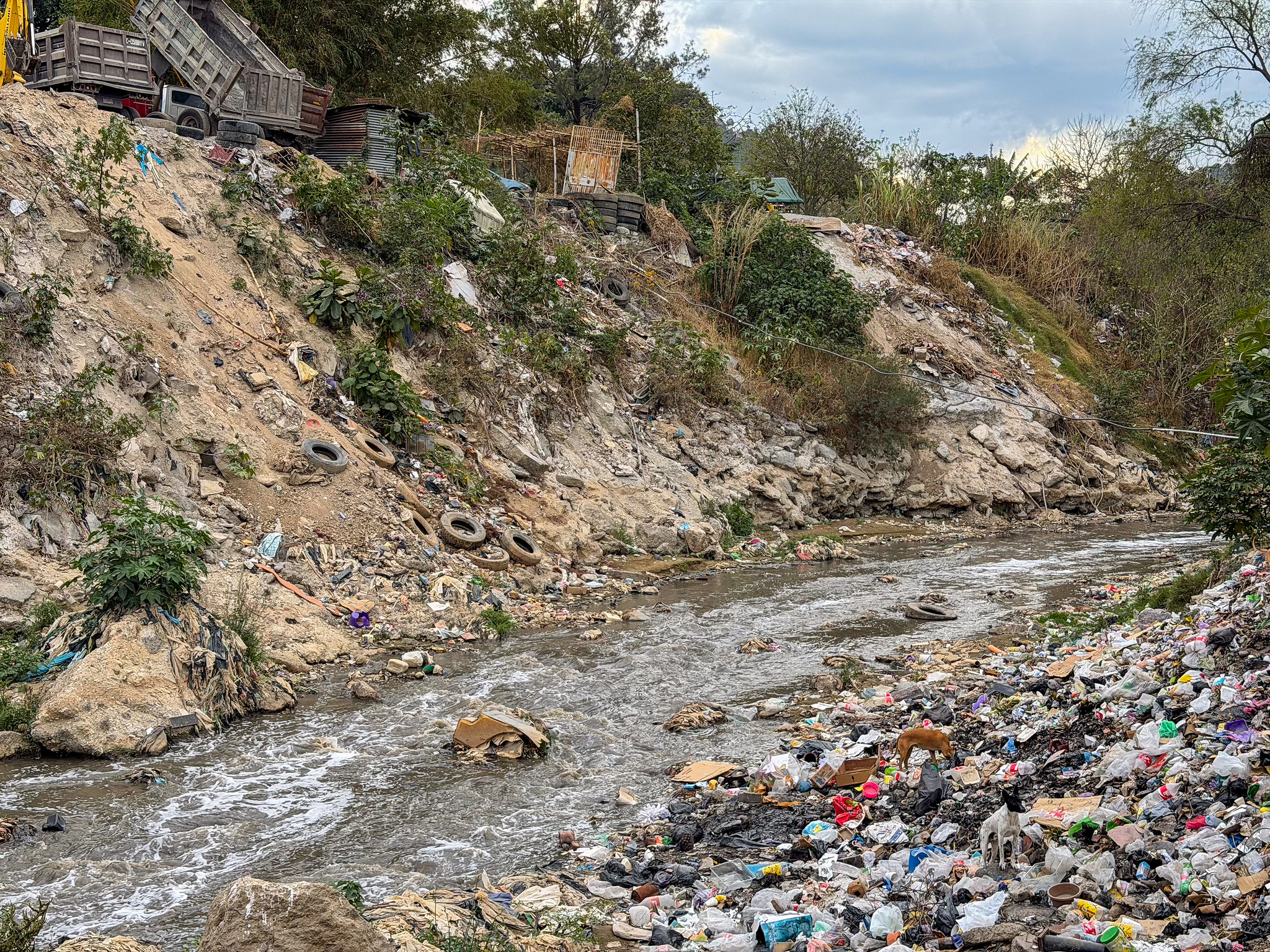
Photo: Mayela Sánchez García.
The situation extends beyond national borders. Every year, the Motagua River discharges some 20,000 metric tons of plastic into the Caribbean Sea, making it one of the rivers that contributes the most plastic pollution to the ocean worldwide, according to estimates contained in a 2025 report by the Inter-American Commission on Human Rights (IACHR).
The river flows into the Mesoamerican Reef at its mouth, so pollution also threatens to degrade one of the largest and most biodiverse transboundary reefs on the planet, which spans the territorial waters of Belize, Guatemala, Honduras, and Mexico.
In addition, the contaminated water reaches the coast of Honduras and spreads into Amatique Bay, located along the eastern coast of Guatemala, affecting the Caribbean Sea.
The roots of this chronic, cross-border problem are structural. Data from the Integrated Environmental Management of the Motagua River Basin project, funded by the United Nations Development Program (UNDP), show that in Guatemala, 66% of municipal solid waste is not collected, and there is no guarantee that the remaining 34% is disposed of properly. Furthermore, of all landfills nationwide, 88.32% are illegal or lack municipal authorization.
In other words, the core issues that need to be addressed are the mismanagement of solid waste and water resources in Guatemala; noncompliance with existing regulations on wastewater discharge and the disposal and treatment of solid waste and residues; and the lack of a water law.
The Poqomam Maya people's quest for justice
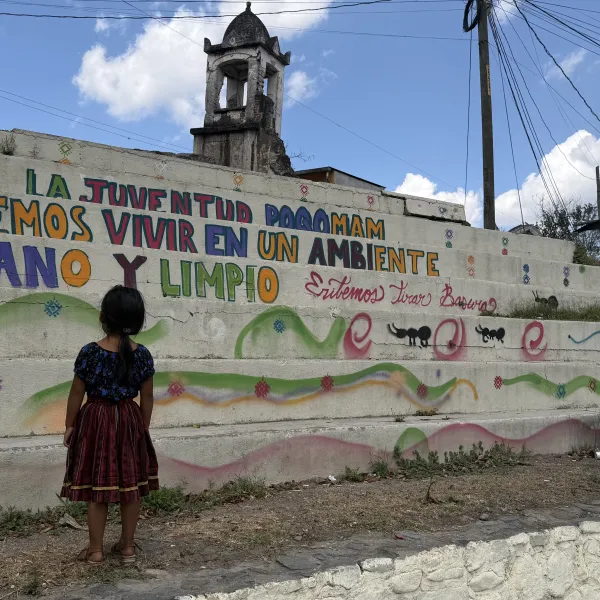
The rivers of Santa Cruz Chinautla, a community of the Poqomam Maya people located just twelve kilometers from Guatemala City, have become conduits of pollution that are degrading the Motagua River.
For decades, the local population has seen its health and livelihoods—including pottery, one of the main economic activities and a source of identity—damaged due to the lack of waste management in the municipality of Chinautla and the urban area of the country’s capital, as well as the activities of sand-mining companies.
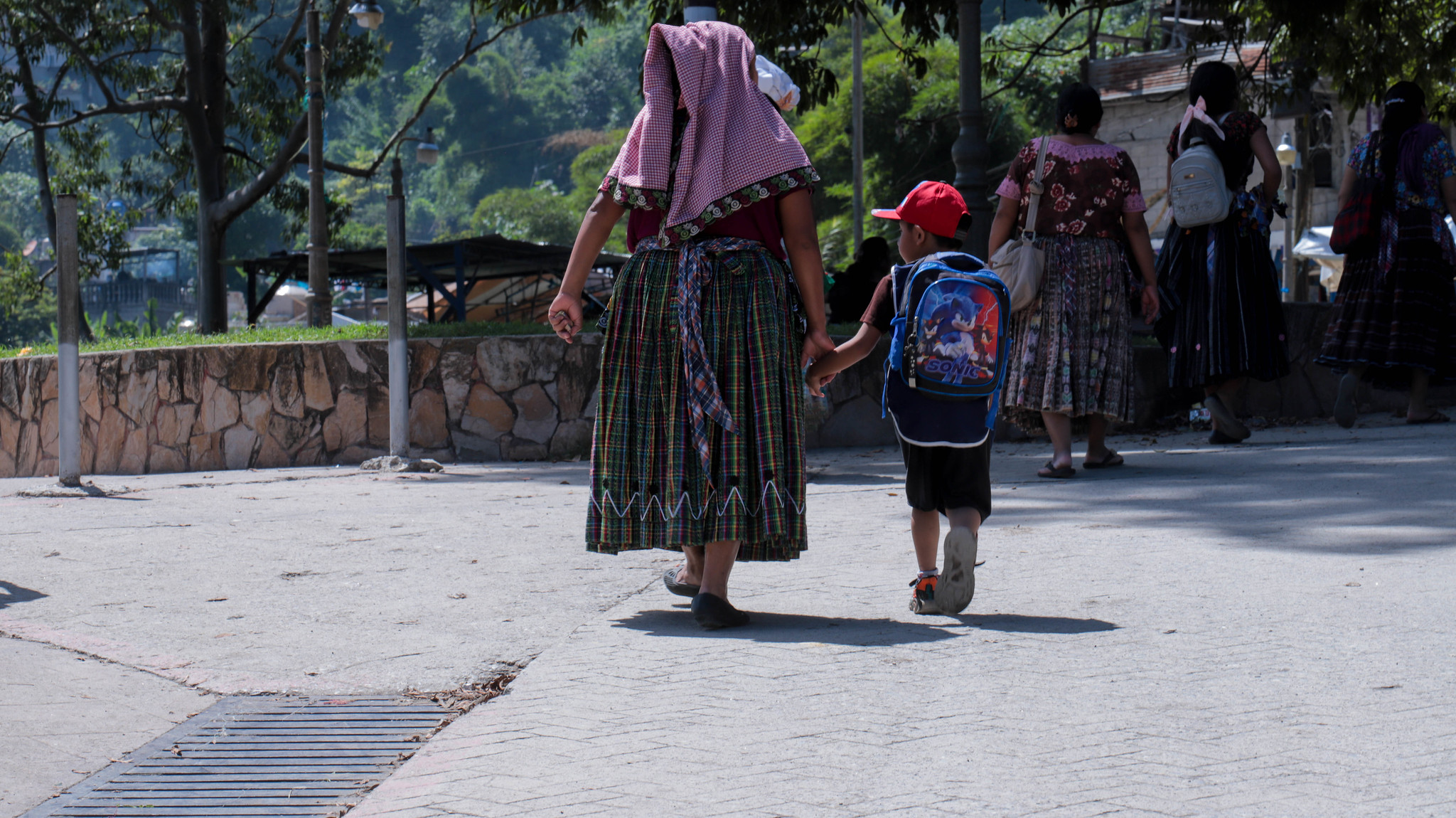
Photo: Mario Winter.
Voices for the Motagua River: Olga Vázquez.
Voices for the Motagua River: Nazario Pascual.
In early 2000, the Maya community organized to stop sand mining on their territory. At that time, the companies held mining permits that remained valid through 2021 and 2022. And although the permits expired, some companies continued to operate after requesting extensions. In June 2022, the indigenous authorities of the Poqomam people began a sit-in protest in front of the Piedrinera San Luis company, which they maintained for four years.
In July 2024, the Special Rapporteur on Economic, Social, Cultural, and Environmental Rights of the IACHR visited Santa Cruz Chinautla. During his visit, traditional authorities and community members spoke about the environmental, water-related, health, economic, and cultural impacts of the pollution in their rivers.
That same year, in October, the community—with support from AIDA, the Indigenous Peoples’ Law Firm, and partner organizations—filed a lawsuit (petition for amparo) against the municipality of Chinautla over its failure to take measures to address the contamination of its rivers and soil caused by improper solid waste management and the existence of illegal landfills.
AIDA’s scientific team, together with local residents and community authorities, collected key information on illegal landfills in the area. This community science initiative supported the litigation by highlighting the severity of the pollution, demonstrating the ongoing use of such practices, and providing evidence of the municipal authorities’ failure to fulfill their legal obligations regarding waste management.
Learn more about this community science initiative.
In June 2025, the Poqomam community won the support of the Guatemalan justice system when a constitutional court ordered the municipality of Chinautla to effectively address the claims in the lawsuit aimed at stopping the pollution of the rivers and soil in Santa Cruz Chinautla.
This is the first time a Guatemalan court has recognized a community's right to a healthy environment and its central role in finding solutions.
Find out the details of the legal victory.
Current situation
Since the ruling was issued, the municipality of Chinautla has held a series of “technical working groups” with representatives from the central government, civil society, and the community. A smaller group of technical experts was later created to develop a work plan with clear goals. Several months have passed without the municipality convening these working groups.
Furthermore, in December 2025, the IACHR noted in its report Human Rights Situation in Guatemala that the Motagua River basin is facing a severe pollution crisis that has had profound impacts on biodiversity and has resulted in systematic violations of the human rights of local communities, including the Maya Poqomam people.
And in May 2026, the Ministry of the Environment and Natural Resources revoked the license of the sand mining company Piedrinera San Luis for "failure to comply with environmental commitments."
AIDA continues to monitor the implementation of the court ruling to ensure the right to a healthy environment for the Poqomam Maya community and all those living in the Motagua River basin. Meanwhile, the residents of Santa Cruz Chinautla remain organized and mobilized to improve their environment and defend their rights.
Related projects
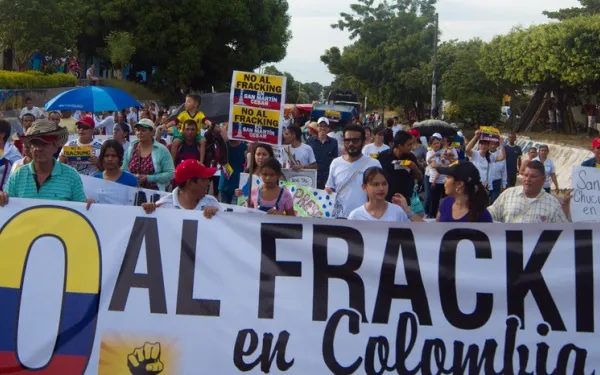
International pressure to stop the advance of fracking in Colombia
Many Latin American governments continue to promote extractive activities—including the exploration and exploitation of unconventional hydrocarbons through fracking, or hydraulic fracturing—as a means of economic revitalization in the face of the crisis caused by the COVID-19 pandemic. This trend contradicts the international commitments adopted by these countries to reduce emissions and mitigate the global climate crisis. A United Nations report, to be released this month, is expected to state that reducing methane emissions will be critical to avoid the most extreme effects of global warming. The report is based on recent data showing that carbon dioxide and methane levels in the atmosphere reached record highs last year, despite the pandemic bringing much of the global economy to a halt. This information complements scientific evidence that methane emissions from oil and gas production—one of its major human-related sources—may be higher than previous estimates. This increase has been associated with the leakage and flaring of methane from fracking operations. Although methane is an extremely potent greenhouse gas, it has a relatively short life cycle in the atmosphere, meaning that reducing its emissions could help the world meet our climate goals more quickly. Colombia is an example of how the push for fracking contradicts the urgent need to combat the climate crisis and its damages. Although it is not legal to carry out fracking operations in the country because its regulation is temporarily suspended, the government has not stopped the development of pilot projects of this technique and continues to anchor its energy policy on hydrocarbons. At the same time, there is a national and international push to stop the advance of fracking in Colombia. While the Council of State makes a final decision on the regulation, two legislative initiatives are underway: one that seeks to prohibit the implementation of fracking nationwide, and another that would prohibit the exploration and/or exploitation of unconventional hydrocarbons by any technique. In the framework of the parliamentary treatment of both bills, which are expected to be unified, authorities from the United Nations and the Inter-American Commission on Human Rights (IACHR) participated in public hearings, in which they called on Congress to approve the legislation that would allow Colombia to move toward a fair and low-emission energy transition. The case for protecting people and the climate In his intervention, David Boyd, UN Special Rapporteur on human rights and the environment, referred to the climate crisis as "serious and unprecedented", highlighting that its impacts on human rights "disproportionately affect poor, vulnerable and marginalized people." In the same vein, Marcos Orellana, UN Special Rapporteur on Toxic Substances and Human Rights, expressed concern about "the Colombian State's intention to consider funding and supporting fossil fuel fracking," considering its potential impact on human rights and sustainability. He emphasized, "new investments in fracking are incompatible with the protection of human rights." For his part, Renato Zerbini, chairman of the Committee on Economic, Social and Cultural Rights—a body, composed of 18 independent experts, that monitors the implementation of the International Covenant on Economic, Social and Cultural Rights by its State parties—stressed that hydraulic fracturing "is closely related to multiple and ongoing human rights violations, as it causes irreversible environmental impacts and severe social affectations." Thus, the use of the technique violates the rights guaranteed by the Covenant, to which Colombia is a party, Zerbini pointed out. In general, the extractive industry "increases the risk for environmental defenders, territorial occupation and the impact on the rights of the communities surrounding the projects," added Soledad García Muñoz, the IACHR’s Special Rapporteur on Economic, Social, Cultural and Environmental Rights. In sum, the representatives of the international organizations reported on the unfeasibility of fracking in climatic, social and even economic terms: "When the real costs of fracking are taken into account, it becomes evident that these far exceed the alleged economic gains," emphasized Orellana. They referred to the international obligations of the Colombian State in terms of human rights and climate change, contained in various instruments. Among those, they cited Advisory Opinion 23/17 on human rights and environment of the Inter-American Court of Human Rights; General Comment 36 on the right to life, contemplated in the International Covenant on Civil and Political Rights; as well as the Joint Declaration on Human Rights and Climate Change that five human rights bodies issued in 2019. The statement expresses that "failure to take measures to prevent foreseeable harm to human rights caused by climate change, or to regulate activities that contribute to such harm, could constitute a violation of States' human rights obligations." The common recommendation: ban fracking At the conclusion of their interventions, the international authorities expressed their support for a law banning fracking throughout the Colombian national territory: David Boyd argued,"to address the climate crisis, Colombia must urgently pursue a low-carbon, climate-resilient future, replacing fossil fuels with renewable energy in light of its obligations under constitutional law, international human rights law and the right to a healthy environment." He concluded, "the government of Colombia must pass a law to ban fracking." Marcos Orellana pointed out that "the Congress of the Republic of Colombia has the opportunity to raise its gaze towards the future and preserve the legacy of its megabiodiversity." In that sense, he pointed out, "the protection of the right to live in a toxic-free environment inspires my respectful call for Congress to adopt a law banning fracking." Soledad Muñoz said that "the approval of a bill whose purpose would be to put an end to the exploration and exploitation of unconventional oilfields, prohibiting practices such as fracking, would represent a valuable measure of environmental protection, the reduction of socio-environmental conflicts and compliance with the commitments emanating from the Paris Agreement and the Inter-American (Human Rights) System itself." Continuing to base local economies on the extractive industry and promoting fracking only increases the dependence of our societies on fossil fuels, deepening the causes of the climate crisis and the damage it does to the most vulnerable among us.
Read more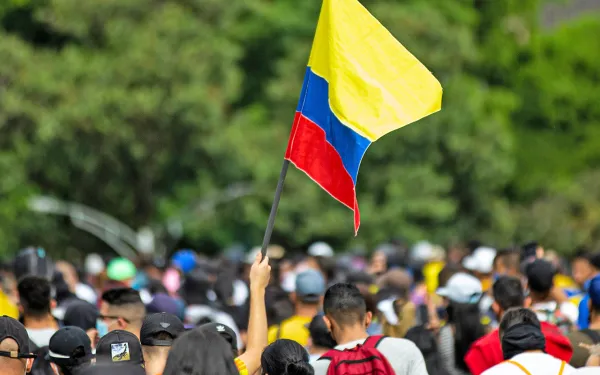
Statement on the abuses of security forces during the repression of social protest in Colombia
In the last week, protests in Colombia over a proposed tax reform have spurred a national mobilization against poverty and inequality, to which the Colombian government has reacted with repression, extreme violence and assassinations. The Interamerican Association for Environmental Defense (AIDA) emphatically rejects the abuses of security forces and expresses our deep concern about the lack of guarantees for social protest in Colombia. According to reports from national and international organizations, in recent days dozens of people have lost their lives in the context of state repression and hundreds more have been injured. We categorically condemn the extreme use of force against demonstrators and demand that the lives and rights of all citizens be respected. Liliana Ávila, AIDA human rights attorney and Colombian citizen, states: "Faced with the worrying escalation of violence, and the abuse of public force to silence social demonstrations, it is urgent that the Colombian state respect the human rights of protesters and create democratic and participatory spaces in which effective responses can be given to the conditions of poverty, marginalization and exclusion that are at the root of these protests." "All people have the right to demonstrate, and it is the State’s responsibility to create effective mechanisms for public participation. It’s extremely worrying that the State, instead, has taken repressive measures incompatible with the rule of law, severely restricting people's freedoms, and violating their right to life and personal integrity, while promoting language that stigmatizes and criminalizes protesters". We call on the international community and urge the Inter-American Commission on Human Rights to demand that the Colombian State respect the human rights of the protesters.
Read more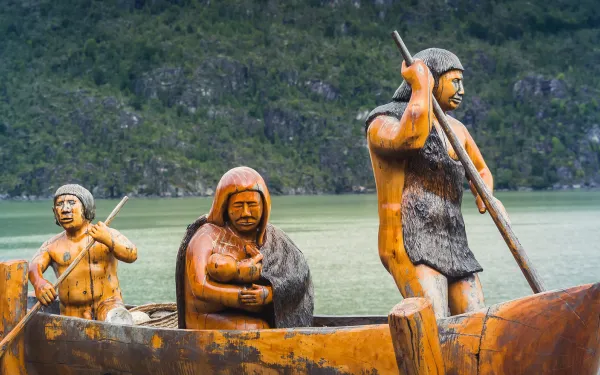
Chile: Report Finds That Approval of Salmon Farms in Kawésqar National Reserve is Illegal
The document prepared by national and international organizations highlights the incompatibility between this type of industry and the purpose of protection of the area. Even without an established management plan, there are already 57 salmon farming concessions, 113 in process and 6 resolutions of environmental qualification have been approved after the creation of the Reserve. Local communities in the area of the Kawésqar National Reserve—including Kawésqar Atap, As Wal Lajep, Grupos Familiares Nómades del Mar, Residentes Río Primero and Inés Caro—provided Chile’s National Forestry Corporation (CONAF) with a technical report that seeks to provide information on the serious impact that the salmon industry generates on marine ecosystems. Prepared by the NGOs FIMA, Greenpeace and AIDA (the Interamerican Association for Environmental Defense), the report will be considered in the management plan that the government entity must develop and implement to comply with the protection of the marine waters that make up the Reserve. "CONAF must guarantee compliance with what was established in the Indigenous Consultation and explicitly prohibit salmon farming in the reserve's management plan. This definition is key to the future health of the Patagonian marine ecosystems," explained Estefanía González, Greenpeace's Campaign Coordinator. "Salmon farming is completely incompatible with the maintenance of healthy marine ecosystems." Historic process for the protection of the Southern seas The creation of the Kawésqar National Reserve in 2018 was a key milestone for the participation of these native people in decision-making regarding the ecosystems that make up their ancestral territory. On that occasion, through indigenous consultation, the need to protect the waters and prevent the development of activities such as salmon farming was expressly established, considering the particular situation of fragility of the area and the Kawésqar cultural legacy, firmly linked to the sea. In their above referenced report, the organizations conclude that salmon farming as an activity is incompatible with the protection objectives of National Reserves, from a legal and ecosystemic point of view, and in particular with the Kawésqar National Reserve, due to the many risks involved. Among the damages caused by this industry are biological contamination caused by the introduction of exotic species, the indiscriminate use of antibiotics, periodic massive salmon escapes, and the food and feces deposited on the seafloor, which generate anaerobic conditions and red tides. All of the above endangers a marine area with unique diversity and which the State itself has decided to protect. "Allowing salmon farming in the Kawésqar National Reserve would render the protection given to the area useless," added Victoria Belemmi, FIMA attorney. "This point has even been recognized by the national directorate of CONAF, which when consulted in 2019 by the comptroller's office on salmon farming within protected areas, pointed out that according to the current national and international legal framework, including the Washington Convention, an activity such as salmon farming would not be admissible in an area designed to protect the marine ecosystem." Statement from the Comptroller's Office For its part, AIDA filed a letter with the Comptroller General's Office to solicit a ruling on the approval of a project to increase the biomass of a salmon farming center located in the Alacalufes Reserve, now Kawésqar National Reserve, which was operating under anaerobic conditions. "The approval of this project meant that salmon production was authorized to increase in an area where there was already evidence that the carrying capacity of the site was exceeded," explained Florencia Ortúzar, AIDA attorney. "The fact that the center was located in the waters bordering the Alacalufes Reserve (now Kawésqar) makes it even more serious." The low level of oxygen affecting the waters was evidenced by official documentation recognizing the regulations for that purpose—the Preliminary Site Characterization that the center's owner submitted to request the expansion, and several preliminary reports (INFA) confirming the situation. With the approval, the center acquired authorization to almost triple its original production. Subpesca had noted the situation, even interposing an observation on the matter within the process. However, shortly thereafter, it issued its approval of the project. Subsequently, the Environmental Evaluation Service (SEA) approved the project by means of an Environmental Qualification Resolution (RCA, for its Spanish initials). Read the report here (in Spanish) press contact Victor Quintanilla (Mexico), AIDA, [email protected], +5215570522107
Read more