
Project
Shutterstock.
Pollution of the Motagua River in Guatemala: The Poqomam Maya people’s quest for environmental justice
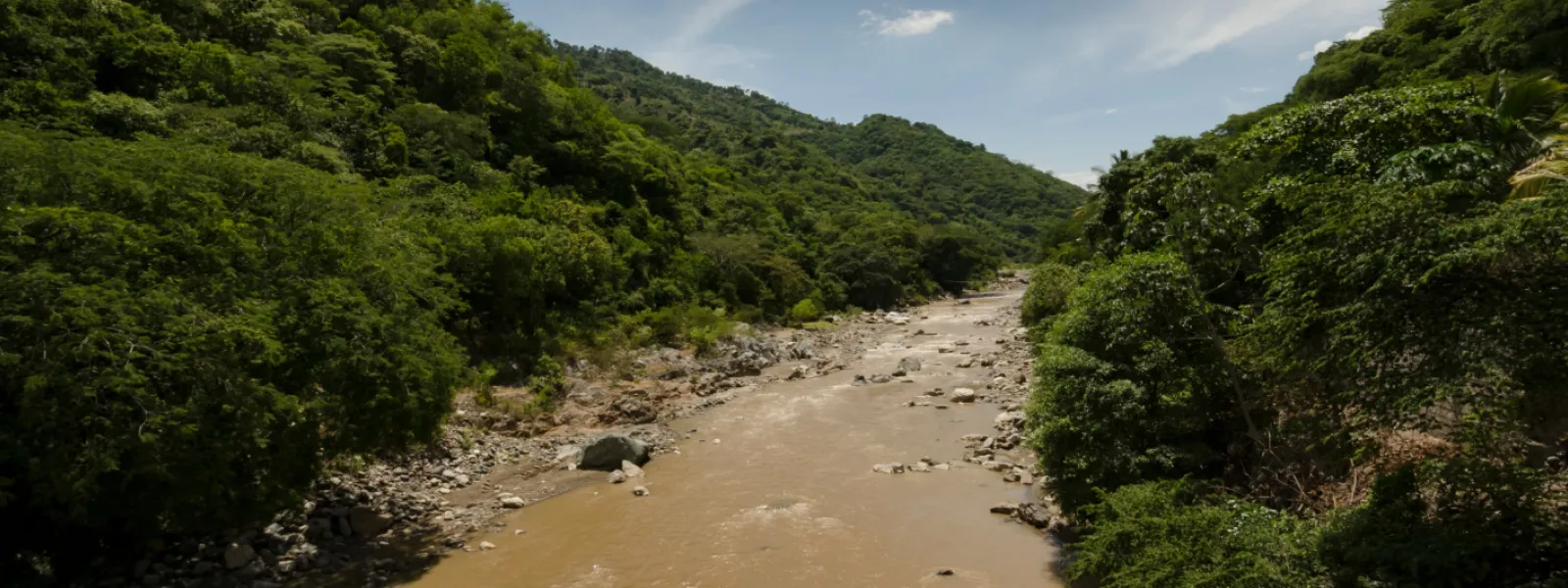
The Motagua River basin—Guatemala’s largest and most important river—is severely polluted with wastewater, solid waste, and other types of debris.
This is a cross-border issue because the Motagua’s polluted waters flow into the Caribbean Sea, reach the coast of Honduras, and threaten the Mesoamerican Reef System.
For decades, this has violated the rights to health, water, development, and a healthy environment of all the people living in the river basin.
In June 2025, the Poqomam Maya community of Santa Cruz Chinautla—supported by AIDA, the Indigenous Peoples’ Law Firm, and allied organizations—achieved an unprecedented legal victory to halt degradation in the basin. In response to the lawsuit it filed, a Guatemalan court ordered the municipality of Chinautla to comply with a series of obligations to curb the pollution of the area’s rivers and soil.
The government's response to the ruling has so far been limited to technical working group meetings. Meanwhile, the community continues to work toward the proper implementation of the ruling and to take other actions to defend its territory and its rights.
Background
The Motagua River, which is 486 km long, flows through 96 municipalities and 14 departments in Guatemala. It originates in Quiché, a department located in the northwest, and empties into the Caribbean Sea.
Polluting activities occur throughout the entire basin, including sub-basins and micro-basins. The largest volume of pollution comes from Guatemala City, the country’s capital, and is carried by the waters of the Las Vacas River, which in turn receives a large amount of waste from the Chinautla River.
The Chinautla River, which flows through the municipality of the same name, carries solid waste from a landfill located in Zone 3 of the capital—where trash from at least 14 municipalities in the department of Guatemala is dumped—as well as sewage generated by some 500,000 people living in the northern part of the capital, which undergoes no prior treatment.
Other sources of pollution include the numerous illegal dumps in the municipality of Chinautla, the waste that private vehicles and garbage trucks dump along the banks of its rivers, as well as the sand-mining companies—which began setting up operations in the area between 1996 and 1997—whose activities weaken the rivers' basins, causing solid waste to be more easily carried away by the river currents.
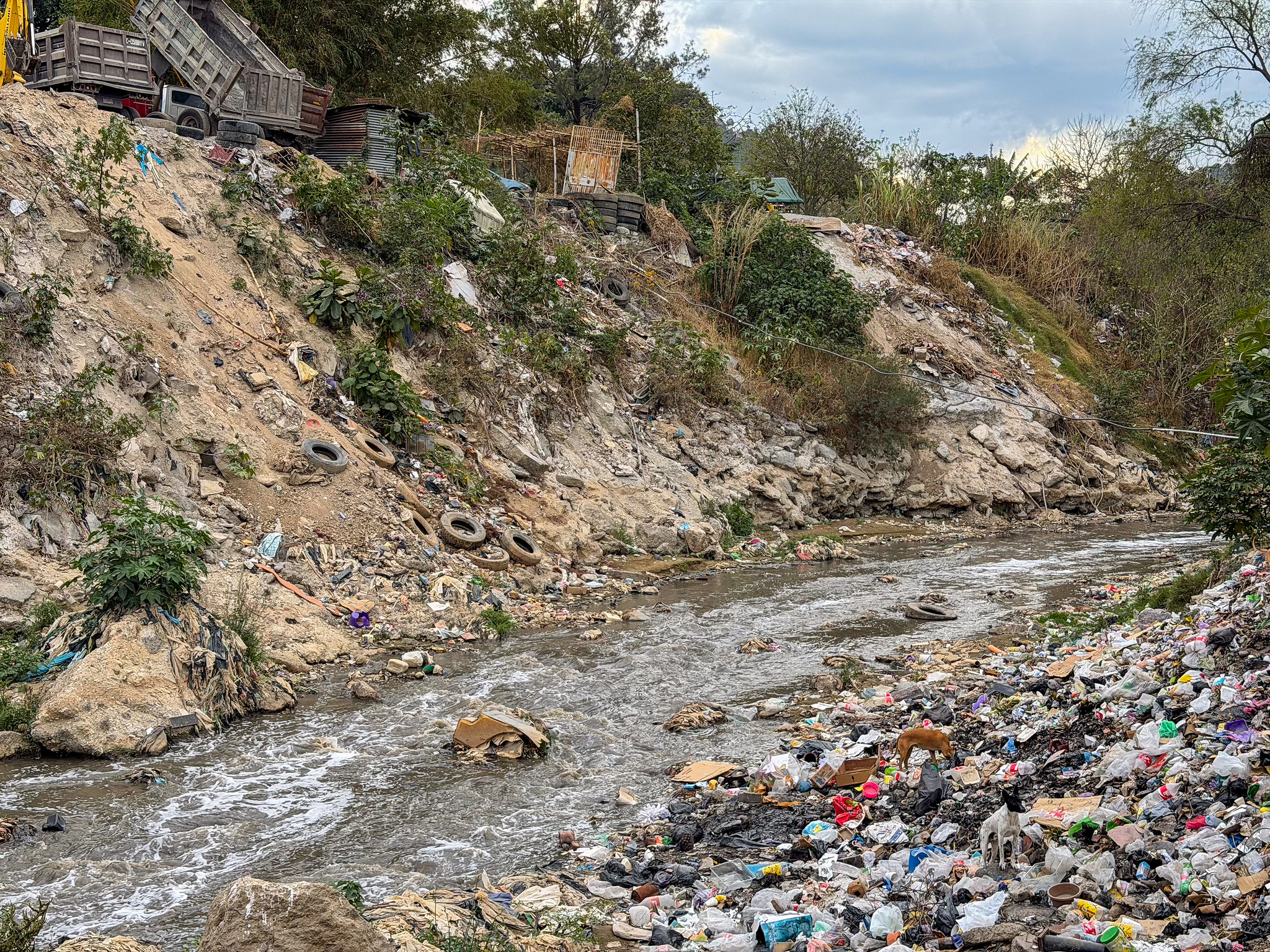
Photo: Mayela Sánchez García.
The situation extends beyond national borders. Every year, the Motagua River discharges some 20,000 metric tons of plastic into the Caribbean Sea, making it one of the rivers that contributes the most plastic pollution to the ocean worldwide, according to estimates contained in a 2025 report by the Inter-American Commission on Human Rights (IACHR).
The river flows into the Mesoamerican Reef at its mouth, so pollution also threatens to degrade one of the largest and most biodiverse transboundary reefs on the planet, which spans the territorial waters of Belize, Guatemala, Honduras, and Mexico.
In addition, the contaminated water reaches the coast of Honduras and spreads into Amatique Bay, located along the eastern coast of Guatemala, affecting the Caribbean Sea.
The roots of this chronic, cross-border problem are structural. Data from the Integrated Environmental Management of the Motagua River Basin project, funded by the United Nations Development Program (UNDP), show that in Guatemala, 66% of municipal solid waste is not collected, and there is no guarantee that the remaining 34% is disposed of properly. Furthermore, of all landfills nationwide, 88.32% are illegal or lack municipal authorization.
In other words, the core issues that need to be addressed are the mismanagement of solid waste and water resources in Guatemala; noncompliance with existing regulations on wastewater discharge and the disposal and treatment of solid waste and residues; and the lack of a water law.
The Poqomam Maya people's quest for justice
The rivers of Santa Cruz Chinautla, a community of the Poqomam Maya people located just twelve kilometers from Guatemala City, have become conduits of pollution that are degrading the Motagua River.
For decades, the local population has seen its health and livelihoods—including pottery, one of the main economic activities and a source of identity—damaged due to the lack of waste management in the municipality of Chinautla and the urban area of the country’s capital, as well as the activities of sand-mining companies.
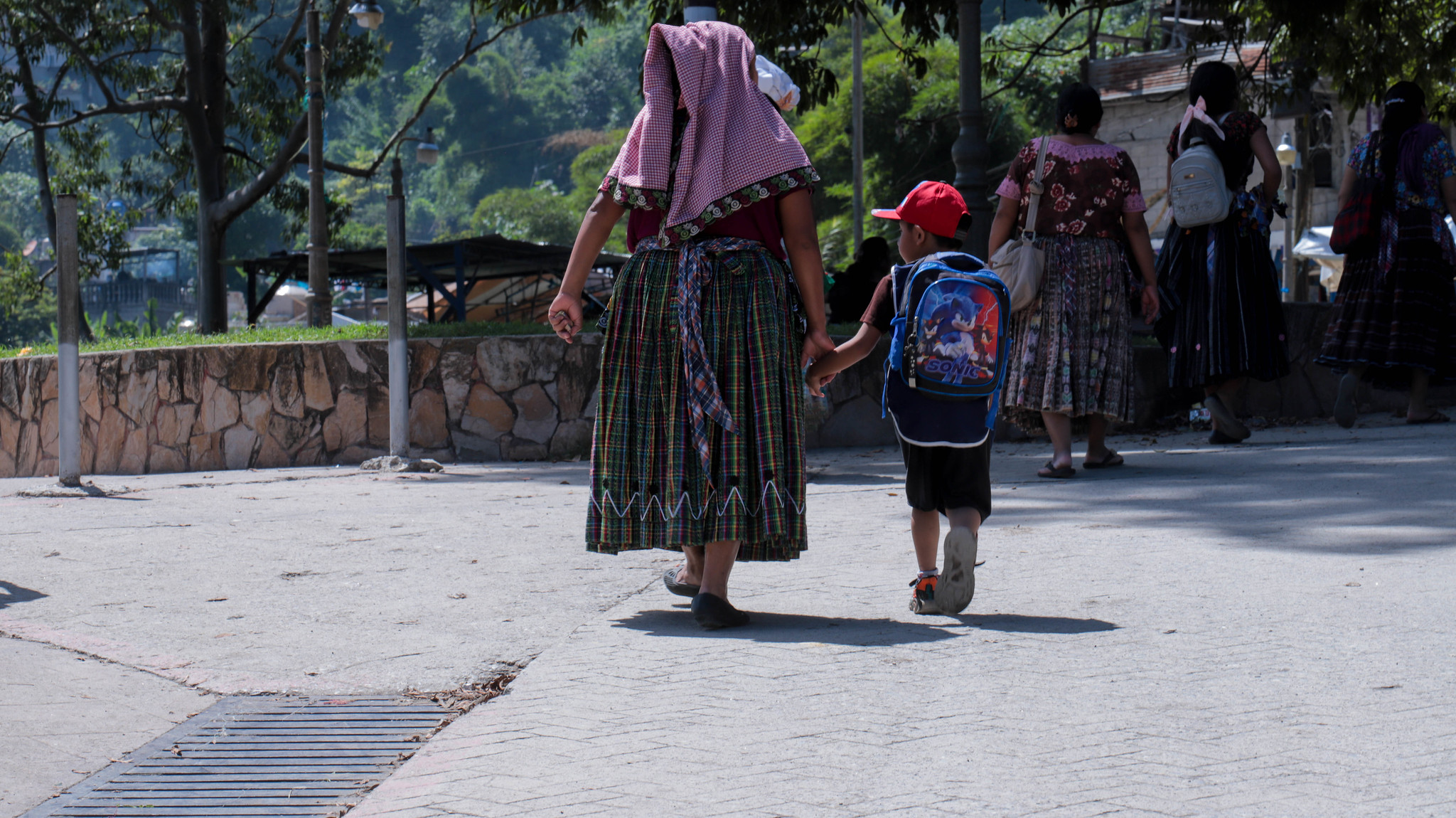
Photo: Mario Winter.
Voices for the Motagua River: Olga Vázquez.
Voices for the Motagua River: Nazario Pascual.
In early 2000, the Maya community organized to stop sand mining on their territory. At that time, the companies held mining permits that remained valid through 2021 and 2022. And although the permits expired, some companies continued to operate after requesting extensions. In June 2022, the indigenous authorities of the Poqomam people began a sit-in protest in front of the Piedrinera San Luis company, which they maintained for four years.
In July 2024, the Special Rapporteur on Economic, Social, Cultural, and Environmental Rights of the IACHR visited Santa Cruz Chinautla. During his visit, traditional authorities and community members spoke about the environmental, water-related, health, economic, and cultural impacts of the pollution in their rivers.
That same year, in October, the community—with support from AIDA, the Indigenous Peoples’ Law Firm, and partner organizations—filed a lawsuit (petition for amparo) against the municipality of Chinautla over its failure to take measures to address the contamination of its rivers and soil caused by improper solid waste management and the existence of illegal landfills.
AIDA’s scientific team, together with local residents and community authorities, collected key information on illegal landfills in the area. This community science initiative supported the litigation by highlighting the severity of the pollution, demonstrating the ongoing use of such practices, and providing evidence of the municipal authorities’ failure to fulfill their legal obligations regarding waste management.
Learn more about this community science initiative.
In June 2025, the Poqomam community won the support of the Guatemalan justice system when a constitutional court ordered the municipality of Chinautla to effectively address the claims in the lawsuit aimed at stopping the pollution of the rivers and soil in Santa Cruz Chinautla.
This is the first time a Guatemalan court has recognized a community's right to a healthy environment and its central role in finding solutions.
Find out the details of the legal victory.
Current situation
Since the ruling was issued, the municipality of Chinautla has held a series of “technical working groups” with representatives from the central government, civil society, and the community. A smaller group of technical experts was later created to develop a work plan with clear goals. Several months have passed without the municipality convening these working groups.
Furthermore, in December 2025, the IACHR noted in its report Human Rights Situation in Guatemala that the Motagua River basin is facing a severe pollution crisis that has had profound impacts on biodiversity and has resulted in systematic violations of the human rights of local communities, including the Maya Poqomam people.
And in May 2026, the Ministry of the Environment and Natural Resources revoked the license of the sand mining company Piedrinera San Luis for "failure to comply with environmental commitments."
AIDA continues to monitor the implementation of the court ruling to ensure the right to a healthy environment for the Poqomam Maya community and all those living in the Motagua River basin. Meanwhile, the residents of Santa Cruz Chinautla remain organized and mobilized to improve their environment and defend their rights.
Related projects
5 things you should know about methane
Although its presence in the atmosphere is less than that of carbon dioxide (CO2)—the most abundant and well-known greenhouse gas—methane is much more effective at retaining heat due to its chemical composition. Therefore, adding smaller amounts of methane to the atmosphere can have an effect equal to that of adding tremendous amounts of CO2. Since 2006, the amount of methane in the atmosphere has grown considerably—by about 25 million tons per year. Studies have associated this increase with the leakage and burning of methane from the extraction of unconventional hydrocarbons through the process of fracking, or hydraulic fracturing. Although extracting gas through fracking is sold as a “greener” alternative to other fossil fuels, it is a false narratiave that must be combatted. In general, all activities that cause methane emissions aggravate the climate crisis and the increasingly urgent need to combat air pollution. The common understanding of methane is inaccurate. Therefore, it’s necessary to generate more awareness about what it is and what its real impacts are. What follows are five basic facts about methane. 1. Methane is a short-lived greenhouse gas and climate pollutant Methane is a greenhouse gas.The Greenhouse Effect is a natural phenomena in which the atmosphere, composed of different gases, captures some rays of the sun and keeps them trapped in order to balance the temperature of the planet. When an excess of gases such as methane are emitted, the atmosphere traps more heat than necessary, leading to global warming. Methane has 67 times more power than CO2 to warm the planet over a 20-year period. Its emissions are responsible for nearly 25 percent of global warming. And since it stays less time in the atmosphere—12 years on average (CO2 stays for centuries)—it is among the Short Lived Climate Pollutants (SLCPs), which cause 40-45 percent of global warming and damage air quality. 2. Methane primarily is produced from human sources About 60 percent of the methane in the atmosphere is considered by scientists to be caused by human activity, while the other 40 percent comes from natural sources like wetlands, volcanoes, and permafrost. Human sources include livestock, gas and petroleum exploitation, rice farming, mining (particularly coal mining), and landfills. It should be noted that, according to scientific evidence, reservoirs are also an important source of methane. They generate 1.3 percent of all greenhouse gases worldwide each year, more than all of Canada's polluting emissions, and 80 percent of that pollution is from methane. 3. Methane directly and indirectly degrades air quality Large amounts of methane are intentionally leaked or released during the exploitation, processing, and transportation of oil and gas. In the United States alone, such direct emissions amount to 13 million tons each year. When released into the atmosphere, methane is accompanied by other toxic pollutants such as benzene, formaldehyde, and ethylbenzene. In addition, by interacting with solar radiation, methane promotes the formation of ground-level ozone (O3), another short-lived climate pollutant (CCVC) and the main component of smog. Methane gas flaring also produces black carbon and volatile organic compounds (VOCs), which are also CCVCs. 4. Methane causes serious damage to human health As mentioned, methane emissions promote the formation of ozone found in the lower layers of the atmosphere, which has serious impacts on public health. It irritates the airways, generates a feeling of burning and shortness of breath, complicates asthma, causes lung dysfunction and even premature death, and alters the immune system's response, reducing its ability to respond to diseases such as COVID-19, which mainly affects the airways. And since methane burning generates black carbon, it is relevant to point out that it is a key component of particulate matter (PM 2.5)—particles that are 35 times smaller than a grain of sand. These particles cannot be filtered or retained naturally in the nose, and can even enter the lungs. Particulate matter is the air pollutant most frequently associated with cardiovascular, respiratory, and pulmonary diseases, including lung cancer. 5. It is urgent to regulate and curb methane emissions Since methane, in addition to aggravating the climate crisis, deteriorates air quality and with it human health, it is urgent to act to curb its emissions. Civil society must demand that governments efficiently regulate methane emissions from the hydrocarbon industry and other sectors such as coal mining and industrial livestock. In addition, we must demand the monitoring of emissions, as well as the production and dissemination of timely information about methane’s damage to our air quality.
Read more5 things you should know about methane
Although its presence in the atmosphere is less than that of carbon dioxide (CO2)—the most abundant and well-known greenhouse gas—methane is much more effective at retaining heat due to its chemical composition. Therefore, adding smaller amounts of methane to the atmosphere can have an effect equal to that of adding tremendous amounts of CO2. Since 2006, the amount of methane in the atmosphere has grown considerably—by about 25 million tons per year. Studies have associated this increase with the leakage and burning of methane from the extraction of unconventional hydrocarbons through the process of fracking, or hydraulic fracturing. Although extracting gas through fracking is sold as a “greener” alternative to other fossil fuels, it is a false narratiave that must be combatted. In general, all activities that cause methane emissions aggravate the climate crisis and the increasingly urgent need to combat air pollution. The common understanding of methane is inaccurate. Therefore, it’s necessary to generate more awareness about what it is and what its real impacts are. What follows are five basic facts about methane. 1. Methane is a short-lived greenhouse gas and climate pollutant Methane is a greenhouse gas.The Greenhouse Effect is a natural phenomena in which the atmosphere, composed of different gases, captures some rays of the sun and keeps them trapped in order to balance the temperature of the planet. When an excess of gases such as methane are emitted, the atmosphere traps more heat than necessary, leading to global warming. Methane has 67 times more power than CO2 to warm the planet over a 20-year period. Its emissions are responsible for nearly 25 percent of global warming. And since it stays less time in the atmosphere—12 years on average (CO2 stays for centuries)—it is among the Short Lived Climate Pollutants (SLCPs), which cause 40-45 percent of global warming and damage air quality. 2. Methane primarily is produced from human sources About 60 percent of the methane in the atmosphere is considered by scientists to be caused by human activity, while the other 40 percent comes from natural sources like wetlands, volcanoes, and permafrost. Human sources include livestock, gas and petroleum exploitation, rice farming, mining (particularly coal mining), and landfills. It should be noted that, according to scientific evidence, reservoirs are also an important source of methane. They generate 1.3 percent of all greenhouse gases worldwide each year, more than all of Canada's polluting emissions, and 80 percent of that pollution is from methane. 3. Methane directly and indirectly degrades air quality Large amounts of methane are intentionally leaked or released during the exploitation, processing, and transportation of oil and gas. In the United States alone, such direct emissions amount to 13 million tons each year. When released into the atmosphere, methane is accompanied by other toxic pollutants such as benzene, formaldehyde, and ethylbenzene. In addition, by interacting with solar radiation, methane promotes the formation of ground-level ozone (O3), another short-lived climate pollutant (CCVC) and the main component of smog. Methane gas flaring also produces black carbon and volatile organic compounds (VOCs), which are also CCVCs. 4. Methane causes serious damage to human health As mentioned, methane emissions promote the formation of ozone found in the lower layers of the atmosphere, which has serious impacts on public health. It irritates the airways, generates a feeling of burning and shortness of breath, complicates asthma, causes lung dysfunction and even premature death, and alters the immune system's response, reducing its ability to respond to diseases such as COVID-19, which mainly affects the airways. And since methane burning generates black carbon, it is relevant to point out that it is a key component of particulate matter (PM 2.5)—particles that are 35 times smaller than a grain of sand. These particles cannot be filtered or retained naturally in the nose, and can even enter the lungs. Particulate matter is the air pollutant most frequently associated with cardiovascular, respiratory, and pulmonary diseases, including lung cancer. 5. It is urgent to regulate and curb methane emissions Since methane, in addition to aggravating the climate crisis, deteriorates air quality and with it human health, it is urgent to act to curb its emissions. Civil society must demand that governments efficiently regulate methane emissions from the hydrocarbon industry and other sectors such as coal mining and industrial livestock. In addition, we must demand the monitoring of emissions, as well as the production and dissemination of timely information about methane’s damage to our air quality.
Read more
Science as a human right and a tool for environmental justice
By María Fernanda Ordoñez y Andrés Ángel According to the Encyclopedia Britannica, science is any system of knowledge that is concerned with the physical world and its phenomena and that entails unbiased observations and systematic experimentation. For its part, the United Nations (UN) defines science as the tool created by human beings to understand the world around them, and thus apply that knowledge to their benefit. If science is such an important tool, why is it not available to everyone? There is still a long way to go before science is recognized as a human right, and even the advances that have been made to that end are not well enough known. The so-called right to science was formed in the 1948 Universal Declaration of Human Rights, article 27 of which states that "everyone has the right to participate in scientific progress and in the benefits resulting therefrom.” It is also referred to in the Charter (Article 38) of the Organization of American States and in the American Declaration of the Rights and Duties of Man. In addition, the International Covenant on Economic, Social and Cultural Rights—which entered into force in 1976—recognizes in its Article 15 the right of every person to "enjoy the benefits of scientific progress and its applications.” It is precisely to raise public awareness of the responsible use of science for the benefit of society that World Science Day for Peace and Development is celebrated every November 10. The big gaps remaining Although the right to science is promoted by various world class scientific organizations, like the American Association for the Advancement of Science (AAAS), its application is still relatively unknown. This may be due in part to ignorance and economic difficulties in some countries. In Latin America and the Caribbean, socioeconomic, racial, and gender gaps are the major obstacles to the establishment of the universal right to science, which is closely linked to other rights, such as the right to education. According to UNESCO’s 2017-2018 World Education Report, 52 percent of children and adolescents in the region fail to reach minimum levels in mathematics and 36 percent fail in reading. In addition, in 2015 the rate of out-of-school youth of secondary school age reached 15.3 percent. A more telling indicator is the percentage of the Gross Domestic Product (GDP) allocated to public education, which stands at an average of 5 percent. In terms of the percentage of GDP allocated to research and development, the World Bank data shows that the countries that allocated the most resources for this purpose in 2017 were Brazil (1.26%) and Argentina (0.54%), followed by Cuba (0.43%) and Costa Rica (0.42%). The lowest figures were recorded in Guatemala (0.03%), Honduras (0.04%) and Peru (0.12%). These figures demonstrate that there are profound challenges to be faced in order to create the necessary conditions for the effective exercise of the right to science. Science in the Service of Environmental Justice Scientific advances allow us to find solutions to the new economic, social and environmental challenges we face on our way to a more just and sustainable future. Most communities in Latin America lack access to basic tools, or the training to develop programs for independent monitoring of environmental parameters, such as air or water quality. Thus, communities are at a serious disadvantage in the context of socio-ecological conflicts that may result from proposals for large mining, oil, and agro-industrial projects. However, it’s worth highlighting and promoting progress where it exists. It is encouraging to hear from empowered communities that have decided to implement community water quality monitoring programs, epidemiology initiatives, and many others. There is also hope because UNESCO data shows gross enrollment in higher education rose from 22 to 46 percent between 2000 and 2015. Likewise, many of the region’s civil society organizations are supporting the recognition of the right to science. At AIDA, scientific knowledge is used to strengthen our legal strategies to protect people and environments in the region. During the AAAS’s Conference on Science, Technology, and Human Rights in October 2019, we explained the link between science and human rights advocacy, and how we apply it in our work. Two months earlier, in August, UNESCO organized their first Latin American workshop in Argentina to discuss the development and implications of the right to science. There, the right to science was defined as a major focus of the organizattion’s work in the region. Strengthening the right to science in Latin America is vital for promoting more just and sustainable societies, where socioeconomic, racial, and gender gaps do not impede access to information as a common good. It’s essential to involve trained people committed to research in projects, organizations, and entities that promote social and environmental justice. In addition, the support of scientific professionals is fundamental to the process of knowledge transfer between countries and regions. This support is indispensable for the development of effective and efficient public policies. Finally, it should be noted that science should not only contribute to overcoming information asymmetries among actors in society, but should also be practiced and developed within a framework of respect for the rights of nature and human rights. At AIDA, we will continue to promote the right to science, building new capacities and strengthening existing ones, both for our partners and for the communities we support.
Read more